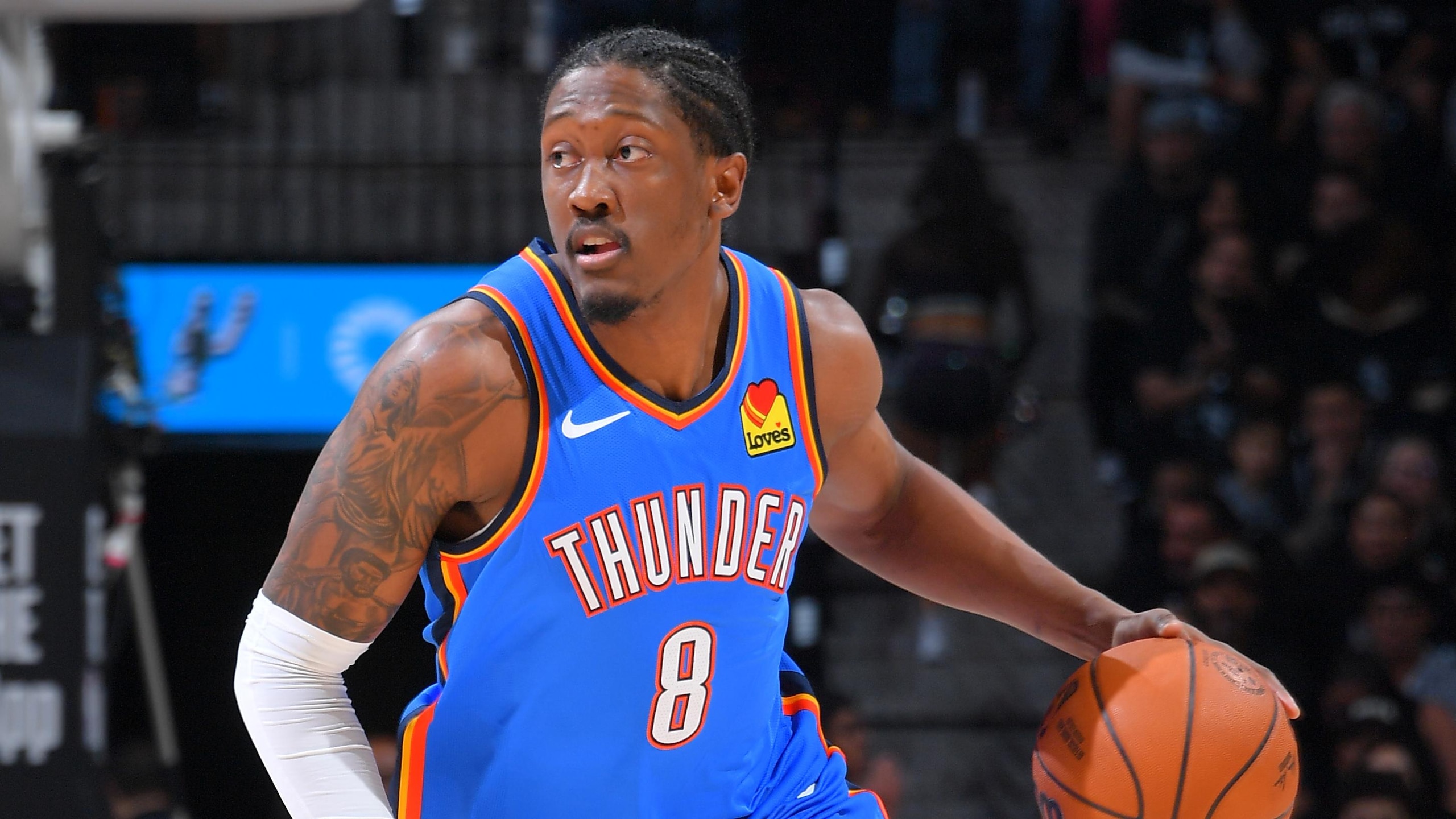
Duke Basketball: Blue Devils' Biggest Concerns in Conference Play
The sky is falling in Durham, North Carolina. After 14 straight wins to start the season, Duke has suffered two straight beatdowns at the hands of North Carolina State and Miami. The loss to State was an embarrassing defeat to a local rival, and Miami ended Duke’s 41-game home winning streak while handing every scholarship player not named Quinn Cook his first-ever loss at Cameron Indoor Stadium.
There are many factors behind these losses. Both opposing teams were knocking down their far share of tough triples, but Duke also managed to shoot itself in the foot in each game. Duke is giving up wide-open layups in half-court defense and committing too many live-ball turnovers. It seems like the entire team is always two steps behind when getting back on defense.
Duke has also struggled on offense the last two games, with Tyus Jones and Matt Jones both being particularly cold from the floor. The scoring will not be a hindrance as the season goes on, but Duke will need to work on a lot of things if it wants to make its way back up the rankings and ACC standings. With the toughest stretch of the season coming up, the Devils have little time to figure things out and need to improve quickly.
Here are the top things that could continue to plague the Devils as the season goes on.
Defense Has Disappeared
1 of 4
Giving up 87 and 90 points in back-to-back conference games is always a cause for concern, but the way that Duke has given up the points makes it even worse.
Both N.C. State and Miami spread the floor against Duke and ran successful pick-and-rolls at the top of the key over and over again. Running the pick-and-roll is a great way to get any defense scrambling, but Duke players often failed to give any resistance to the ball-handler, who would waltz into the paint for open layups or dunks.
The reason why this has been so easy for teams is simple: Jahlil Okafor does not move on defense.
Some big men are comfortable blitzing the ball-handler on screens and trapping him at midcourt, while others prefer to drop back in the paint and attempt to wall off the basket. In the last two games, Okafor’s strategy has been to stay glued to the screener (his man) and offer no resistance to the penetration.
If he keeps this up much longer, he is going to end up with an embarrassing YouTube clip of his defense that will rival James Harden’s. Duke’s small backcourt of Quinn Cook and Tyus Jones are going to struggle to get through screens, and Okafor needs to offer some form of help if the results are going to change in the future.
There is one obvious way to prevent these wide-open lanes from happening every play: switching to a zone defense. Coach Mike Krzyzewski has been averse to zone throughout his career, but he has used it sparingly at times.
Playing zone would allow Okafor to use his gigantic frame to get in the way of drivers without moving too much or having to make quick reactions. A zone defense would also utilize the length of Amile Jefferson and the strength of Justise Winslow.
Getting open jump shots against a zone can be easy, but that would be much better than the endless layup line Duke is currently giving up. If Duke fails to improve defensively in its next few games, the coaching staff should consider at least a part-time switch.
Double-Teaming Okafor Has Become Easy
2 of 4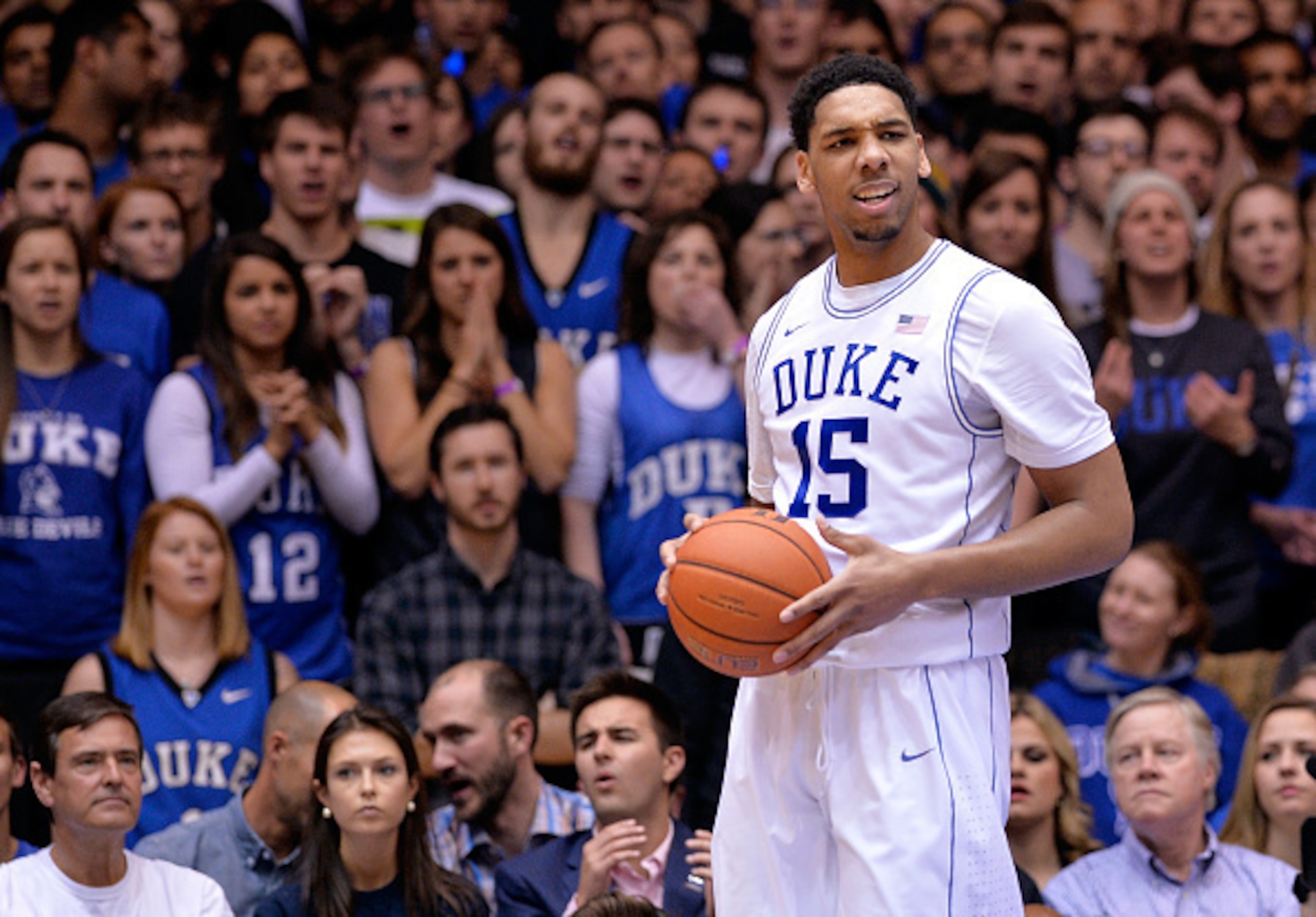
It seems like ages ago that Duke was easily winning its first 14 games and teams were facing a double-edged sword when choosing how to defend Okafor. If they defended him with one man, he would score easily (which is still true), but if they sent a second defender, the big man would identify the open player and whip a pass to him, resulting in an open shot.
Teams have started to double-team Okafor with another big, which has often resulted in Duke’s offense having to reset. Okafor likes to hold the ball and wait to see what the defense is doing, but that feeds right into the hands of the big-on-big double-teams.
When teams use both bigs to double-team, the opposite forward is open for only a split second before a guard crashes down to help. After that guard crashes down, the open player will be whoever is in the opposite corner from where Okafor has the ball. Unfortunately, any pass to that player would take so long to get there that the defense has already shifted back to him before the ball arrives.
Okafor has great patience, but it is working against him in these cases. He will need to learn to make a quick move upon receiving the entry pass or make a quick pass to the other forward before the opposing guard gets into the lane to provide help. If the ball sticks in his hands for just a few seconds, the defense has already won.
Ice-Cold Three-Point Shooting
3 of 4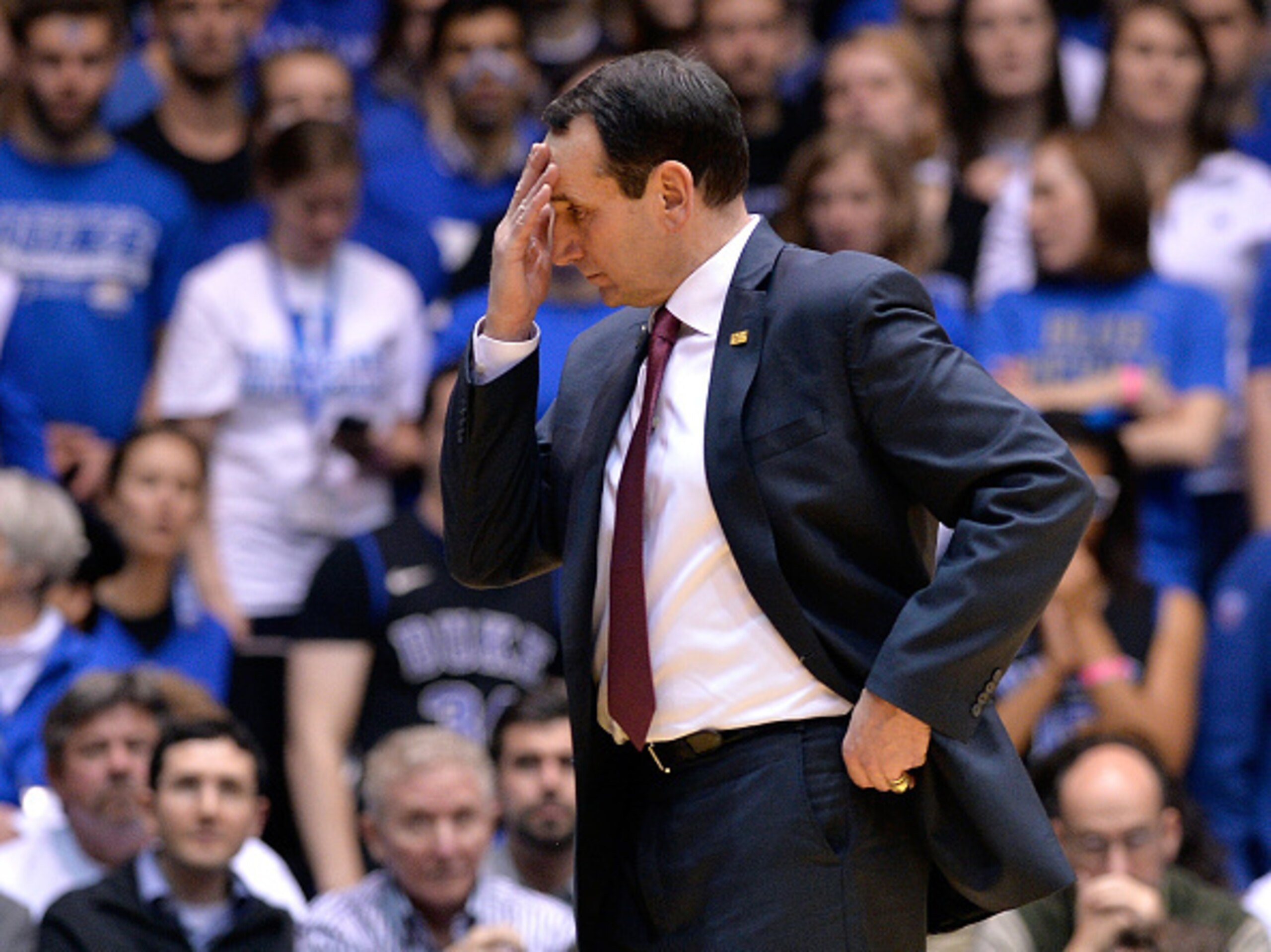
Duke was never going to rely on the outside shot as much this year as it has in the past, but the Devils need to knock down a reasonable number of open shots in order to keep defenses honest. In the past two losses, a few players have been really struggling with their three-point shots:
- Matt Jones: 1-of-6
- Tyus Jones: 0-of-6
- Justise Winslow: 1-of-8
- Rasheed Sulaimon: 3-of-13
Cook has gone 8-of-14 from deep in the losses, but the rest of the team is shooting just 14.7 percent on triples. Sulaimon is a better shooter than that, and his numbers will improve, but there is reason to believe that the other players may find themselves in long-term slumps.
Winslow was supposed to have an iffy jump shot coming in, and one of the reasons he has played so well and shot up mock drafts was his surprising efficiency behind the arc. He was shooting 39 percent before the last two games, but it may turn out his early-season hot streak was a fluke. What we’ve seen recently may be the type of shooter he really is.
Tyus Jones had a reputation as a decent shooter in high school and had shown an ability to knock down threes in bunches early in the season. He seems to go into periods where he does not shoot at all, and this cold streak could lead to him hesitating from deep when he's open. If he does this, the offense could stall and wind up taking tough shots at the end of the shot clock.
Matt Jones had a reputation as a great shooter coming in last year, but he suffered through a season-long slump and knocked down only three triples. His confidence could suffer while going through another cold spell. If he is hesitant to take shots and is unable to make them, his value to the team would really diminish.
Duke hasn't found a way to keep help defenders away from Okafor when it goes cold from deep. If the slump continues, the coaching staff will need to get creative in designing sets to free up Okafor.
.jpg?w=2560 "Seahawks Chiefs Football")


Lack of Poise in the Second Half
4 of 4
While both losses ended up in double digits, neither of Duke’s two letdowns was a blowout from the start.
Duke trailed N.C. State by only five points with 11 minutes left before surrendering a 19-5 run and finding itself down 19 with just less than six minutes left. The Devils led Miami by one point at halftime before giving up 56 points after the break and finding themselves trying to climb out of a hole for the last 12 minutes of the game.
The most refreshing thing about the Devils’ hot start to the season was their poise in big moments against teams like Wisconsin and Michigan State. This strong clutch play was in direct contrast with last year, when Duke often let games get away during short periods of time. Duke will need to get back to the way it was performing earlier this season if it wants to avoid the same path that last year’s team went down.
The players seemed to panic in the last couple of games, forcing shots in order to get points when trailing by single digits. The guards and Winslow ignored Okafor for long stretches and took bad shots or committed turnovers that led to easy baskets for the opposition.
These short spurts are the reason the last two games were not even close. Duke has enough talent to make up for cold shooting and defensive lapses but needs to keep its poises throughout the whole game.