J.P. Parise Has a Special Place in New York Islanders History
Former New York Islanders forward J.P. Parise died Wednesday night at the age of 73 of lung cancer, as reported by The Associated Press (via ESPN.com). While younger fans know Parise primarily as the father of Minnesota Wild forward Zach Parise, fans old enough to remember know that Parise scored one of the most important goals in Islanders history and made a huge impact on the team’s Cinderella playoff run of 1975.
The Islanders acquired Parise from the Minnesota North Stars on January 5, 1975 in exchange for forwards Ernie Hicke and Doug Rombough. Two days later, Isles general manager Bill Torrey acquired center Jude Drouin from the North Stars in a separate deal.

.jpg?w=2560 "Golden Knights Blues Hockey")
At the time, the Islanders were a young and improving team that lacked veteran leadership outside of captain Ed Westfall. The younger players weren’t sure how good they could actually be. Adding Parise and Drouin made an immediate difference for the young team.
Former Isles defenseman Jean Potvin recalled the impact Parise and Drouin had on the team.
“Jude and J.P. were leaders, not just good players. They gave us advice during faceoffs and between periods and were like two additional coaches in the locker room. They were helpful not only for the rest of that season but helped our team to bond together. They added character and dedication. They were in the best physical condition and they worked hard at practice. It changed our team.”
Defenseman Gerry Hart recalled Potvin as a player: “J.P. was an outstanding teacher of the game and he had a great attitude.”
Parise himself was disappointed to be traded to the Islanders at first, but he quickly warmed to the idea of playing on Long Island.
“I absolutely did not want to go there,” Parise said when asked about how he reacted to the trade. “I was towards the end of my career and until then, the Islanders had never made the playoffs. They had a reputation for futility.”
But Parise quickly changed his mind after speaking to a young teammate at one of his first practices.
“So there I was at practice, expressing how I hate New York. A guy comes up to me and asks what I like to do. Fishing? Some of the finest fishing in the world is here. Beaches? Restaurants? Plays? That young man was Denis Potvin. I quickly realized this [Long Island] was a pretty good place.”
The younger players quickly acknowledged what Parise and Drouin brought to the team, and the fans realized it as well.
“All of a sudden, I had a fan club,” Parise recalled. “They had a banner that read, ‘Winning is easy with J.P. Parise.’ The fans treated me great. They used to chant, ‘Jay-Pee.’ The fans were unbelievable. We’d go to a restaurant and the tab would be picked up by somebody anonymously or they’d just send a bottle of wine to our table.”
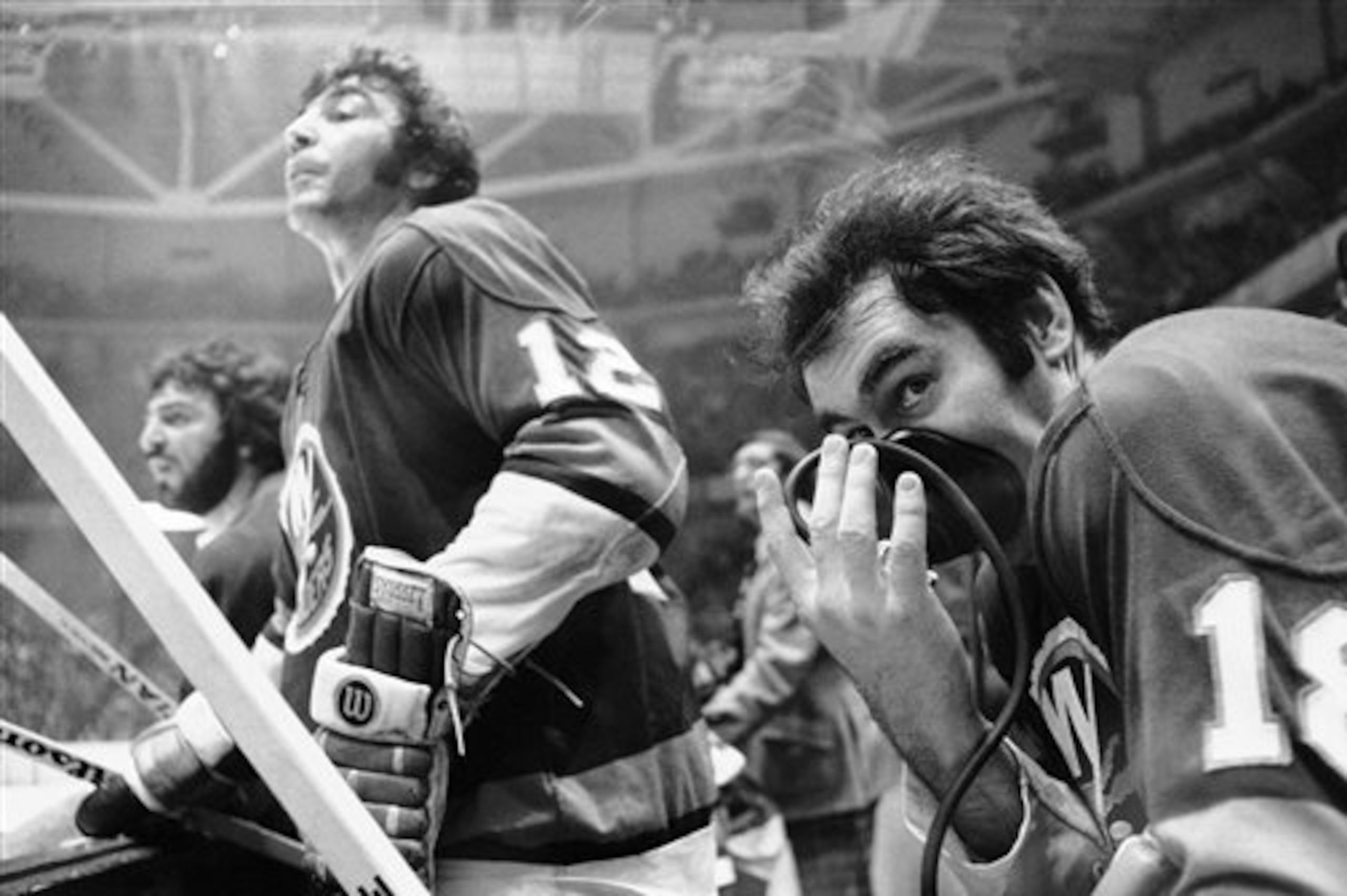
In 41 games with the Islanders in 1974-75, Parise scored 14 goals and 30 points. He helped the team qualify for the playoffs for the first time in franchise history. Their opponent, of course, was the New York Rangers. Back then, the opening round of the NHL playoffs was a best-of-three series. The experienced Rangers were heavily favored against an Isles franchise that was just in its third year of existence.
Parise recalled the attitude he helped bring to the young Isles before the start of the playoff series.
“Guys, we have a good team here. We’re tougher, more resilient. We have all the things we need to make us win,” Parise said. “They had no NHL playoff experience and they had to be told that. [Head coach] Al Arbour said it well. We took charge on the ice and showed them.”
It worked. The Islanders came back from a 2-0 deficit in Game 1 at Madison Square Garden to win 3-2. Rookie Clark Gillies scored the game-winner in the third period.
The Rangers came back to win Game 2 8-3 at the Nassau Coliseum. It was a fight-filled and one-sided contest. Again, having experience, Parise was able to help steady his young teammates.
He told his teammates, “Let’s not get excited; let’s play for tomorrow. Our guys said if you’re going to beat us, it isn’t going to be pleasant.”
In Game 3, the Islanders took a 3-0 lead, but the Rangers scored three goals in the third period and managed to tie things up. Billy Smith made some big saves late in the third period to keep the game tied and force overtime.
“Maybe we were tentative and thought we had it won,” Parise admitted.
The game went to overtime, but that didn’t last long. Parise came through with a goal just 11 seconds into the extra session.
“We had a set play,” Parise recalled. “If Jude went to the corner, I’d go to the other corner. For some reason, this time, I never went to the corner; I went to the net. Jude found me and I tipped it in. It was a tremendous pass right on my stick. Brad Park was on the ice and I just beat him there. I got hit so hard after I scored, I hit the back of my head on the ice and then the guys all piled on me.”
The Islanders had pulled off a tremendous upset. In the next round, they fell behind the Pittsburgh Penguins 3-0 before reeling off four straight wins to oust the Penguins. That made the Islanders only the second team in NHL history to overcome a 3-0 deficit to win a playoff series.
In the semifinals, the Islanders again dropped the first three games of the series to the defending Stanley Cup champion Philadelphia Flyers before winning three straight and forcing a seventh and deciding game. However, the Isles would see their season come to an end following a 4-1 loss in Game 7.
Parise was an important part of that run that propelled the Islanders from an expansion team to a true Stanley Cup contender. He scored 47 goals for the Islanders over the next two seasons and continued to guide the young team toward maturity.
The Islanders traded Parise to the Cleveland Barons midway through the 1977-78 season, and he would finish his career with one final year with the North Stars in 1978-79.
While J.P. Parise may have spent most of his career in Minnesota and may be best remembered for being a part of Team Canada during the 1972 Summit Series, his place in New York Islanders history is secure. His leadership and experience helped speed up the maturation process of a young and improving team. He also scored the most important goal in franchise history—at least the most important goal before May 24, 1980.
Parise is gone now, and he will be missed by everyone in the Islanders organization.
All quotes obtained personally by the author during interviews conducted between 2009-2011.


.jpg?w=2560 "Chiefs, Steelers Eye WR Trades")
.jpg?w=2560 "WWE Raw Live Grades 🔠")


.jpg?w=2560 "Cowboys Handle Eagles on MNF 🤠")
.jpg?w=2560 "🚨Jay-Z Headlining Super Bowl")