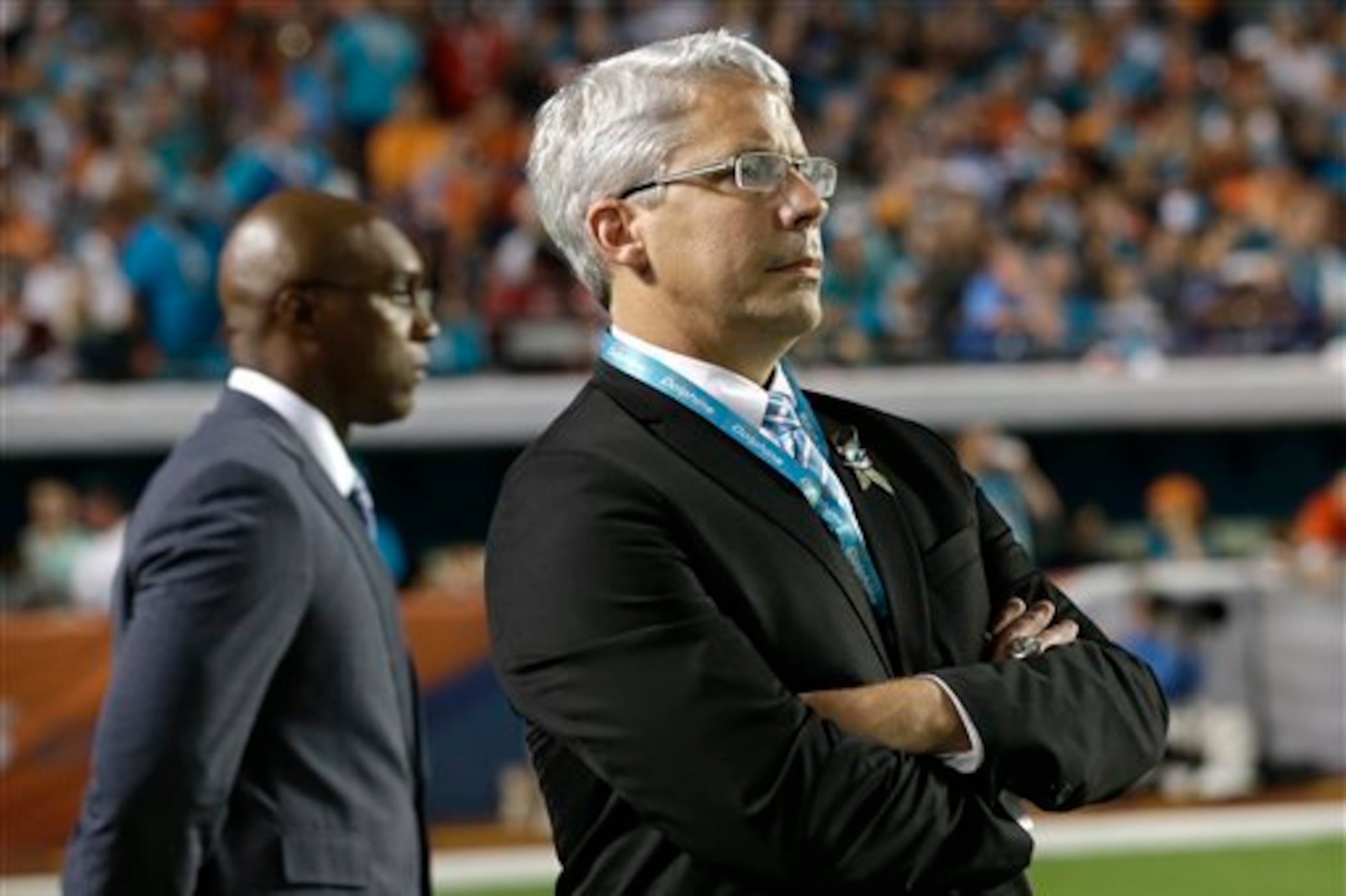

Grading Dennis Hickey's First Season as GM
Although the Miami Dolphins were unable to break their consecutive streak of seasons without making the playoffs, owner Stephen Ross saw enough progress on the field to bring the coaching staff and general manager back from 2014. That means the Dennis Hickey-era will continue, which isn’t necessarily a bad thing when looking back at his first offseason.
After years of big free-agent bust signings and average-at-best draft classes from Jeff Ireland, Hickey was a breath of fresh air for the Dolphins’ franchise. Having a general manager and coaching staff that work well together is paramount for successful player acquisition. When players are drafted that don’t fit with the coaching staff’s ideals, then those players become wasted talent and resources.
Miami’s on-field play has given Hickey some difficult choices to make this offseason. Armed with the 14th pick in the draft and little cap room, some veterans may need to be released so this team can improve upon its 8-8 record next season.
Should Dolphins fans have faith in Hickey? We’re going to look back at Hickey’s 2014 offseason and see how well his moves paid off in the short term and how they could pay off in the future as well.
What are your thoughts on Dennis Hickey? Leave your opinion in the comments section below.
Early-Round Drafting
1 of 6
Delivering on early-round draft picks is absolutely crucial for a franchise to become a sustainable winner. Finding impact players who can be around for a decade is difficult, but it's something that must occur. This is where former general manager Jeff Ireland failed.
With the 19th pick in each round of the 2014 NFL draft, Dennis Hickey wasn’t able to get his hands on a bona fide, premier athlete to add to the roster, but he was able to get instant contributors in the first two rounds. After nabbing two guys they felt could impact the 2014 team, Hickey looked for high-upside picks that needed some development.
The first round brought Miami its right tackle of the future, Ja’Wuan James. James had a great first half of the season for the Dolphins, allowing just two sacks in nine games, according to Pro Football Focus (subscription required). After Branden Albert was lost for the season, though, James struggled dearly at left tackle in the last month of the campaign. He was responsible for giving up four sacks and 20 quarterback hurries in the final four games.
If James can move back to the right side in 2015, he likely returns to a high level of play. James was exactly what Miami needed in the first round to rebuild its offensive line, and he was likely the best rookie tackle in the league for most of the season.
Hickey grabbed wide receiver Jarvis Landry with the 63rd pick after a trade down. Landry had a very productive rookie season from the slot, catching 84 passes for 758 yards and five touchdowns. He’s a nice piece that the Dolphins offense eventually needed, but it is also fair to question whether Miami got great value with this selection.
Landry is a limited athlete that likely is going to be a career slot receiver. Yes, he did contribute on returns, but he also made several bad plays on special teams as well. He had seven fumbles on the season and chose to return several punts within the 10-yard line. Those are critical mistakes.
Instead of taking Landry, Hickey could have chosen a receiver with potential to become a more dominant outside playmaker like Davante Adams, Martavis Bryant or Donte Moncrief. Traditionally it is much easier to find a slot receiver with limited physical upside than it is a big, fast, outside red-zone playmaker. Miami simply paid a premium for Landry.
That’s not meant to disparage Landry. He’s a spark plug for the Dolphins offense and should be a nice piece for the next decade. But finding great value in the draft is also a necessity.
In the third round, Hickey opted to select a raw offensive lineman from North Dakota State, Billy Turner. It’s clear now that Turner was never going to play this season if he didn’t have to, as he only logged 17 snaps. Turner’s long-term position is likely at guard, and he should be expected to start in 2015 with his tremendous athleticism and strength. This grade is an incomplete right now.
Overall grade: B
Finding Late-Round Values
2 of 6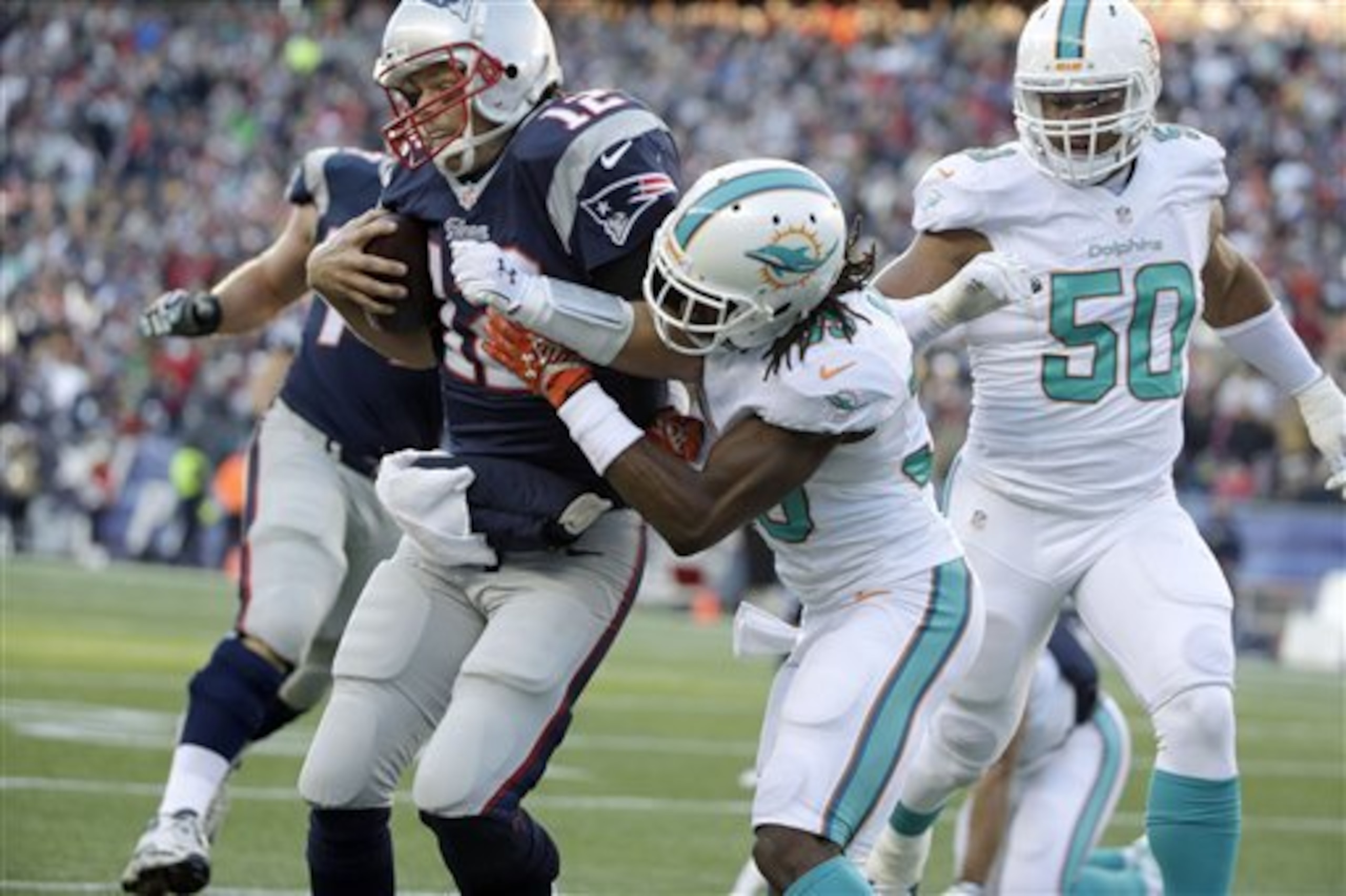
Building a deep roster takes years to accomplish because of the unlikeliness of hitting on Day 3 picks in the draft. These are long shots for the most part. So, when a playmaker like Reshad Jones comes from Day 3, it’s important to remember that these picks still matter a great deal.
Miami had an interesting Day 3 strategy, as they picked up two very raw, physical projects in Walt Aikens and Terrence Fede. Each played some in 2014 and figure to see their role expand next year. The rest of their picks did not play much in 2014.
Linebacker Jordan Tripp and tight end Arthur Lynch dealt with injuries all year, and Tripp only played 12 snaps. Tripp does have upside and needed a year to bulk up, but Lynch was a low-upside pick because he doesn’t do any one thing very well or have great athleticism.
Receiver Matt Hazel was inactive for most of the year as he was on the practice squad to add weight. He figures to be on the active roster in 2015, possibly as a No. 4 or No. 5 receiver on the depth chart.
Overall Grade: C-
Best Free-Agency Additions
3 of 6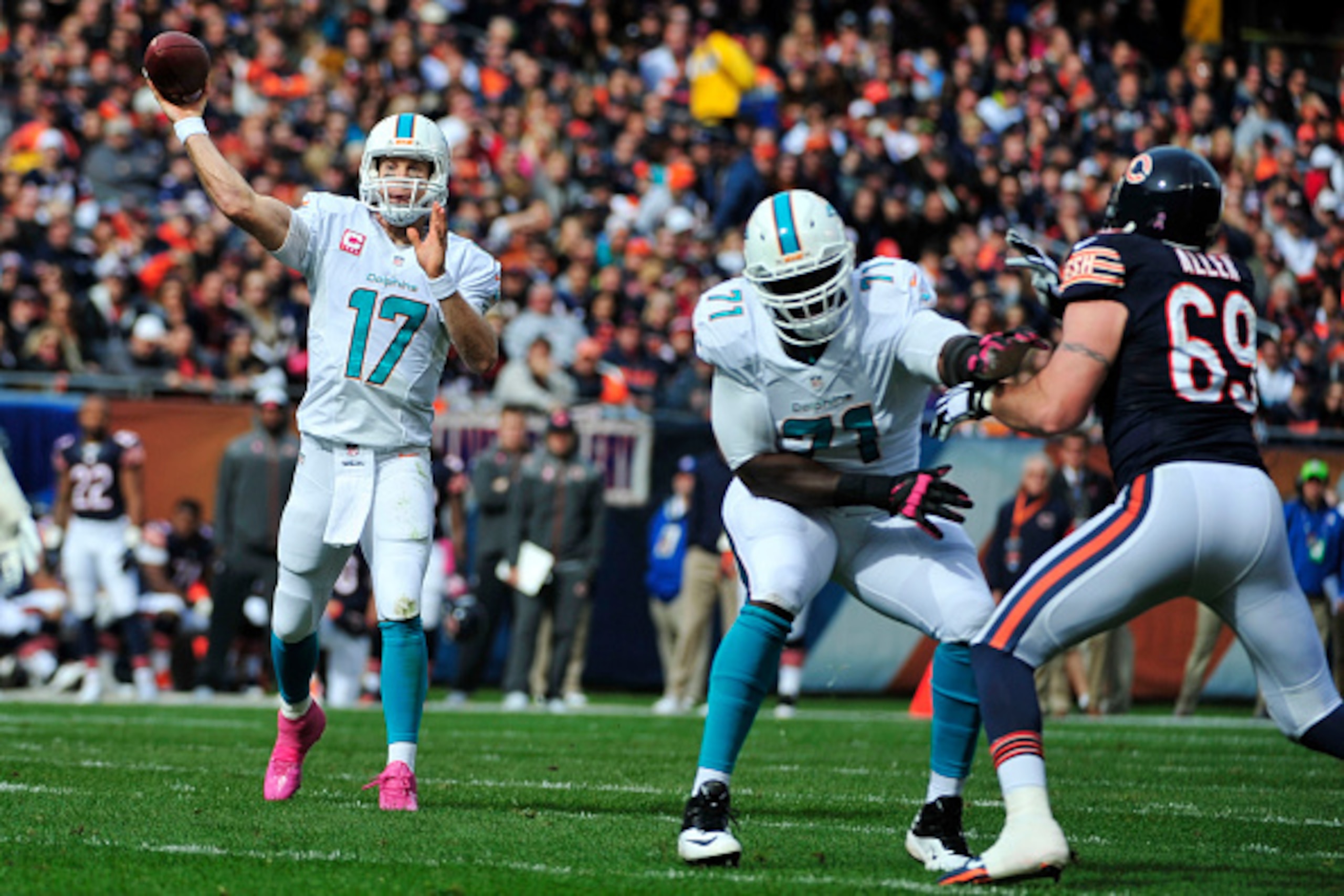
Armed with superfluous cap space to fill various holes throughout the roster, the Dolphins came away with a number of fairly big-named free agents. Some of those free agents worked out wonderfully, and we’re going to give Hickey some props for signing the four guys below.
The biggest and best free-agent signing was easily left tackle Branden Albert. Albert was excellent at left tackle for the Dolphins, grading as PFF’s eighth best in the NFL before getting hurt. His leadership and ability to protect the pocket was sorely needed. Unfortunately, Albert has a long injury history and that trend continued when he tore his ACL. Miami needs him to get back on the field by the start of 2015 if possible.
Earl Mitchell was the second-best acquisition for Hickey in free agency. In his first season in a 4-3 defense, Mitchell made 24 run stops and accounted for many double-teams, which was a key catalyst for the defense in the first half of the season. Mitchell did wear down as the season went on, but the rest of the front four did as well.
An undrafted free agent, running back Damien Williams was a nice surprise as he became the backup to Lamar Miller. Williams contributed more in the pass game than as a runner, but he has value to the Dolphins as a short-yardage back and special teamer.
Swing tackle Jason Fox finally got a chance to play in the final two weeks, and it turned out that he should’ve been at right tackle ever since James moved to left tackle. On a one-year deal, Fox is headed to free agency again. Miami should bring him back as a top backup.
.jpg?w=2560 "Seahawks Chiefs Football")


Worst Free-Agency Additions
4 of 6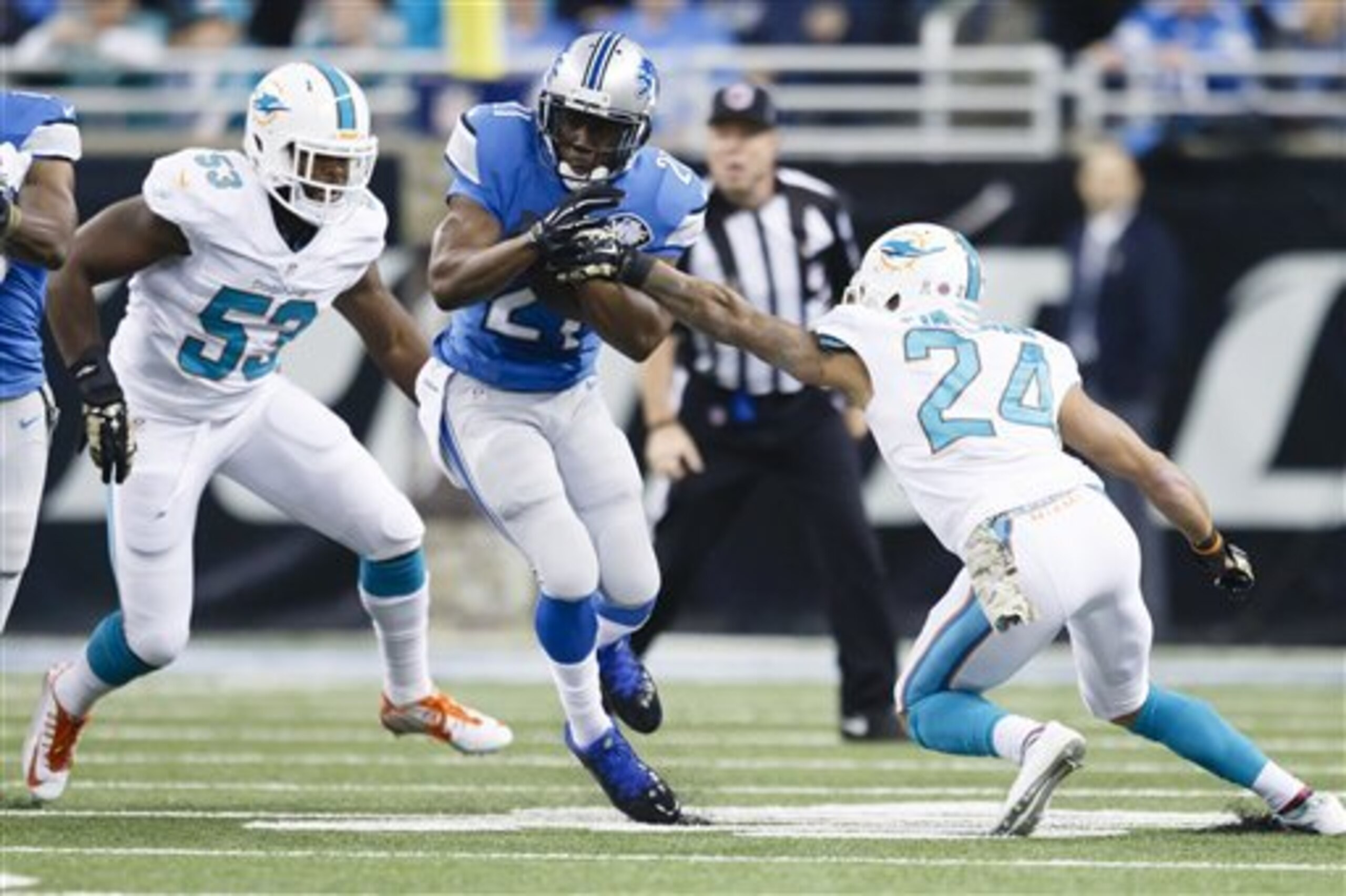
Miami’s free-agent approach was interesting, and it really backfired on several key positions. Instead of investing in younger players who can develop, Hickey chose to sign older veterans with injury histories. This risk didn’t pay off well enough, and each of the four players below were unable to stay healthy or good.
Cornerback Cortland Finnegan began the season playing decently, but he missed four key games down the stretch and never provided the playmaking ability Miami needed. Finnegan was paid handsomely when Hickey didn’t need to pay him well either. His $5.5 million average salary took a major chunk of the Dolphins’ available space, and Miami could’ve signed a much better player in Alterraun Verner for less than $1 million more.
Louis Delmas was a similar risk to Finnegan. Delmas eventually got hurt, but even when he was healthy, he was virtually invisible on the field. His presence in the secondary was nice because he didn’t make glaring mistakes, but ultimately, he played no better than his predecessor, Chris Clemons.
Running back Knowshon Moreno endeared fans by racking up 134 yards in the season opener, but he carried the ball only seven more times in two games. Like the others, Moreno had a major knee injury that will add to what was already an extensive injury history. Moreno’s loss led to Miami abandoning the run way too early every week in fear of Lamar Miller getting hurt. This was a major bust.
Left guard Daryn Colledge was brought in as a Band-Aid to the line, and he was predictably bad. Colledge was never particularly good with Green Bay or Arizona, but Miami was familiar with him, so it overlooked better options to sign Colledge. He allowed a whopping seven sacks and nine additional pressures as a platoon player at guard.
Free-Agent Losses
5 of 6
Every year, talent will leave. It’s how the NFL works. Sometimes this is a good thing, but other times, it is not. Did Miami make the right move to let these three players become former Dolphins?
The big-fish free agent that Hickey allowed to walk away was defensive tackle Paul Soliai. Hickey re-signed Randy Starks instead of Soliai, for about a $1 million difference. Think that Hickey regrets that decision after seeing Starks get shoved around in the run game the last two months? He should, as Soliai is the nose tackle that Miami now desperately needs.
Free safety Chris Clemons bounced around from Houston to Arizona this season, unable to make any type of impact. This is pretty surprising, as Clemons was the 19th-best safety in the league, according to PFF. His replacement was Delmas, who graded as the 51st best. It's safe to say Miami downgraded again here.
Former starting cornerback Nolan Carroll was stuck on the bench most of the season for the Philadelphia Eagles, which is strange because he is better than their two starters. Nonetheless, Miami’s move from Carroll to Finnegan also needs to be criticized.
Overall
6 of 6
Dennis Hickey’s first season as the Dolphins general manager was a bumpy ride as we look with hindsight. He hit on his three biggest acquisitions in Branden Albert, Ja’Wuan James and Jarvis Landry, but he also failed to upgrade players who walked away in free agency.
One year ago, the Dolphins had three major needs that had to be addressed. Those were the offensive line, middle linebacker and overall depth throughout the roster. Now, Miami still needs offensive line help, an impact middle linebacker and still has depth concerns.
The Dolphins and Hickey have a chance to overhaul their roster and trim the fat, per se. Get cheaper and more explosive at the playmaker positions, and this team will be in a better position to make the playoffs in 2015. But Hickey will need to invest in better, younger players this year and not try to put stopgaps throughout the roster.
2014 grade: C+
All stats used are from sports-reference.com.
Ian Wharton is a Miami Dolphins Featured Columnist for Bleacher Report, contributor for Optimum Scouting and analyst for eDraft.