
Jets Free Agency: Exploring Impact of New York's Salary Cap
Former general manager John Idzik left behind a lousy football team, but he also left behind a ton of cap room for the New York Jets to work with as they restart their rebuilding process with a new regime.
There are not many members of this 4-12 roster who deserve to be kept around, but the Jets do have some young defensive stars to pay along the defensive line. They will also have a difficult decision to make on receiver Percy Harvin, oft-injured and overpaid, yet supremely talented wide receiver who finally seems content playing in New York.
All of these decisions will be impacted by who the Jets hire as their new general manager/head coach combination. Their on-field team-building philosophies and scheme will dictate how they do business with players off the field.
Here is a breakdown of some of the biggest issues that will impact the Jets' salary cap in 2015.
The Current Situation
1 of 6
Current Cap Number (via OverTheCap.com): $99,454,320
Estimated 2015 salary cap (via ProFootball Talk): $145,000,000
The official salary cap for 2015 has yet to be announced, but if Pro Football Talk's report is anywhere close to accurate, the Jets are going to have enough cap space to buy an iPhone 6 without a contract.
The Jets find themselves looking for new management in large part because of the previous regime's unwillingness to spend, but that does not mean the new general manager will be able to throw money around like a bachelor in Las Vegas.
The Jets have several young players who will demand top-of-the-line deals in the coming years—it would be a shame if a player such as Sheldon Richardson hit the open market because the Jets had too much money invested in an overpaid free agent.
Percy Harvin Conundrum
2 of 6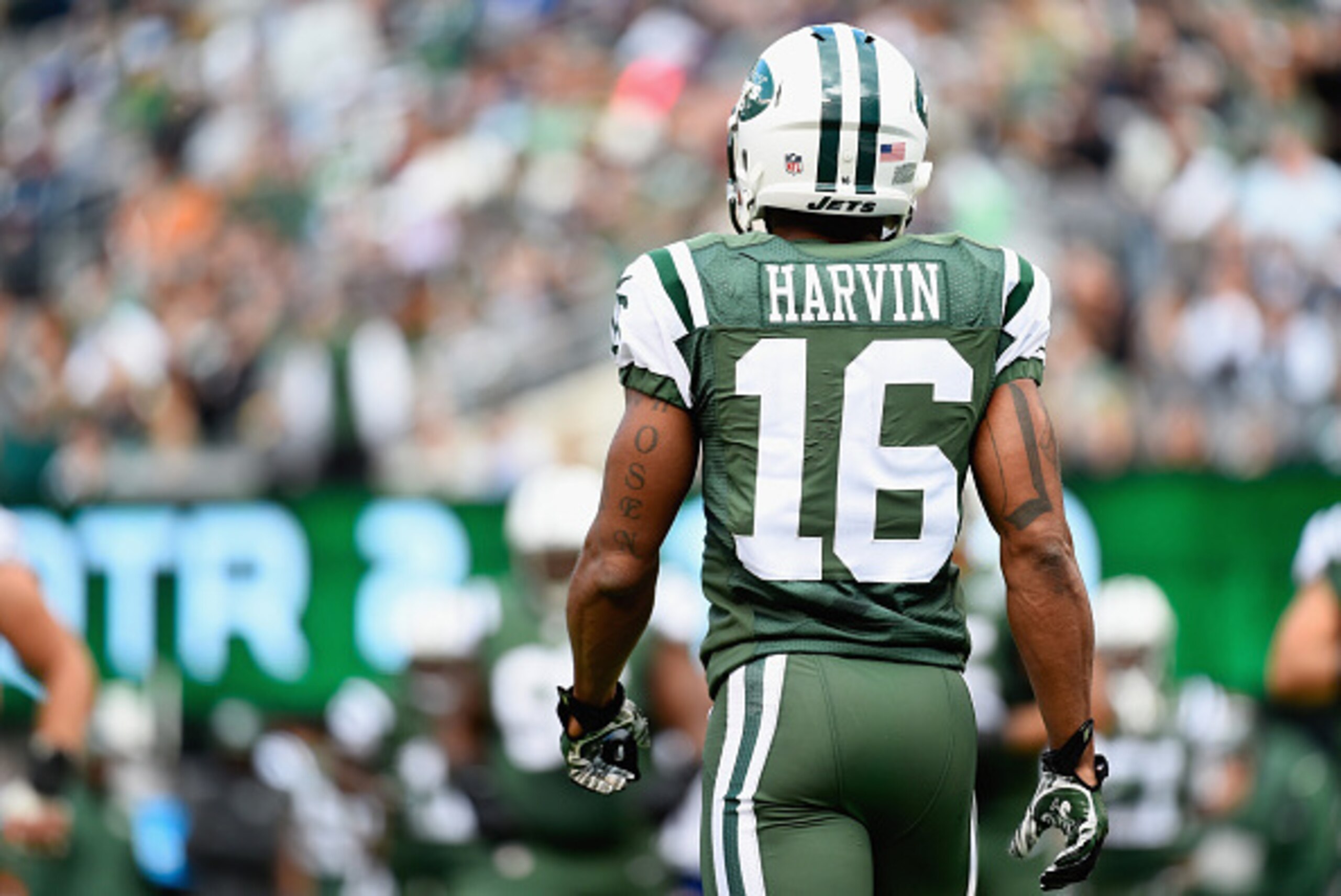
Percy Harvin was able to give the Jets an offensive boost in the second half of last season, but he now presents the new administration with a unique contract situation.
Set to make $10.5 million next season, the odds of the oft-injured receiver playing another down on his current contract is bleak. The fact that the Jets will be able to release Harvin without cap penalties of any sort only makes it easier for the Jets to cut ties.
Not only is Harvin an injury hazard (just one 16-game season in his career): He is a uniquely-sized receiver who requires some manipulating to fit into an offense. His misfit as a conventional receiver was one of the reasons he was traded from Seattle. A new coaching staff may not be interested in doing extra work to get Harvin into the game plan every single week.
However, the possibility of Harvin returning on a more manageable contract is certainly in play. After all, he had some of his most productive games as a professional with the Jets and appears to be content with his new team, even if they did finish 4-12.
Ultimately, whether or not he is a Jet in 2015 will depend on how valuable the new regime views him from an injury-risk and on-field standpoint.
Muhammad Wilkerson's Option
3 of 6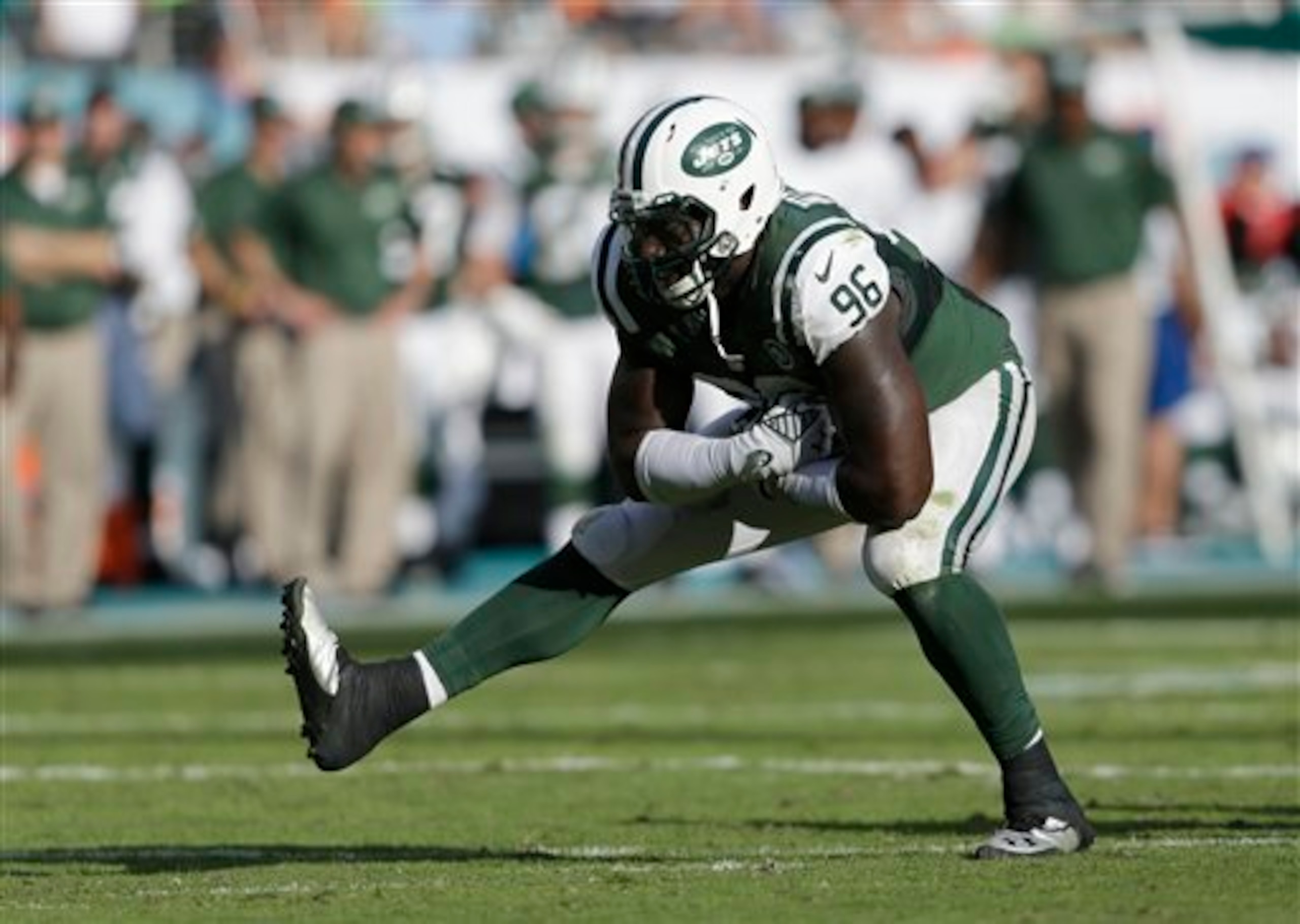
The Jets have enjoyed some excellent defensive line play for a relatively bargain price over the past few seasons, but the bills are starting to pile up, starting with Muhammad Wilkerson.
Wilkerson's rookie contract was scheduled to expire after this season, but the Jets' (easy) decision to extend him to a one-year, $6.96 million option will keep him in New York for at least one more season.
Beyond 2015, the Jets will have the option of using the franchise tag. In this case, based on last year's numbers, Wilkerson's cap hit would be somewhere north of $13 million—quite a burdensome number.
Keeping Wilkerson on the team through the use of tags and options protects the Jets from making a long-term investment, but if the Jets choose to make last year's team MVP a part of their long-term plan, they will need to sign him to an extension before having to use the franchise tag in 2016.
Wilkerson is not worthy of the $100 million deal All-Pro J.J. Watt, a fellow draftee from the 2011 first round, received from the Houston Texans—but he deserves a top-of-the-market deal that should edge close to the $13 million-per-season mark.
.jpg?w=2560 "Seahawks Chiefs Football")


The End for David Harris?
4 of 6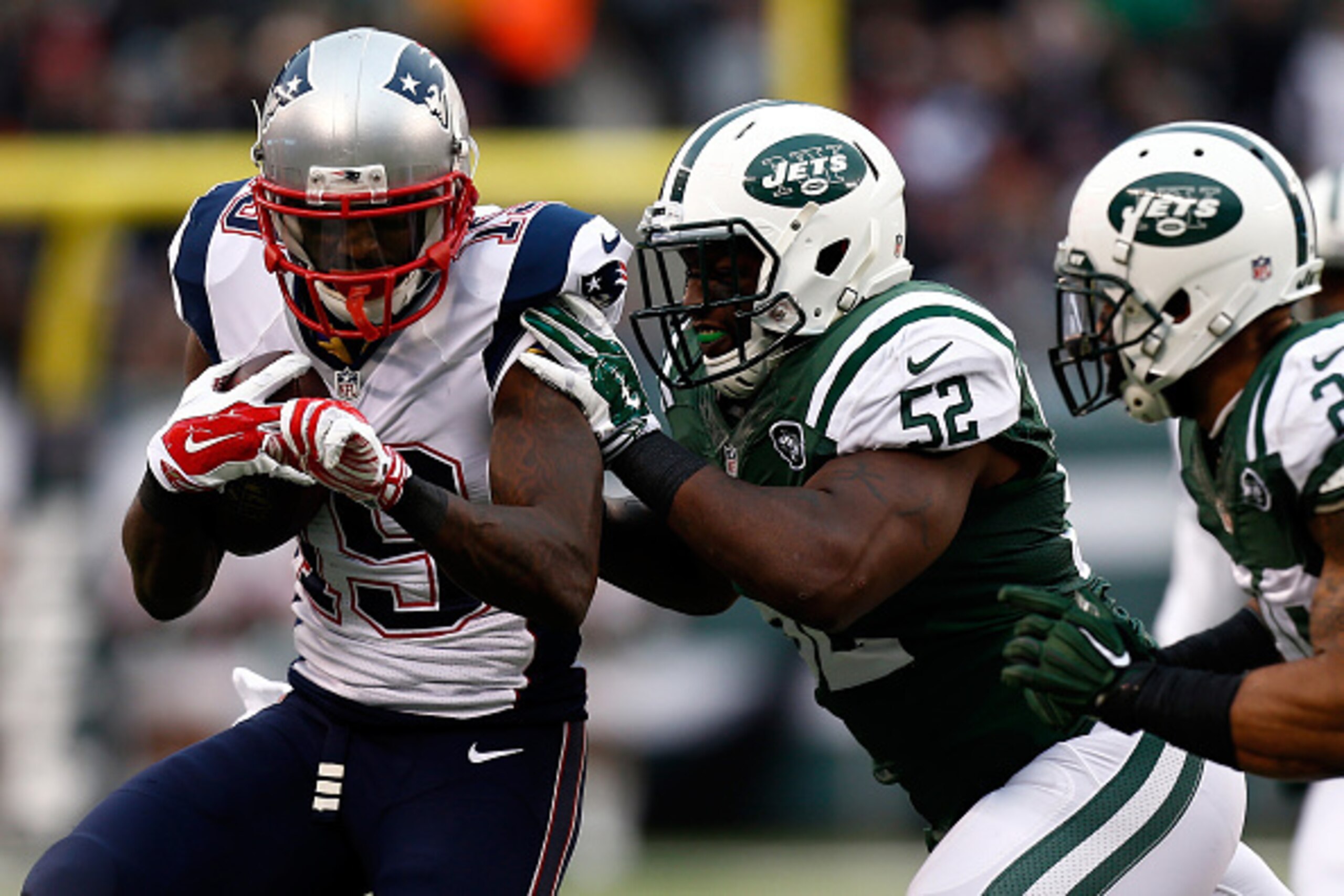
There are not many pieces of this 4-12 roster that the Jets will want to keep around much longer, but they could find themselves in a bind if inside linebacker David Harris walks in free agency.
If the Jets allow Harris to walk, they will free up $4.5 million—but will be left with a gaping hole in their linebacking corps that the 30-year-old Harris has filled for the better part of seven seasons.
The Jets could use this money on a younger free agent, but doing so would be playing a dangerous game given their lack of depth behind Harris. Last year's fifth-round selection, linebacker Jeremiah George, was claimed by the Jacksonville Jaguars, while veteran back Nick Bellore is set to hit the open market as well.
Again, whether or not Harris remains with the team in 2015 and beyond will depend heavily upon the scheme brought in by a new coaching staff. Having played in a 3-4 alignment throughout his career, a defensive coach who utilizes a 4-3 scheme would have little use for Harris.
A Tender Coming for Snacks?
5 of 6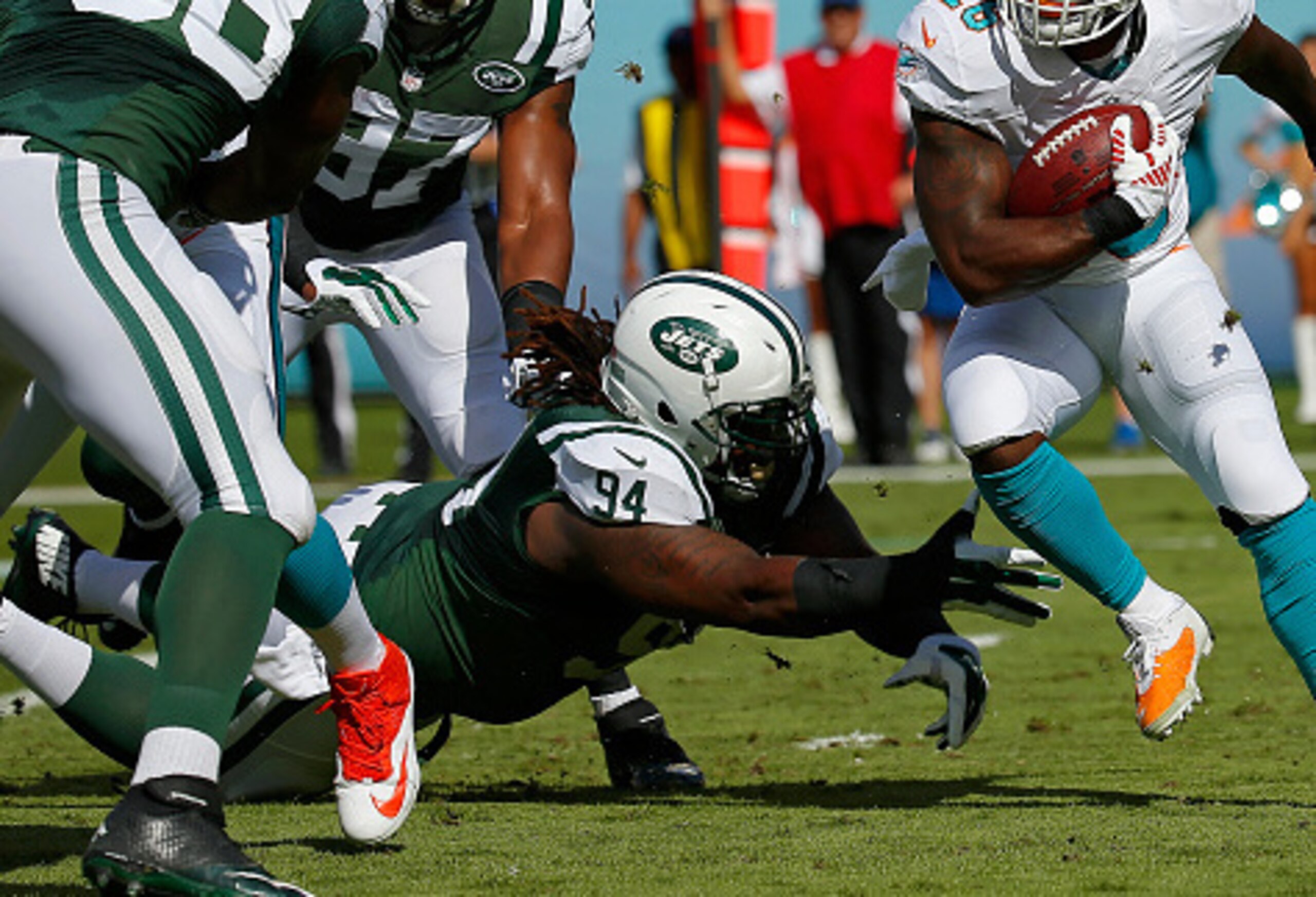
While not quite the same priority as a player of Wilkerson's caliber, Damon Harrison is another rare member of this futile team the Jets would love to keep around for a long time. According to Pro Football Focus, "Snacks" was the third-best run defender at his position in 2014. He was No. 1 in 2013.
The former undrafted free agent's contract expires after this season, but luckily for the Jets, they do not have to pay him top-of-the-market money (yet). His undrafted status makes him a restricted free agent, giving the Jets the ability to give him a one-year tender—a contract that only allows Harrison to sign with a team willing to give draft-pick compensation in return.
As one of the top players at his position, the Jets would be foolish to give him anything less than a maximum first-round tender, which, based on last year's number, would be somewhere north of $3.1 million—robbery for a player of Harrison's caliber.
The Jets won't have to worry about Harrison's cap number blowing up in the short term, but if Harrison continues to play this well (and stay healthy), he will eventually warrant a long-term extension. Based on some of the salaries of other top defensive tackles, as outlined by Spotrac, Harrison's per-year average will more than double once he is free of his tender.
End of the Line for Calvin Pace?
6 of 6
Aging linebackers who cannot rush the passer have a hard enough time getting jobs in the NFL, nevermind when a new regime comes in to clean the place out.
Calvin Pace had a workmanlike, five-sack season in 2014 and can still play a role for an NFL team as a run-stopping 3-4 outside linebacker, but a rebuilding Jets team may be more interested in getting younger and more dynamic at this position—especially if they can save a few bucks in the process.
According to OverTheCap.com, cutting the 34-year-old Pace would save $2.125 million against the salary cap (his $2.25 million salary minus a $12,500 penalty).
The Jets are not exactly desperate for cap space, but re-investing money from old players into younger players with more upside would pay off in the long term.
Working in Pace's favor is the uncertainty of this position behind him on the depth chart. Ik Enemkpali flashed some promise as a situational rusher as a rookie, but giving him a full-time job at linebacker would be quite the leap of faith. If the Jets do cut ties with Pace, they had better have a plan in place to replace him with a younger player.
Advanced statistics provided by ProFootballFocus.com (subscription required).
.jpg?w=2560 "Raiders Saints Football")