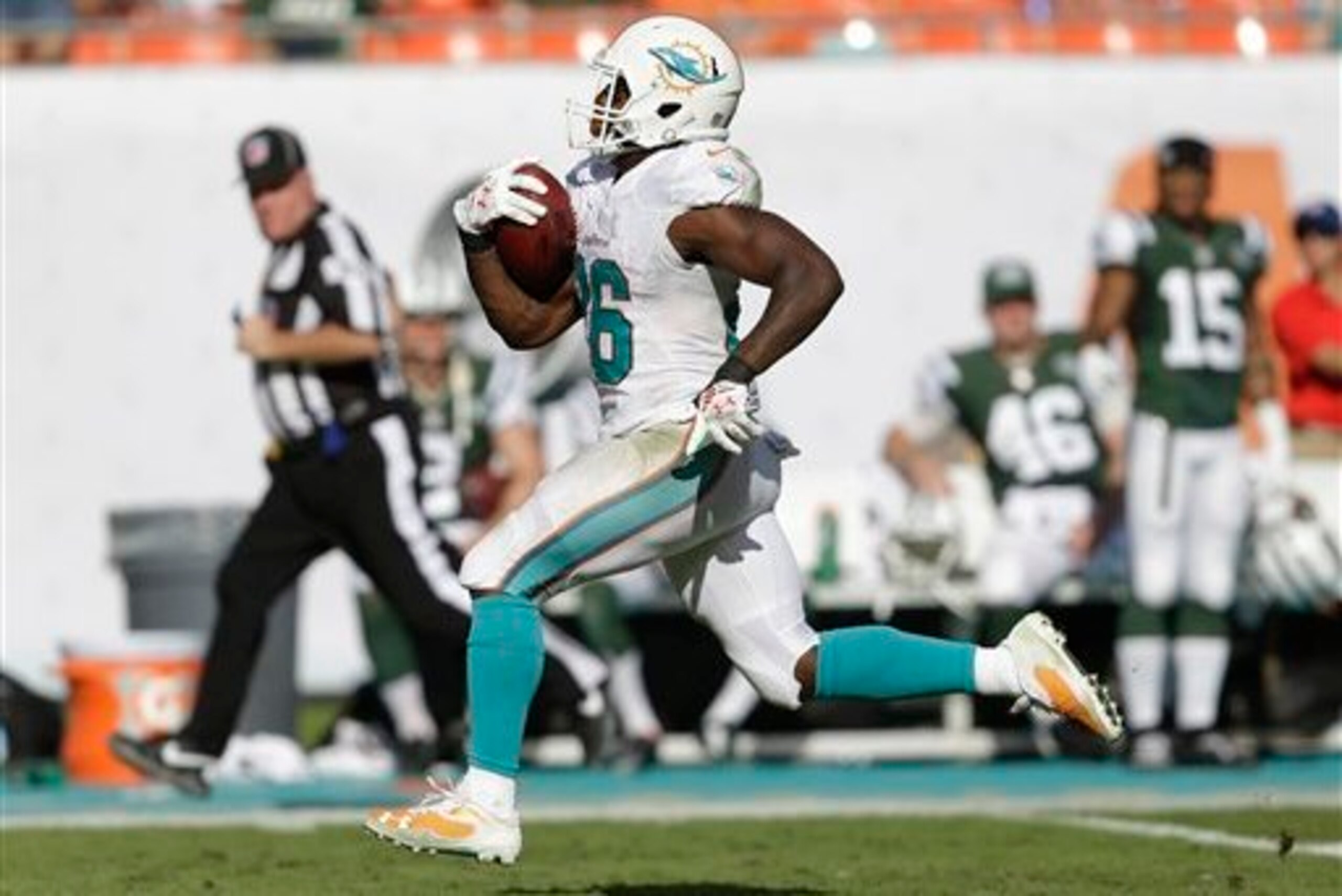

Biggest Takeaways from Miami Dolphins 2014 Season
The Miami Dolphins have completed their 2014 season with a final record of 8-8. Unfortunately, it is another season where the franchise is stuck in mediocrity, and any sign of progress seems to be attached with two negatives that outweigh the positive. That’s what will happen when it’s been years since the organization has produced a winning product.
Some positives were established in 2014, and we learned about several key pieces on the Dolphins’ roster moving forward. Those who had a good season should figure to be featured even more in 2015.
Naturally, some players regressed or struggled during the season. We’ll address the negatives that popped up throughout the campaign and figure out how Miami can avoid the same mistakes with personnel next season.
Let’s jump into the biggest takeaways from the Miami Dolphins’ 2014 season, starting with a major positive.
Miami Has Its Franchise Quarterback
1 of 10
There are times when raw statistics lie, and then there are instances when the numbers fairly indicate how well a player is performing. For Ryan Tannehill, his third season in the NFL was a great indicator of how good he is and what he can become.
With Tannehill’s strong finish to the regular season, he was able to achieve what only Dan Marino has done before with the Dolphins’ franchise, and that’s surpass the 4,000 yards mark in one season. Tannehill also broke Marino’s single-season franchise completion record, finishing with 392.
His 27 touchdowns and 12 interceptions only give a snapshot of how efficient Tannehill was, as his receivers dropped at least five more sure-touchdowns throughout the season. Tannehill’s progression from an inconsistent, struggling quarterback into a confident playmaker came quickly as he adjusted to Bill Lazor’s new offense.
Once Week 4 came, the light turned on for Tannehill, and the production flowed. He’s played with more natural feel for the game. In turn, his pocket presence and ability to go through progressions have massively improved.
It all adds up to one conclusion: the Dolphins have their franchise quarterback. Tannehill may not be the next Aaron Rodgers, but we also don’t know that for sure. Rodgers hadn’t played in game until his fourth season in the NFL.
With so many other issues on the roster, the quarterback position is in good hands as long as Tannehill is the man under center. He’s continued to grow despite very little help around him throughout his first three seasons. It’s time to invest around Tannehill.
Coaching Is a Major Issue
2 of 10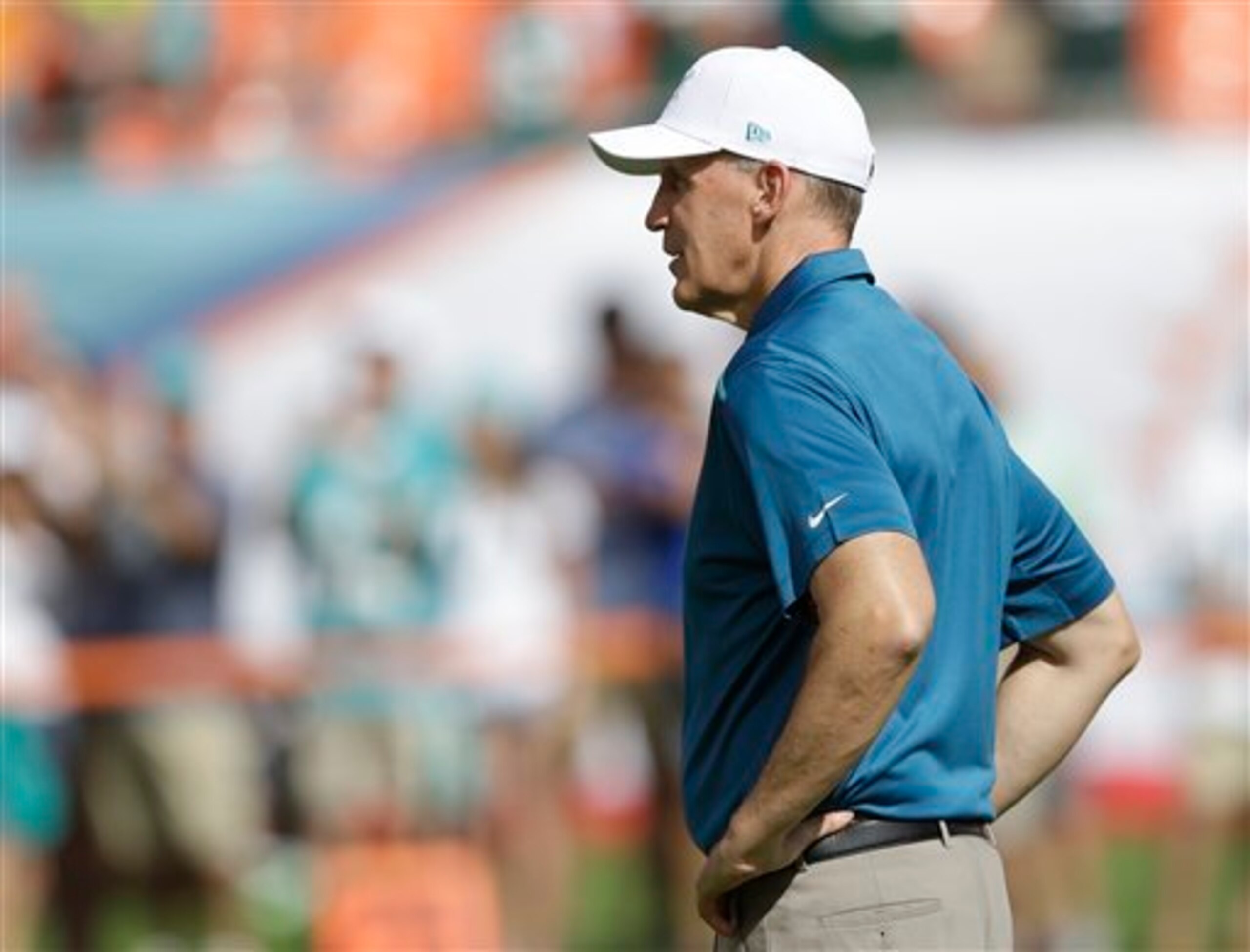
From weekly personnel decisions to game-planning and even to handling NFL personalities, the Dolphins’ coaching staff just isn’t up to the level needed to guide a franchise to the playoffs. It all starts with head coach Joe Philbin and trickles down to defensive coordinator Kevin Coyle.
Philbin has repeatedly jettisoned elite playmakers and locker room leaders because of his inability to make it work with guys who need to be treated differently. Great leaders can mold to individuals and rein in personalities, but Philbin lacks that talent. This is likely a major reason why the Dolphins so often seem to be unmotivated and lack fire every week.
The Dolphins’ defense has utterly collapsed under Coyle’s watch the last two months, and he’s stood idly without changing the identity of his unit. Philbin’s stubbornness has been matched only by Coyle’s inability to adjust to the strengths of the available talent. The results have been a major factor for Miami’s 3-5 finish to the season.
Luckily the Dolphins upgraded the offensive coordinator spot when Philbin was forced to fire Mike Sherman and hire Bill Lazor last offseason. Lazor has been good, helping Tannehill use his talents more effectively. But he also must become more consistent with his play designs and situational play-calling, which have each been troublesome on a weekly basis.
Effort and routine mistakes have plagued Miami under Philbin, and 2014 was composed of bad penalties and execution. Those are issues a stronger coaching staff can iron out and overcome, but not this cast.
The Offensive Line Is Far from Complete
3 of 10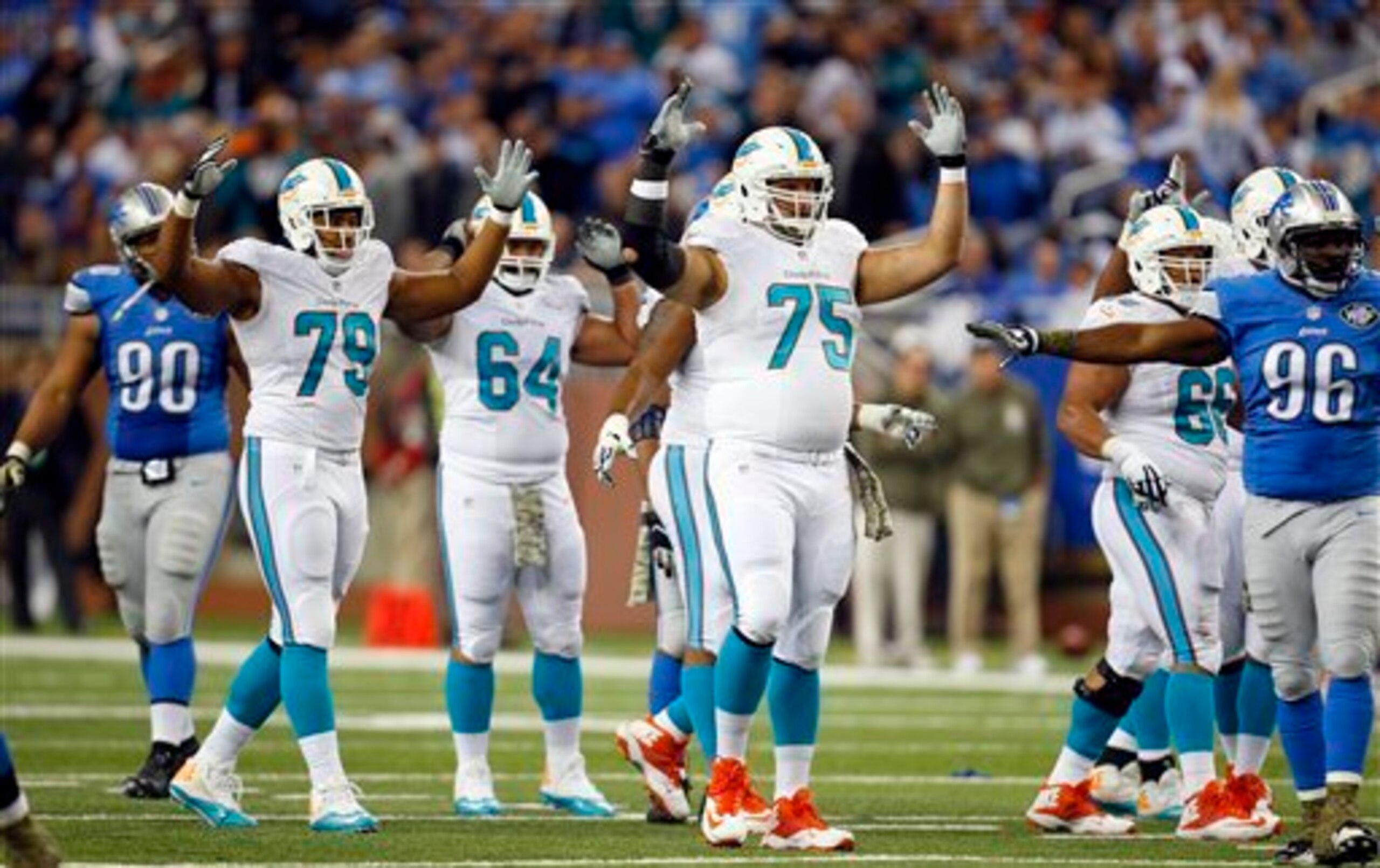
General manager Dennis Hickey will get a second season to control the roster, and the offensive line is still a glaring issue. Miami allowed the ninth-most sacks in the league, finishing with 46. That’s an improvement by 12 sacks, but still a formula that will not help Ryan Tannehill and the offense flourish.
Hickey’s approach of plugging over-the-hill veterans into the interior offensive line was a flawed tactic. Daryn Colledge and Samson Satele allowed a combined seven sacks and 21 quarterback hurries, according to Pro Football Focus. They also combined for a grade of -29.5.
Backup guard Shelley Smith was a much more effective run-blocker and a better pass-blocker than Colledge, but Philbin refused to use Smith as the starter. Rookie guard Billy Turner was given a redshirt season, which is astounding considering the lack of talent ahead of him on the depth chart.
Dallas Thomas, who had to play right tackle when Branden Albert was injured, also struggled to show improvement when he was given the starting job. He allowed seven sacks and 26 total pressures in 2014, which should put his roster spot in jeopardy moving forward.
Turner still has a chance of being very good with his physical gifts and shouldn’t be written off yet. It’s too early for that. But Hickey should be criticized for not properly addressing the interior offensive line in free agency. He chose to add a bad stopgap in Colledge over a long-term option like Jon Asamoah or Geoff Schwartz.
With Albert’s return likely pushing the start of the 2015 season, Miami will again need to address the offensive line. Winning in the trenches is something that has been lost since Philbin has been in Miami, but it's a principle the Dolphins must get back to.
.jpg?w=2560 "Colts Football")
.jpg?w=2560 "Commanders 49ers Football")
.jpg?w=2560 "DOLPHINS-AIKMAN")
Where Are the Offensive Playmakers?
4 of 10
The Dolphins spent more money on their receivers in 2014 than any other in the league, and yet the results they gained were absolutely average. Some of this is the byproduct of an offensive line that didn’t allow much time in the pocket, and part of the reason is the offense was built for quick passes.
But ultimately, the Dolphins’ playmakers are vastly overrated when compared to playoff-caliber teams. There is no Rob Gronkowski, A.J. Green, Demaryius Thomas, Reggie Wayne, Jordy Nelson or Julio Jones. And yet Mike Wallace is the highest-paid receiver in the league and Brian Hartline is the 16th-highest, per Spotrac.
Wallace doesn’t fit well with Tannehill, as Wallace is a deep threat who requires a perfect deep ball in order to be effective. Unfortunately, Tannehill isn’t overly great with the deep ball, ranking 15th in the league in deep ball accuracy by Pro Football Focus (subscription required). Mix that in with Wallace’s many instances of dropping the ball or losing his feet, and there is a bad mix present.
Miami’s high-priced group ended with the sixth-most drops on the season, with 26. There was not enough consistency catching the ball or creating with the ball after the catch for a unit that was making over $20 million between four players. The Dolphins ranked 31st in the league in yards per catch, with 10.3.
Quite frankly, it takes unspectacular talent to put up those unimpressive numbers.
It takes impact players to create explosive offensive units, and Miami needs to trim the fat contracts while adding more well-rounded and explosive players to its receiving core.
Reshad Jones Is a Star
5 of 10
Miami’s secondary was routinely burned in the final few weeks as Brent Grimes and Cortland Finnegan showed their age, but safety Reshad Jones continues to be a star. Once he returned from his suspension to start the season, he has reasserted himself as a top-five strong safety in the league.
Jones graded as PFF’s seventh-best safety despite having 100 less snaps than anyone graded above him. His 73 tackles, seven passes defensed and three interceptions all formed to make a Pro Bowl-caliber season (if he were eligible).
The return of Jones’ dominance is a huge boost for the Dolphins, as he struggled in 2013 to repeat his breakout 2012 season. If Miami can land a quality second cornerback or a star free safety in free agency, their secondary will once again become a very good unit.
The Defense Needs to Be Rebuilt
6 of 10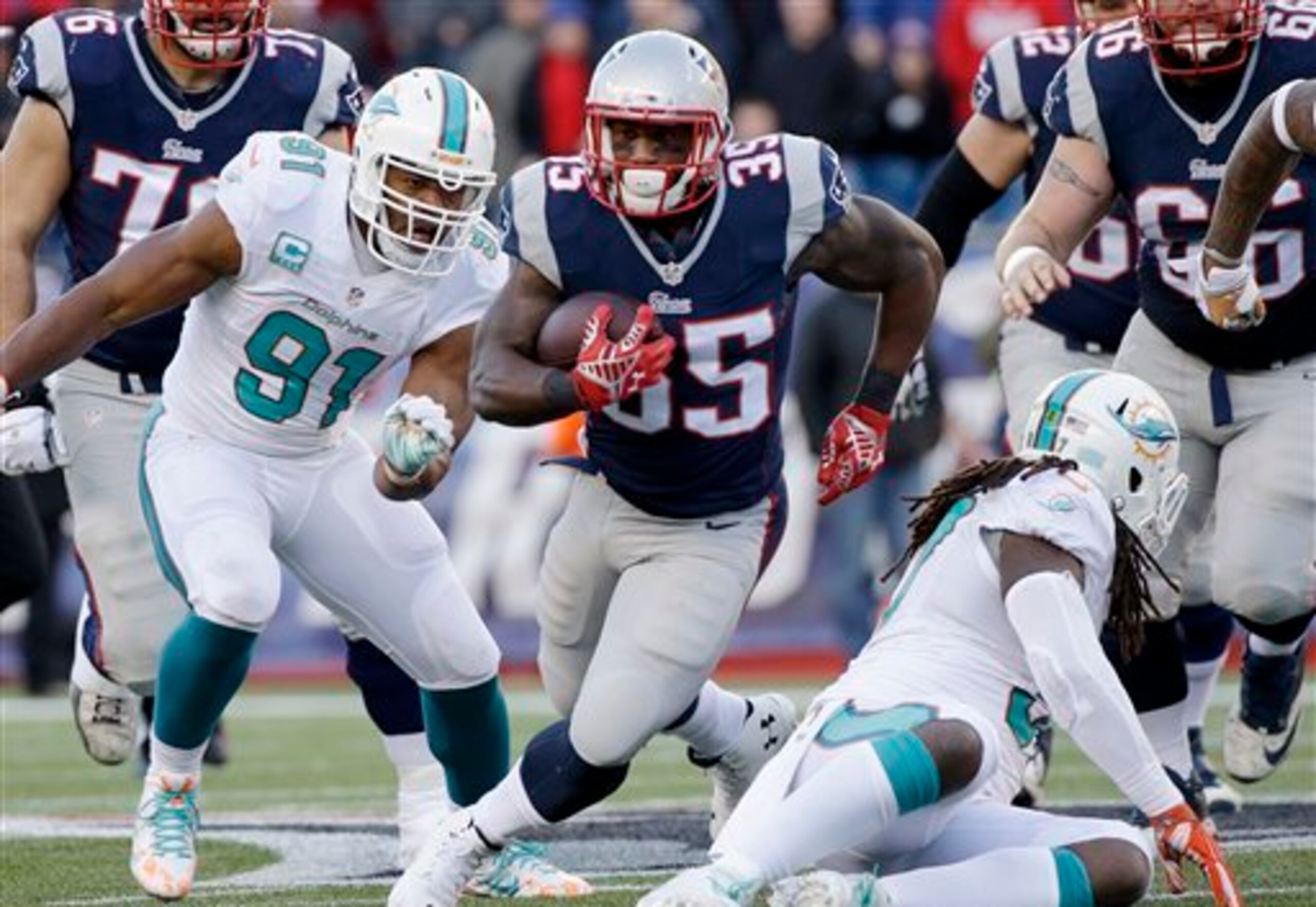
After a pretty good start to the season, the Dolphins’ defense proved to be as soft as warm butter down the stretch. Miami’s allowed nearly 400 yards of offense in the last three games of the year, ranking fifth-worst in the league.
The demise was swift and impossible to blame on one incident. All of a sudden, Cameron Wake and Olivier Vernon no longer created pressure, the defensive tackle rotation looked gassed, and the secondary wilted every week.
In the meantime, Kevin Coyle continued to allow opposing offenses to neutralize the pass rush by giving 10-yard cushions to receivers. The turnovers stopped coming because of the vanilla defensive approach, and the defense often failed to get off the field when the offense needed it most.
The Dolphins’ defense now looks old and needs an injection of young playmakers to augment guys like Jelani Jenkins. Jenkins was a major bright spot this year, and for spurts of the season, so was Earl Mitchell. Now that those two have played in full-time roles for an entire season, hopefully they will grow into bigger roles next season.
The Chemistry Is off
7 of 10
One season after the Richie Incognito and Jon Martin incident, it seemed as though the Dolphins’ locker room would galvanize together. Well, that didn’t happen. Let’s look back at the headlines through the season.
Jared Odrick was caught yelling at Joe Philbin on the sideline in Week 15. That move could lead to his departure from Miami, despite the team needing talent at the position and Odrick being a solid piece.
Bill Lazor apparently has a “rocky” relationship with some of the offensive players. One player even complained because the ball was being spread around too much in the passing game. The me-first attitude was way too prevalent throughout the season.
Head coach Joe Philbin was rumored to be losing the locker room as early as October, with each ensuing loss creating a louder vibe that he would be gone if the team missed the playoffs.
Finally, Mike Wallace continued to put himself above the team in Week 17, when he benched himself after a first half where he wasn’t as involved in the game plan, per Armando Salguero of the Miami Herald. This is yet another sign of Wallace’s childish attitude, which has been present since the first game he played as a Dolphin.
The locker room needs fixing, and the toxicity must be completely wiped from existence. Titles are won when there is a great amount of respect between players and coaches, and right now, the players aren’t holding up their end of the bargain. That must change.
Dennis Hickey’s Hits
8 of 10
There were some real positives in Hickey’s first season with the Dolphins, and there’s hope he will be able to address the major needs of the team in his second try. Let’s look at the best “hits” of his first offseason.
- Branden Albert—When healthy, Albert was fantastic. The left tackle always had injury concerns, but his signing was huge for the franchise because of his on-field leadership and ability to control the blind side for the offense. If he can return healthy, he will continue to rank as one of Miami’s best free-agent signings of all time.
- Ja’Wuan James—Miami’s first-round pick struggled at left tackle, but was very good on his more-natural right side. James wasn’t a home run pick, but he was the best rookie tackle in 2014 and will help provide stability to the unit for the foreseeable future.
- Jarvis Landry—The Dolphins added a reliable slot weapon for the next decade in Landry. He posted 84 receptions for 758 yards and five touchdowns as a rookie, which is solid. Like James, Landry doesn’t have a ton of physical upside, but he’s a great piece to have in place. Miami needs to build using Landry and continue to accentuate his strengths.
- Terrence Fede—If nothing else, Fede will continue to be a great special teams player and rotational defensive end. For a seventh-round pick, that’s a nice impact. Fede is still very raw, but he has potential to be a force as a rusher as soon as next season.
- To be determined are Billy Turner, Walt Aikens, Jordan Tripp, Matt Hazel, Chris McCain and Damien Williams.
And Hickey’s Misses
9 of 10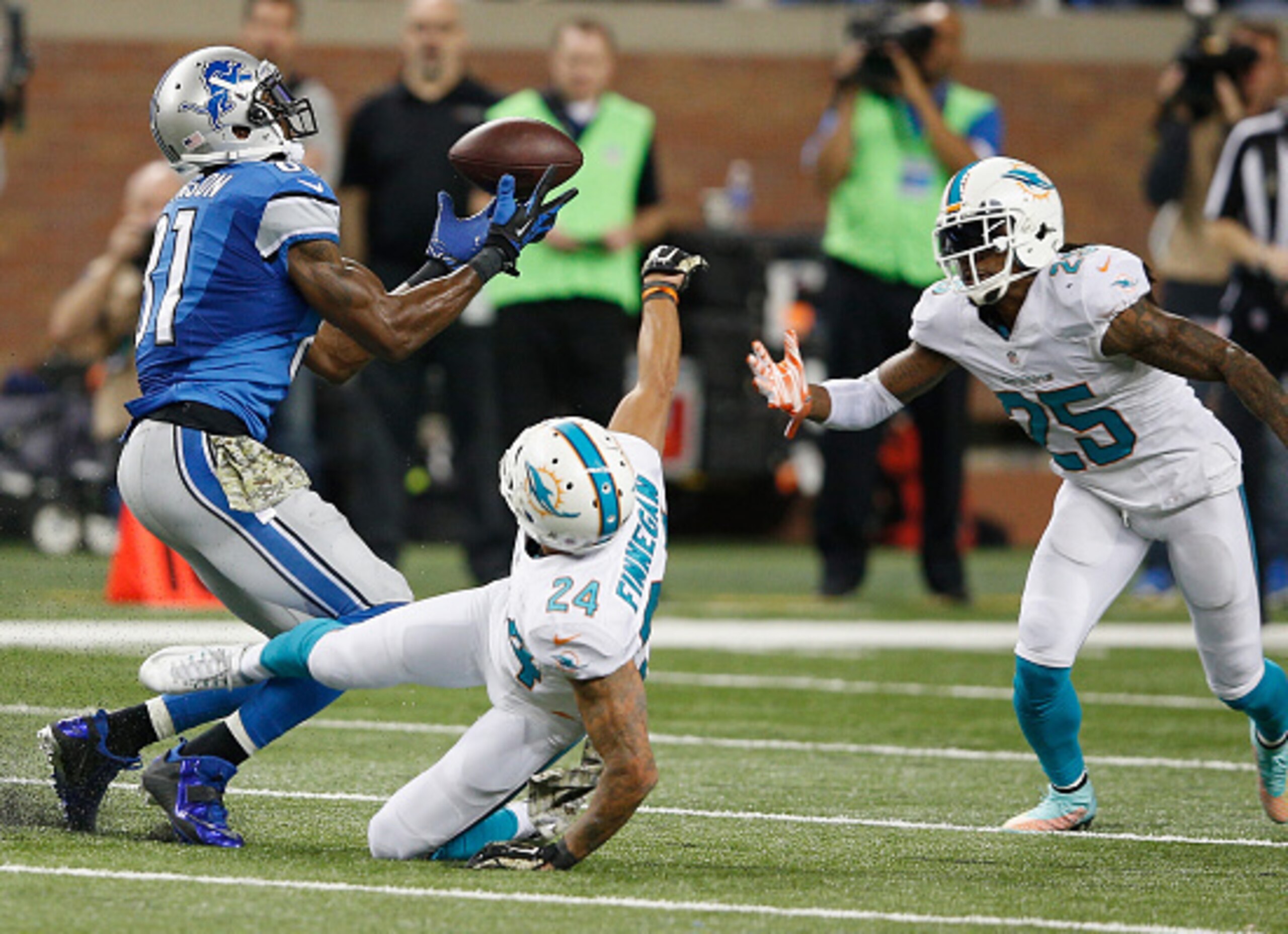
Miami used an “all-in” approach to 2014 and spent a ton of money to do so. Hickey signed numerous injury-prone veterans who were allowed to hit free agency because of their inability to stay on the field. Unfortunately, the risk did not pay off for these players, either due to injury or talent.
- Louis Delmas—When Delmas was signed, he was the ultimate hit-or-miss guy. Delmas has a lot of injuries on his resume, but when he plays, he’s usually solid and forces turnovers. He failed to stay healthy and make an impact for Miami, which makes him a bust.
- Daryn Colledge—Miami signed Colledge due to Philbin’s familiarity with him, and that was a bad decision. Colledge has never been a quality starter, and yet Miami put its faith in him despite clear need at the position.
- Cortland Finnegan—Hickey paid a premium to see what Finnegan had left in the tank after two bad seasons in St. Louis. The price was essentially a waste, as Finnegan contributed no more than what Nolan Carroll did in 2013, and he cost twice as much.
- Knowshon Moreno—Moreno flashed his talent in the opening game of 2014, but his career could be over after yet another injury. Miami would’ve been better off adding another young back with less miles on his legs than to invest in a player who had only one full season without injuries.
Conclusion
10 of 10
The Dolphins saw some growth in key positions, which is going to be huge in 2015. Ryan Tannehill and Lamar Miller can be a very good backfield tandem, but they do need help around them moving forward. Far too often, the lack of outside playmakers and consistent interior offensive line play was too much to overcome against playoff-caliber opponents.
Miami’s defense needs a lot of work, and after some cap causalities, it'll have the chance to reload. The unit needs to play much better and more aggressively next season, so Coyle will need to grow and adapt to his personnel more effectively.
It’ll be a busy offseason for Miami once again. There are no shortcuts to building a sustained winner in the NFL, and hopefully the leadership group in place will be able to get younger and more explosive with their acquisitions this time around.
.jpg?w=2560 "NFL Paris Football")
.jpg?w=2560)

.jpg?w=2560 "Malik Beasley Negotiating Plea Deal (AP)")