Vikings Defense Allowing Too Many Long Drives, Must Play Better on 3rd Downs
The second half of the season has brought more promise than concern for the Minnesota Vikings, a team looking for building blocks as it crafts a different identity under a new coaching staff and young quarterback. A few alarm bells are going off after the defense’s most recent performance, though. It gave up far too many long drives and struggled to get off the field with third-down stops.
Mike Zimmer’s unit gave up an appalling 493 total yards, 396 of which came through the air, for 36 first downs. That led to the Miami Dolphins outdueling the Vikings to a shootout victory.
.jpg?w=2560 "Commanders 49ers Football")
.jpg?w=2560 "Colts Football")
.jpg?w=2560 "DOLPHINS-AIKMAN")
As it turns out, the stifling of the Detroit Lions in Week 15 was more of an aberration than anything else. The Minnesota defense put in concerning performances against both the New York Jets and the Carolina Panthers in the weeks before, neither of which quite match the inadequacy of its Week 16 showing.
Zimmer made no bones about how poorly his unit played, per Brian Murphy of the Pioneer Press:
"#Vikings coach Mike Zimmer on defense: "Worst we played all year. Maybe one of the worst defensive performances I've seen in a long time."
— Brian Murphy (@murphPPress) December 22, 2014"
The brutal honesty of Zimmer’s answers are a real blessing. He felt no need to sugarcoat the play of the unit at his command. It really did perform that poorly.
Minnesota’s defense has been regressing to this point after it found a groove during the middle of the season. Drive stats tell the story of what has happened lately.
| Weeks | Scoring % | Yds/drive | Plays/drive |
| 1-13 | 33 | 29.9 | 5.9 |
| 14-16 | 47 | 37.0 | 6.4 |
While touchdown drives stayed steady, percent of drives ending in a score skyrocketed over the last three weeks. That coincides with the Vikings allowing more yards on the average drive and having to be on the field for more plays, which only wears them down quicker.
That may have contributed to the poor drive stats in Miami. After moderate success in the first half, giving up only seven points on five legitimate drives, the defense collapsed. Outside of quarterback kneels, the Dolphins launched four drives over the course of the second half. They racked up a combined 304 yards of offense and four touchdowns, literally scoring at will.
Excuses related to field position hold no weight either. Three of those touchdown-scoring drives went a full 80 yards. The other went 64. Miami ran an average of 8.5 plays on those second-half drives too, so big plays and egregious errors aren’t to blame either. Minnesota was dominated outright.
Impressively from a Miami standpoint, the Dolphins marched the ball for their first two touchdown drives in the second half without facing a third down until the first play in the fourth quarter, when they punched it in for six points.
The Dolphins drove 144 yards in those two possessions and only needed a single third-down conversion. Minnesota could hardly get them into third down, much less fourth.
Even when Minnesota forced Miami into third-down situations, early-down yardage put it in poor positions. The Dolphins faced five third downs in the fourth quarter, needing distances of 1, 5, 4, 2 and 14 yards, respectively. All were converted for either first downs or touchdowns, the 14-yard success coming from a debatable pass-interference call against Xavier Rhodes.
Miami ultimately converted nine of 13 third downs, deflating the Vikings with each. Third downs are usually where Zimmer dusts off the most effective sections of his playbook, so Minnesota’s inability to get off the field doesn’t follow the rest of the defense’s body of work.
Vikings blogger Arif Hasan succinctly locates the root of Minnesota’s third-down problem from Sunday:
"If we hear about bad third-down rate by defense, it's less about performance on third down itself and more about first and second down.
— Arif Hasan (@ArifHasanNFL) December 21, 2014"
Through the first 15 games of the season, the average distance opponents needed on third downs was 7.14 yards. Miami needed only an average of 4.08, a drastic difference.
Miami’s ability to efficiently run the ball on early downs set its offense up for success on a down-by-down basis. The Vikings failed to force negative plays and take Miami out of its comfort zone. Outside of kneels, Minnesota never got to the Dolphins in the backfield on first- or second-down run plays.
The front seven's failures go beyond that too. It only mustered a single stuff for no gain. The defense also gave up four or more yards on 15 of 22 runs, keeping Miami on schedule all game long.
Ultimately, Minnesota's defense just hasn't held up in the box as the season has worn on. Sharrif Floyd going in and out of the lineup and continuous changes at the linebacker position have left the Vikings defense vulnerable on the ground. Lamar Miller and the Dolphins took full advantage.
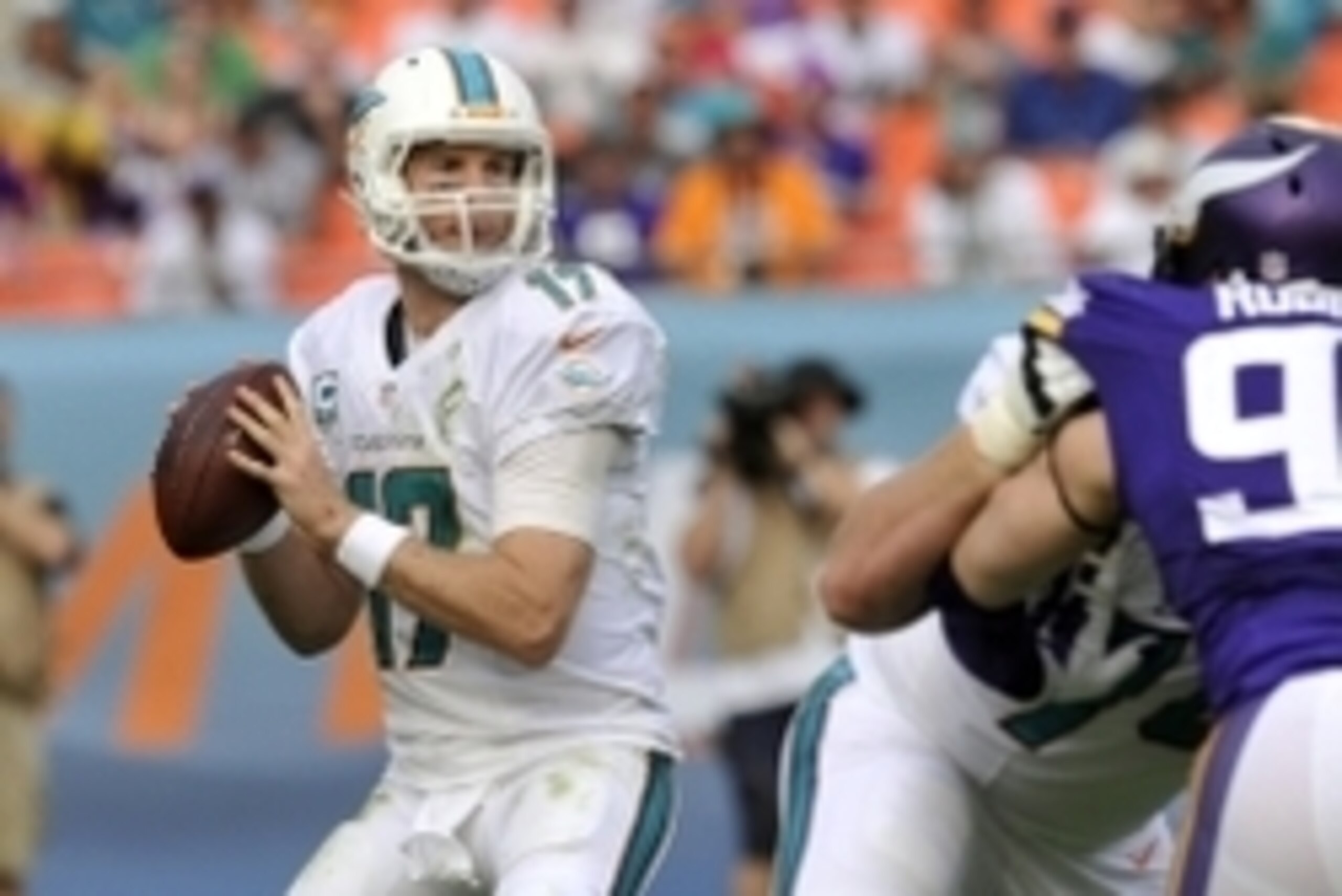
Regression was palpable in pass defense as well. An above-average quarterback in Ryan Tannehill tore the Vikings up, completing passes at a high rate and making Minnesota pay with his mobility. Lack of consistent pass rush left the Vikings secondary with a heavier workload. Breakdowns on the backend were problematic too, with numerous miscommunications leaving open Dolphin receivers.
Mike Zimmer was left with endless reasons to be frustrated with his unit’s performance. Giving up never-ending drives by failing on all three downs will send Minnesota and its coaches back to the drawing board defensively.
With only a week remaining, the Vikings are almost out of time for corrections. They may have more revamping to do in the offseason than they had previously anticipated.
Drive and down-by-down statistics via Pro-Football-Reference.com. Game statistics via ESPN.com.
.jpg?w=2560)
.jpg?w=2560 "NFL Paris Football")

.jpg?w=2560 "Malik Beasley Negotiating Plea Deal (AP)")