New York Knicks' Injuries Have Created Opportunity and Headaches During Rebuild
At this stage of the New York Knicks' woeful season, it's almost impossible not to associate them with the NBA's hottest buzzword of 2014: tanking.
Though upon entering the realm of the tank, it's more important to understand what exactly this strategy fosters than what it doesn't. Obviously, teams in this conversation are typically better off focusing on tomorrow's winning percentages over today's, partly because of the valuable draft selection that becomes the fruit of futility.
But often overlooked is the importance of the present. Despite the emphasis not necessarily being on winning basketball games, a team in rebuild always has a number of reasons to value in-game sequences and recurring themes.
TOP NEWS
.jpg?w=2560 "NBA Gambling Charges")
Malik Beasley Negotiating Plea Deal (AP)

Yaxel: Luka Not MJ 🗣️
Knicks, Spurs On Wrong Side of History
The Knicks' laundry list of injuries has surely helped bolster their status in the upcoming draft. But by failing to accomplish several developmental goals in this rare rebuilding year, New York could still be behind the pace of other bottom feeders looking to contend in a similar time frame.
In down years, it only makes sense for teams to run out their young talent, not only to contribute with their current skill sets, but also in the hopes that the coaching staff and sheer experience help improve whatever flaws may exist.
New York's injuries have kept it from executing this simple mission all season long, and with a number of players.
Cleanthony Early could be an interesting piece to the organization moving forward, and the team's current situation would make a perfect stage for the rookie to get significant NBA work. But Early underwent arthroscopic knee surgery in November, and there's still no timetable for his return.
Jose Calderon's strained calf cost him the first three weeks of the season, and in his absence coach Derek Fisher was all but forced to call upon Shane Larkin as his starting point guard. Larkin logged just 489 minutes combined in his rookie year.
The 5'11" Larkin, who was brought in as an intriguing young piece in the Tyson Chandler deal with the Dallas Mavericks, was figuratively and literally in over his head as a starter. Since Calderon's return, though, Fisher has been able to cycle Larkin in as needed and has used his skills much more effectively in a more natural role.
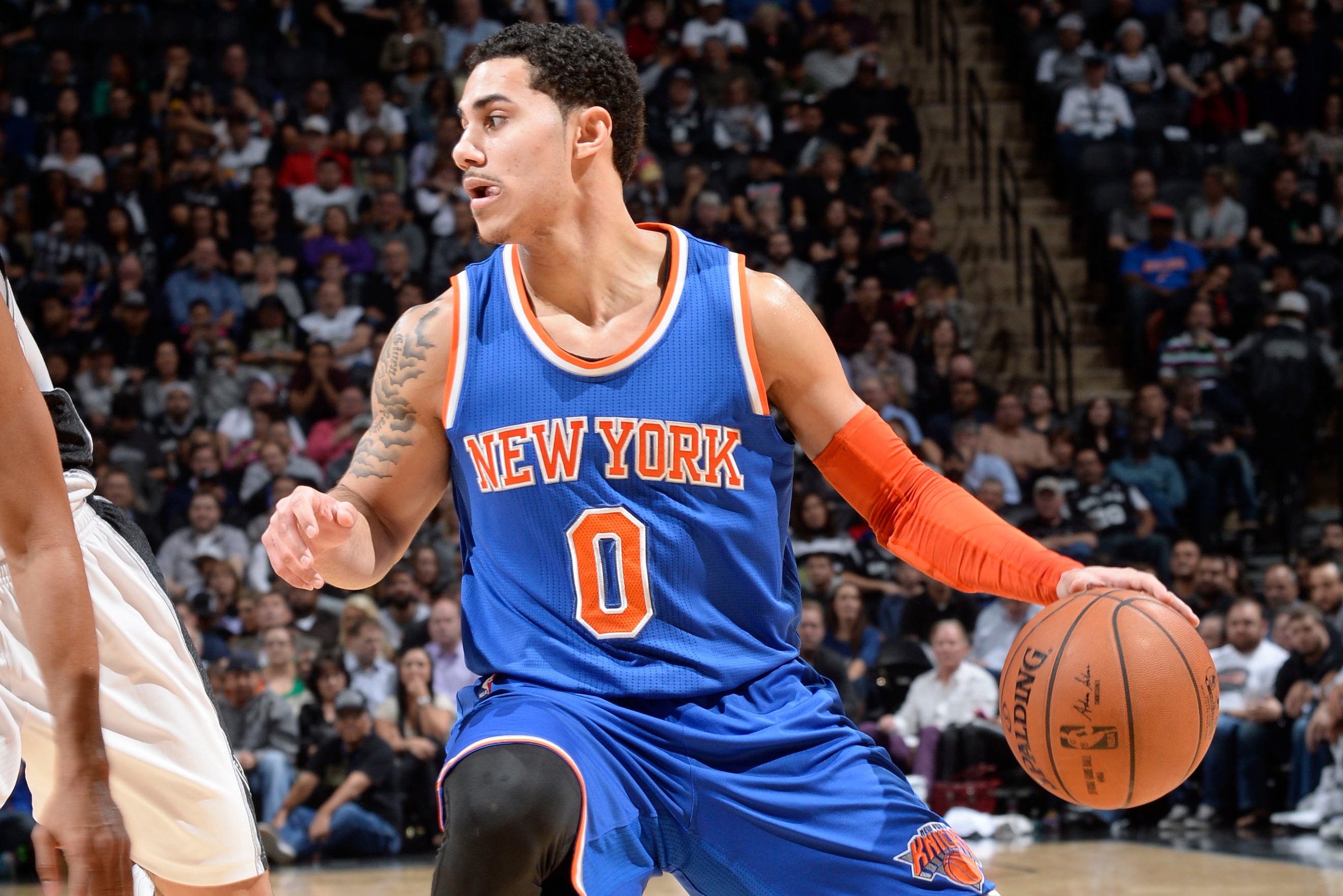
Since Calderon made his Knicks debut on Nov. 22, Larkin has averaged 19.6 minutes per game, shot 45.3 percent from the field and nailed 47.8 of his three-pointers. The 22-year-old still has tons of developing to do—specifically in finding his own shot and being more than a catch-and-shoot guard—but necessary mistakes are more forgivable against teams' reserve units.
Tim Hardaway Jr. is currently going through a similar struggle. A year after posting impressive offensive numbers, the current Knicks regime seemed rightfully curious as to whether the 22-year-old could show enough complementary skills to warrant an increased role as an NBA sophomore.
In his first year, Hardaway Jr. ranked 76th out of 77 shooting guards in ESPN's Defensive Real Plus-Minus, which attempts to weigh a player's positive contributions against his negative ones. He passed the ball just 17.3 times per game, according to NBA.com, which was less than Amar'e Stoudemire. Heading into this year, Hardaway Jr. simply needed to prove that he could be productive without chucking.
With Iman Shumpert and J.R. Smith also on the roster, Fisher indicated right away that Hardaway Jr. would need to earn minutes with improved all-around play. He was averaging just 17.4 minutes over the team's first 23 games, significantly down from the 23.1 he logged nightly as a rookie.
| Through Dec. 9 | 23 | 17.4 | .486 | 7.8 | 8.7 |
| Since Dec. 10 | 8 | 34.1 | .447 | 14.9 | 17.1 |
But after Shumpert's dislocated shoulder and Smith's torn plantar fascia diminished the Knicks' shooting guard depth solely to Hardaway Jr., Fisher was left with no choice but to throw his conservative plans for the second-year man out the window.
Since Smith exited the lineup first on Dec. 10, Hardaway has averaged 34 minutes per game, shooting just 37.5 percent from the field while throwing up 14.9 shots nightly, translating to 17.1 points.
Shumpert's injury in particular has had dreadful long-term effects, as it has damaged the development of two potential pieces to the Knicks' future.
The 24-year-old will likely miss about a month with his shoulder ailment, which couldn't come at a more pivotal time in his career. Now in Year 4, New York has hoped for Shumpert to translate raw skills into a complete package—something resembling the jump Jimmy Butler has made this season—since 2011. Outside of a few spurts, that has never been the case.
With Shumpert's impending free-agent status looming, Phil Jackson will likely have to take a chance on the 6'5" swingman's perpetual potential or be forced to cut ties forever.
The Knicks have the right to match any offer sheet for the Georgia Tech product, but without significant strides (like the ones we saw over this season's first 11 games), it's unlikely New York will dedicate precious cap space while in pursuit of the summer' biggest names.
That pursuit is one of the primary reasons Carmelo Anthony decided to re-up with New York last July, and the Knicks' plans to court another max-level free agent are far from a secret—just look at the structure of Anthony's deal.
Melo agreed to leave a reported $1.4 million on the table in Year 2 of his deal, per Ian Begley of ESPNNewYork.com. But otherwise, the contract includes maximum raises through 2018-19, leaving Jackson with very little spending space after this summer.
And if the plan is to chase a top-tier guy in July, Anthony's array of bumps and bruises already in 2014-15 has only hurt the cause for a few reasons.
New York will presumably need to salvage some sort of promise this season, since it's extremely difficult to attract the top-tier free agents with a bottom-of-the-rung record. The Knicks tried this most recently off a 29-win season in 2010 and ended up with a good haul in a prime Amar'e Stoudemire, but that's possibly only because they offered $52 million more than ESPN Insider Tom Haberstroh projected him to be worth (subscription required).
Second, Melo's time away from the court this season is understandable. With knee and back ailments costing him games already, it only makes sense to shut it down temporarily.
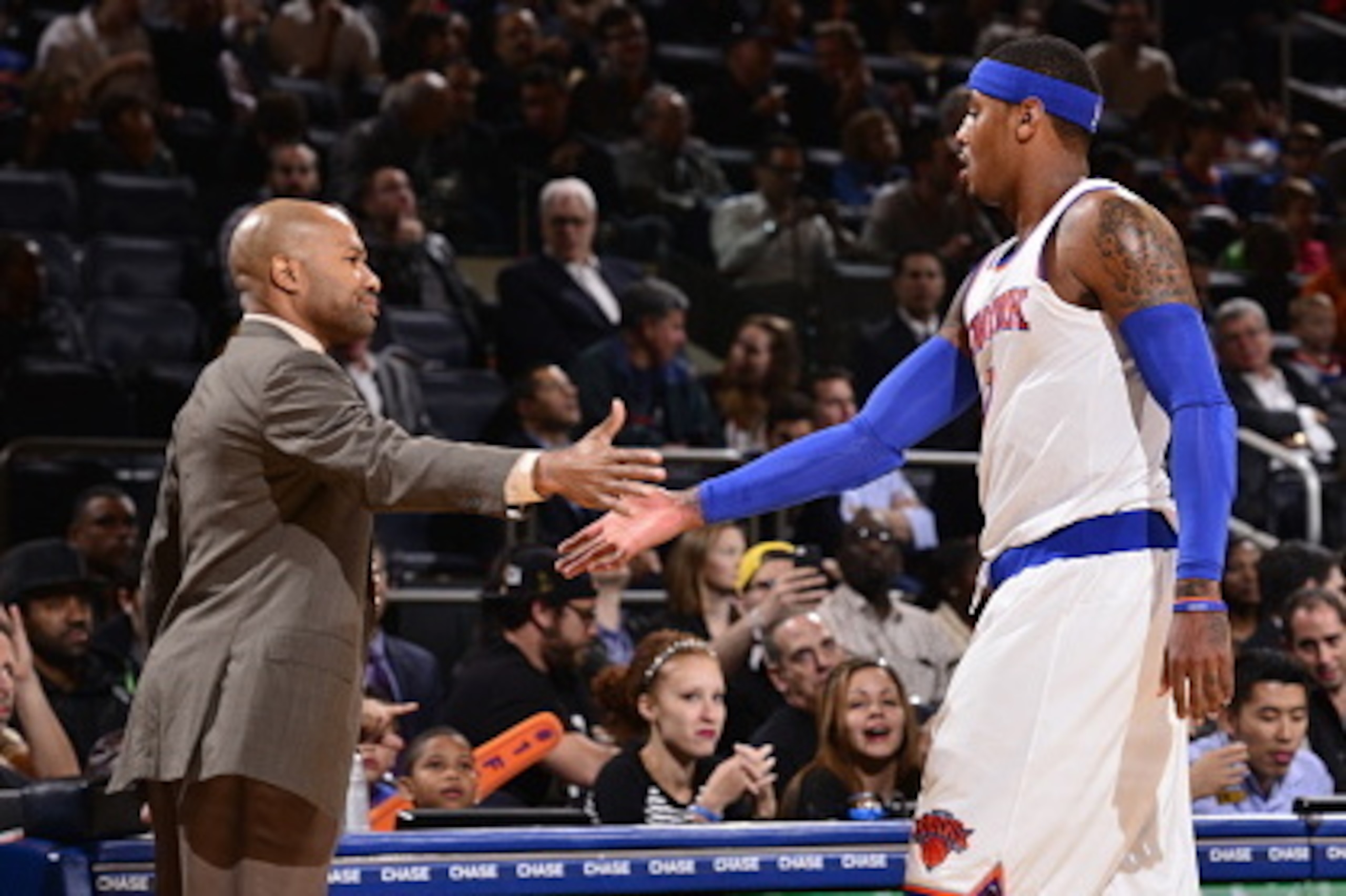
“I’ve had multiple people say kind of, just shut it down or just take time off,” Anthony said last week via NorthJersey.com's Steve Popper. “At the end of the day it’s hard for me to just do that right now with what’s happening with the team. So I’m just trying to be smart about it.”
It's tremendously important for Anthony not to risk his health in a down season. But being on the floor, playing within the system Fisher is trying desperately to install, does have value—particularly in the season before extreme roster turnover is about to take place.
As many as 10 Knicks can become free agents this summer, opening the door for several newcomers next year and an offseason in which Jackson will certainly try to put together a team in his image.
It was impossible this season—Year 1 of a regime that was foreign ground to everyone at the onset—but if Anthony becomes familiar enough with the triangle in 2014-15 to become a branch of Jackson and Fisher's leadership staff moving forward, it would promote a type of front office/coaching staff/player synergy that the franchise hasn't constructed in decades.
But to this point, injuries, among other factors, have curbed this development. And the effects could be much more damaging than any result on a 2015 scoreboard.



.jpg?w=2560 "Aikman Blasts Cowboys WR 🫣")
.jpg?w=2560 "Jonathan Taylor Landing Spots")