Bayern Munich: Win in Mainz Shows How Far Squad Depth Has Progressed
Bayern Munich wrapped up their 2014 calendar year on a high note on Friday, overcoming an early deficit to beat Mainz 2-1. The result marked the eighth consecutive victory for Pep Guardiola's side in the Bundesliga, confirming at least an 11-point lead atop the German table as they head into the winter break.
Bastian Schweinsteiger's free-kick canceled out what had been a shock opener for Elkin Soto on 21 minutes. But although Mainz held firm throughout the second half, Arjen Robben secured three points for the visitors at the death.
It was an impressive result for Bayern, especially considering the fact that they were without almost an entire team of injured stars: Xabi Alonso, Philipp Lahm, David Alaba, Thiago Alcantara, Mehdi Benatia, Holger Badstuber, Javi Martinez, Robert Lewandowski, Sebastian Rode and Tom Starke were all unable to play due to injuries.
TOP NEWS
Sullivan, Hall Lead USMNT to Big Win 💥
.jpg?w=2560 "Titans Giants Football")
OBJ Calls Out Giants After Release
Lamar Jackson Day-to-Day
Yet, a casual look at Bayern's starting XI on Friday would not reveal any major weaknesses. Despite such a lengthy list of injured players, Guardiola was able to start with World Cup winners Schweinsteiger, Thomas Muller, Mario Goetze, Manuel Neuer and Jerome Boateng, and call upon world-class superstars in Robben and Franck Ribery. As backups go, there could be much worse.
Bayern in particular know well how fickle backups can be. It wasn't very long ago when their bench was quite ordinary. In some areas, particularly in the full-back position opposite Philipp Lahm and in the interior of defense, they didn't even have a starter of top-level class. Much has changed in recent years.
When Bayern reached the Champions League final in 2010, Louis van Gaal managed to the team with Hamit Altintop, Danijel Pranjic and Anatoliy Tymoshchuk as their best (and only) backups in midfield.
Had the 2009-10 team, minus 10 injured players, been used on Friday night, Guardiola would have had to manage with the aforementioned three in between the defensive and forward lines. At the back, Christian Lell and Andreas Gorlitz may have been used.
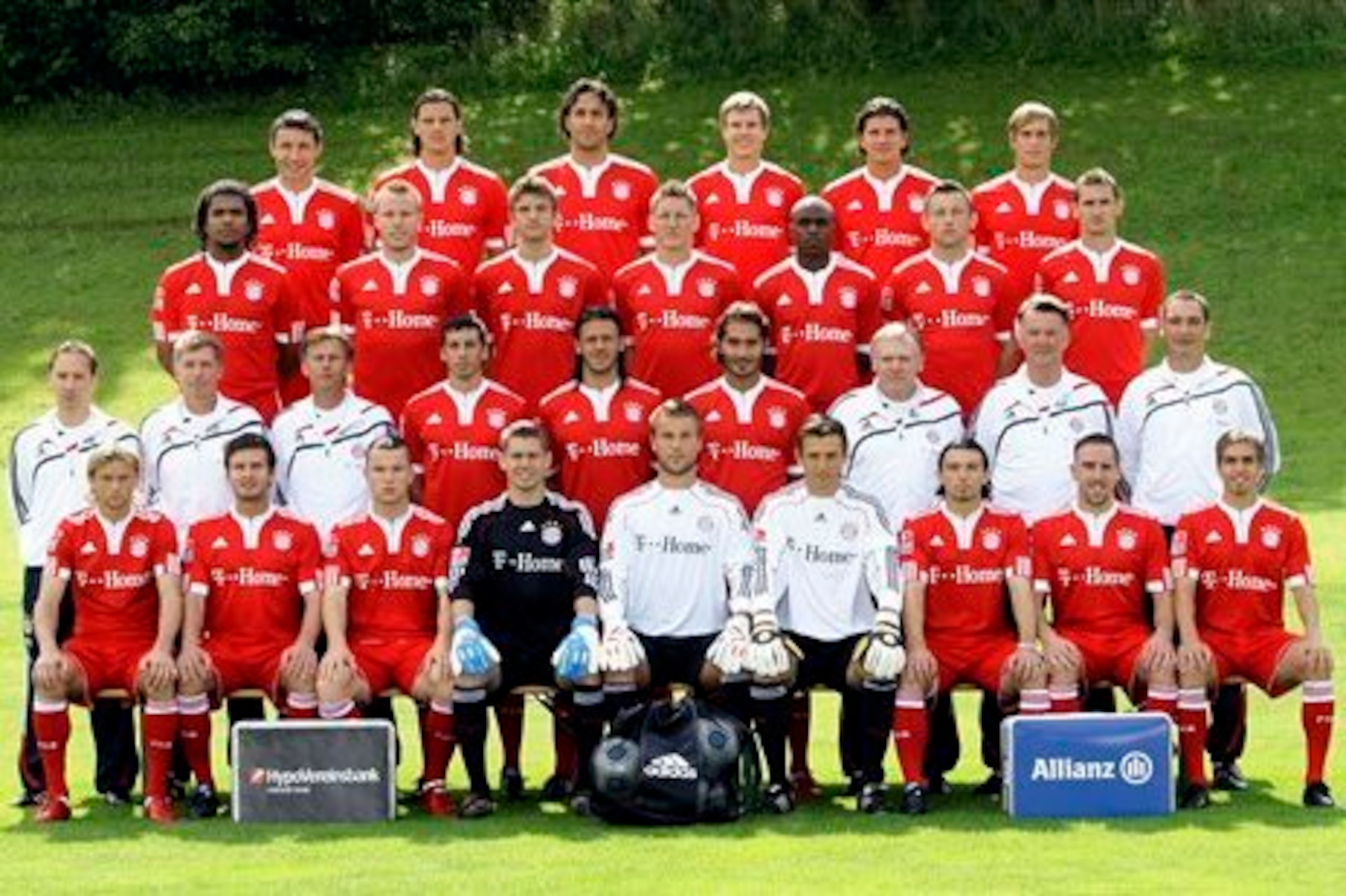
With due respect to the substitutes Louis van Gaal had to manage, there's no comparison between the team of five years ago and that of the present. Back then, there was a heavy creative burden on Ribery and Robben to use their individual brilliance to score. Muller was lethally effective playing from the shadows, while Ivica Olic had the best season of his career, primarily by working extremely hard.
When one of the wingers was sidelined (as both were for long spells during that season), it was possible to repel Bayern's attack by focusing on stifling the remaining source of creativity.
Now, Bayern can rely on Ribery or Robben or Goetze or Thiago, when fit, to shoulder the creative burden. Even Lewandowski can be a significant contributor to the build-up play, much more than Olic.
Deeper in midfield, Bayern no longer have to rely upon Schweinsteiger being continually fit: They have Alonso to sit deep and build the play in the center of the pitch. Alaba, Lahm (both with many thanks to Guardiola's tutelage) and even Thiago can play in that role.
At the back, Bayern no longer have to sweat over the possibility of Lahm being injured: they have Rafinha, Rode and Pierre Hojbjerg to cover the right of defense. On the left, there's Alaba, and newly capped Spain international Juan Bernat.
A huge contributor to Bayern's increased depth is the fact that they have managed to build their team with almost no setbacks. Few players have retired since 2010, among them Hans-Jorg Butt and Daniel van Buyten, both of whom were nowhere near the starting lineup when they left the club. Sales have been few and almost exclusively of players Bayern had deemed surplus to requirements, the exception being Toni Kroos.
Team-building is tremendously difficult, and creating a formula that can be effective both domestically and in the Champions League is something that rarely can be done in a year.
Bayern's ability to retain their players has been crucial towards this end: the skyrocketing of their wage bill to €215 million per year (as confirmed in a German-language press release in November) has played a huge factor and would never have been possible without the massive growth of their revenue, which (via Deloitte) stood at €323 million in 2009-10.
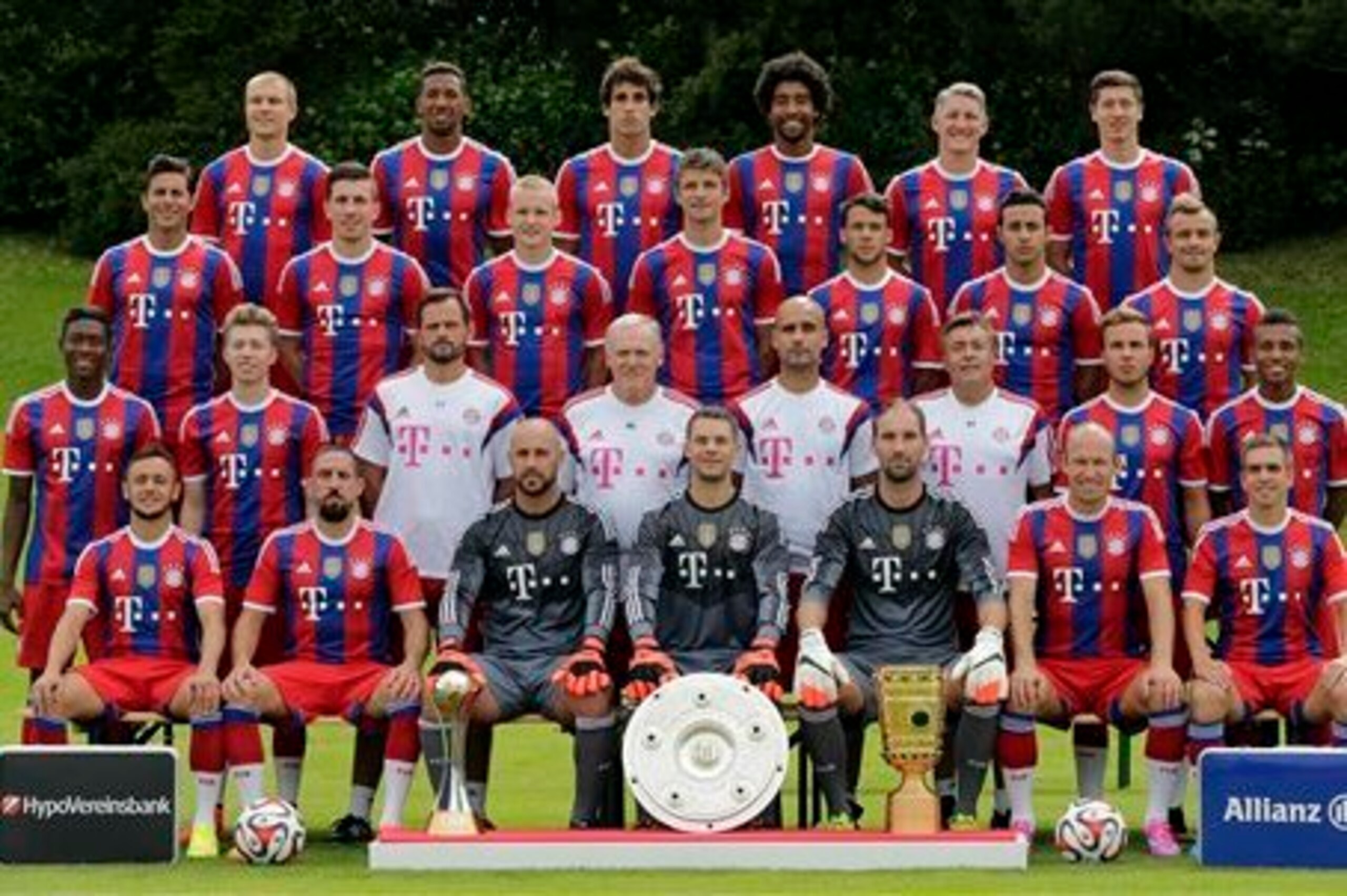
It took three more seasons after the near-miss in 2009-10, but Bayern finally won the Champions League in 2012-13, with many thanks to their improved depth. Winning the Bundesliga weeks in advance allowed Jupp Heynckes to rest players who needed a break ahead of the final, and unlike in the 2010 and 2012 finals, the Bavarians were able to use their strongest-possible starting lineup at Wembley.
Bayern's depth has only improved since, in part due to their investments in wages and transfer fees but also due to Guardiola's philosophy of universality, of training each player to fill multiple different positions. With this improvement has come sustainability.
Bayern no longer require the same players week-in, week-out, to dazzle for years on end, regardless of whether they had a full summer break or one abbreviated by an international tournament.
Although it comes at a hefty price in terms of wages, the extra money for payroll is the difference between a few stars being pushed to the limit every week and them being able to rest when needed. It's the difference between having Andreas Ottl and Edson Braafheid on the bench and having Goetze and Schweinsteiger.
And it's the difference between having to fight for domestic dominance and (as we saw on Friday) being able to win with nearly any combination of players.




.jpg?w=2560 "Saquon Out for Game")