San Diego Chargers vs. San Francisco 49ers: Breaking Down San Diego's Game Plan
What once looked like another tough December matchup for the San Diego Chargers (8-5) is now a perfect opportunity to keep their playoff hopes as they face the crumbling San Francisco 49ers (7-7).
For San Diego to snap its two-game losing streak, it must stretch the 49ers’ linebackers and take away the play-action pass. This article will break down these key points, why the Chargers must focus on them and how they can execute the game plan properly. But first, let’s take a glimpse at both squads.
The Chargers are reeling offensively, with only 17 offensive points scored in the past two weeks. And now, that offense may be without Ryan Mathews, Keenan Allen and Ladarius Green come Saturday. The team's official Twitter account provided injury updates:
.jpg?w=2560 "Commanders 49ers Football")
.jpg?w=2560 "Colts Football")
.jpg?w=2560 "DOLPHINS-AIKMAN")
It’s not all bad, however, as the Chargers still have a shot at the playoffs, and the defense continues to impress.
For the 49ers, it’s all bad. The Jim Harbaugh and Colin Kaepernick situations are too messy to get into here. The offense is kaput, and the linebackers—once the strength of the team—can’t stay healthy. The team is not where it expected to be after years of playoff success. Championship windows always close sooner than expected.
The Chargers have a perfect opportunity at San Francisco to begin another hot streak. What do they have to do here to spark their second consecutive playoff finish?
Offensive key to the game: Keep the San Francisco linebackers running
First NaVorro Bowman was injured, then Patrick Willis and then impressive rookie Chris Borland. The 49ers have been very fortunate at the inside linebacker position for years, but now they are trotting out castoffs and slumping veterans there.
In Bowman and Willis’ place are guys such as Michael Wilhoite and the recently signed Desmond Bishop. As for the outside linebackers, Aldon Smith has played decently, Aaron Lynch is having an up-and-down rookie year, and Ahmad Brooks hasn’t been able to pressure anybody.
This sudden weakness at the position is something the 49ers aren’t used to dealing with, and thus it’s something the Chargers should attack. They need to challenge the San Francisco linebackers with crossing routes and running back screens that target the middle of the field and reap the rewards of missed tackles and improper angles.
The struggling Rivers should feel comfortable throwing in the short-middle area of the field where linebackers usually roam. Why stop a good thing?
| Completion % | Passing yards | Touchdowns | QB rating | |
| Left side | 80.7 | 169 | 2 | 103.4 |
| Middle | 80.0 | 968 | 6 | 105.4 |
| Right side | 76.3 | 253 | 1 | 102.2 |
Down Allen and Green, Rivers will have to rely on trusty tight end Antonio Gates to make the most of his passes in the middle of the field. Gadget receiver Eddie Royal and running back Branden Oliver will also see their fair share of targets—Royal on bubble screens and rub routes, Oliver on running back screens and draws.
These types of plays are nothing out of the ordinary for San Diego, and with the proper matchups, they can be quite effective. Analysts have taken notice, including Andy Benoit of Sports Illustrated and Derek Havens of Patsfans.com:
Antonio Gates’ long reception on a crossing route versus the Baltimore Ravens is a good example of the Chargers’ success on chain-moving plays.


The 49ers could have similar problems covering Gates on Saturday. Besides Brooks, none of the currently healthy linebackers are considered reliable in coverage.
San Diego’s advantage in the middle of the field will help against the 49ers’ strong defensive line, which shouldn’t have too much trouble stuffing Oliver and Donald Brown’s rushing attempts. Additionally, the lack of options outside the numbers, with Allen out and Malcom Floyd likely to receive much more attention, will force the Chargers to lean toward this linebacker-targeting philosophy whether they like it or not.
Defensive key to the game: Shut down the play-action pass
Let’s be honest—even with star defender Corey Liuget dealing with an ankle injury, the Chargers defense shouldn’t have to strain itself in this game.
The 49ers are an offensive mess with nothing left to play for. Kaepernick has declined in a big way—in the past three games, he has completed just 15 passes per contest and has averaged less than 146 yards passing. His completion percentage during that stretch is below-60.
As for the rest of the unit, running backs Frank Gore and Carlos Hyde are injured. Gore was playing poorly before his injury. Vernon Davis has gone missing. Anquan Boldin is the only reliable receiver. The offensive line is struggling in pass protection. It’s an ugly team to watch.
What’s been ailing the offense? Basically everything. But the lack of play-action passes, the bedrock for Kaepernick’s early success, hasn’t helped, either. Graham Barfield at NumberFire breaks it down:
"One place where Colin Kaepernick is so productive is with play-action passes. Play-action usually allows quarterbacks to see the field a little more easily, opens up passing lanes, and gives them easier progressions to read. In 2012, San Francisco called play-action 11.1 times per game, and 8.8 times per game in 2013. This year, it's at 7.31 times per game.
"
A large part of the decline in play-action passing is the declining personnel. Davis was one of the league’s best tight ends at wreaking play-action havoc, and the dominant offensive line helped Kaepernick set his feet and scan the field. There’s none of that in the 2014 49ers, which has led to a sharp decline in what was once their offensive cornerstone. Scout.com's Chris Biderman shared a significant Pro Football Focus stat regarding Kaepernick's completion percentage as it relates to play-action passes:
The Chargers need to make sure this trend continues. Single-high safety looks should do the trick, with one (Eric Weddle, in the Chargers’ case) closer to the line of scrimmage to account for quarterback keepers and receiving backs. Let’s look at how the Oakland Raiders kept tabs on both Kaepernick and the deep ball in Week 14.
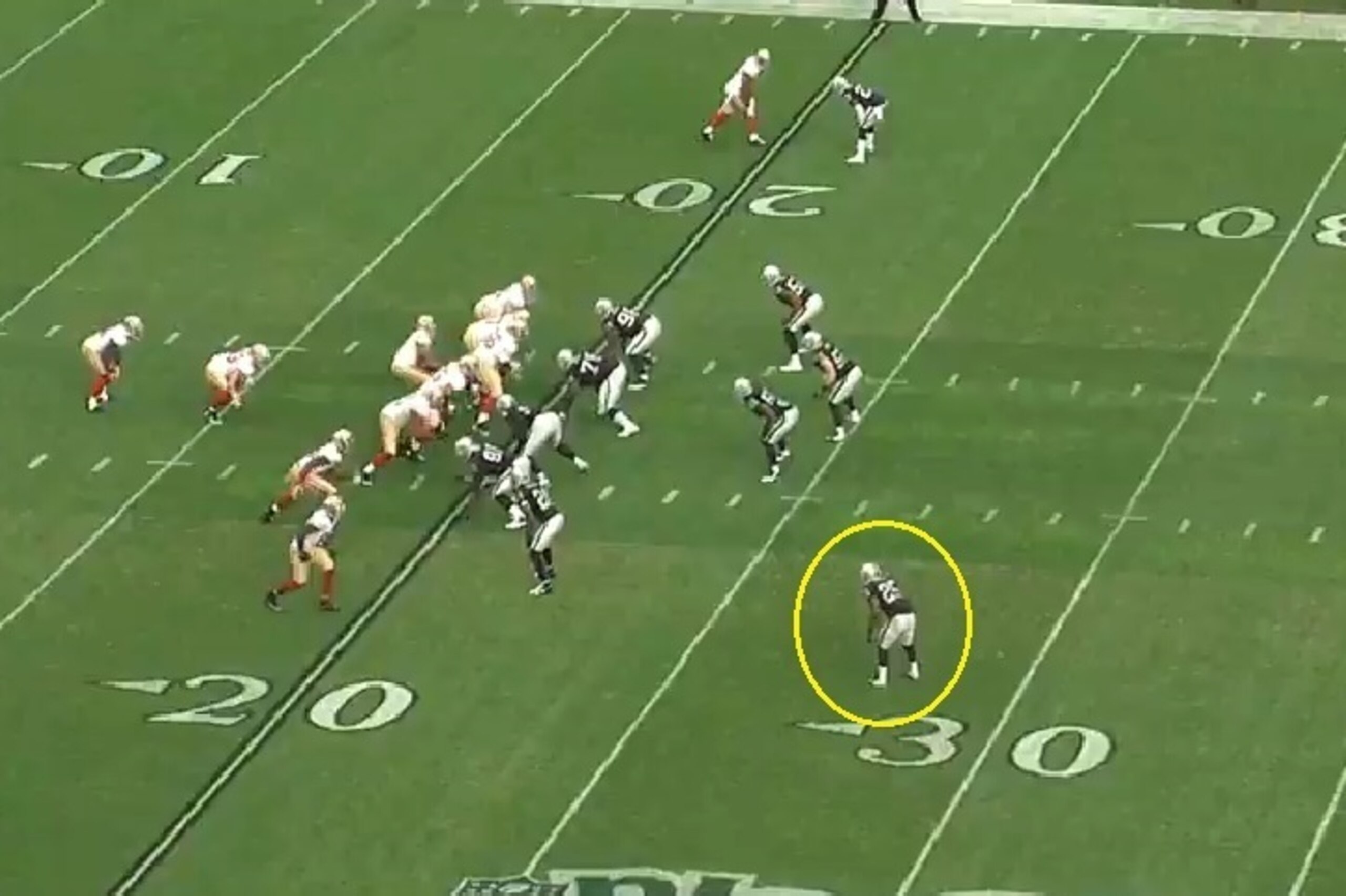

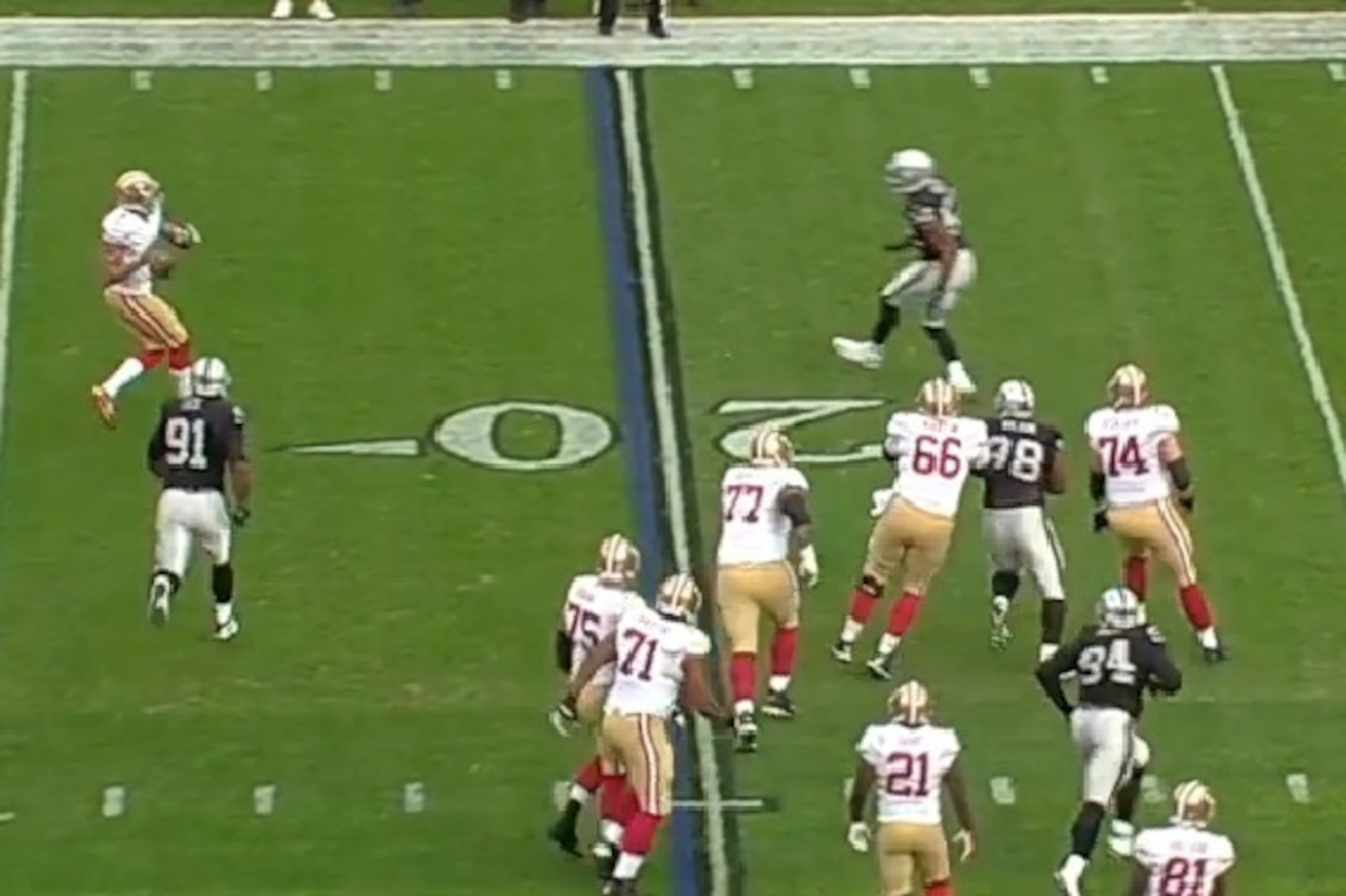

When the 49ers can’t get their play-action pass working, it results in pitiful performances against weak defenses. The Chargers defense shouldn’t struggle to get off the field in this one, but it should be mindful of San Francisco throwing everything but the kitchen sink at it. After all, the 49ers don’t have much left to play for. In terms of on-field competitiveness, that can either be an asset or a nightmare.
.jpg?w=2560)
.jpg?w=2560 "NFL Paris Football")

.jpg?w=2560 "Malik Beasley Negotiating Plea Deal (AP)")