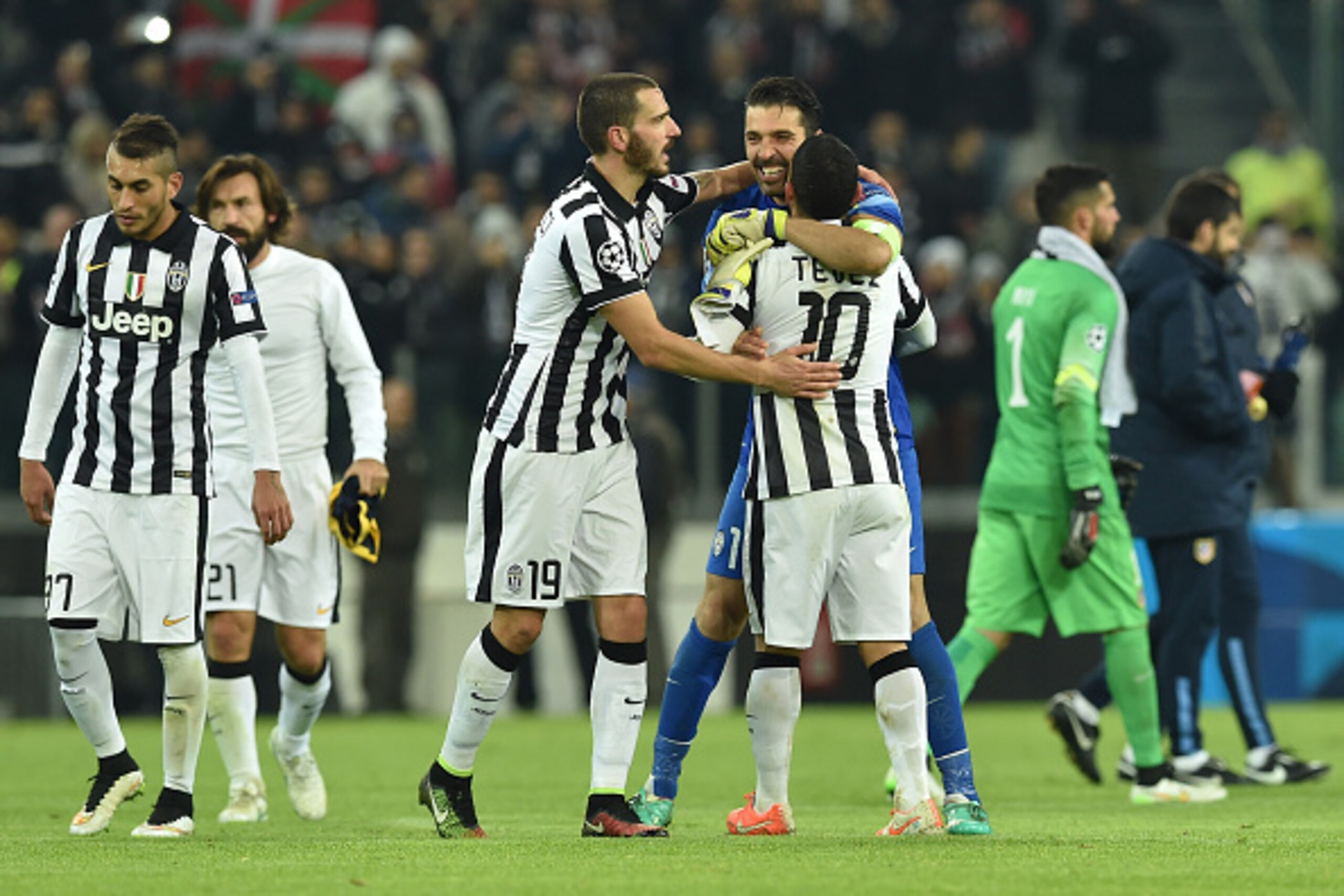

Juventus: Ranking the Desirability of the Bianconeri's Potential UCL Matchups
Juventus didn't make the Champions League easy on themselves this year. A surprising and limp loss against Olympiakos in Greece presented them with a must-win situation in the return two weeks later.
Win they did—but they squandered a golden opportunity to give themselves the tiebreaker edge when Arturo Vidal missed a penalty in stoppage time.
Because of that result, there was still a scenario that could see Juve drop to the Europa League for a second straight year. That result would have been unacceptable, and it was clear during the group stage finale on Tuesday that Massimiliano Allegri's first goal was avoiding it.
Attaining the draw that they needed to advance was priority one. Seeking the two-goal win that would have seen Juve top the group was decidedly second.
It didn't sit well with some of Juve's fans, who wanted the team to go for broke and get the favorable draw that comes with winning a group. The Bianconeri now have to hold their breath on December 15th and hope that fate pairs them with an easier matchup rather than one of Europe's behemoths.
Competition rules prohibit teams from the same group to play each other until the quarterfinal, which means that there are seven teams that Juventus could potentially play in February.
Today, we're going to evaluate each of Juve's potential opponents and rank them based on how desirable the matchup is for the Bianconeri, from least to most.
Who does Juve want in the round of 16? And who is making them say "novenas" in an attempt to avoid? Let's take a look.
Bayern Munich
1 of 7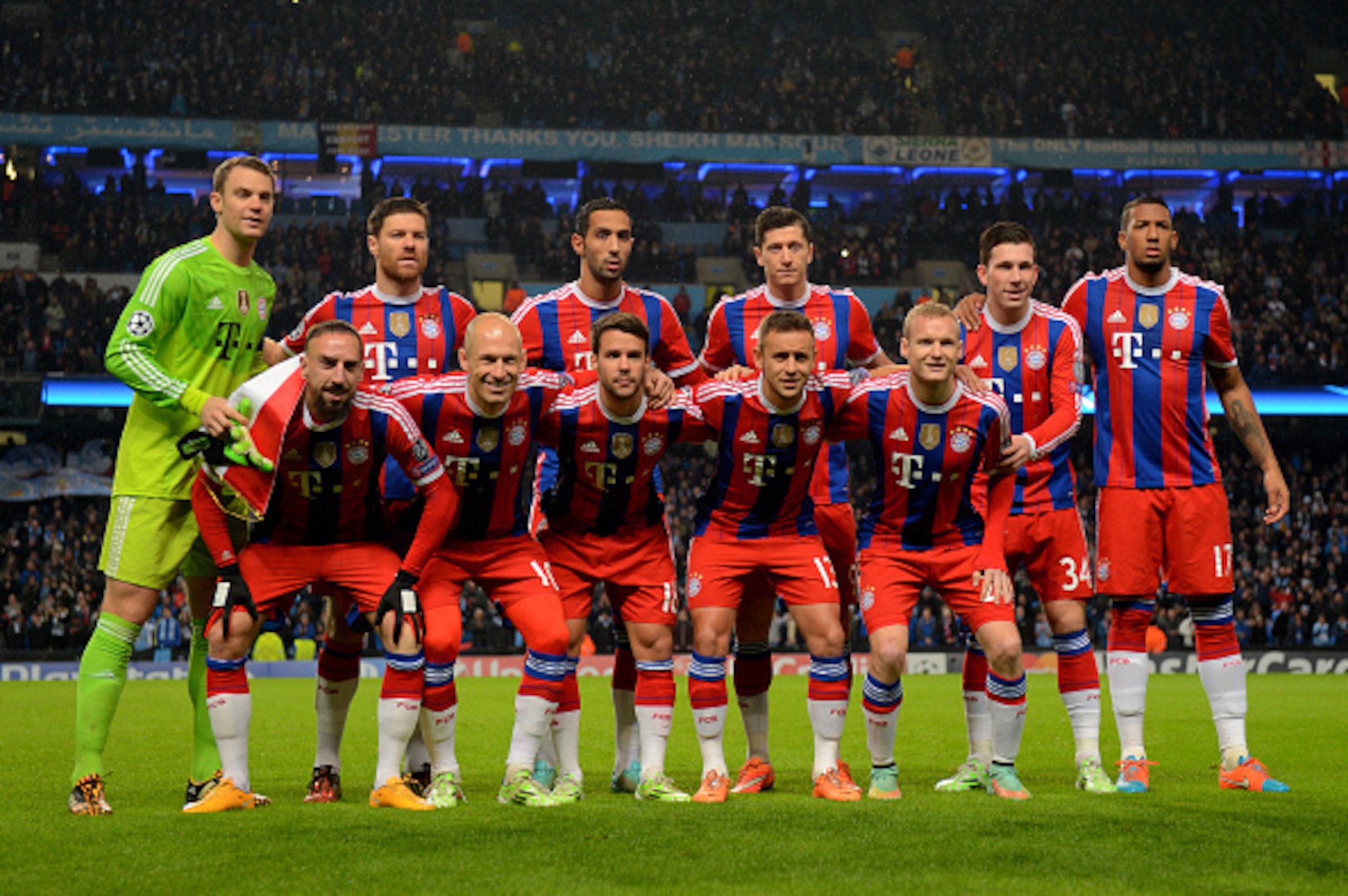
Two years ago, Juve met Bayern Munich in the quarterfinals of the Champions League and were thoroughly dominated. Antonio Conte's 3-5-2 was overmatched on the wings. Arjen Robben, in particular, ran wild. Bayern won both legs by identical 2-0 scores.
It was disappointing, but in no way humiliating. Jupp Heynckes' last Bayern team was a buzzsaw. They followed up on the performance by annihilating Barcelona 7-0 on aggregate and then won the final against Borussia Dortmund 2-1 on a Robben goal in the 89th minute.
The good news is this Juve side is much better than the one that took the field against the Bavarians two years ago. Arturo Vidal has matured, Paul Pogba has blossomed, Leonardo Bonucci is one of the most improved players in Europe and the team finally has legitimate strikers in Alvaro Morata, Fernando Llorente and Carlos Tevez.
They are also in a better position to cope tactically. The shift to 4-3-1-2 by Allegri will make it easier to deal with the likes of Robben and Franck Ribery bombing down the flanks.
The bad news? Bayern are even better than when they blanked the Bianconeri.
This Bayern team has it all. Their front line is both incredibly talented and incredibly versatile. They can play with a traditional striker like Robert Lewandowski, a pair with Lewandowski and Thomas Muller, drop Muller into the hole behind the Polish international or attack with a false nine in Mario Gotze.
The back line is equally impressive. Dante, Mehdi Benatia and Jerome Boateng prowl the center, while the likes of Sebastian Rode, Juan Bernat and David Alaba roam the flanks. In midfield, old hand Xabi Alonso—acquired on a shock transfer from Real Madrid—stabilizes a dynamic group that can consist of Gotze, Philipp Lahm, Bastian Schweinsteiger, Alaba, Rode and a host of others.
Behind all of this is Manuel Neuer, who is almost certainly the best goalkeeper on the planet right now.
Beating this team over two legs will take an absolutely Herculean effort. Juve are a supremely talented team, but few of the teams that won their groups can match Bayern when they're in full force. If they're drawn together, they're going to have to hope that injuries whittle them down between now and mid-February. This is absolutely the team that Juve would least like to face.
Real Madrid
2 of 7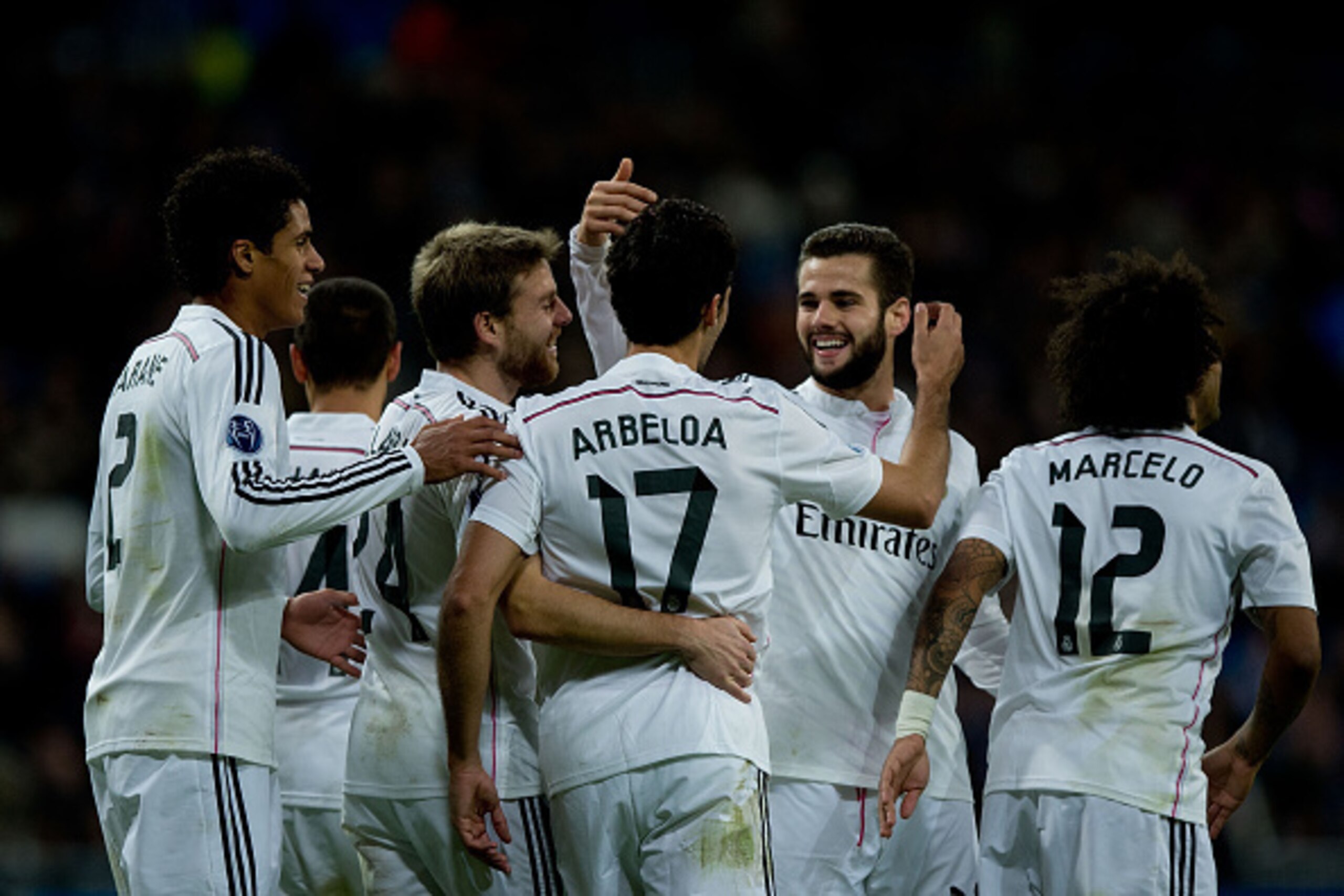
Real Madrid is on a truly historic run.
Carlo Ancelotti's team has won their last 19 competitive fixtures—a mind-boggling streak that dates back to their Champions League opener against Basel. The last time they lost was September 13, a 2-1 setback against Atletico Madrid at the Bernabeu.
Initially this season, Los Blancos looked unbalanced. The midfield was supremely talented going forward but looked weak defending. There were questions as to how they would be able to form a cohesive unit.
Ancelotti has largely answered those questions. The center of his 4-3-3 has been manned by Toni Kroos, Luka Modric and a rotating set of James Rodriguez, Isco and Asier Illarramendi.
Modric is the glue, and both he and Kroos have sacrificed eye-catching attacking numbers to drop back and defend when necessary. They back up the forward line that has come to be known as the BBC—Gareth Bale, Karim Benzema and Cristiano Ronaldo.
The defense is also excellent, but it is also the most vulnerable part of the team. Left-back Marcello can get caught out on attacking runs, and on the other flank, Alvaro Arbeloa is steady but not dynamic.
Raphael Varane is one of the best young center-backs in the world and has played well in this competition, but his partners can leave something to be desired.
Sergio Ramos and Pepe can both have moments of brilliance in the back, but also moments of madness. Ramos has already been suspended once this tournament for yellow card accumulation, and both center-backs are prone to head-scratching red cards.
The weakest point for Real might be in the very back. As little as three years ago, it would be impossible to consider Iker Casillas a question mark, but that's exactly what he has been the last few years. He was awful at the World Cup and very nearly lost Real the Champions League final against Atletico when he made an error on a simple cross that led to Diego Godin's opener.
Juve played Real hard in the group stage a year ago, losing 2-1 at the Bernabeu before earning a 2-2 draw in Turin. The two games were arguably the best Juve played all season.
It's interesting to note that Antonio Conte tinkered with a 4-3-3 in both games. Now that Allegri has made the switch to a four-man defense permanent, it's possible for Juve to give the champions a run.
But you don't want to run into a hot team in a knockout tournament. Injuries could cool Real down somewhat, and their participation in the Club World Cup will use a little more energy than they'd probably like. But if you look at their schedule, it's conceivable to see them brushing off every opponent until the return with Atletico at the Calderon on February 8.
It's entirely likely that this team will still be humming when they get to the beginning of the knockout stage—and that's not something Juve is going to want to see.
Chelsea
3 of 7
In his second season back on the Chelsea bench, Jose Mourinho finally has the team he wants—and it has showed.
The summer arrivals of do-it-all midfielder Cesc Fabregas and hard-nosed striker Diego Costa have transformed the team that finished third in the Premier League last season into a true juggernaut.
Fabregas has been masterful pulling the strings from midfield. According to WhoScored, he has 11 assists in the Premier League—an insane number considering the fact that Steven Gerrard led the league last year with 13. He's added three more, and two goals, in Champions League play.
The main beneficiary of this has been Costa, who opened his first season in England with seven goals in four games and currently sits second in the top-scorer standings with 11.
He hasn't yet translated that form to the Champions League, but he scored eight times for Atletico in their run to the final last year, so he knows how to deal with this tournament.
His lack of notable stats in the continental competition more accurately reflect a nagging hamstring injury and Mourinho's desire to keep him fresh for the league while battling in a fairly easy group.
The Blues are also blessed with a plethora of attacking midfielders, headlined by Eden Hazard. The Belgium international teams up with Andre Schurrle—who won the World Cup with an assist this year—and Oscar, who memorably scored two goals in two minutes against Juve in his Chelsea debut two seasons ago. They are what make Chelsea's attack truly frightening—the goals can and will come from anywhere.
There are some weaknesses. Chelsea isn't a particularly deep team. If Costa were to be kept off the field due to injury or suspension—not out of the realms of possibility considering his six yellow cards in league play—he would have to rely on 36-year-old Didier Drogba to lead the line.
If any of the primary attacking mids go down, it will likely lead to Fabregas playing a more advanced role and a lesser player taking his place deeper in midfield.
Their back line could also be a vulnerable point. Some of Chelsea's biggest offensive outputs have served to cover up lackluster performances on the other end. Early-season games against Everton and Swansea City—which ended 6-3 and 4-2, respectively—are emblematic of their inability to keep the way totally shut.
So, too, was allowing a Manchester United team that was, at that time, in a state of total dysfunction score a stoppage-time equalizer. Similarly, a 10-man Manchester City team was able to snatch a point in the cruelest of ways—an 85th minute goal by former Chelsea captain Frank Lampard.
In last weekend's upset loss, Chelsea allowed Newcastle United precisely two truly dangerous attacks—and allowed them to convert both of them.
Juve fans still think fondly of the meetings between these two teams in the group stage two years ago. Juve impressed in a come-from-behind 2-2 draw at Stamford Bridge in the group opener and were a crossbar away from making it a 3-2 win. Two months later, a dominating 3-0 home win took Chelsea out of the competition and into the Europa League.
But this is not Roberto Di Matteo's Chelsea. Mourinho's Blues are a well-oiled machine that can destroy any team they face. If matched, Juve will have to hope for one of the momentary defensive lapses that seem to plague the side and then defend hard in order to progress.


Barcelona
4 of 7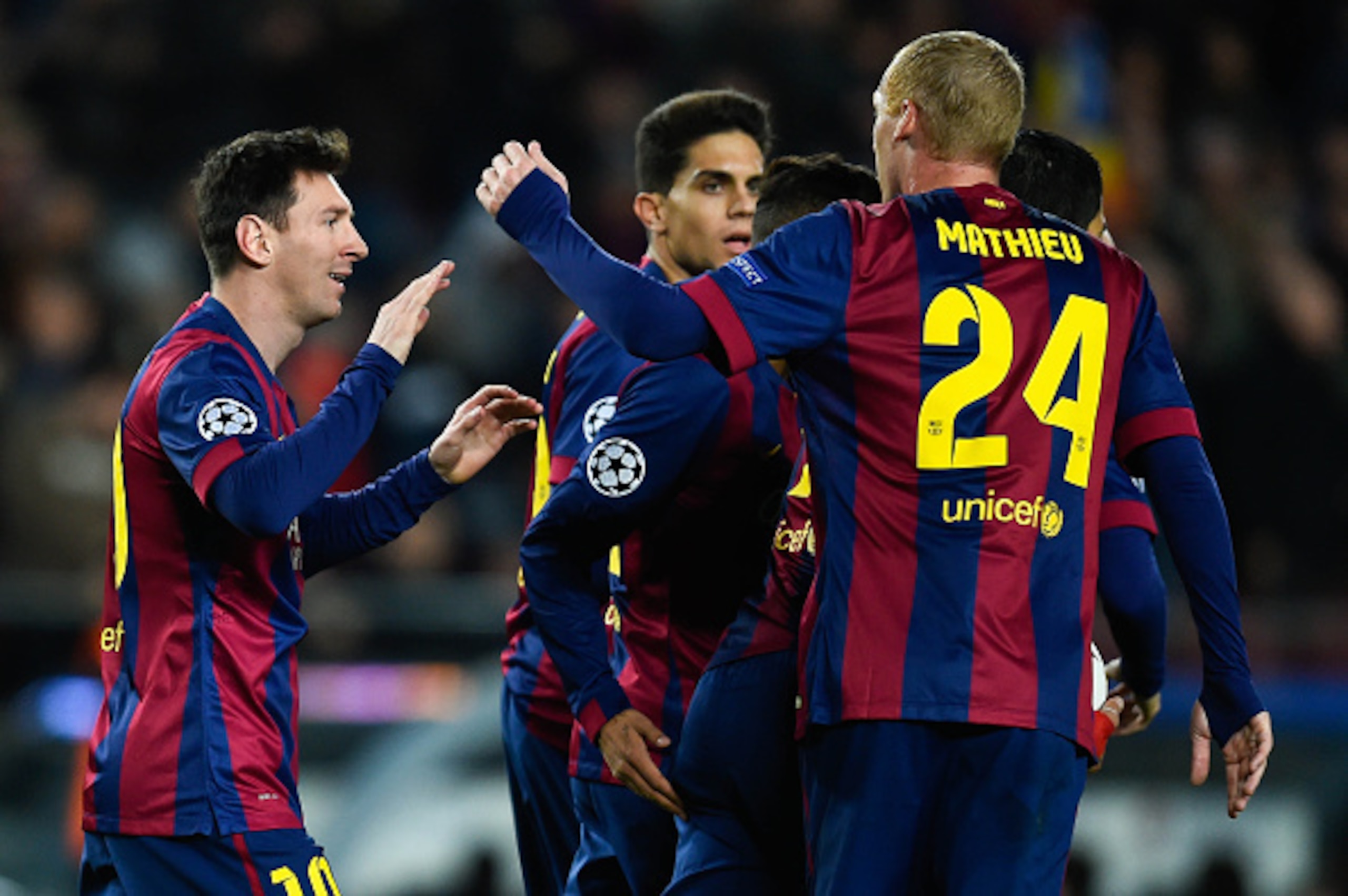
It's strange to see Barcelona this far down the list, but something about the way Barca has played this season has just been...shaky.
It's strange to say about a team that has dropped points in only four games in all competitions this year, but Luis Enrique's Blaugrana don't quite have the aura that the mighty Catalans of the mid-2000s possessed.
Since the middle of October, Barca has struggled to dominate the way one would expect them to. A good number of their victories have come very, very late on, after opponents—that were once swatted away like flies—put up such spirited resistance that one wondered if a point was in the offing for them.
Early signs came in games against Villarreal—a 1-0 victory attained in the 82nd minute—and Athletic Bilbao, who held Barca off until the 79th. But the problems really started in late October at the Clasico.
Enrique's men were up after three minutes at the Bernabeu, then let three goals by to fall to their hated rivals. The next week, they were felled by Celta Vigo in a massive upset. A week after that, they went down to Almeria after 37 minutes and had to be rescued by Neymar (in the 73rd) and Jordi Alba (10 minutes later).
The pattern has continued. They lost a lead against Sevilla before storming back to win. Valencia nearly managed a point at the Mestalla only for Sergio Busquets to save the Catalans in the fourth minute of stoppage time.
In last Sunday's Derbi Barceloni, it was Espanyol that opened the scoring. Barca fans had to wait until the stroke of halftime for Lionel Messi to wake the team from the doldrums.
Even at Wednesday's game—a playoff for the top spot in the group at Camp Nou—PSG took the lead before Barca was able to rally and win.
The point that's being made here is, unless Barca gets things straightened out between now and February, they could be in a very dangerous spot. La Liga is strong at the top but weak throughout, and Europe's top clubs won't be as forgiving of their mistakes.
If all form is equal, Juve isn't a match for Barcelona, and one way or the other they're going to be hoping that their ball isn't paired with them. But if they are drawn together and the Catalans come into the tie with any sort of wobble, it could give Juve an opening. Still, this matchup is unfavorable.
Borussia Dortmund
5 of 7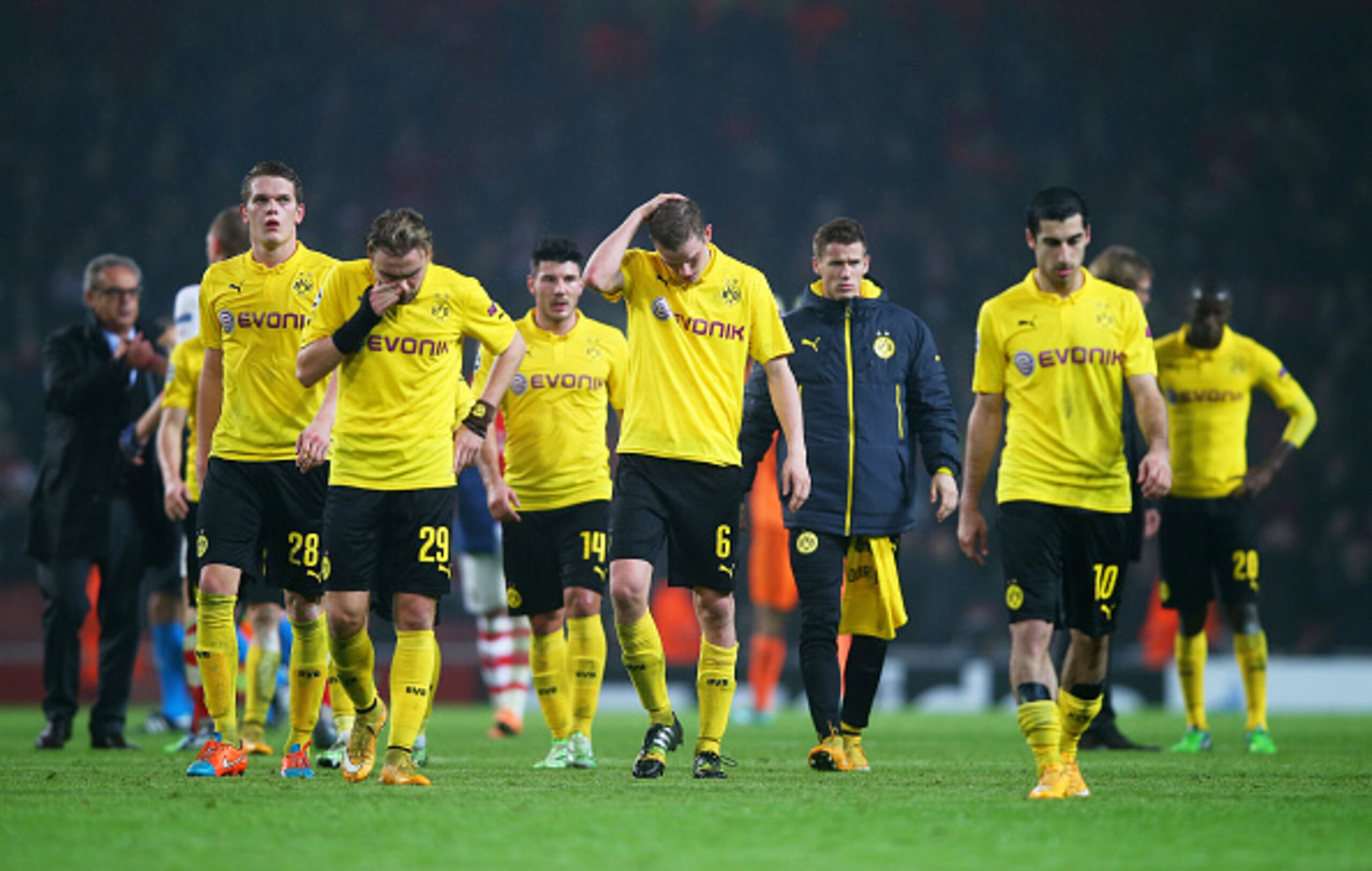
Winning Group D has been the only bright spot in Borussia Dortmund's puzzling season.
From late September through the end of November, BVB lost five consecutive league games and six of eight. The tailspin sent the team that was Champions League runner-up two seasons ago to the very bottom of the Bundesliga. Victory against Hoffenheim got the team out of the relegation zone, but this is still a team that is very, very down.
Injuries have played a massive part in their struggles. Marco Reus has only played half of the team's games. Mats Hummels has missed time, as has Ilkay Gundogan. Jakub Blaszczykowski still hasn't returned to the field after tearing his ACL in January.
That has forced Jurgen Klopp to go deep into his roster, and the results haven't been pretty.
The departures in successive years of Mario Gotze and Robert Lewandowski also haven't helped. Ciro Immobile, brought in to be the Polish striker's replacement, has yet to fire on all cylinders—although it's worth noting that he's tied with three other players with the fourth-most goals in this competition.
This is the first matchup Juve can have that might be truly favorable. Much depends on just how fit they've been able to get between now and February—although it's inadvisable to count out a team run by Klopp.
If we do see these two teams renew the rivalry they enjoyed in the 1990s, it would be a matchup Juve can realistically believe to be winnable.
Porto
6 of 7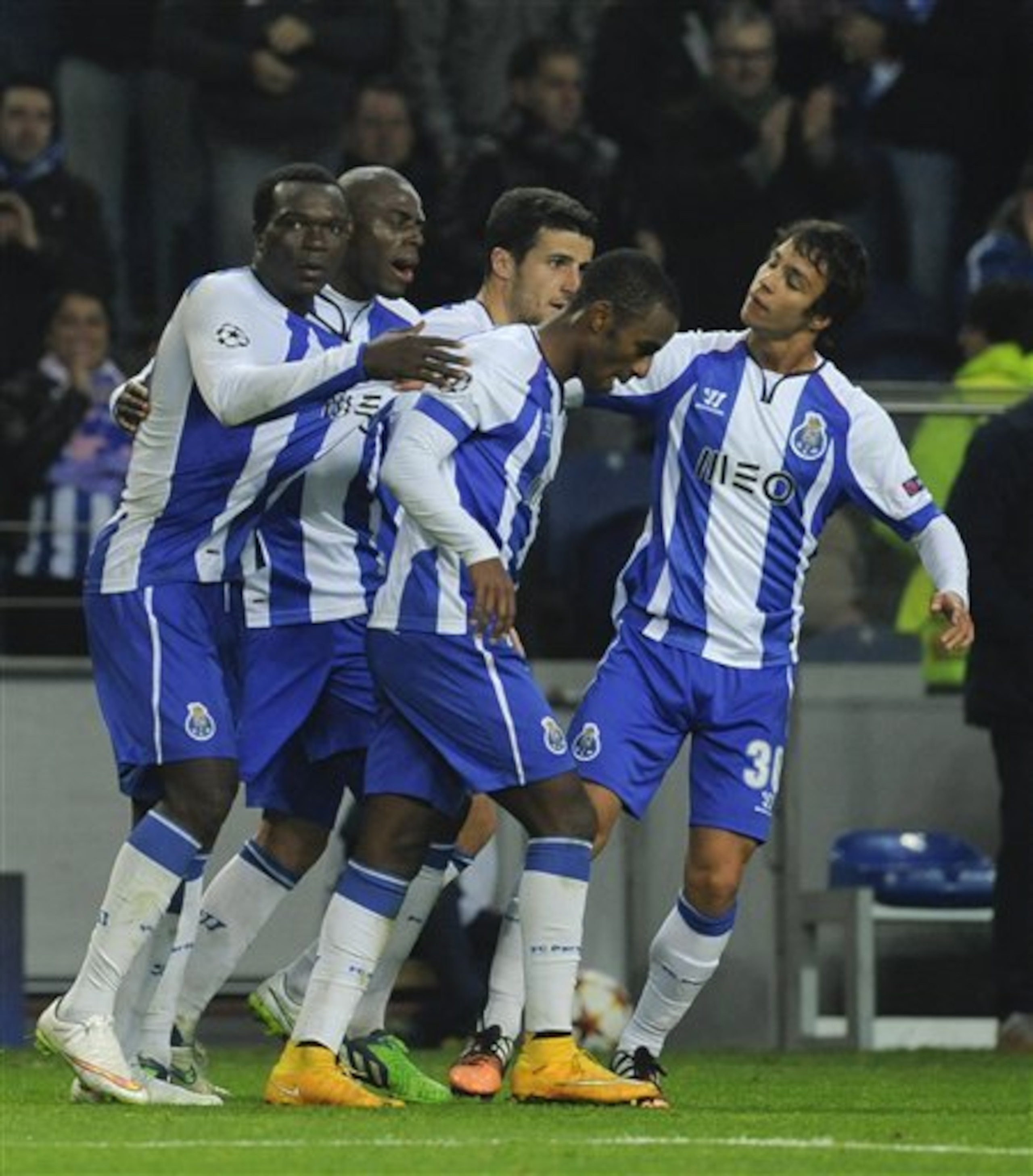
Led by Colombian international Jackson Martinez, Porto made short work of an open group to rack up 14 of a possible 18 points.
In fact, the Portuguese giants are not only unbeaten in the Champions League, but in domestic play as well. It's a run that has seen them move into second place behind bitter rivals Benfica—who they play in O Classico over the weekend with first on the line. Their only loss on the year was a 3-1 loss to Sporting in the third round of the Taca de Portugal.
This year's Porto has become a proving ground for several Liga starlets, including Barcelona's Cristian Tello and Real Madrid's Casemiro. The latter has been a key cog in the Dragoes' midfield, contributing a team-leading 5.5 tackles per Champions League match while completing 84.9 percent of his passes, per WhoScored.
Defense has been Porto's hallmark this season. The team has only conceded five goals in league play and four in Europe. Bruno Martins Indi and Maicon Pereira have formed a potent combination in the middle of Julen Lopetegui's back line, and the flanks, manned by Alex Sandro and Danilo, are solid as well.
The mention of disciplined and effective defense on a Portuguese side is likely to make your average Juventino slightly sick after last year's Europa League semis, but Juve have the firepower that can break this defense down.
It won't be easy, but Juve's defense can match most back lines in the game. A tie here will likely come down to one goal, and the away goals rule may end up being decisive. Still, it's a quality matchup for the Bianconeri.
Monaco
7 of 7
Like Porto, Monaco has been extraordinarily stout defensively in the Champions League, giving up only one through the six games. Unlike the Portuguese side, that hasn't been the case for them domestically. The principality club has given up 18 goals in 17 games and only has a goal difference of plus-3 in Ligue 1.
The really strange thing about Monaco's group win is that they did it while only scoring four times.
You read that right. Four goals in the entire group stage, and they still managed to take the group by a point over Bayer Leverkusen. No Monaco player scored more than once, and their leading scorer in the league—Dimitar Berbatov—hasn't scored at all in Europe this season. The team only scored more than once in a game, in the finale against Zenit St. Petersburg, and had a pair of 0-0 draws.
That lack of offensive punch is going to be a problem. Juventus boasts one of Europe's best defensive units, and that unit will only get better as Martin Caceres and, hopefully, Andrea Barzagli return from long-term injuries.
Monaco's poor scoring record makes them the ideal opponent for Juve. It's conceivable that they could build a lead in Turin before going back to the Stade Louis II in a position to simply ice the win.
Monaco is easily the weakest of all the group winners—and the best-case draw for Juve on Monday.

.jpg?w=2560 "NBA Gambling Charges")

.jpg?w=2560 "Aikman Blasts Cowboys WR 🫣")


.jpg?w=2560 "Jonathan Taylor Landing Spots")