What Getting Captain Zdeno Chara Back from Injury Means to the Boston Bruins
Zdeno Chara is poised to return Thursday night after missing 19 games with a knee injury, and the Boston Bruins couldn't be happier to have him back as the team limped along to...
...an 11-7-1 record? Without Chara? Really?
How did the Bruins manage to not only stay afloat without a generational defenseman for nearly one-fifth of the season but play at about a 100-point pace over that time? After all, not only was Chara missing, but David Krejci and Adam McQuaid were out for most of that stretch too.

As with anything, a mix of luck and skill played a role in the Bruins' success in Chara's absence.
First, the luck. And there was quite a bit of it.
The Bruins had soft spots in their schedule during those 19 games without Chara and took advantage of them. In seven games against teams that are below the NHL's definition of .500, the Bruins went 7-0-0. The Bruins defeated Buffalo, Columbus, Carolina, New Jersey, Edmonton, Ottawa and Arizona by a combined 28-15.
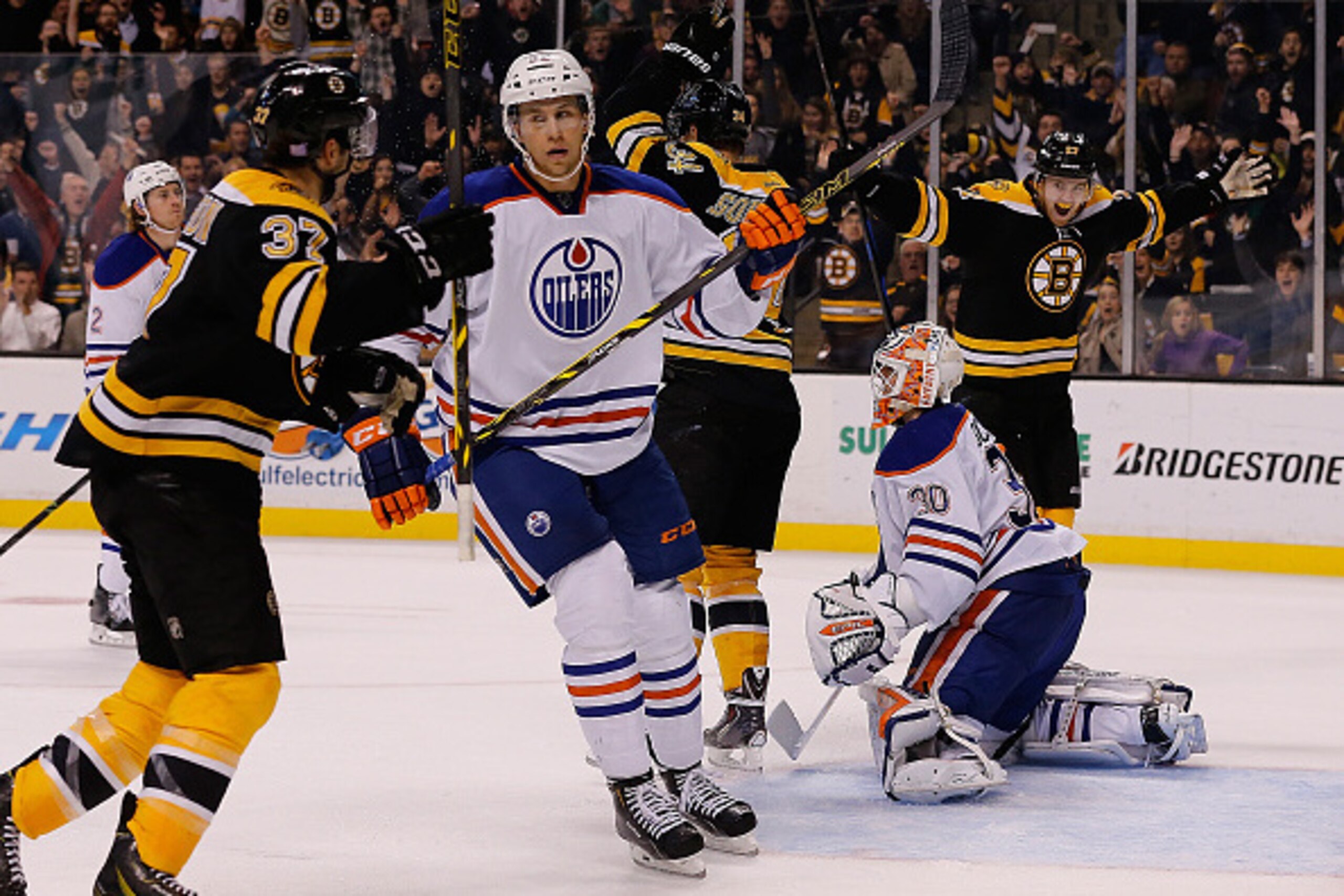
The obvious weakness on the back end was exploited far more often by the league's better teams, as the Bruins went a measly 4-7-1 against squads above NHL .500.
Against the sub-.500 teams, the Bruins allowed 2.14 goals per game; against the better opponents, the Bruins allowed three goals a contest.
Therein lies the value of Chara: Sure, he's older now and not as dominant as he was three or four years ago, but his presence is what takes the Bruins from being a good team to one that can compete with anyone. The Bruins are plenty good enough to pummel the Oilers and Coyotes of the world but they take a step down in class against the likes of the Kings and Canadiens when their captain is sidelined.
That's not exactly breaking news, but it's something to consider if Chara were to miss the remainder of this season, or when he one day retires and permanently leaves the Bruins' blue line in a state of mediocrity. It can be easy to take someone like Chara for granted and forget why the Bruins are the Bruins you know and love today, so this 19-game stretch should serve as a reminder of his greatness and provide a glimpse into a somewhat bleak, not-too-distant future.
Via war-on-ice (it's a downloaded table and can't be linked), the bounces were without question going the Bruins' way during Chara's absence.
| With Chara | 9 | 11 | 15 | 53.8 | 96.5 |
| Without Chara | 19 | 31 | 25 | 51.7 | 102.1 |
The above numbers are always best applied over larger sample sizes, but as you can see, the Bruins had the puck less without Chara yet somehow found a way to make it work. That 102.0 PDO screams luck, and sometimes that happens over 19-game stretches, no matter the team.
The skill, however, also contributed to keeping the Bruins in playoff contention.
As evidenced by their win-loss record in Chara's absence, the Bruins have more than enough talent to handle the league's more inept teams. That's a credit to the job done over the years by GM Peter Chiarelli, even if he has done an incredibly poor job of managing the salary cap the past two seasons. Patrice Bergeron is still murdering the competition at even strength and the Bruins are 12th in Fenwick close (51.8 percent) this season.

The Bruins have the game's best two-way center in Bergeron and one of the best coaches in Claude Julien, and sometimes that's enough over 19 games.
The gut reaction for explaining the Bruins' success without Chara is to say Tuukka Rask, one of the best goaltenders in the league, carried the team on his back. But Rask was more his usual self over that time (.922 in 15 starts, about .004 below his career mark) than a goalie having a superhuman stretch, which is usually categorized by a save percentage somewhere in the .940s.
Chara was playing about 22 minutes per game, almost all of it against the opponent's best players, when he went down. That load fell mostly to three players: Dougie Hamilton, Torey Krug and Dennis Seidenberg, who had mixed results.
Krug had the roughest go of it. The 23-year-old had 14 goals and 40 points a season ago, playing sheltered minutes mostly on the bottom pairing. He was expected to assume a bigger role entering this season, but it became much bigger than he or the Bruins expected when Chara went down and it didn't exactly work out.
Krug's Fenwick close through nine games this season was 56.1 percent, which translated into a plus-3.8 percent relative to his teammates. That's not far off from the 54.3 percent Krug posted last season. But Krug dipped to 45 percent in Chara's absence, a relative minus-6.0 percent.
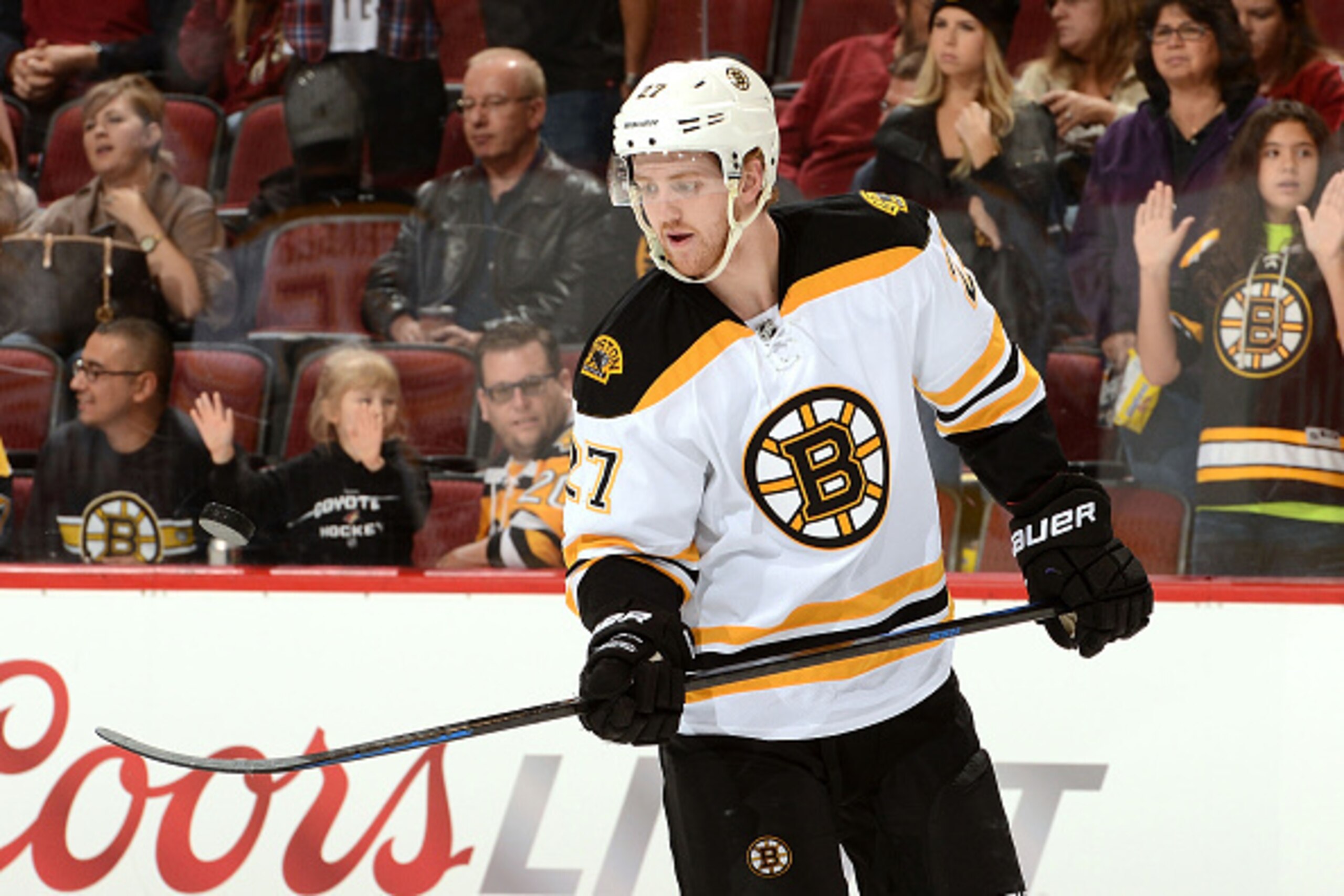
Seidenberg went the other way, going from 48 percent to 50 percent in close situations. The 33-year-old played at least 22 minutes in 14 of 19 games with Chara out, and perhaps an indirect effect of his increased ice time was that Seidenberg got back to his old self quicker after missing most of last season from knee surgery.
But it was Hamilton who answered the bell most effectively. The ninth pick in the 2011 draft went from 53.9 percent to 54.1 percent, which is impressive when considering the level of competition he was facing and the fact he was plus-5.1 percent relative to his teammates with Chara out.
The truly encouraging news for these three defensemen is they can now slot back into the roles for which they are better equipped, while the experience of added responsibility can only serve to help them. Krug had just two goals and two assists in 15 games without Chara; don't be surprised to see him return to his 2013-14 scoring levels with Chara healthy again.
And don't be surprised to see the Bruins begin pushing their way to the top of the Atlantic now that they have their rock back on the blue line and Krejci not far from returning.
All statistics via NHL.com and Stats.HockeyAnalysis.com.
Dave Lozo covers the NHL for Bleacher Report. You can follow him on Twitter: @DaveLozo.
.jpg?w=2560 "NHL Trade Grades Connor Hellebuyck")


.jpg?w=2560 "Malik Beasley Negotiating Plea Deal (AP)")
.jpg?w=2560 "Aikman Blasts Cowboys WR 🫣")


.jpg?w=2560 "Jonathan Taylor Landing Spots")