

Knicks Hope to Emulate Spurs' Success After Lost Season
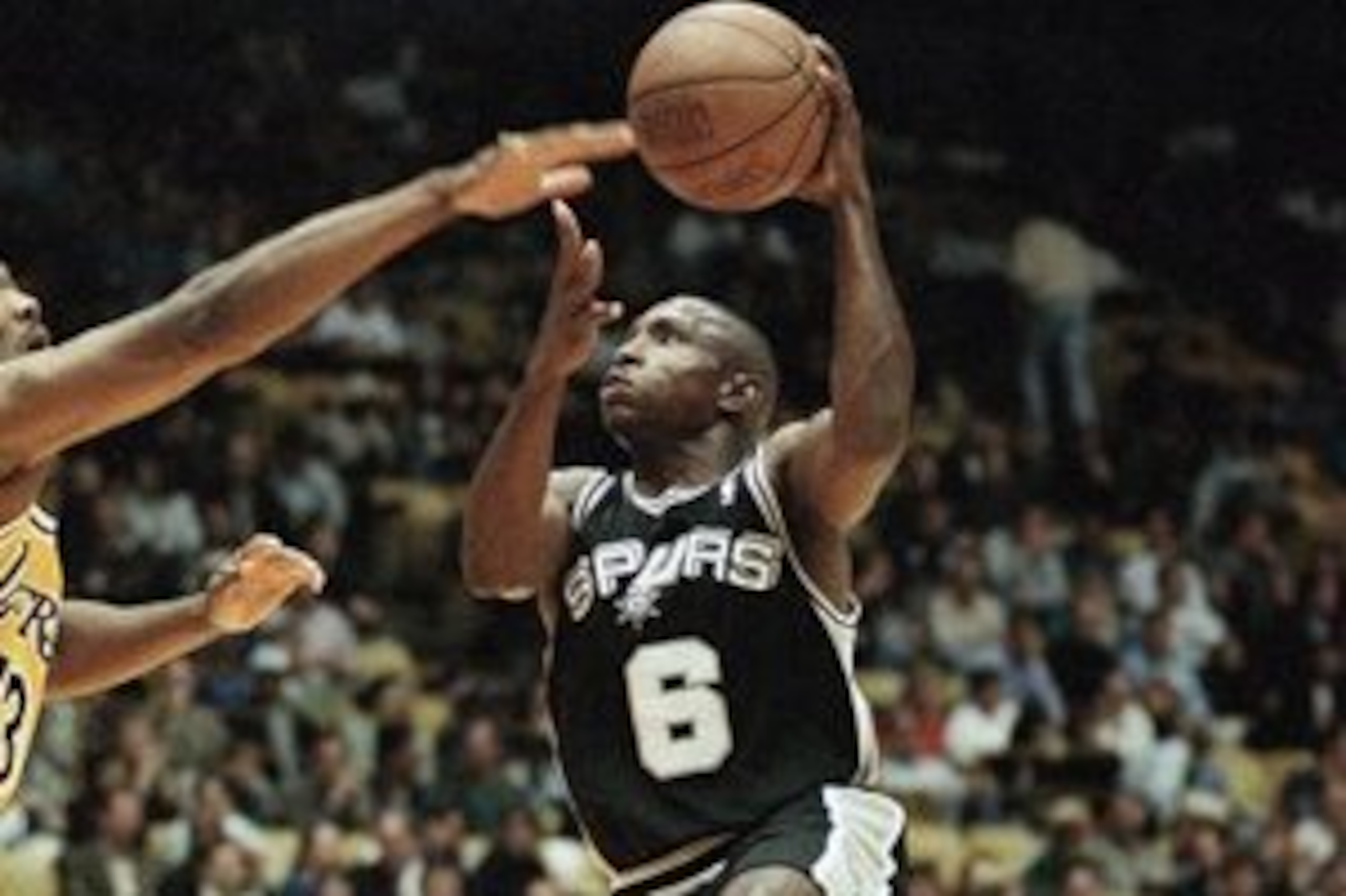
Recently, Dominique Wilkins has begun to receive his just due, whether a statue outside or a ceremony inside Philips Arena, for all he did as a NBA player. Well, actually, for all he did as an Atlanta Hawk since few can recall his four other stops. The aerial artist commonly known as "The Human Highlight Film" did represent teams in Los Angeles, Boston, San Antonio and Orlando, too, though in each case, there's little footage to prove it.
Which is a shame because Wilkins had an immeasurable impact on one of those four franchises, one that is still being felt today. On Nov. 1, 1996, after spending a season in Greece, a nearly 37-year-old Wilkins played his first of 63 games for a Spurs squad that was coming off a 59-win season. He would play 62 more, starting 26 of them, and finish first on the team in both total points (1,145) and points per game (18.2).
TOP NEWS

Jokic says booing fans not welcome in Denver

Brown with an all-time summary of relationship with Tatum
Worst NBA Predictions 🫣
The Spurs would lose 49 of the 63 games that Wilkins played.
They would lose 62 of 82 games in all.
But that single-season setback set them up to keep winning ever since.
"It's a good thing we didn't get the old Atlanta Hawks Dominique, the guy who was flying above the rim, dunking on everybody," said ESPN analyst Avery Johnson, Wilkins' teammate that season. "I never want to wish an Achilles injury on anyone. But we were lucky to get the guy who couldn't jump, couldn't move very well, couldn't space the floor but still got up a lot of shots."
Johnson laughed.
"Let's make this clear, I love Dominique," Johnson said. "So I don't want to act like I'm taking shots, I'm actually having fun. But as part of our first championship, I think we should have given Dominique a ring."
Wilkins would gladly take one.
Or five.
That's how many championships the Spurs have won since.
"It pains me because I helped them get Tim Duncan," Wilkins said, smiling.
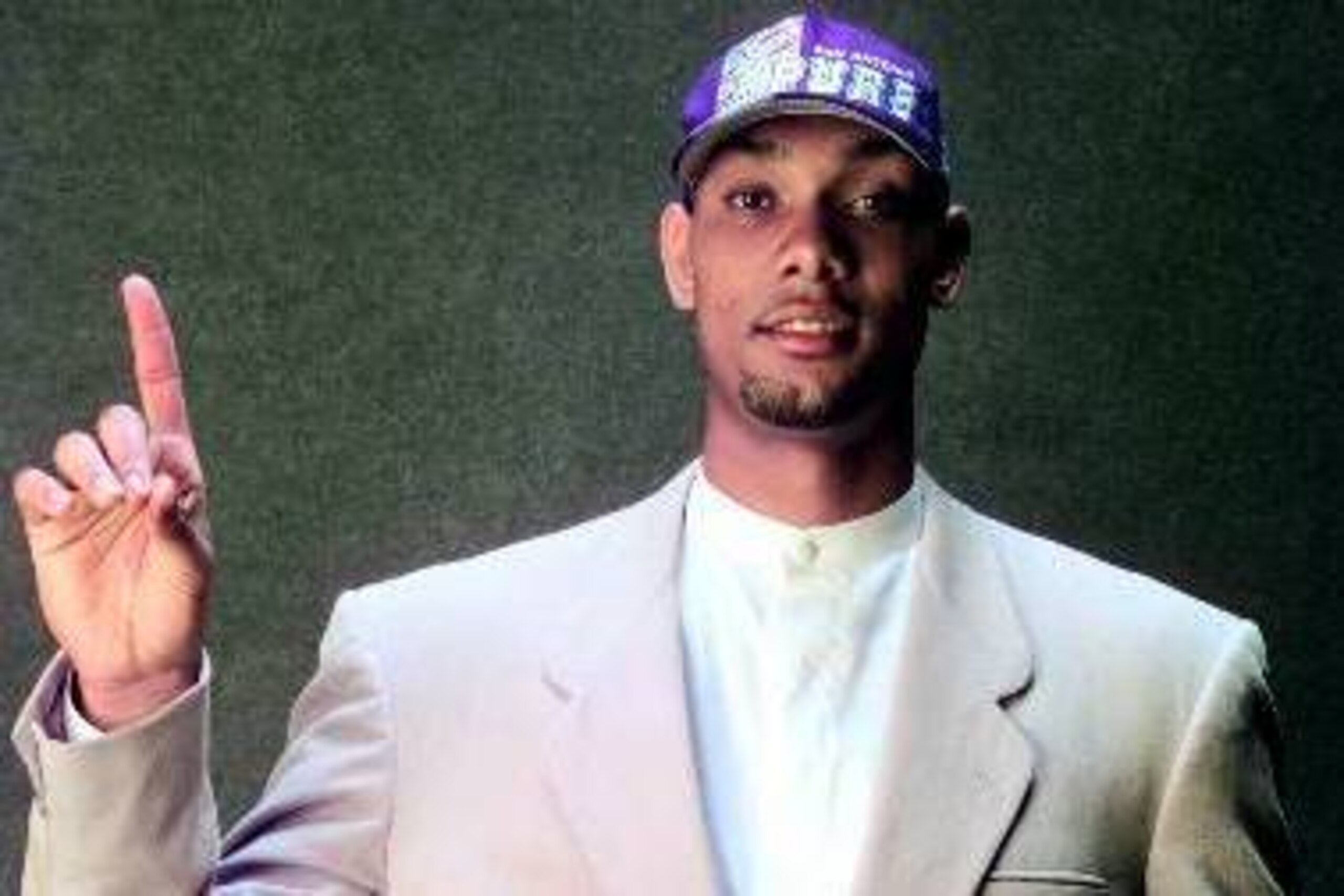
It does seem that he did even if it wasn't intentional and even if he still contends that he had "a very good year" while connecting on a then-career-low 41.7 percent from the field. But he wasn't the only one: So did a lot of Spurs veterans, players with names you may know well, who either couldn't stay healthy or didn't perform up to career standards.
That season, long forgotten in a blizzard of sustained Spurs success, is worth remembering Tuesday, as Gregg Popovich's team visits Madison Square Garden to face the Knicks, who are suffering through misery similar to what the Spurs endured in 1996-97. New York is 13-53, on pace to finish 16-66. The Knicks have arrived at that wretched record through extreme incompetence—and then, it seems, some level of intention.
Monday, prior to playing for the contending Cavaliers in Miami, former Knicks guard J.R. Smith insisted that it "was never a tanking situation where you're trying to lose. When I was there, we always tried to win; we always tried to put the best team we could put out there on the floor, but just due to injuries, we weren't able to."
Smith admitted, though, that things changed around the All-Star break, soon after he and Iman Shumpert were traded for future flexibility and when Carmelo Anthony shut it down for the season.
Knicks President Phil Jackson recently called his first Knicks season "a project gone awry" and suggested that, for the quickest possible fix, he might be willing to trade the 2015 first-round pick that all the current losing—which is guaranteeing plenty of lottery balls—is rendering more potentially valuable. He also indicated that he will use free agency as his primary means of bolstering the roster.
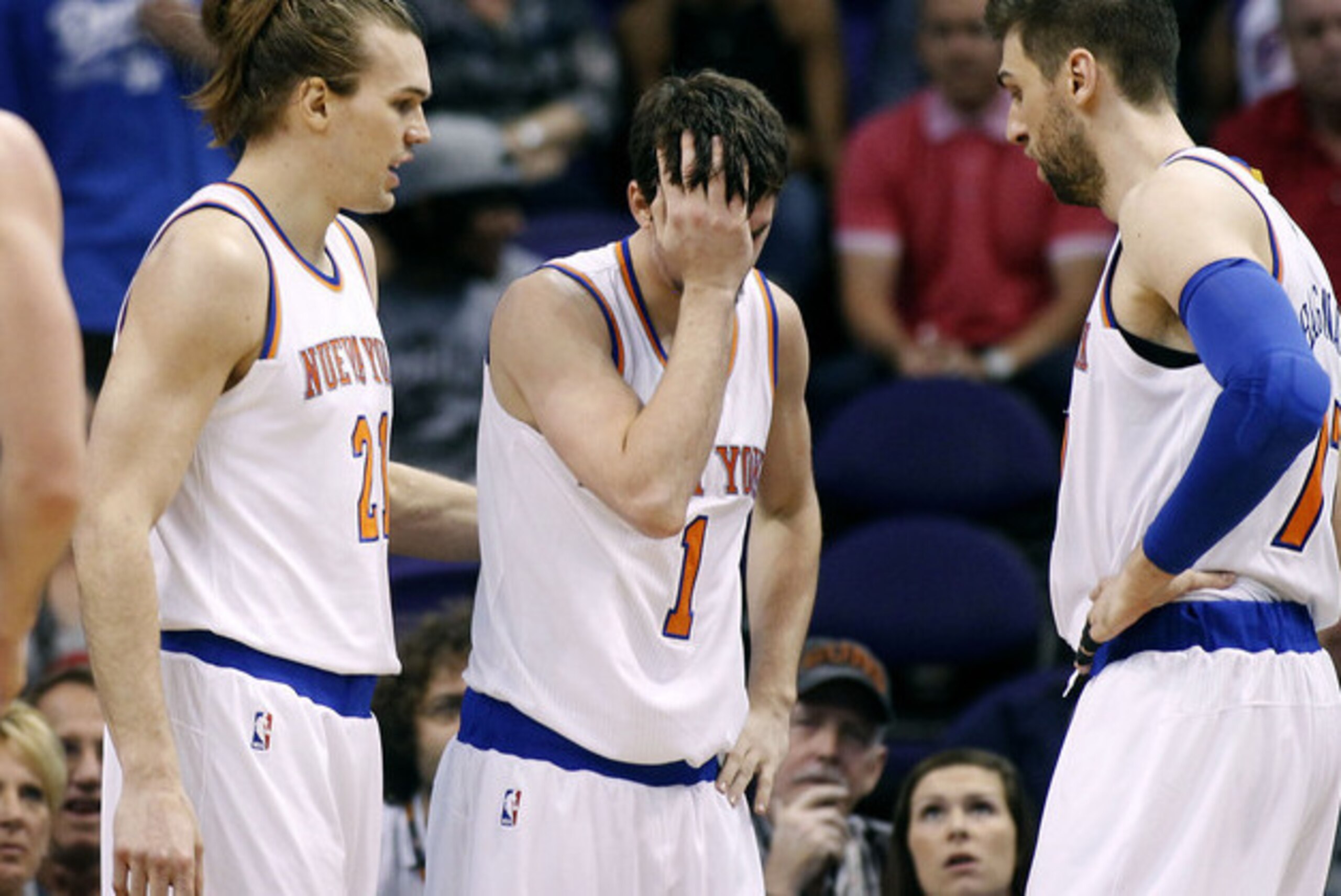
Still, the tanking accusations won't taper much, not after the trades of Smith and Shumpert, the buyout of Amar'e Stoudemire and the shelving of Anthony. Not when the Knicks have been starting a lineup of Andrea Bargnani, Lou Amundson, Lance Thomas, Alexey Shved and Langston Galloway. Not when some organizations have benefited greatly from being really, really, really bad.
Including the gold standard of organizations.
For the Spurs, disaster begot dominance.
Pain became gain...and a rather long reign.
The Spurs enter Tuesday's game with a winning percentage of .631, which would be their 18th straight season—since suffering a .244 mark in 1996-97—of .610 or better (and actually their second-worst in that span). It's a number that, incidentally, the Knicks have topped just once in those same 18 seasons, back in 2012-13 before New York's brittle bodies broke and fragile chemistry cracked.
The one Spur who has been part of all 18 of those seasons?
Duncan's longevity is stunning, but his success hardly is. Everyone knew that he was special when he graduated from Wake Forest and that he could develop into a franchise centerpiece. Certainly, some teams, the Boston Celtics foremost among them, seemed to be angling for an opportunity to select him by not always putting their best talent on the floor.
So were the Spurs also trying to lose for lottery balls?
Well, they didn't set out to do so when the season started.
They were supposed to return their top six scorers, including center David Robinson, who had just played in all 82 games while averaging 25.0 points per game.
In the preseason, though, Robinson hurt his back.
He returned in December, only to break his foot.
Robinson would play only six games all season.
And then?
"Everybody got hurt," Wilkins said. "Will Perdue got hurt. Sean Elliott got hurt..."
Perdue would play 65 games.
Elliott would play 39.
Chuck Person suffered a back injury and would miss the entire season.
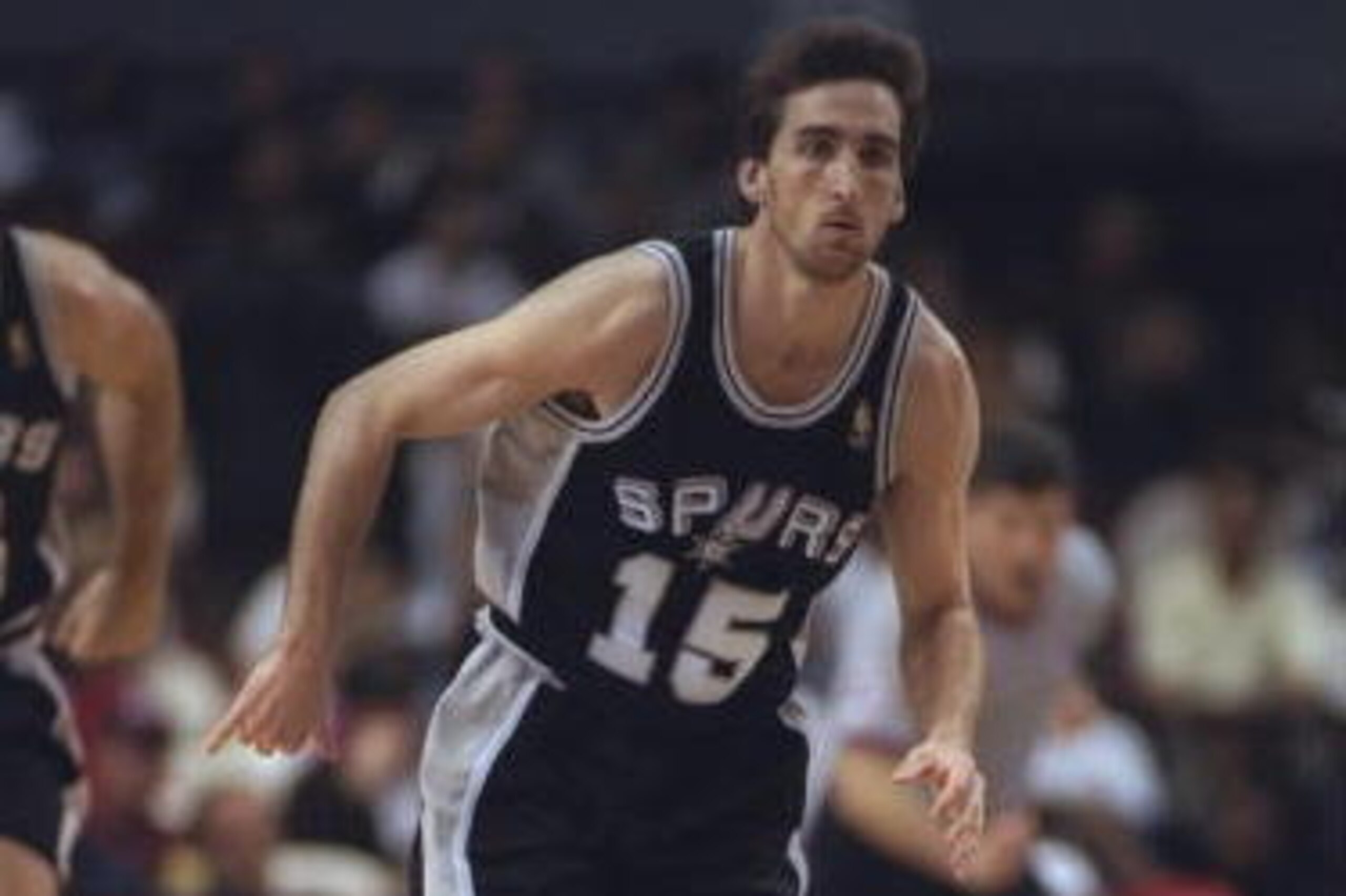
"I had an elbow injury," added Vinny Del Negro, who did play in 72 of 82 and later became one of three NBA head coaches from that roster, along with Johnson and Monty Williams. "Avery had some hip injuries. It was just one of those things where we had a four- or five-year run, and then all of a sudden, it just hit where everybody was just injured. And then we brought in some other free agents. But it was just one of those seasons where we could never get enough guys healthy at the same time."
It was one of those seasons when, at some point, that no longer became the focus; rather, it was just about getting to the end with some dignity intact.
"It just came to, hey, man, we're just trying to survive," Wilkins said.
What does Williams, who was then just 25, recall?
"We got the fleas beat off of us," said Williams, now the coach of the New Orleans Pelicans. "That was my recollection. Got beat like a drum. That was it. Just got tore up. It was not fun at all."
"[It was] just brutal," Elliott, now a Spurs broadcaster, said. "Without Dave, we just didn't have that anchor in the middle. We had a bunch of new guys we were trying to acclimate to the team. It was a lot of chaos, to be honest with you."
Johnson called it "frustrating because we were just a couple of years removed, in the '94-95 season, of having the best record in the NBA and losing to the Rockets in the Western Conference Finals. We were 62-20 in 1995, and the next year, we lost to Utah in the second round. But it was a long year because I had become accustomed to playing with David, and he was not around. We basically were a team, because of our lack of chemistry and continuity, that had lost a game before we had even walked on the floor. And that was a tough pill to swallow."

Then they had to digest something else:
A switch at the top from the likable Bob Hill to...Pop.
At the time, it wasn't the most, well, popular move.
"Pop just walks on the bus in Phoenix," Johnson said of Popovich, who had been serving solely as the team's general manager. "I'll never forget it. He walks on the bus and says, 'I made a coaching change, I'm the new coach, let's go to shootaround.' And everybody was just in shock. It was a weird year."
After all, back then, Popovich didn't have the championships he does now.
So he didn't seem quite so charming.
"Pop had just started coaching," Williams said. "So can you imagine having Pop 20 years ago? Right? All you guys think I'm weird, imagine that 20 years ago."
Popovich is now seen as one of the guardians of the game.
So did he ever endorse tanking?
"No," Elliott said. "It was just what happened. It was a chemistry problem, just trying to get everyone on the same page. It just wasn't working out too well for us. Pop takes over after firing Bob Hill, so there was a little bit of that chaos, too. We all liked Bob; we didn't have a problem with him. Pop takes over, and boy, he was a lot tougher, a lot more rigid. Pop wanted to build our offense around Big Dave, do a little bit more of that, and then when Big Dave was gone, we were kind of just drifting out there."
Johnson insisted that "the word 'tanking' never came up."
Not in any meeting with players, anyway—though Del Negro did acknowledge that, at some point, with the season lost, the mission changed to getting core components healthy for the next season rather than rushing back from surgeries.
"Pop didn't walk in the locker and say, 'Hey, guys, we're gonna go out here and try to play the worst game of the year,'" Johnson said. "I think it just came to pass that way. Toward the end of the year, we just tried to play some younger players, and fortunately for the Spurs and the future of the team, we lost those games."
Johnson laughed. He recalled Popovich trying to get the Spurs to emulate Detroit defensively and Utah offensively during strenuous practices.
"But when we got in the games, we just weren't good enough," Johnson said. "And if we had a close game in the fourth quarter, we weren't good enough to close those games. Fortunately, those games were lost. What people fail to realize, though, is the Spurs didn't have the worst record that year."
No, the Grizzlies (14) and Celtics (15) both had fewer wins.
"So it wasn't like we tanked and we had the worst record," Johnson said. "We didn't win [just] five games that year. I think that's kind of the misperception about that whole deal. But I just think every decision that was made, in terms of how to play the game and try to develop some younger players, led to a lot of losses. But obviously, Tim Duncan was the ultimate result of that."
Robinson returned for the next season, playing 73 games alongside his then-rookie teammate from Wake Forest.
The Spurs quickly recovered to go 56-26.
They've been rolling ever since.
"It worked out," Wilkins said.
The next season, the Spurs weren't in the running for a top pick but a top seed, ultimately finishing fifth in the West before losing to Utah in the second round. It was proof that none of the losing habits of 1996-97 had stuck.
Why not?
"Well, it was Pop and the character of the guys that we had," Johnson said. "Unlike a team like Philadelphia [now], we were getting some veteran, battle-tested guys back the next year."
The Knicks will get Anthony back next season but not much else of note from the current roster. So even if they strike lottery gold and draft someone like Jahlil Okafor—whose offensive game has drawn some Duncan comparisons—they'll need much more to compete.
Otherwise, maybe they can get 'Nique to suit up again, at age 55.
After all, he's already had a hand in one turnaround.
Right?
"Dominique did a lot that season," Williams said, laughing. "But I wouldn't give him credit for anything, outside of jacking up a bunch of shots."
Ethan Skolnick covers the NBA for Bleacher Report and is a co-host of NBA Sunday Tip, 9-11 a.m. ET on SiriusXM Bleacher Report Radio. Follow him on Twitter, @EthanJSkolnick.

.jpg?w=2560 "Mahomes Told Teammate to Leave Meeting")
.jpg?w=2560 "5 Teams Eyeing Jonathan Taylor")

.jpg?w=2560 "Baker Gets Glove From Rays 🧤")
.jpg?w=2560 "🚨 Week 8 AP Top 25 Poll")
.jpg?w=2560 "NFL investigating Eagles")
.jpg?w=2560 "Steelers Roll Saints in Paris")
