When Do We Know Who an NBA Team Actually Is?
The NBA season can often be a topsy-turvy mess, with teams establishing new identities throughout the season, incorporating injured pieces and losing players to maladies at almost every twist and turn.
But is there any point at which teams stabilize?
It's tough to draw any firm conclusions about the Association's 30 squads after they've played just a handful of games, but perhaps that process becomes much easier when they have a dozen contests under their respective belts. Maybe it gets easier when teams are nearing the quarter mark of the season, as we are now. But there's always a chance we can't figure out the true identities until we're beyond the halfway point.
TOP NEWS

Pic of LeBron's Helicopter Commute 🚁

Duren Calls Out 'False' Rumors

NBA Power Rankings Entering Preseason 🔢
Can we accept that the Milwaukee Bucks are for real when they're sitting pretty—by Eastern Conference standards, at least—with an 11-12 record? Is it time to officially foretell doom for the Los Angeles Lakers and New York Knicks, or is there still hope of a shocking turnaround?
To answer those questions, I looked at data from the 2013-14 season, compiling each team's offensive and defensive ratings after every one of its 82 regular-season games. Since we know each squad's final points scored and allowed per 100 possessions, we can find the percent error after each game, which allows us to look at when those discrepancies begin to stabilize.
After all, the closer the numbers are to the final versions, the more a team has stabilized.
You can see those results below, but warning: It will look—as it should—like a massive cluster of data that's hard to interpret early in the season:
During the first few games, most teams have data points that are high on the y-axis, indicating that their offensive and defensive ratings are quite far off from where they'll end up after the 82nd contest of the campaign. There's plenty of fluctuation during this period of small sample sizes, but everything actually stabilizes quite nicely rather quickly.
By the 10th game of the season, the San Antonio Spurs, who would go on to finish with a 62-20 record, had the highest total percent error, while the eventual 29-53 Detroit Pistons' numbers were closest to their season-end results:
| Pistons | 106.8 | 106.6 | 0.19 | 109.5 | 110.4 | 0.82 |
| Spurs | 104.4 | 111.1 | 6.03 | 94.5 | 102.9 | 8.16 |
At that point in the year, plenty is changing. Teams are still figuring out how they want to play, they're shifting new pieces into their rotations, and they're affected heavily by one or two outliers. One blowout can matter quite a bit when it's literally 10 percent of the equation.
But from there, teams only reinforce their identities. After all, they have to get to zero total percent error by the end of the season, so everything naturally trends in that direction.
Though there are a few stragglers—the Milwaukee Bucks, for example—the total percent error is holding steady once we get into the late 20s. That becomes even clearer if you look at the teams with the highest and lowest summed total percent errors over the course of the season:
As you can see, it didn't take long for the Sacramento Kings, who would win only 28 games all year, to reveal their true colors. Just a handful of games into the season, they'd established their identity on both ends of the court, and it wouldn't change much during the rest of the go-round.
The Bucks, however, took a while to figure out who they were en route to a 15-67 season, which was likely due to a string of major injuries and some steady improvement throughout the year after their turbulent start. But even Milwaukee had a total percent error under 10 after the 26th game of the season.
That's not good enough for our purposes, but it's notable simply because that's the team that had the most trouble stabilizing throughout the 2013-14 campaign. And, as you can tell from this next graph, it's clearly a major outlier:
To get even more accurate, let's go ahead and remove the two biggest outliers from each end of the spectrum. The following average will no longer take the Bucks, Cleveland Cavaliers, Kings or Portland Trail Blazers into account, as the first two stabilized quite slowly, and the latter didn't take any time at all to do so:
Maybe you aren't surprised by how quickly teams tend to stabilize, but I certainly was when I first saw the results of that analysis.
Within 10 games, the league-average squad has less than five percent error between its current ratings and the ones it will put up at the end of the season. It only takes 18 games for the total percent error to drop to exactly four.
But what does that mean?
Let's take the Bucks from this season as our example, since they're perhaps the most surprising team in the NBA. After all, they were hovering right at .500 before dropping a Tuesday night contest to the Oklahoma City Thunder, and this is coming directly after a massively disappointing season.
After that loss to OKC, Milwaukee had a 103.6 offensive rating and a 105.4 defensive rating. Accounting for a total percent error that we saw last year after 18 games, there's only so much fluctuating that those numbers can do.
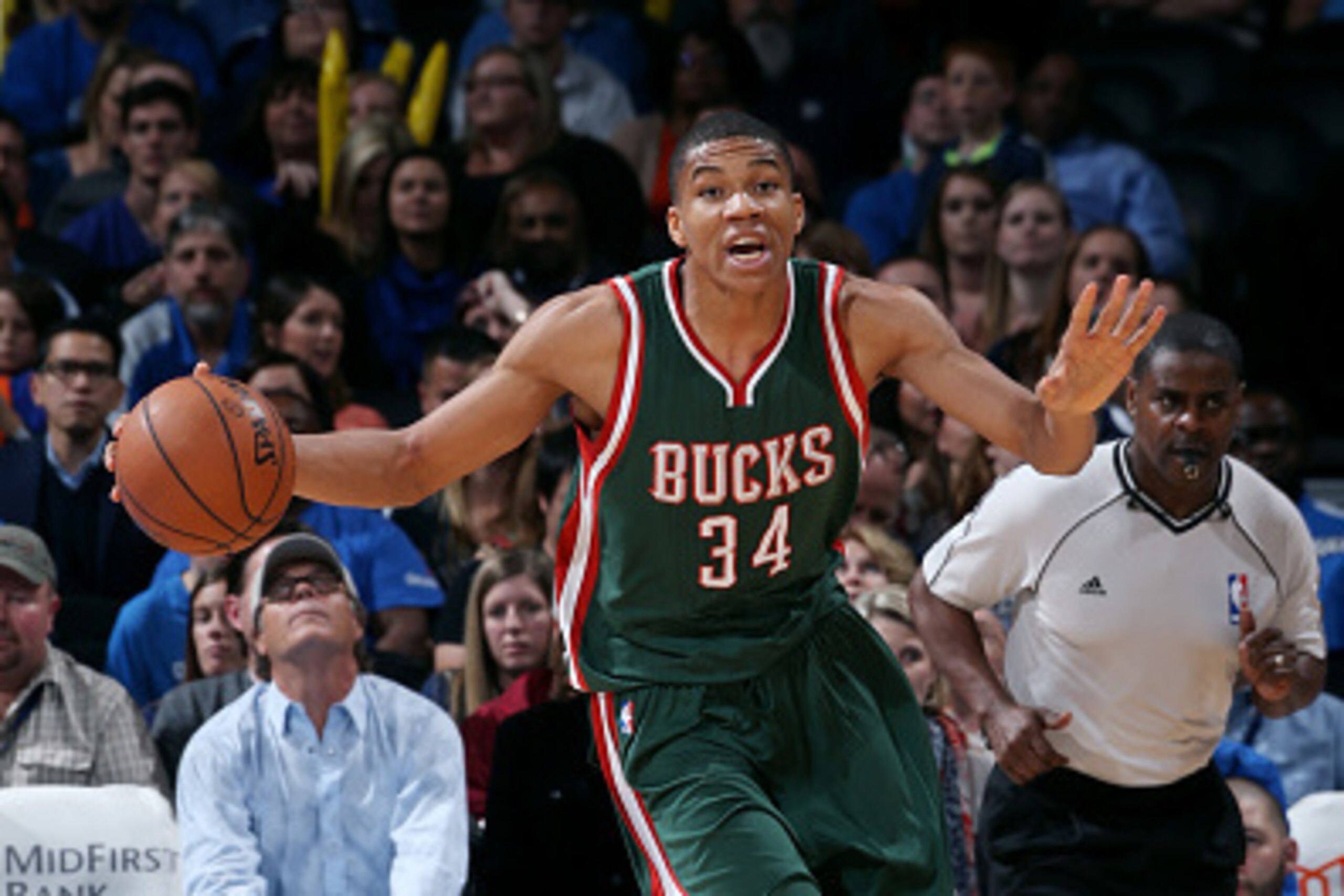
Here are a few possibilities that are 4 percent away:
- 107.7 offensive rating and 105.4 defensive rating (all the changes come positively on offense)
- 99.5 offensive rating and 105.4 defensive rating (all the changes come negatively on offense)
- 103.6 offensive rating and 109.6 defensive rating (all the changes come negatively on defense)
- 103.6 offensive rating and 101.2 defensive rating (all the changes come positively on defense)
But none of those is very likely, as teams don't tend to change on just one side of the ball. In fact, the percent error is split almost exactly between defense and offense when looking at the league-average data. So, let's see what the possibilities are for Milwaukee under those restrictions:
- 101.5 offensive rating and 107.5 defensive rating (worse on offense, worse on defense)
- 101.5 offensive rating and 103.3 defensive rating (worse on offense, better on defense)
- 105.7 offensive rating and 107.5 defensive rating (better on offense, worse on defense)
- 105.7 offensive rating and 103.3 defensive rating (better on offense, better on defense)
By compiling the offensive and defensive ratings of every team in NBA history—and adjusting to account for league-wide trends—I can compare each of those four possibilities to each squad that has ever suited up in the Association. By finding the 10 best matches, I can give a basic prediction for how many games each of those various possible versions of the Bucks would win:
There's some room for variation, but how likely is it that the team regresses or improves the maximum amount on each end of the ball? Chances are, it'll be something more mixed, and there's always the possibility of this team showing less than 4 percent error as well.
So, how strong is that amount of error? Pretty darn strong in this case, and it indicates that teams tend to stabilize rather nicely as soon as 18 games into the season. Milwaukee is on pace—based on historical data, not the current win-loss percentage—to win 37 games, and that's right around where it should finish. Pinpointing the exact number is impossible, given the 4 percent of fluctuation allowed, but we should already be confident in predicting the Bucks will finish just below .500 and have a legitimate shot at an Eastern Conference playoff berth.
Of course, there will always be exceptions.
The Thunder this year, for example, are going to look nothing like they do now when the end of the season is approaching. But that's a weird circumstance, as two of the league's 10 best players are being incorporated back into a lineup that was decimated by injuries.
You always have to keep your eyes out for flukes and exceptions to the rule, but the data shows it's fairly safe to draw conclusions even at the quarter mark of the season. With that in mind, and remembering that there will inevitably be variation and some new trends emerging, particularly for teams like the Thunder, let's close by providing an objective snapshot of how each team in the league is expected to fare.
First, the Eastern Conference:
| Record | Pace | Historical Projection | Historical Match | |
| 1. Cavaliers | 13-7 | 53-29 | 57-25 | 1991-92 Cavaliers |
| 2. Raptors | 16-6 | 60-22 | 57-25 | 1987-88 Celtics |
| 3. Hawks | 14-6 | 57-25 | 53-29 | 1993-94 Suns |
| 4. Wizards | 14-6 | 57-25 | 52-30 | 1997-98 Hawks |
| 5. Bulls | 12-8 | 49-33 | 47-35 | 1994-95 Rockets |
| 6. Bucks | 11-12 | 39-43 | 37-45 | 2012-13 Raptors |
| 7. Celtics | 7-12 | 30-52 | 37-45 | 1994-95 Heat |
| 8. Nets | 8-11 | 35-47 | 31-51 | 2001-02 Cavaliers |
| 9. Heat | 10-11 | 39-43 | 30-52 | 1985-86 Warriors |
| 10. Pacers | 7-14 | 27-55 | 29-53 | 2002-03 Hawks |
| 11. Magic | 9-14 | 32-50 | 26-56 | 2010-11 Kings |
| 12. Knicks | 4-19 | 14-68 | 24-58 | 2010-11 Raptors |
| 13. Hornets | 5-15 | 21-61 | 22-60 | 2003-04 Magic |
| 14. Pistons | 3-19 | 11-71 | 21-61 | 1979-80 Pistons |
| 15. 76ers | 2-18 | 8-74 | 15-67* | 1982-83 Rockets* |
Second, the Western Conference:
| Record | Pace | Historical Projection | Historical Match | |
| 1. Blazers | 17-4 | 66-16 | 62-20 | 2010-11 Heat |
| 2. Warriors | 18-2 | 74-8 | 61-21 | 2007-08 Celtics |
| 3. Grizzlies | 17-4 | 66-16 | 60-20 | 1992-93 Sonics |
| 4. Clippers | 15-5 | 62-20 | 59-23 | 1994-95 Magic |
| 5. Spurs | 15-6 | 59-23 | 59-23 | 2008-09 Magic |
| 6. Rockets | 16-4 | 66-16 | 54-28 | 2007-08 Spurs |
| 7. Mavericks | 16-7 | 57-25 | 51-31 | 2009-10 Suns |
| 8. Suns | 12-11 | 43-39 | 46-36 | 1987-88 Sonics |
| 9. Pelicans | 10-10 | 41-41 | 43-39 | 1990-91 Hawks |
| 10. Kings | 11-11 | 41-41 | 42-40 | 1992-93 Hornets |
| 11. Thunder | 8-13 | 31-51 | 38-44 | 1979-80 Blazers |
| 12. Nuggets | 9-12 | 35-47 | 34-48 | 1986-87 Warriors |
| 13. Lakers | 6-16 | 22-60 | 28-54 | 2008-09 Warriors |
| 14. Jazz | 6-16 | 22-60 | 25-57 | 1987-88 Spurs |
| 15. Timberwolves | 4-16 | 16-66 | 20-62 | 1990-91 Nuggets |
Note: All stats, unless otherwise indicated, come from Basketball-Reference.com.

.jpg?w=2560 "OBJ Calls Out Giants After Release")



.jpg?w=2560 "Saquon Out for Game")