
Power Ranking Tiger Woods' Success in Eras of Different Swing Coaches
Tiger Woods has just linked up with his fourth coach as a professional.
For the sake of precision, it's worth noting that Woods announced Como was "consulting" rather than coaching via Twitter on November 22.
Thus, it seems like Mr. Woods will be driving the bus rather than undergoing a total rebuild of his motion as he did under his other coaches.
We'll see what comes of the Como-Woods partnership. For now, with just one tournament under their belts together (seemingly half of which Woods spent sweating, vomiting and chunking pitch shots), the pair is fourth out of four in our ranking.
With wins (with an emphasis on major victories) as our metric, how do the other three Woods-and-coach partnerships stack up?
Click through to see.
Honorable Mentions: John Anselmo, Earl Woods
1 of 4
Before he competed on the professional circuit and secured his tour card with a win at the 1996 Las Vegas Invitational as a 20-year-old, Tiger Woods had already tasted tremendous success as an amateur.
Originally coached by his father and John Anselmo (who worked with the golfer until he was roughly 16), Woods won three straight U.S. Junior Amateur Championships from 1991 to 1993 before linking up with a top coach.
That's worthy of an honorable mention.
He also won three consecutive U.S. Amateur titles from 1994 through 1996—a feat that has never been duplicated. However, that was after he joined forces with a certain Butch Harmon in 1993.
3. Sean Foley: 2011-14
2 of 4
Majors: 0 (in 13 starts)
Wins: 8 (in 55 starts): 14.5 percent
Why the partnership is ranked third
It's often said that Sean Foley inherited the "worst Tiger" to work with. Woods was in his mid-30s when he began working with Foley and was often injured during their tenure.
Remember, though: Tiger Woods always says he expects to win the tournaments he competes in. As such, he felt capable of winning every single tournament in which he teed it up under Foley, so we can't make too many apologies.
The glaring indictment of Woods' time under Foley, and his unfortunate legacy, is tied to the number zero. Woods didn't win a major while working with Foley.
Given this, nothing more needs to be said for the purposes of this ranking; Woods-Foley is the third-place battery.
2. Hank Haney: 2004-10
3 of 4
Majors: 6 (in 23 starts): 26.08 percent
Wins: 31 (in 93 starts): 33.3 percent
Why the partnership is ranked second
Tiger Woods' indiscretions, and the fallout from those indiscretions, indirectly ended a successful coach-player relationship with Hank Haney. The two split shortly after Woods returned to competition at the 2010 Masters, following a brief period out of the public eye after the SUV-into-fire hydrant debacle.
Haney informed Woods in May of 2010 that he was dissolving their partnership. The clear implication at the time was that it was an "I'm-quitting-so-you-can't-fire-me" type of situation.
Woods won six majors with Haney, which is six more than he won with Foley. He raised a major trophy better than 26 percent of the time he teed it up in a major under Coach Haney.
His non-major winning percentage was ridiculous during this period as well: Woods won a third of the non-major tournaments he competed in under Haney.
His major win percentage, however, was much better under the next guy. Thus, Hank Haney is our runner-up.


.jpg?w=2560 "NBA Gambling Charges")
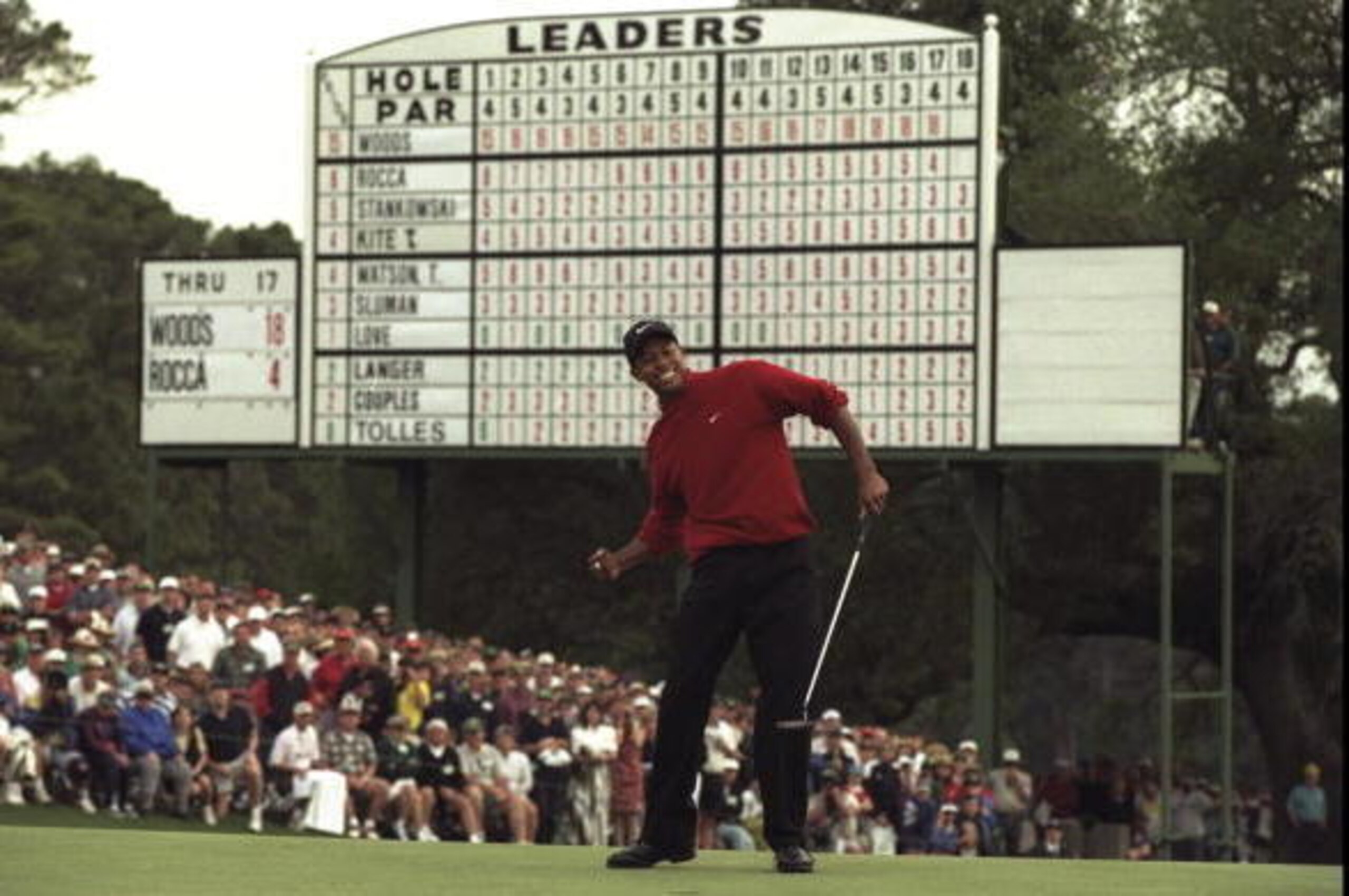
1. Butch Harmon: 1993-2002
4 of 4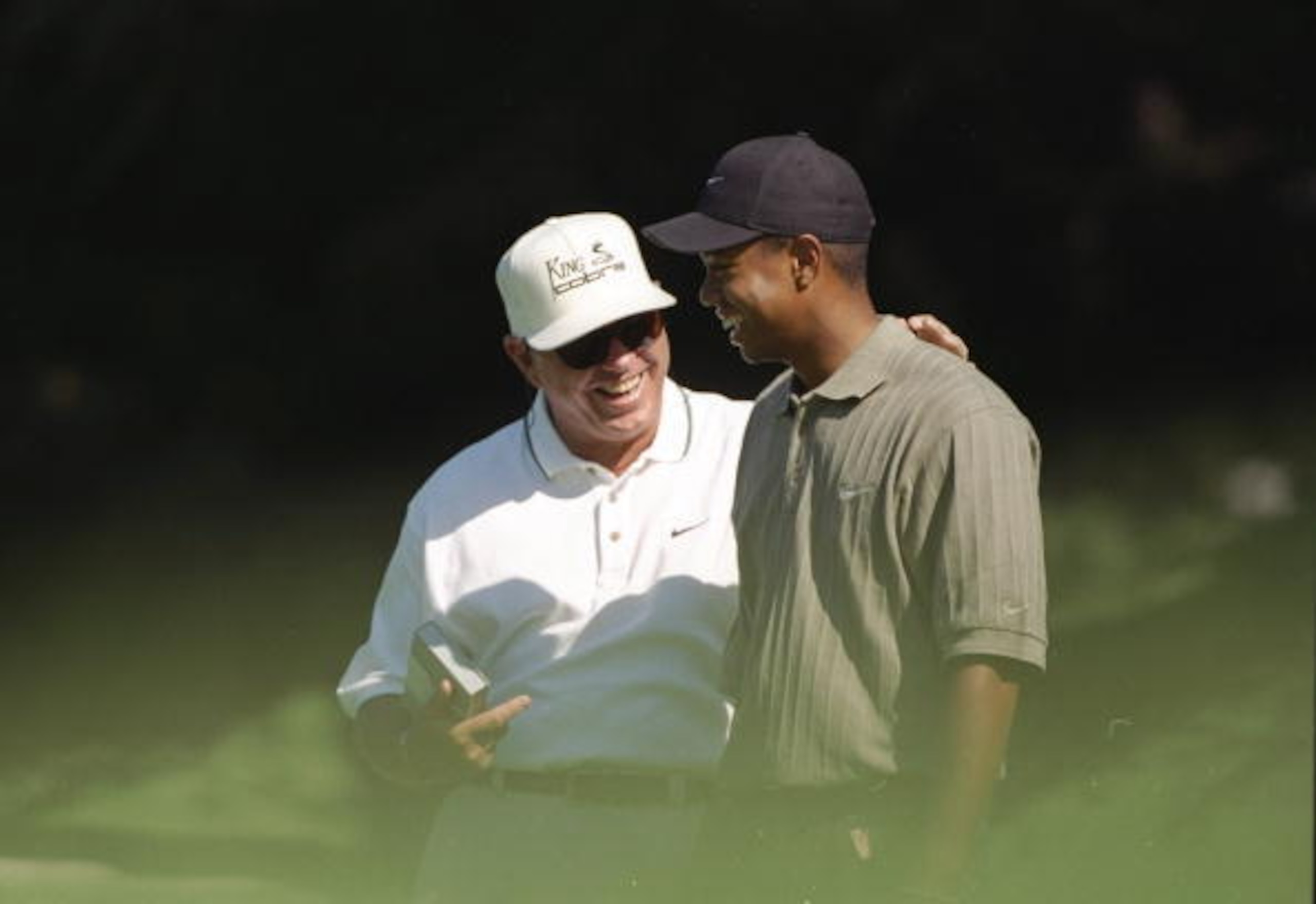
Majors: 8 (in 24 starts): 33.3 percent
Wins: 34 (in 127 starts): 26.8 percent
Why the partnership is ranked first
Butch Harmon had the easiest job (by far) of the teachers on this list. Woods was at his youngest, healthiest, most explosive and most malleable under Harmon. He had the least psychic baggage and the fewest competing swing theories in his head.
Woods won eight majors while working with Butch Harmon—the most with any teacher on this list. It's his win percentage in majors with Harmon (33.3 percent) that puts this partnership ahead of the Woods-Haney duo. Tiger won 26.08 percent of the majors he teed it up in with Haney in his corner.
In other words, the Stanford alum was 7.22 percentage points "better" in the majors under Butch Harmon. And major victories, of course, are the measure of elite professional golfers' success in general, and they're Tiger Woods' primary concern, in particular.
Thus, even though Woods won at a better rate under Haney, his time with Harmon secures the top spot.
.jpg?w=2560 "Commanders 49ers Football")
.jpg?w=2560 "Jonathan Taylor Landing Spots")