
Breaking Down Why the New York Rangers Are a .500 Team
With a 12-10-4 record through 26 games, the New York Rangers have a .538 win percentage. The season to date has been challenging and underwhelming for the defending Eastern Conference champions, and the team has not played to potential.
Through the first quarter of the season, there have been some good things, like the emergence of Derick Brassard, the elite play of Rick Nash and Martin St. Louis and the surprising play of Kevin Klein.
They are all nice things that fans can cling to and celebrate, but there are some serious issues that are holding the team back.
With that in mind, here are some reasons behind the Blueshirts' lackluster start.
Fourth Line Hasn't Been as Good as Last Year
1 of 4
Patrick Kearns wrote a great piece for The Washington Post back on November 5, and it talked about the Rangers' lack of a possession-strong fourth line.
In short, Kearns looked at the fact that the team's current fourth line doesn't match what Dominic Moore, Derek Dorsett and Brian Boyle brought to the table.
Last year's line was able to play solid defensively, hold on to the puck and generate offense from time to time. It had a nice balance and was a major strength of the Rangers, but all good things sometimes come to an end.
Dorsett was traded, Boyle went to Tampa and Moore re-signed with the Blueshirts. Based on the departures, the team had to make some moves, and some have actually been to the line's detriment.
The biggest reason the fourth line is struggling this season is because of the addition of Tanner Glass, a player whose stick is where pucks go to die. His advanced metrics are among the worst in the NHL, and his simply being in the lineup brings others down.
Despite the fact that the Rangers' fourth line was humming along while Glass had a case of the mumps, he was inserted back into the lineup. It was odd, because before he was sick, he was usually being benched in the third period. As a result, his linemates would be scratched as well.
The Rangers were victorious against the Pittsburgh Penguins, but they would have had a better chance at increasing their margin of victory had Glass been scratched.
It seems like a trivial statement, but against a top offensive team like the Penguins, the Rangers could have benefited from having another offensive-minded player in the lineup.
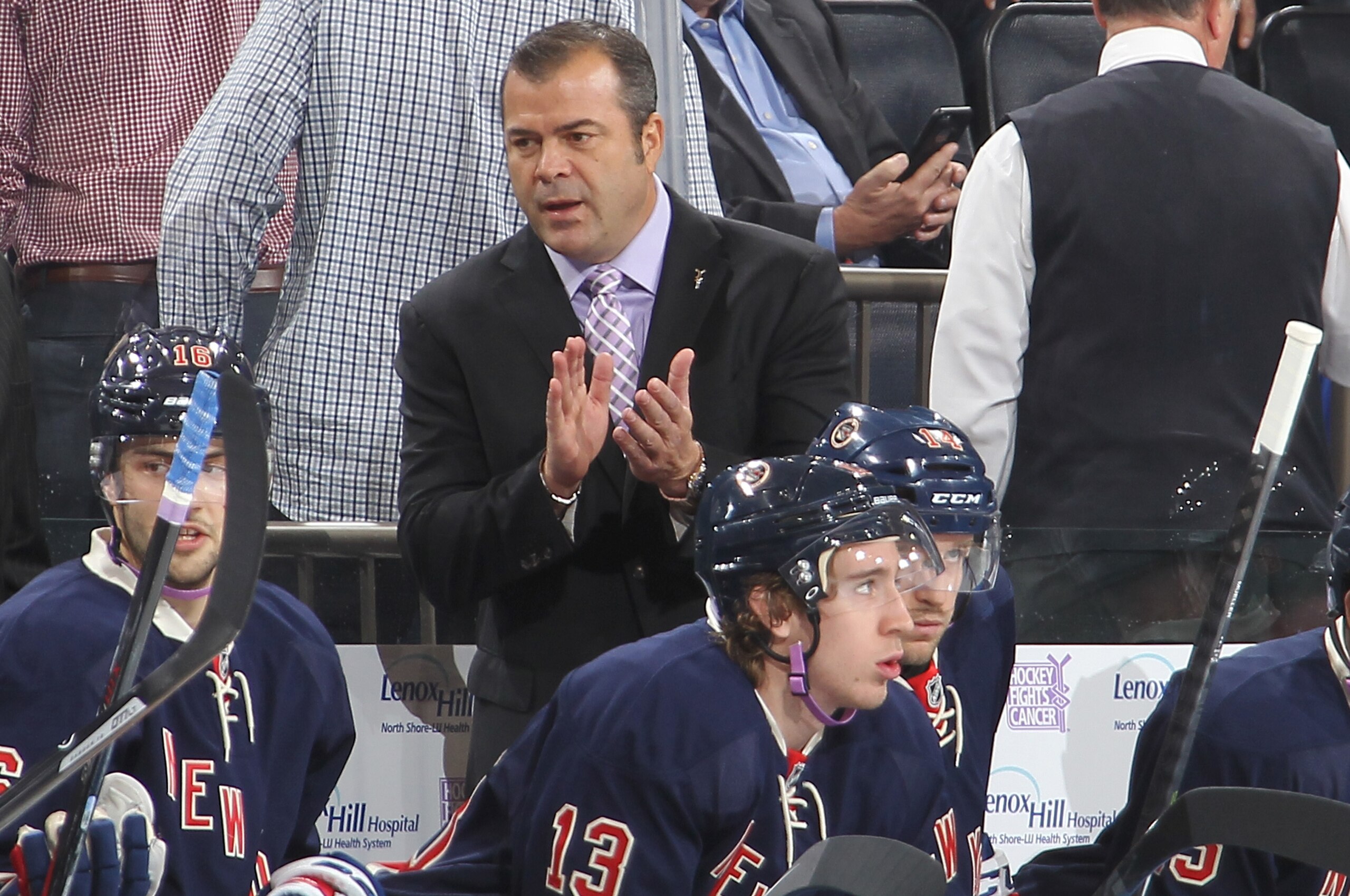
Rookie dynamo Anthony Duclair ended up being scratched for him, and it was a puzzling decision on the part of Alain Vigneault, a coach known for having a healthy appetite for rolling multiple lines that can score.
In short, it was a mistake that the Rangers signed Glass. The team has continued to repeat this mistake when it has inserted Glass into the lineup night after night when there are other players with more skill and potential wallowing away in the skybox.
While rookies come along at a slow pace, Duclair doesn't belong upstairs with general manager Glen Sather as he chomps down on a stogie with disdain because of NYC's aggressive no-smoking laws when it comes to indoor buildings.
Defense
2 of 4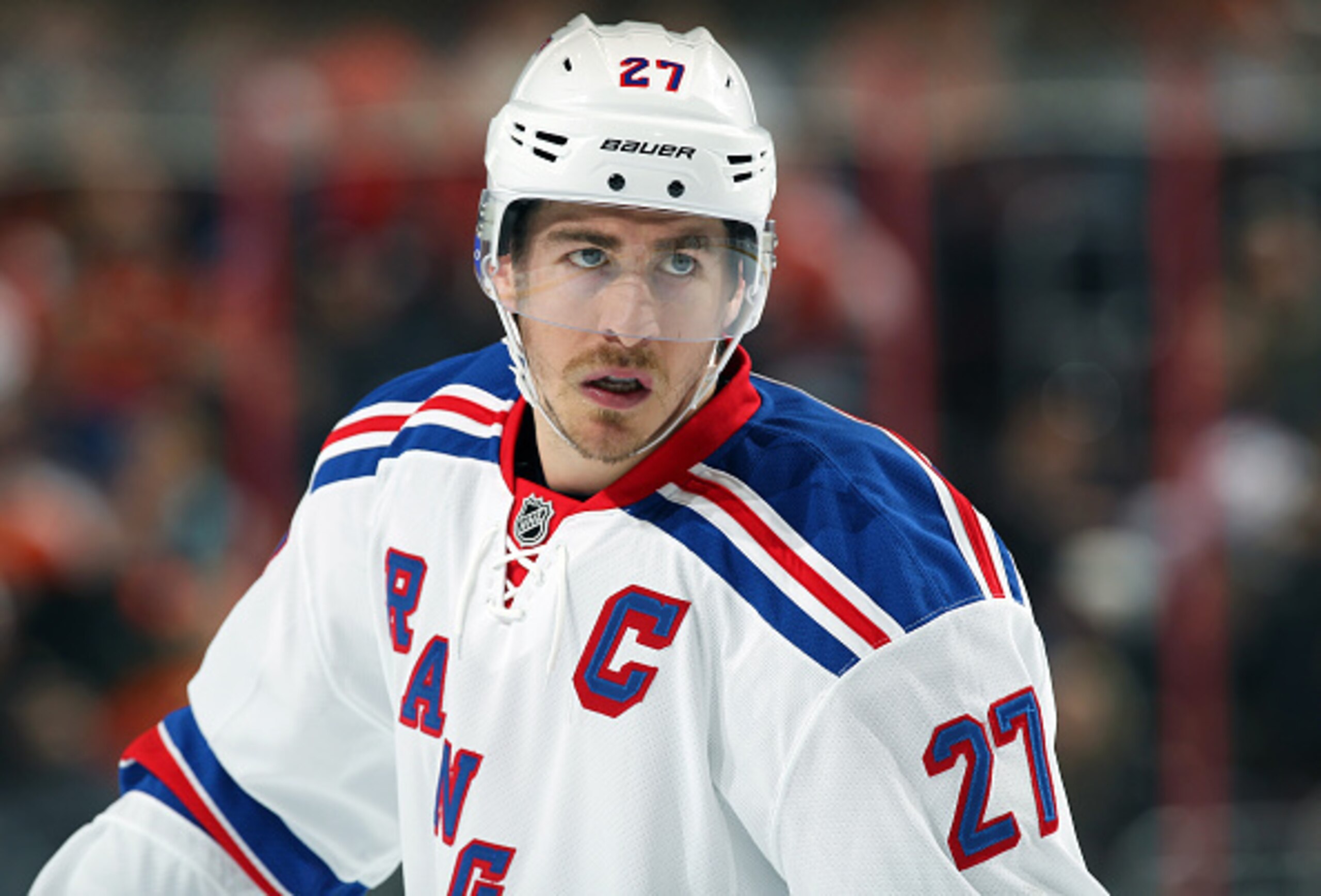
The New York Rangers once had one of the NHL's top defensive corps, but this season the team has struggled mightily on the defensive side of the puck. It is safe to say that Anton Stralman is missed, and his absence has loomed large for the Rangers.
In addition to that, Dan Girardi and Marc Staal have regressed mightily, captain Ryan McDonagh has not looked himself—seven points, zero goals in 15 games—Dan Boyle hasn't had the best luck in the world and John Moore hasn't shown any signs of development.
The two bright spots include Kevin Klein and Matt Hunwick, and both have been unlikely success stories for the Rangers. Klein is currently the Rangers' top offensive defender, and he has six goals and 10 points. He's really elevated his game since coming over from Nashville.
Hunwick has been a nice third-pairing defender since signing with the Rangers as a free agent, and he came in handy when the Blueshirts were plagued with injuries.
The former Colorado Avalanche defender has been a nice addition, has provided offense and has been solid from an advanced metrics perspective.
Things aren't completely dire, because right now McDonagh is in a funk that he's hasn't seen before. In addition, Boyle hasn't been able to string enough games together because of injury and illness, so he should improve as he gets some games in.
The only real question marks remain Girardi and Staal, the Rangers' former top shutdown pairing. Both have made head-scratching mistakes—see Staal's most recent blunder here—and the Rangers need both to be better.
If Staal can't get back on track, he could become a trade chip because of his impending free agency and the potential cap crunch the Rangers could face after the season.
Struggles of Key Forwards
3 of 4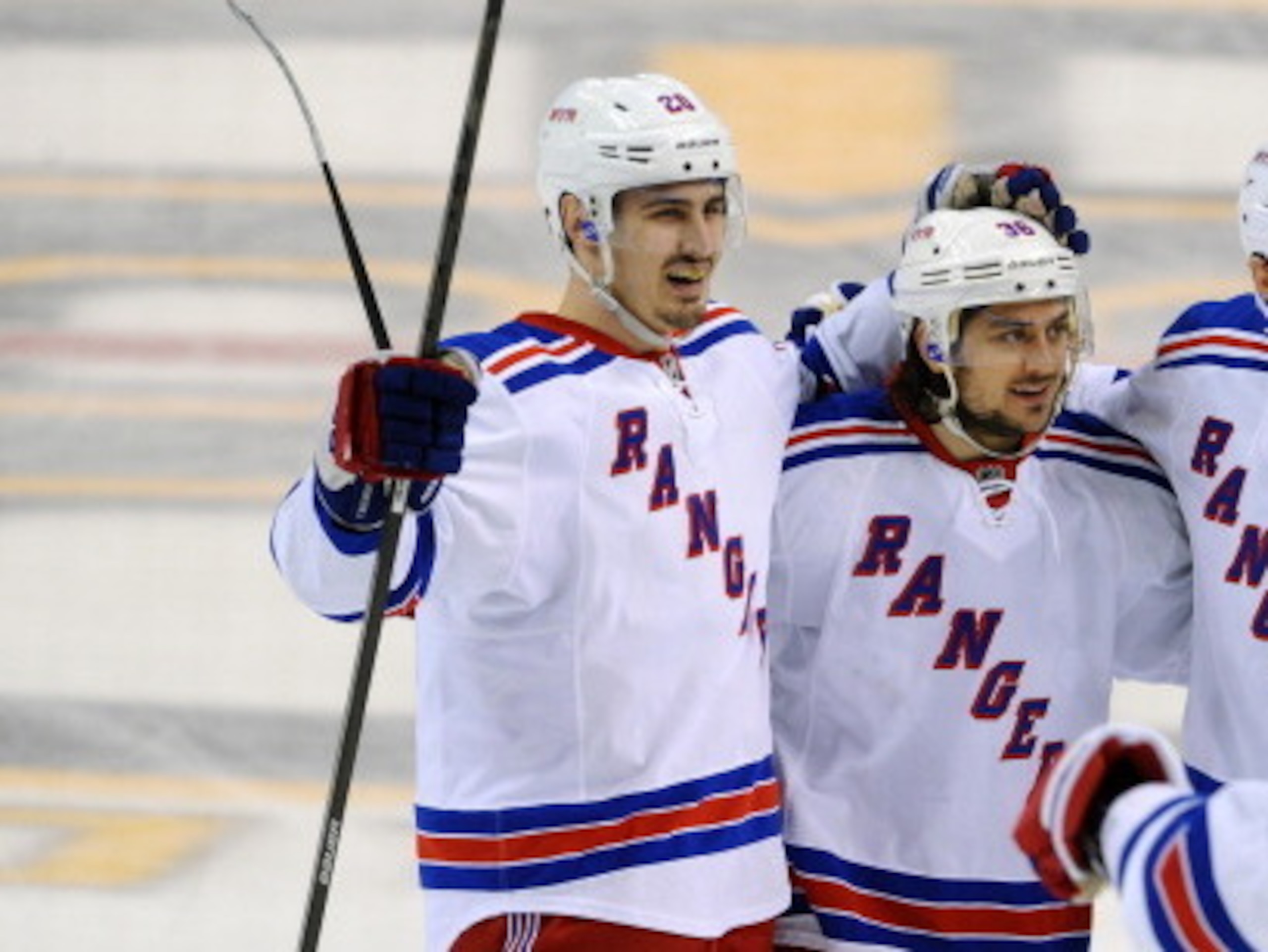
In 2013-14, things looked bright for Mats Zuccarello and Chris Kreider, especially the latter. Zuccarello finished the season one point shy of 60, and Kreider had an impressive first full rookie season.
Based on the improvement both showed last season, it was expected that 2014-15 was "gonna be huge" for both players. Note: The last link leads to an ad that played all the time in upstate Central New York while I was in college, and it comes to mind from time to time, but I digress.
This season, Kreider has four points and nine assists for 13 points in 24 games, and Zuccarello has four goals and seven assists for 11 points during the same span.
While on the surface both players have OK numbers, they aren't great. It is reasonable to expect more, but there are some variables that could explain each player's tough start.
Kreider missed New York's game on November 29 to attend the funeral of his grandfather. It is unknown if the death was sudden or if he was in declining health.
This could explain some of Kreider's struggles, and it would explain why he hasn't scored a goal since November 8. Players deal with off-ice issues in different ways, so I don't want to unknowingly pass judgment on Kreider, but I did want to point out that his lack of performance this season has been odd.
Zuccarello, on the other hand, could be playing hurt—according to Andrew Gross of The Bergen Record back on November 1:
"Mats Zuccarello did not play due to a lower-body injury, his first absence of the season. Zuccarello was hurt in the second period of Saturday’s 1-0 shootout loss to the Jets in a collision with Mark Scheifele, though he finished the game."
He missed the aforementioned game, which was against the St. Louis Blues, because of soreness. Since that point, the diminutive and sparky forward has not looked himself, and it could explain why he only tallied six points in November.
Zuccarello is known for his skating ability and creative playmaking skills, but he hasn't really shown any explosiveness thus far.
Both Kreider and Zuccarello are key players whose production will have a direct impact on the Rangers' success, and both will need to get going as soon as possible.

Henrik Lundqvist Hasn't Been Henrik Lundqvist
4 of 4
I wrote to great lengths about Henrik Lundqvist's struggles being greatly overblown here, and I still stand by them. However, because he hasn't been the Henrik Lundqvist the entire NHL has come to know and love over the years—except this guy—the Rangers have been exposed a bit.
He's 10-7-3 with a 2.71 goals-against average and a .906 save percentage, and that is starkly different than the sub-2.20 and .920 figures that he is used to.
While it isn't his fault completely that his numbers are what they are, the Rangers are a middling team partially because Lundqvist hasn't been able to steal as many games early on.
Eric T. of SB Nation explained it best in a post from last year, and reading that post will illustrate how the variation in Lundqvist's overall numbers this season based on his usual totals are factoring into a decline in total team wins.
If Lundqvist heats up like he usually does, the Rangers will start winning more games, and things won't be as dire as they are now. The Blueshirts netminder is getting older, but that isn't the reason why his numbers are down in 2014.
Stats via NHL.com unless otherwise noted.

-(2).jpg?w=2560 "Bleacher Report")
.jpg?w=2560 "OBJ Calls Out Giants After Release")





.jpg?w=2560 "NFL investigating referee after viral exchange with player")