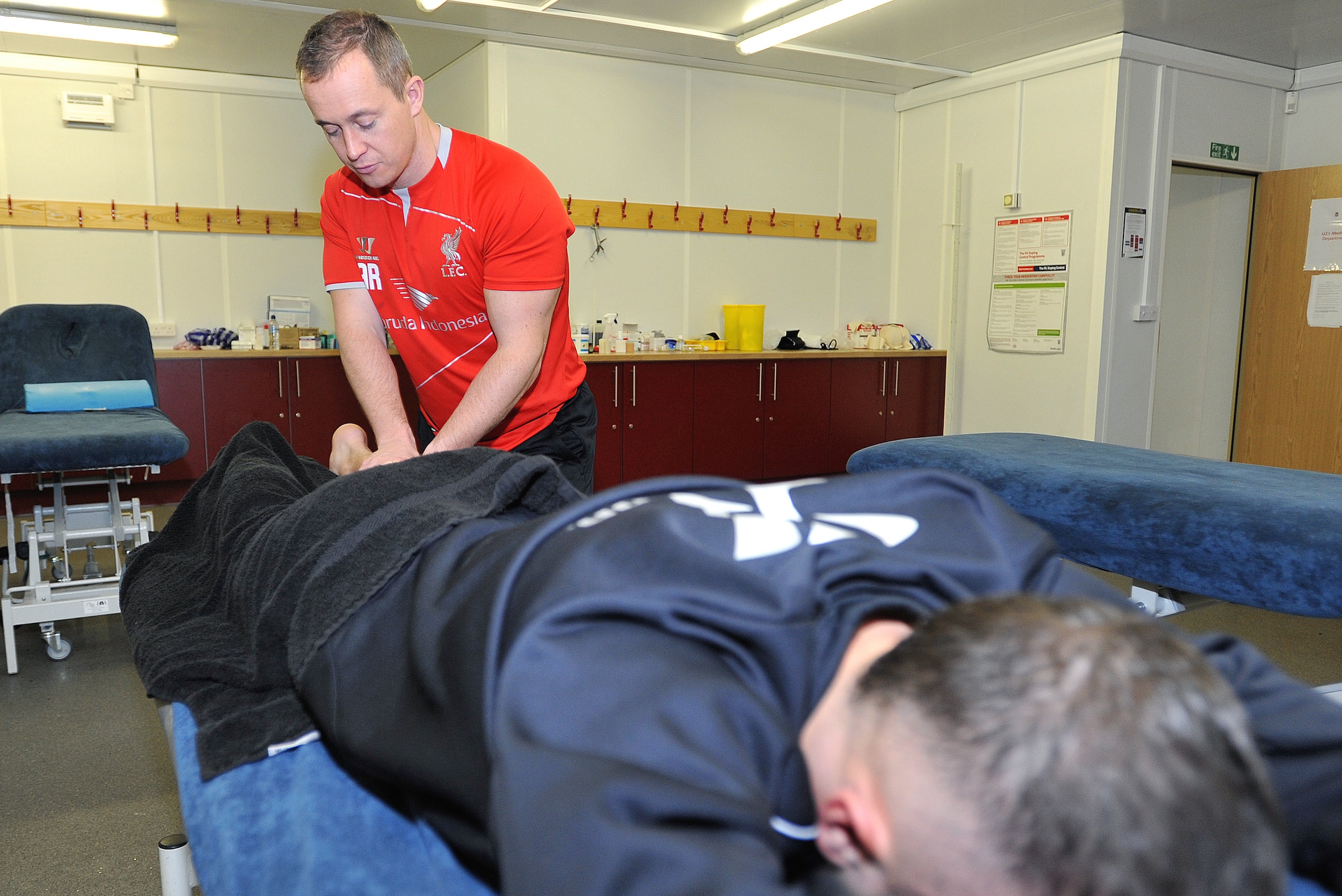

Liverpool Academy Exclusive Q&A: Andrew Renshaw, Head of Physiotherapy
It's Inside Liverpool FC Academy week here on Bleacher Report, and we're speaking with a whole range of personnel to find out more about their roles at the club and how one of England's biggest sides gets the best out of its youngsters.


Day 3—Interview with Academy director Alex Inglethorpe and Picking an All-Time Homegrown Liverpool XI.
Next up in our feature on Liverpool's academy is Andrew Renshaw, the head of physiotherapy with the club's talented youngsters.
BLEACHER REPORT: How might a young player’s muscle injury be treated in a different way to a senior player’s if the youngsters are still growing, perhaps at different rates to each other?
ANDREW RENSHAW: We have to appreciate that young players are exposed to significant amounts of exercise away from the football club (via school sports, physical education classes, etc.). As a result we have to factor in that the players will not just be returning to training at our club.
In addition to this, younger players are more likely to miss training/games due to overuse-related conditions such as Sever’s disease and Osgood-Schlatter’s disease and at times will require time away from the game that might not need much in the way of rehabilitation. It’s merely a case of resting the individual until their pain settles to a point that they can return to training/games.
We also perform a comprehensive musculoskeletal screening on all of our older Academy players, and although we have baseline data to compare rehab data against, we have to be aware that as players mature these figures will change, so our rehab targets have to change accordingly.
BR: Can it be difficult to keep spirits and motivation up of a player during a lengthy spell out, or do younger players tend to react better than seniors in that regard?
AR: Yes. When players are likely to miss a significant period of time away from training/playing, they are also therefore spending considerable amounts of time away from their team-mates and the sport itself.
We try to keep these players involved with the playing squad by providing them with work-related projects, such as visiting a game with the players and writing "scouting" reports on opposing players (or elite players in Premier League/Champions League games) in their own position.
As a result, these players are still increasing their education about the demands of soccer for their particular position. We also aim to provide a support system psychologically, as well as allowing these players to spend time at home with their families at certain periods throughout their rehabilitation.
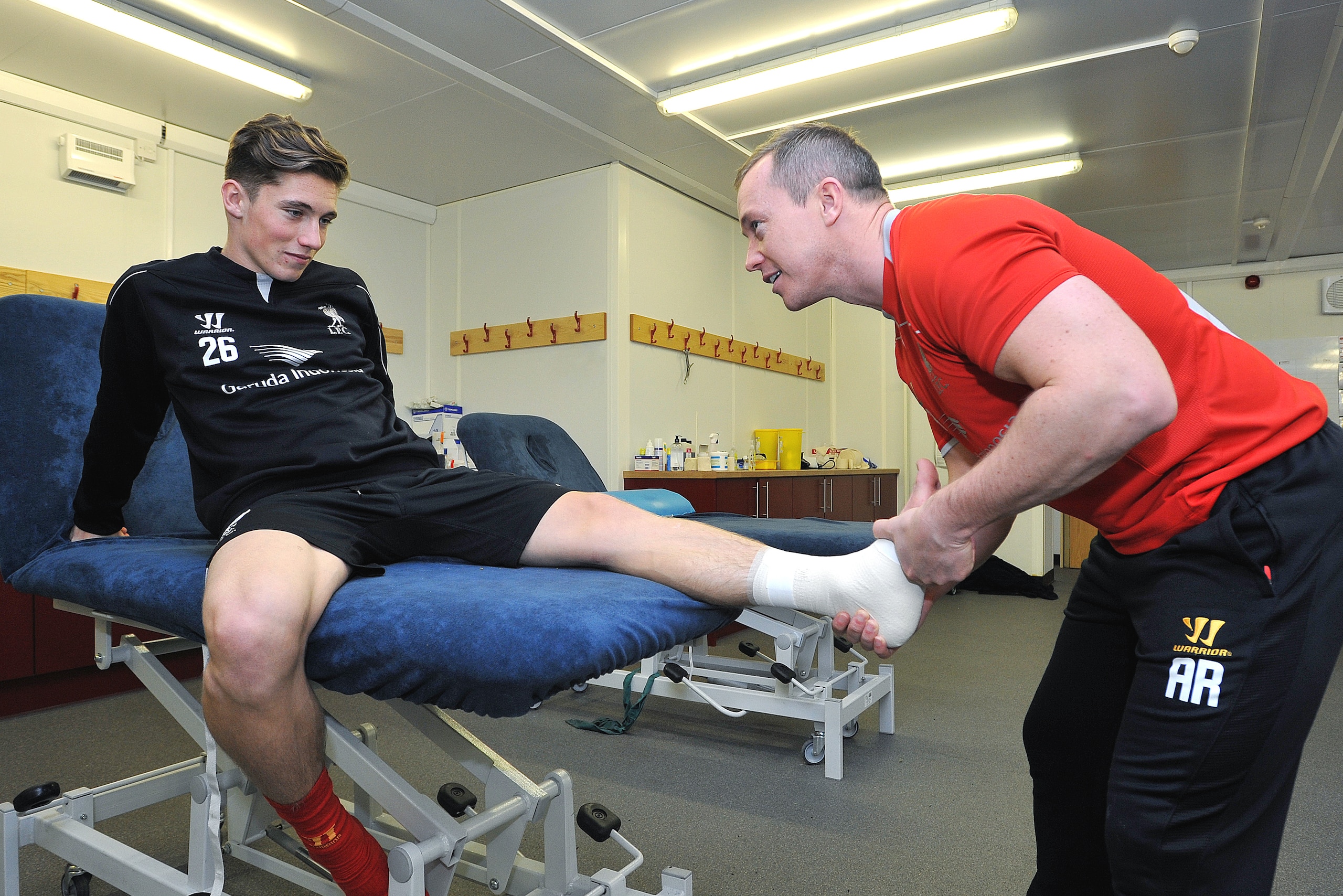
BR: How do you go about implementing preventative measures at the different age groups?
AR: We perform injury audits throughout all of our age groups. We therefore aim to provide specific prevention measures dependant upon the type/location of injuries within each age group.
BR: How does the physiotherapy group ensure that youngsters aren’t rushed back too early?
We use objective data wherever possible to ensure that players reach pre-injury fitness levels before they are returned to "full" training. We work closely with sports scientists and coaches to ensure that players are graduated back from injury by carefully managing the time that each player is available for training/games.
BR: Is there an age at which injuries noticeably begin to feature much more frequently?
AR: There isn’t anything in available literature to highlight this exactly. We are one of the first professional football clubs to commission research in this area which we hope to release soon, but I can say that we’ve found that in general the number of injuries tend to increase with advancing age.
BR: What kind of injury might impact on a younger player more than an older one? Can these injuries change a player’s game style? How do you combat that sort of change, for example a loss of speed, in a young player?
AR: We don't tend to see injuries that cause a reduction in the speed of a player. We have found that older players tend to suffer more impact injuries and muscle/ligament tears than younger players, possibly due to the developing bodies of the younger players and the faster pace and higher competition levels found in the adult game.
.jpg?w=2560 "NBA Gambling Charges")

.jpg?w=2560 "Aikman Blasts Cowboys WR 🫣")

.jpg?w=2560 "Jonathan Taylor Landing Spots")