

Lack of Confidence in Offense, Talent Stunting Derek Carr's Development
Despite the Oakland Raiders' 1-11 record, there is hope for the future in rookie quarterback Derek Carr. At least that’s the familiar narrative, but it glosses over several key facts.
The truth is that Carr has a lot of work to do before the Raiders should commit to him as the starter next year. Carr is directing the league’s worst offense and not doing much on his own to help it. Sticking with Carr requires a leap of faith that is both necessary and scary at the same time.
It has become apparent that Carr’s development may not be going quite as planned. That doesn’t mean all this experience will go to waste, but simply that he’s still learning tough lessons about playing quarterback at the NFL level.
.jpg?w=2560 "Seahawks Chiefs Football")

.jpg?w=2560 "Colts Vikings Football")
A big part of the problem is that Carr doesn’t appear to have total confidence in the offense or his supporting cast. The result is either Carr being too conservative or taking big risks at the wrong times. Carr also locks on to wide receivers or concepts he trusts, leaving room for smart defenders to shut him down.
Without that trust, Carr’s development has come to a screeching halt. Before Carr can take his next step forward as a player, the Raiders may have to make changes around him for the better.

On a key 3rd-and-1 play early in the game against the St. Louis Rams Sunday, Carr threw incomplete and the Raiders punted. By the time Carr got the ball back again, it was 14-0. While Carr can’t control the defense, he can sustain drives to give his defense a rest and his opponent fewer opportunities.
The first note on the play was that the Raiders didn’t get the protection call right. The Raiders have running back Darren McFadden staying in to block the edge. The cornerback is showing blitz (red arrow), but he ends up dropping into coverage (blue arrows) and right into the path of Carr’s first read.
Without a man to block, McFadden tries to become a receiver for Carr, but it’s too late. The blitzing inside linebacker is bearing down on Carr, and he throws incomplete.
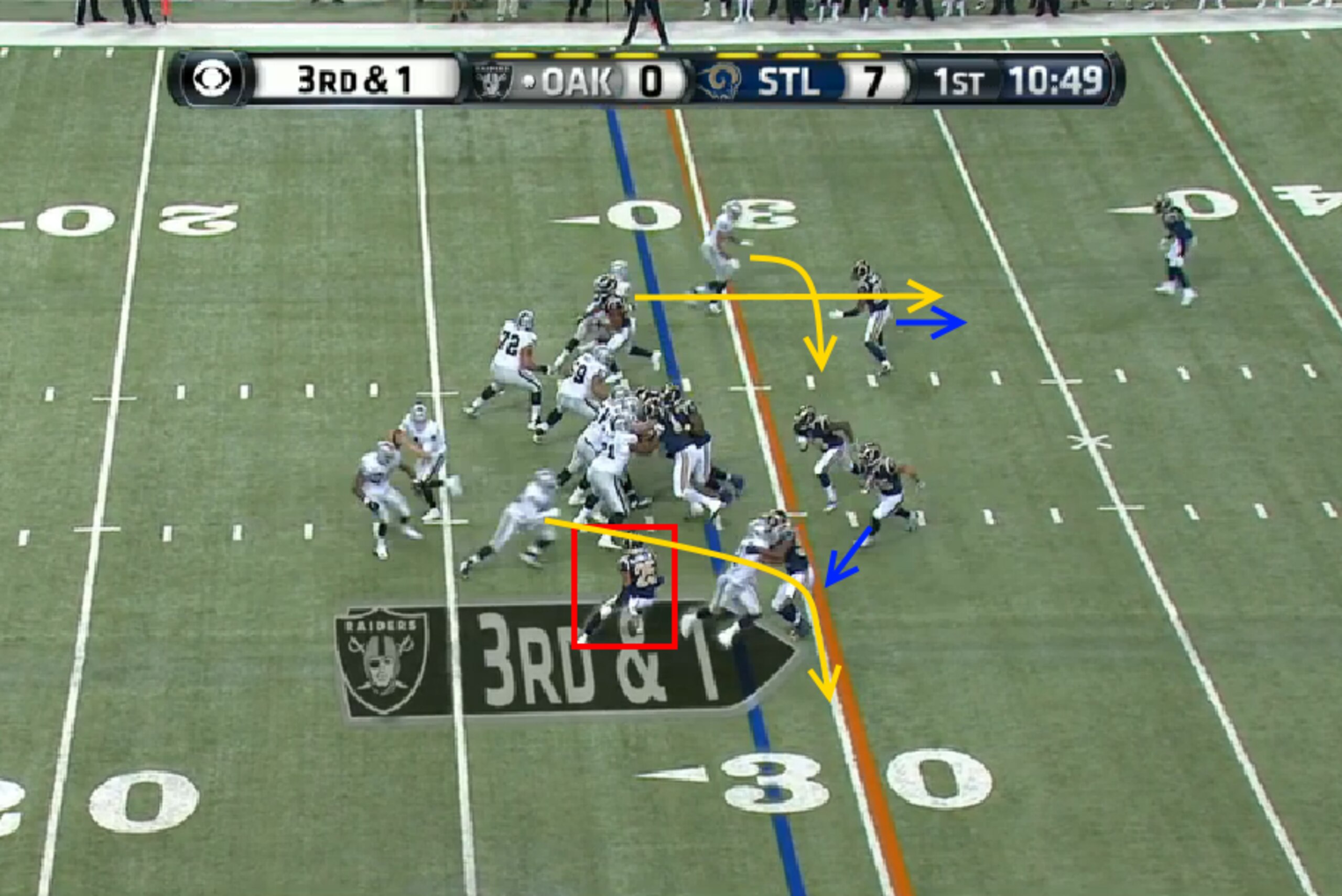
Carr has to read that the defender is going to drop right where he wants to go with the ball and quickly move to his next read. He also has to locate if there is pressure coming from another direction so he can step away from it to deliver the ball.
In this case, Carr had a wide-open receiver to his left had he quickly moved away from his first read, located the pressure and stepped up in the pocket. Opposing defenses are doing a great job slowing down the Raiders by giving Carr new looks and until he makes an adjustment, that will continue to be the case.

When Carr does pull off his primary read, as he does on this play against the Rams, he often takes the underneath route for a short gain. Here, Carr wisely pulls off his No. 1 target, but then he won’t throw it deep to his second option and takes the short completion. In this case, his underneath receiver was actually the lesser of two underneath options on the play.
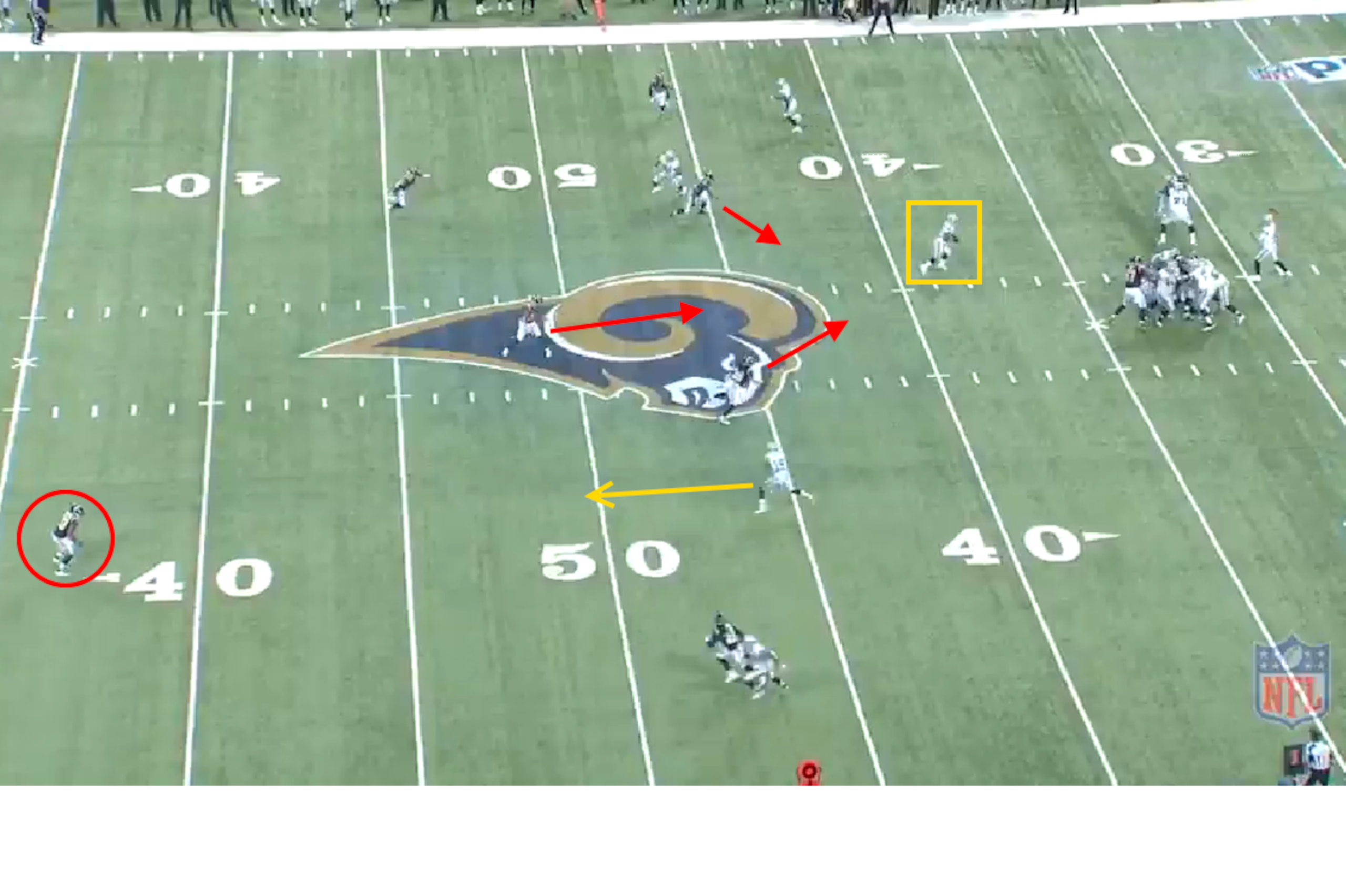
Here, Carr hit running back Maurice Jones-Drew for a nice gain. As you can see, the Rams dropped into zone coverage, but they kept their eyes on Carr so they could quickly react. Had Carr noticed the defense cheating, he could have hit his receiver on an open seam route for a big gain.
Lest you think this was a problem exclusive to the game against the Rams, here’s an example from Carr’s best game of the season against the San Diego Chargers earlier this year. In this case, Carr targets his well-covered No. 1 option and never makes it to his second read over the middle who was wide open for a first down.

There are dozens of examples of Carr either forcing the ball to his first read or taking a short completion underneath and not enough examples of him moving through all his progressions to find the open receiver.
Carr is hoping his top option is open and when he isn’t, he’s checking it down for a short gain. This comes at the expense of a second and third receiver who may be open on a play. Take away Carr’s No. 1 option, and he’s in trouble.
It’s hard to blame Carr for imagining that his top weapon is open or taking the safe completion when the Raiders put him in no-win scenarios. Carr is usually playing from behind, and the Raiders stink.
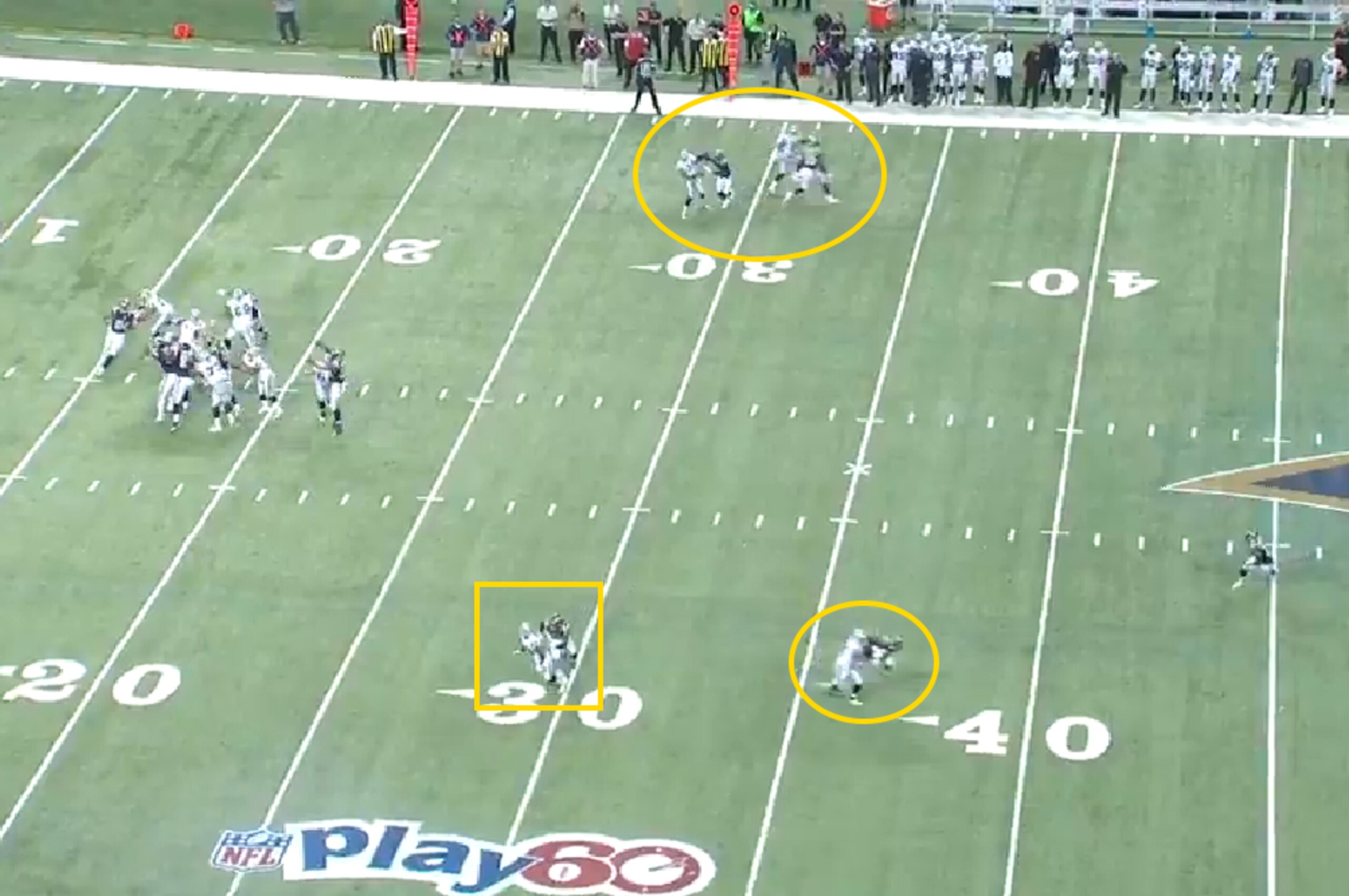
Far too often Carr has to look at a field in which all defenders are covering all of his wide receivers. Carr is trying to find the open man, but his receivers aren’t doing a good job of getting open.
Then there’s the design of the offensive plays themselves. At one point against the Rams, the Raiders attempted a pass in which two receivers ran a pass pattern against seven defensive backs. Amazingly, Carr had an open receiver but couldn’t pull the trigger on the throw and ended up pulling it down and running out of bounds on a scramble.

The offense and the receivers share some of the responsibility for the team’s poor offense, but Carr’s development has also been slower than people want to believe. It’s possible the offense and talent around him have actually retarded his growth.
Having a No. 1 receiver who can win consistently and other secondary receivers Carr can trust—like James Jones—could be huge for Carr going forward. The return of wide receiver Rod Streater would help Carr make some of the corrections he needs to make after playing so poorly last week, but bigger changes are necessary.
None of this means Carr won’t be good down the line. Experience is valuable, and Carr is learning lessons the hard way. Put better components around Carr, and then we might see the best he has to offer. Until then, everyone is just hoping he can.


.jpg?w=2560 "WWE Raw Live Grades 🔠")

