

Ranking the Biggest Mistakes from 2014 NBA Offseason
It's too soon to proclaim LeBron James' return to the Cleveland Cavaliers a mistake, and the Miami Heat have looked surprisingly functional without him. So we'll have to dig deeper for the 2014 NBA offseason's biggest blunders.
As a matter of fact, most of the high-profile transactions have either worked out nicely or looked good enough in the early going to stave off judgment for now.
Think about it: The Cavs have looked much better lately, which means the James and Kevin Love acquisitions can't credibly be termed mistakes. Chandler Parsons has helped the Mavs become an elite offense, and the Houston Rockets haven't missed him at all.
You could stretch and say it was a mistake for Carmelo Anthony to re-sign with the floundering New York Knicks, but can it ever be a mistake to collect $129 million?
These mistakes are ranked in order of overall negative impact on the franchise. Dollar amounts are a factor, but more important is the way the mistake in question either sets back or limits the potential ceiling of each club. Opportunity cost and effects on chemistry are vital.
Don't worry; there were still plenty of transactions worthy of criticism. Overpays, failures to close deals and missed opportunities abounded this past summer. You just have to dig a little until you hit the Carlos Boozers and Kemba Walkers of the world.
Honorable Mention: The Clippers' Failure to Improve Depth
1 of 6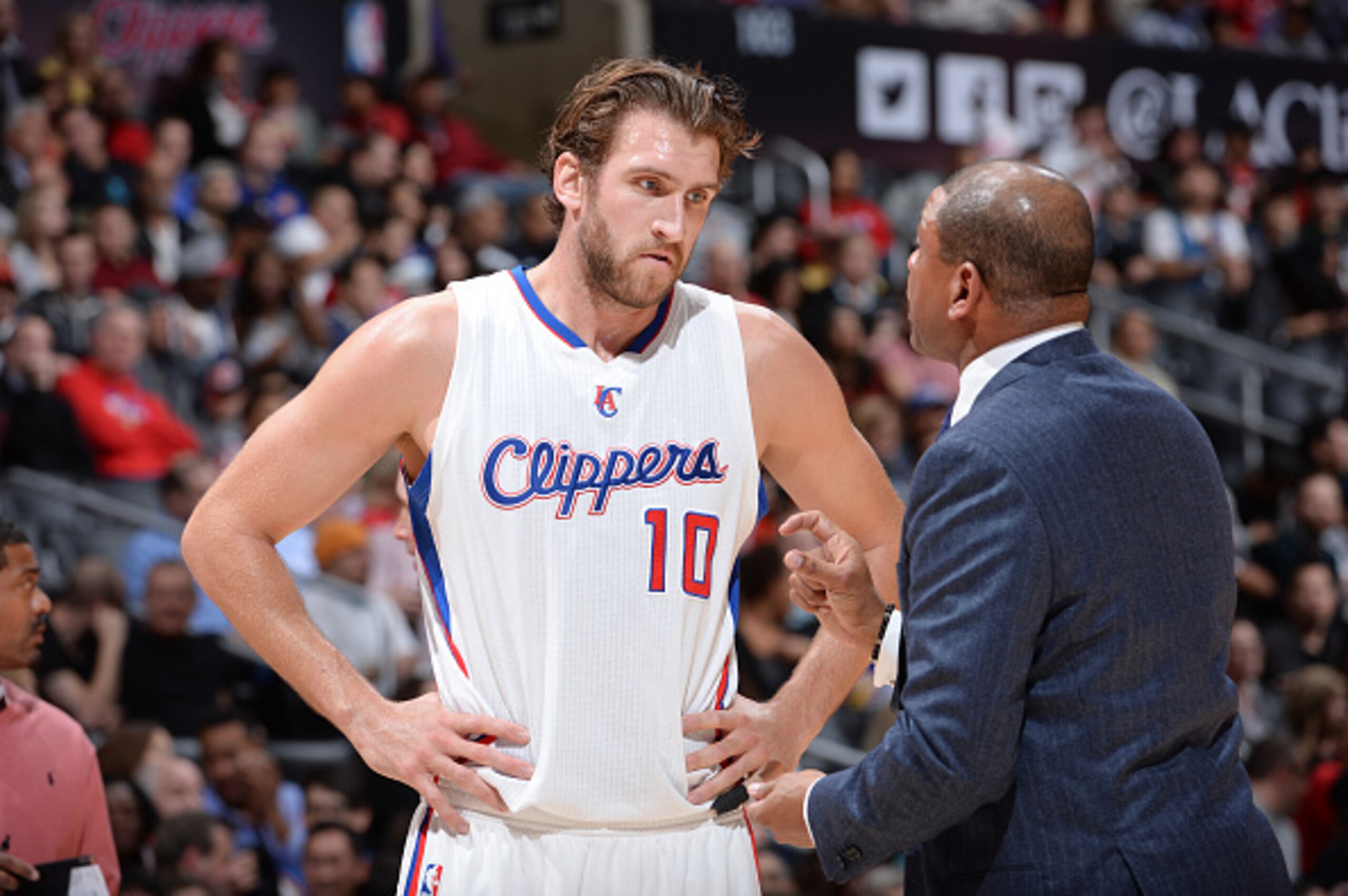
The Los Angeles Clippers' swing and miss at adding meaningful roster depth only earns an honorable mention because the club has won five straight and eight of 10 overall. Saying the Clips are in serious trouble right now is a tough sell.
But the team's disinterested shoulder shrug of an offseason is going to come back to bite it eventually.
Spencer Hawes, an offensively gifted, defensively invisible backup center, was the Clippers' big get. And while he stretches the floor with his shooting and functions nicely as a passer, handing him heavy minutes in the playoffs will swing wide the defensive floodgates.
Jamal Crawford remains a terrific spark plug off the pine, but the rest of the reserves simply don't address Los Angeles' glaring lack of wing scoring and rim protection.
Of the six other Clippers subs who average at least 10 minutes per game, four of them have negative plus/minus figures this year, per NBA.com. And anyone expecting the lone positives, Hedo Turkoglu and Glen Davis, to continue their residence in positive territory is ignoring their recent track records.
This is a minor problem now that will morph into a big one come spring—when an early postseason exit will make LA regret its weak summer acquisitions.
5. The Isaiah Thomas Signing
2 of 6
Hear me out. This is more complicated than it seems.
Isaiah Thomas has played well for the Phoenix Suns, boosting their net rating when he's been on the court by almost 10 points per 100 possessions, per NBA.com. And he's done it on a very affordable four-year, $27 million deal.
But his acquisition didn't happen in a vacuum.
Signing Thomas meant the Suns' attention was diverted from Channing Frye, who signed a four-year, $32 million contract with the Orlando Magic. Frye's absence has been devastating to Phoenix's spacing, and Goran Dragic's across-the-board decline is the clearest evidence of how much Phoenix misses its premiere floor-stretching big.
"No hard feelings," Frye said before a Nov. 30 rematch with the Suns, per Paul Coro of The Arizona Republic. "Of course, I wanted to continue playing with my boys, but at the same time, I'm finding new friends and working things out here in Orlando."
Frye may be cool with the change, but I'm guessing Dragic, whose player efficiency rating has plummeted from 21.4 last year to a below-average 14.5 so far this season, per Basketball-Reference.com, is less understanding.
Both he and Thomas have voiced frustrations over the way minutes have been allotted among the team's ball-handlers.
Dragic's decline has been most obvious, but Eric Bledsoe's shots (both in terms of efficiency and volume) are also down. Taken together, it seems Thomas' individual brilliance may have come at too great an expense. You can't say he's hurting his teammates directly; the numbers don't bear that out.
But if you consider the ripple effects, his overall impact on the Suns has been quietly devastating.
4. The Kenneth Faried Extension
3 of 6
Kenneth Faried's four-year, $50 million extension can be explained away with the same "but the salary cap's going up, so this will look good in two years" rationale that applies to every other deal signed this offseason.
Relativistic qualifiers, comforting as they are, still don't make this a good contract.
In a league that is increasingly covetous of shooting and rim protection from forwards, Faried offers neither. The effort is there, sure. But the Denver Nuggets clearly bought high on the Manimal after a strong showing at the FIBA Basketball World Cup, ignoring the fact that his limitations on both ends would almost certainly have kept his restricted free agency price down.
From Grantland's Zach Lowe:
"Some trends have emerged over the last three summers. The price of shooting at all positions has gone up. And one player type has become less and less desired, to the point it may already be a market inefficiency: the power forward who can’t shoot 3s and can’t protect the rim or provide real fill-in minutes at center.
"
"Quick! Let's throw $50 million at exactly that kind of talent," the Nuggets brain trust must have shouted to one another.
Faried has played the worst basketball of his professional life this year, as evidenced by career lows in PER, rebound rate and field-goal percentage, according to Basketball-Reference.com. He's better than his performance to this point, but the continued lack of development in his shot and defense doesn't point to growth going forward.
"Awful," Faried said when asked to describe his season so far, per Christopher Dempsey of The Denver Post.
It's not all bad. Faried plays hard, and he's a ton of fun to watch. Those things count.
But energy guys aren't worth $12 million per year.
Taj Gibson makes $8 million for the Bulls, and he plays just as hard as Faried while showcasing elite defense and a perimeter stroke.
Denver whiffed on this one.



3. The Kemba Walker Extension
4 of 6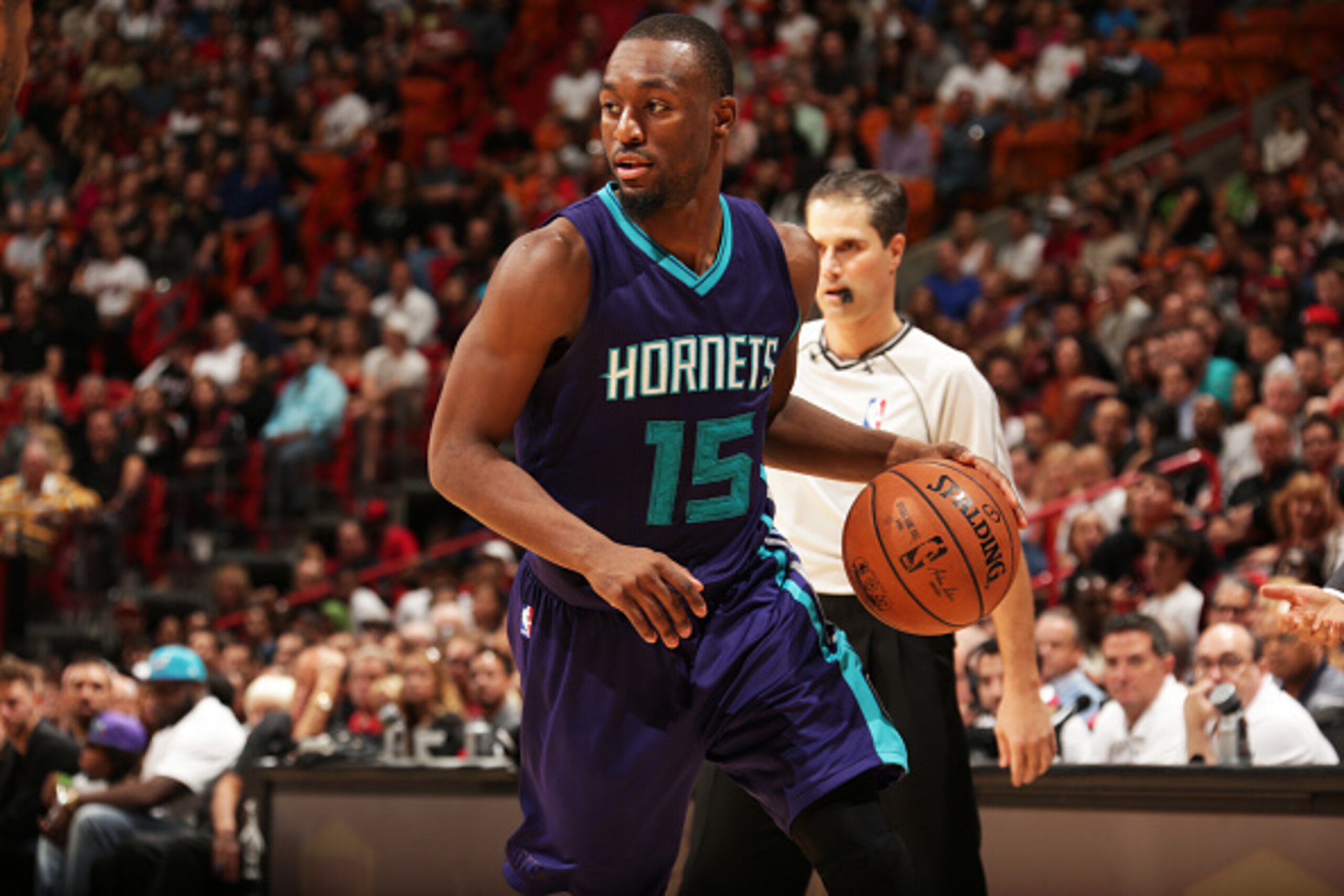
Know what the NBA is absolutely lousy with these days? Quality point guards.
As such, shelling out $12 million per year on a four-season deal to Kemba Walker who, relatively speaking, may not even be a quality point guard, was a major blunder.
The Charlotte Hornets are in free fall, and there are loads of moves to question in these dark times. But Lance Stephenson's deal is only a three-year pact, and he can opt out after the 2015-16 season. Marvin Williams has been pretty bad too, but his contract is only a two-year commitment.
In inking Walker, a point guard who dominates the ball, lacks the size (6'1", 184 lbs) to defend or finish at the rim and boasts a career field-goal percentage less than 40, the Hornets quietly made their biggest offseason misstep.
Everyone likes Walker's moxie. He loves big shots, takes plenty of them and competes whenever he's on the floor. He has good qualities all around.
But is he really so different than, say, stereotypical journeyman Darren Collison, whom the Kings signed for three years and $15 million?
Yes, actually, he is. But probably not in the way you'd expect. Walker has been worse across the board this season, according to Basketball-Reference.com, trailing Collison in scoring, assists and, especially, field-goal accuracy.
It's not just Collison who has outplayed Walker this year. The fourth-year pro has made just 36.4 percent of his attempts this season. Among guards who've taken at least 10 shots per game, only Michael Carter-Williams has been less accurate than Walker, per NBA.com.
It's unfair to discount the fact that Walker is three years younger than Collison, but the Hornets point guard has seen his numbers stabilize over the past few years. We know who he is, and Charlotte should have too.
In an offseason of shaky moves, committing to Walker as a starting point guard may have been the shakiest.
2. Bulls Fail to Lock Up Jimmy Butler
5 of 6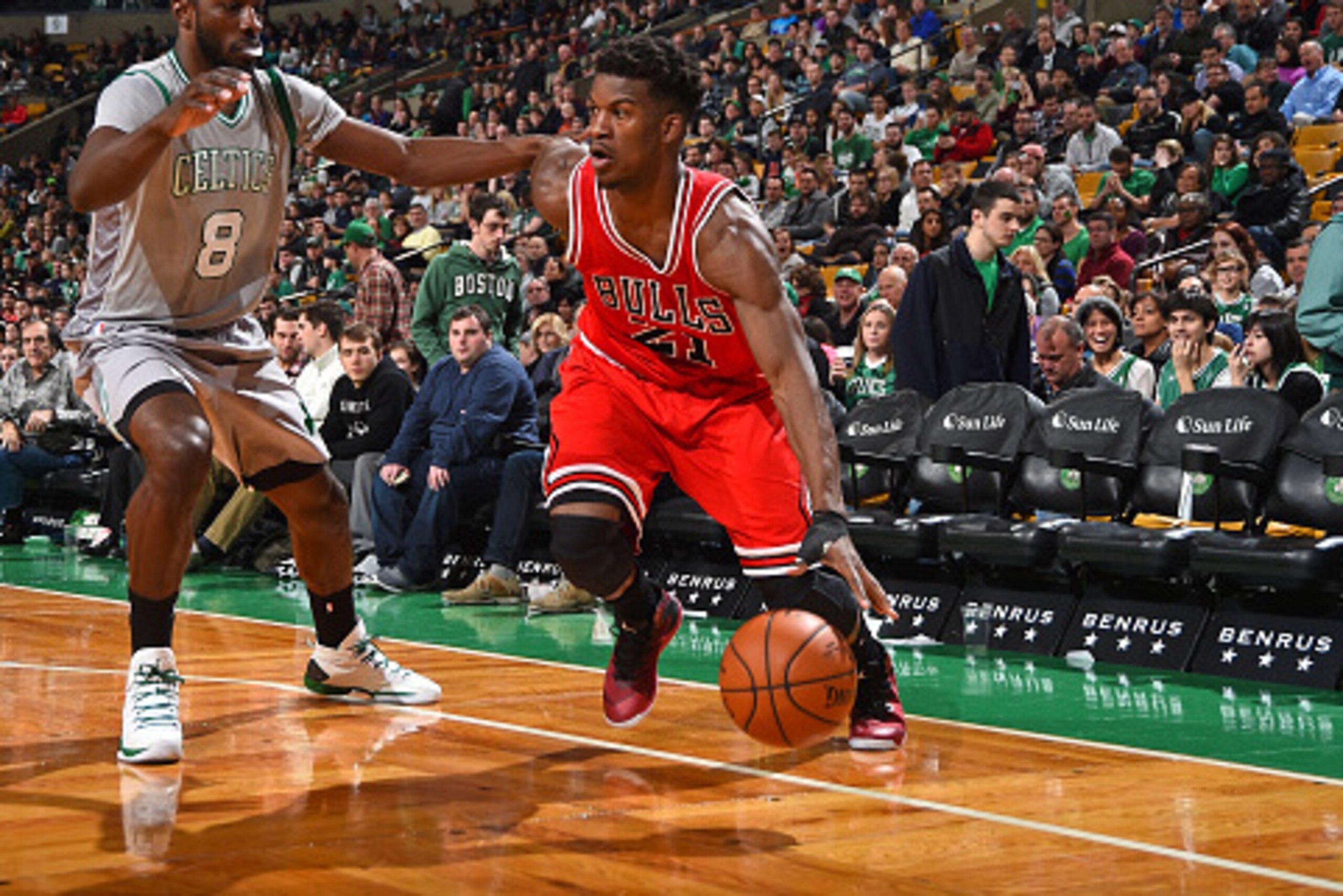
It's hard to know what it would have taken for the Chicago Bulls to lock up Jimmy Butler this past offseason.
Ben Golliver of Sports Illustrated reported that Butler passed on a four-year offer worth at least $40 million, which means there was significant room between that figure and the available max (around $70 million over four years) in which to continue negotiations.
But Chicago determined what it was willing to pay, and it wasn't enough to coax an early signing from Butler.
"Why not have a [max contract] be a goal?" Butler asked Golliver rhetorically. "When I hear ‘max player’ I just think about being able to take my family to Bora Bora or something, going on a nice vacation. Because I don’t really pay attention to the money.”
Now the Bulls will almost certainly get stuck paying top dollar when their two-way star hits restricted free agency in 2015.
Butler has added to his offensive game and is averaging 21.9 points per contest on a career-best 49.8 accuracy rate from the field. He's getting to the line like crazy and, of course, still locking down at an elite level on the other end.
As an offensively limited, defensively dominant wing, Butler might not have made more than $10-$12 million on the open market. This new-and-improved version is going to command a max offer from somebody, which means the Bulls will have to match.
If the performance holds up all season, Butler will still be worth the market-dictated money. But for a Bulls team that may be stuck getting abbreviated seasons from worn-down Joakim Noah and Derrick Rose at least through next season, any savings would have helped.
1. The Lakers' Curious, Pot-Stuck Moves
6 of 6
Kobe Bryant's two-year extension happened before the 2014 offseason, which means it can't be counted among the mistakes listed here.
Nonetheless, it was a precursor to the questionable moves that followed.
Because Bryant's two-year re-up prevented an outright rebuild, the Los Angeles Lakers were stuck toeing the impossibly thin line between starting fresh and staying competitive. A tricky two-year limbo began.
Short contracts were the prescription, but everyone knew franchise-altering talent would balk at joining a franchise in such a strange state of flux.
Unwanted former Houston Rocket Jeremy Lin came aboard via trade, though it cost the Lakers next to nothing. And Jordan Hill got a surprising two-year, $18 million pact. (That's Paul Millsap money!). Xavier Henry and Wesley Johnson? Sure, bring 'em back!
On their own, those moves weren't egregiously bad, but those decisions established a pattern of transactions targeting players the broader market had little interest in.
Amnesty victim Carlos Boozer is the best representation of that trend, and signing him was perhaps the worst move of all. And it's not about the money (C-Booze only costs the Lakers about $3 million)—it's about what he represents. With rookie Julius Randle in tow and brilliant bargain Ed Davis coming later, Boozer's signing effectively blocked the only two players on LA's roster with real potential.
Randle's season is done, but Davis remains an intriguing talent.
A month into the year, Boozer is still starting and playing ahead of Davis, despite posting the team's worst on-court net rating—a putrid minus-14.8 points per 100 possessions, per NBA.com.
Maybe it's unfair to knock the Lakers for what they did this summer; with Kobe on the roster, their hands were basically tied. Given the circumstances, playoff contention was a nonstarter, and completely bottoming out would have ticked off the franchise player.
Looking ahead, the Lakers will struggle to compete this year and next, which will only make it harder for them to attract the two or three transformative free agents they'll need to start over.
LA was in a no-win situation from the moment Kobe inked his extension. Boozer and the ragtag band of misfits currently filling out the roster are just the fallout from that original nuclear decision.
.jpg?w=2560 "OBJ Calls Out Giants After Release")



.jpg?w=2560 "Saquon Out for Game")