

What to Expect from Ryan Tannehill, Miami Dolphins Offense in Week 14
To say the Miami Dolphins earned an ugly win over the New York Jets on Monday night would be putting it mildly.
In a must-win game, the Dolphins put together one of their worst performances of the season and were only able to squeak by due to the incompetence of the Jets, highlighted by their complete lack of faith in their starting quarterback.
However, winning ugly is always better than losing pretty, and it's that type of win that the Dolphins have consistently failed to deliver over the last few years.
TOP NEWS
.jpg?w=2560 "Titans Giants Football")
OBJ Calls Out Giants After Release
Lamar Jackson Day-to-Day

Live Live: Updates from every NFL game
Last season the Dolphins had some ugly performances as well—twice against the Buffalo Bills, the Tampa Bay Buccaneers on Monday Night Football and the season finale against the Jets, to name a few—and they lost each and every game.
With that said, the Dolphins can't afford to repeat that performance, especially with the Baltimore Ravens and New England Patriots as the next two teams on their schedule.
Of course, the defense must get back on track after allowing a season-high 277 yards on the ground, but the offense will also be looking to bounce back after one of their more dreadful performances of the year.
The improvement on offense will start with Ryan Tannehill, who is coming off his first game of the season in which he didn't throw a touchdown pass.
One of the major problems for the Dolphins offense against the Jets was not only the lack of big plays, but the fact that there was barely any type of attempt at making big plays. The entire offensive system throughout the game was seemingly to get the ball out as quickly as possible, with Tannehill constantly choosing to make short throws instead of looking down the field.
As much as people may want to blame Tannehill for the lack of deep balls thrown—and he does deserve some of it—a major reason for the scarcity is due to the offensive game plan and the routes that were run.
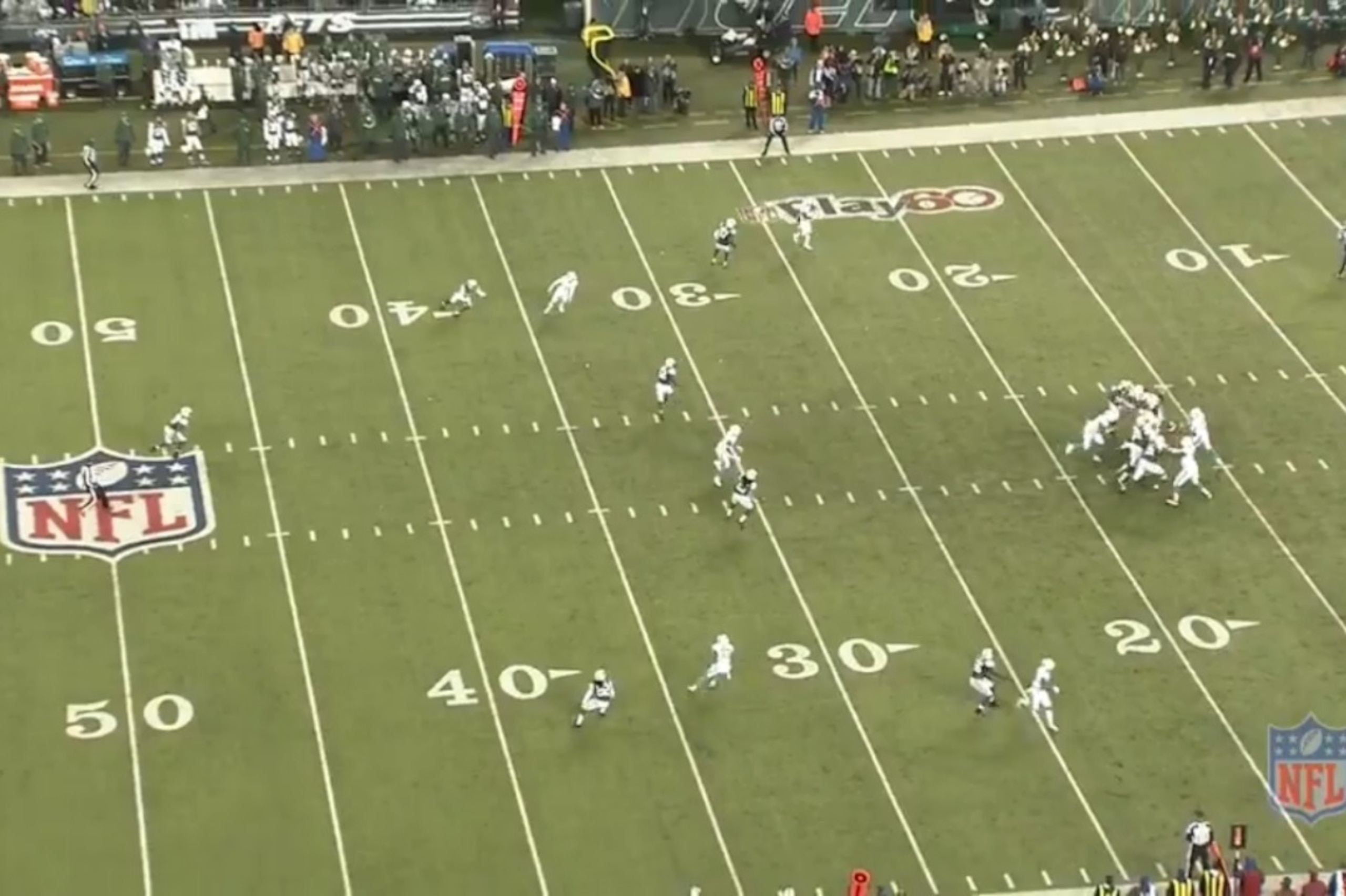
The photo above is a first-down play in which all five receiving targets ran routes within 10 yards of the line of scrimmage.
Regardless of what you think of Tannehill's ability to throw a deep ball, he can't make many big plays when those are the type of routes being run on a consistent basis.
In fact, among all 40 quarterbacks that have played at least 25 percent of their team's snaps this season, Tannehill ranks dead last in the percentage of passes attempted over 20 yards, according to Pro Football Focus (subscription required).
| Stat | Attempt Percentage | Accuracy Percentage | Yards | TD:INT Ratio |
| Tannehill | 8.2% | 31.6% | 254 | 1:2 |
| NFL Rank (among 40 QBs) | 40th | 35th | 36th | 36th |
Obviously, some will make the argument that this is simply offensive coordinator Bill Lazor's way of putting Tannehill in the best position to succeed, trying to mask his inability to throw the deep ball while maximizing some of his other strengths.
This argument certainly holds some weight, as this offense has given Tannehill great success in terms of his completion percentage—which, at 66.3 percent, is not only the highest of his career but is also sixth-best in the entire league.
However, on the other hand, it's also putting the entire Dolphins offense into a small box in which to operate, which ultimately limits their potential and production as defenses continue to catch on and work closer to the line of scrimmage.
This is especially frustrating considering that when the team does decide to run deeper routes, there are big plays to be made—especially with Mike Wallace.
Take a look at this play from the Jets game in which Tannehill ran out of time in the pocket and was forced to scramble to his right as he looks down the field:
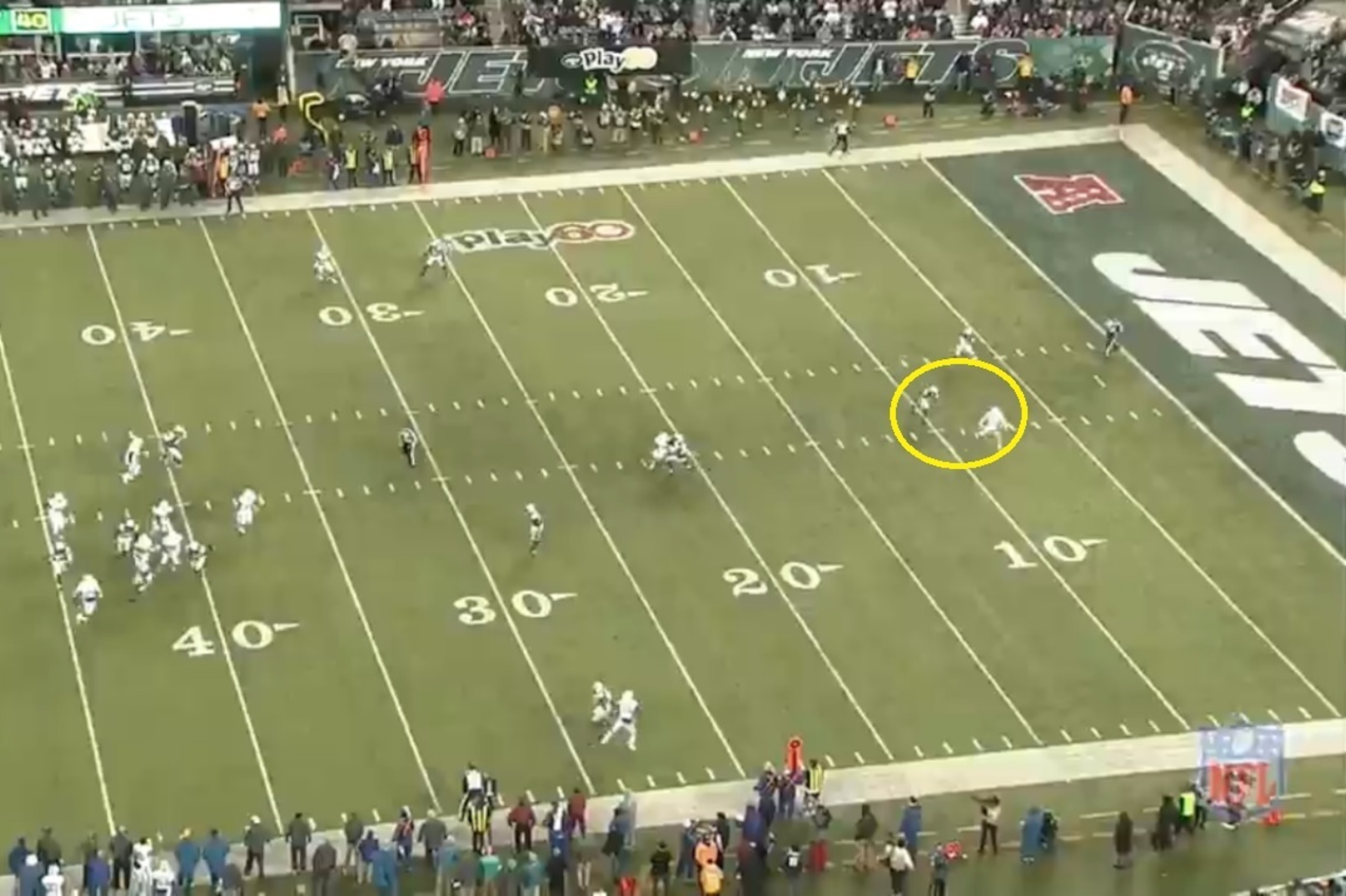
As you can see, Wallace has a few steps on his defender with no safety help in front of him. Instead of launching a pass to the back of the end zone to see if Wallace could go make a play, Tannehill tries to force it into Jarvis Landry on the sideline and it ends up going incomplete.
As the Dolphins enter the final month of the season, it's important to at least attempt a few shots down the field each game in order to maintain that big-play potential while also opening up more opportunities underneath.
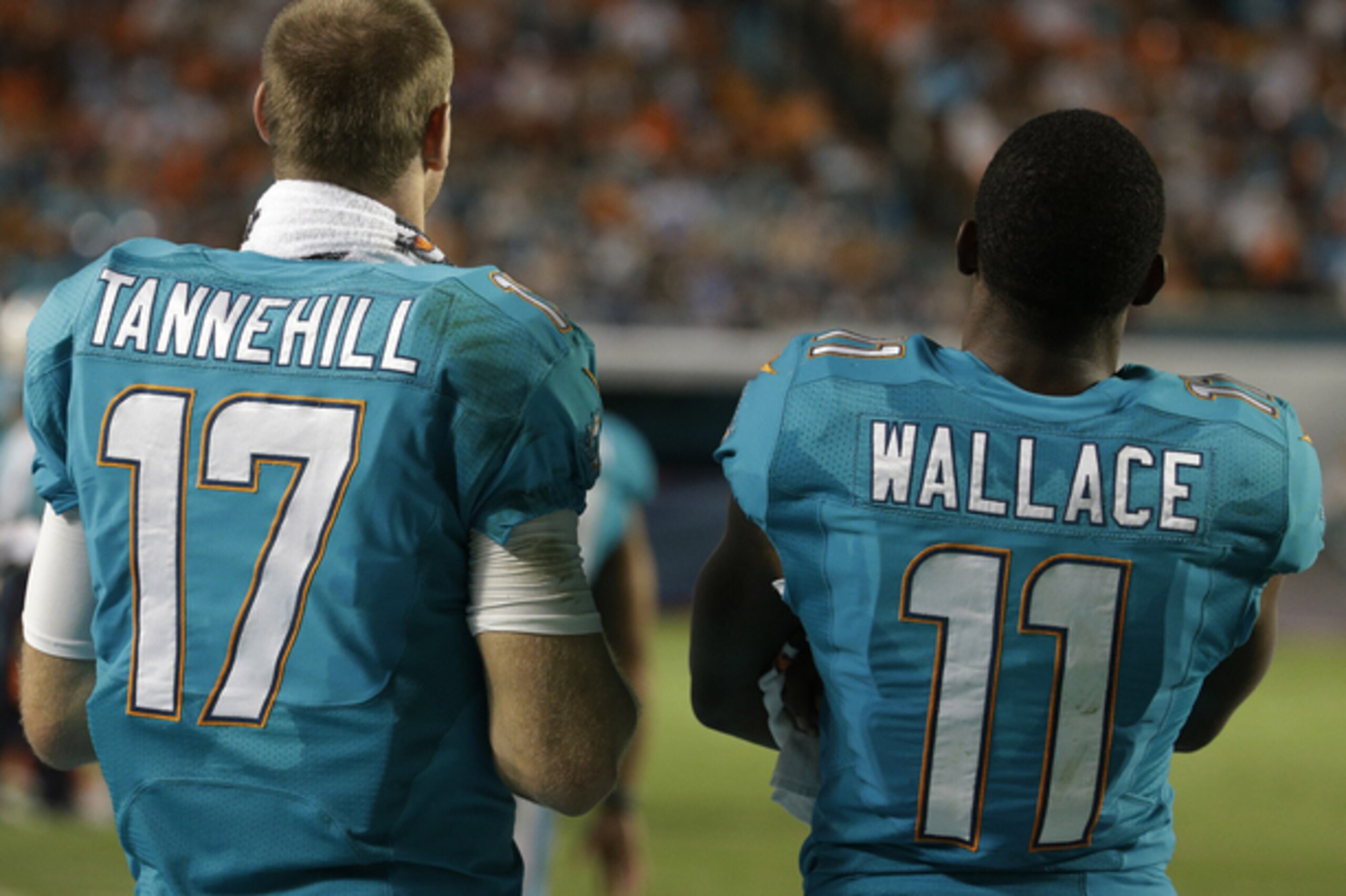
If Tannehill has become accustomed to not looking deep downfield, it's up to Lazor to dial up more plays for Wallace, because more often than not he is going to be open.
The Ravens are a team that has a tendency to give up big plays—allowing the eighth-most 20-plus-yard passing plays in the league with 44, via NFL.com—and the opportunities will be there for Tannehill to try to take some deep shots.
Much like the Jets were, the Ravens are a team that is very strong in defending the run and very weak in defending the pass.
Baltimore has struggled with opposing quarterbacks all year, allowing 274 passing yards per game (second-worst), a 66.7 completion percentage (fourth-worst) and a 97.4 quarterback rating (eighth-worst). And it has only gotten worse since they lost their top cornerback Jimmy Smith for the season in Week 8.
While there's no denying the Ravens and Jets have similar defenses, that's about where the comparisons end. Baltimore has a far better offense that ranks sixth in the league in points per game (27.3).
So there's little doubt that the Dolphins offense will likely need to score more than 16 points to win this week, which means it should once again fall on the shoulders of Tannehill to lead his team to a victory.
In a matchup that could likely serve as a playoff elimination game for the loser, the time has come for Tannehill and the rest of the Dolphins offense to stop with the inconsistencies, get on track and stay there as they make their drive for the playoffs.
Andrew Tornetta is the Miami Dolphins Featured Columnist for Bleacher Report. Check out his B/R archive and stay updated on his latest articles by becoming a fan.



.jpg?w=2560 "Saquon Out for Game")
