Jay Gruden, Washington Redskins' Problems Are Bigger Than Quarterback
If Jay Gruden didn't know it before, he certainly knows it now: The Washington Redskins have a ton of problems, and those problems are bigger than the quarterback position.
If Gruden thinks the situation under center is a mess, what about the open-door offensive line, a defense that gives away more big plays than it creates and his own dire play-calling?
That's an inventory of major problems that have added up to Washington's fifth losing season since 2008. Every one of the Redskins' fatal flaws were on display during Week 13's 49-27 loss to the Indianapolis Colts. Gruden certainly can't put this one on Robert Griffin III.
TOP NEWS
Bears' Santos Wanted to Kick 58-Yarder
Picking Each NFL Division Winner 🔮
.jpg?w=2560)
B/R's Expert Week 7 NFL Picks 🔮
He can't blame the 2012 draft bust for a line that allowed Griffin's replacement, Colt McCoy, to suffer six sacks. Don't worry Colt, the alleged franchise quarterback pouting on the sideline knows just how you feel.
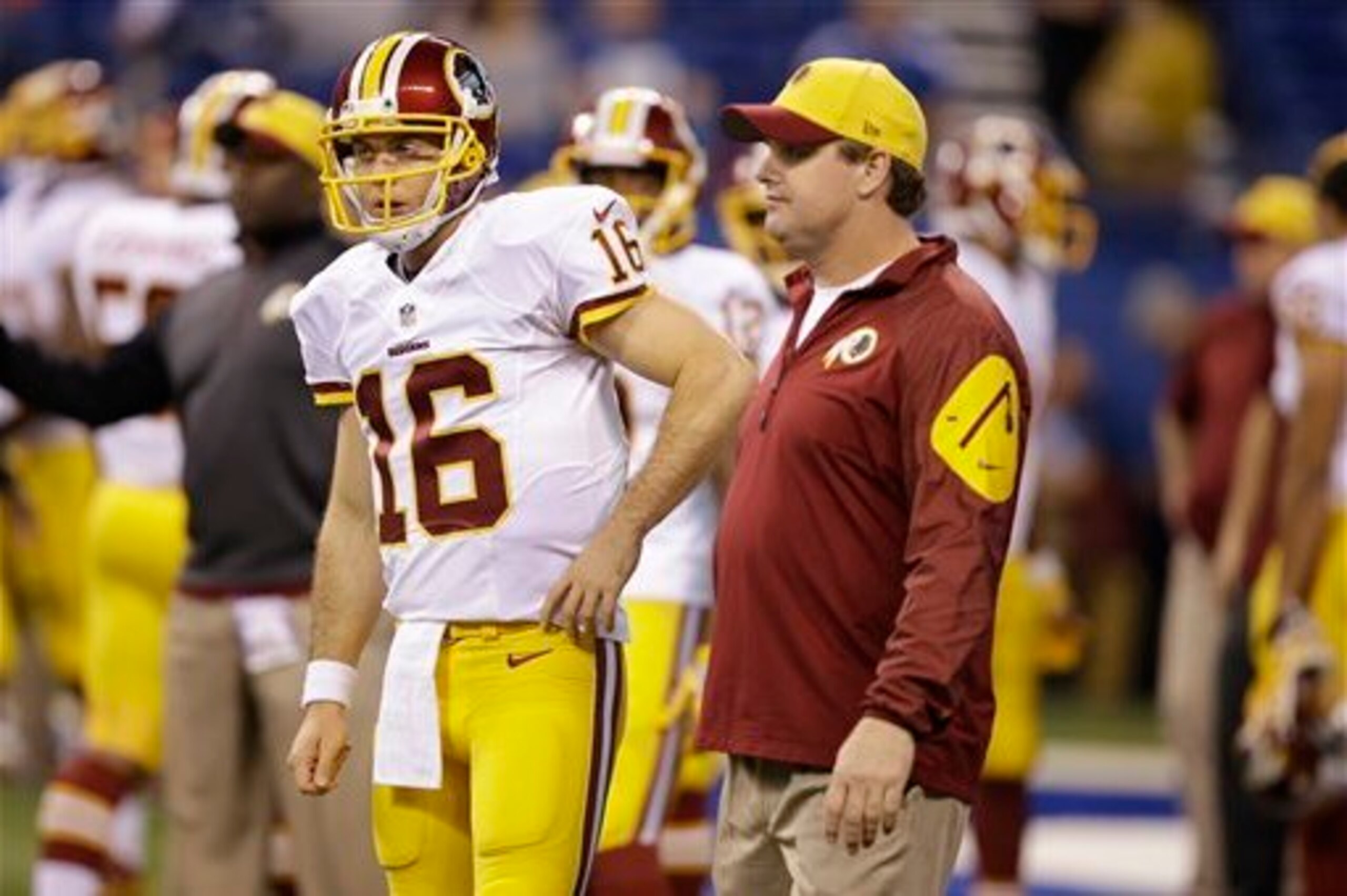
Gruden can't blame Griffin for a game plan that failed to exploit the Colts' weakness against the run or maximize the talents of receivers DeSean Jackson, Andre Roberts and Pierre Garcon.
Both sides of that ugly coin were revealed when Gruden opted to go for it on 4th-and-inches in the third quarter. Rather than choosing a run, Gruden tried to be a little too clever and cute when he called a play-action, rollout pass.
That put a very inviting offensive line under yet more pressure. The Colts responded with an alignment that stacked outside linebackers Bjoern Werner and Erik Walden together on the same side.
That duo conspired to show everything that's wrong with Washington's offensive front. Walden blitzed clean to batter McCoy and jar the ball loose. Middle linebacker D'Qwell Jackson scooped it up and returned it for six.
The Redskins had failed to identify the strength of the Indy front, where the pressure would come from. That's on you Kory Lichtensteiger.
But even without the center doing his job, left tackle Trent Williams, a Pro Bowler, and tight end Logan Paulsen could have responded better. Mike Jones of The Washington Post detailed their failings:
The protection should have been directed to slide toward Werner and Walden to begin with. Then Paulsen and Williams should have assigned their blocks and maintained them.
Instead, the Redskins had failures in organization, communication and technique. Basically all the things you need to do right in order to block well.
But there was also a deeper problem at work here. It was a conceptual one that started with the original call itself.
On a short-yardage situation, why overcook things so much? Especially when the player who started the season as your third-string quarterback is under center?
On a bold, not totally unnecessary, but certainly critical call, Gruden could have simplified things considerably. Jones offered one obvious but smart suggestion:
But this example of embracing the complex over the straightforward was a game-long pattern that cost Washington points. Here's a few examples of Gruden over-egging the pudding.
How about the way he continually tried to run Alfred Morris up the middle in key situations? All that did was attack the strength of the Indianapolis defense, namely it's size along the interior of the trenches.
Jones described how that was doomed to fail after Morris was stuffed twice near the goal-line during the final quarter:
Not only do monster nose tackle Josh Chapman and Arthur Jones represent a problem, but so does veteran Cory Redding. To compound matters, running inside played to the aggressive, downhill instincts of Jackson and fellow middle 'backer Jerrell Freeman.
The decision to attack the middle was made to look more foolish by the fact Morris has been excelling as a lateral runner. In last week's game-plan article, Morris' ability to thrive on the outside was noted as a ploy that would cause the Colts a few problems.
More importantly, Morris had already made that potential clear during Week 12's 125-yard effort against the San Francisco 49ers. This week, his numbers weren't nearly as sweet.
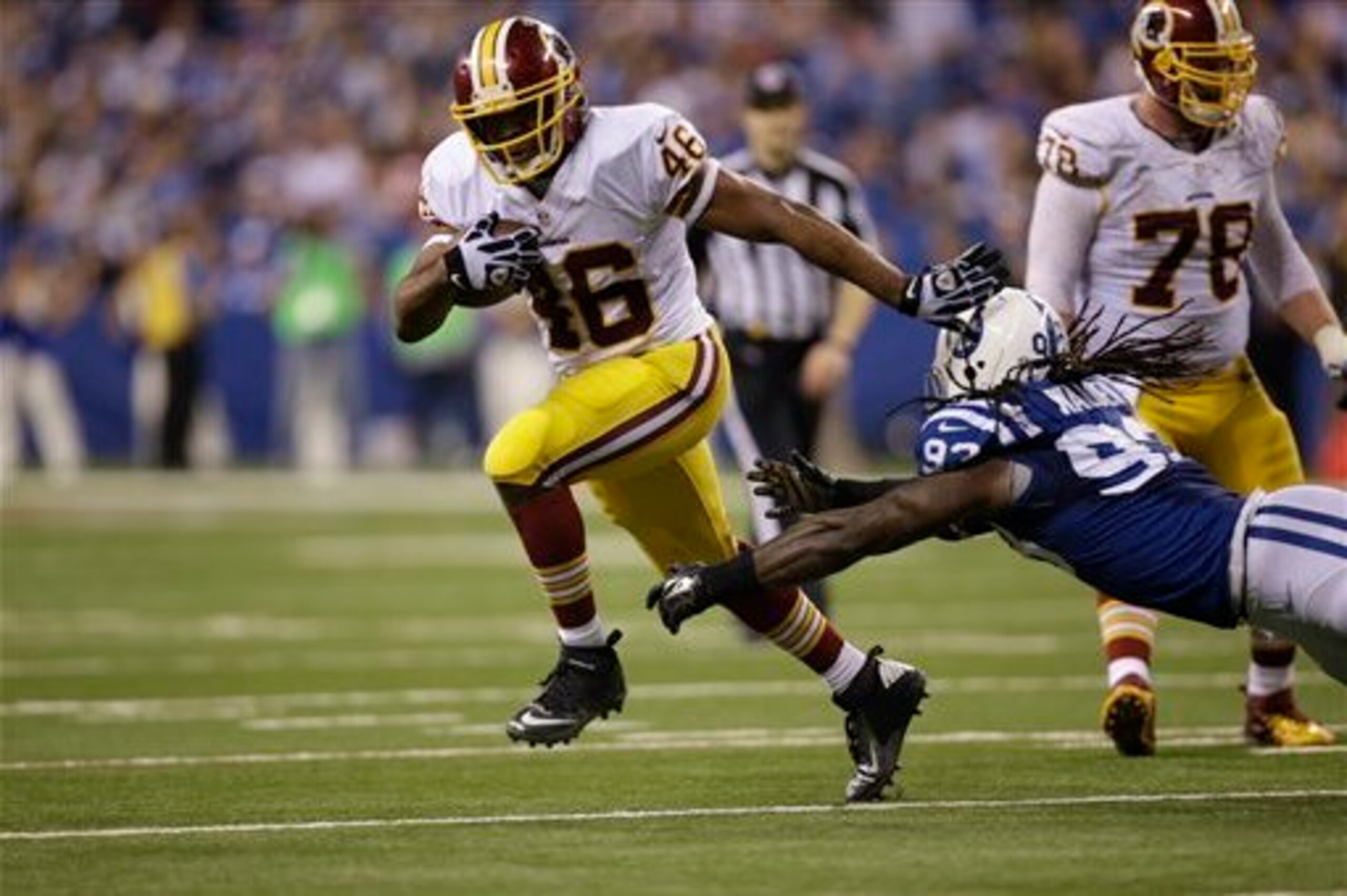
Morris managed 67 yards on a mere 17 carries. As an offense, Washington tallied just 84 yards on the ground. Dubious play-calling was a big reason for the lack of production.
But Gruden's suspect choices also extended to the passing game. He routinely had McCoy, not the most strong-armed or accurate passer, target receivers on timing fades aimed for the back corner of the end zone.
That was a strange decision when considering the Redskins don't possess a single credible receiving threat taller than 6'2". Fades are usually effective when aimed at taller pass-catchers, something 106.7 The Fan host Grant Paulsen pointed out:
If Gruden and offensive coordinator Sean McVay were so intent on trying a fade, then why not let 6'5" tight end Logan Paulsen run the pattern? OK, he's primarily a blocker, but a betting man would surely favor Paulsen snagging a fade more than he'd wager Jordan Reed, Jackson or Roberts would.
There were were very strange things going on with the Washington offense in Indianapolis, and none of them had anything to do with the quarterback.
Instead, there were structural problems with the supporting cast, specifically the blocking. There were also play-calling issues relating to a scheme that doesn't exactly make things easier on a signal-caller.
Put those two things together and you've got a framework any quarterback would struggle to succeed within. That's especially true when you combine those problems with defensive ineptitude.
If Gruden wants to spin the wheel in another round of the blame game, perhaps he'll direct his ire toward coordinator Jim Haslett and his defense. The unit got into the Christmas spirit a little early by gifting the Indy passing attack several big plays.
Jones detailed the carnage:
The pass defense was so exposed for two key reasons: lack of talent in the secondary and an overly complex scheme that leaves players dedicating too much brain matter to just getting lined up.
What exactly has happened to David Amerson and Bashaud Breeland? At the midway point of this season, they looked like something this franchise could count on. Namely, a pair of quality, young cornerbacks.
But form has certainly deserted the duo in recent weeks, particularly Amerson. He was routinely burned in Indianapolis. The team's prime pick in 2013 is already rapidly approaching bust status.
Of course, no coverage scheme is helped when its members aren't sure what they're supposed to be doing. The confusion was obvious in Indy, and CSNWashington.com reporter Rich Tandler was in no doubt who was to blame:
It's clear by how many times Washington defenders are still talking to one another as the ball is snapped, that this defense is overloaded with too much scheme.
Greater simplicity has been a season-long call. A clear identity gives players a basic structure to work within. That lets them play aggressively and fly to the ball.
Haslett certainly hasn't provided that, which is something that only deepens the mystery of why he was even retained when Gruden replaced Mike Shanahan this offseason.
Haslett's issues are just one more headache for Gruden and anyone employed to try and turn this team around. A lack of quality players in the offensive trenches and defensive backfield has been ongoing since 2009.
Shanahan never fixed it. So far neither has Gruden. He spent his first offseason in charge targeting glamor positions such as wide receiver and pass-rusher.
It's that type of thinking that will keep this franchise stuck in losing, no matter who's playing quarterback. Gruden rolled the dice this week by benching Griffin and turning to McCoy.
But that gamble wasn't just about the one position. It was a bet that a change under center would inspire the rest of the team, a supporting cast already good enough to win, just lacking direction.
It's only taken one game, but Gruden has found out he needs to fix much more than just the quarterback before this team can win.
All statistics via NFL.com.