
Breaking Down What Colt McCoy Brings to the Washington Offense with RG3 Benched
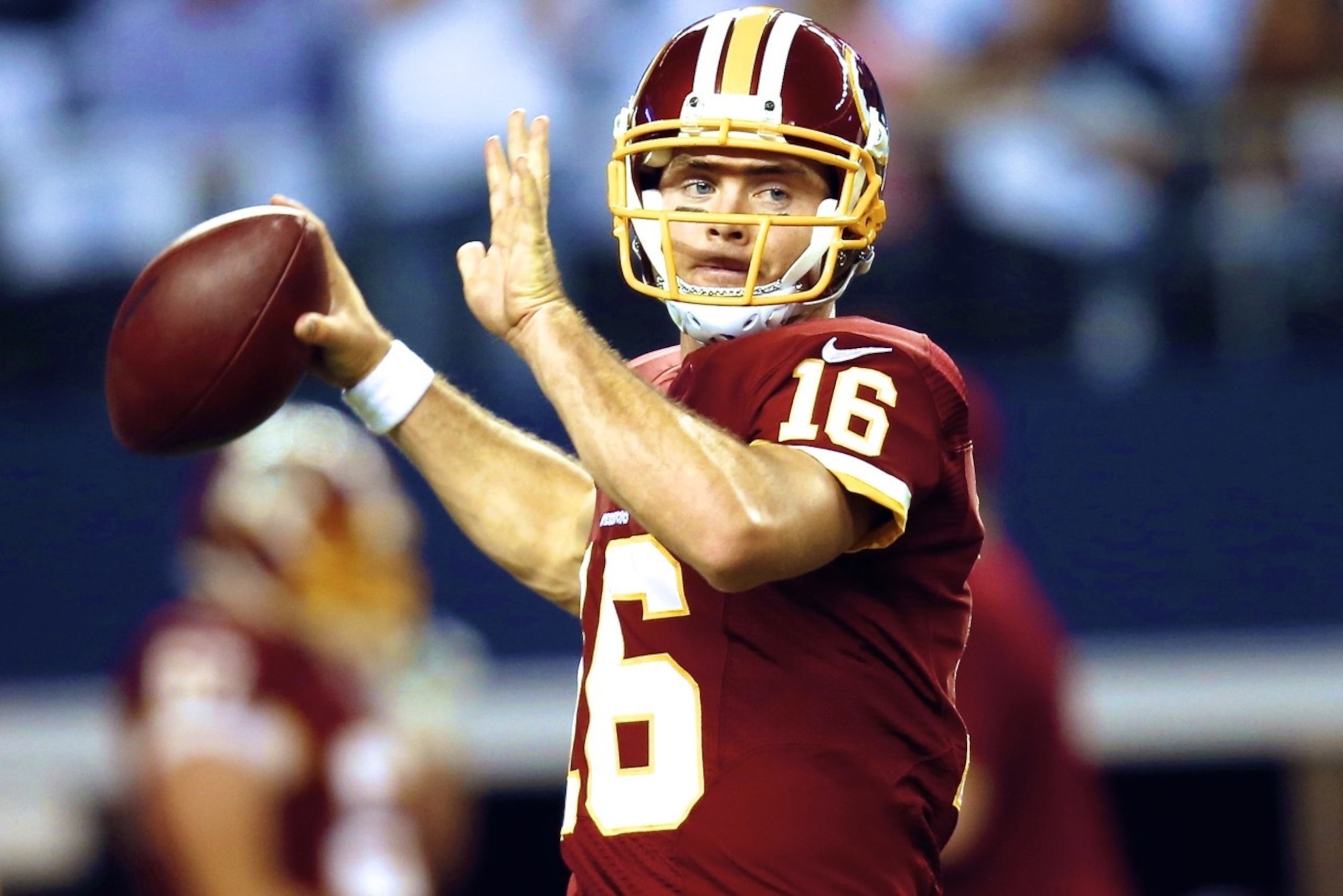
Now that Robert Griffin III is on the bench, the focus shifts to his replacement: Colt McCoy.
Although Washington head coach Jay Gruden is trying to frame this move as a way of helping Griffin learn the offense better, it appears the job is there for McCoy to take. Seizing NFL jobs hasn't been a strength of McCoy's throughout his career.
He is 28 years old and has been in the NFL since the Cleveland Browns selected him in the third round of the 2010 draft. McCoy started eight games as a rookie and 13 during his second season. In his third year, he was active for just three games, throwing 17 passes.
TOP NEWS
.jpg?w=2560 "Chargers Mack")
Every Trade's Best Trade Asset 🔁
.jpg?w=2560 "Green Bay Steelers Football")
Insiders: Cowboys Overpaid for Porter
.jpg?w=2560 "Seahawks Cardinals Football")
MHJ's Potential Trade Value 📉
From there, McCoy lost out on the chance to start for the Browns when the franchise drafted Brandon Weeden. Weeden went on to flop, while McCoy became the backup quarterback for the San Francisco 49ers. Before the 2014 season, Blaine Gabbert, the failed Jacksonville Jaguars quarterback who was borderline incompetent during the preseason, replaced McCoy.
His failings landed McCoy in Washington as the third quarterback behind Griffin and Kirk Cousins.
When Cousins proved incapable of executing the offense effectively during Griffin's injury absence, coaches inserted McCoy into the lineup. During those two games, he threw 42 passes, completing 36 for 427 yards, one touchdown and one interception. He also ran for a touchdown and fumbled the ball.
McCoy's statistics weren't significant in either direction. He completed a lot of passes but for limited yardage, and he had as many turnover-worthy plays as touchdowns.
As Gruden pointed out after naming McCoy his starter, the team has won every game when the former Texas college quarterback has seen the field. Quarterback wins are a flawed statistic; any rational fan or analyst will understand that. Washington's past record with McCoy means nothing. Instead, his skill set and performance are what will determine if he can sustain success as a starter.
Griffin quite clearly has the skills to sustain success in the NFL, but within a new system coming off multiple injuries, he was incapable of showing enough in his performance.
McCoy lacks the tools of a top-tier NFL quarterback or even an average starter. He is a weak-armed passer with limited accuracy as a pure thrower. His intelligence allows him to avoid disasters but not to the extent that he can limit turnovers. And his athleticism isn't a flaw, but it's also not a strength.
Early on against the Dallas Cowboys, we got to see McCoy's accuracy while on the move outside of the pocket.
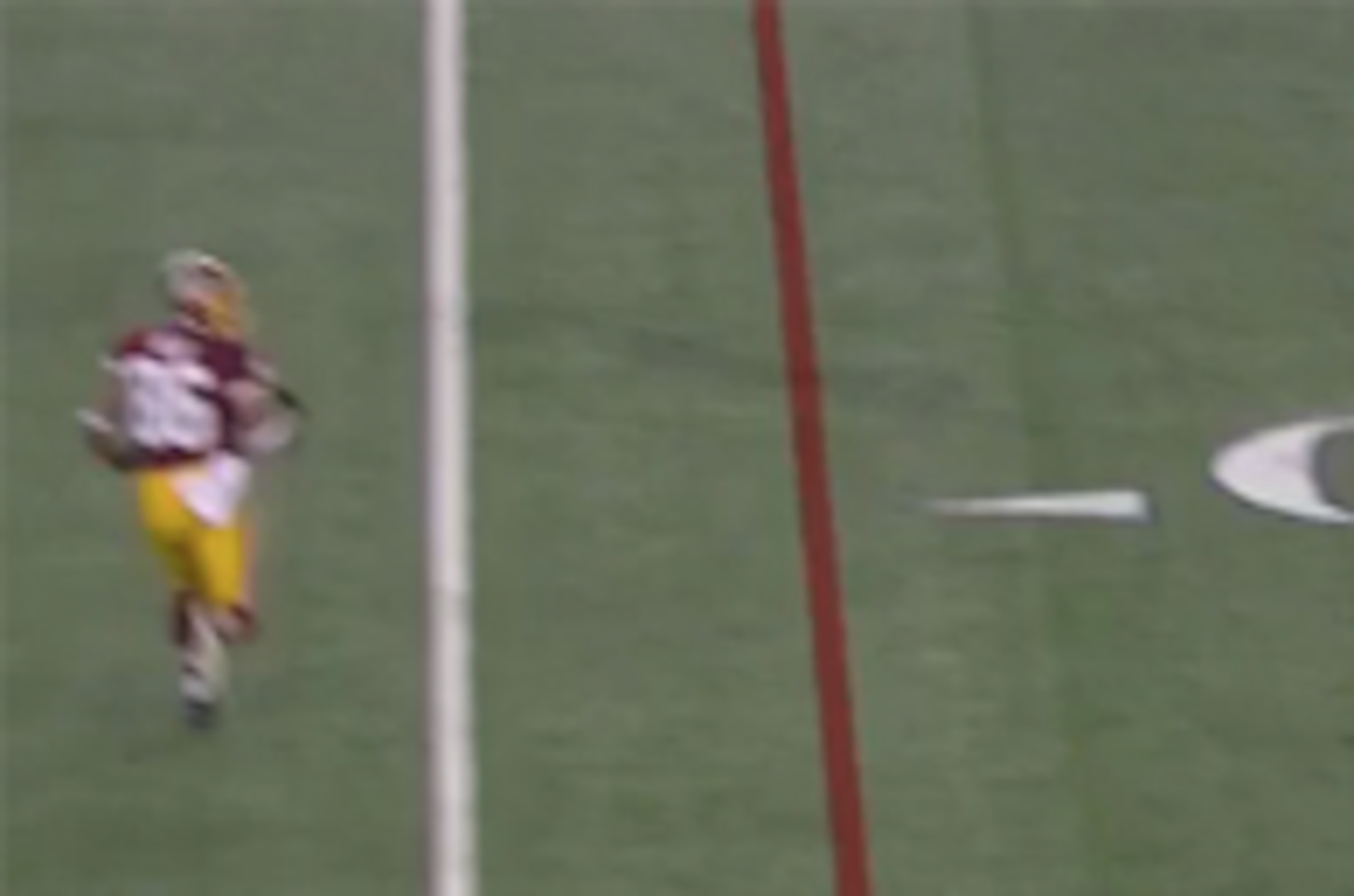
On this 3rd-and-11 play deep in Dallas territory, McCoy drops his eyes against the blitz and turns backwards to run into the left flat. He brings his eyes back up at the last moment to throw the football down the field.
McCoy has a defender in his face when he releases the ball, so that is seemingly why he never turns his body to line up with his receiver downfield.
Because of his poor mechanics on the move, McCoy is unable to find Andre Roberts on the corner route in the end zone. Roberts has created a pocket of separation in the end zone and is waiting on the football, but McCoy's pass drifts too far out of bounds.
While this play was only a yard or two of accuracy away from being a touchdown, the window McCoy was throwing the ball into wasn't tight, and he wasn't being hit as he released the football. This is the kind of throw you would expect a quarterback with starting NFL talent to make.
This play in a vacuum doesn't tell us anything conclusive about McCoy's accuracy and mechanics on the move, but a play on the following drive would.

On this occasion, McCoy finds his way out of the pocket because of the design of the play. He is running a bootleg to his left side, and not a single defender has reacted to the play fake to be near him as he surveys the field.
McCoy takes the time to survey the field and steady himself, but when he begins his throwing motion, his mechanics are very similar to what they were on the previous throw. As such, so was the result of his throw.

DeSean Jackson is running a deep crossing route, and he is wide-open long before McCoy decides to throw him the ball. McCoy should have seen him and passed to him quickly to allow him to continue down the field with the ball. Alas, even a late, accurate throw would allow Jackson to continue downfield.
Instead of providing a late, accurate throw, McCoy provides a late, inaccurate one that forces Jackson to make an excellent adjustment on the ball and leave his feet.
The strongest argument against starting Griffin and in favor of starting McCoy is that the latter knows the system better. Griffin has struggled badly on more traditional dropback play calls where he needs to manage a pocket and make coverage reads.
During the first quarter of the Cowboys game, McCoy had a read-option run, ran bootleg play action, threw a screen pass and threw a pass on a fake-screen call.
If Gruden is reluctant to run these types of plays—the types of plays Griffin gained most of his yards on against the San Francisco 49ers in Week 12—why was he using them with McCoy on this occasion? Maybe more significantly, McCoy was showing an inability to execute these plays as well as Griffin typically does.
McCoy ended his first quarter with a bad interception.

On 2nd-and-12, the Washington offense comes out with two receivers to the left and a tight end to the right. Jackson is motioning behind the formation at the snap, so he is in position to potentially catch a screen pass behind the two receivers to the left.
Before the ball is snapped, the Cowboys hint at zone coverage by not reacting to Jackson's motion to the other side of the field.
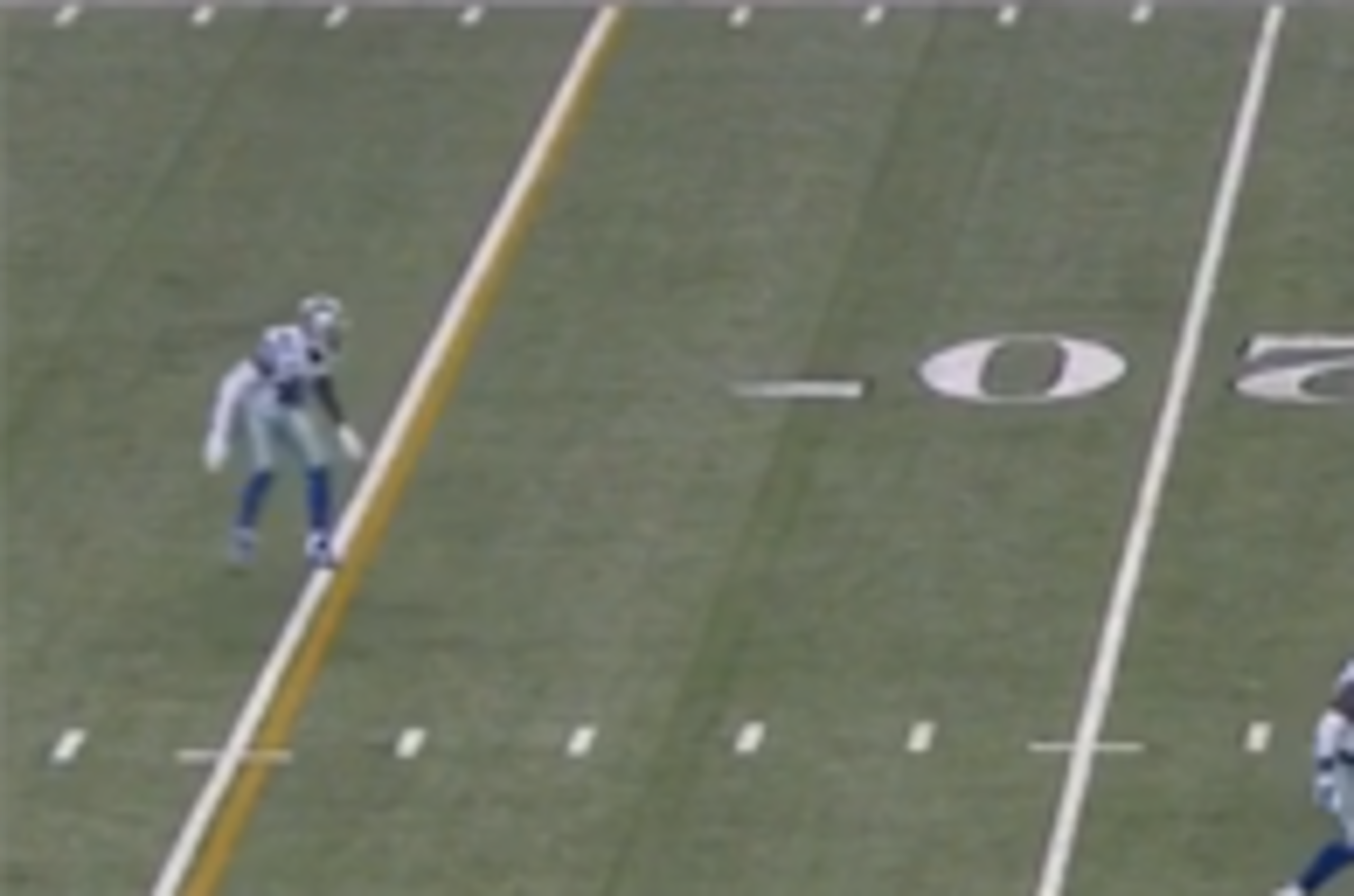
McCoy is running a fake screen. He initially fakes the ball to Alfred Morris before looking to Jackson behind the line of scrimmage. The above image shows the point when McCoy is looking at Jackson. At this point, he should be pump faking to the receiver to draw the coverage forward.
Drawing the coverage forward would create space down the sideline for McCoy to throw the ball into.
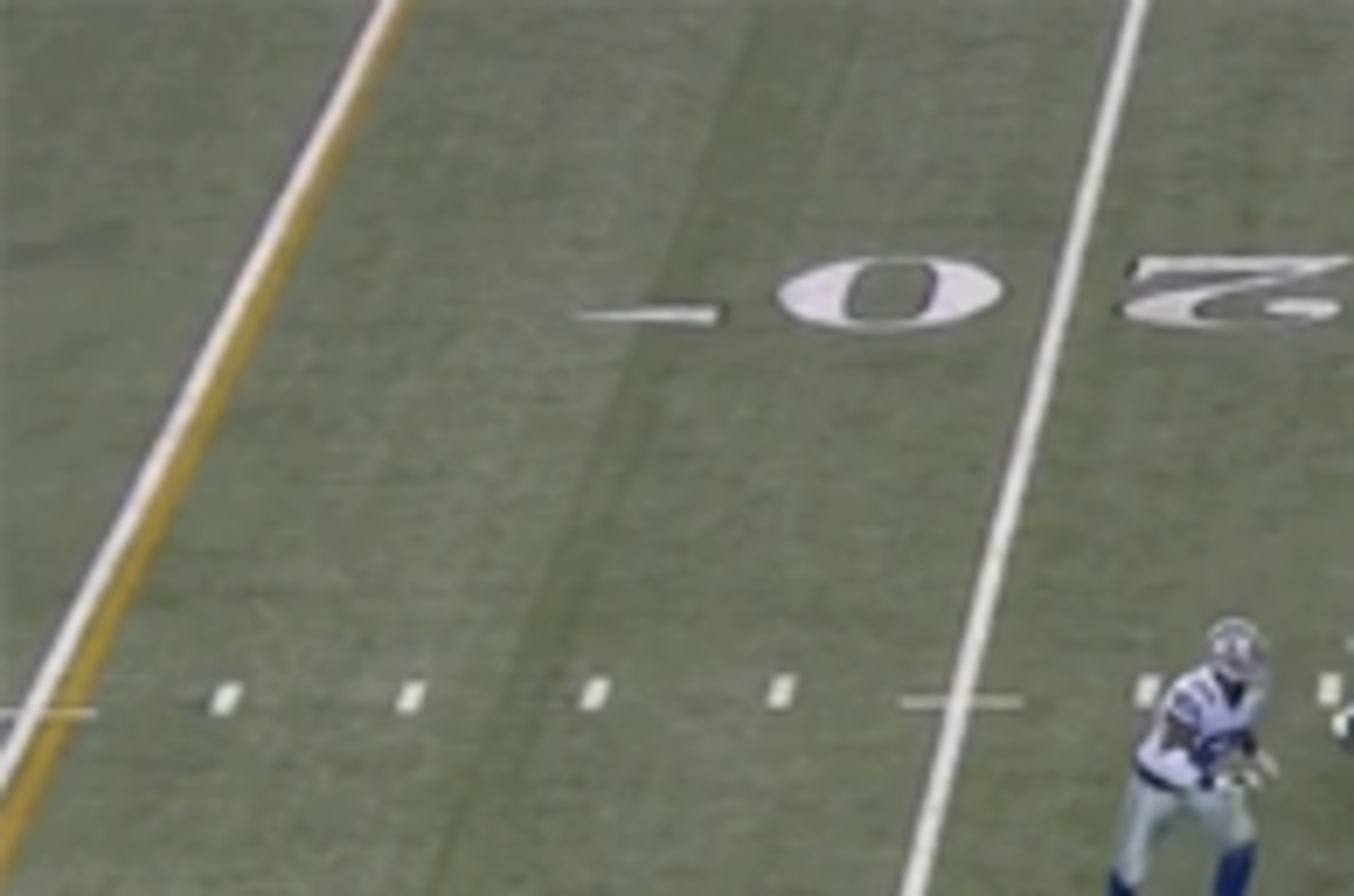
Instead of doing that, McCoy holds the ball before bringing his eyes back to the coverage and then pump faking. By this point of the play, the defensive backs have recognized that he is not throwing the ball to Jackson and dropped off with the wide receivers underneath.
Furthermore, on any fake screen going down the left sideline with deep-safety help, the last thing you want to do is draw them to that side of the field with a poorly executed pump fake.

At this point, McCoy is holding the ball and staring down his receiver running down the left sideline. He is watching as the underneath coverage drops back with the receivers, and the deep coverage comes across to crowd that area of the field.
Meanwhile, Jackson is left alone underneath with just one defender coming across to him. If McCoy showed any kind of poise or understanding of how to read this coverage in relation to the play he is running, he would check the ball down to Jackson as quickly as possible.
Instead of doing that, he heaves a floating pass into the end zone, where two defenders are covering his intended target. Those two defenders didn't bait him into throwing the ball to them; they were waiting for him to throw it while he looked directly at his receiver.
The limp pass makes the interception easy, as McCoy's lack of arm strength is further highlighted.
Early in the second quarter, we got another look at McCoy's arm strength on a deep completion to Jackson for 49 yards. On paper, it looks like an impressive play. Whenever you gain 49 yards, it can't really be a negative for the team, but if the play should have gone for 80-plus yards it is for the quarterback.

Despite being backed up close to its own goal line, the Washington offense runs play action and sets up a deep throw down the field. Just like on McCoy's earlier completion to Jackson, the offense is running a clear-out route and crossing route to put the coverage in an either-or situation.
On this occasion, the coverage focuses on the crosser, leaving Jackson running wide open down the middle of the field.
Although McCoy steps up subtly in the pocket and makes the right read, his throw forces Jackson to stop and wait on the ball when he had three yards of separation behind the defense. He simply didn't have the arm strength to find Jackson farther down the field to allow him to run free to the end zone.
There are certain things quarterbacks can realistically be expected to improve on. Throwing deep isn't one of them.
McCoy simply doesn't have the arm strength or accuracy to consistently make every throw required of an NFL quarterback. This play only succeeded because of how badly Jackson beat the defensive back and because Jackson recognized the flight of the football early.
If the defender was in even slightly better coverage he could easily have cut underneath the receiver for an interception.
This is the kind of play that highlights McCoy's limitations moving beyond this season.
Against this Cowboys secondary, a secondary that played quite poorly on the day, McCoy was able to find his receivers for a handful of big plays. However, he also left a large number of other plays on the field with poor accuracy and his physical limitations.
McCoy is a lesser version of Alex Smith. He is smart enough to run a simple offense efficiently against a lesser defense, but he lacks the physical talent and accuracy to be effective in less-than-ideal conditions. Against the Indianapolis Colts, he should be able to be relatively effective if used correctly, but that says more about the quality of the Colts secondary than it does McCoy.
Over the long term, it's hard to imagine that McCoy starts for a successful NFL offense. He handicaps the team that much.
Over the short term, he may be an improvement over Griffin in some ways, but he brings negatives to the field also. He's not as effective working outside of the pocket as his predecessor, and he will allow defenses to focus on stopping Alfred Morris.
Morris has rushed for 826 yards on 193 carries this season for a 4.3 average per carry.
Coincidentally, Morris has rushed for the exact same amount of yards with Griffin on the field as he has without Griffin on the field. However, his 413 rushing yards with Griffin on the field have come on 39 fewer carries. That means Griffin has averaged 5.4 yards per carry with Griffin and 3.6 without him.
Even in his diminished state, Griffin has athleticism that is a much greater threat to the defense than McCoy's.
As he has already shown this season, McCoy can allow his receivers to be somewhat productive in the right situation, but there is no guarantee he will be an improvement over Griffin—even while considering how poorly Griffin has played recently.
.jpg?w=2560 "Giants Football")