The Best 'Do-Over' Games for Top 10 College Football Teams
What if each college football team got a mulligan?
Imagine Nick Saban, standing on the sixth tee box (the one at Ole Miss) and snap-hooking his drive out of bounds (aka Blake Sims throwing an interception on the final drive versus the Rebels). Instead of dropping and taking a penalty stroke, he looks back at Hugh Freeze and says, “I’ll take a mulligan here.”
Smiling slyly, he re-tees his ball, spanks it right down the middle (erasing the pick, resulting in a Tide score three plays later) and walks down the fairway, ultimately scoring a birdie and his third consecutive win over Freeze.
In this alternate universe, one-loss teams become the undefeated and two-loss teams magically have only one loss.
Here’s a look at when each top-ranked team would have used its mulligan this season. Just as important as the timing is the reason why the do-over is necessary, common threads that tell us as much about the future as they do about the past.
No. 10 Michigan State
1 of 10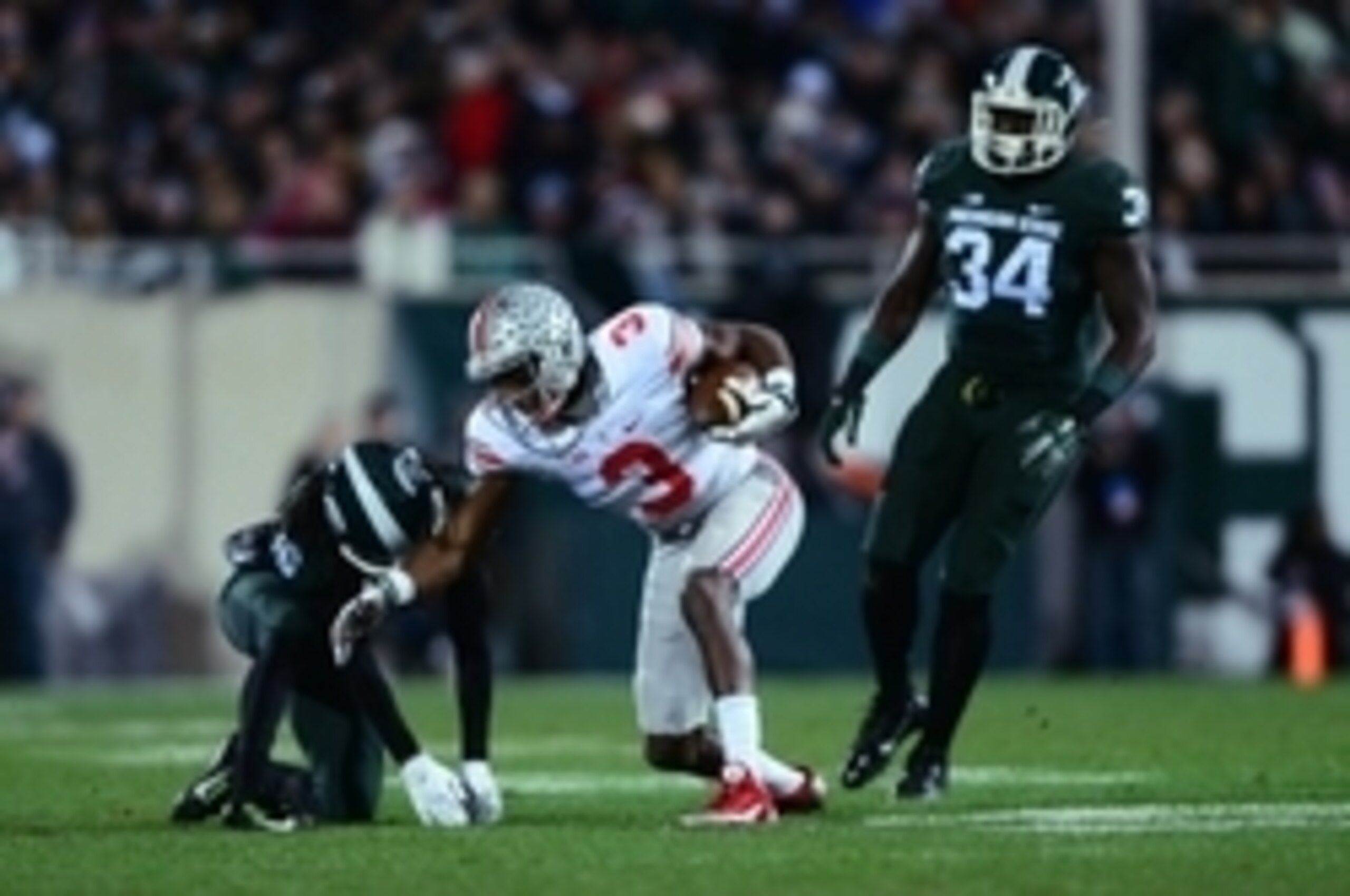
Mulligan: Nov. 8 versus Ohio State, 3:30 remaining in the second quarter. Ohio State 1st-and-10 from its own 21. J.T. Barrett pass complete to Michael Thomas for 79 yards and a Buckeye touchdown.
The Spartans rank No. 6 in the nation in limiting opponents to plays of 10-plus yards. Of the 109 big plays, only three have been for 70-plus yards. Only UCF, Wisconsin, Clemson, Florida and Houston have been better.
Michigan State gave up 29 plays of 10-plus yards and two for 70-plus in its losses to Oregon and Ohio State. That’s 27 percent of the long scrimmage plays and 67 percent of the 70-plus yarders coming in just two games.
It’s no wonder the Spartans lost on both occasions.
Among the lowlights at Oregon were touchdown passes of 24 and 70 yards and touchdown runs of 14 and 38. Against the Buckeyes, Michigan State coughed up 44- and 79-yard touchdown passes in the second quarter and then allowed a 17-yard touchdown run in the fourth.
Eliminating even half of these long plays would make the Spartans an 11-0 team with one regular-season game left to play.
No. 9 Georgia
2 of 10
Mulligan: Sept. 13 at South Carolina, 7:25 remaining in the first quarter. South Carolina 2nd-and-8 at the Georgia 49. Dylan Thompson runs for 10 yards to the Georgia 39 for a first down.
Though Georgia hasn’t wreaked havoc on opposing quarterbacks like, say, Utah—which leads the nation in sacks with 49—there is a direct correlation between wins and losses and getting to the quarterback.
Only once this season have the Bulldogs not registered a sack—in the 38-20 loss to Florida. On only three occasions has Georgia been limited to a single sack: The 38-35 loss to South Carolina, the 44-17 win over Vandy and the 34-7 win over Auburn.
In a less celebrated stat, Georgia has averaged seven quarterback hurries in its 11 games but only had two each in the losses to South Carolina and Florida. That’s a far cry from the 16 it registered against Tennessee and the 17 it scored in the win over Clemson.
It’s no coincidence that Gamecock quarterback Dylan Thompson completed a season-high 70 percent of his passes in the win over Georgia.
This angle makes it difficult to pinpoint a specific do-over, but think back to Thompson’s 10-yard scramble for a first down in the first quarter (resulting in a touchdown five plays later) and his one-yard run on a 4th-and-1 at the end of the game, extending the Gamecocks’ final possession and sealing the win.
No. 8 UCLA
3 of 10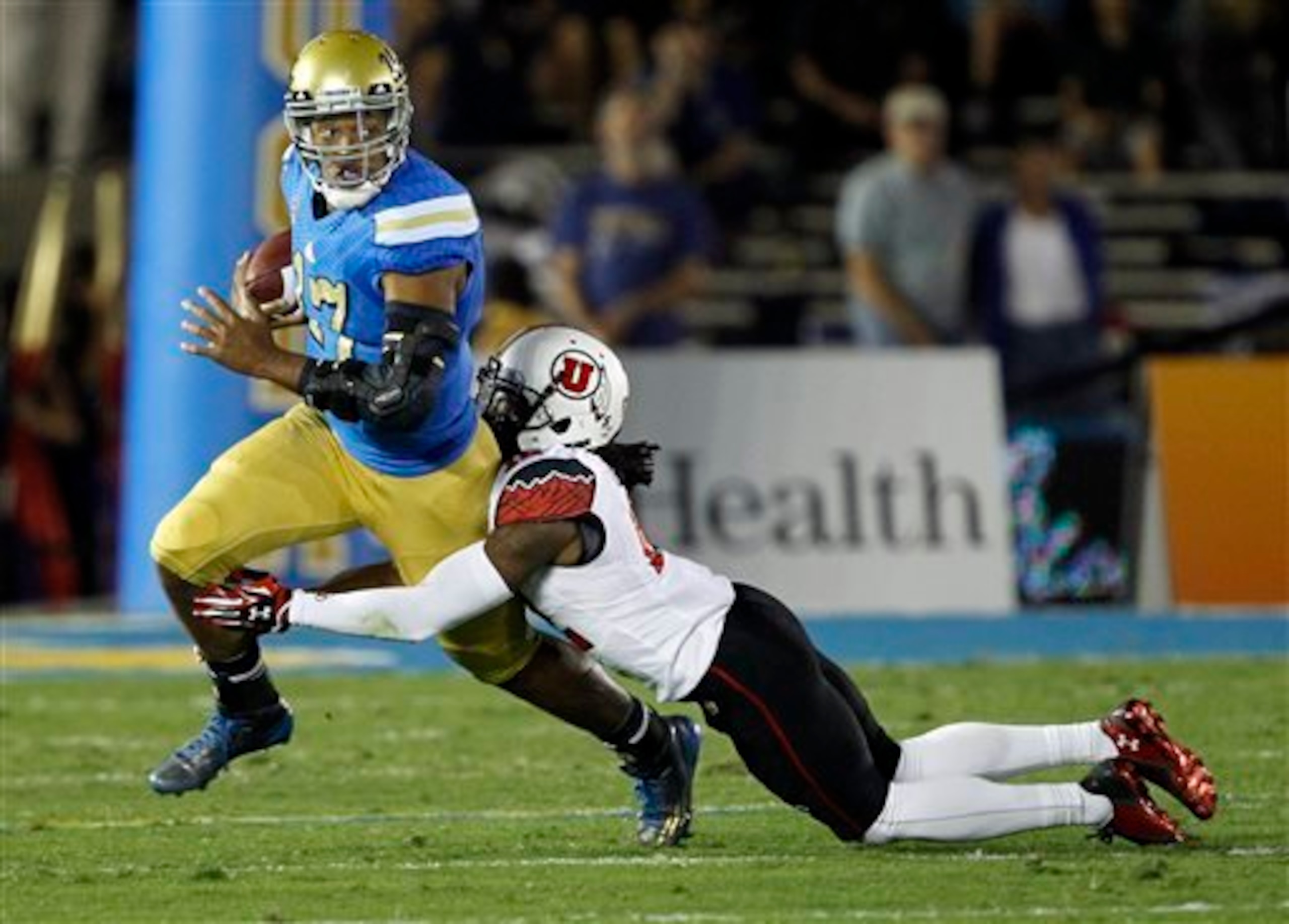
Mulligan: Oct. 4 versus Utah, 10:14 remaining in the game. UCLA 1st-and-10 from its own 21. Brett Hundley sacked by Nate Orchard for a six-yard loss to the UCLA 15.
Only four teams in the FBS have allowed more tackles for a loss than UCLA, and only 18 have given up more sacks. This makes the Bruins offensive line one of the most beleaguered units in the nation.
UCLA quarterback Brett Hundley was sacked 10 times in the 30-28 Week 6 loss to Utah.
Included in this total were three consecutive sacks, by three different defenders, on the Bruins’ third-to-last drive against Utah. The Utes were up 24-21 with 10 minutes left to go, giving UCLA’s 30th-ranked scoring offense a perfect opportunity to make a move.
Instead, Hundley got popped three times in a row, and UCLA punted from its own 1-yard line. This gave Utah the ball at the Bruin 35, where, three plays later, it kicked a 45-yard field goal that was ultimately the difference in the 30-28 win.
No. 7 Baylor
4 of 10
Mulligan: Oct. 18 at West Virginia, 14:51 remaining in the second quarter. Baylor 4th-and-7 from the West Virginia 26. Bryce Petty pass incomplete to Antwan Goodley.
Baylor ranks No. 1 in scoring offense (50 points per game) and No. 1 in total offense (584.5 yards per game), making its No. 4 rank in fourth-down conversion attempts seem logical.
Only UMass (35), Washington State (35) and Arkansas State (34) have made more four-down tries than the Bears 32, but none have come close to completing as many. Baylor is 25-of-32, or 78.1 percent, on fourth down, the seventh-best mark in the nation.
The number means a lot to a team that extends drives and scores when other teams would punt and regroup.
It’s no coincidence that the only team that has shut Baylor out on fourth down this season is also the only team that has beaten it—West Virginia held the Bears to 0-of-2 in its 41-27 win.
Compare this to the Bears’ 25-of-30 (83 percent) mark against its other nine opponents, including posting a perfect 4-of-4 in the huge win at Oklahoma.
Baylor’s first miss against the Mountaineers came early in the second quarter when it was up 13-7 and threw an incomplete pass on a 4th-and-7 try from the West Virginia 26. The second came on Baylor’s final drive, another incomplete pass, this time on a 4th-and-goal from the Mountaineers 18.
If either drive could have been extended and resulted in even a field goal, the outcome could have easily been reversed.
No. 6 Ohio State
5 of 10
Mulligan: Sept. 6 versus Virginia Tech, 2:01 remaining in the second quarter. Virginia Tech 2nd-and-goal from the Ohio State 10. Michael Brewer pass complete to Sam Rogers for 10 yards and a Hokie touchdown.
Though the Buckeye defense ranks No. 30 in scoring and is No. 15 against the pass, it has struggled stopping opponents from scoring touchdowns in the red zone. Ohio State is 27-of-33 in opponent’s red-zone scoring (No. 57), but it has allowed a touchdown inside the 20 on 22 occasions (66.67 percent), earning it a dubious No. 102 rank.
This was especially costly in the shocking Week 2 loss to Virginia Tech, when the Hokies scored four touchdowns during their four visits to the red zone. The first came on the Hokies’ second drive of the game, the next came about eight minutes later, the third came on the final drive of the first half and the final came early in the fourth quarter.
If the Buckeyes could have managed to hold Virginia Tech to a field goal on three out of the four red-zone visits, it would have resulted in a 12-point swing. This could have made all the difference, especially in momentum, in a 14-point decision.
Cincinnati and Maryland combined for a perfect 4-of-4 performance on red-zone touchdowns in the two games after the Virginia Tech loss, but Ohio State’s defense has held opponents to a 12-of-21 mark in the six games since.
No. 5 TCU
6 of 10
Mulligan: Oct. 11 at Baylor, 2:30 remaining in the first quarter. Baylor 1st-and-10 from its own 34. Bryce Petty pass complete to Antwan Goodley for 66 yards and a Bears touchdown.
TCU’s defense has done a decent job of limiting opponents' long passing plays this season. The Horned Frogs rank No. 45 in allowing passing plays of 10-plus yards, giving up 87 such plays.
This acceptable performance fell apart in the game with Baylor, especially late, when the Bears scored 24 points in the final 12 minutes to ice TCU 61-58.
Baylor had 13 pass plays of 10-plus yards in the win, including six for touchdowns. The Bears scored on a 66-yard pass in first quarter, 29- and 67-yarders in the second, a 47-yarder in the third and found the end zone on 25- and 28-yard pass plays in the 12-minute comeback bid in the fourth.
That’s 42 points (or 69 percent of the total scoring) on pass plays of 25-plus yards.
Shutting down any one of these six plays would have made TCU an undefeated squad with a sure spot in the College Football Playoff bracket.
No. 4 Mississippi State
7 of 10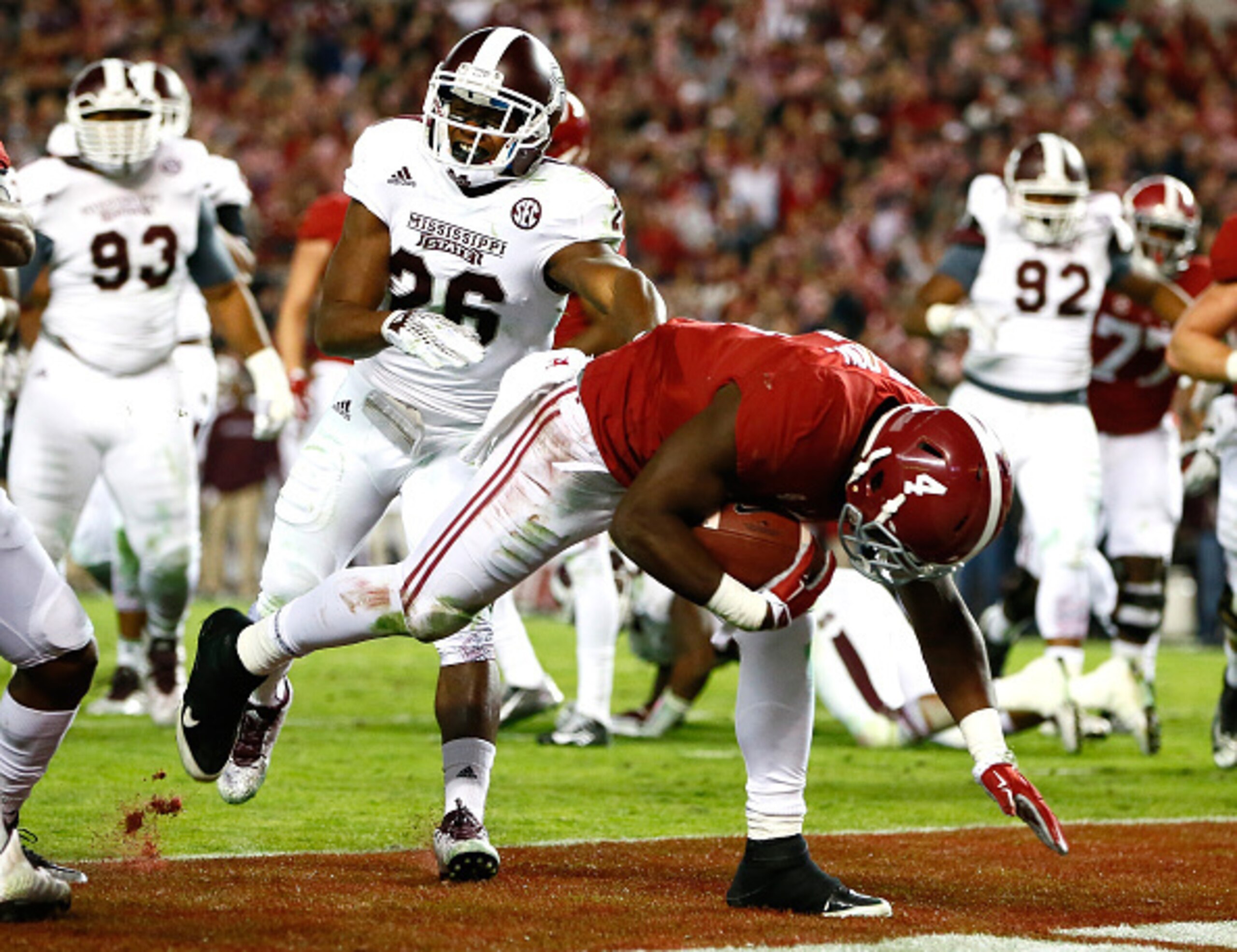
Mulligan: Nov. 15 at Alabama, 8:09 remaining in the game. Alabama 2nd-and-goal from the Mississippi State 7. T.J. Yeldon run for seven yards and an Alabama touchdown.
The absolute high point of Mississippi State’s statistical resume is its red-zone performance on defense, where it ranks No. 1 in both scoring percentage and touchdowns allowed.
Coming into the showdown with Alabama, the Bulldogs gave up a score within the red zone only 52.6 percent of the time and allowed touchdowns only 30 percent of the time.
The Tide blew these high marks up, scoring four of five times inside the 20 (80 percent) and finding the end zone on three occasions (60 percent), both season worsts for the Mississippi State defense.
Included in the performance were a red-zone touchdown in the second quarter that took four plays from the Mississippi State 15-yard line and then the deal-sealer, a seven-play, game-winning score from the Bulldogs 10-yard line.
If even two red-zone scores were reversed (three touchdowns and one field goal), Mississippi State would still be undefeated.
No. 3 Florida State
8 of 10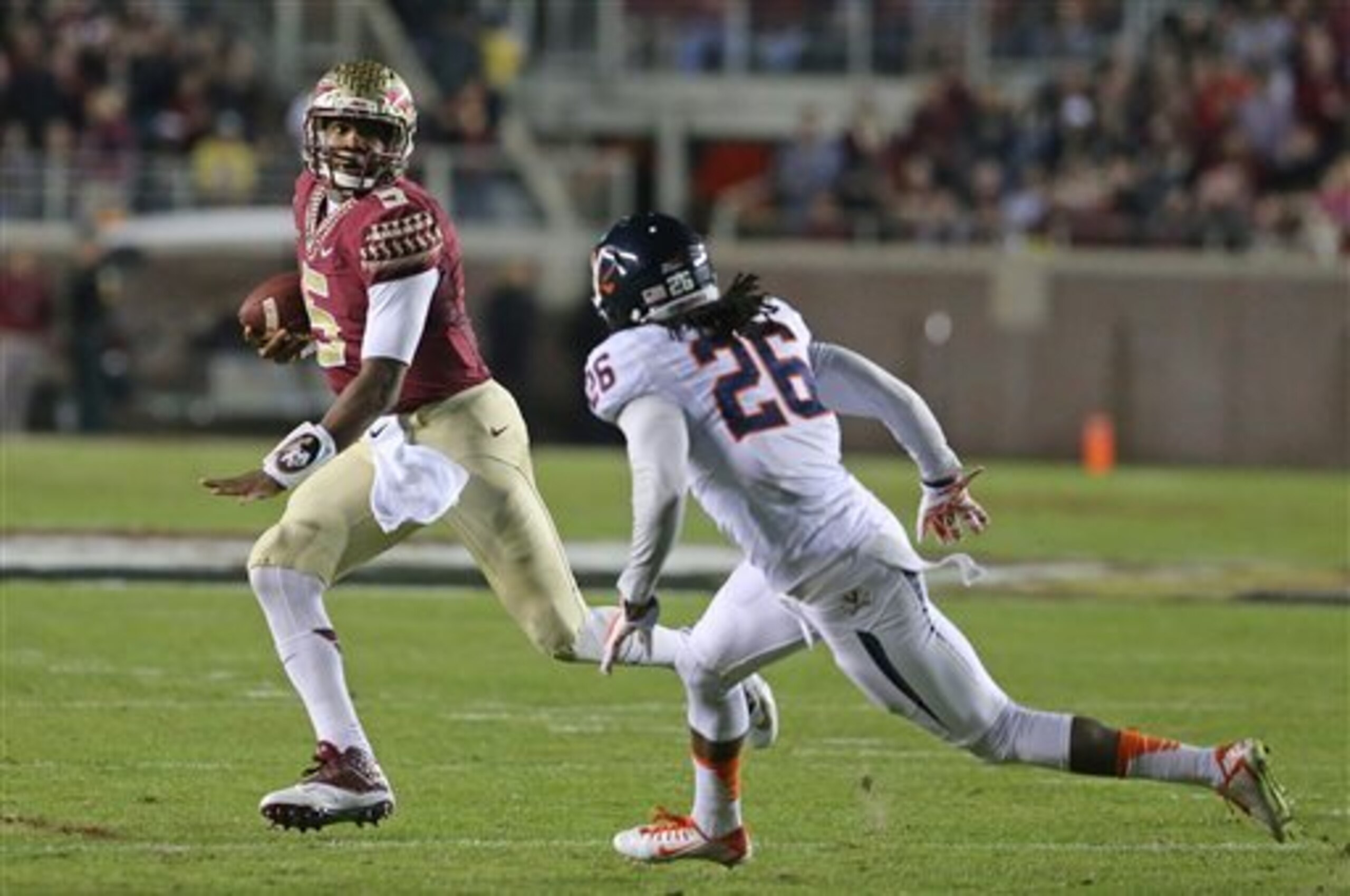
Mulligan: Nov. 8 versus Virginia, 10:30 remaining in the first quarter. Florida State 3rd-and-5 from its own 47-yard line. Jameis Winston’s pass intercepted by Virginia’s Maurice Canady.
Though Florida State hasn’t lost a game, its narrow 34-20 victory over Virginia in Week 11 dropped it from its No. 2 spot in the CFP rankings to No. 3, where it still sits.
The reason the Cavaliers hung around in the game was turnovers, scoring two touchdowns in the first half after Jameis Winston interceptions and another six points in the second half after a forced fumble. This accounted for all 20 of Virginia’s points in the game.
Though the Seminoles rank a decent No. 77 in turnover margin, they are an awful No. 111 (out of 128 FBS teams) in interceptions thrown, meaning only 17 teams are worse.
Winston has thrown at least one pick in every game, with the exception of the wins over FCS Citadel and Syracuse, and he threw multiple interceptions in the close calls with Oklahoma State and Louisville. His 13 picks tie him for the fifth most in the FBS.
If Winston doesn’t throw the two interceptions, Florida State beats Virginia 34-7 and holds the No. 2 spot in the rankings.
No. 2 Oregon
9 of 10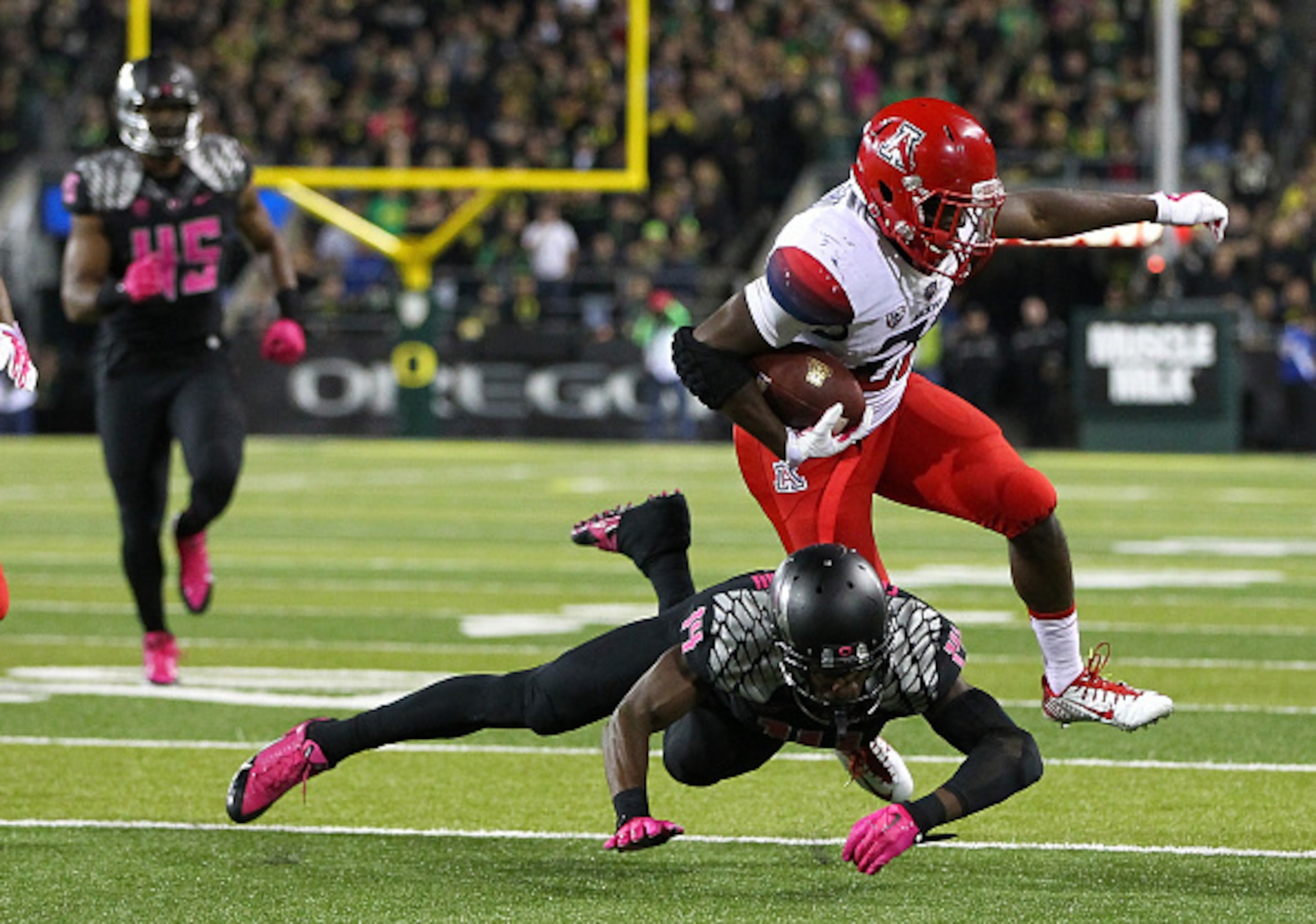
Mulligan: Oct. 2 versus Arizona, 4:46 remaining in the third quarter. Arizona 2nd-and-9 from the Oregon 34. Anu Solomon pass complete to Nick Wilson for 34 yards and a Wildcat touchdown.
What cost Oregon in its 31-24 loss to Arizona on Oct. 2 was something that’s plagued it all season—giving up big plays.
The Ducks rank No. 112 in the FBS in allowing plays of 10-plus yards, giving up a whopping 180 such plays and 19 in its loss to the Wildcats.
Included were eight Arizona running plays for more than 10 yards (two for 20-plus yards) and 11 pass plays of 10-plus (five for 20-plus yards). Particularly painful were a 54-yard completion that set up a score and a 34-yard touchdown pass, both in the 21-point third quarter.
Arizona’s final scoring drive, which ultimately iced the Ducks, featured a 28-yard pass completion on a 3rd-and-4 and a 24-yard run on a 3rd-and-20. Either, if prevented, would have reversed the outcome of the game.
No. 1 Alabama
10 of 10
Mulligan: Oct. 4 at Ole Miss, first Alabama drive of the third quarter. Alabama 3rd-and-16 from the Ole Miss 30. Blake Sims sacked by Bryon Bennett for a loss of four yards to the Ole Miss 34.
It’s pretty obvious that Alabama’s one do-over would be in its only loss, the 23-17 decision at Ole Miss on Oct. 4.
Though there is lots to pick apart in the defeat, including a costly late interception, what stands out from a game-wide perspective is third-down conversions.
Alabama went 6-of-16 (37.5 percent) on third down versus the Rebels, well below the season average of 52.4, the fourth-best mark in the entire nation. Among the misses were a 3rd-and-16 try from the Ole Miss 30 on the first drive of the second half, resulting in a sack for a four-yard loss.
This led to a 51-yard missed field-goal attempt. The Tide were up 14-3 at that point, a lead that could have been bolstered by extending the drive by even a couple of additional downs. Instead, the Rebels took over at their own 34 and found the end zone four plays later, making the score 14-10.
Other season lows on third down include posting a 26.7 percent in the 14-13 near-miss at Arkansas and 35.7 percent in the 25-20 win over Mississippi State.
Even one additional third down conversion against Ole Miss could have secured Alabama an 11-0 record coming into the Iron Bowl.
Statistics courtesy of CFBStats.

.jpg?w=2560 "Every Trade's Best Trade Asset 🔁")
.jpg?w=2560 "Insiders: Cowboys Overpaid for Porter")
.jpg?w=2560 "Top NFL Trade Targets")