The Most Troubling Statistic Facing All 30 NBA Teams
Every NBA team has at least one troubling statistic, and we delved into the stat sheets to find them.
Now that there's a month's worth of data to work with, many clubs are starting to reveal their deficiencies and undesirable tendencies.
Whether it's traditional stats, advanced metrics or SportVU tracking, we found the numbers that are most unsettling to each squad's coaching staff and fanbase.
For the most part, this list showcases and focuses on team-related output and collective statistics. When we touch on individual production, we connect it back to the club's bottom line.
What's your favorite team's most disquieting stat?
Atlanta Hawks
1 of 30
Record: 7-5
Statistic: The defense gives up 117.1 points per 100 possessions when Al Horford is on the floor (as opposed to 99.8 when he's on the bench).
Although the Atlanta Hawks offense isn't spectacular, there's plenty of ball movement and scoring firepower to stay competitive in the Eastern Conference.
Defensively, however, Mike Budenholzer's club has been disappointing thus far. Opponents are feasting in the paint, shooting 57 percent on field goals at the rim and out-rebounding the Hawks 43.1 to 39.6 per contest.
Al Horford deserves a sizable chunk of the blame, as his low-post stoppage has faltered this season. He's currently on pace to post a career-low defensive rating of 108, and Atlanta is 17.3 points worse defensively when he's in action.
If he can't return to his pre-pectoral injury productivity, the Hawks will have trouble surviving on the glass and on the scoreboard.
Boston Celtics
2 of 30
Record: 4-8
Statistic: 32 percent of opponents' two-point field-goal attempts are dunks or layups.
If you thought the Atlanta Hawks had defensive problems, you might want to sit down before perusing the Boston Celtics' stat sheet.
Opponents are getting a boatload of favorable opportunities due to maddeningly inconsistent transition defense and underwhelming half-court rim protection. They're giving up an unsightly 108.4 points per game largely because almost a third of their foes' shots are layups or dunks.
The lack of a well-coordinated back line of defense doesn't just give up close-range buckets. It also undermines talented perimeter defenders like Marcus Smart and Avery Bradley. Ben Watanabe of NESN.com explains:
"Even tenacious on-ball defender Avery Bradley has been de-toothed to a degree. Without reliable rotations behind them, the Celtics’ perimeter defenders cannot pressure the ball or get out on shooters with confidence. Coincidentally, the Celtics have gone from being one of the league’s best teams defending the three-point line a season ago to 27th against the long ball this season.
"
The defensive regression in 2014-15 indicates just how deep the franchise remains in the rebuilding process.
Brooklyn Nets
3 of 30
Record: 5-8
Statistic: Nets are -10.7 per 100 possessions when Brook Lopez is on the floor
In Brook Lopez, the Brooklyn Nets have a unique asset. He's a towering presence with a superb scoring touch and the capability to protect the basket when he's sharp.
But through the first handful of games, he hasn't been sharp, and the team has played better without him. Lionel Hollins' crew is significantly more effective defensively when he's on the bench, and it's also more productive on the other end.
That's a shame, because the franchise has always had sky-high hopes for Lopez. He's the type of low-post anchor who could pull the team out of mediocrity and make them dangerous in the East.
Tim Bontemps of the New York Post discussed the dilemma: "If the Nets are going to get to the kind of place they thought they could entering the season...they’re going to do so because Lopez gets back to the level he played at in that 2012-13 season... Right now, Lopez doesn’t look like that player. His touch has been off...and he’s looked a step slow at times defensively."
Brooklyn is playing better basketball without this subpar version of Lopez, but that doesn't say much for its ceiling.

Charlotte Hornets
4 of 30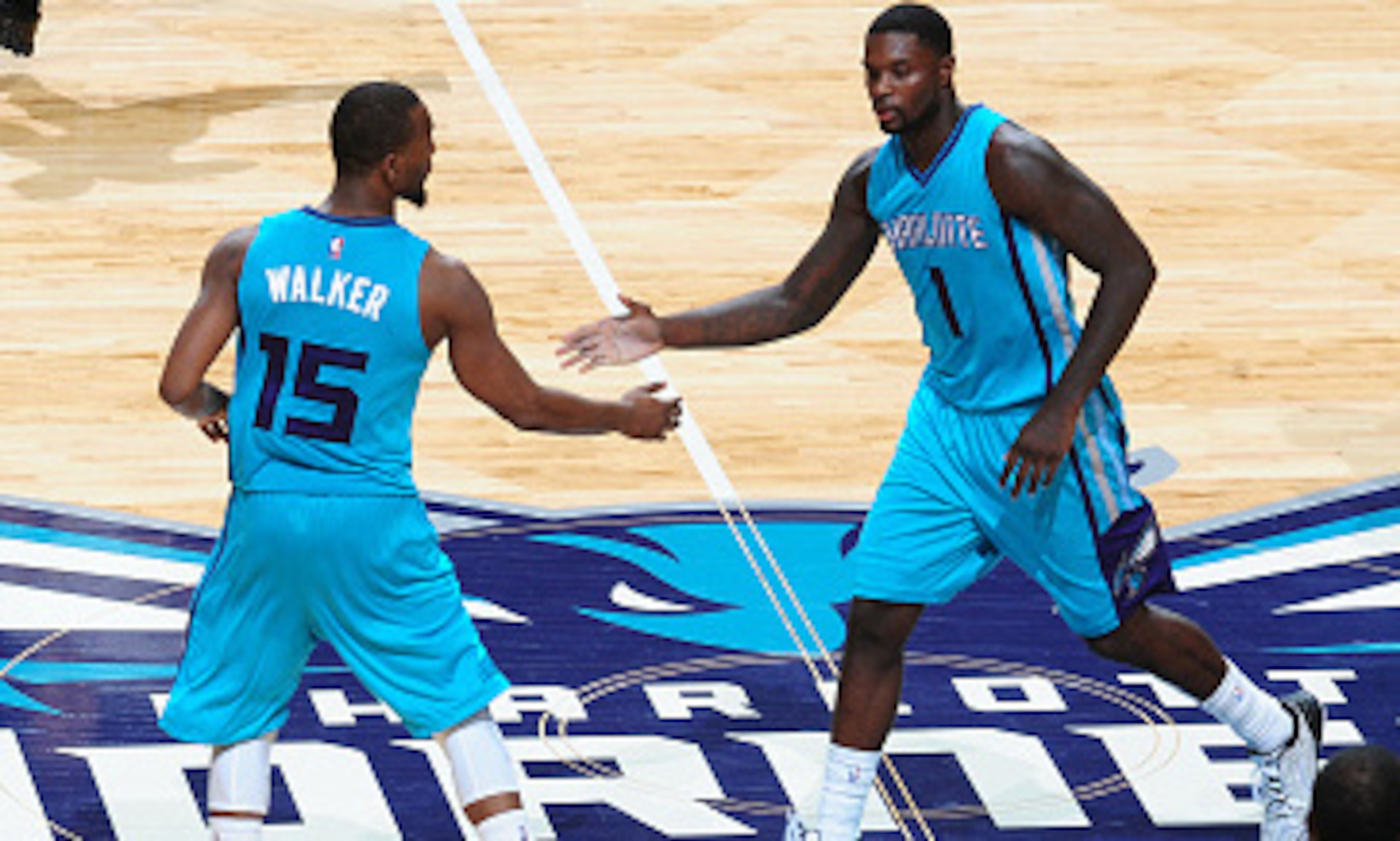
Record: 4-11
Statistic: Kemba Walker and Lance Stephenson shooting combined 38 percent
The Charlotte Hornets have assembled some talented pieces over the past few years. They also happen to be some of the most inefficient offensive weapons in the league.
In the backcourt, Kemba Walker and Lance Stephenson are exciting and creative playmakers. But they're shooting a combined 138 of 366 from the field, which translates to an unhealthy 38 percent.
When two of your biggest offensive threats are hoisting so many errant shots, it's no wonder the team sits in the bottom third of the league in scoring, field-goal percentage and overall efficiency.
Last year's playoff appearance was a promising achievement marking notable progress, but the 2014-15 Hornets are doing plenty to set the franchise back. Will this group, as currently constructed, ever be able to make real noise?
Chicago Bulls
5 of 30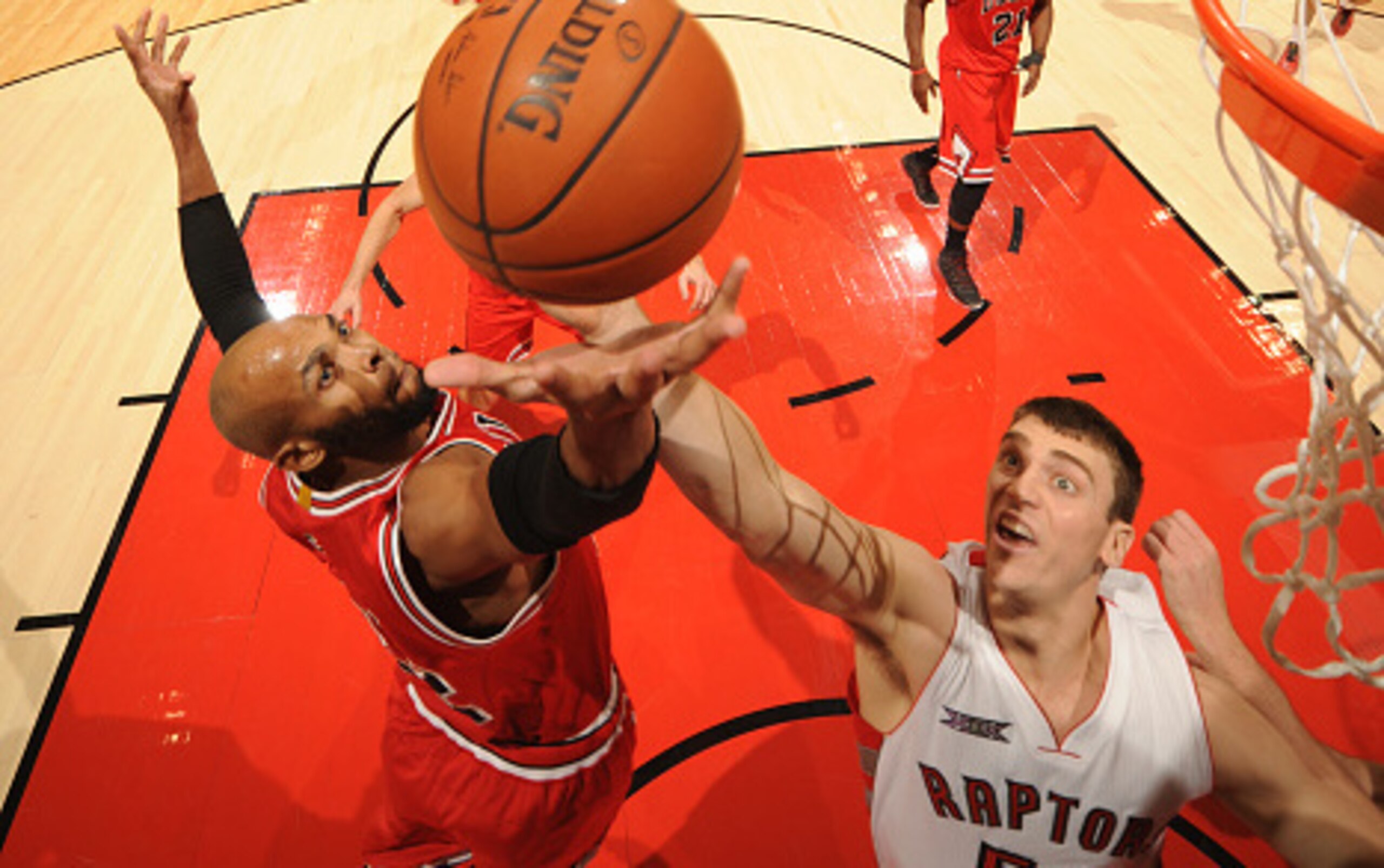
Record: 9-6
Statistic: Opponents averaging 12.1 offensive rebounds per game
Beyond the obviously troubling statistic of Derrick Rose missing the majority of Chicago's games, the Bulls' have uncharacteristically struggled on the boards this season.
Although they have a winning record in the standings—which is impressive considering the intermittent absences of Derrick Rose and Pau Gasol—they have a losing record in the rebounding column.
The Bulls are being out-rebounded 659 to 629 so far, which is not ideal for a defensive-minded team with high playoff aspirations.
Their opponents are collecting an average of 12.1 offensive boards per night, which is part of the reason why Chicago's defense has yielded more buckets than usual in 2014-15.
Cleveland Cavaliers
6 of 30
Record: 6-7
Statistic: Opponents effective field-goal percentage is 52 percent
With a sub-.500 record approaching Thanksgiving, the Cleveland Cavaliers have been substantially disappointing on both ends of the floor. The offense has been inconsistent and untimely, and the defense has been porous at times.
The offensive woes stem largely from a want for chemistry and ball movement, but those are issues that will gradually be solved by such competent personnel.
We're not so sure this group is set up to succeed defensively, however.
Cleveland's having trouble covering both the perimeter and interior. Kyrie Irving and Co. are failing to consistently cover the three-point line, and LeBron James and Kevin Love's frontcourt has allowed too many easy looks inside the arc.
The result is a devastating balance of triples and close-range attempts, producing a 52 percent effective field-goal percentage for foes.
Dallas Mavericks
7 of 30
Record: 10-5
Statistic: Defense allowing 10.1 three-pointers per game, opponents shooting 39 percent on threes.
While the Dallas Mavericks defense forces a bunch of turnovers and has seen intermittent success, it surrenders a truckload of three-pointers.
Rick Carlisle's unit is routinely giving up double-digit triples, forcing the team to play nearly perfect basketball in every other facet.
It's not a one- or two-man adjustment. The whole team must play a notch sharper on that end of the floor, both individually and on rotation collaborations. Oftentimes, the Mavericks overplay one side of the court and then get burned with a couple of quick swing passes or a kick-out dish.
Back on opening night, Dirk Nowitzki quipped that the Mavs "got a long way to go" defensively (per Tim MacMahon of ESPNDallas.com). Nearly a month later, there's still so much refining to do.
Denver Nuggets
8 of 30
Record: 7-7
Statistic: Committing 24.9 fouls per game, opponents attempting 30.4 free throws per game
For the most part, the Denver Nuggets have been a wreck on defense.
They've been unable to consistently stop attackers from getting to the hoop and finding high-percentage opportunities. While their overall coordination has improved in recent games, they're still giving opponents chances to win by fouling and sending them to the charity stripe.
Denver is the hacking capital of the NBA so far in 2014-15; it's committing more fouls per game and yielding more free throws than any other team in the Association.
Brian Shaw's squad is often a step too late to rotate, and consequently, it's giving up anywhere from 15-25 points per night at the free-throw line alone.
Detroit Pistons
9 of 30
Record: 3-11
Statistic: Shooting 41 percent from the field
No fancy advanced metrics necessary: The Detroit Pistons just can't put the ball in the hoop.
Part of it is due to an awkward assemblage of frontcourt talent and a lack of potent playmakers outside of Brandon Jennings. But Motown fans' eyes are sore from so many missed shots, particularly from Josh Smith and Andre Drummond. In the field-goal percentage department, the Pistons are down in the league's basement with the hapless Philadelphia 76ers.
Smith is back at his brick-throwing ways, shooting 38 percent from the field (including 22 percent from three-land). Meanwhile, Andre Drummond's shooting 43 percent despite taking mostly close-range attempts.
Coach Stan Van Gundy talked about how the disjointed offense and poor shooting has affected them defensively.
"One of the problems we're having is when you're not efficient offensively, and you're not scoring the ball, there are a lot of misses coming off and a lot of opportunities to run," he told Vince Ellis of the Detroit Free Press. "Obviously, if you're putting the ball in the basket, it's much easier to get back and get your defense set."
Golden State Warriors
10 of 30
Record: 11-2
Statistic: Defense allows 109 points per 100 possessions with Marreese Speights on the floor and 111 when Festus Ezeli is on the floor (compared to 96.6 and 97.0 when they are on the bench).
Anyone who has watched (or even heard about) the Golden State Warriors knows they don't have too many problems offensively. Even without David Lee, the Splash Brothers and Co. are bombarding opponents nightly.
They're defense has also been solid, as it leads the league in opponent field-goal percentage and plays extremely well together.
However, there are a couple of weak links in the paint, as our stat illustrates. Marreese Speights and Festus Ezeli haven't been able to stop opponents, and the team is clearly weaker when they're patrolling the paint.
Andrew Bogut's health is frequently in question, and David Lee's defense is nothing to brag about. Therefore, it's troubling to know that the back end of the frontcourt rotation is struggling to protect the basket.
Houston Rockets
11 of 30
Record: 11-3
Statistic: Averaging 19.4 assists per game.
Much has been made of James Harden's increased playmaking productivity, and rightfully so. He does a phenomenal job of attacking opponents, forcing them to react as he finds open comrades.
What about everyone else? Save for the surprisingly dextrous Kostas Papanikolaou, they're not distributing the ball much.
No one other than Harden dishes more than three assists per game, and that's a big reason why the Rockets are in the league's bottom third in assists per game and bottom half in points per game.
Point guard Patrick Beverley needs to become a more productive and creative quarterback, as he's dealt just 2.1 dimes per contest over seven games.
Indiana Pacers
12 of 30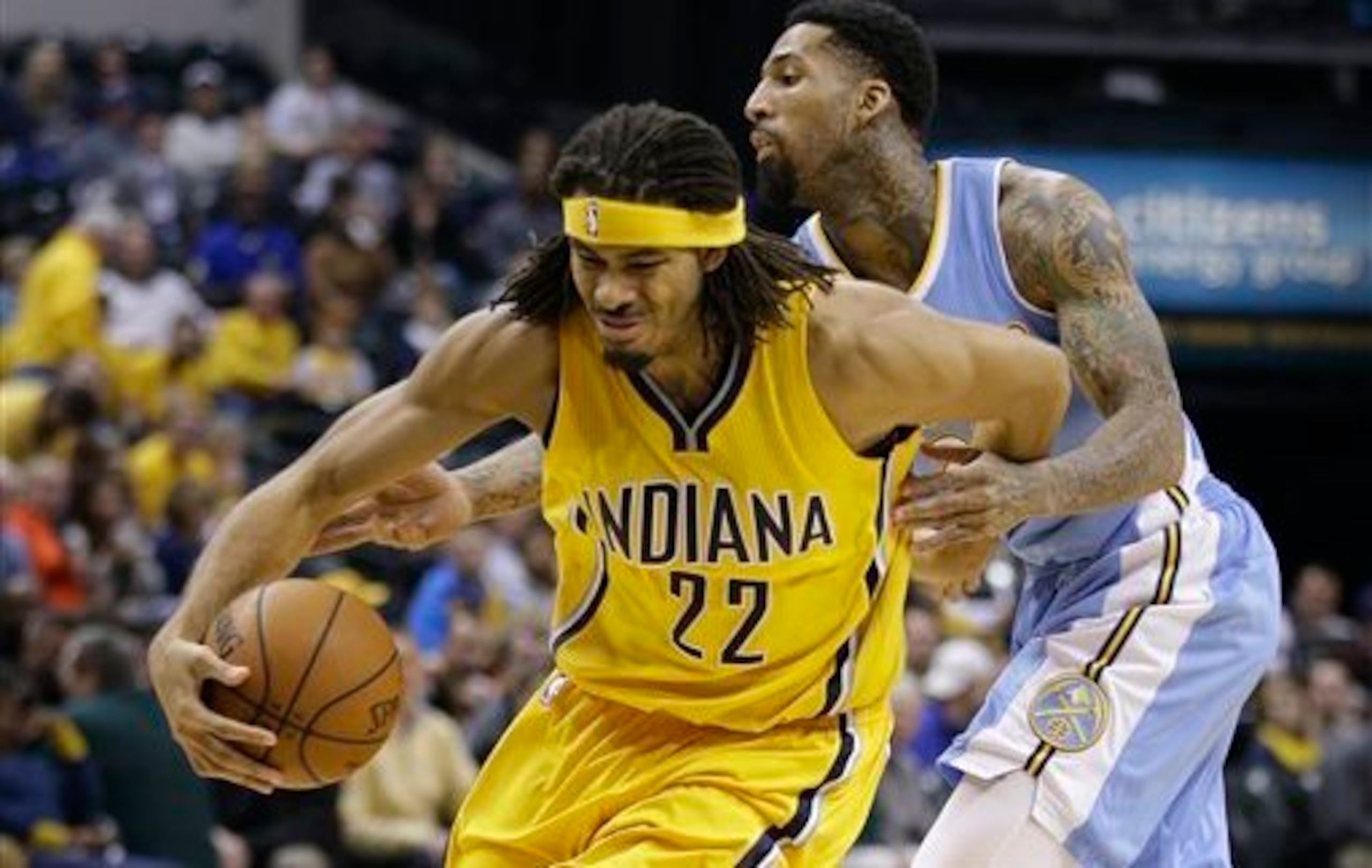
Record: 6-8
Statistic: 41 percent of two-pointers are assisted
We can't really scold the 2014-15 Indiana Pacers for much of anything, as the roster is depleted by injuries and transformed from the 2013-14 version. In fact, the way Frank Vogel's group has competed has been impressive.
Of the many deficiencies plaguing this talent-starved group, one that stands out is the lack of assisted two-point field goals (just 41 percent of their two-pointers are assisted). The Pacers rank dead last in the NBA in that category, and it's not much of a surprise considering the roster turnover.
Their ball movement isn't well oiled, and even when they try to share the rock, it often doesn't result in a crisp assist to a cutter heading toward the hoop. On many possessions, they rely on players like Donald Sloan and Chris Copeland to create and drive to the bucket.
Again, it's hard to blame this new-look lineup. It's just a difficult recipe for success.
Los Angeles Clippers
13 of 30
Record: 8-5
Statistic: Matt Barnes, Jamal Crawford, J.J. Redick and Blake Griffin all have 109-plus defensive ratings
On the wing and in the post, the Los Angeles Clippers' defense has been abysmal.
Matt Barnes (110), Jamal Crawford (111) and J.J. Redick (113) are the not-so-proud owners of awful defensive ratings. That's frightening because they're the Clippers' best swingmen and own the lion's share of minutes at the 2 and 3-spots. Most slashers are getting past them this season.
While the small forward and shooting guard woes are unquestionable, we can't let Blake Griffin off the hook for this defensive play (109 defensive rating).
The supremely gifted power forward has not done his part to protect the paint. He's succumbing to bad habits like biting on pump fakes, and opponents are taking advantage.
Here's one of the most startling stats you'll see about any NBA superstar: The Clippers are a whopping 20 points worse defensively per 100 possessions when Griffin was on the floor.
Los Angeles Lakers
14 of 30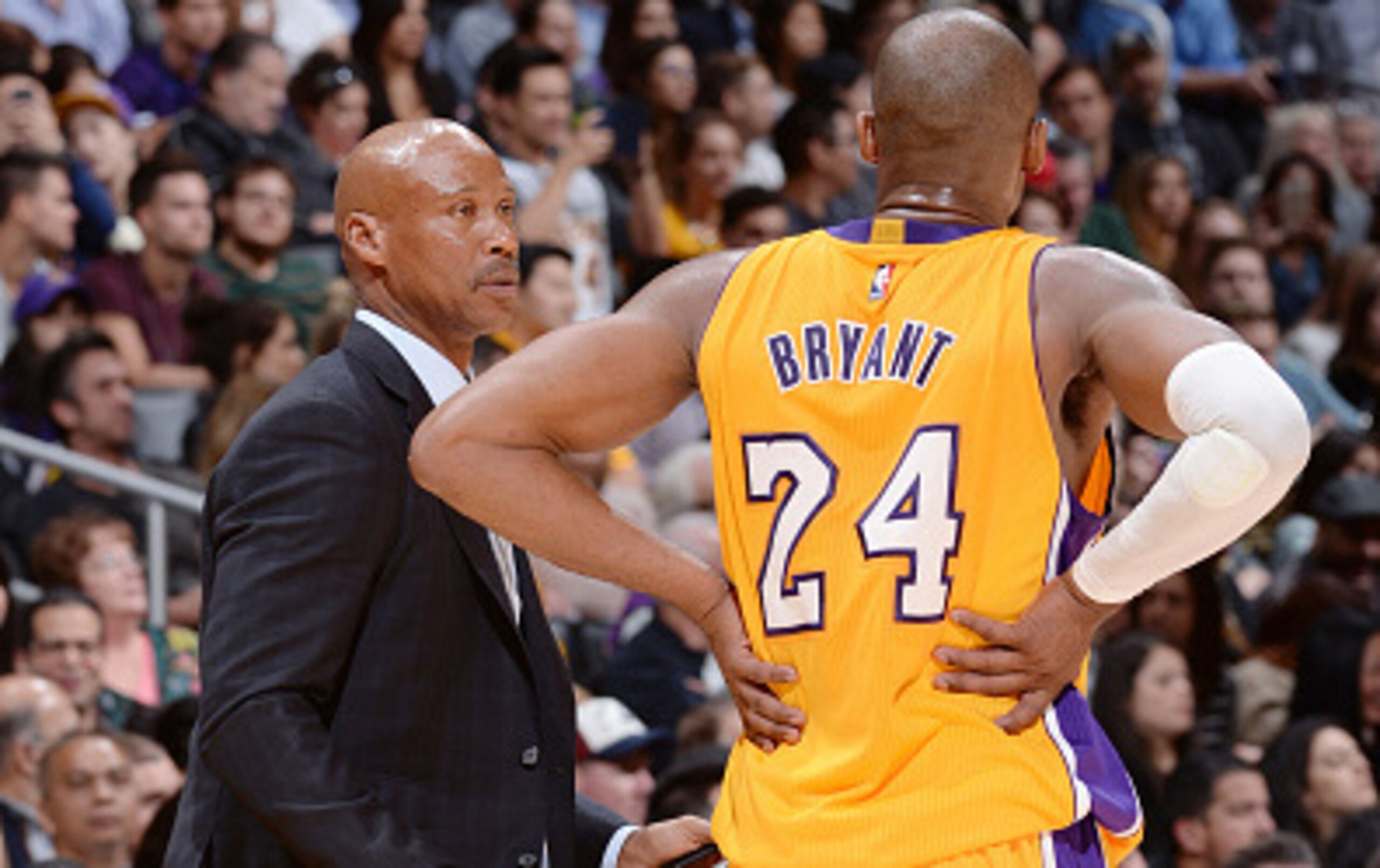
Record: 3-11
Statistic: Making 4.8 three-pointers per game while allowing 10.6 from opponents
It's tough to choose which stat is most troubling for the Los Angeles Lakers because there are so many of them.
We chose the three-point dichotomy because it reflects the squad's shortcomings on each end of the floor. Kobe Bryant and Co. aren't generating enough clean looks from the perimeter, and they're giving up the most triples in the league on the other end of the court.
To say that it's a disappointing start to Byron Scott's tenure is an understatement, especially regarding LA's defensive ineptitude. Zach Harper of CBS Sports points out that, unlike the similarly appalling Philadelphia 76ers, the Lakers' can't use inexperience as an excuse:
"They can't even blame the lack of defensive capabilities on a young roster either. Of the five competing worst defenses in NBA history, those five teams ranked anywhere from second to 14th in terms of average age on the roster. This Lakers' team has the 23rd-youngest roster in the NBA this season. It's not youth or inexperience clouding their defensive abilities; they simply can't stop opponents.
"
Memphis Grizzlies
15 of 30
Record: 12-2
Statistic: Attempting just 14.8 three-pointers per game
We don't want the Memphis Grizzlies to change who they are.
We want them to continue to Grit 'n' Grind their way to the playoffs, as it's a refreshingly and entertainingly physical brand of hoops. After all, they're 12-2 and sit atop the NBA mountain right now.
However, we want them to squeeze out a few more three-pointers per game—just one or two additional attempts per quarter. So far, they're tossing just 14.8 per contest.
They've got a decent (but not spectacular) stable of shooters, including Mike Conley, Courtney Lee, Vince Carter and Quincy Pondexter.
When these guys stretch the floor and fire up more than 15 per night (like they did in recent wins against the Boston Celtics and Los Angeles Clippers), good things happen. It opens up room for Marc Gasol to operate and results in a formidable offensive unit.
Miami Heat
16 of 30
Record: 8-7
Statistic: Offensive-rebounding percentage is 20.5 percent.
This isn't a new phenomenon.
The Miami Heat struggled on the boards during the LeBron James era, when they were atop the Eastern Conference and vying for titles. But with LeBron orchestrating such a highly productive and ridiculously efficient offensive attack, rebounding wasn't as consequential or concerning. There were less rebounds to be had.
This year, they absolutely need to attack the basket and then crash the boards more effectively.
They're in the bottom five in the league right now in offensive-rebounding percentage (a calculated "estimate of the percentage of available offensive rebounds a player/team grabbed.")
Without the King in the picture, the Heat need those 50-50 balls and extra possessions more than before.
Milwaukee Bucks
17 of 30
Record: 8-7
Statistic: Offense scores 94.9 points per 100 possessions with Larry Sanders on the floor
It's okay that Larry Sanders' defense is better than his offense. He's a tremendous defender who is a mobile, active presence and a superb rim protector.
However, the Milwaukee Bucks can't afford for his offense to be this bad. They didn't spend $11 million per year (through 2017-18!) for someone who is so counterproductive to the team's attack.
Jason Kidd's young squad is 12 points better per 100 possessions when he's sitting on the bench. It's not just that he doesn't score, he also lacks a good feel for the game and doesn't pass effectively.
I'm all for the John Henson movement; hopefully Kidd gives him more minutes throughout the year. But wouldn't it be great if both he and Sanders were competent offensively?
Minnesota Timberwolves
18 of 30
Record: 3-9
Statistic: Defense gives up 13.6 FGM at the rim per game, opponents shooting 58.4 percent at the rim
Without Ricky Rubio, the Minnesota Timberwolves are one of the worst passing teams in the NBA. Luckily, his eventual return should steer them back to offensive prominence.
Unfortunately, I doubt he'll be able to mend this woeful defense.
The Wolves are allowing far too many slashers, pick-and-rolls and post-ups. Consequently, they're surrendering the league's highest at-rim field-goal percentage. Without cohesive rotations or effective rim protection, Flip Saunders' defense is asking to get plundered every game.
William Bohl of ESPN TrueHoop's AWolfAmongWolves.com notes that the team needs to brush up on the basics: "Simple things—containing basic pick and roll action, communicating on the defensive side of the floor, knowing where your help is behind you—aren’t happening. And that’s discouraging to see."
If you can't fortify the paint, don't expect to give up fewer than 110 points in today's NBA.
New Orleans Pelicans
19 of 30
Record: 7-6
Statistic: Only seven players average more than 13 minutes per game
Led by a mind-bogglingly dominant Anthony Davis, the New Orleans Pelicans own a winning record and have one of the most dangerous offenses in the league.
But do they have enough depth to sustain it, and do they have enough strength in the rotation to play defense in the Western Conference through springtime?
Those questions are the most pressing, as only seven players average more than 14 minutes and score more than five points per contest. Monty Williams seems to trust only Ryan Anderson and Austin Rivers off the bench, and Eric Gordon's shoulder injury will test the mettle of New Orleans' depth.
Having such a small rotation puts pressure on everyone to produce every night on both ends, and that's an unrealistic expectation. The Pelicans need fresh legs in order to keep pace and slow down other high-octane Western Conference teams, and they need more offensive firepower from the bench.
New York Knicks
20 of 30
Record: 4-11
Statistic: Opponents making 9.7 three-pointers per game at 42 percent rate
Make no mistake, Derek Fisher's New York Knicks are struggling on both sides of the ball.
The offensive ailments can be chalked up partially to triangle development and Jose Calderon's three-week absence, but the defensive side is what's deeply worrisome.
They're failing to stop quality shooters from getting quality shots. Too many wing and corner defenders are leaving long-range weapons open while they play help defense, as Joe Flynn of Posting and Toasting explains:
"New York has a great deal to fix on defense. They don't guard the pick-and-roll well, they foul too much. This isn't all going to get fixed overnight. But they need to adjust their priorities and focus on what is hurting them the most -- the fatal flaw that opponents love to exploit. And that is their three-point defense. Fisher must teach his players to stay home on dangerous three-point shooters.
"
For an example of their arc-related shortcomings, look no further than Monday's loss to the Houston Rockets. The Bockers outplayed the Rockets in a host of key categories, but Houston was able to edge New York thanks to 14 triples on 36 attempts.
Oklahoma City Thunder
21 of 30
Record: 3-12
Statistic: Offensive rating is 98.4
We knew the Oklahoma City Thunder would struggle to score without Kevin Durant and Russell Westbrook.
We didn't know it would be this bad.
Only the Philadelphia 76ers have a worse offensive rating, and the Sixers are the only other team with a sub-100 rating. OKC is in bad company at the bottom of the food chain.
It's an indictment of the stars' supporting cast but also of the coaching staff and system in place. There isn't a dependable rhythm or juice to their possessions, and players often wind up settling for shots away from the hoop. Only 23 percent of Oklahoma City's field-goal attempts are within three feet of the rim.
Even if the Thunder's dynamic duo eventually returns with a vengeance, the current version of OKC might have dug a hole too big to overcome.
Orlando Magic
22 of 30
Record: 6-10
Statistic: Generating 37.8 assist opportunities per game
Orlando Magic fans should exercise patience when it comes to the progress of the team's rebuild.
Yes, the Magic have got decent talent across the board and some exciting young pieces. They've shown flashes of brilliance and are clearly a cut above other Eastern Conference bottom feeders like Philadelphia and Milwaukee. But their offense has a long way to go.
The backcourt rotation doesn't have enough playmaking punch or savvy at this juncture, and that's evidenced in the Magic's place near the league's cellar in the "assist opportunities per game" department.
Luke Ridnour isn't a dynamic playmaker, Elfrid Payton is young and lacks a jump shot to keep defenses honest, and Victor Oladipo isn't a true quarterback. The Magic are thus wanting for consistent ball movement and scoring chances.
Philadelphia 76ers
23 of 30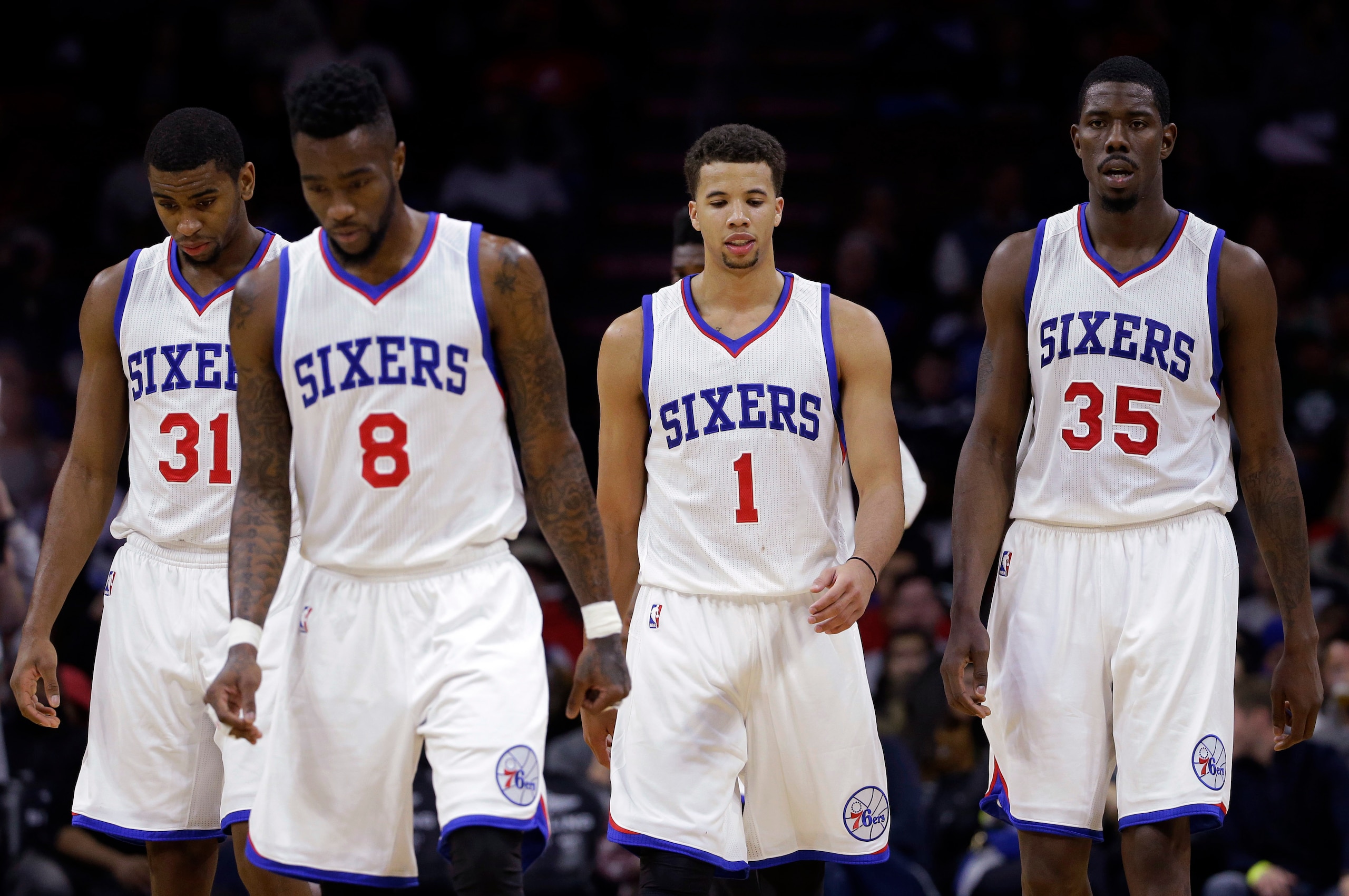
Record: 0-14
Statistic: Assist-to-turnover ratio of 1.09
Sloppy is one of the many negative adjectives we could use to describe the Philadelphia 76ers.
Part of their extreme tanking process involves trotting out a D-League-type team that only vaguely resembles the rotation the 76ers intend to employ a couple of years from now. A painful side effect from employing lower-tier talent is a discombobulated offense that turns the ball over almost as much as it generates points.
The Sixers are a top-five pace team, keeping things uptempo whenever they get a chance—but at a steep cost. They're coughing up 18.2 turnovers per game while dishing 19.9 assists.
B/R's Dan Favale aptly illustrated the Sixers' reckless tendencies: "Their offense is a fast-paced black hole that bruises rims and creates transition buckets for opponents."
It's going to take a long time to develop good habits and become an efficient club.
Phoenix Suns
24 of 30
Record: 9-6
Statistic: 20.5 assists per game
With such an array of offensive weapons, it's disappointing to see the Phoenix Suns in the bottom half of the NBA in assists.
When you take a good look at their roster and playing style, however, it makes sense (in a bad way). Outside of explosive playmakers Eric Bledsoe, Goran Dragic and Isaiah Thomas, the squad doesn't have solid role-playing distributors or creators. There aren't any other players who can generate offense for themselves and others.
And as for the three backcourt stars, their roles still seem in flux. You never know how much production you'll see from each on any given night.
Don't get me wrong, Jeff Hornacek's crew is dangerous and competent, and they regained some of their footing during the recent road trip. But they have yet to show they can consistently churn out 22-25 assists per night, which is what it takes to be a top-tier Western Conference club.
Portland Trail Blazers
25 of 30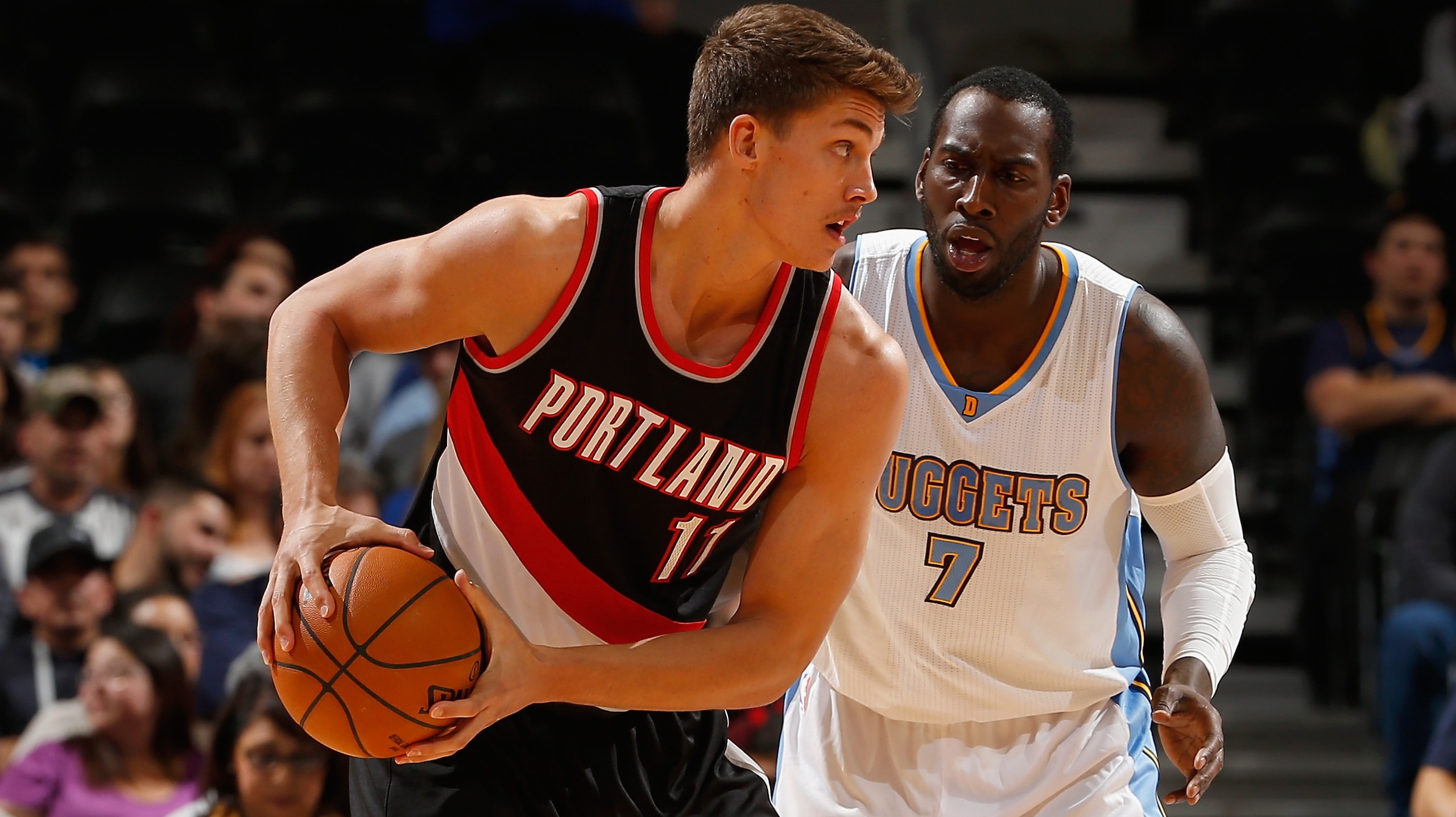
Record: 11-3
Statistic: 20.9 free-throw attempts per game
The fans of Rip City must love what they see through the first few weeks of the season. Terry Stotts' Portland Trail Blazers are playing magnificently in nearly every phase of the game, and that's reflected in a robust eight-game winning streak.
If we want to nitpick, however, we can point to their low free-throw usage.
The Blazers don't get to the free-throw line very often, as they take less than a half-dozen foul shots per quarter. Other than Damian Lillard and LaMarcus Aldridge, no one really forces opposing defenses into uncomfortable situations and exploits individual matchups.
Take Robin Lopez, for example. He's a fine defensive asset and a respectable offensive role player. But he doesn't make plays that force opponents to make defensive mistakes. He's Portland's starting center, and he attempts just 2.2 free throws per game because he rarely draws fouls.
It puts a lot of pressure on guys like Aldridge to wear down opposing defenses over the course of games and playoff series.
Sacramento Kings
26 of 30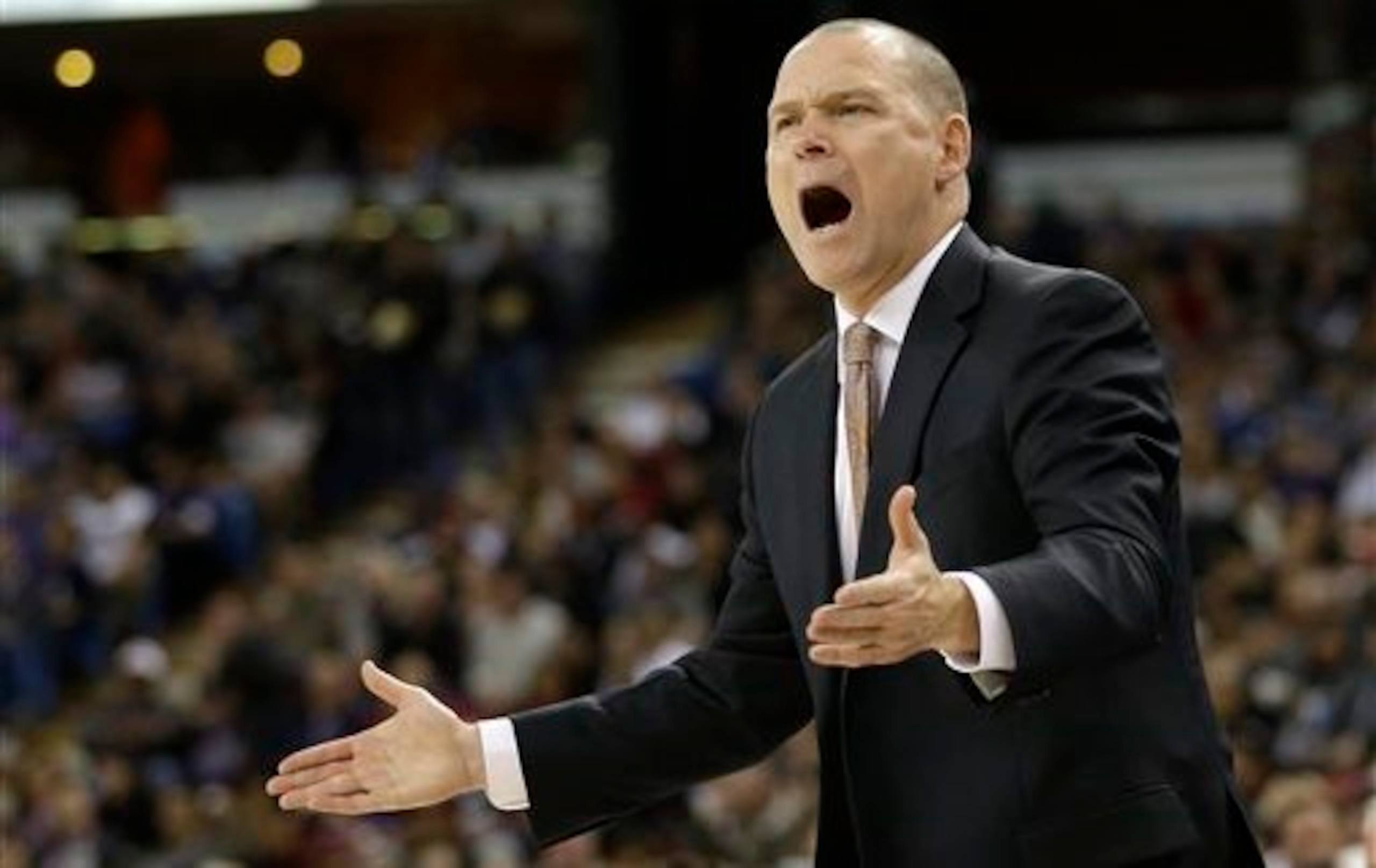
Record: 9-5
Statistic: 42.9 points created by assists per game
One of the most pleasant surprises in the NBA resides in Sacramento, where the Kings have churned out a winning record on the shoulders of DeMarcus Cousins.
Can they keep it up? We hope so, but we have our doubts. The offense is heavily reliant on the one-on-one prowess of the its stars, as depicted by the meager 43.4 points created by assists per game.
Another statistic that conveys this same issue is that Sac-town has assisted on just 52 percent of its field goals. That means it relies on individual efforts for almost half of its buckets.
It's great to see the Kings relevant again. In order to keep the wins flowing throughout the season, it would behoove them to move the ball more and work harder to set each other up.
San Antonio Spurs
27 of 30
Record: 9-4
Statistic: Offensive rating is 103.8
The San Antonio Spurs are getting significantly less bang for their buck, or points per possession, than they did in 2013-14.
You have to look below the league average to find the team's offensive rating this season, which is in contrast to last year's superb 110.5 rating that placed them sixth in the Association.
Don't worry, Gregg Popovich's squad hasn't unraveled or mysteriously forgotten how to run the system. There's just less production from Tony Parker and Tim Duncan, and Marco Belinelli's limited action has hurt the long-range stats.
This less-than-efficient attack isn't of grave concern at this point in the season, especially with Pop doling out plenty of rest to the vets. But it's something notable to keep an eye on. Can the Spurs improve their numbers soon, or will they have a middling offensive attack throughout the winter?
Toronto Raptors
28 of 30
Record: 12-2
Statistic: Defense gives up 111.6 points per 100 possessions when Jonas Valanciunas is on the floor (compared to 99.9 when he's on the bench).
The Toronto Raptors have proven they can play a variety of styles of basketball.
They can use their athleticism in an uptempo pace, slow down and grind out possessions and defend using a deep rotation. They can share the ball or rely on a couple of different isolation resources. And they can also cover the three-point line.
What they haven't proven yet is that they can consistently stop opponents while Jonas Valanciunas is on the floor. He still needs to improve on positioning, timing and possession-by-possession discipline.
His scoring and rebounding is a worthwhile trade-off for now, but assistant coach Bill Bayno explains that the youngster's effectiveness is paramount down the road (per Eric Koreen of the National Post): "One of the big focuses for us to advance in the playoffs is that he’s got to be the best rim protector—block shots, [legal] vertical [jumps] and being able to get over to that weak side early on any [dribble] penetration."
It would be outstanding for Toronto if he could make strides. He's clearly their most valuable post player on offense.
Utah Jazz
29 of 30
Record: 5-10
Statistic: 57 percent of opponents' two-pointers are unassisted
Quin Snyder and his staff are surely irked that opponents are able to successfully drive and score unassisted against his defense.
The Utah Jazz aren't giving up an overwhelming amount of layups or dunks, yet they're allowing slashers and shot-creators to get into the lane and convert close-range attempts.
No NBA team gives up more 3-10-foot shots than the Jazz, and that's a testament to Utah's substandard containment and foiled rotations.
The Jazz aren't as terrible as sieves such as Minnesota and Los Angeles, but that's not saying much.
Washington Wizards
30 of 30
Record: 9-4
Statistic: John Wall shooting 29 percent from three-point range
John Wall is still quite inaccurate beyond the arc, and it will put a strain on the Washington Wizards eventually.
When playoff basketball arrives and the Wiz are facing the top defenses in the league, he won't get away with an unproductive jumper. If he could shoot around 35 percent or better from three-point land, it would give the team two or three long-range options to stretch the floor during crunch time.
If he keeps shooting as is, the team will only have Bradley Beal and one other wing as perimeter threats.
Washington will navigate through the regular season and take care of business against inferior Eastern Conference competition. In the spring, however, Wall's outside shot could determine whether the Wizards beat a team like Toronto or Miami and advance to the Eastern Conference Finals.
All statistics accurate as of Nov. 25.
Follow Dan O'Brien on Twitter for more NBA coverage: @DanieO_BR
.jpg?w=2560 "Every Trade's Best Trade Asset 🔁")
.jpg?w=2560 "Insiders: Cowboys Overpaid for Porter")
.jpg?w=2560 "MHJ's Potential Trade Value 📉")