Justin Faulk Adding Stabilizing Factor to Carolina Hurricanes' Shaky Defense
Seventeen games. Three goals: two on the power play, the other short-handed. Ten assists. Fifty-four shots on goal. Plus-five rating. Over 25 minutes of ice time per game.
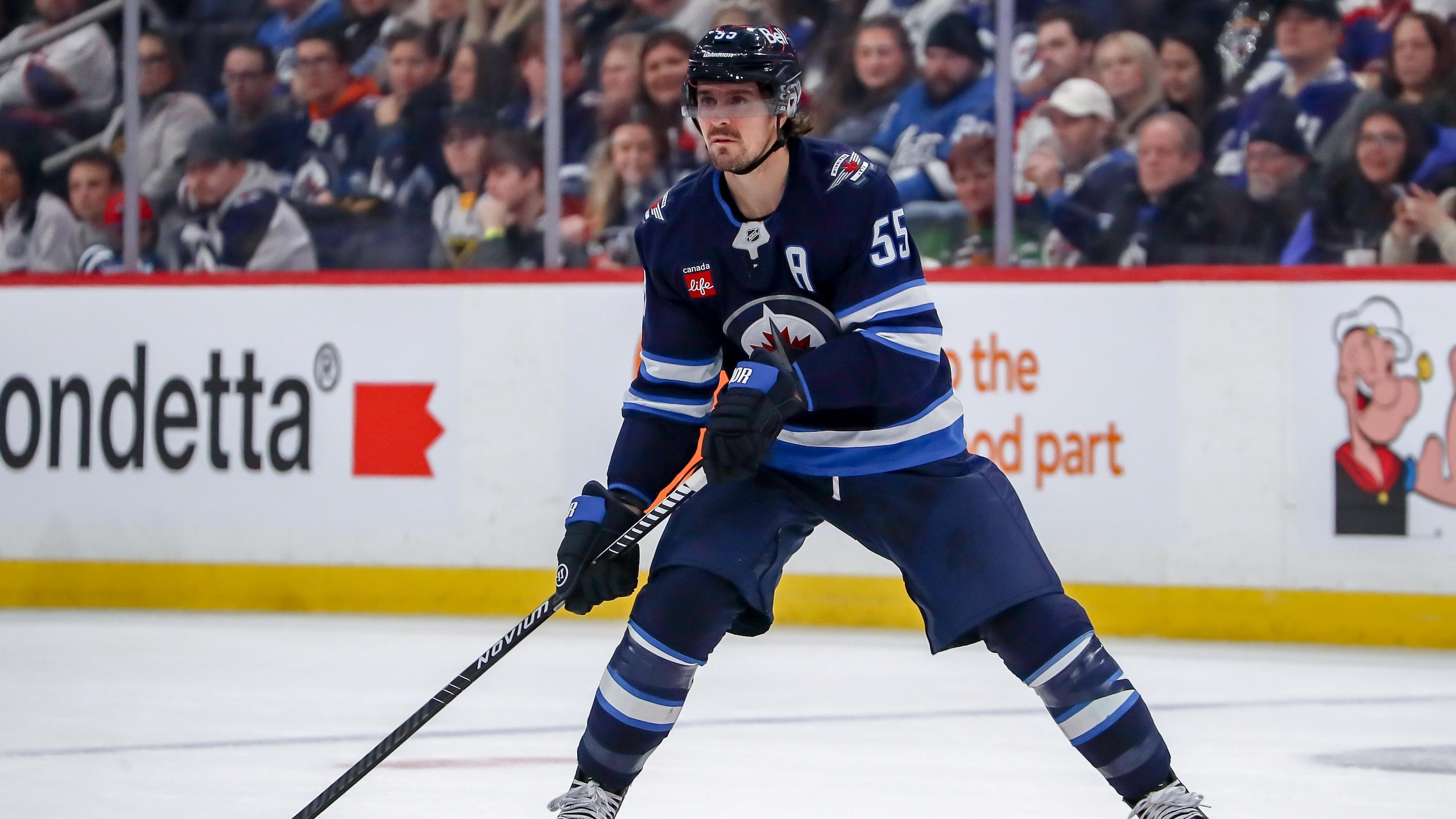
Such is the November stat line for Carolina Hurricanes defenseman Justin Faulk, who currently ranks first on the team in points, second in shots on goal and near the top of the early-season team MVP leaderboard.
The 22-year-old rearguard's stellar, consistent play has helped Carolina to an 8-8-1 record so far since a 0-6-2 October.

How has he done it?
Faulk's dominant November began, of course, in the defensive zone, where his active stick, top-class vision and smooth puck-moving ability have proven a major asset to the 'Canes defense. Now in his fourth NHL season, Faulk seems more poised and unflappable than ever before.
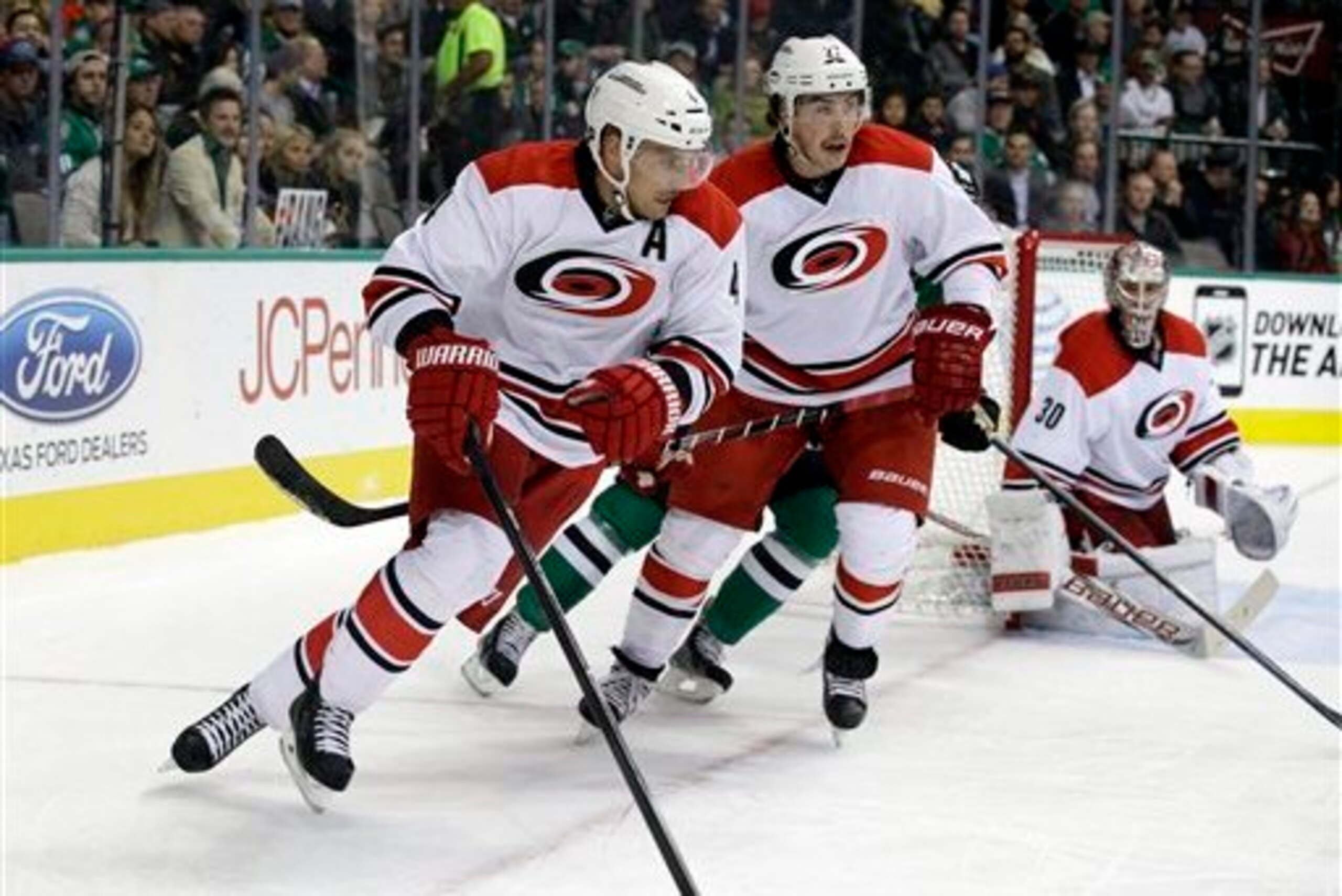
The chemistry he and pairing mate Andrej Sekera have developed since last autumn continues to be a major asset for the team's otherwise shaky defense.
Faulk and Sekera rank second and third, respectively, among team defensemen in Corsi (shot-attempt) ratio (per Hockey Analysis)—and they trail only John-Michael Liles, who benefits greatly from a 61.4 offensive zone start percentage.
Meanwhile, the duo occupies the top two spots among such company in points, average ice time and shots on goal.
| Goals | 3 |
| Assists | 12 |
| Points | 15 |
| Shots on Goal | 68 |
| Shot Attempts | 91 |
Outside of its considerable productivity, though, the sheer volume that the Faulk-Sekera pairing plays alone creates stability in the Hurricanes' defensive ranks.
The pairing has played more than twice as much as any other single pairing in the last 10 games, according to Left Wing Lock, and Faulk has played almost 70 percent of his ice time this season with Sekera also on the ice alongside him.
And frankly, 'Canes defensive coach Steve Smith doesn't have much to work with outside of his two stars.
Ron Hainsey, Jay Harrison, Tim Gleason and John-Michael Liles have all been scratched at least once in 25 games, and none has conclusively emerged as reliable second-pairing options.
Youngsters Ryan Murphy and Haydn Fleury await promisingly in the wings, but neither is even close to prepared for 20-minute-a-night workloads in the NHL.
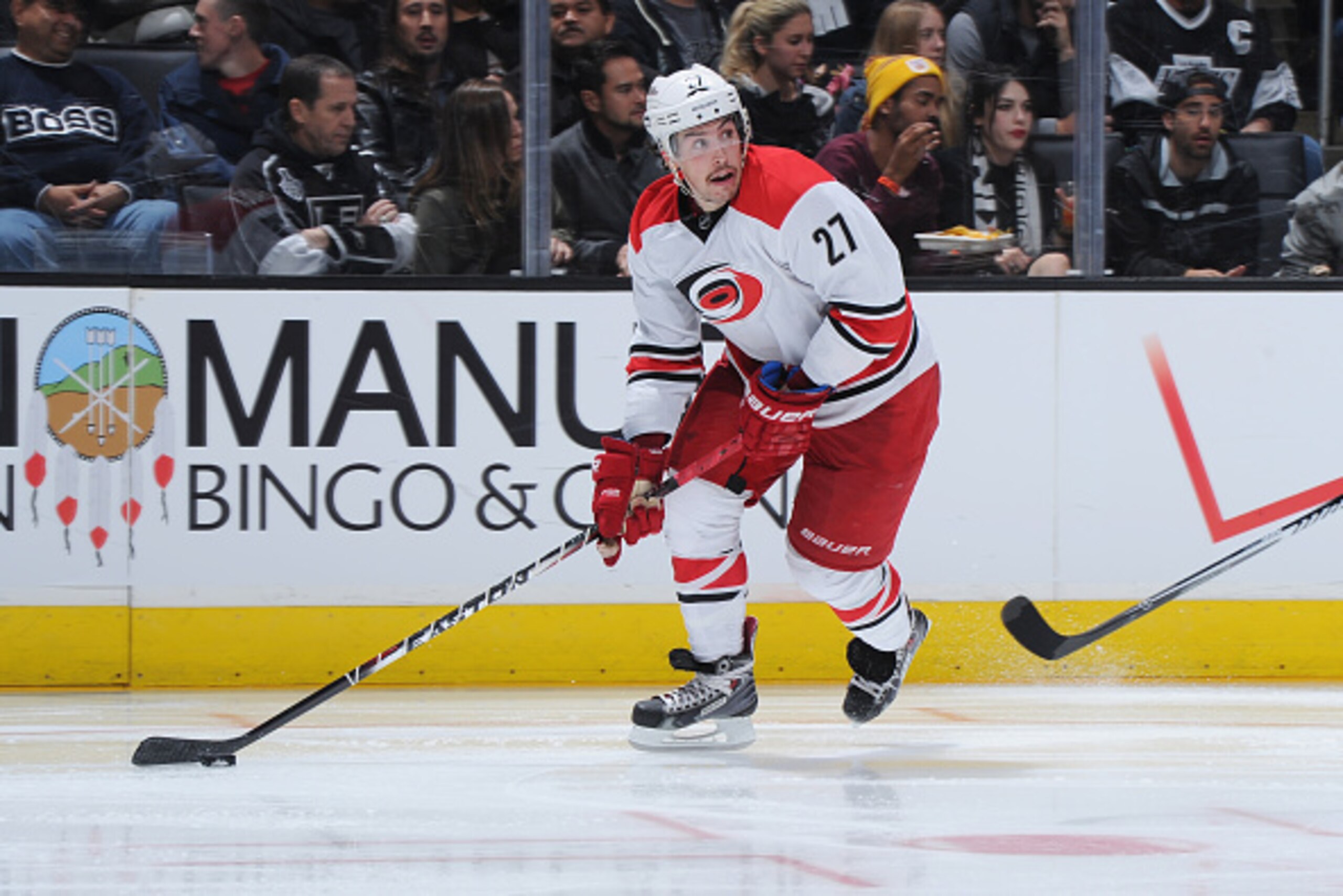
Advanced stats don't quite reflect the dominance Faulk displays on the ice (at least in comparison to most of his teammates on an 8-17 team), but they don't paint a bad picture, either.
Opposing players have recorded a 47.1 percent Corsi ratio against Faulk this season but a 49.7 percent ratio when not facing Faulk, also per Hockey Analysis data.
But most of that difference is happening in the opponent's defensive zone, meaning that Faulk has been a more significant difference-maker in terms of producing shots than limiting opponent shots.
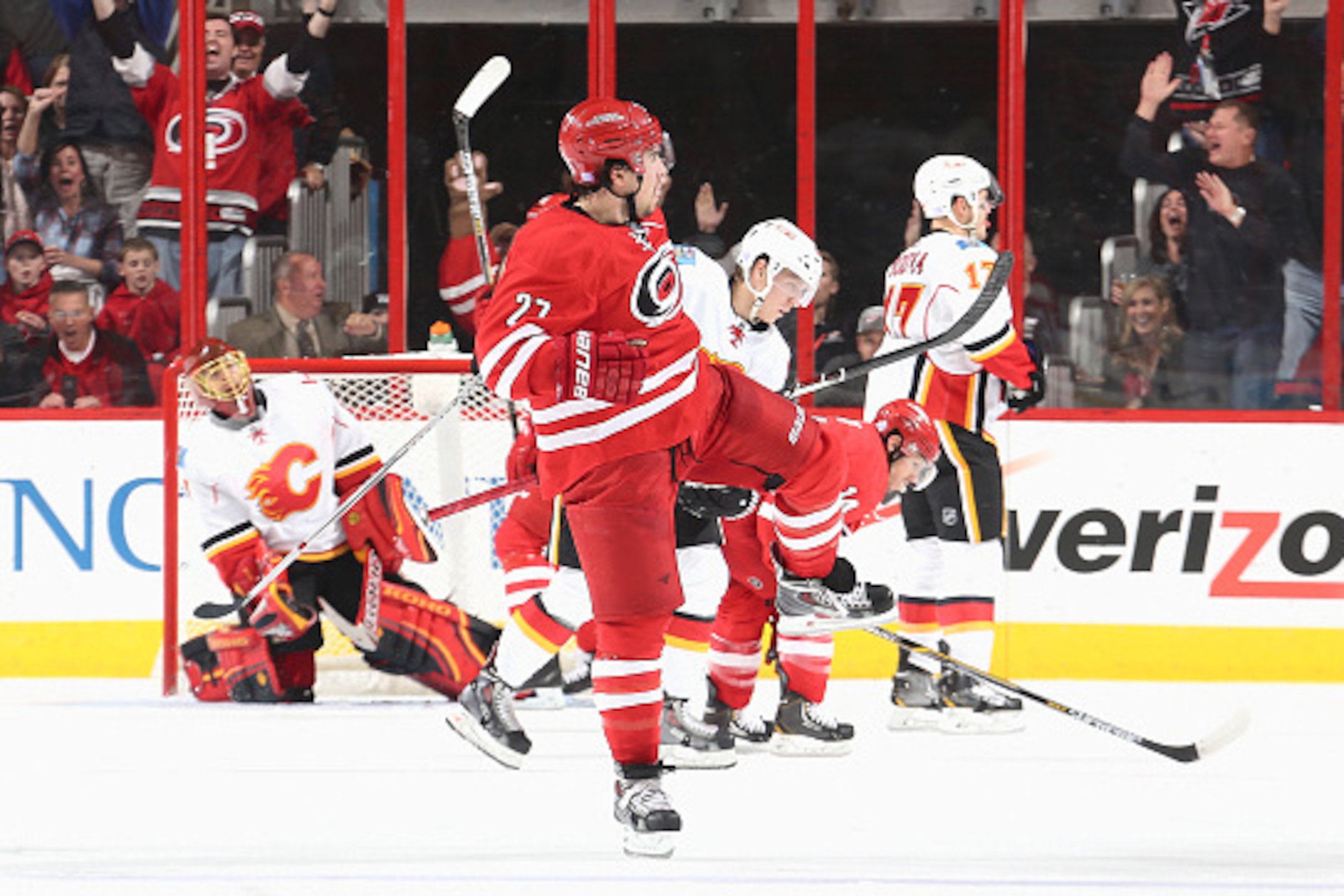
That seems odd for No. 27, who's not historically been considered an "offensive" defenseman, but it may well be true in 2014-15.
Faulk is one of only four defensemen (along with Calgary's Mark Giordano, Colorado's Tyson Barrie and Arizona's Keith Yandle) to currently lead his team in scoring points, and his 68 shots on goal this year ranks ninth among all league blueliners. His shots-on-goal per-game rate is up 36 percent from last season.
The 22-year-old rearguard, who signed a six-year contract extension last spring, has emerged as one of the most shot-happy players on the 'Canes roster and also one of the best at getting his attempts on goal.
Only 25.3 percent of Faulk's shot attempts in 2014-15 have missed or been blocked, by far the lowest percentage among 'Canes defensemen.
Yet Faulk's importance to this depth-lacking Carolina defense is most evident through the "eye test," not numbers.
The poise and stability that No. 27 displays on a nightly basis and his ability to quickly regain such characteristics after a rare mistake offer a much-needed lifeline for the rest of the Hurricanes' inconsistent back end.
Mark Jones has covered the Carolina Hurricanes for Bleacher Report since 2009. Visit his profile to read more, or follow him on Twitter.

.jpg?w=2560 "OBJ Calls Out Giants After Release")