Detroit Pistons' Most Startling Statistics of 2014-15 Season so Far
The Detroit Pistons have struggled out of the gate in 2014-15, and some startling numbers can help to make sense of all their losses.
In 2013-14, they were just No. 20 in offensive efficiency and No. 26 in defensive efficiency, per NBA.com, so nobody was expecting them to be world-beaters. But this roster has had issues that weren't foreseeable.
The strength of the team is on the interior with Andre Drummond, Greg Monroe and Josh Smith. It was on the outside where most thought the Pistons would be weakest; sharpshooter Jodie Meeks began the season with an injured back, and the Pistons were No. 29 in three-point shooting last season.
Instead, they have moved to No. 15 in that area, up 3.2 percent from 2013-14.
So after improving arguably their biggest weakness from a season ago and with a significant upgrade at head coach in Stan Van Gundy, why have the Pistons won just three of their first 12 games?
These statistics may not explain all of their losses, but they do shed some light on the Pistons' biggest issues thus far.
Inside Scoring
1 of 5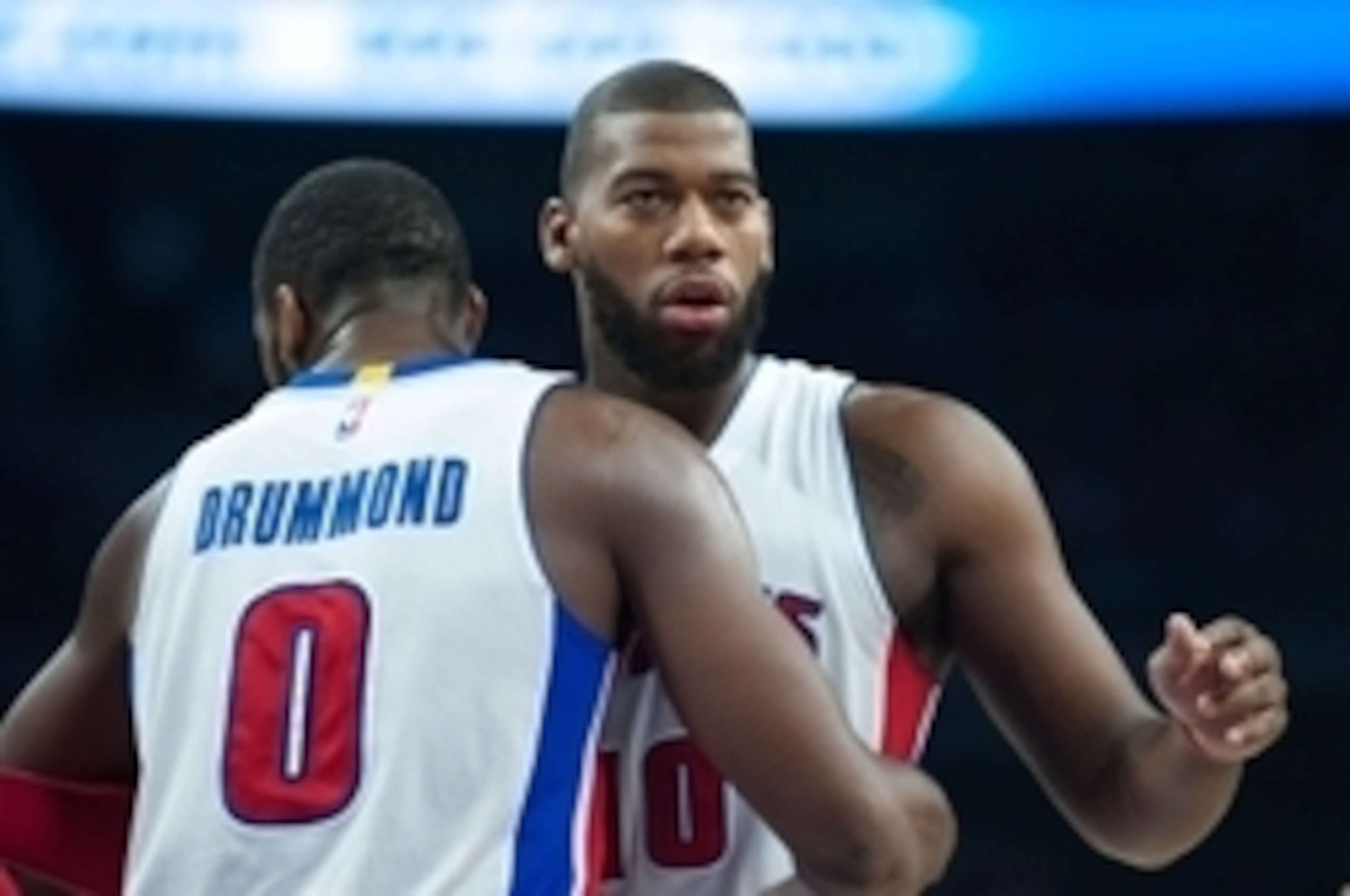
With three starter-quality bigs, the Pistons offense was supposed to rely on pounding opponents down low. And though that's how the team has been running the offense, it just hasn't been effective so far.
In 2013-14, the Pistons were in the middle of the pack in shooting from within five feet, ranking No. 18 at 58.6 percent. With a year of improvement from youngsters Drummond and Monroe and some added shooting to space the court, it seemed inevitable that the ranking would improve.
Instead, it has fallen drastically to No. 28 in the league at 53.5 percent—a 5.5 percentage-point drop-off. The only teams making fewer of their shots from in close are the injury-depleted Oklahoma City Thunder and the historically bad Philadelphia 76ers.
These are not the type of teams who should be compared to the Pistons on the inside.
All three big men are shooting worse down low than they were in 2013-14, particularly Drummond and Smith. They will likely progress toward the mean and improve their percentages, but it certainly is a concern when all three are faltering after a year together.
| Player | 2013-14 FG% Inside 5 Feet | 2014-15 FG% Inside 5 Feet | 2013-14 FG % | 2014-15 FG% |
| Andre Drummond | 65.3 | 47.6 | 62.3 | 39.4 |
| Greg Monroe | 56.1 | 54.3 | 49.7 | 48.1 |
| Josh Smith | 63.2 | 50.0 | 41.9 | 36.9 |
The Pistons' biggest advantage on most nights is their size and skill on the interior. If these guys are not capitalizing on that superiority, then this team will not be going anywhere.
Team Assist Rate
2 of 5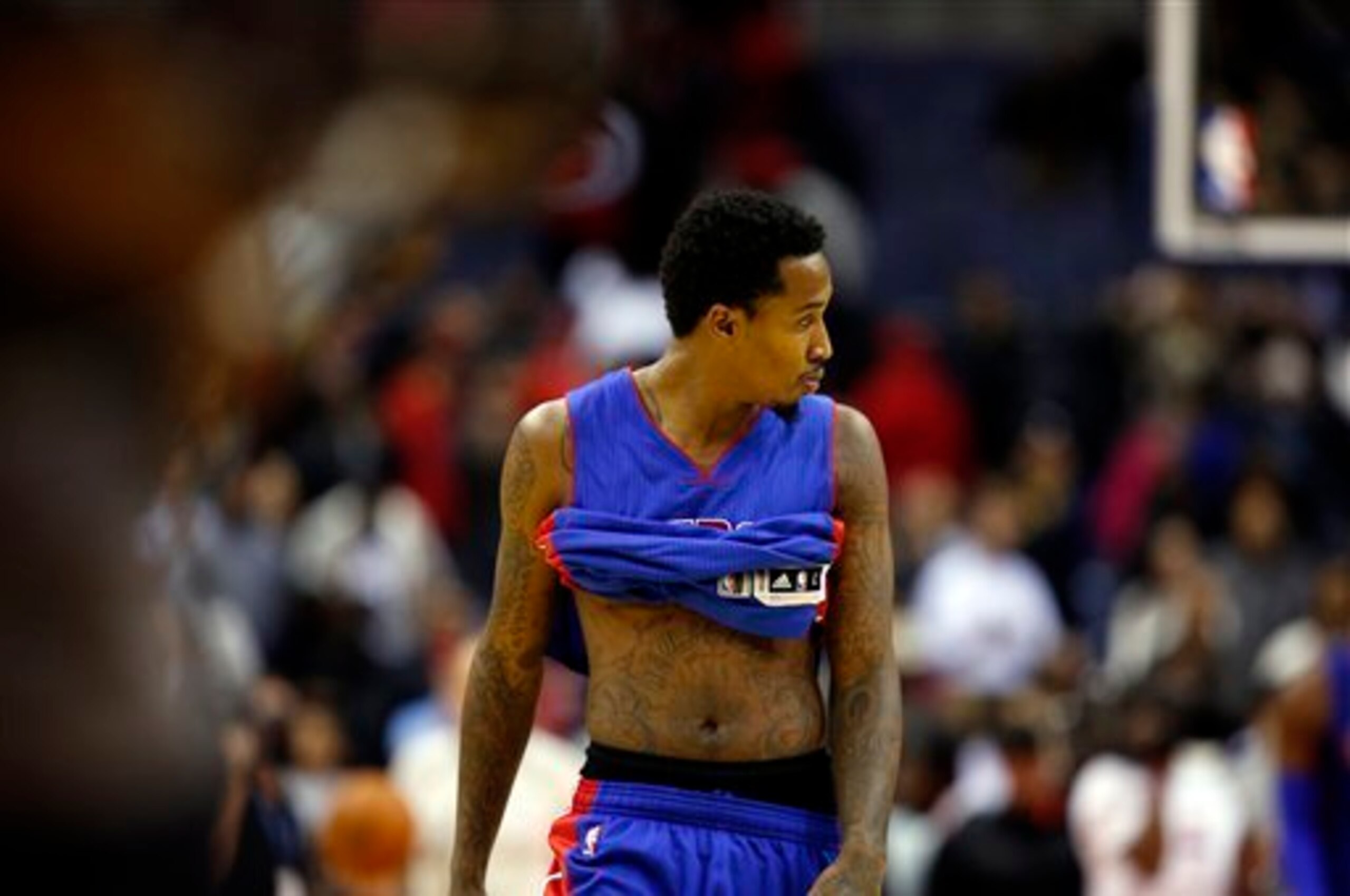
Getting good ball movement was a big issue last season, as the rudderless Pistons all too often played isolation basketball. Van Gundy's leadership and the addition of point guard D.J. Augustin off the bench in the place of chucker Will Bynum seemed like a recipe for improvement in this area.
Instead, they seem to have gotten even worse.
In 2013-14, they ranked No. 28 in assist ratio—the percentage of a team's possessions that end in an assist—at 15.6, per ESPN's Hollinger statistics. In 2014-15 they have maintained that No. 28 ranking but have fallen an entire percentage point to 14.6.
The only teams worse than Detroit are a depleted Indiana Pacers team and a Sacramento Kings team featuring ball-stoppers Rudy Gay and DeMarcus Cousins.
With just one training camp to prepare for the season, Van Gundy could only implement parts of what he would like to do offensively. But some serious issues are hindering ball movement.
First, Augustin and Brandon Jennings are both susceptible to pounding the ball far too long. It is up to Van Gundy to get them into offensive sets earlier in the shot clock in order to look beyond first and second reads if there aren't open looks.
Also, it is up to the coach to add those secondary actions to the offense. All too often, the offense begins with a post-up of one big, and if that fails, he kicks it out to a guard, who runs a pick-and-roll.
And that is it. There is little weak-side movement; the other guys often just clear out and stand around the arc.
When you watch the way the defending champion San Antonio Spurs move the ball, it is obvious that isolation ball just isn't a recipe for success.
Josh Smith's Plus-Minus
3 of 5
Josh Smith did not have a strong start in Detroit last season after signing a four-year, $54 million deal. But a bit of a revival in March and April left some hope that he could turn around his play in Year 2.
We are still waiting.
The one area where Smith has gotten his act together is from the three-point arc. After a year of maligning from fans and the media in which he made 26.4 percent of the 3.4 triples he took per game, Smith has cut those attempts in half to 1.7 per game.
Not much else has gotten better.
His playing time is down just a hair, but his scoring is even down from 16.7 to 14.0 on a per-36-minute basis. He's making just 36.8 percent of his field goals, down from 41.9 percent. And he is making exactly one-in-five of his threes.
Not all of the blame should be put on Smith, as he continues to play out of position at small forward a significant portion of the time. But he is simply not getting it done at any position on the floor.
According to NBA.com, Smith's average plus/minus rating is minus-6.8. That is 2.5 points worse than Kentavious Caldwell-Pope, who has the second-lowest rating on the roster.
Smith's rating ranks 16th lowest in the NBA among players who have played at least five games. He is fifth-worst if you ignore everyone from the 76ers and Los Angeles Lakers.
Plus/minus is not a terribly reliable statistic, as it relies on the nine other players on the court in addition to the player being measured. But it is telling that Smith is among the worst in the league, while fellow starter Greg Monroe has managed to be one of two Pistons with a positive rating.

Andre Drummond's Troubles
4 of 5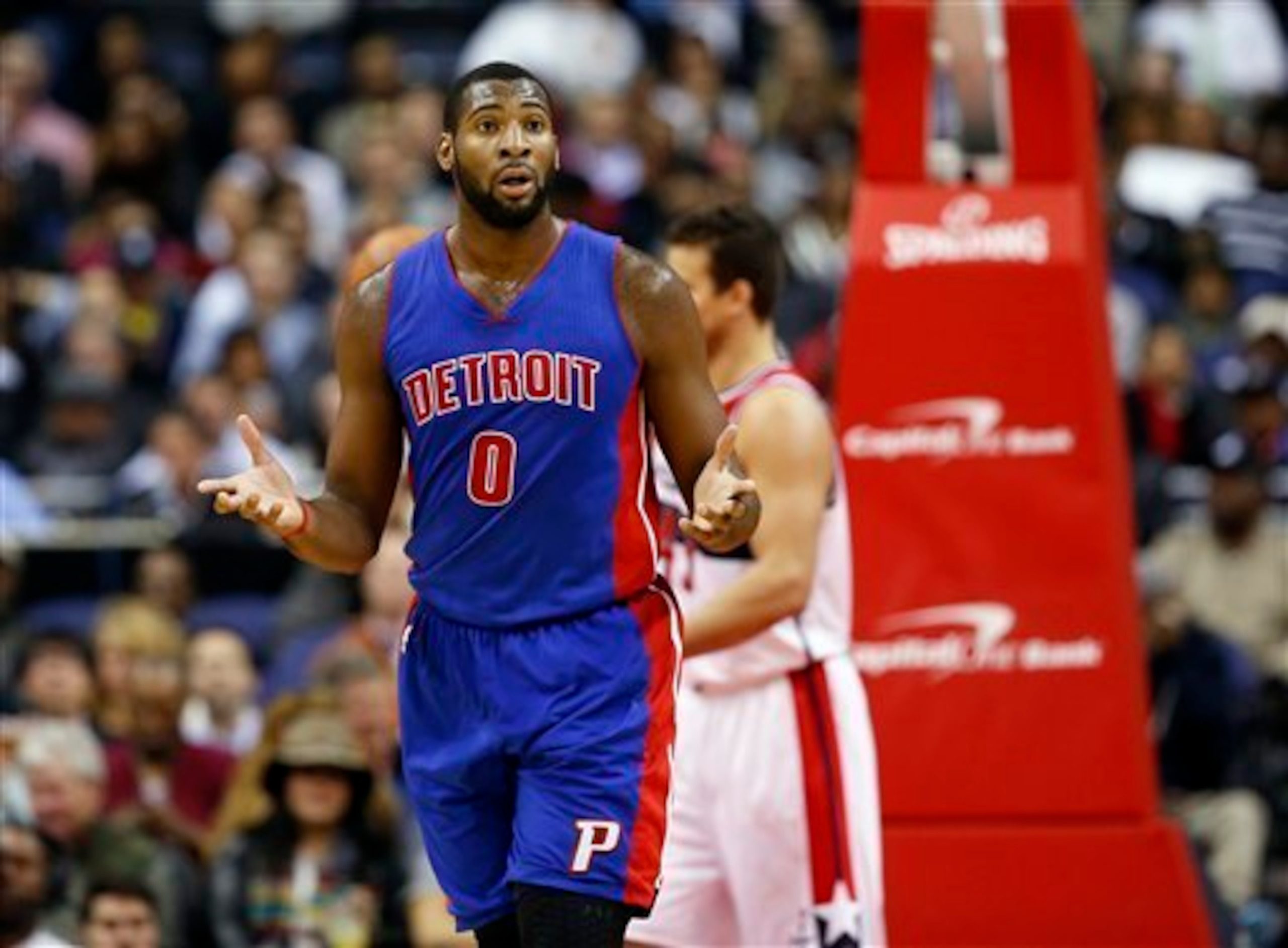
Andre Drummond had a breakout sophomore campaign, averaging 13.5 points and 13.2 rebounds after being given the chance to start. And playing with the gold medal-winning Team USA this summer, he seemed certain to vault into stardom in 2014-15.
Instead, Drummond has been seemingly the only member of Team USA who has struggled this season.
His scoring has dipped into the single digits to 8.3 per game, and he is averaging two fewer rebounds per contest. Van Gundy has tried to post him up, getting mixed results, and it seems like Drummond just can't find his role in the new offense.
But his most startling stat is a combination of both offense and defense: Drummond has more personal fouls (50) than he does field goals (43).
That is in part because he is making just 39.4 percent of his shots—nearly a 23 percentage-point drop from 2013-14. It is also a result of Drummond averaging 1.6 more fouls per 36 minutes than he did last season, per Basketball-Reference.
Drummond is the Pistons' most important player. Period. When he's on top of his game, he can protect the rim defensively and provide offensive rebounding and easy baskets on the other end. He makes opponents wary to drive the lane and can command double-teams in the paint.
But right now he's fouling too often to stay on the court. And even when he can, he is offering next to nothing offensively.
Fourth-Quarter Performance
5 of 5
If one area best sums up the Pistons' 3-9 start, it is their fourth-quarter play.
During its nine losses, Detroit held a lead in the fourth quarter in five of them. In seven of the nine games, the Pistons have been within five points in the final five minutes. They are simply not executing at the end of tight contests, and it is costing them.
In the NBA, "clutch" situations take place in the fourth quarter or overtime, with less than five minutes remaining in the game when neither team is leading by more than five points.
In such situations, the Pistons have been brutal. They have shot 28.2 percent from the field and 21.4 percent from the arc, good for No. 29 and No. 24, respectively. They are also dead-last in free-throw percentage, missing exactly half of their attempts.
Their opponents haven't had it so rough. The Pistons have allowed teams to shoot 43.9 percent from the field and 35.7 percent from long distance, No. 22 and No. 21 in percentage against, respectively.
Detroit ranks in the bottom third of the NBA in both field goal and defensive field-goal percentage during clutch situations. This isn't ground-breaking, but it is next to impossible to win many games when this is the case.
This is compounded by the Pistons having played in clutch situations 10 times—more than any other team in the league. They are 3-7 so far, and the only way this season will get better is if they can find a way to perform at both ends down the stretch of close games.
All statistics accurate through Nov. 19, 2014 and are from NBA.com unless otherwise noted.
Jakub Rudnik covers the Detroit Pistons as a Featured Columnist for Bleacher Report.
.jpg?w=2560 "Every Trade's Best Trade Asset 🔁")
.jpg?w=2560 "Insiders: Cowboys Overpaid for Porter")
.jpg?w=2560 "Top NFL Trade Targets")