What's Behind Damian Lillard's Slow Start for the Portland Trail Blazers?
Damian Lillard isn't off to an ideal start for the Portland Trail Blazers.
One season after cementing his status as a rising star and elite point guard, his entry into 2014-15 has been mostly turbulent, punctuated by declining efficiency and atypic passiveness. There have been flashes of the hardhearted offensive monster who would rather leave victims than take prisoners, but they've been brief and proved temporary.
Inconsistency has been his most conspicuous constant.
TOP NEWS

NBA Power Rankings Entering Preseason 🔢
Giannis' Warning to NBA ⚠️
Wizards Guard Admits Tanking 😨
Portland has thus far survived without its most potent weapon bombing atomically on a regular basis, but that's temporary too. Treading water is only possible for so long without Lillard playing up to snuff. Hovering around .500 will only get the Blazers so far in the superpower-saturated Western Conference.
For their sake, Lillard's slow start needs to be diagnosed and then treated until this slump no longer ails their typically terrific floor general.
Doing Less with Less
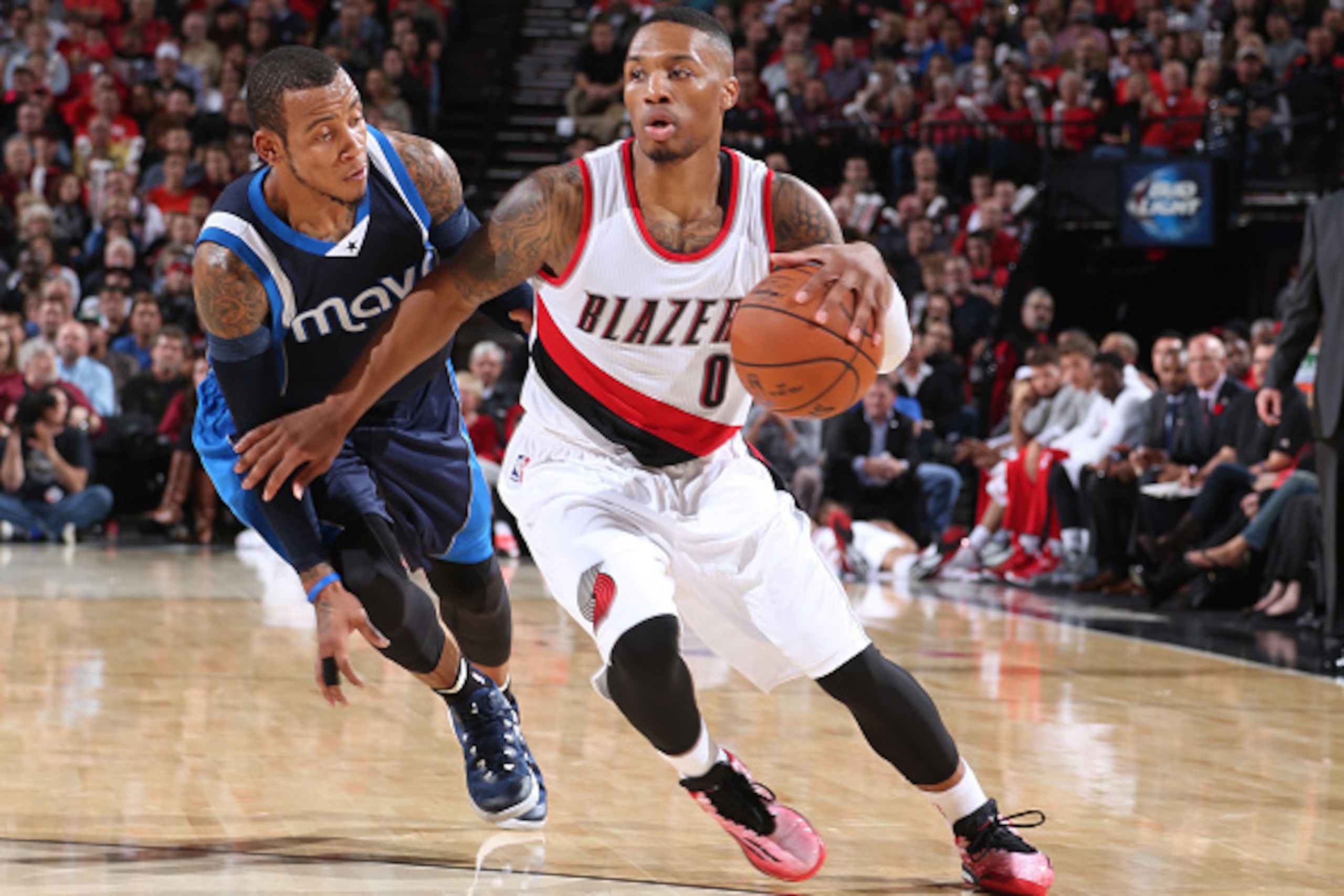
None of this is to say Lillard has been awful. He's picked up his play after shooting just 26.8 percent through his first three outings. His player efficiency rating (19.9) and offensive rating (122) would also be career highs if the season ended right now.
Even his defense has been stellar. The Blazers ranked sixth in efficiency, and opposing point guards are posting average PERs when facing Lillard, according 82games.com.
It just hasn't been all good.
His 17.4 points on 40 percent shooting pales in comparison to the standard set last year, when he averaged 20.7 points on 42.4 percent shooting, including a 39.4 percent conversion rate from downtown.
Yet while Lillard's numbers aren't insanely different, his offensive production fails to command the usual attention. He's already tallied under 12 points three times through seven games. He scored less than 12 points seven times through 82 contests last year.
Over at Rip City Project David MacKay offered a nice explanation as to why he's struggling:
"There are a number of things that could be going on with Lillard, but my pet theory involves a combination of opponent adjustments and a simple down period. His rapid ascension has put a target on his back, making him a defensive focal point for opposing teams.. The looks he is getting are not so clean these days, so his shot selection has suffered, which has alternately resulted in either poor shooting or deferring to teammates to carry the scoring burden.
"
This is a legitimate theory.
Defenses are no longer strangers to Lillard's offensive tactics. Increased exposure and substantiated sample sizes have given them more material to work with and more time to adapt. This happens in sports.
Colin Kaepernick is no longer rip-rolling the competition for the NFL's San Francisco 49ers. Kendall Marshall isn't setting fire to Milwaukee after streaking through Los Angeles. Jeremy Lin isn't putting up February 2012 numbers for the Lakers.
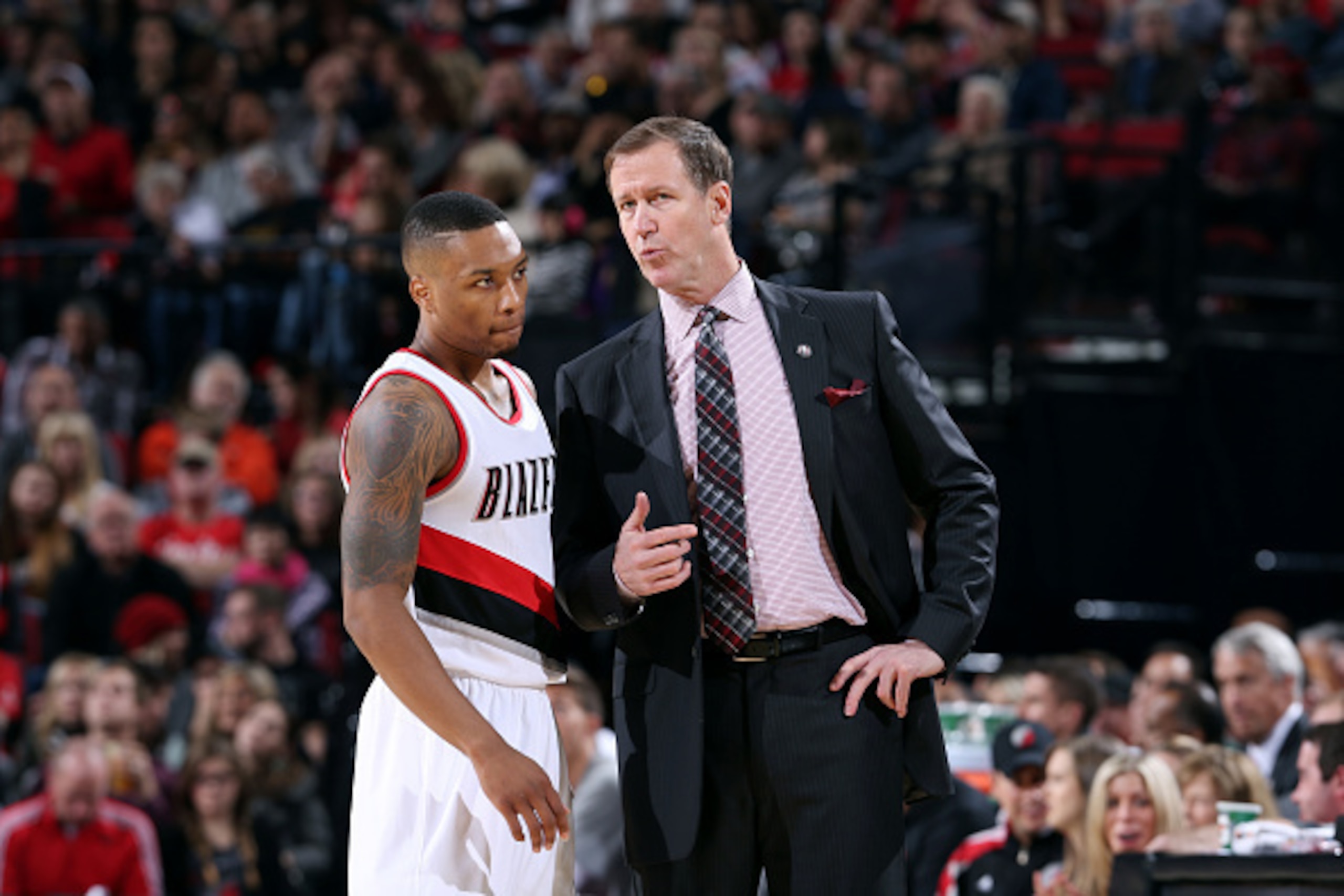
Lillard isn't especially different in this regard. Opposing defenses are coming after him, forcing the ball out of his hands, clogging his passing lanes and contesting his shots.
Though his assist numbers (5.7 per game) have held strong compared to last season (5.6), he's taking far fewer shots. He attempted north of 15.5 field goals per game in each of his first two seasons; he's hoisting just 12.9 in 2014-15.
His usage rate has plummeted as a direct result of his struggling to find shots and deferring more. Roughly 25 percent of the Blazers' plays ran through Lillard last year, a number that's lingering well below 22 percent these days.
While there's usually a positive relationship between a decline in usage and uptick in efficiency, Lillard's accustomed to being more of a volume-shooter and play-user. It's difficult for him to post provocative stat lines if he isn't seeing as many clean looks.
Unless he makes the necessary adjustments.
Which he hasn't.
Shot Selection
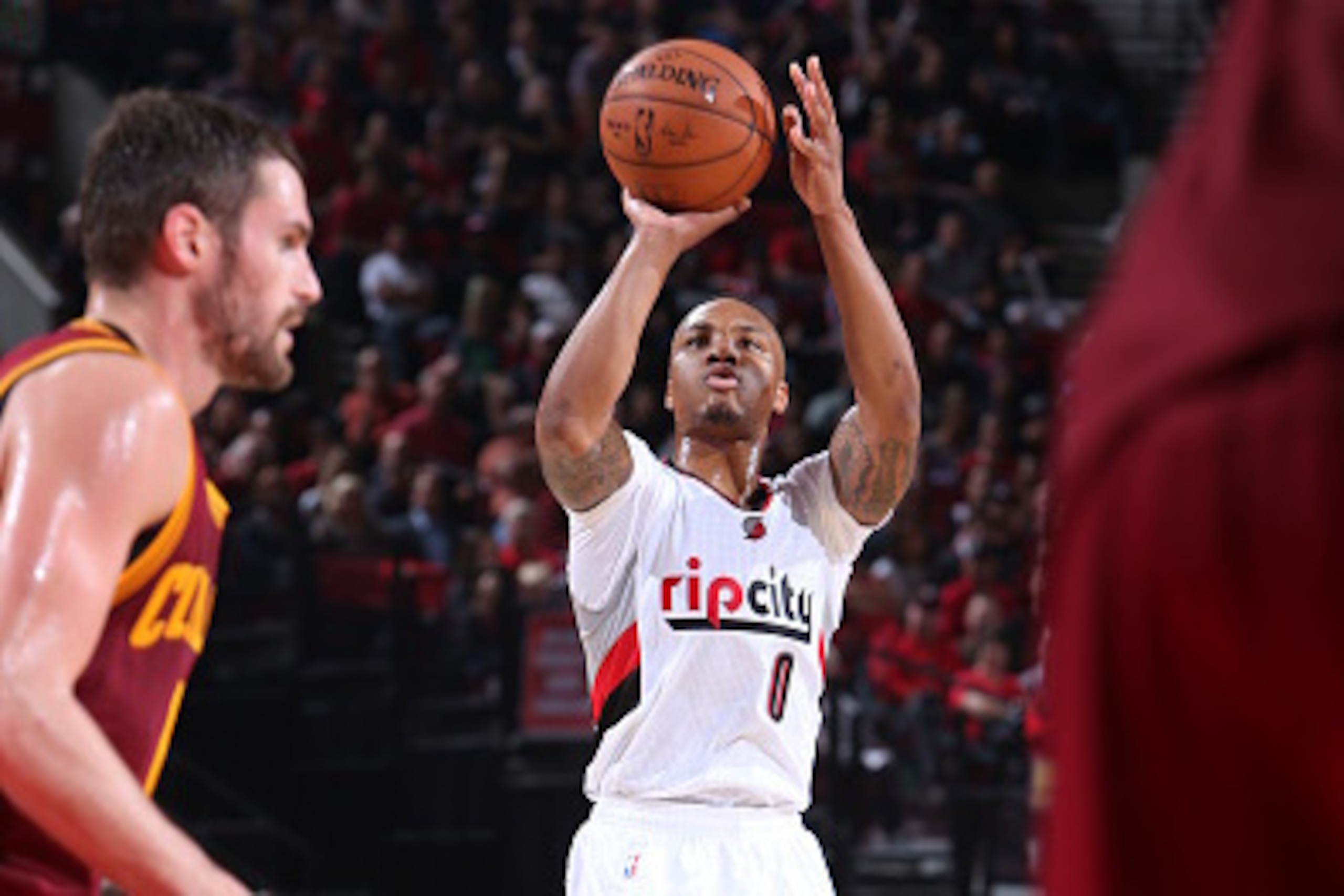
Adjusting and adapting to defenses starts with shot selection.
More than 56.6 percent of Lillard's total shots have come from long range (51). He's shooting a very respectable 37.3 percent from deep, but it's tough for an oft-rim attacker to suddenly earn his entire keep from downtown.
Not even Stephen Curry, who leads the league in three-point attempts per game (8.2), is taking most of his shots from beyond the arc. There needs to be some sort of balance, and Lillard hasn't found it.
Drives are almost nonexistent for him at this point. He ranks 62nd in points generated through drives—which are defined by NBA.com as any "touch that starts at least 20 feet" from the basket and is "dribbled within 10 feet of the hoop"—per 48 minutes.
To put that in perspective, Klay Thompson, who only just began making drives an offensive staple, ranks 50th. Last season Lillard ranked in the top 24 of that same category, which, while not elite, is far better.
Those drives are important. They help create point-blank opportunities. They help break down defenses and keep them honest on future possessions, leaving room for more uncontested three-pointers.
They allow players to reach the foul line more.
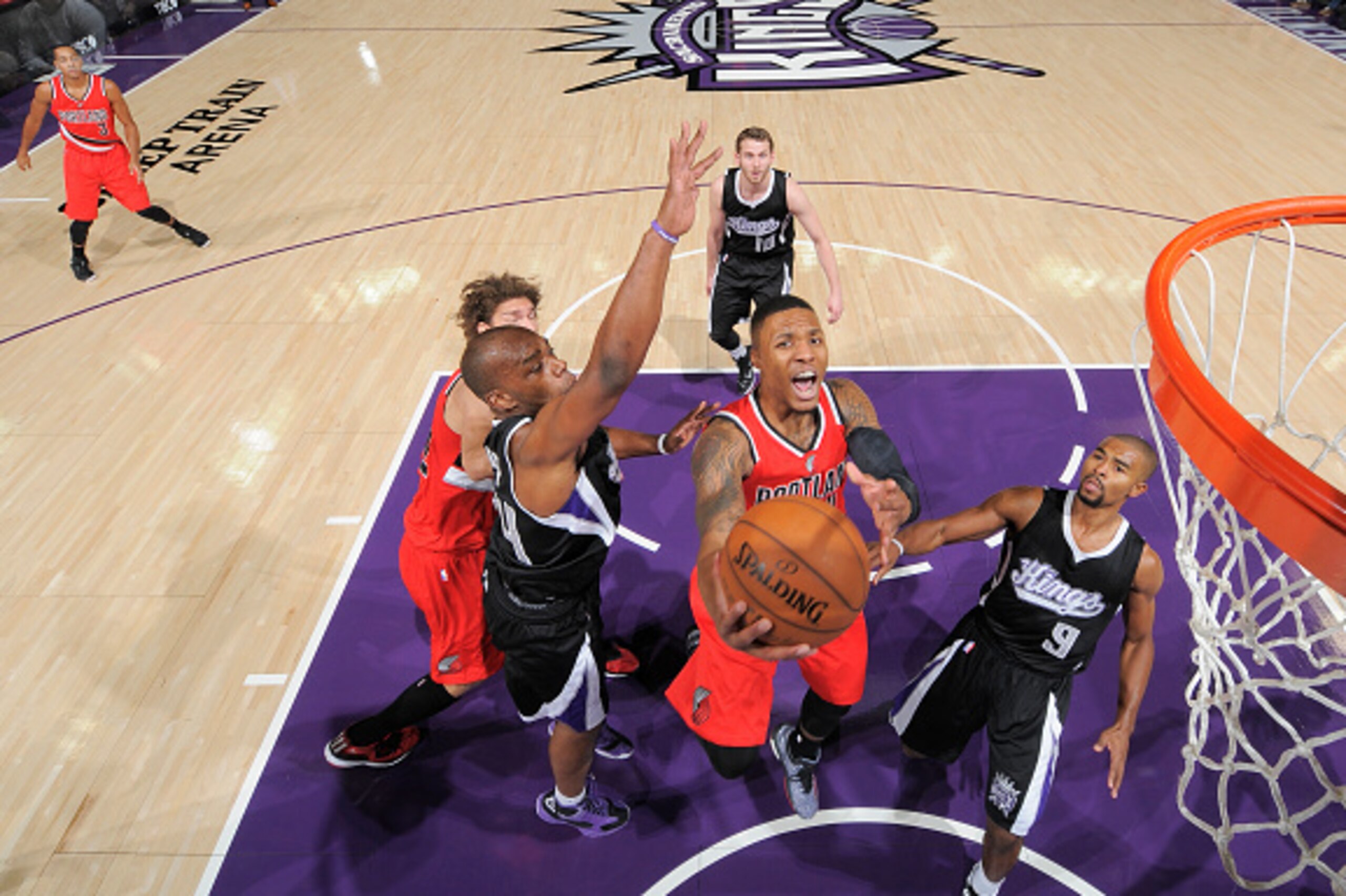
Less than 28 percent of Lillard's total shot attempts are coming within nine feet of the basket, though. Almost 40 percent of his field-goal attempts, meanwhile, came from that range last season. More than 70 percent of his total shots have come outside the paint this year as well compared to 58.6 percent in 2013-14.
| Restricted Area | 24.4 | 59.1 |
| In the Paint | 4.5 | 25 |
| Mid-Range Jumpers | 14.4 | 23.1 |
| Three-Pointers | 56.7 | 37.3 |
It's no surprise, then, that Lillard's free-throw opportunities are trending in the wrong direction. He's attempting just 4.7 freebies a night, down from 5.2 last year.
Foul shooting has admittedly always been a killer for him. He's lights-out from the charity stripe—93.9 percent success rate this year, 86.3 percent for his career—but he doesn't get there nearly enough. Too much pressure is placed upon his jumper instead.
"More threes aren’t necessarily a bad thing, just ask the Houston Rockets and the entire Sabermetrics community," wrote Scott Horlbeck of Blazer's Edge. "But what is a bit troubling is that he may be settling for these shots, rather than coming off the pick-and-roll (or whatever the play) and putting pressure on the defense by attacking the rim and either scoring/drawing a foul/assisting on a basket."
Frequenting the perimeter more would be fine if Lillard was taking additional shots. But he's attempting fewer field goals and firing more threes while posting an assist rate (25.2) identical to 2013-14 (25.1). That's not indicative of a player who is becoming more of a distributor, thus throwing off his shot-selection equilibrium.
It's the symptom of a point guard who's hurting his productivity and curbing his shot opportunities by not searching for the right ones.
Still Early, Still Fixable
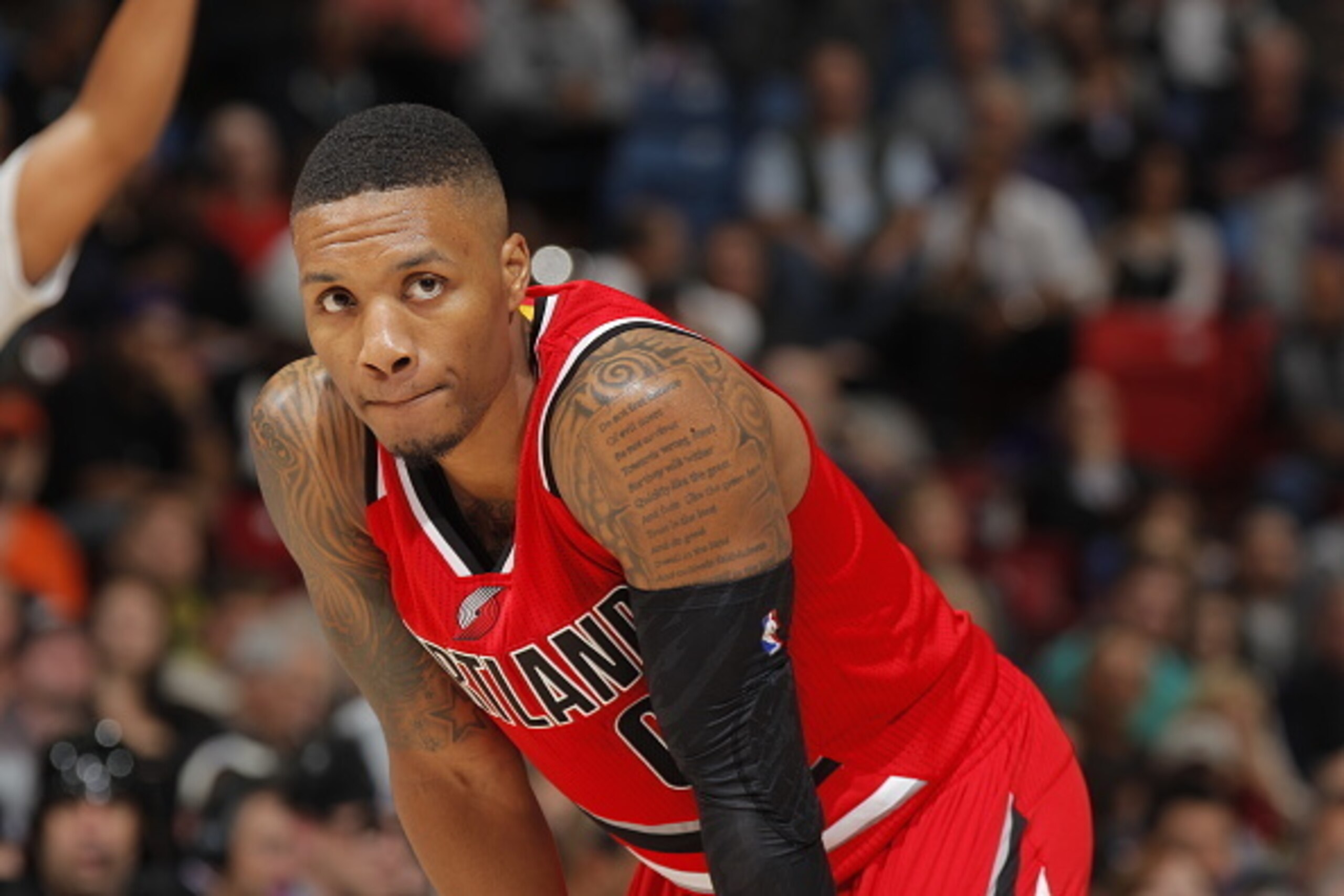
Good news: The world isn't ending. The sky isn't falling. Lillard isn't doomed to walk this Earth as that underachieving NBA talent we all forgot about.
"I'm just trying to be patient," Lillard said in early November of his performance, per The Oregonian's Joe Freeman. "I'm just trying to find my way. We played the same style that we've been playing, and my job is to find my way."
Slow starts such as Lillard's aren't cause for alarm or panic. There are plenty of games left to play, plenty of time left for this 24-year-old to change. And he can change. We saw it in the Blazers' loss to the Los Angeles Clippers, when he pumped in 25 points and eight assists using a steady dose of rim attacks and three-pointers, as shown below:
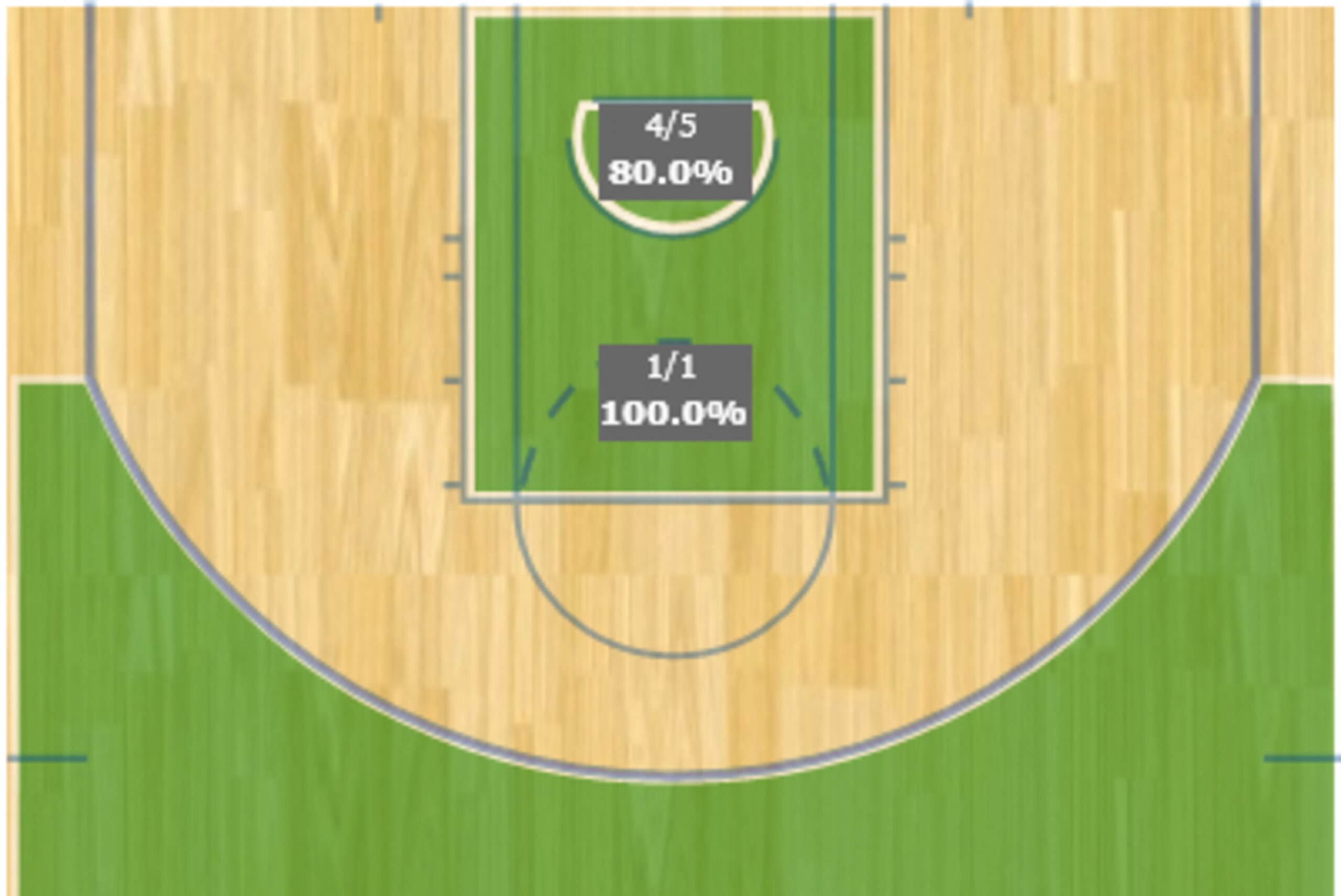
The blueprint for him to get back on track and even improve is there. He's already doing right by advanced analytics as he continues to avoid mid-range jumpers, after all.
Nearly 86 percent of his shot attempts are coming in the restricted area and paint or from beyond the arc. Those are the shots he should be taking. He just needs to be more mindful of the disparity between his three-point attempts and close-range looks.
Some of his numbers may never be as gaudy, but it doesn't matter. LaMarcus Aldridge is still scoring in excess, and Wesley Matthews looks like a net-shredding demigod. Lillard is also playing fewer minutes.
That all factors into his averages. But once he reinvents his offensive balance, this slow start, regardless of how many points he's scoring, will be history—remembered only as the minor bump Lillard leveled just before finding his way.
*Stats courtesy of Basketball-Reference and NBA.com unless otherwise noted.
.jpg?w=2560 "Every Trade's Best Trade Asset 🔁")
.jpg?w=2560 "Insiders: Cowboys Overpaid for Porter")
.jpg?w=2560 "Top NFL Trade Targets")