
The Most Important Stat for Every College Football Playoff Contender
How in the world did No. 8 Michigan State—a team averaging 45 points per game and limiting opponents to 23—lose 49-37 at home to No. 14 Ohio State?
Consider this: Over the last seven games, the Buckeyes have been almost 10 percent more successful than the Spartans on third-down attempts.
It’s one of the underlying difference-makers in Ohio State’s statement-making win, and it illustrates that there is more to statistics than what’s listed on the top line.
Here’s a look at 10 contenders and 10 dig-deeper stats, all which underscore how each squad has gotten to one loss or better.
If these teams can keep burning it up in these sometimes underappreciated categories, they may wind up playing for the big, cheesy enchilada on Jan. 12, 2015.
Duke
1 of 10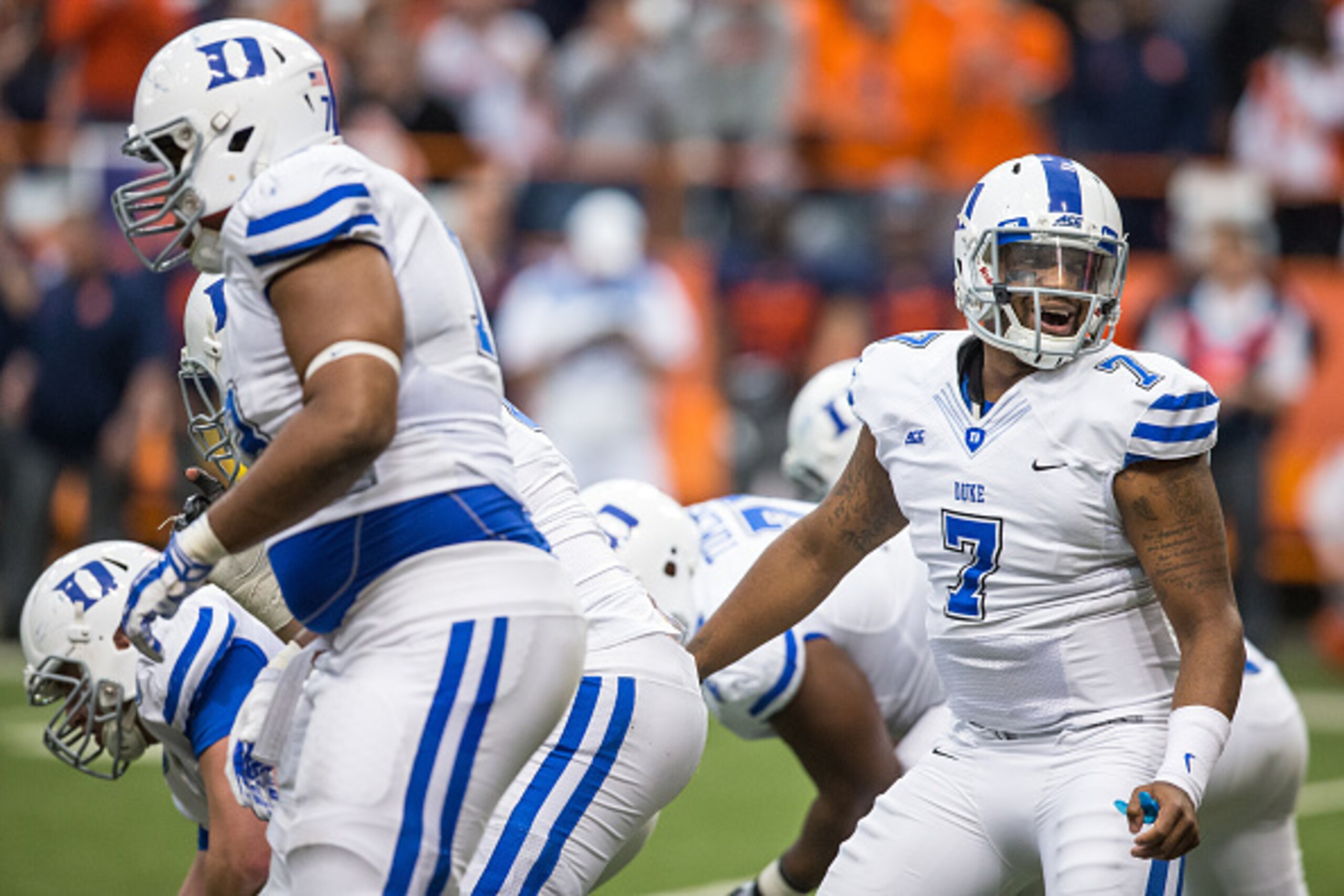
Sacks Allowed: Four
Is Duke a contender? As a one-loss team from a power-five conference, the Blue Devils are in the running until somebody knocks them out.
Duke ranks No. 1 in the FBS in both sacks and tackles for a loss allowed, giving props to a unit that is difficult to statistically praise, the offensive line.
Duke quarterback Anthony Boone has thrown 311 passes and has been sacked only four times, resulting in 21 lost yards, the fewest in the entire FBS.
Boone hasn’t been sacked since the road trip to Miami (Florida), when he went down on the final drive of the 22-10 road defeat, the sole loss of the season. Since then, he’s remained upright in all 127 attempts of the last four games, all wins.
If this weren’t enough, the Blue Devils have given up a mere 23 tackles for a loss for 69 yards, far and away the fewest in the nation. Compare this to the next best team in the ACC—N.C. State—with 39 for 217 yards.
Duke’s O-line could be the under-the-radar reason it posts back-to-back, double-digit-win seasons for the first time in program history.
Ohio State
2 of 10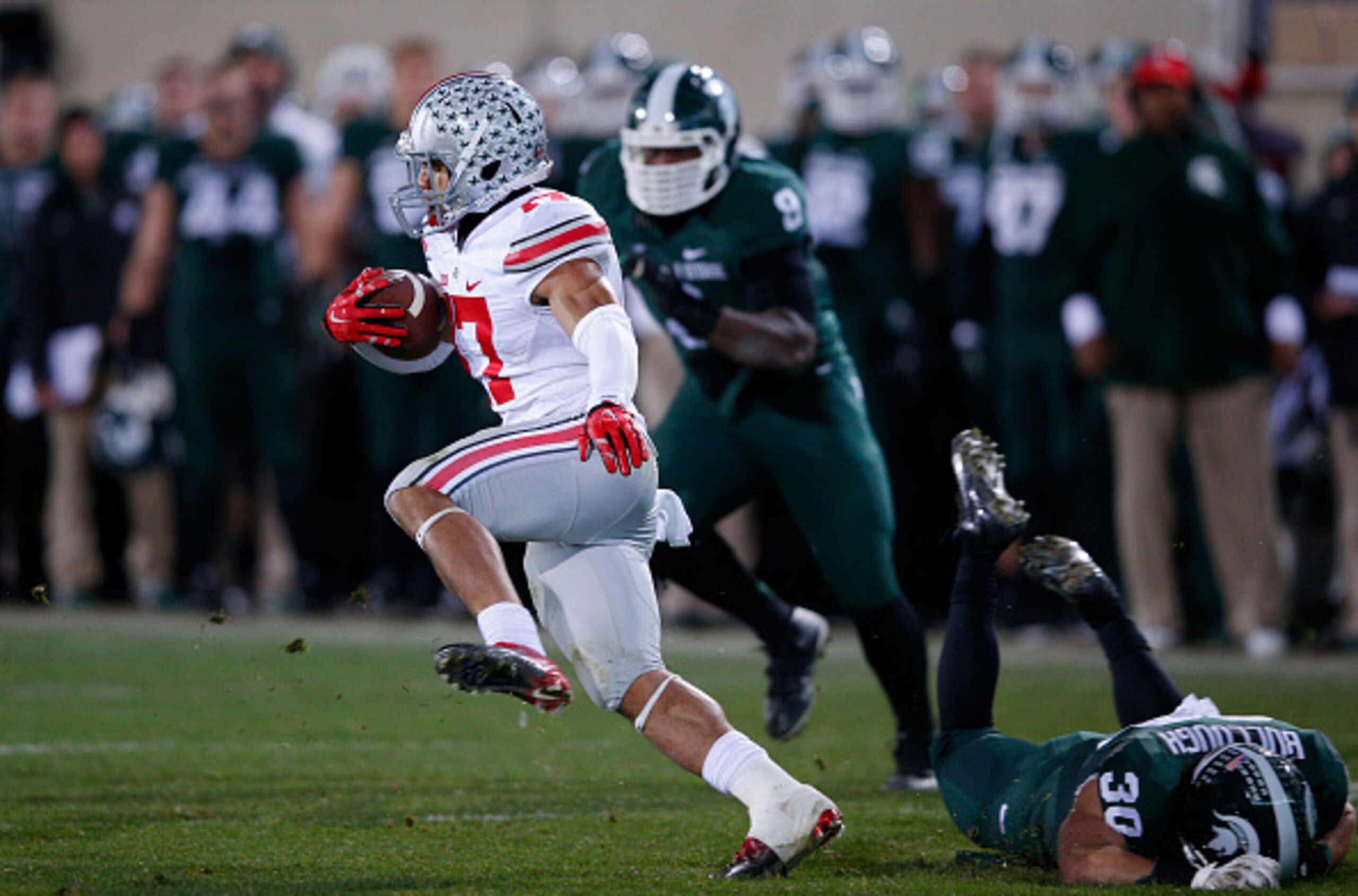
Third-Down Conversions: 51.28 percent
Ohio State is No. 7 in third-down conversions, an amazing mark after starting the season with back-to-back 25 percent performances against Navy and Virginia Tech.
The Buckeyes went 6-of-24 on third down in those first two games, including a 4-of-16 mark in the 35-21 loss to Virginia Tech. How bad was it? How about the worst two-game stretch in the Urban Meyer era other than the combined 3-23 (13 percent) mark in losses to Michigan State and Alabama at the end of last season.
Ohio State is 54-of-93 (58 percent) on third down since Week 3, including posting a season-high 10-of-14 performance (71.4) in last Saturday’s 49-37 win at No. 8 Michigan State.
It’s even more impressive given the Spartan defense’s No. 13 rank in opponent’s third-down tries, allowing a conversion only 31.71 percent of the time.
The only other sub-50 percent performance came in the 31-24 near miss at Penn State, when the Buckeyes went 7-of-18 (38.89 percent).
If Ohio State can keep itself over 50 percent on third down, this could be its year.
Nebraska
3 of 10
Red-Zone Touchdown Conversions: 73.81 percent
The Cornhuskers rank No. 8 in the FBS in red-zone touchdowns, scoring six points in 31 of their 42 trips inside of opponents' 20-yard lines.
If even half of these scores had resulted in a field goal instead, Nebraska would have scored 47 fewer points this season.
The Huskers have been 75 percent or better in red-zone touchdowns on four occasions: Going 5-of-5 against Florida Atlantic, 5-of-6 against Illinois and Northwestern, and 3-of-4 versus Miami (Florida) and Rutgers.
It’s no coincidence that Nebraska’s poorest performance came in a near miss to an FCS team and in its only loss. The Huskers went 2-of-4 (50 percent) in its 31-24 win over FCS McNeese State in Week 2 and hit the same low again in its 27-22 defeat at Michigan State in Week 6.
If the Cornhuskers can keep scoring more touchdowns than field goals in the red zone, it has a chance to win its first-ever Big Ten title.
.jpg?w=2560)

.jpg?w=2560 "Election 2024 Julie Pace Column")
Baylor
4 of 10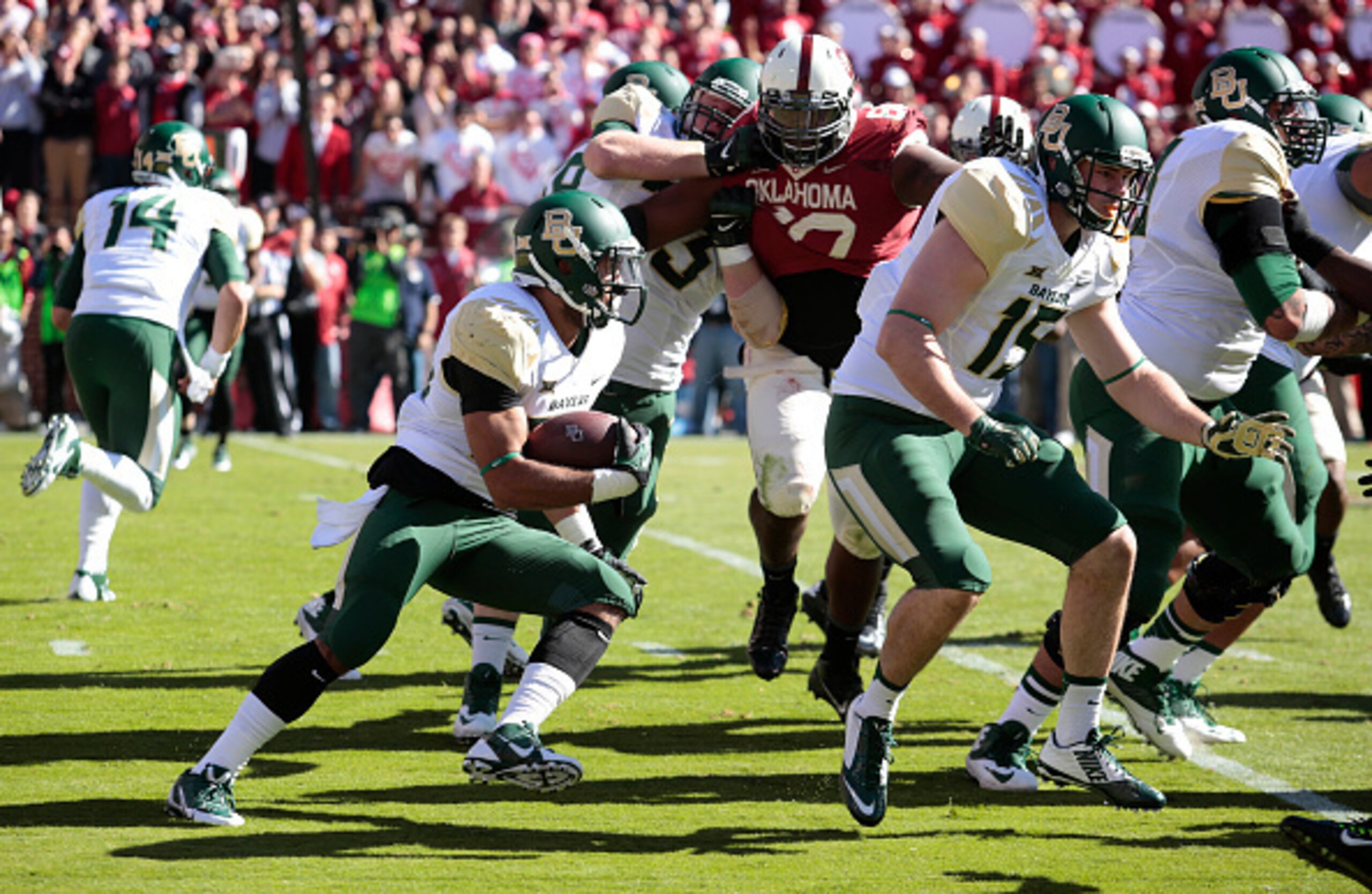
Fourth-Down Conversions: 76.67 percent
Baylor is tied with Washington State for the most fourth-down conversion attempts this season, each trying on 30 occasions. What separates the two teams is success: The Bears achieved a first down 23 times (76.67 percent), while the Cougars where successful 13 times (43.33).
Baylor’s success rate ranks No. 9 in the FBS, but it has attempted at least three times more fourth downs than the eight teams ranked higher in conversion percentage.
The Bears have been perfect on fourth down five times this season, including going 4-of-4 in last week’s 48-14 beatdown of No. 15 Oklahoma.
In the narrow 61-58 win over No. 9 TCU, the Bears converted on four of six first-down attempts, extending two drives that resulted in critical scores.
The only time Baylor has been shut out on fourth down this season was in its sole loss to West Virginia, going 0-of-2. The Bears had a 4th-and-7 from the West Virginia 26 early in the second quarter, resulting in an incomplete pass attempt. Baylor’s final drive ended with an unsuccessful 4th-and-goal attempt from the Mountaineer 18.
Extending drives by converting forth downs is key to keeping Baylor’s No. 1-ranked scoring offense on the field.
Arizona State
5 of 10
Fumbles Lost: Three
Arizona State has run 683 plays on offense this season and has only lost a fumble on three occasions, tying it for the third fewest in the FBS.
The Sun Devils haven’t coughed the ball up in five games, all wins, last suffering a lost fumble in its 62-27 loss to then-No. 11 UCLA in Week 5.
Arizona State lost two fumbles that day, one resulting in a Bruins score. The only other such misstep came early in the second quarter of the 58-23 win over New Mexico in Week 2.
Included in the five-game streak was a perfect game against Washington in Week 9 (a 24-10 win), a remarkable feat against a Huskie defense that ranks No. 4 in the nation in fumble recoveries with 13.
Mistake-free play equals wins, especially in narrow games. If Arizona State keeps up the good work, look out for the dark-horse, Pac-12 contender to continue to be a fork worth fearing.
TCU
6 of 10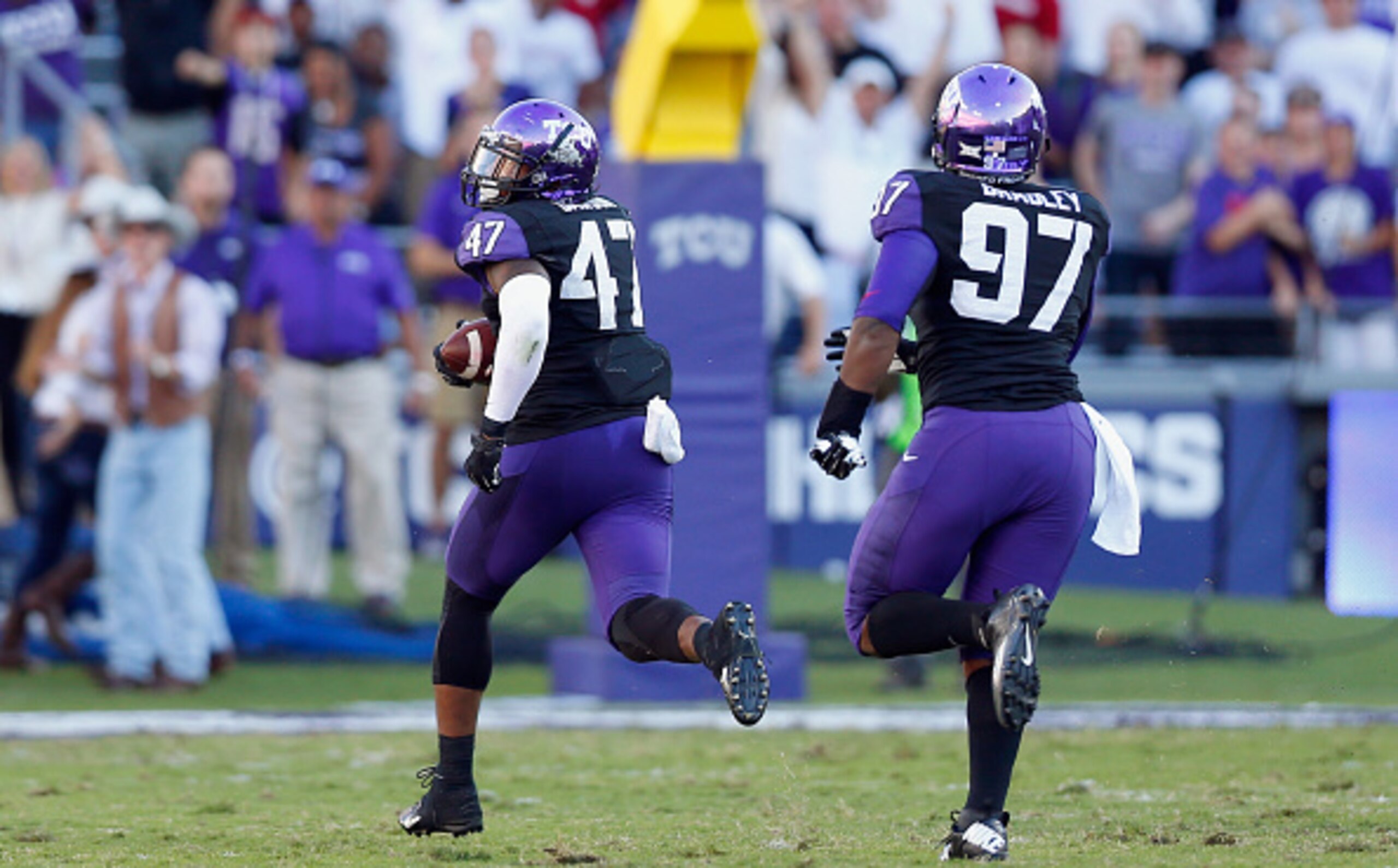
Takeaways: 27
The Horned Frogs are tied with Utah State and Ole Miss for the most takeaways in the FBS. Only Louisiana Tech, with 28, has more this season.
TCU has picked up 11 fumbles and nabbed 16 interceptions, scoring three-plus takeaways in five of its nine games this season. The high points included five in the win over Minnesota, four in the rout of Texas Tech and five in the narrow win at West Virginia.
What’s had even more impact for the Horned Frogs is their consistent track record of cashing in on takeaways, especially when it has mattered most.
In the 37-33 win over No. 4 Oklahoma, TCU scored a pair of game-winning interceptions in the fourth quarter. The first, a 46-yard pick-six, broke a 31-31 tie, and the second stopped Oklahoma on a 2nd-and-13 try at the TCU 24-yard line, squelching the Sooners’ second-to-last chance to retake the lead.
In the 31-30 victory at No. 20 West Virginia, the Horned Frogs scored five plays after forcing a fumble in the third quarter and then scored three plays after an interception. The former gave TCU its first lead of the game, and the latter pulled it back within six points. This set up a 10-point fourth quarter that iced the Mountaineers.
In the loss to Baylor, TCU scored a touchdown after a forced fumble in the first quarter, a field goal after an interception in the third and a 49-yard pick-six in the fourth. Even these 17 points weren’t enough to take down the Bears, who scored 10 points of their own in the final five minutes to top the Horned Frogs 61-58.
If TCU is to keep winning, it will do so with the help of its aggressive, opportunistic defense.
Alabama
7 of 10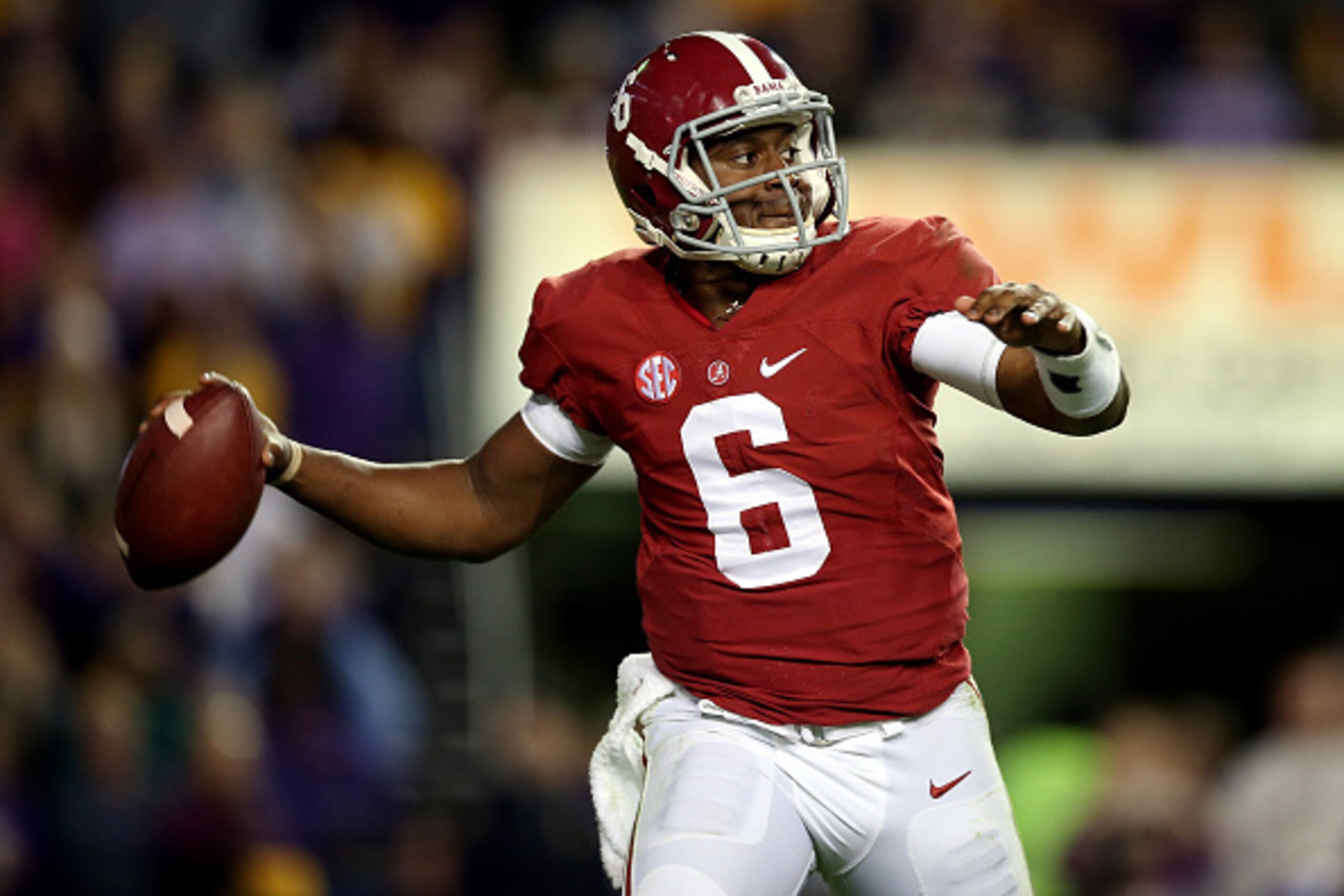
Interceptions Lost: Three
While Alabama first-year starting quarterback Blake Sims’ No. 31 rank in yards per game (249.2) might not turn any heads, his three interceptions ought to blow everybody’s mind.
Sims’ three errant passes ties him for the fourth fewest in the FBS this season. With 245 attempts, only Baylor’s Bryce Petty (three in 283 attempts), Oregon’s Marcus Mariota (two in 277) and USC’s Cody Kessler (two in 297) have thrown fewer picks in more tries.
Sims hasn’t thrown an interception in his last 117 attempts, or his last four games, all Alabama wins. The last time he threw a pick was in the 23-17 loss to Ole Miss, the only defeat of the season.
That misstep came at the end of the game, on a 2nd-and-13 from the Rebel 32-yard line, a Senquez Golson interception that ended the Tide’s final scoring opportunity.
Since that moment, Sims hasn’t made that critical mistake. If he continues to play error-free, Alabama has a shot to advance.
Oregon
8 of 10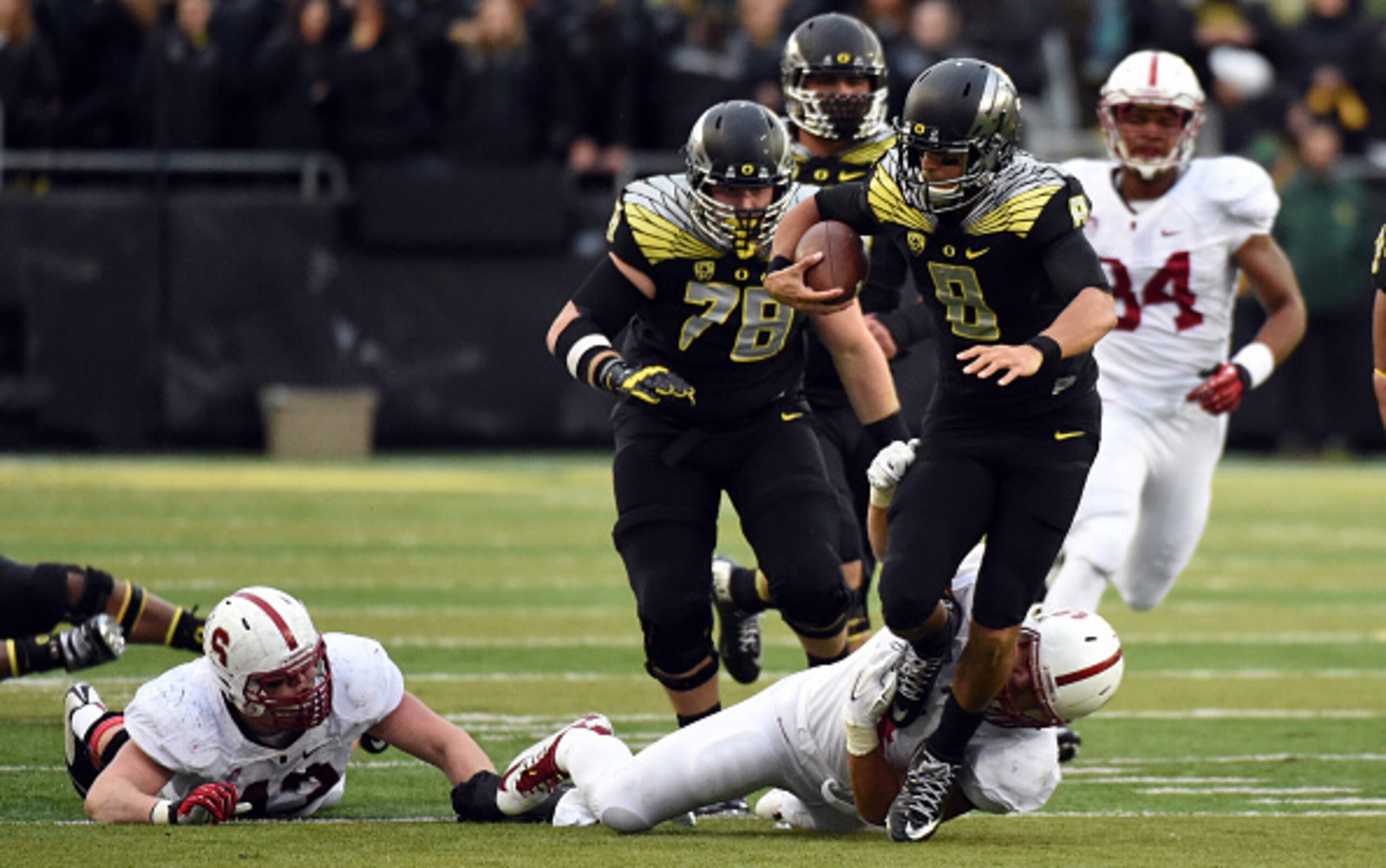
Third-Down Conversions: 51.54 percent
The Ducks rank No. 4 in the FBS in third-down conversions, one of only nine teams with a success rate better than 50 percent.
Oregon has attempted 130 third downs and converted 67 times. The best run of the season came in wins over Washington, Cal and Stanford, when the Ducks went 29-of-48 (60 percent).
It’s no coincidence that Oregon’s worst performance came in its only loss, the 31-24 upset versus then-unranked Arizona. The Ducks went 4-of-14 on third down that day, posting a season-low 28.6 percent.
Oregon has won by 18-plus points in five of the six games it went 58 percent or better on third down.
The only exception came last week when the Ducks went 4-of-13 (30.7 percent) against Utah. It didn’t hurt that the Utes turned the ball over four times in the 51-27 decision.
Any team that holds Oregon to under 50 percent on third down will have a shot at an upset.
Florida State
9 of 10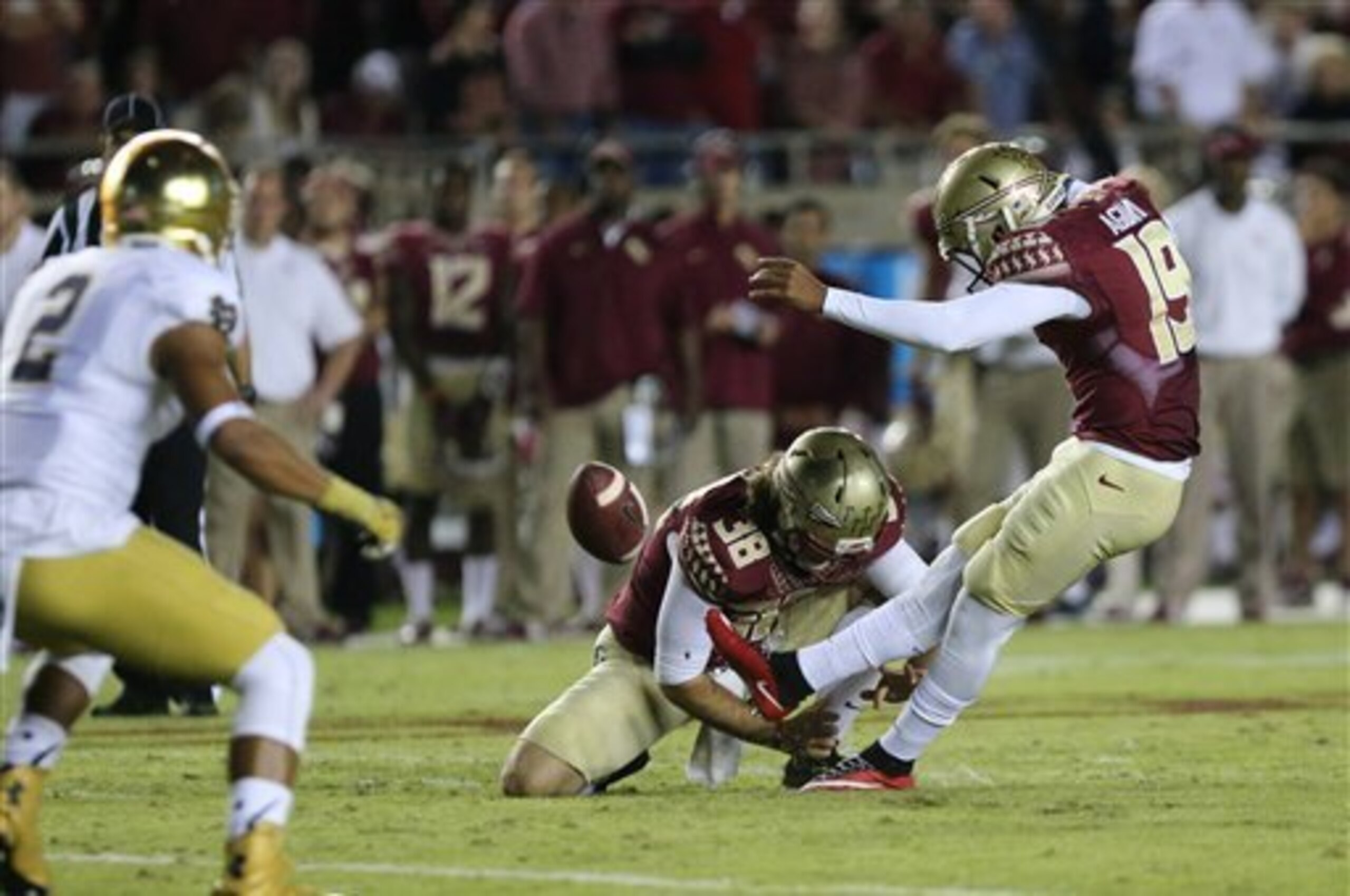
Red-Zone Conversions: 92.5 percent
Only five teams in the FBS have been more successful than Florida State inside the 20-yard line this season, scoring on 37 of its 40 visits.
The Seminoles were 100 percent successful in the red zone in their wins over FCS Citadel, Clemson, N.C. State, Wake Forest, Syracuse and Notre Dame, posting a perfect 29-of-29 mark over the six-game stretch.
This included the wins over Clemson (23-17) and Notre Dame (31-27)—four- and six-point victories that could have been reversed with even one unsuccessful conversion.
What has helped Florida State’s numbers inside the 20 is kicker Roberto Aguayo, 16-of-17 on field-goal attempts, giving him a 94.1 percent success rate (the second best in the FBS). The only time he’s missed this season was on a 41-yard try in the win over Louisville.
Upset-minded teams with fantasies of knocking off the Seminoles will have to bring their A-game in the red-zone defense—and hope that the sure-footed Aguayo starts to miss.
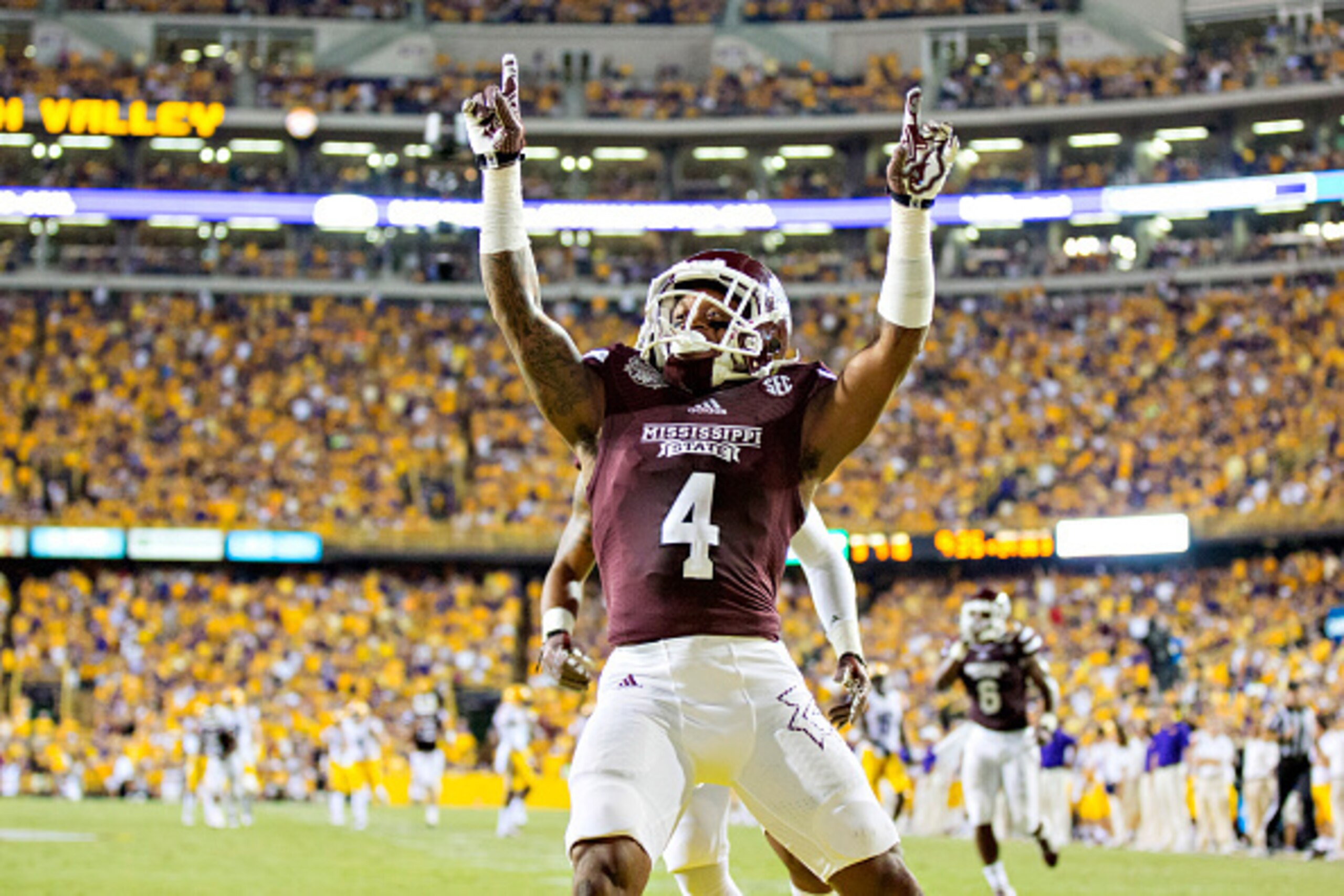
Mississippi State
10 of 10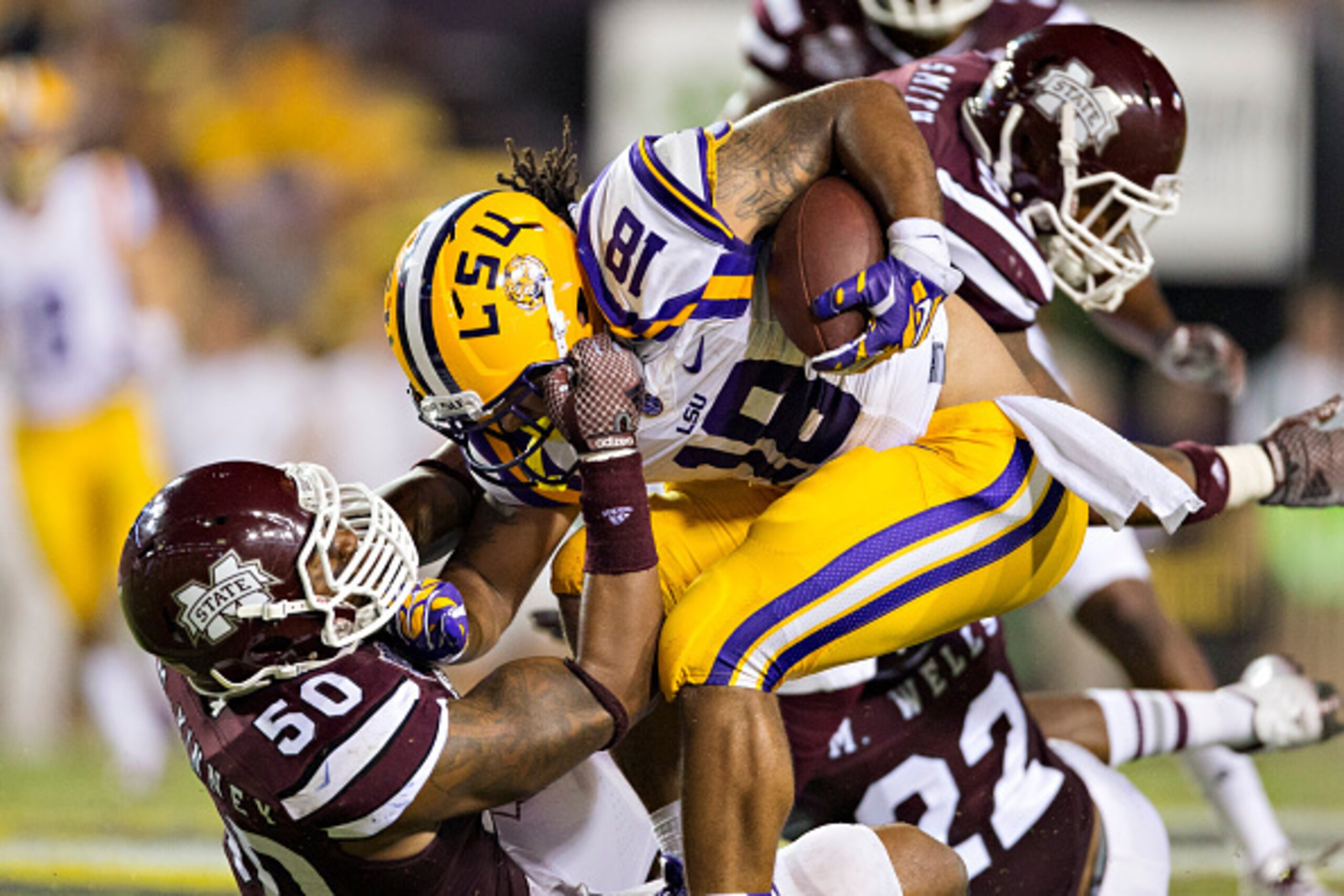
Opponent Red-Zone Touchdown Conversions: 32.3 percent
The Bulldogs rank No. 1 in the FBS in red-zone defense, better than any team in the nation in squelching scoring (58.06 percent) and touchdowns (32.26 percent) inside the 20.
Mississippi State’s opponents have visited the red zone 31 times and have scored on 18 occasions. Even more critically, of the 18 scores, only 10 have been touchdowns.
The net difference is 24 fewer points scored, a big deal to a team on a 9-0 run.
Think back to the narrow 34-29 win over then-No. 8 LSU. Unranked Mississippi State was up 7-0 midway through the first quarter when LSU drove the ball to the Bulldog 2-yard line. The Tigers had four shots from there and were eventually thwarted on a 4th-and-goal.
The Bulldogs took over on their own 2-yard line and drove 98 yards in just over a minute to take a 14-0 lead.
In the second quarter, LSU drove down to the Mississippi State 15-yard line and after failing to convert on a 3rd-and-8, settled for a field goal—its first points of the game.
The two stops represented a 10-point swing, the difference-maker in what ended up being a five-point decision.
If the Bulldogs defense can keep up its blistering pace in the red zone, it could capture its first SEC title since 1941.
Statistics courtesy of CFBStats.