Breaking Down Washington Redskins' Improving 3rd-Down Offense
The Washington Redskins haven't exactly been the most efficient offense on third downs this season. The unit ranks 29th in conversion percentage.
But the last two games have seen a noticeable improvement in both execution and efficiency on third down. In Week 8's 20-17 overtime win over the Dallas Cowboys, Washington converted six of 14 third downs, good for a 43 percent conversion rate. That was followed by six successful conversions from 13 attempts for a 46 percent success rate in Week 9's 29-26 loss to the Minnesota Vikings.
Here are some numbers that show how these mild improvements compare to the rest of the season:
TOP NEWS
Bears' Santos Wanted to Kick 58-Yarder
Picking Each NFL Division Winner 🔮
.jpg?w=2560)
B/R's Expert Week 7 NFL Picks 🔮
| Game | Conversions | Attempts | Success Rate |
| Away vs. Houston Texans | 3 | 12 | 25% |
| Home vs. Jacksonville Jaguars | 6 | 14 | 43% |
| Away vs. Philadelphia Eagles | 8 | 15 | 53% |
| Home vs. New York Giants | 1 | 8 | 13% |
| Home vs. Seattle Seahawks | 3 | 12 | 25% |
| Away vs. Arizona Cardinals | 2 | 10 | 20% |
| Home vs. Tennessee Titans | 3 | 11 | 27% |
| Away vs. Dallas Cowboys | 6 | 14 | 43% |
| Away vs. Minnesota Vikings | 6 | 13 | 46% |
After four dismal weeks, the Washington offense has shown considerable improvement on football's money down. The key to that improvement has been two-fold.
First, expanded roles for running back Roy Helu Jr., third receiver Andre Roberts and tight end Jordan Reed have provided a major boost. With most defenses naturally slanting their coverage toward star wideouts DeSean Jackson and Pierre Garcon, Helu, Roberts and Reed have often faced single coverage.
That, along with some clever scheming from head coach Jay Gruden and offensive coordinator Sean McVay, is consistently creating favorable matchups. Let's take a look at three examples, beginning with how Roberts and Reed tormented the Vikings.
The first example comes from the opening quarter, where the Redskins faced 3rd-and-4 from their own 37-yard line. The play began with Reed coming across the formation in motion:

He joined Roberts in the slot, presenting a dangerous dual threat to Minnesota's inside coverage:
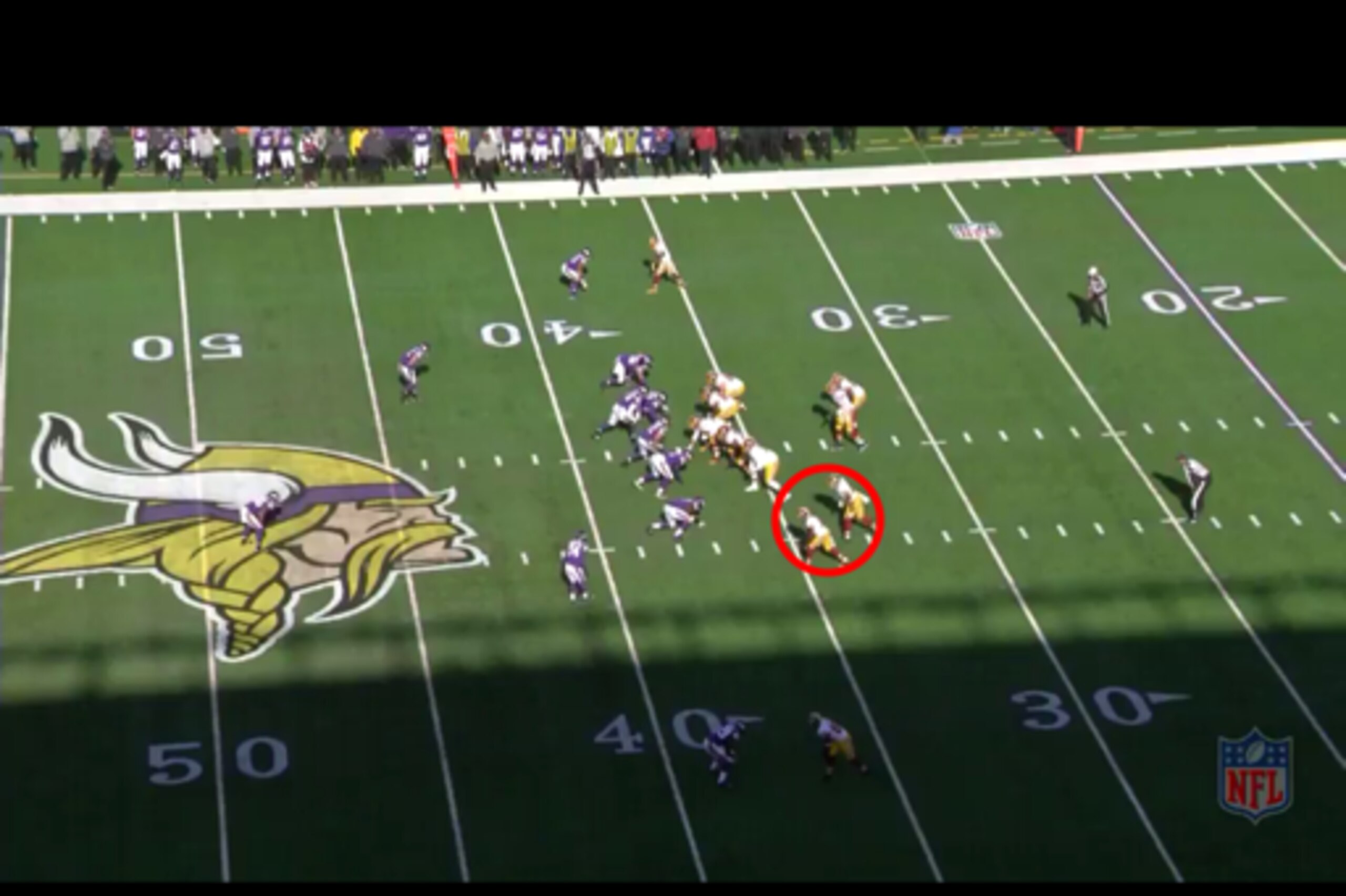
Roberts and Reed ran conflicting routes to split Minnesota's second-level defenders and challenge them in man coverage. Reed swung out on a shallow curl (blue line), while Roberts ran a quick, in-breaking slant (red line):
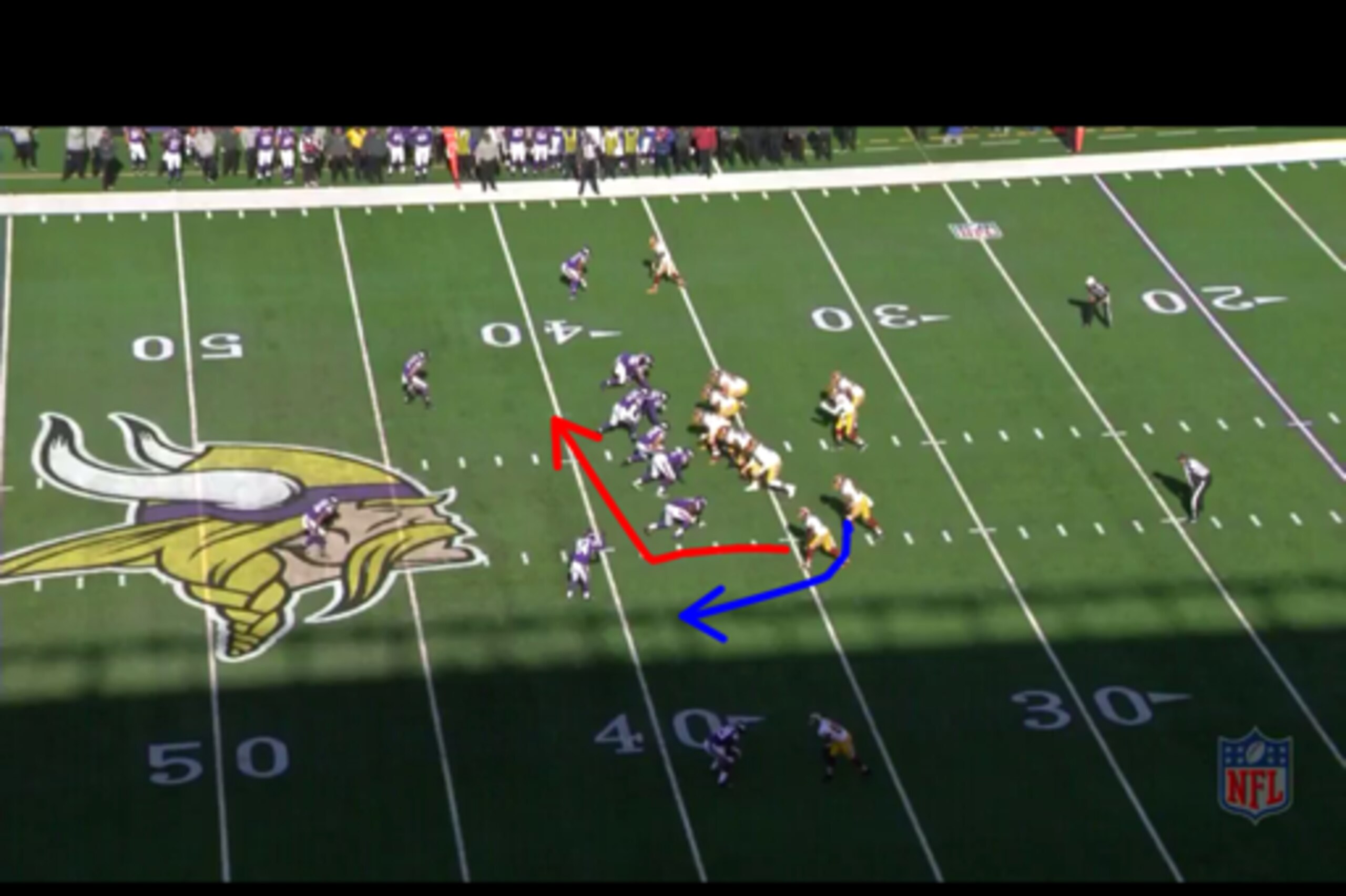
Both receivers broke free underneath, with Reed drawing the attention of two covering defenders:
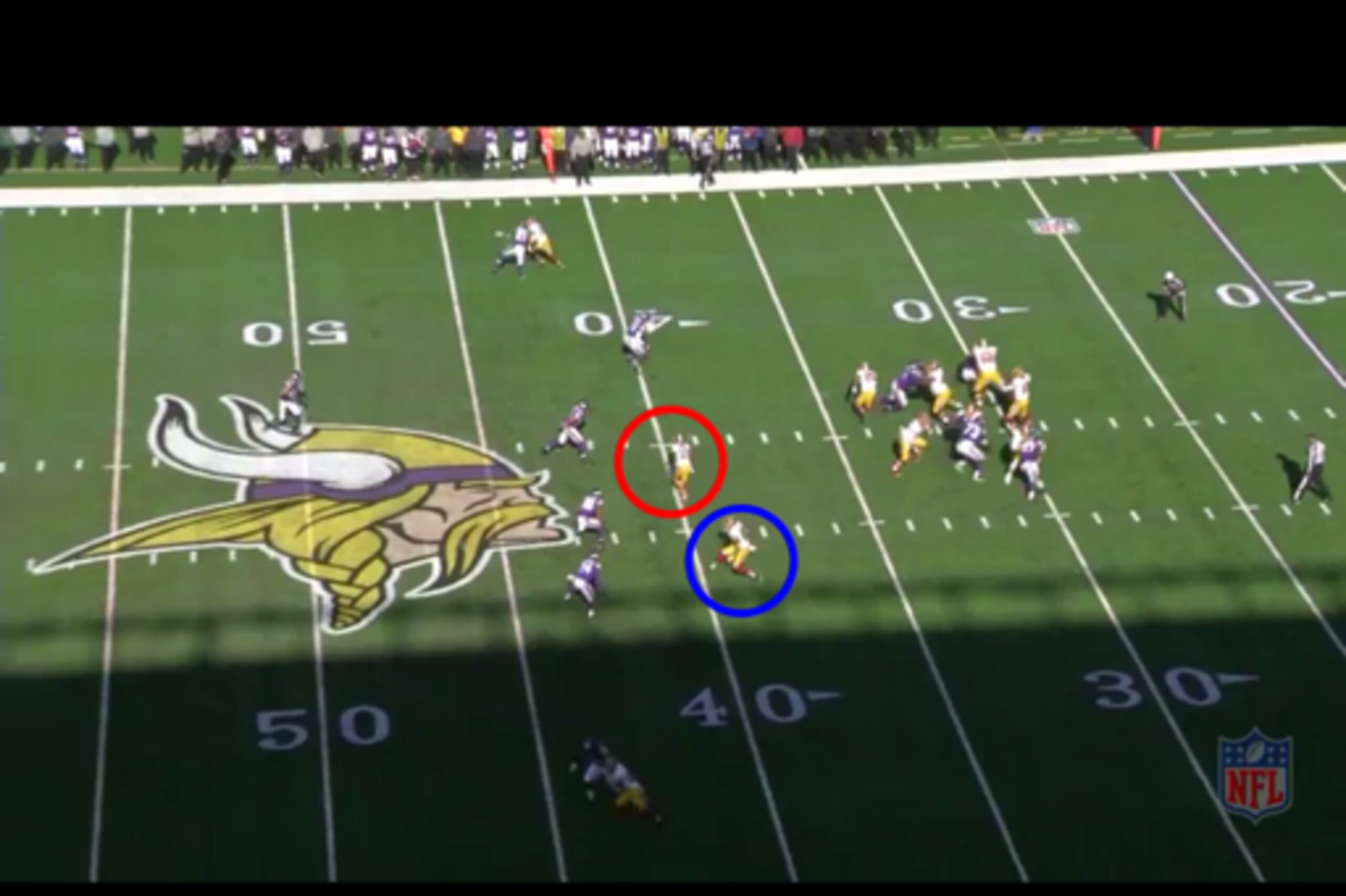
That left Roberts isolated against middle linebacker Chad Greenway. A wide receiver against a linebacker should be an automatic matchup win for an offense.
If you look at the play from the viewpoint of quarterback Robert Griffin III, you'll see one reason why Washington is improving on third downs:
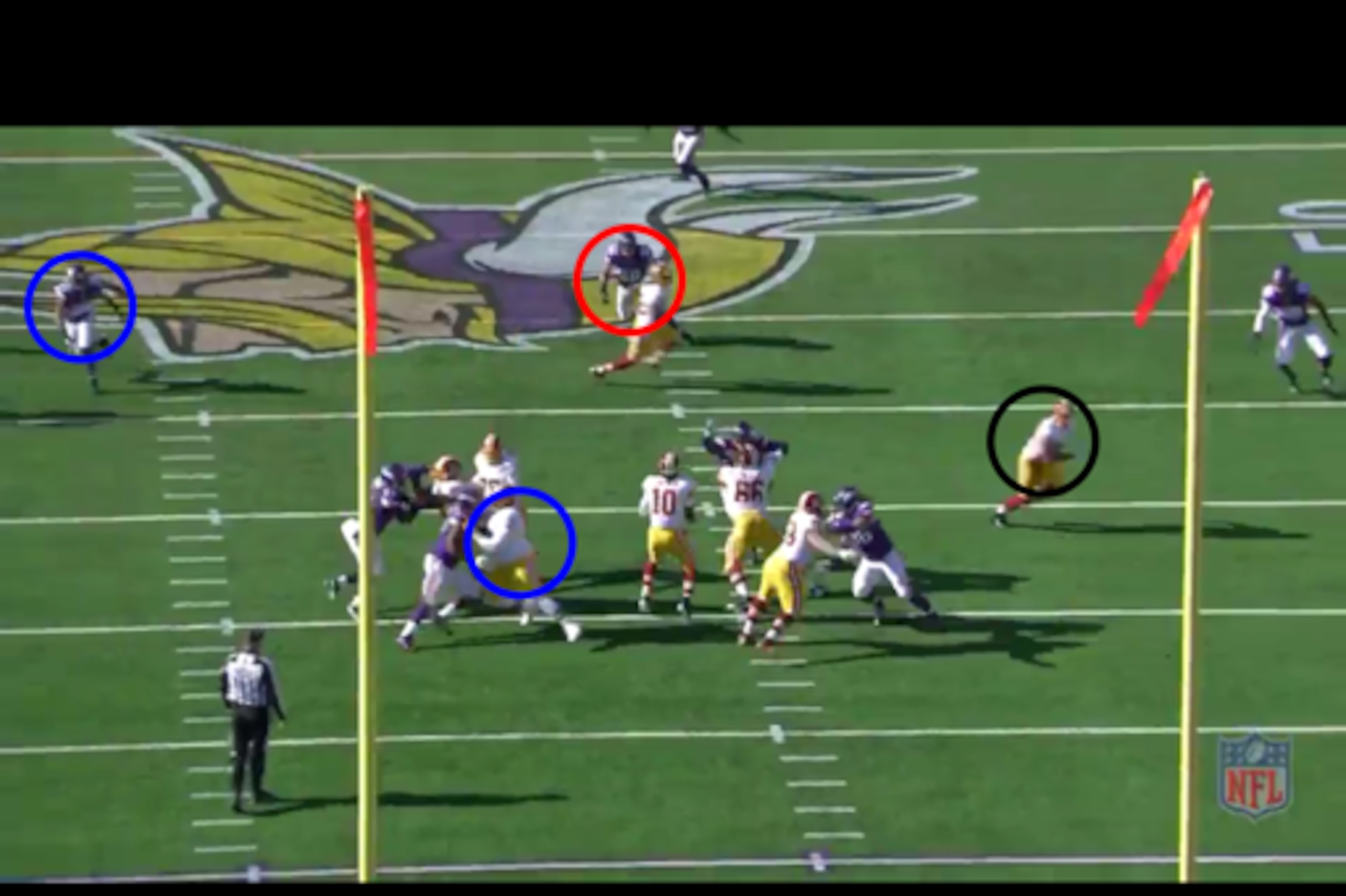
Notice how Griffin has three underneath receivers to aim for: Reed, whose coverage is represented by the blue circle, Roberts, who is separating from Greenway, and Helu, who is the short-range checkdown, shown in the black circle.
Ultimately, Griffin wisely identified Roberts as his best matchup and connected with the ex-Arizona Cardinals receiver for nine yards to earn a fresh set of downs:
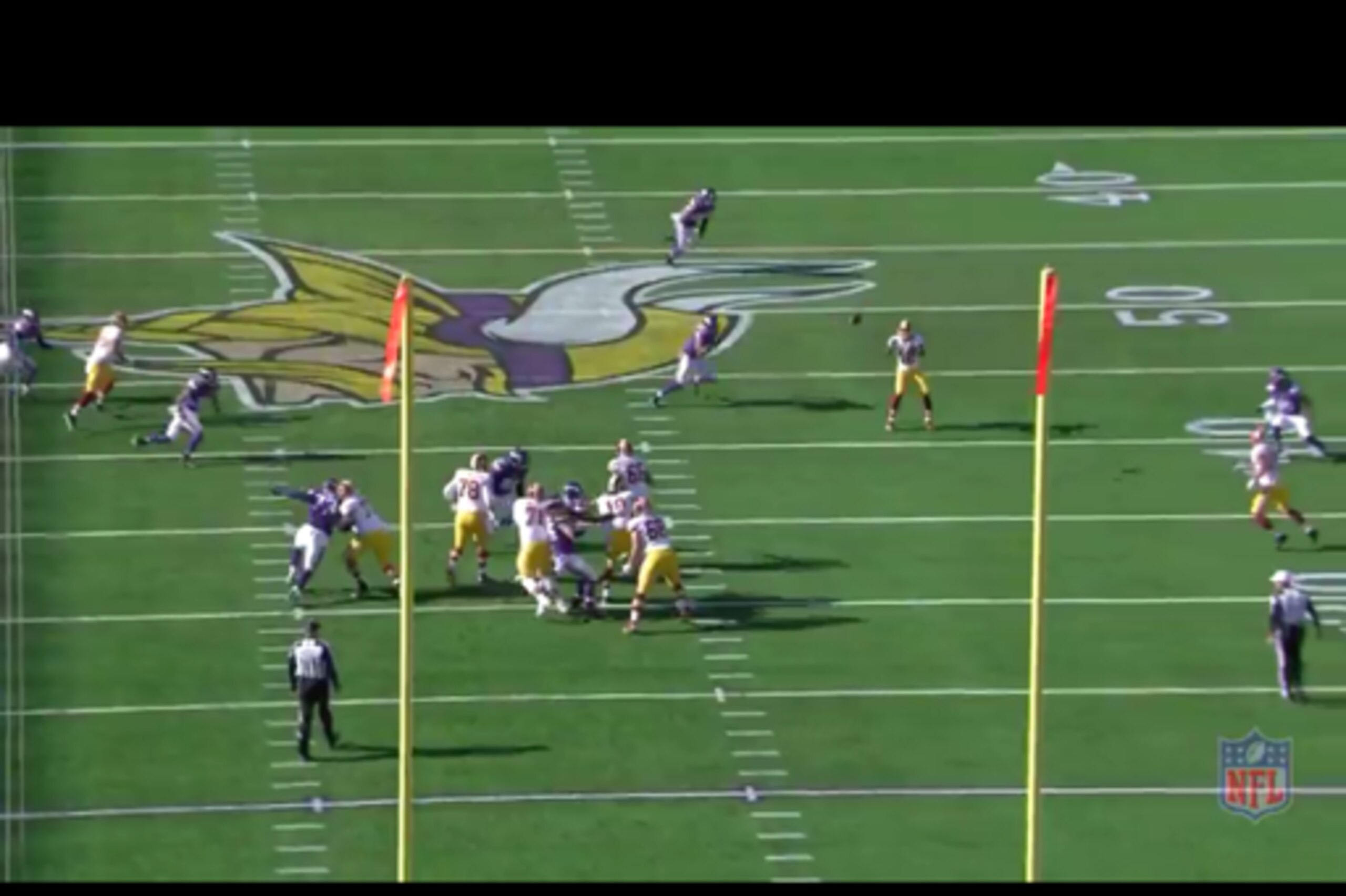
What Gruden and McVay schemed here was a play that gave Griffin three simple, intermediate reads to make. Whichever one of Roberts or Reed drew only single coverage would be Griffin's best option.
However, if both receivers were well-covered, or Griffin was put under immediate pressure, he could simply dump the ball off to Helu to avoid a negative play.
Covering all the bases to make the quarterback's job easier is the essence of good third-down offense. It's the best answer to the complex, pressure-based schemes most defenses turn to on third down.
Making things easier for a quarterback also demands intelligent and athletic playmakers who consistently get open over the middle. Reed is exactly that kind of weapon.
In the third quarter against the Vikings, Gruden used the same concept that worked early in the game. But this time he flipped the script to make Reed the primary option on 3rd-and-4 at the 50.
Once again, the dynamic "move" tight end started the play by shifting across in motion:

He joined Roberts on the other side of the formation, creating a two-man stack Minnesota's nickel coverage would struggle to adjust to:
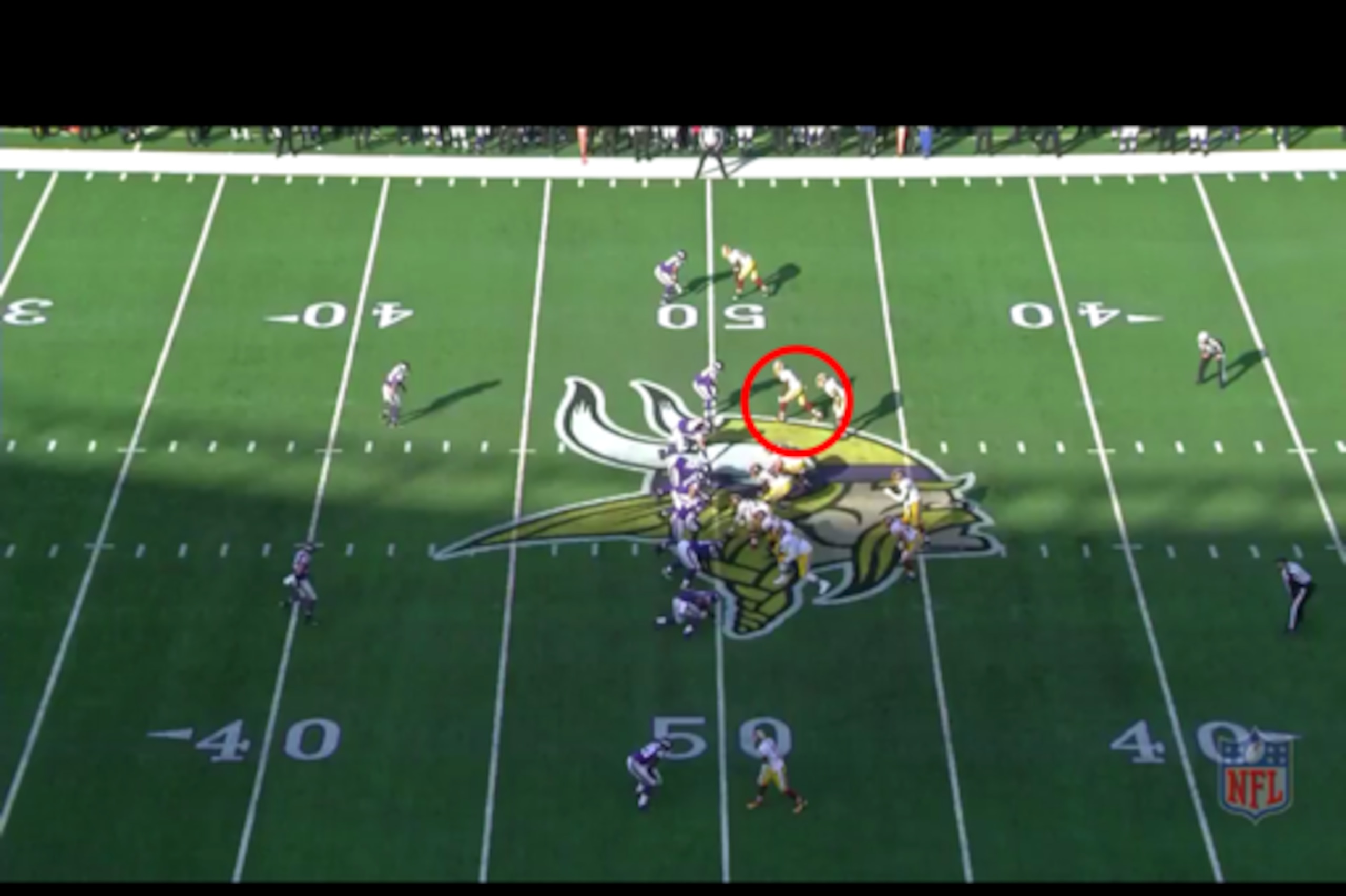
Roberts and Reed would both run slant patterns over the middle. However, Roberts would run his crossing route right across the field. Meanwhile, Reed would initially break to the outside, before turning back inside on a comeback route to run a shallow slant underneath:

With Roberts taking his coverage across the field and Reed's double move leaving his defender trailing, the tight end was wide-open to make a simple catch and turn it upfield for 17 yards:
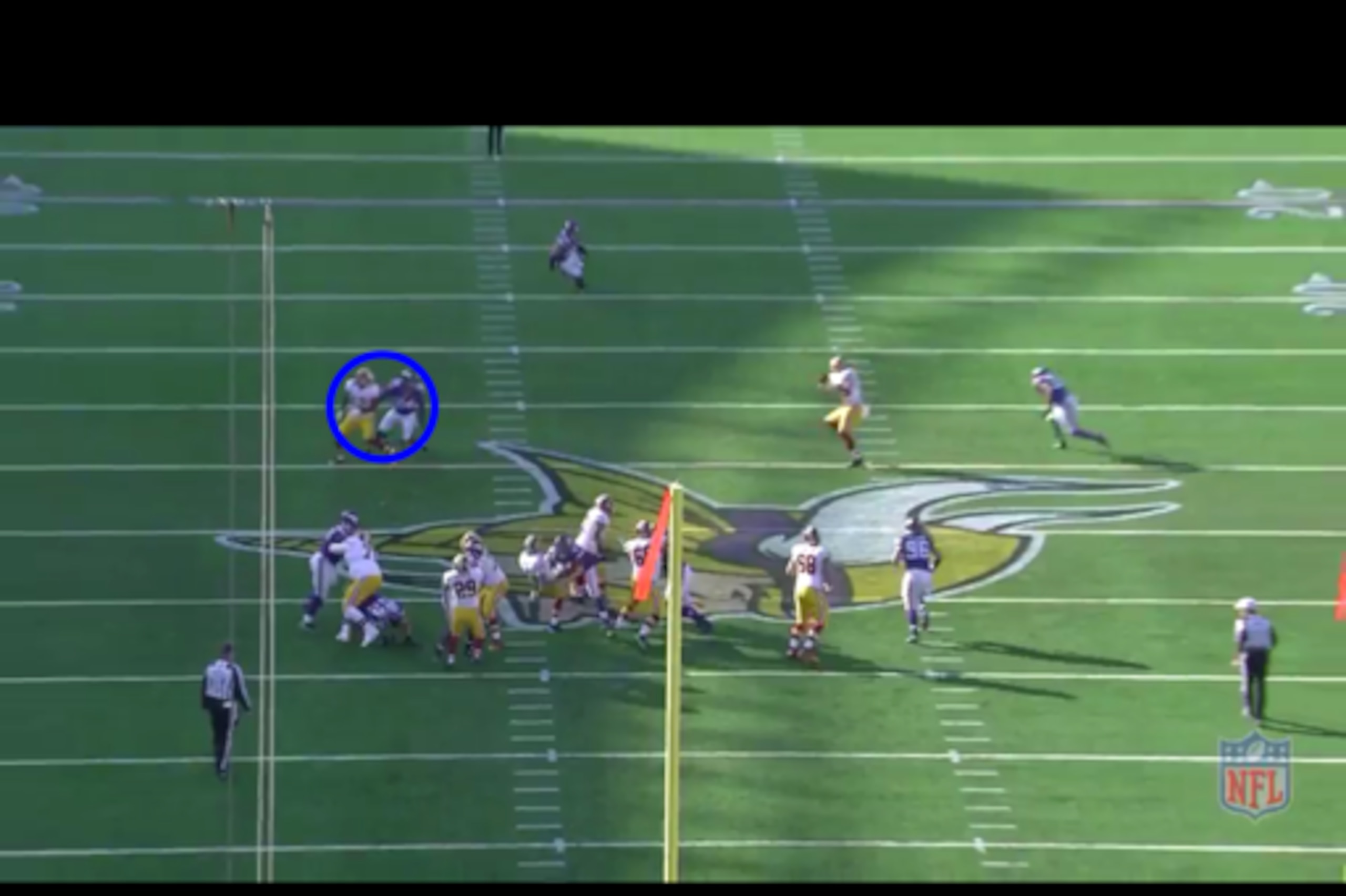
The Vikings had initially shown pressure by stacking both linebackers in their 4-2-5 nickel scheme in both A-gaps threatening to blitz. That meant both Reed and Roberts faced single coverage in a natural void in the middle.
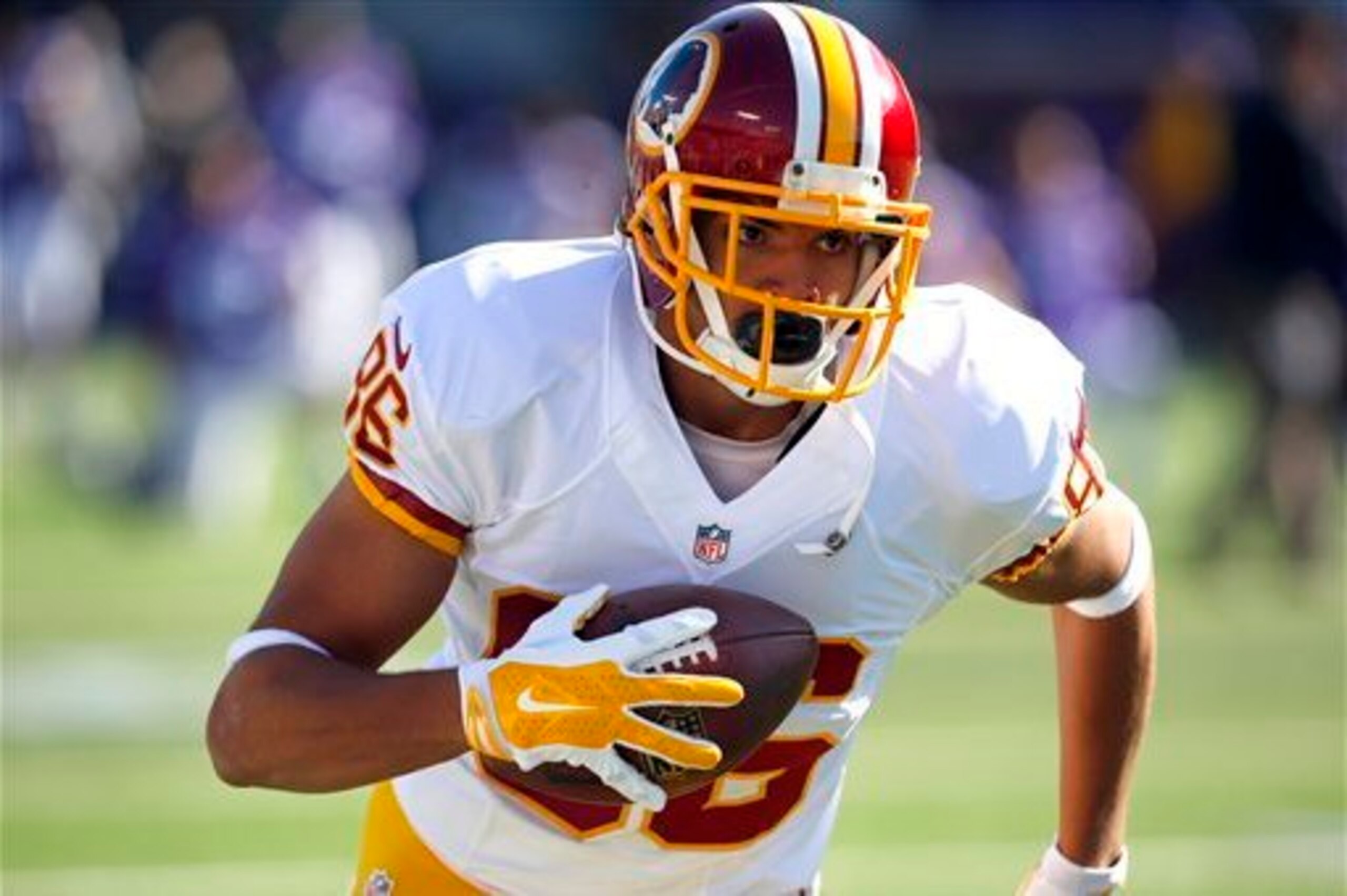
Reed is too nimble and crafty a route-runner to leave isolated across the middle. Reed has missed four games through injury this season, but his return has coincided with this team's improvements on third down.
ESPN.com Redskins reporter John Keim has previously detailed Reed's significance on third downs:
"Last season, in nine games, Reed caught 14 passes on third down, with 13 going for a first down. In weeks 6-11 last year, Reed’s longest stretch of the season and when he became a bigger focal point in the passing game, Washington converted 53.8 percent of third downs, according to ESPN Stats & Information. For the 2013 season, the Redskins converted 40.4 percent of third downs.
And in weeks 12-17 -- after Reed was sidelined -- they converted just 31.5 percent of third downs. Yes, he makes a difference.
...
The more Reed plays, the better this offense becomes. Again, look back to last season, when he averaged 11.43 yards on third down.
"
The last part of Keim's analysis is significant. It shows the value of a player who can turn short throws into big plays via yards after the catch. Short throws to dynamic athletes on the run is a combination Gruden and McVay should create more often.
It would help improve Griffin's accuracy and decision-making, two major flaws in his game, as well as build his confidence from the pocket.
Reed is a key figure in that process on any down. So is Helu, even if most of his workload is limited to third downs.
The 2011 fourth-round pick has established a niche as a useful outlet from the backfield. The best example came in the third quarter against the Cowboys.
Washington faced 3rd-and-6 at its own 24. Gruden and McVay manipulated the coverage by deploying a trips look, three-receiver set on one side of the formation while splitting Reed out wide on the other:
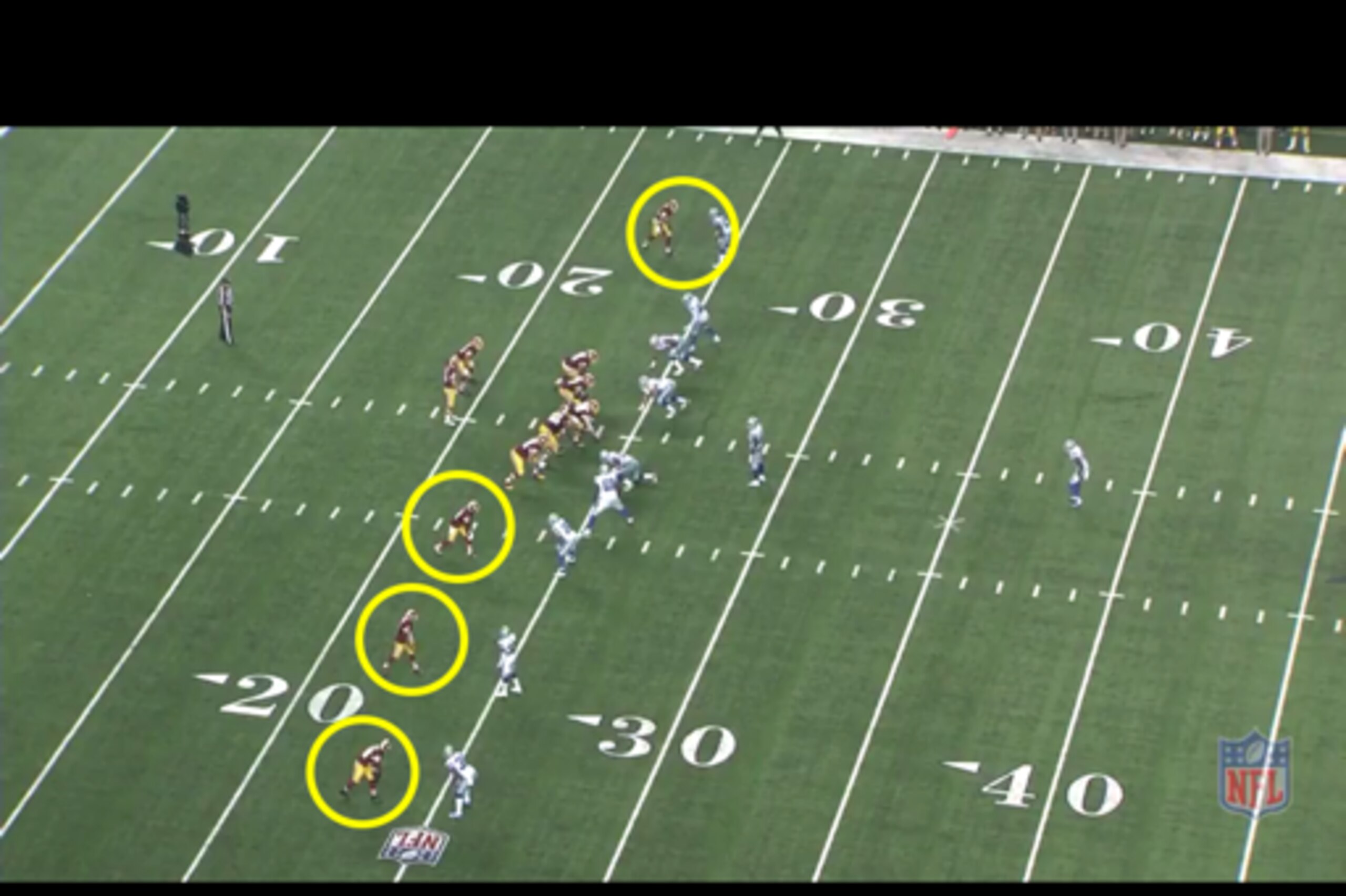
This forced the Cowboys to match up in man coverage from their standard nickel look, with a single-high safety behind it.
The attention given to the outside receivers meant Helu could isolate himself against a linebacker. Again, this has to be a favorable matchup for any offense.
Helu ran a circle pattern out of the backfield and into the middle zone. He was matched up against outside 'backer Justin Durant:

Helu easily wrong-footed Durant with one quick cut before sprinting into the voided middle. The underneath zone had been vacated because middle linebacker Rolando McClain had rotated to try to undercut any deep crossing patterns:
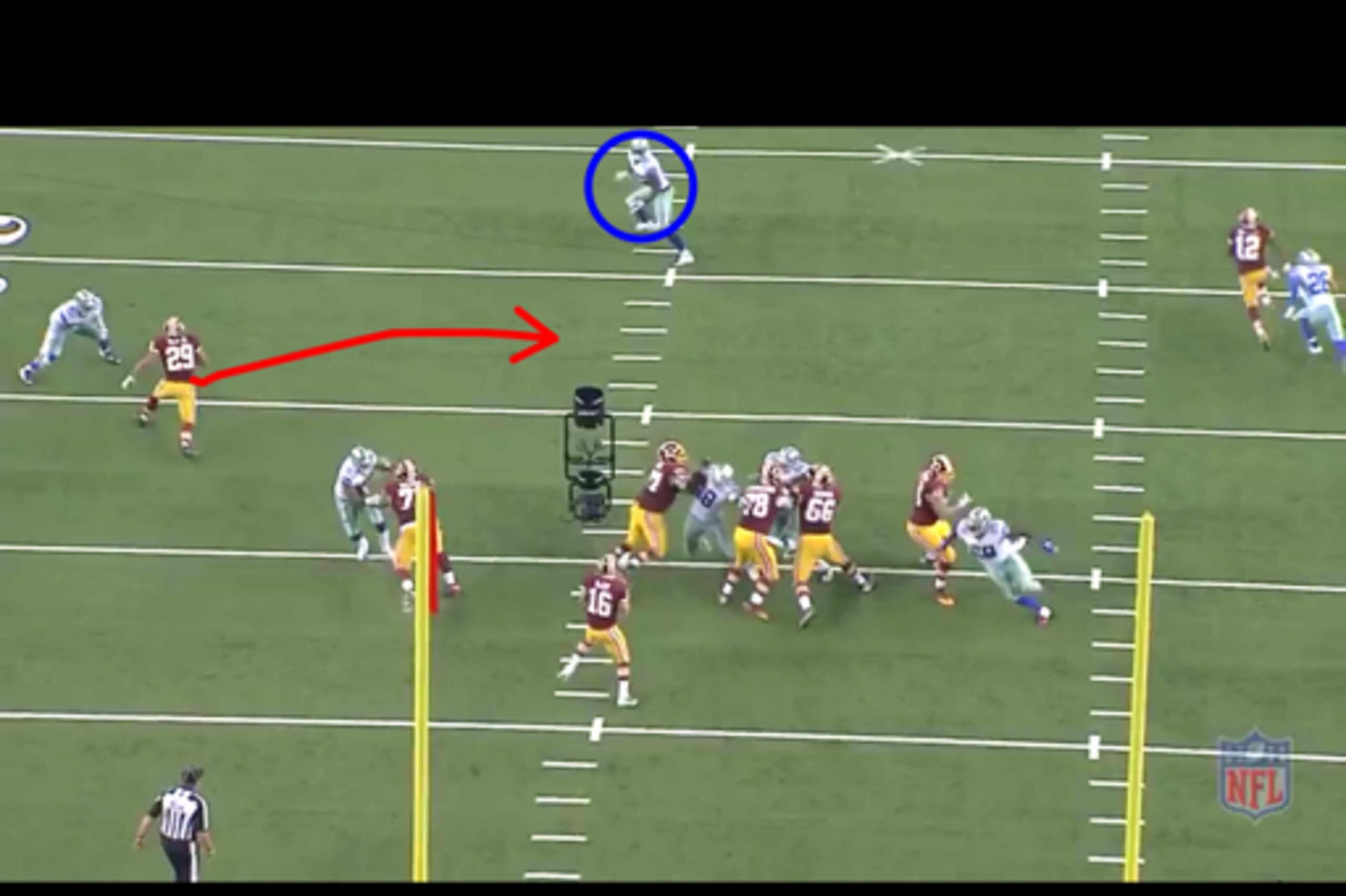
Helu outran Durant and was open for a clutch seven-yard grab:
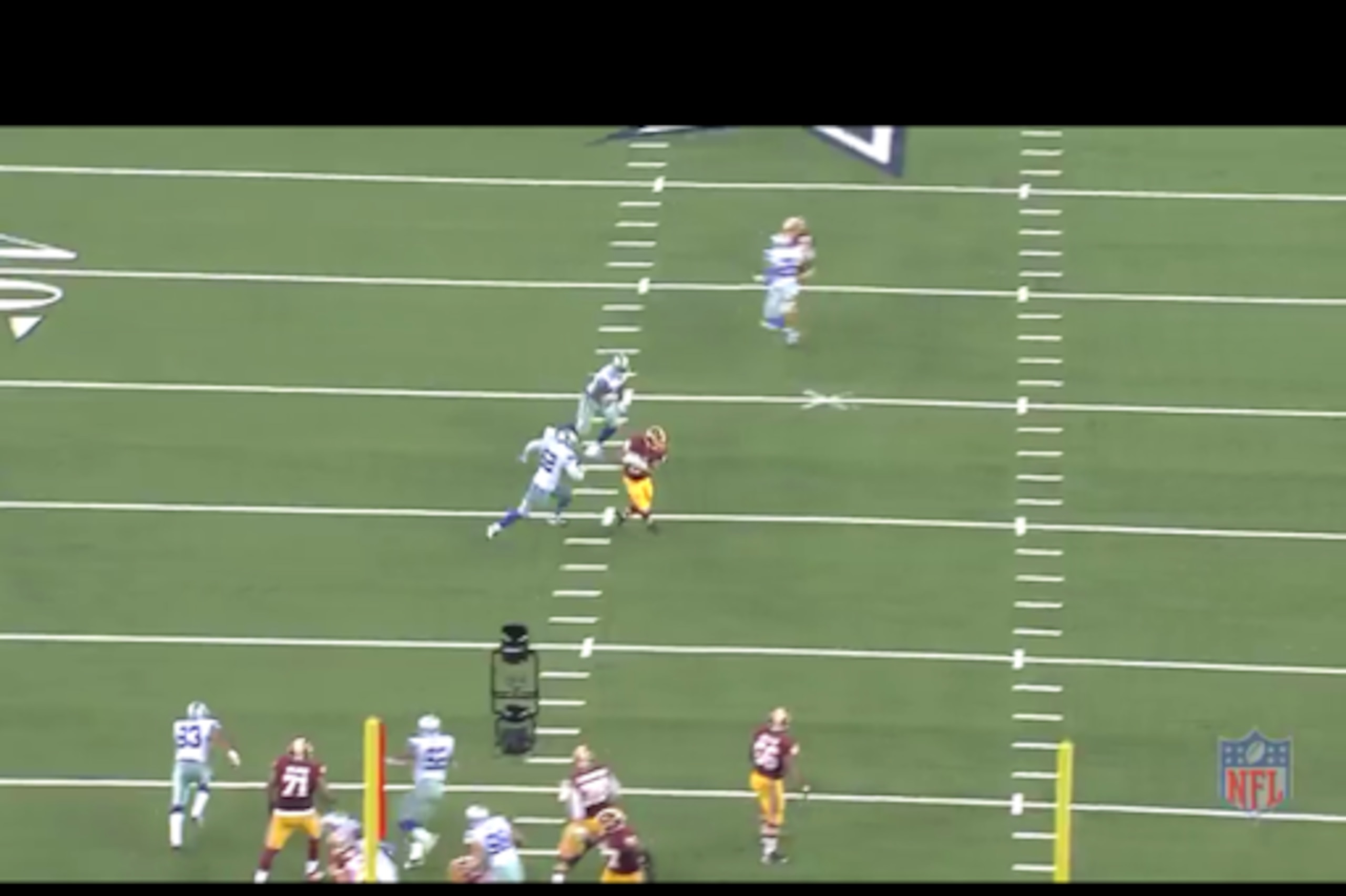
Similar to Roberts' catch against the Vikings, this play was tailored to give a quarterback multiple options and a safety valve if his first read was not open.
Colt McCoy was under center and he initially looked Reed's way, wisely identifying the tight end singled up against safety J.J. Wilcox as a mismatch favoring Washington.
However, when Reed hadn't broken free, McCoy took the smart option of dumping the ball off to Helu, his in-built checkdown.
This shows the value of a pass-catching running back, particularly on third downs. Helu is now a vital outlet for Washington quarterbacks under duress or seeing their initial reads covered.
If anything, Helu warrants a bigger role in this offense. He only has 33 carries and 26 catches on the season. That's not enough for a player possessing his multipurpose skill, savvy and big-play speed.
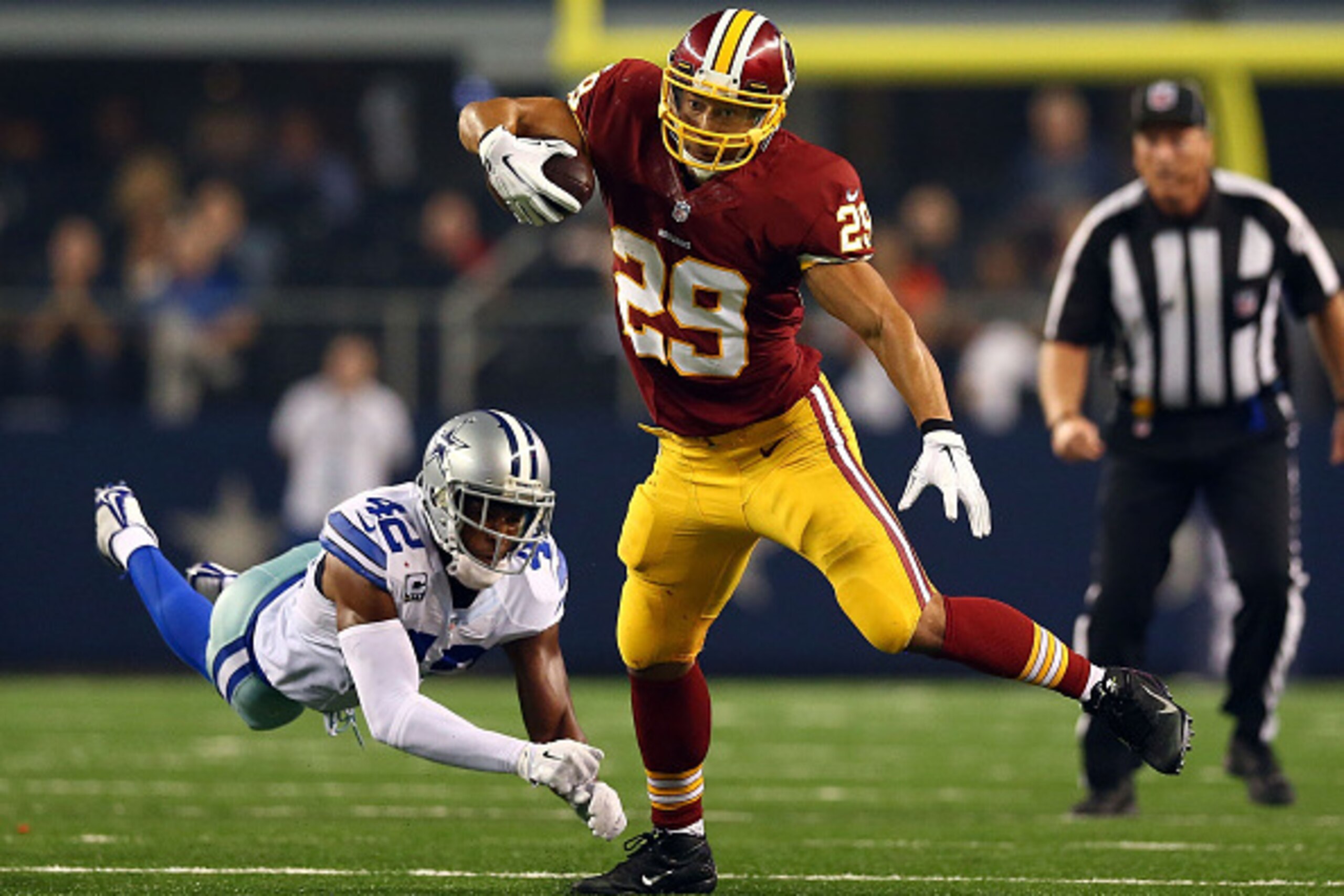
Gruden ought to expand the number of passes thrown Helu's way, as well as how he's used to attack defenses. Splitting him out wide or flexing him into the slot more often would be a good start.
Roberts, Reed and Helu form the foundation of Washington's third-down offense. Their ability to get open and work the middle is invaluable.
However, this prolific trio is only part of Washington's revival on football's key down.
The Value of a Running Quarterback
It's no coincidence that the Redskins have been better on third down in recent weeks when they've had more mobility under center. Both McCoy and Griffin are capable runners and Gruden has used that skill well.
Against the Cowboys, Gruden turned McCoy loose on a 3rd-and-2 at Washington's 28-yard line. The play was a designed keeper.
It involved the Washington O-line executing its familiar zone-style stretch blocking one way, while McCoy escaped around the corner on the other side:

To get the Dallas defense to fall for the ruse, McCoy faked a handoff to Helu. The Cowboys bought the fake and slanted Helu's way:
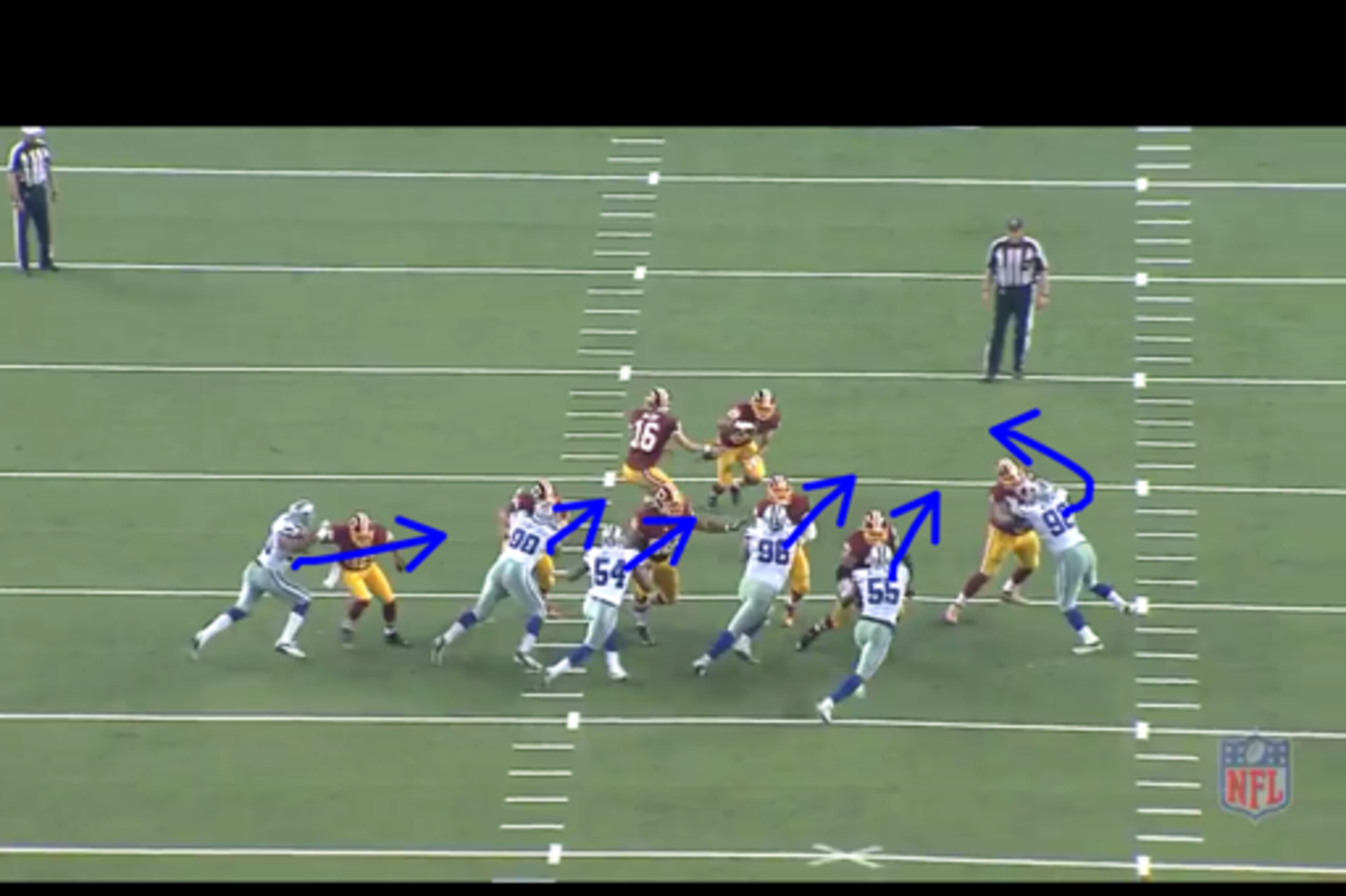
Once McCoy reversed his field and scampered around the edge, there was no backside pursuit because end Anthony Spencer had crashed down playing the initial handoff:

McCoy gained three yards to convert.
Griffin ran the same keeper against the Vikings on a 3rd-and-1 from Washington's 37 in the second quarter. Only this time the play was packaged in the familiar read-option look.
Griffin was aligned in the pistol or short shotgun stance, with Alfred Morris behind him and Reed flexed into the backfield to join them:
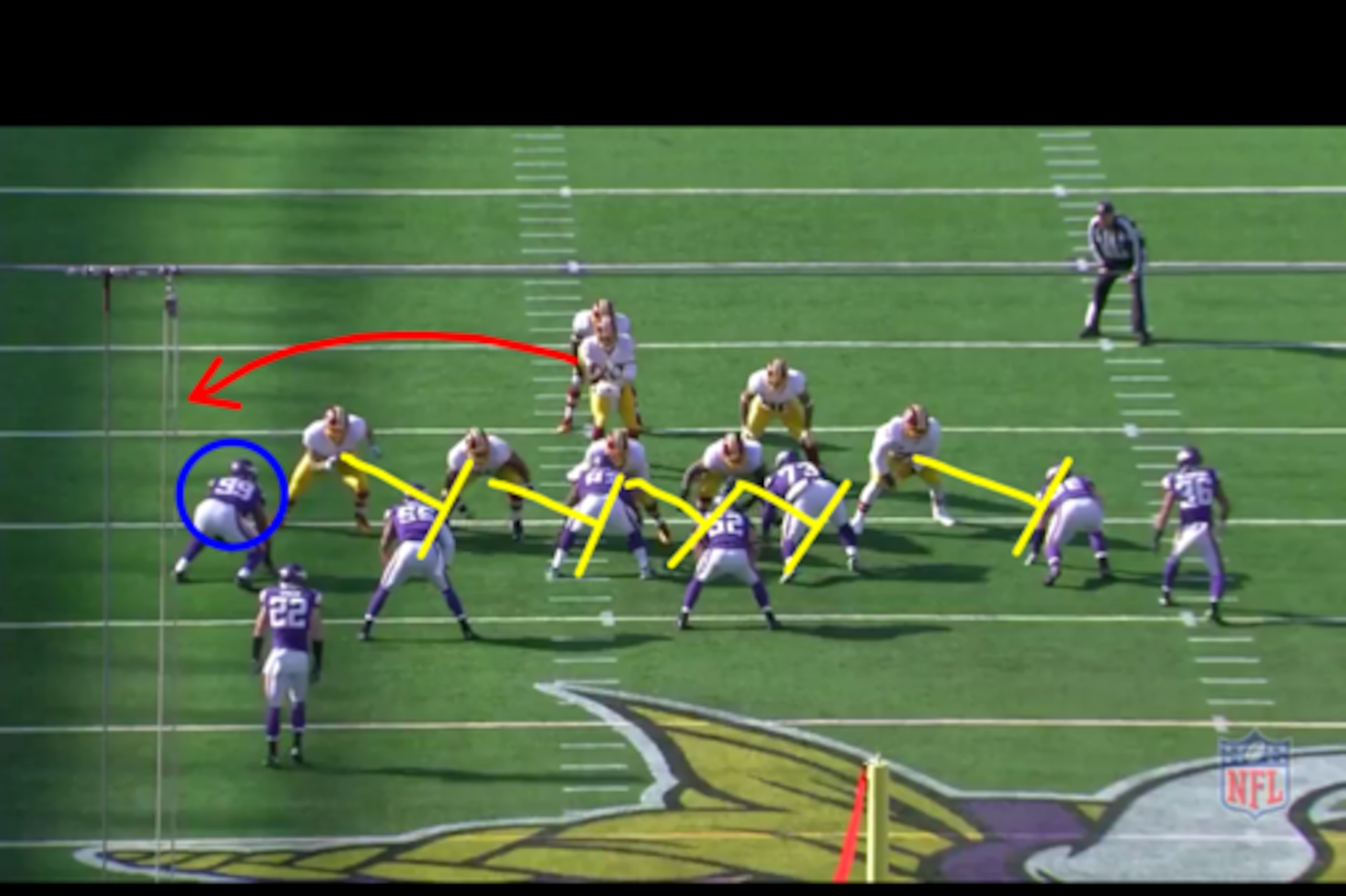
Again, Washington blocked as if running the zone-stretch play behind left tackle Trent Williams. That left Griffin free to read the actions of defensive end Corey Wootton.
As Griffin faked to Morris, Wootton slanted inside for that run. This left Griffin with a clear lane of escape around the outside:

He pulled the ball away from Morris and sped around the corner, with Reed darting across as a lead blocker:

Griffin smartly made his way out of bounds after collecting four yards to convert:
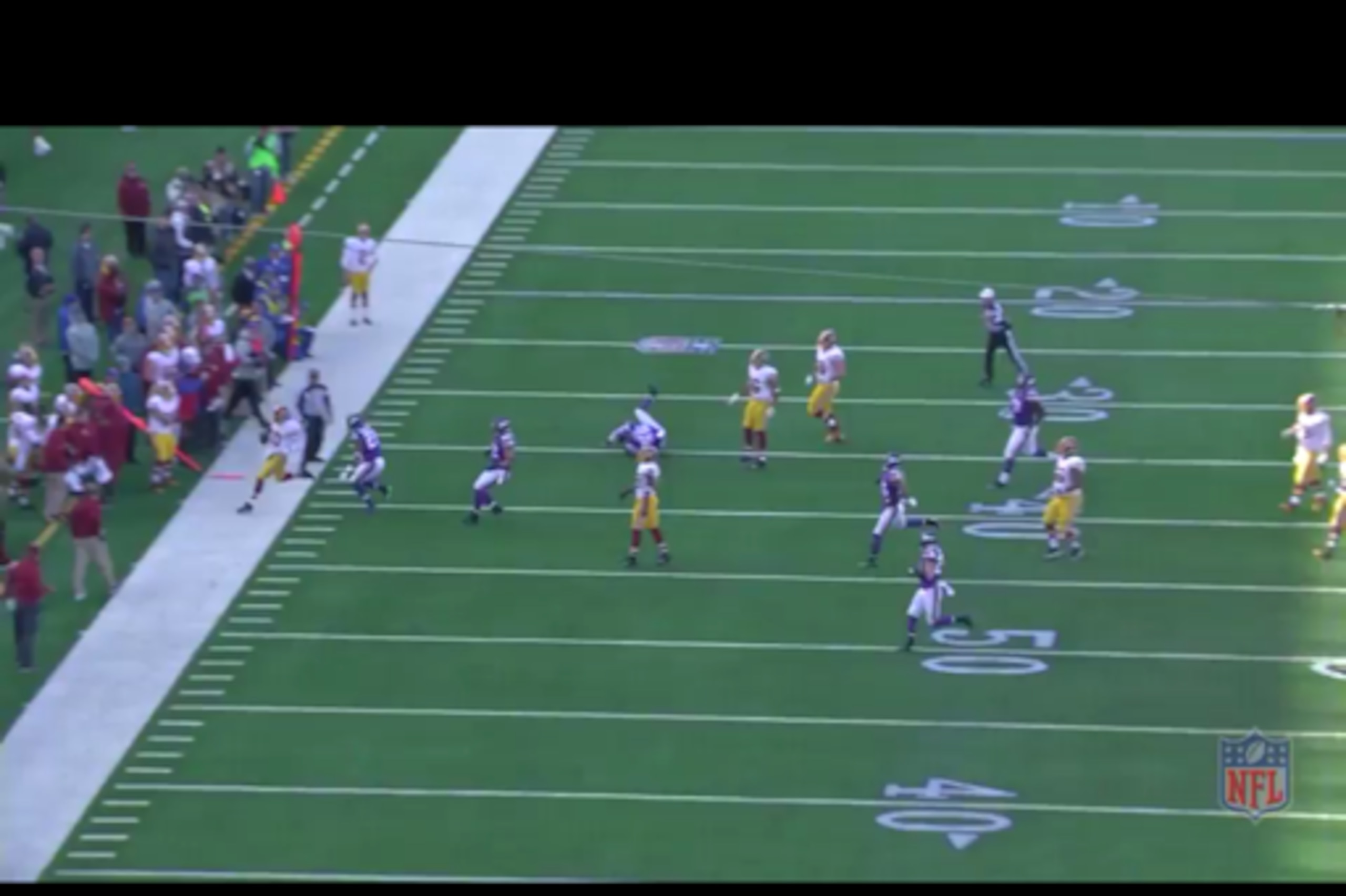
Griffin's return means Gruden can include more planned bootlegs. Designed runs from a quarterback are the X-factor that usually lives in the forgotten recesses of a defensive player's mind.
Griffin has naturally lost a step to two thanks to his litany of leg injuries. But he remains an able enough runner that defenses have to be wary of his threat.
Smart and selective use of this skill can still let the Washington offense outflank overly aggressive defenses on the money down.
Washington's third-down package features a trio of clever and dynamic possession receivers. They are now augmented by a quarterback who can punish defenses with his legs. That's a lot for an opposing coordinator to account for.
What's striking about many of these plays is how well they would work on first and second down. A more efficient, quarterback-friendly scheme is the key to regularly creating manageable third-down situations.
That's the best way to keep improving in this vital area.
All statistics via NFL.com.
All screen shots courtesy of ESPN, Fox Sports and NFL.com Game Pass.