
Pinpointing the Best-Case Scenario for Miami Heat's 2014-15 Season
It doesn’t take an enormous imaginative leap to envision what the 2014-15 Miami Heat could look like if everything breaks exactly right. In fact, for the most part, we’re seeing it right now.
After three games, the Heat are comfortably perched at 3-0—the only unblemished record in the Eastern Conference—and at 11.7 have posted the third-best scoring differential in basketball.
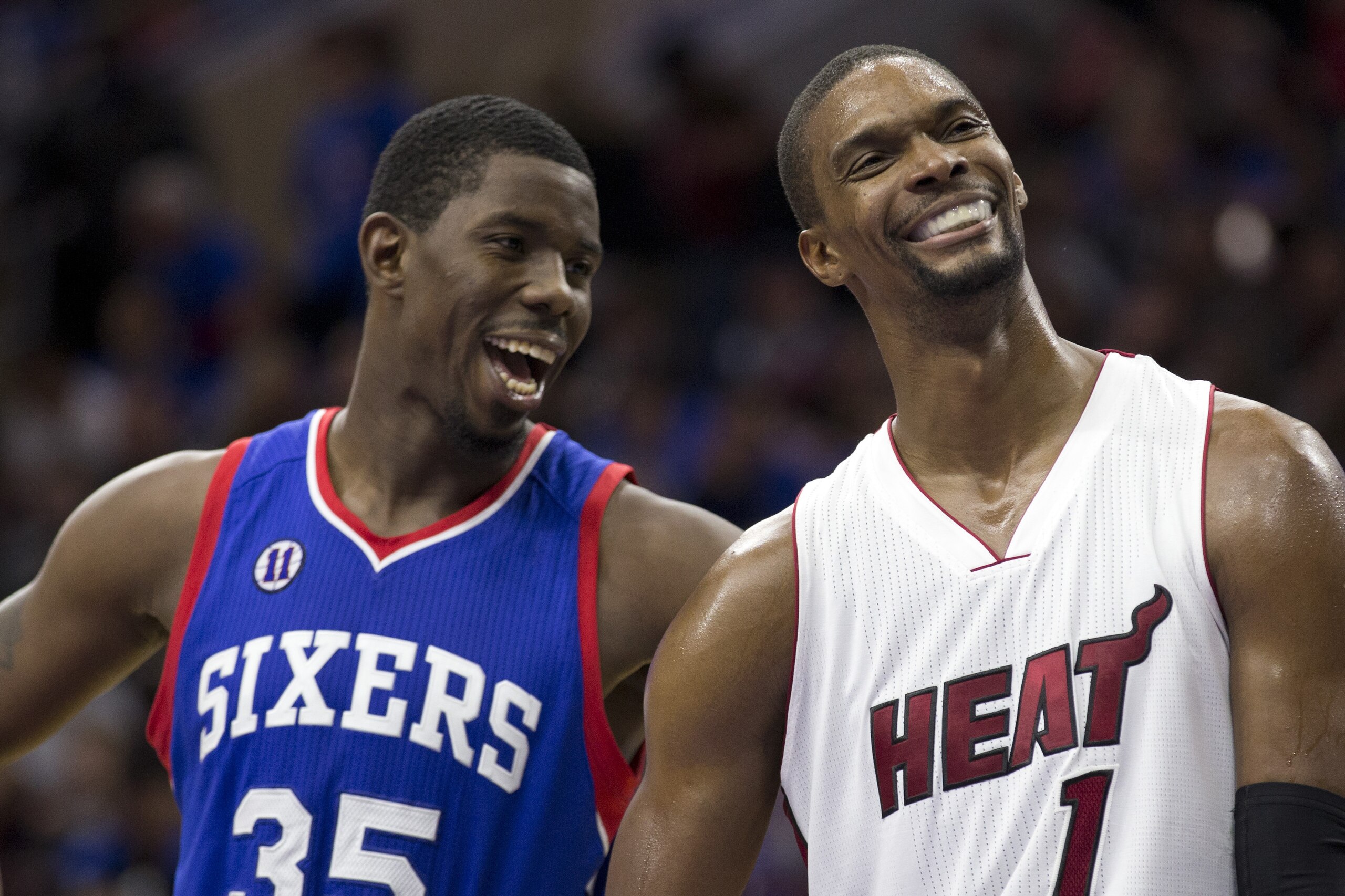
These wins haven’t come at the expense of patsies either. While Miami’s second victory came at the hands of the Philadelphia 76ers—who, at this point, would have to get much better before we could even laugh at them; jokes at their expense feel cruel and mean-spirited at this point—they also topped two teams who figure to challenge for home court out East.
TOP NEWS
Jaylen Brown Calls Out Tatum 🧢
LeBron on President Trump's Criticism
Knicks Staff Didn't Get Rings 🤔
Though they’re absent Bradley Beal, the Washington Wizards entered the season with a deep bench and high expectations. Miami set them down by a dozen on opening night.
After an Atlantic Division title in 2013-14, the Toronto Raptors likewise came into the year with optimism and, in Kyle Lowry, one of the top point guards in the conference. No matter. The Heat got a 107-102 win at American Airlines Arena.
This early success has, in large part, been a function of the performance of Chris Bosh—who’s quickly quieted doubts that he lacks the requisite toolkit to be the No. 1 option on a good offense.
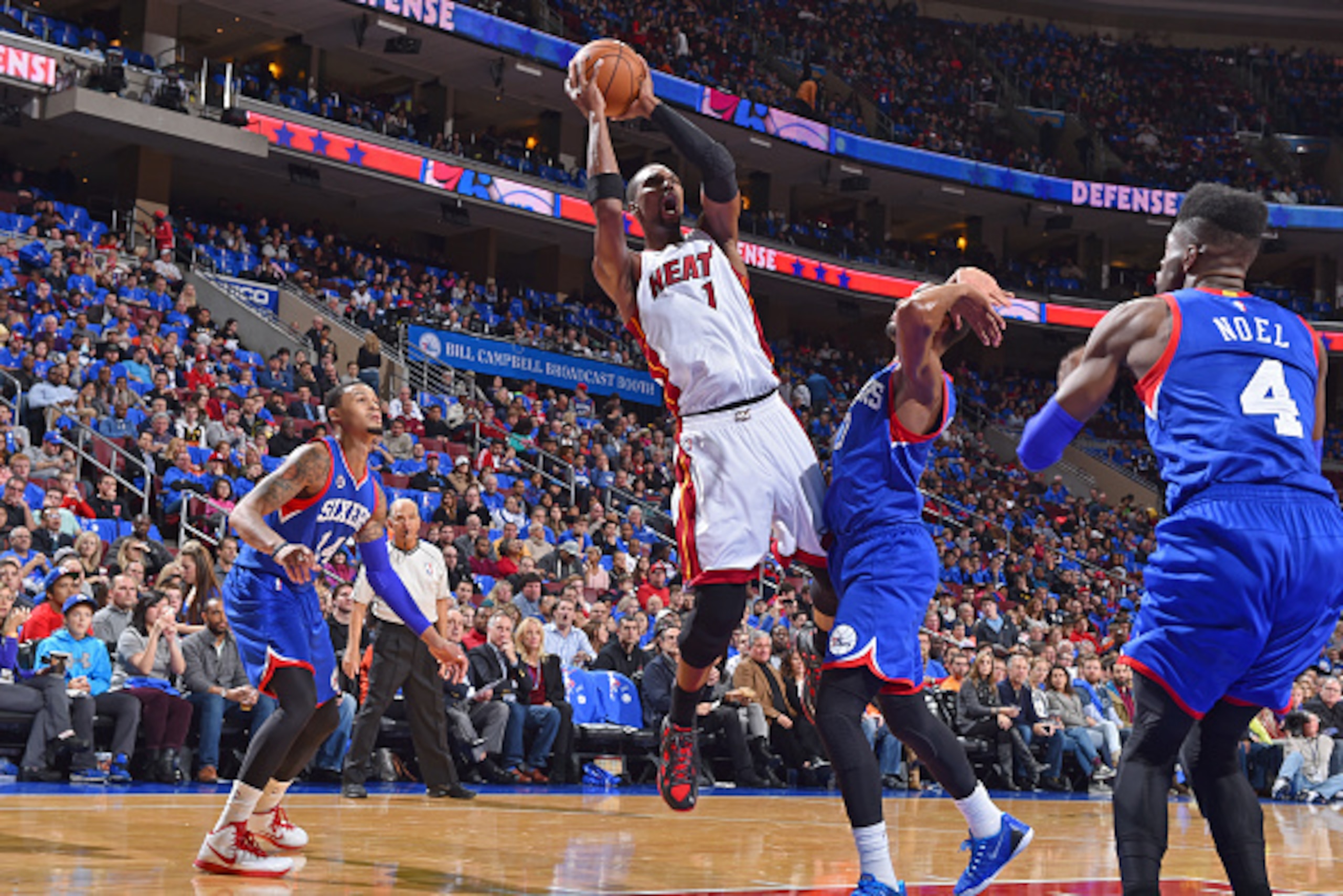
Through three games, the 6’10” center is averaging 25.7 points, 11.3 rebounds, 4.0 assists and 1.3 steals, all of which would be career-highs if they persist. These figures are bolstered by Bosh’s remarkable 54.3 percent mark from three points.
Bosh’s consistency has also impressed. He had 10 games in 2013-14 in which he scored more than 20 points and pulled down more than eight rebounds. So far this year, he’s three for three.
Bosh, for his part, seems unsurprised by his scorching start.
“It’s just time,” Bosh told ESPN.com’s Michael Wallace after leading the Heat to their third win in as many games. “I knew I couldn’t settle into that same position I’ve been in the past four years, floating outside and shooting a couple of jumpers. I know I had to switch it up a little.”
But what’s peculiar about Bosh’s success, despite his protests to the contrary, is how little has changed in his game. While it was widely expected before the season that he would spend more time in the low post in 2014-15, so far his shot distribution is very similar to the first four seasons of his Heat career. If anything, Bosh has spent more time in mid-range and on the perimeter.
According to Basketball-Reference.com, last season 28 percent of Bosh’s field-goal attempts came from within three feet of the basket and 27.6 were from between 16 and 23 feet. In the first three games of this campaign—admittedly, a vanishingly small sample—the center is at 25 percent from both of these areas.
The Heat would likely prefer to see their center spend more time around the hoop, and it’s a good bet that migration will occur over the next 79 games. But if he can continue to produce at this level—irrespective of how—Miami has a strong chance to exceed the middle-of-the-road expectations it was saddled with.
There’s also the strong play of Dwyane Wade, who, despite occasional struggles from the floor, has fashioned himself into a fine distributor. In 95 minutes, Wade is averaging 10.7 assists per 100 possessions—which would be the highest mark of his career, regular or postseason, if it holds up.

This has had a galvanizing effect on Miami’s offense, which everyone who put a prediction on record thought would take a significant step backward without LeBron James. But, as ESPN.com’s Wallace has noted, Miami’s attack has flourished behind the strong performance of its two veteran cogs:
"But the Heat’s offense seems well ahead of schedule, with Miami averaging 109.3 points per game to rank second in the league behind Golden State. After finishing with 33 assists on Saturday against the Sixers, the Heat added 22 more to complete the back-to-back set Sunday. It has been an encouraging blend of ball-movement, back-to-back availability from Wade and bigger boosts from Bosh to begin the season.
"
The supporting cast hasn’t disappointed either. Norris Cole, whose ascension to the starting point guard spot was met with incredulity in some corners (well, at least one corner), has been tremendous, averaging 12.7 points on 55.9 percent shooting.
New addition Luol Deng has been a rock, averaging 15 points on 57.6 percent shooting. And once Chris Andersen, Shabazz Napier and Josh McRoberts get going, the Heat could be even more formidable.
Granted, the Heat's start, however impressive and unlikely it's been, has more than a faint whiff of unsustainability.
Miami won't have Wade available for all 82 games. The franchise has made it plain that it intends to sit the 32-year-old regularly to keep him as fresh as possible not just down the stretch but for the remainder of his career. Minus his shot-creation skills, both for himself and his teammates, this is a different offense.
Bosh, furthermore, won't produce at this level with his present approach. The odds of his continuing to shoot better than 50 percent from three-point range are effectively zero, and it's equally unlikely he can maintain a true shooting percentage of 63.4 with an offensive game that hinges to such an extent on mid-range success.
Those caveats aside, this really is what Miami’s best-case scenario looks like this season: Bosh playing like a superstar, Wade like a willing and able secondary weapon and a host of effective tertiary options supplementing and supporting the two A-listers.