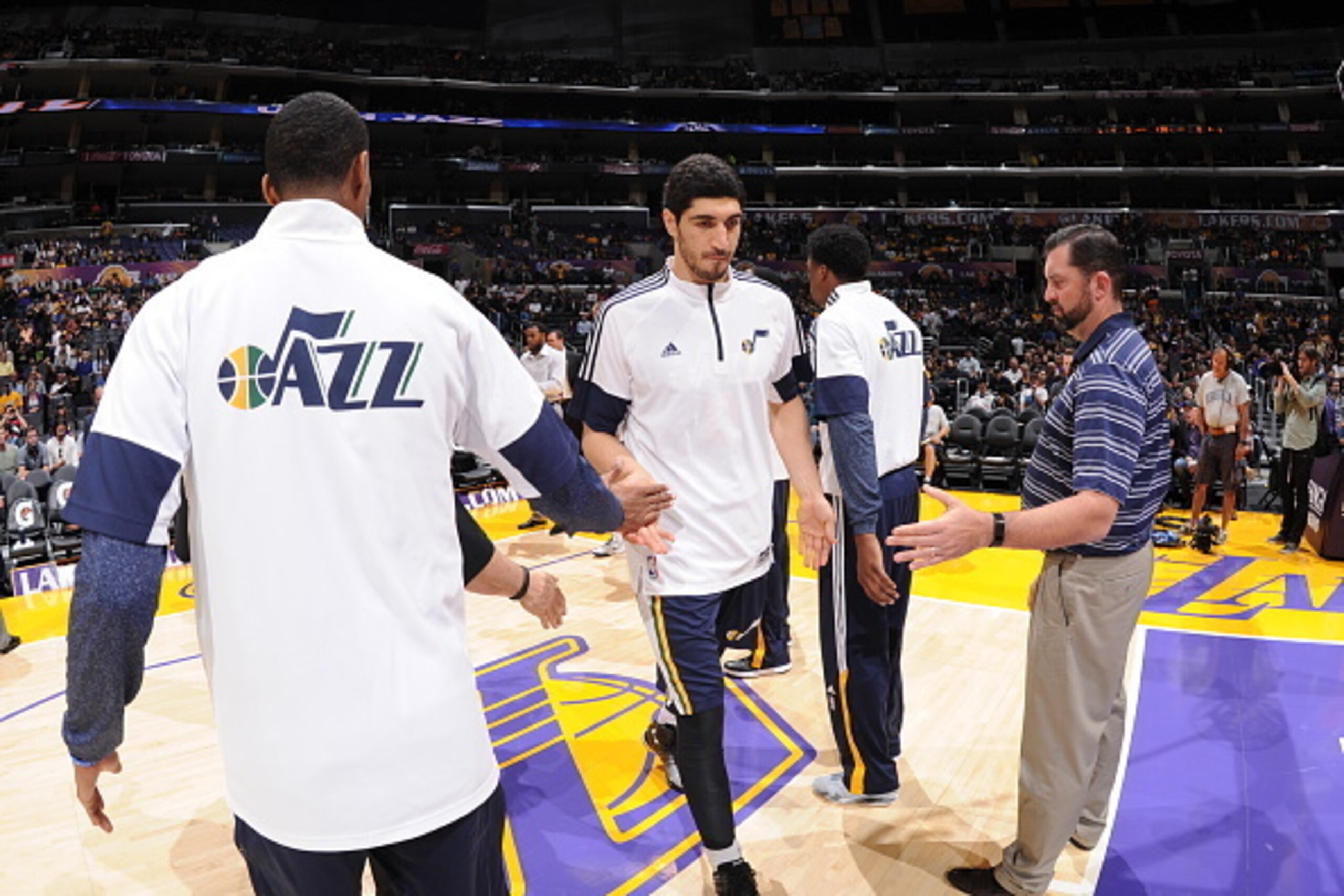
Utah Jazz Smart to Wait on Handing Enes Kanter Contract Extension
On the heels of a summer in which the Utah Jazz matched a $63 million offer for restricted free agent Gordon Hayward, the organization may face a similar scenario a season from now.
That's when 2011 third overall draft pick Enes Kanter is set to enter restricted free agency, the inevitable consequence of extension negotiations that didn't get far enough.
"We have mutually agreed with Utah to concentrate on the season and look at our options again in the summer," agent Max Ergul told Yahoo Sports' Adrian Wojnarowski. "Enes likes Utah and the organization very much, and now he can concentrate on continuing to grow as a player and helping them win."

The two sides would have had until Friday to strike a potential deal.
Kicking the can down the road makes sense for the Jazz and Kanter alike. The former becomes less likely to prematurely overpay the center, while the latter has another season to prove his worth.
The 22-year-old is coming off a career-best season in which he tallied 12.3 points and 7.5 rebounds per contest. His average field-goal attempts nearly doubled from the 2012-13 campaign, and his playing time jumped from 15.4 minutes per game to 26.7. It's the kind of progress that makes one wonder just how high Kanter's ceiling really is.
Taking another step forward could make Kanter a more expensive commodity, but chances are he's already asking for a big payday.
Utah can let the market decide his worth next summer, reserving the right to match any offer sheet the Kentucky product signs with another club. If he has a big season, he'll be paid accordingly—by Utah or another team in pursuit of a productive big man.
As Wojnarowski adds, "Kanter's size and skill will make him an intriguing player on the summer market, and several teams told Yahoo Sports they'll be scouting him closely to gauge his full value and potential."
But the Jazz will have a greater sample size of work to evaluate, and general manager Dennis Lindsey's front office can make a more informed decision about just how much of a raise Kanter deserves.
Caution is a virtue in this case.
Some fiscal restraint is in order as this team's talented young pieces begin outgrowing their rookie contracts. The organization will pay Hayward $14,746,000 this season and potentially as much as $16,736,710 in 2017-18 should he pick up his player option for the final year of his new deal.
Swingman Alec Burks—selected 12th overall in 2011—is also eligible for an extension at the moment, and he's likely to warrant a deal worth at least $6 million annually.
And down the road, promising guards Trey Burke and Dante Exum could very well earn lucrative agreements of their own.

Utah is already scheduled to pay power forward Derrick Favors $48 million over the next four seasons.
Making a significant investment in another post presence shouldn't be automatic. Even if you're convinced Kanter is worth every penny in a vacuum, Lindsey and Co. must plan their spending in the context of very real opportunity costs. Sometimes roster building requires teams to preserve flexibility, even if that means parting ways with an otherwise attractive asset.
Kanter's situation hasn't come to that yet, but it's an eventuality for which the Jazz must be prepared.
The continued development of 7'1" Frenchman Rudy Gobert—a 22-year-old taken with the 27th overall pick in 2013—could make Kanter increasingly expendable. While the athletic shot-blocker played sparingly a season ago, he's poised to adopt a more prominent role as the still-rebounding club looks to groom its prospects.
That said, it's still premature to imagine life after Kanter.
His best may be yet to come, and it's entirely possible the Jazz opt to lock him up when the right time comes. With just three seasons under his belt, it's hard to put firm parameters on his upside—especially with new head coach Quin Snyder looking to expand his repertoire.
"Coach Q came to visit me and we went to a gym. He said, 'You know you're going to shoot some threes this year, right?'" Kanter told reporters in October, via Jody Genessy of the Deseret News. "I was just like shocked that the first time he met me he gave me that confidence. It means a lot to me."
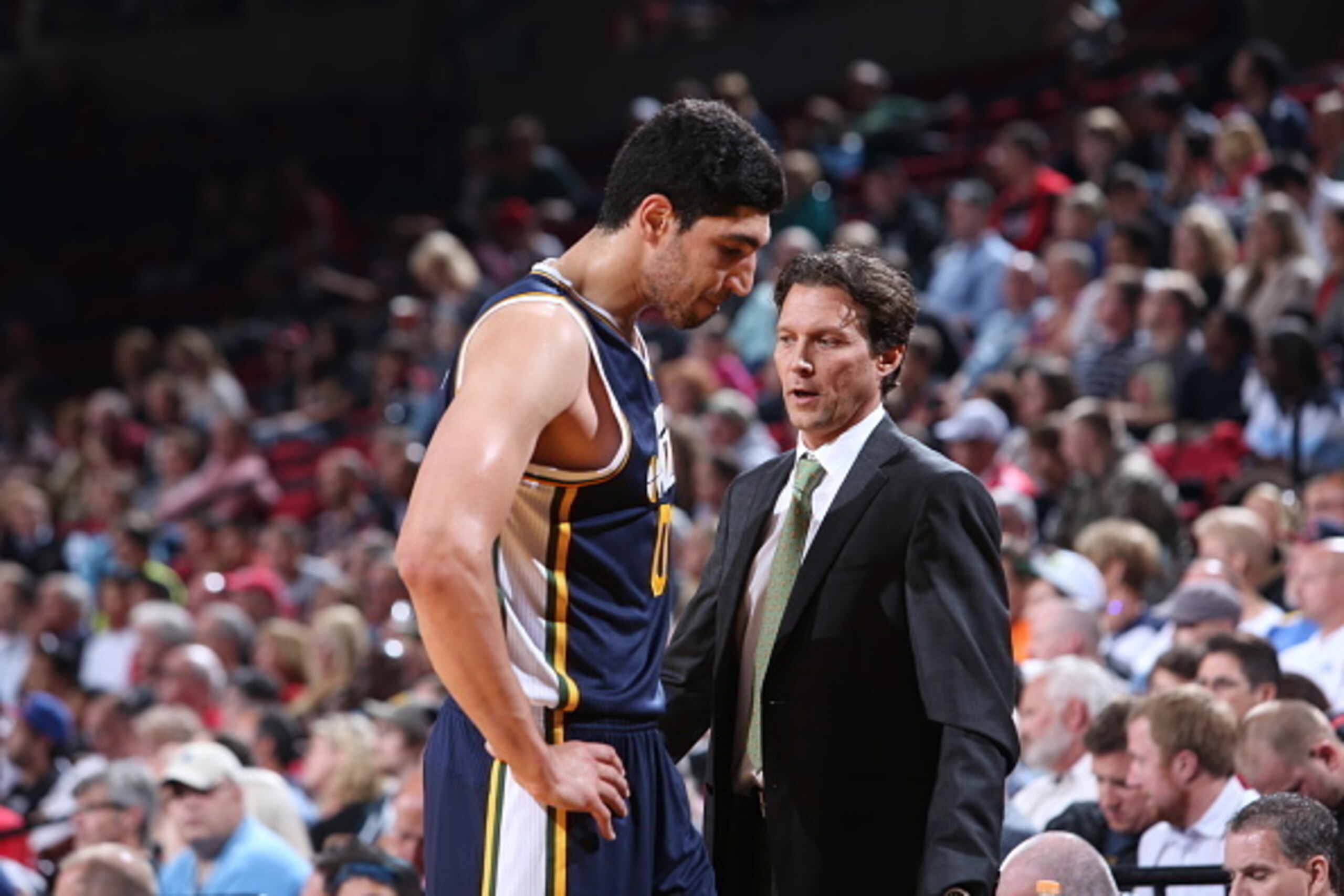
"I've been working really hard on the three," he added. "My teammates and my coaches give me that confidence. I really appreciate it."
In Snyder's mind, it's a natural progression for Kanter's game.
"I believe he has three-point range, so if he's taking long twos, just from a percentage basis, it's not good for him, it's not good for us," Snyder explained to Genessy in October. "We want to attack the rim and get good stuff there. The long twos for a guy that can shoot threes, it's just got to be a habit of his to space behind the line."
Snyder may have a broader impact on Kanter's game as well. The 47-year-old coach has had success both in the NCAA and the Development League, meaning he's spent plenty of time cultivating up-and-coming talent.
That experience has already translated into a practice regime that's apparently more disciplined.
"We're talking and communicating and going 100 percent," Kanter told the Deseret News' Mike Sorensen in October. "Sometimes you lose focus and it's normal, but Coach Quin gets on us and says, 'Hey you’re losing focus.' [Practice] is pretty hard, but it's more mental—you have to keep your focus on what we're doing in here."
While the renewed grind should produce collective dividends, no one stands to benefit more than Kanter.
As The Salt Lake Tribune's Aaron Falk recently put it, "Now, with new system and new coach in Utah, Kanter and his representatives believe the 22-year-old could have a breakout year, which would boost his value."
And boost Utah's willingness to spend accordingly.
There's certainly nothing implicitly wrong with the organization coughing up the dollars, particularly in light of the league's lucrative new television deal—a development that could dramatically increase the NBA's salary cap and salaries alike.
This isn't about being stingy for the sake of being stingy.
It's about smart spending—the kind of spending that shouldn't be rushed.
If Kanter and the Jazz were meant to be, they'll find common ground in 2015. Otherwise, they'll go their separate ways, and yes—life will go on.

.jpg?w=2560 "NFL House in Paris Closes for Protests")
.jpg?w=2560 "Trevon Diggs Cut by Seahawks")