Breaking Down Tramon Williams' Inconsistencies Against the New Orleans Saints
Entering Sunday's match against the New Orleans Saints, the Green Bay Packers weren't exactly in the best shape in their secondary. With starting cornerback Sam Shields and starting safety Morgan Burnett inactive, cornerback Tramon Williams was the only veteran starting defensive back in Green Bay's base defense.
Many, including Cheesehead TV's Brian Carriveau, were unimpressed with the cornerback's performance against the Saints.
"Cornerbacks Tramon Williams, Davon House—With Sam Shields out of the lineup due to a knee injury, the Packers' starting cornerback duo had an evening to forget, both in pass coverage and run support. Tramon Williams was picked on by Drew Brees for two consecutive touchdown passes in the third quarter, the first a deep post route by Brandin Cooks, and the latter on a leaping grab to tight end Jimmy Graham in the end zone. Those two touchdowns pushed the score from 16-16 to 30-16.
"
TOP NEWS
.jpg?w=2560 "NFL Paris Football")
NFL House in Paris Closes for Protests
.jpg?w=2560 "Seahawks Chiefs Football")
Trevon Diggs Cut by Seahawks
.jpg?w=2560)
B/R's Expert Week 7 NFL Picks 🔮
When watching Williams in coverage in the 44-23 loss, five completions stood out. Nearly all of them were due to different inefficiencies of Williams' game.
Play 1
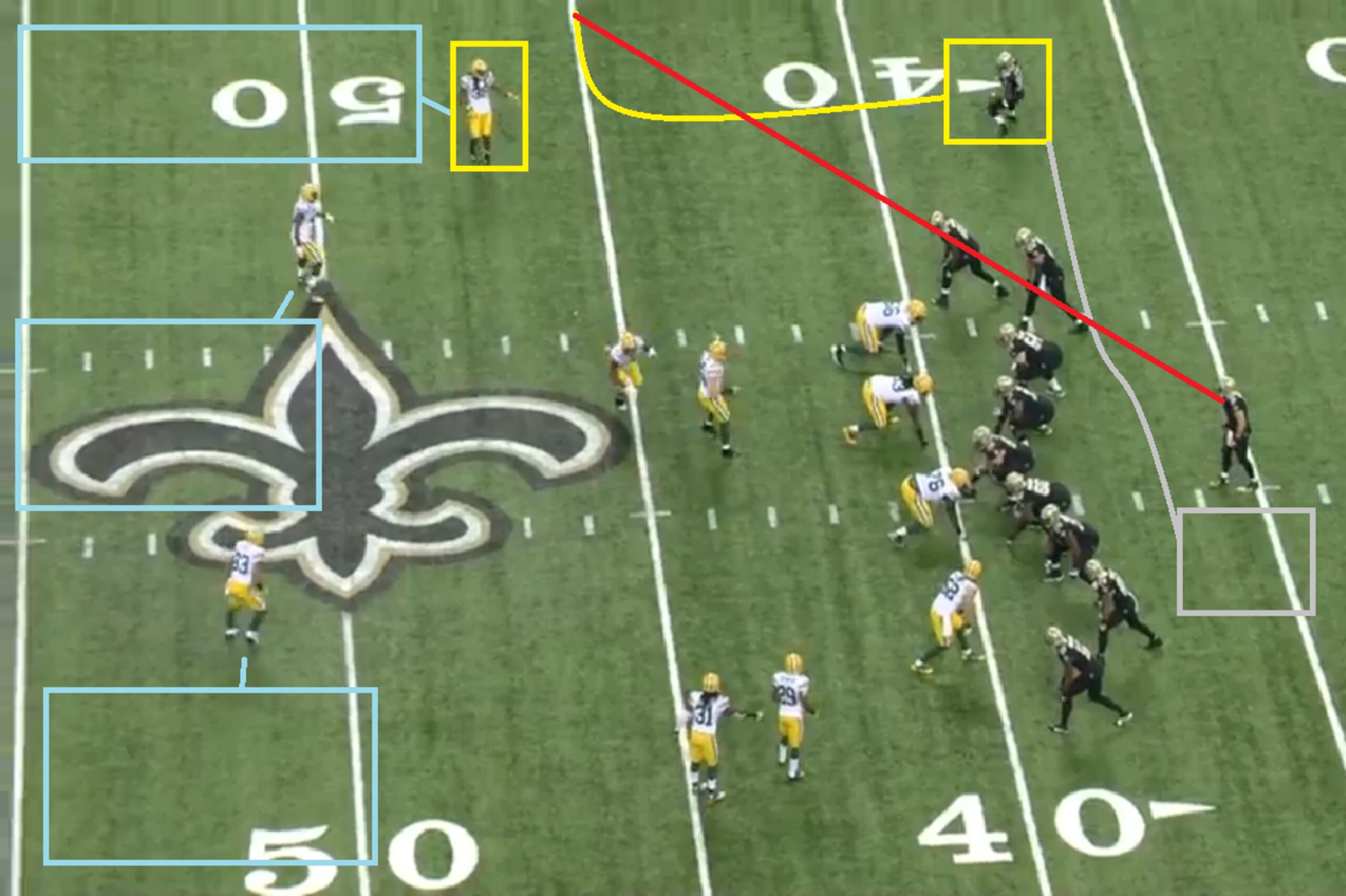
This play occurred in the early portion of the first quarter. New Orleans motioned its running back to the boundary while the typical pass-catchers were in a two-by-two bunch set. The Packers were in a nickel formation.
The back motioned to the boundary, which meant he was Williams' clear assignment. The reason that was so was due to Green Bay's coverage call: Cover 3
The other boundary cornerback, Davon House, and safety Micah Hyde joined Williams in each covering a third of the field vertically. The target of this play, though, was the boundary running back running a seven-yard out route.
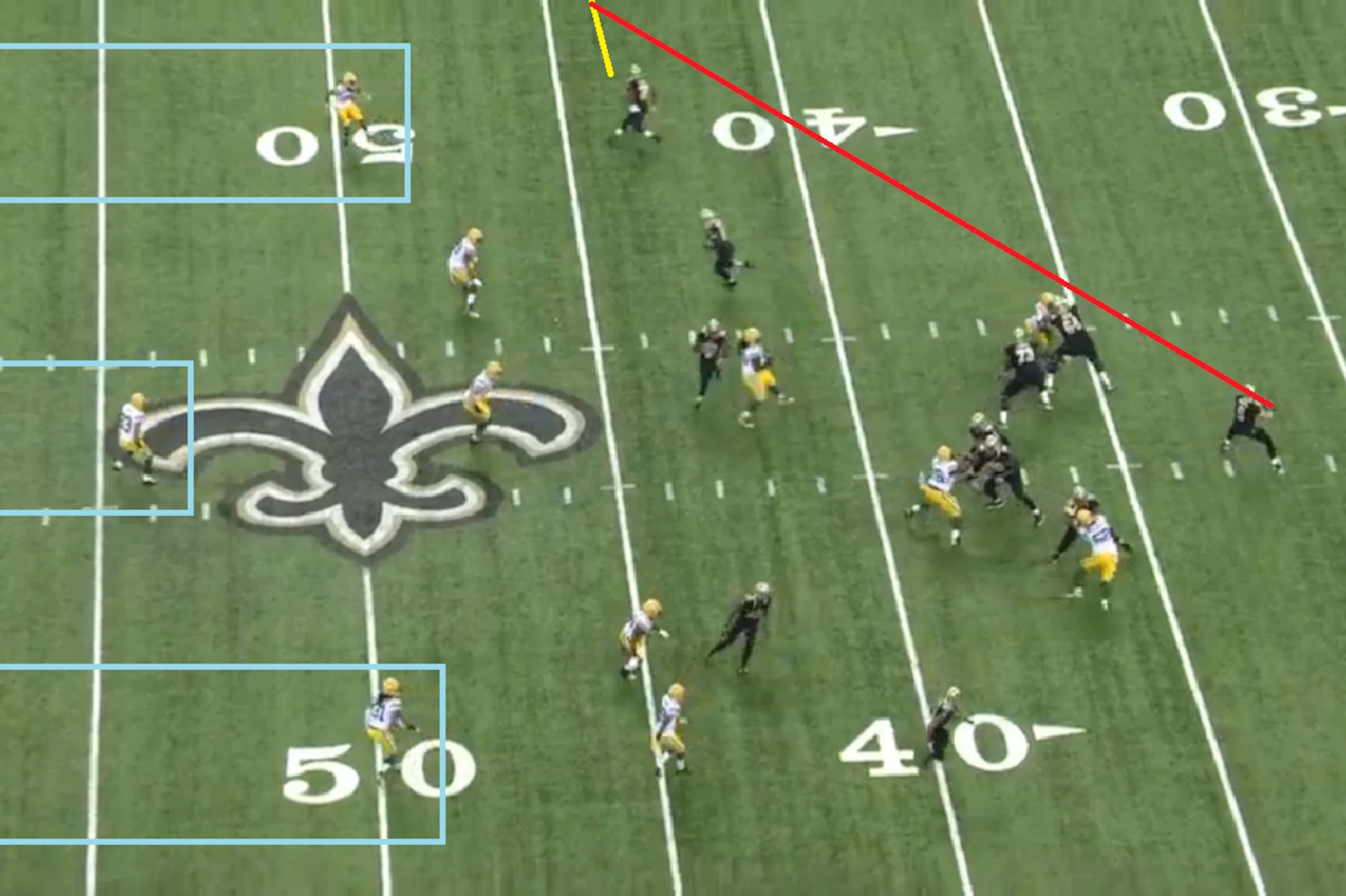
As the target broke on his route, Williams still had his eyes in the backfield. While the would-be-receiver was running toward the sideline, Williams had his feet still in a back-peddle. There was no way he was going to be able to make a play on either the ball or the receiver.
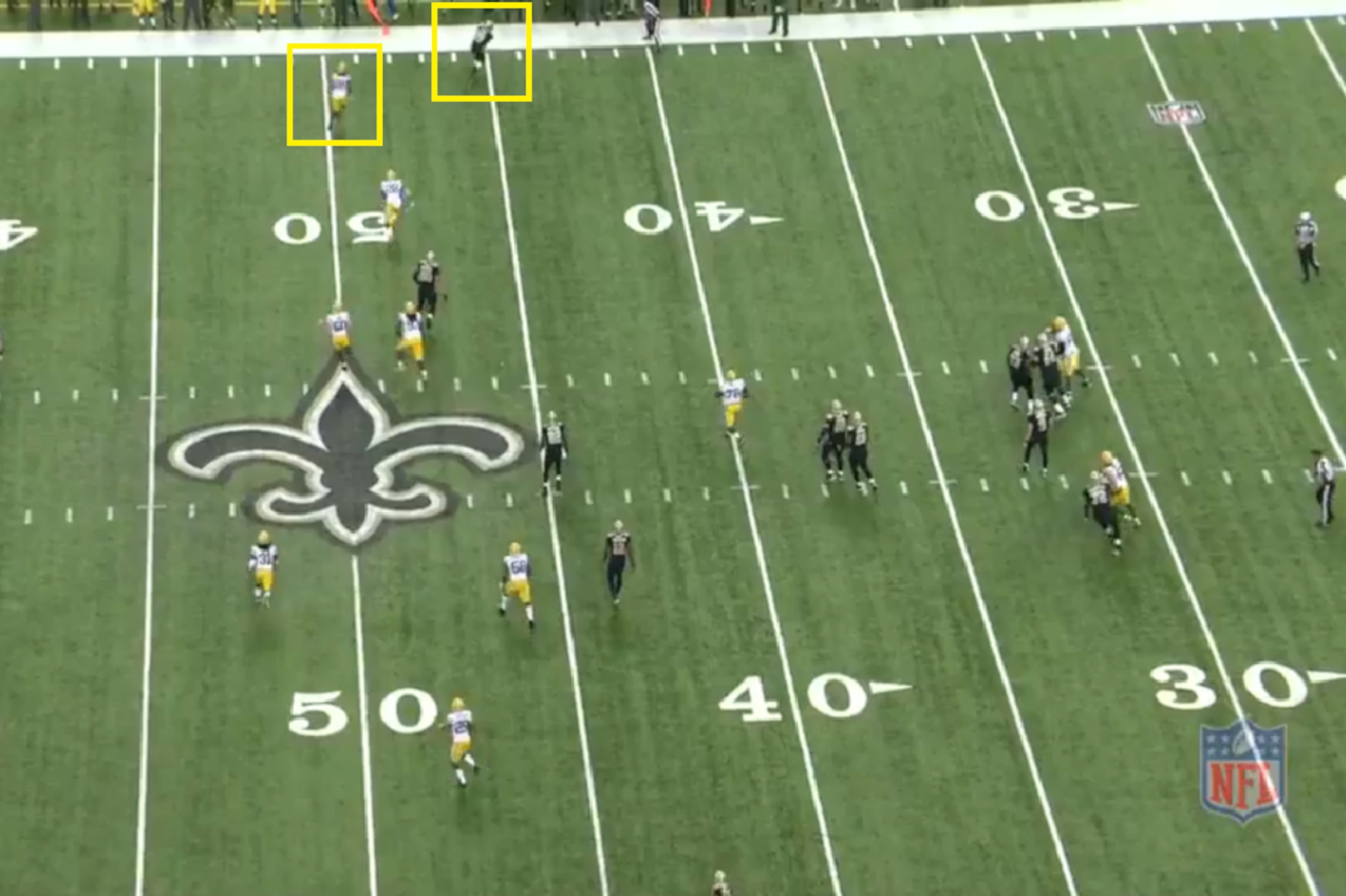
The target's momentum carried him to the sideline, meaning Williams didn't need to make a tackle attempt, but this didn't happen until after a gain of five yards.
Play 2
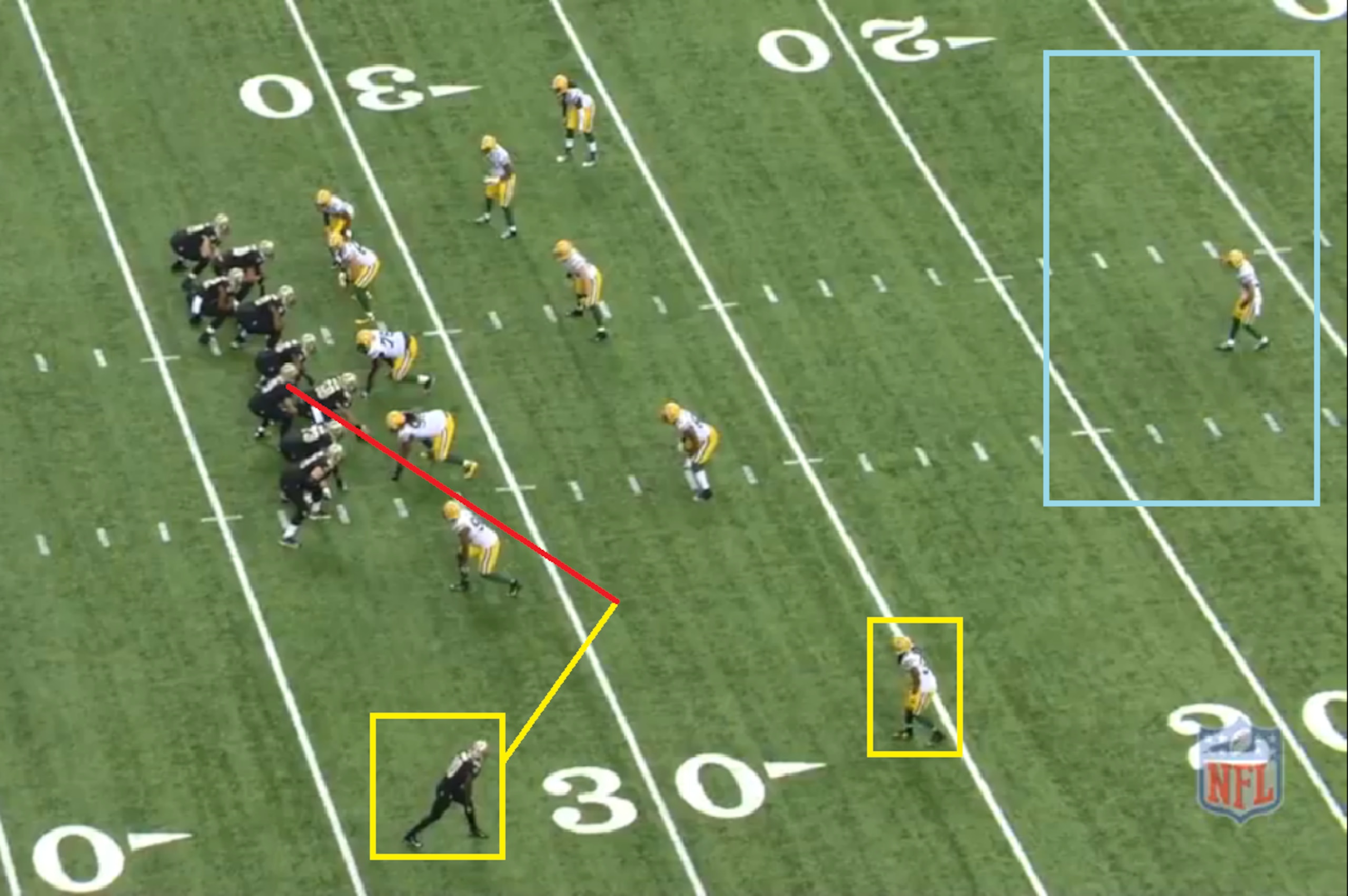
This play occurred in the middle of the second quarter. This isn't a very difficult play to diagnose. New Orleans only had one wideout split out, and the Packers came onto the field with their base defense bunched up near the line of scrimmage.
The Packers were in Cover 1, meaning Williams was essentially isolated against his man. About seven yards off the receiver, quarterback Drew Brees decided to test the cornerback.
His target was running a short slant route. For Williams to prevent the reception, he would need to break on the ball near instantly. If he didn't, he still would need to make a tackle to avoid the receiver running with the ball to a position where only the deep safety could make a play.

Almost as soon as he received the snap, Brees was able to get the ball off. Williams, on the other hand, took a false step that set him back from closing in on the football.
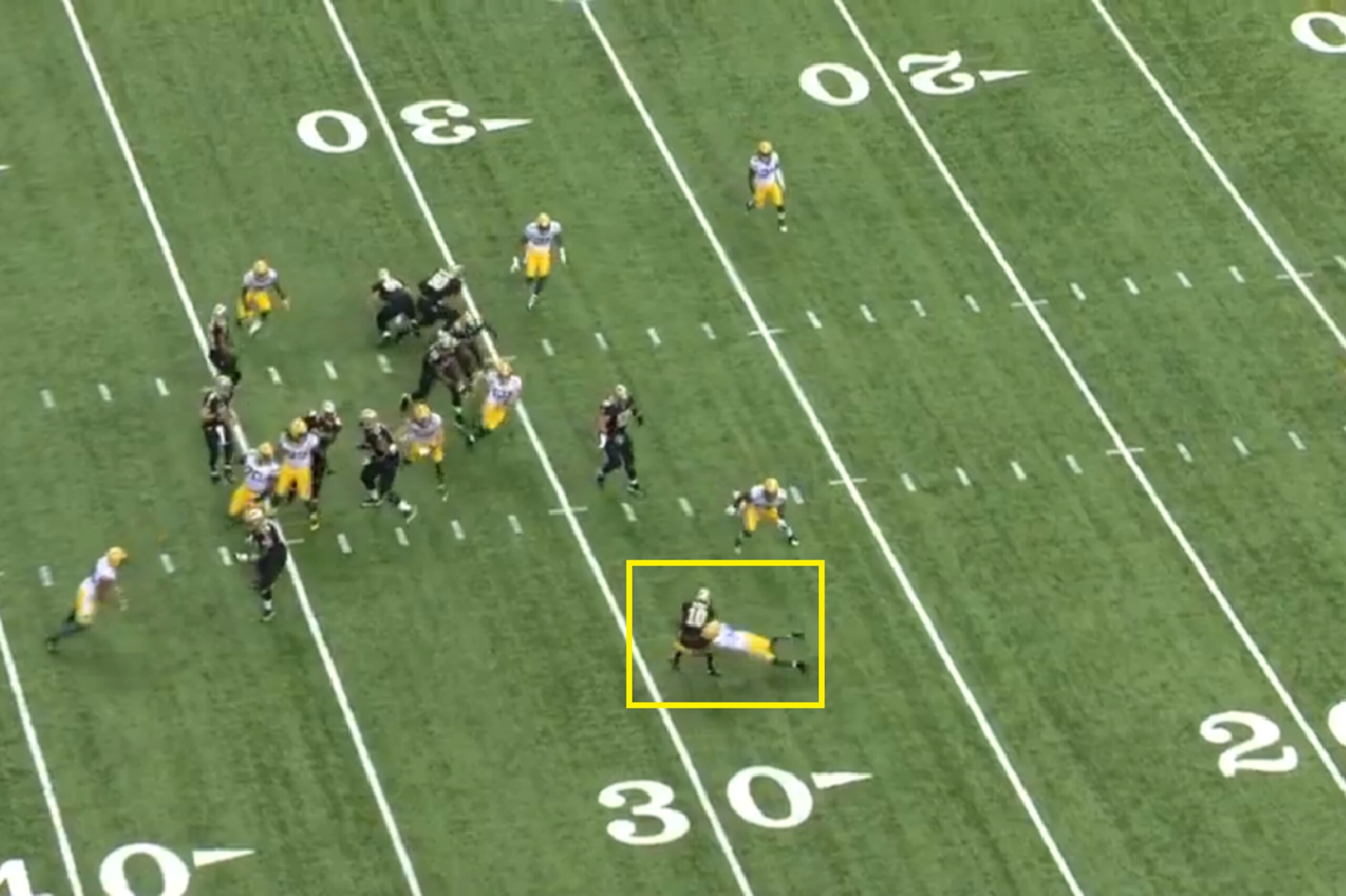
Able to make the tackle, Williams stopped the play for a three-yard gain.
Play 3
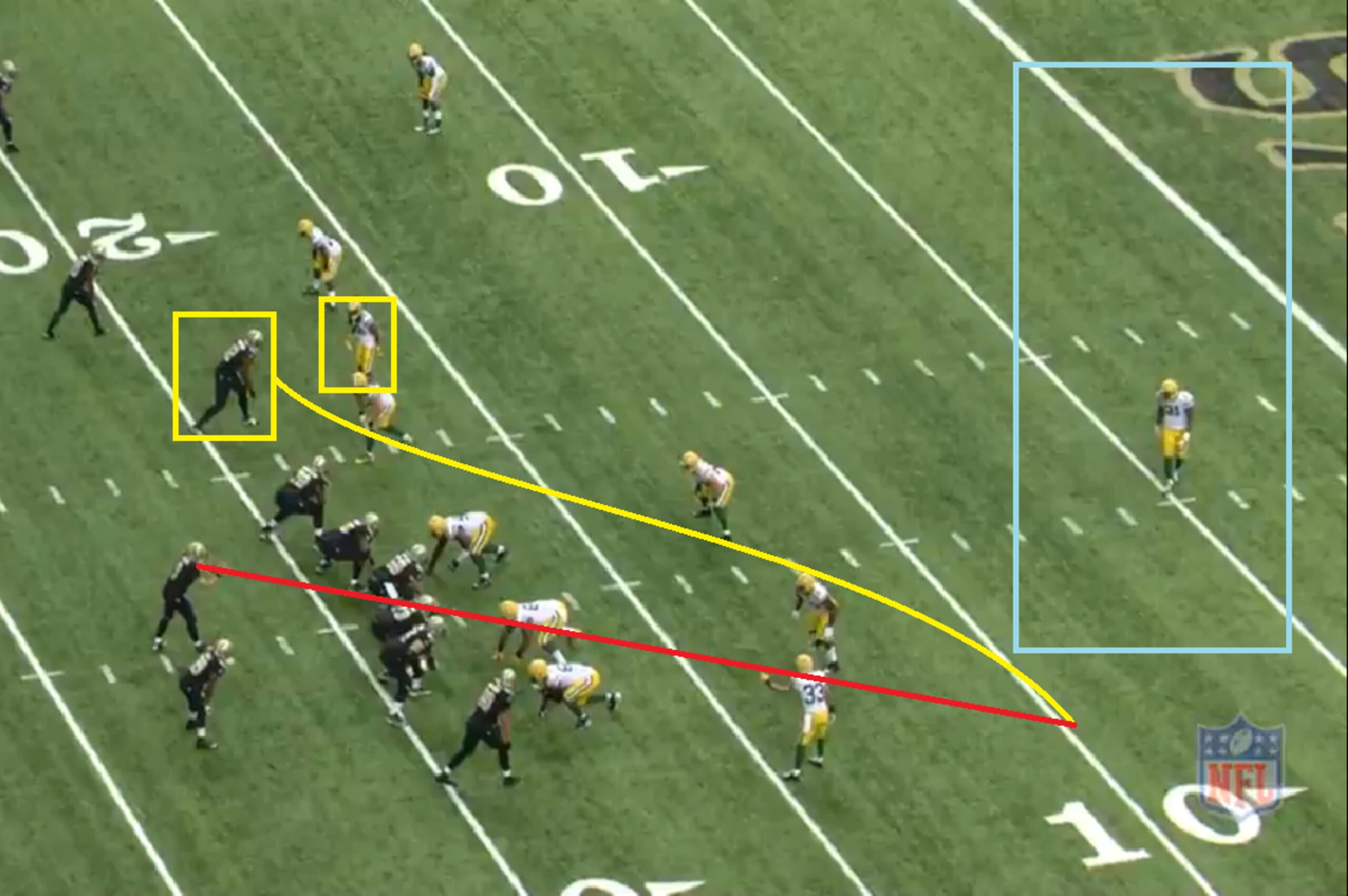
This play occurred less than two minutes after the previously highlighted play. New Orleans was lined up in 11 personnel with three receivers to the right of the offensive line. Green Bay was in a Cover 1 defense again out of its nickel set.
Williams this time was no longer lined up as a boundary cornerback. Instead, he was bumped inside to the closest slotback role near the ball. His target in man coverage would be running a crossing pattern that stretched nearly all the way to the sideline.
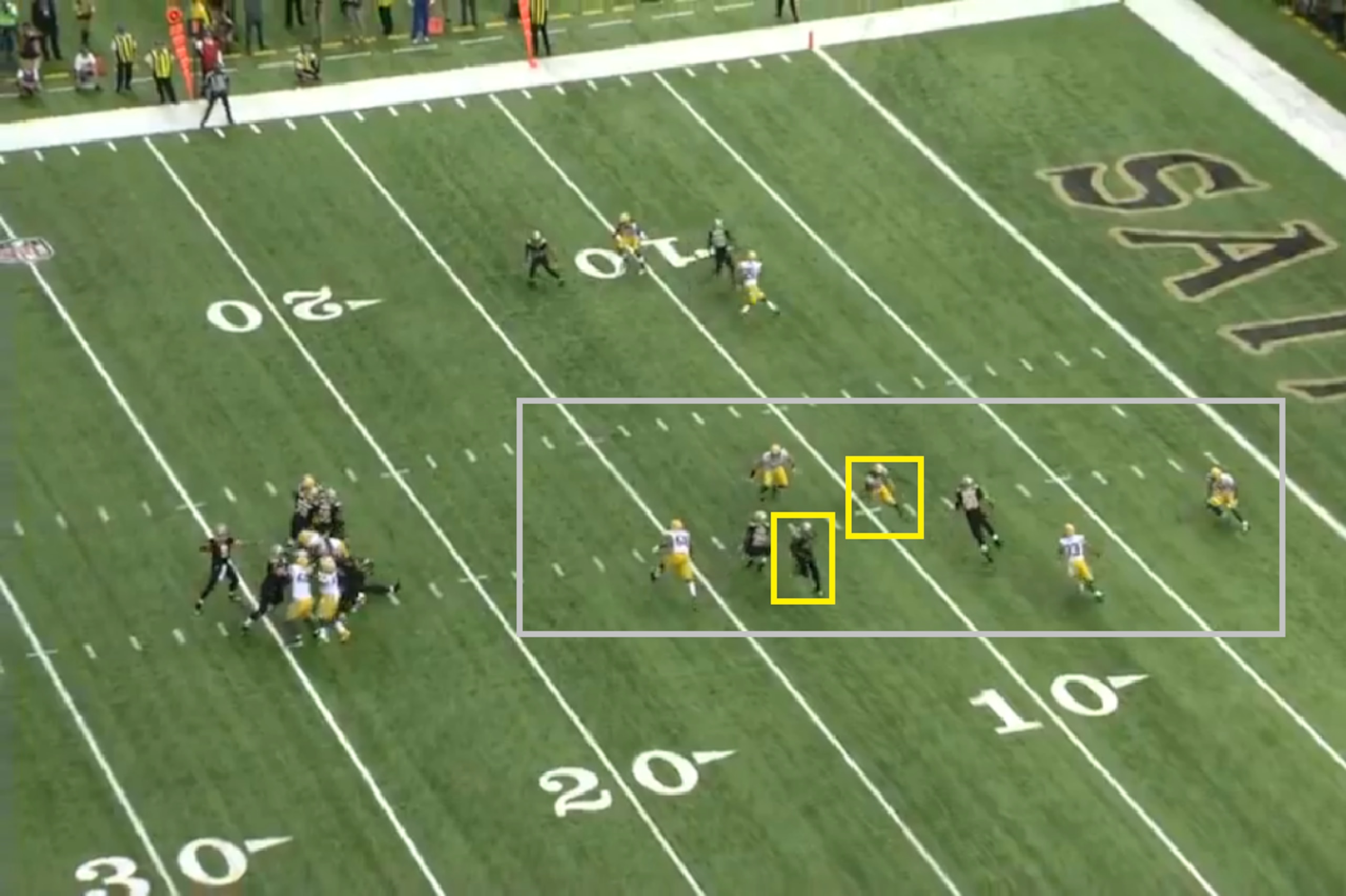
While Williams wasn't able to stay in the hip pocket of his man, he didn't lose him in traffic either. There were eight players in the same vertical zone at the same time in one point in the play. Being able to shift through traffic made up for the lost step behind his man.
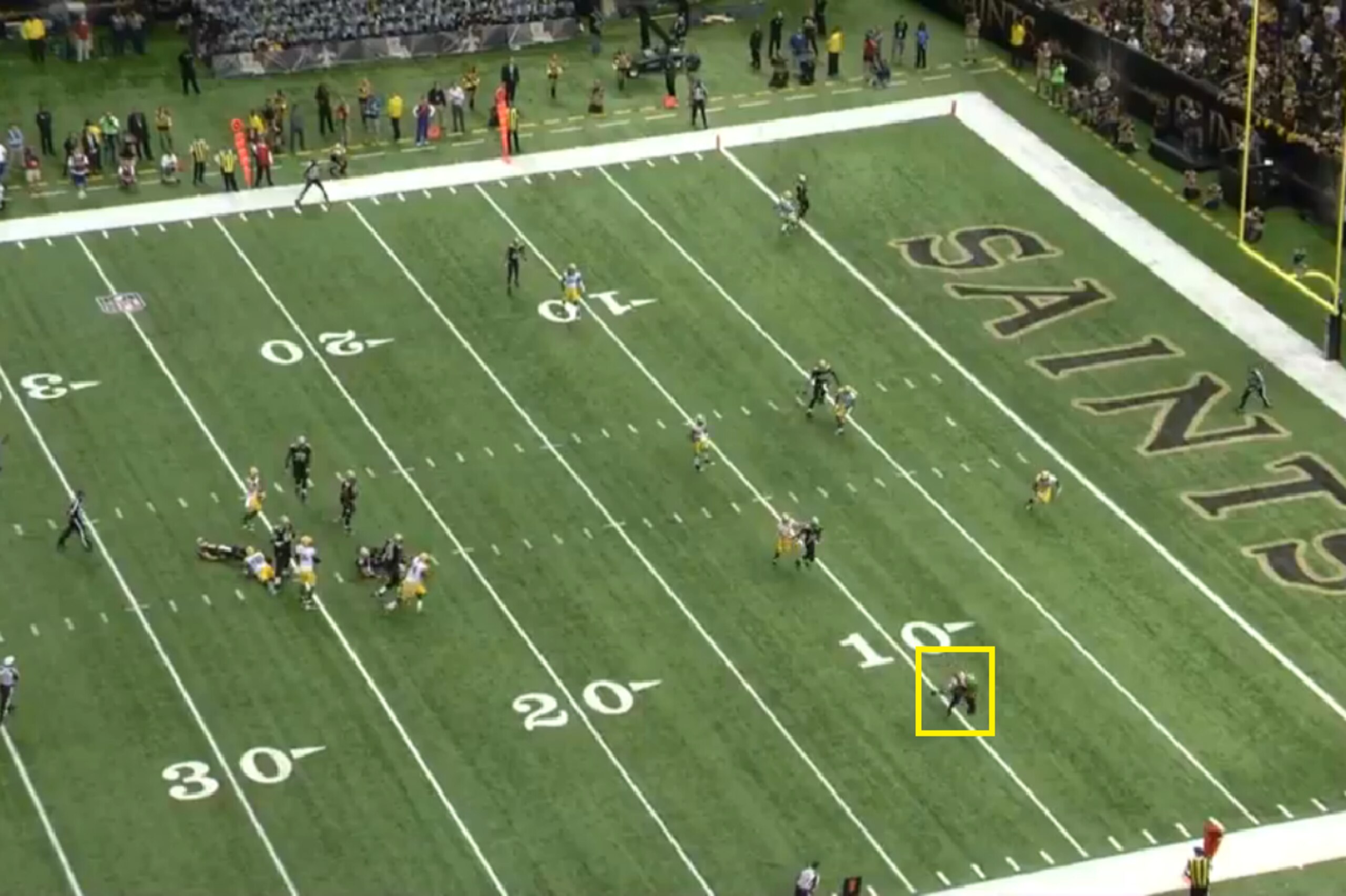
His target was able to make a catch for a seven-yard gain, but Williams was there to make the tackle when he touched the football.
Play 4
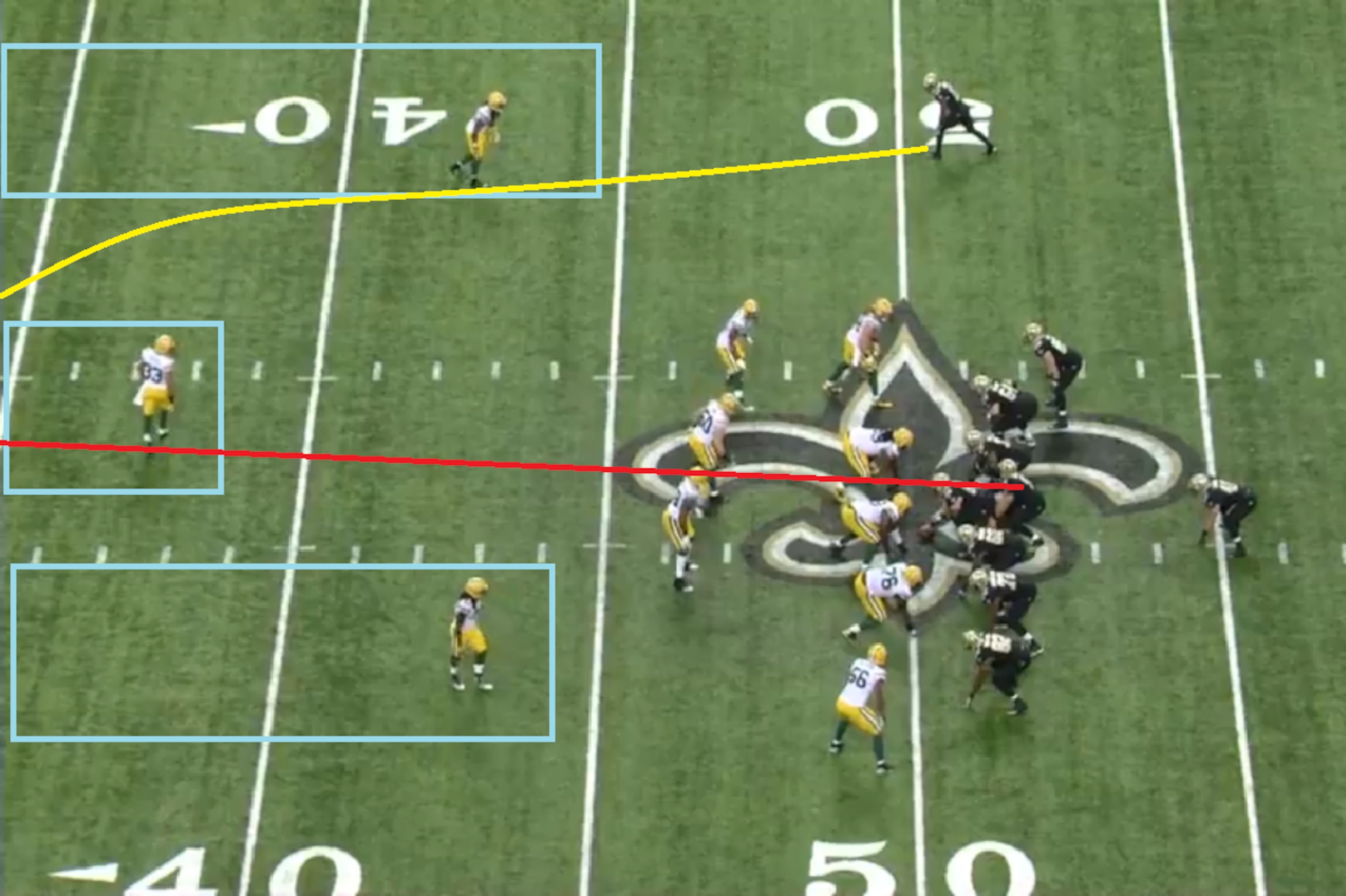
This play occurred in the middle of the third quarter. New Orleans again had an isolated receiver in the area of Williams. The run-heavy look was an attempt to trick Green Bay's secondary to think run when the play action on the play was executed.
Green Bay again faced the isolated receiver set with a base defense. The Packers would play Cover 3 defense on the play.
The target would run a skinny post route, a slow developing vertical attempt to shake the boundary corner off of him.
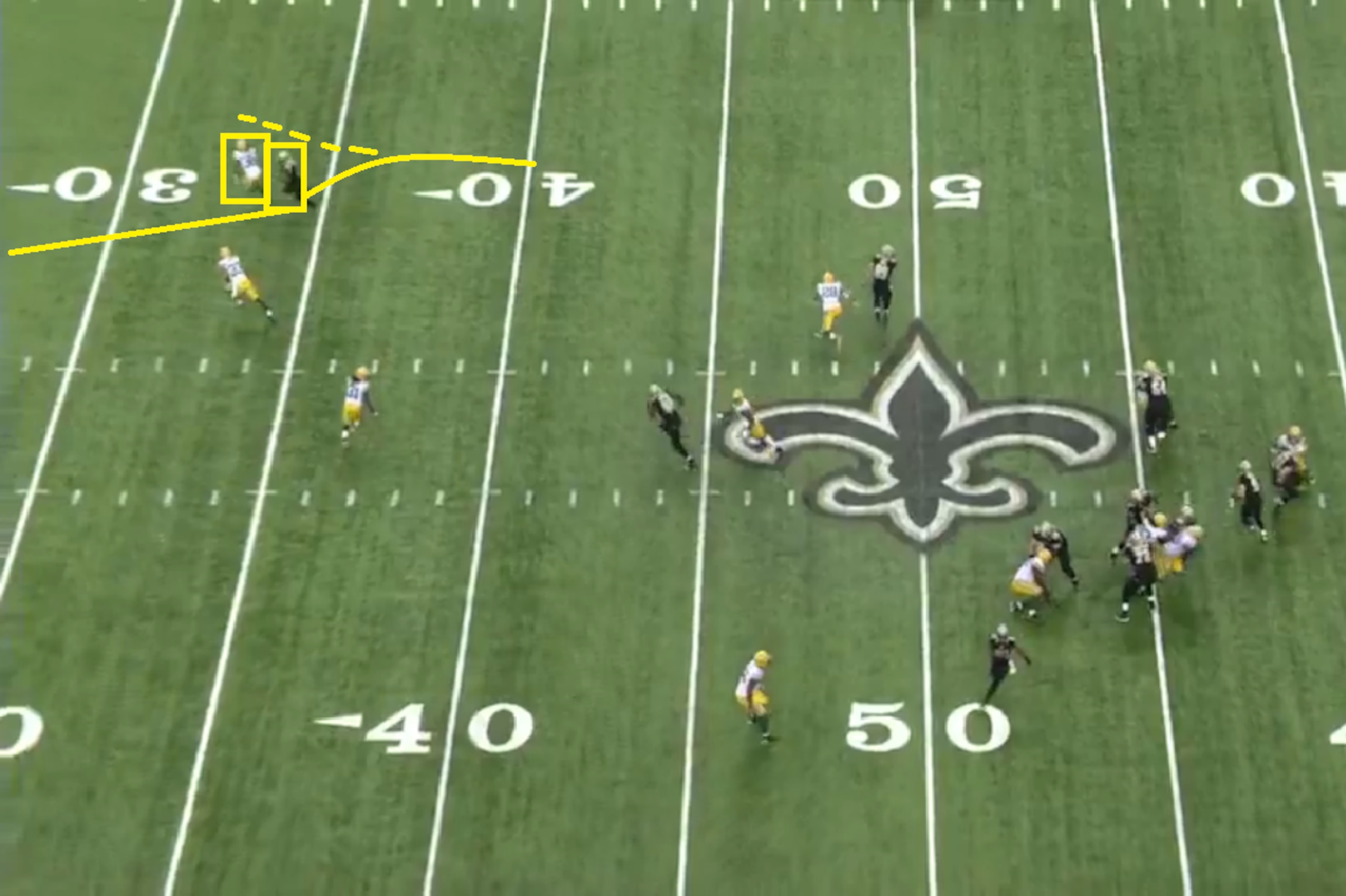
The play did just that. When Williams needed to make the decision to flip his hips to keep up with his man, he made the wrong choice. Assuming the target was going to stay vertical, Williams turned to the sideline in an attempt to close in on it. Closing in on the area between he and the sideline would make the margin of error on a streak very small.
The Saint took the play inside, though, meaning that single-high safety Micah Hyde needed to make up for Williams' mistake to prevent a touchdown.
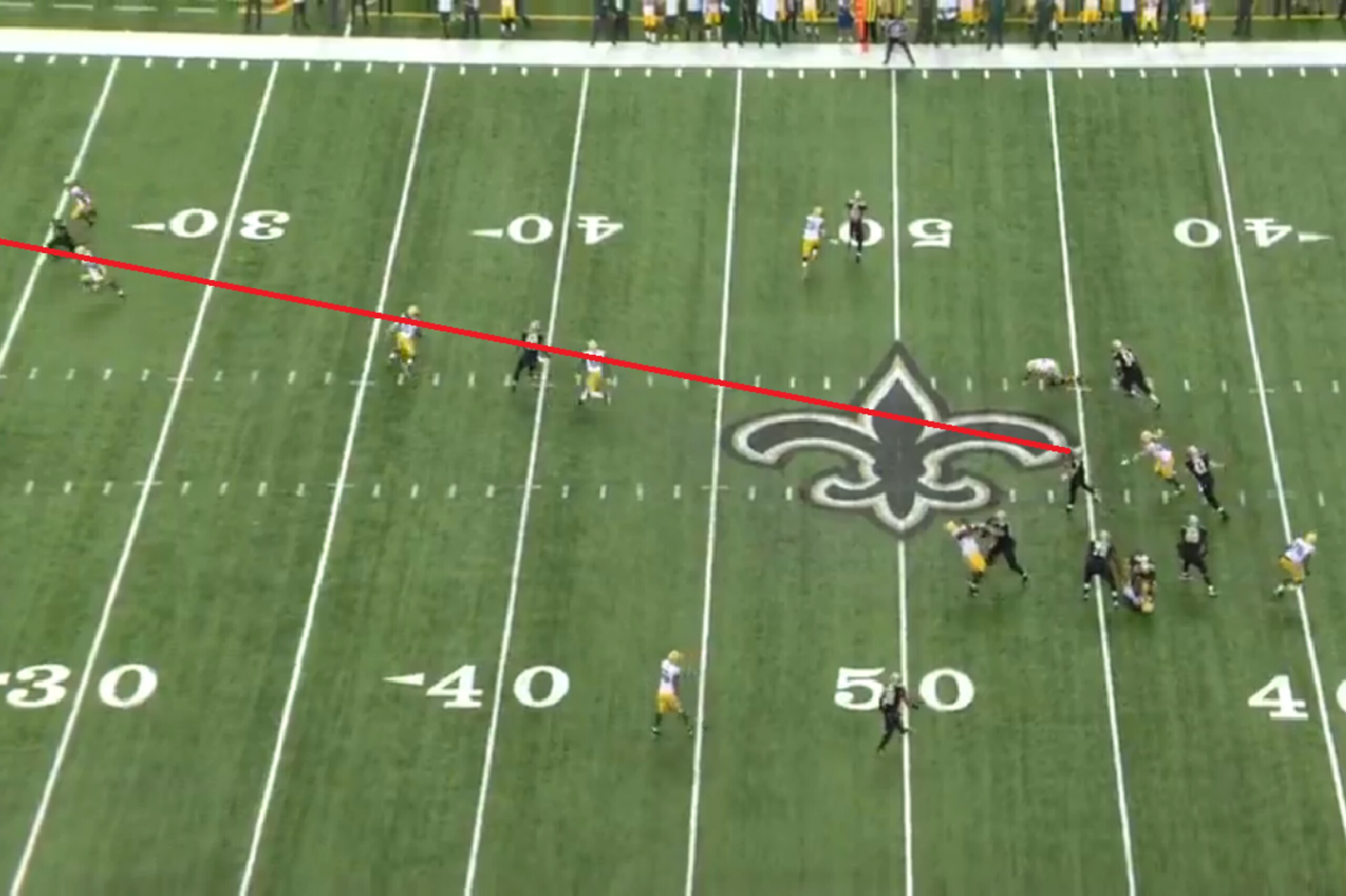
By the time Brees let the ball loose, his target had a step on both defensive backs.
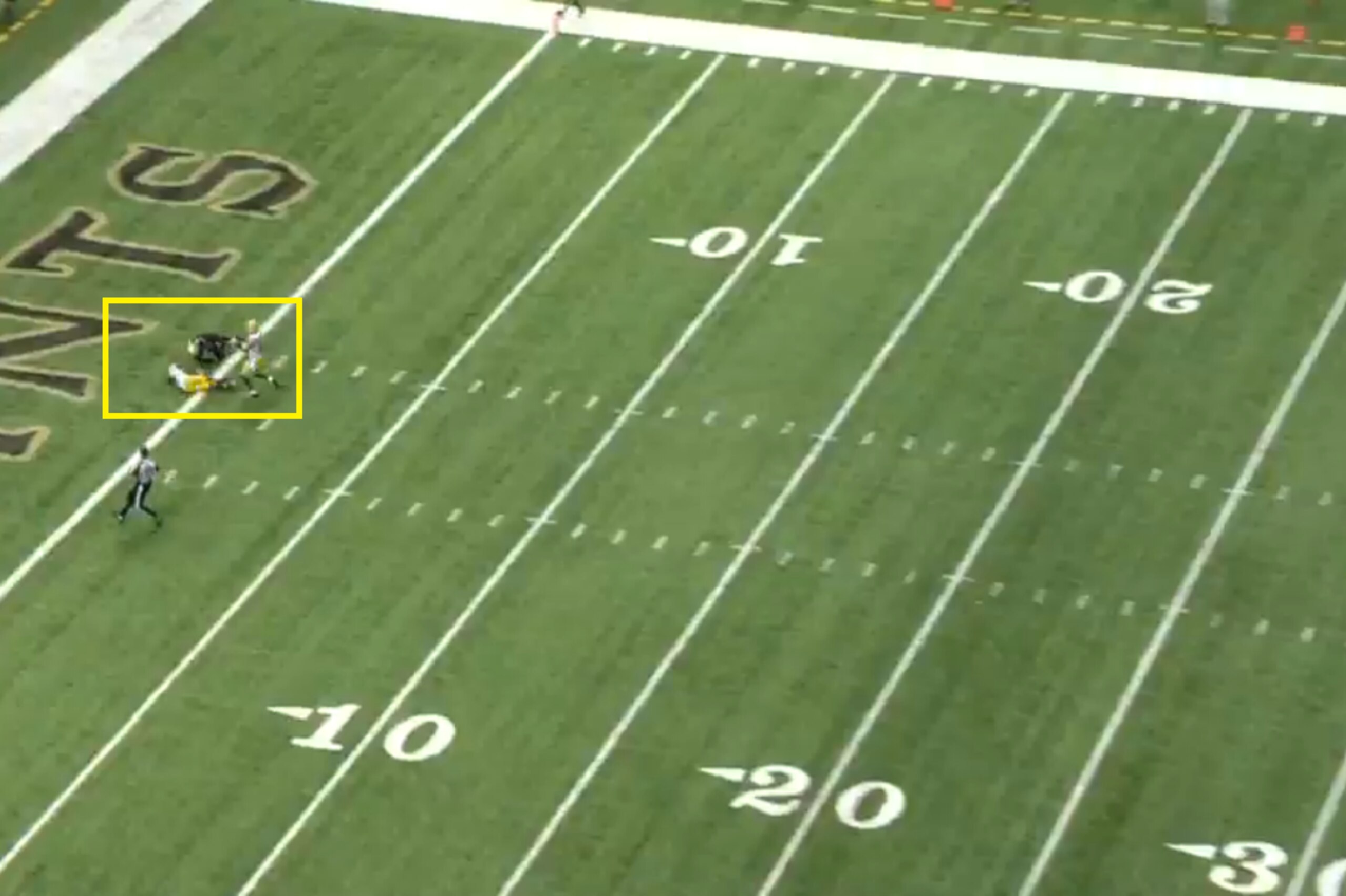
As a result, the play went 50 yards for a score.
Play 5
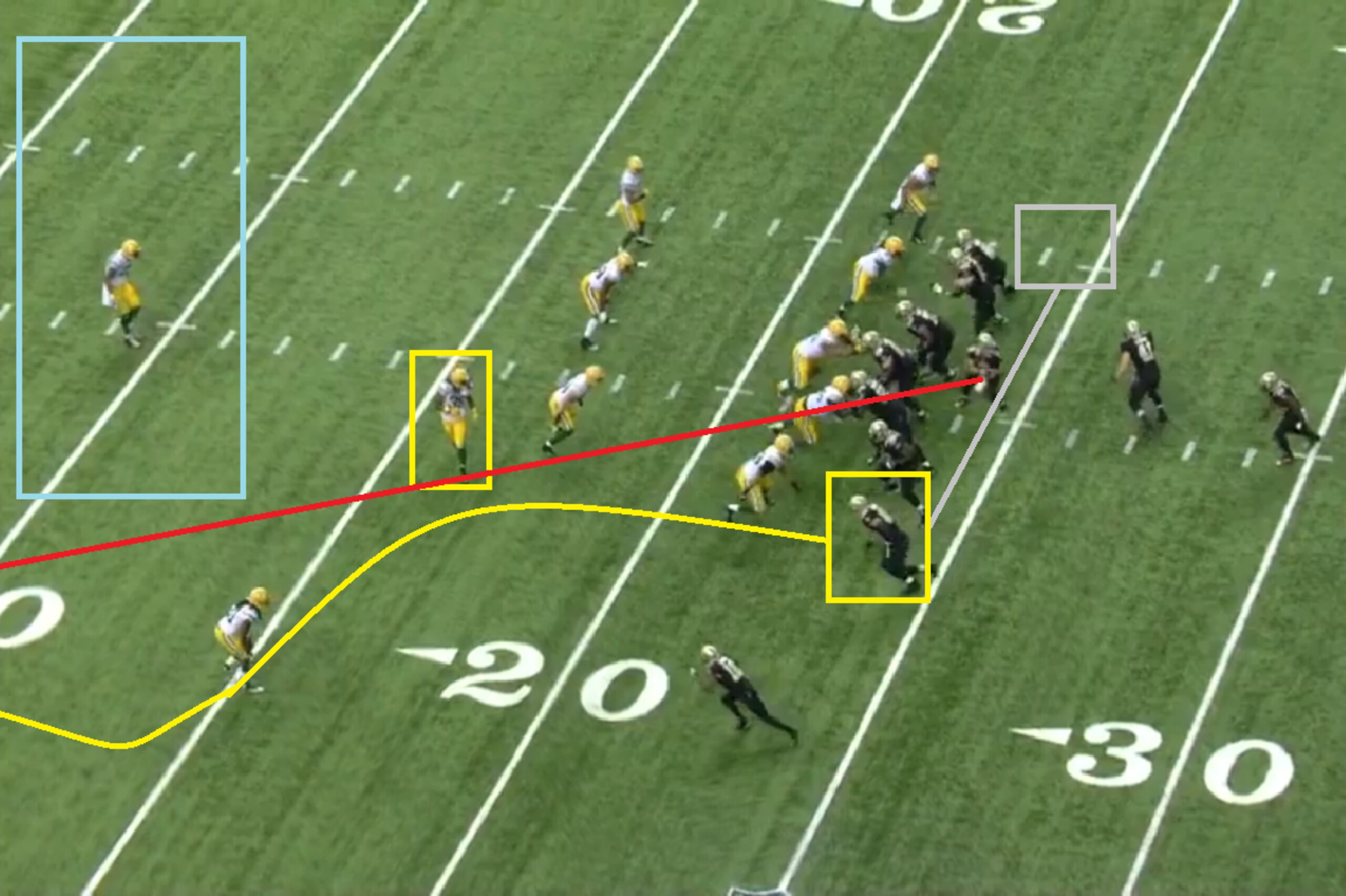
This play occurred late in the third quarter. Two yards from the red zone, the New Orleans Saints would again attack the Packers deep with a run-heavy set. They again only had one split wideout, but they did motion tight end Jimmy Graham into the slot just before the snap.
Williams, who typically would have been the left boundary cornerback, followed the tight end, as there was no boundary target on the right side of the formation.
The Packers would play a Cover 1 defense on the play, with a safety playing center field. If New Orleans wanted to score through the air, it needed to hit something near the sideline vertically.
The play was designed to do just that, as Graham ran an out-and-up route in an attempt to lose the cornerback if he became aggressive.
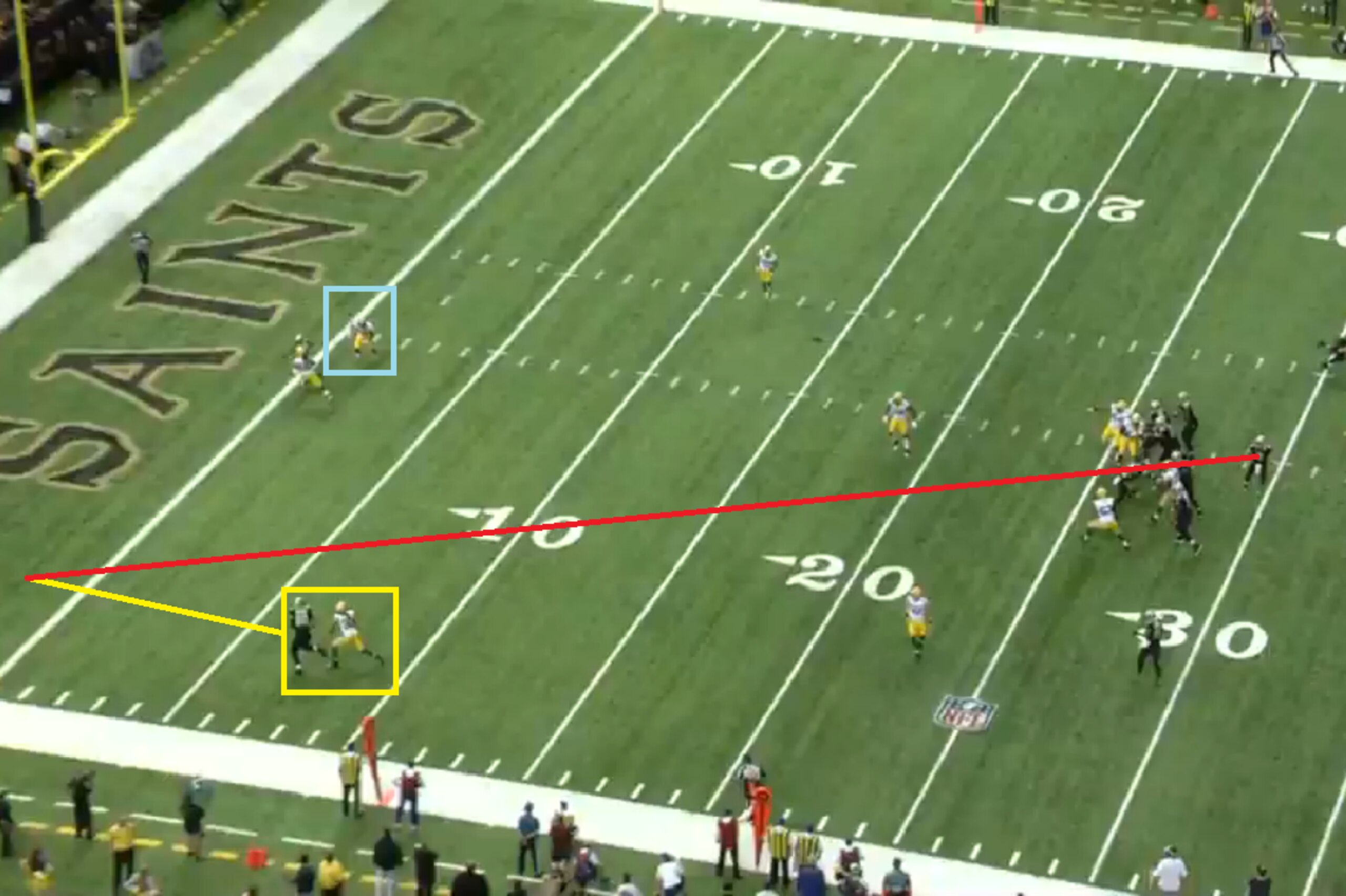
Williams dropped down on Graham's route as it appeared to be an out route, but when Graham turned vertical, the cornerback was left a step behind. The safety was out of position to make a play on the ball or help Williams over the top as he had an assignment in the middle of the field.
Williams would either have to make up for his mistake with speed or beat an All-Pro tight end at the catch point to prevent a touchdown.

Unfortunately for the cornerback, Graham proved exactly why he was an All-Pro player on the snap. As Williams tried to deflect the pass with his back to the ball, Graham was already turned around, in the air and won at the catch point.
Final Thoughts
While the two touchdown scores against the Saints are going to draw the most attention, Williams was taken advantage of for several plays against New Orleans. Though most of them were short gains due to his tackling ability, one must wonder if the cornerback's talent it worth a definitive contract offer in 2015, when he becomes a free agent.
According to Cheesehead TV's Brian Carriveau, Tramon Williams had the lowest Pro Football Focus grade for any defensive player who played in Sunday's match.
"The lowest-rated #Packers player on defense from the loss to the Saints, according to @PFF, was CB Tramon Williams (-2.3).
— Brian Carriveau (@BrianCarriveau) October 27, 2014"
Per Ryan Wood of the Green Bay Press-Gazette, Williams allowed a total of 102 yards in the air for the night.
In the end, the Packers must decide if that's the type of production they want from a starting cornerback who will be reaching the age of 32 by the time he plays in 2015. With fewer than 10 games left on his contract, Green Bay has a tough decision to make.
.jpg?w=2560 "Colts Football")