Manchester City and the FFP Trick That Might Sign Them Their Next Superstar
Earlier this year, Manchester City became one of the first clubs to be punished by UEFA under its newly imposed Financial Fair Play (FFP) regulations.
Having failed to comply with restrictions over the losses a club could make over the course of three seasons, City were fined £49 million and banned from spending more than that sum in net transfer fees during the 2014 summer transfer window. Their playing squad for this season’s Champions League was also reduced from 25 to just 21 players.
The impact of those restrictions on the performances on the pitch is hard to measure with any great certainty, although it can be safely assumed that it has not helped. City had to produce two magnificent results against Bayern Munich and Roma to scrape through to the knockout stages of the Champions League. In the Premier League, an early-season blip has seen them playing catch-up to pace-setters Chelsea.


"I really do not understand what Financial Fair Play is," City manager Manuel Pellegrini bemoaned to reporters in September, per the Daily Mail, when form in both competitions was underwhelming. "For me, it is impossible.
"This is a club that does not have a pound of debt to anyone. I understand that if you have a big debt you don't pay, you have to be punished, but I do not understand exactly what is Financial Fair Play."
Pellegrini may not be alone in his concerns about how Financial Fair Play has been implemented—especially considering the club's owner, Sheikh Mansour bin Zayed Al Nahyan, has an estimated personal worth of almost $5 billion—but the Chilean is in the minority if he truly feels it is not needed in the modern game.
City may be able to sustain their own vast spending, thanks to the wealth of their backers, but artificially limiting those near-unlimited resources evens the playing field slightly for everyone else and retains some of the unpredictability and excitement that is at the heart of football's enduring popularity.
Having been stung by FFP (French champions Paris Saint-Germain were also punished, to a lesser extent, at the same time), City now know better than almost any other club the importance of adhering to those regulations going forward. On the other hand, they also will want to continue to use the advantage of their wealthy benefactors (“oil rich,” as Football Manager might describe them) as much as possible.
Those twin ambitions for City create a new challenge, a new dynamic: staying within the rules of FFP while exploiting them enough to retain an economic advantage over the competition.
How, then, do they go about doing that? Well, judging by the number of players they signed to long-term contract extensions in recent times, it appears they may have already found one way.

First of all, it is important to note that it is not just UEFA FFP regulations that City have to comply with. The Premier League has also implemented its own set of regulations—regulations that are more lenient than the European parameters in some ways but more stringent in others.
For example, Premier League clubs are allowed a maximum loss of £105 million over a three-year period, much more than UEFA—which permits just a €45 million (approximately £35.5 million at the current exchange rate) loss over the same time frame.
That allows clubs not involved in European competition (such as Manchester United this year) greater leeway to spend aggressively on transfers, although they too will have to curb their outlay if and when they qualify for a UEFA competition.
It is in an area of greater overall expenditure for the big clubs, however, where the Premier League is particularly stringent. UEFA has no rules and regulations surrounding salary. As long as clubs comply with UEFA's overall loss restrictions, they can spend as much as they want on wages. The Premier League, however, takes a different view. It restricts all clubs to an annual wage bill of over £52 million.
Below that threshold, clubs can increase their annual wage spend as much as they want, but above it, they are limited to an annual wage bill rise of just £4 million (plus any increased revenue from commercial deals).
An argument can be made that this is actually a stealth tax on the players (the restriction will mean that, over time, players' earning potential is artificially curbed)—a valid debate for another time.
Considering Manchester City spent £233 million on wages during the 2013/14 season, it is safe to say they will always be well over that £52 million bar. A £4 million rise on that wage bill works out as a permitted rise of just 1.72 per cent—considering that inflation in the United Kingdom is currently 1.2 per cent, those regulations mean Man City could barely offer their existing players a wage rise in real terms, never mind sign new players and add their salaries to the balance sheet.
This season, City have not even been allowed to do that—one of the other aspects of UEFA's FFP punishment prohibited the club from increasing its wage bill for one season.
In their latest financial results, announced at the start of December, per The Independent, City actually went one stage further and revealed a £28 million decrease in their annual wage bill, although this coincided with a reduction in "football staff," from 222 last year to 112 this time around.
Experts believe those employees are now paid by a subsidiary—in essence, the savings did not come from the cutting the wages paid to Pellegrini's first-team squad.
Even so, FFP restrictions limit what Manchester City can do in the transfer market. In theory, considering at least a couple of players are going to demand an increase in their salary (£4 million a year works out at around £77,000 a week) each season, the club will have to remove players from the wage bill (sell or release them) before they can add any reinforcements.
City’s 2012/13 financial results showed the club's wage bill rose from £202 million to £233 million. That sort of increase could not happen again unless the club earned an additional £27 million from commercial deals.
As reported by The Guardian's datablog, in 2012/13, City reported an income of £143 million from commercial deals (which does not include television payments or match-day income)—a rise of £22 million (just over 15 per cent) on the year before.
An increase of £22.8 million was revealed this month, but while increasing commercial revenue by the same amount year on year may be feasible, it is not something a responsible club would be banking on.
Manchester City chief executive Ferran Soriano, who was previously a part of Joan Laporta’s presidential team at Barcelona, seemed to acknowledge as much, when he talked about City’s approach to this season back in May, per Jeremy Cross of the Daily Star.
"The plan has already been done, we know that some players will leave because their contract is maturing, but we will also have more to come. Winning players will arrive, it takes time to build a team.
"
That is what seems to have occurred. City signed Eliaquim Mangala, Fernando Reges, Willy Caballero and Bacary Sagna on deals that will have made a noticeable impact on the wage bill, but they also offloaded Javi Garcia, Jack Rodwell, Joleon Lescott and Gareth Barry. Alvaro Negredo and Micah Richards also left on long-term loans (and are almost certain not to return), with the wages of those six players likely to offset those of the four they signed.
| Frank Lampard | loan | Joleon Lescott | free | |
| Bacary Sagna | free | Micah Richards | loan | |
| Bruno Zuculini | £2.2m | Emyr Huws | £2.77m | |
| Willy Caballero | £7.04m | Jack Rodwell | £11.09m | |
| Fernando Reges | £13.2m | Javi Garcia | £14.78m | |
| Eliaquim Mangala | £35.2m | Gareth Barry | free | |
| Costel Pantilimon | free | |||
| Alvaro Negredo | loan | |||
| Total cost: | £57.64m | £29.52m |
No one will be more aware than City, however, that they cannot repeat that trick every summer. In a way, it was fortunate that a number of high-earning players they did not want to keep came to the end of their contracts in the summer (Barry, Lescott, back-up goalkeeper Costel Pantilimon). That won't happen every summer.
Next summer, according to Transfermarkt, only the contracts of James Milner, Martin Demichelis and Richard Wright are due to expire. Wright’s wage is unlikely to be significant in the grander scheme of things (as the club’s third-choice goalkeeper, he is mainly there to help fulfil the homegrown player regulation), while it seems the club would certainly prefer to keep Milner (for his versatility, if nothing else).
Even so, if both Milner (whose desire for more first-team football is presumably a reason his contract has not yet been extended) and Demichelis left, it would not give the club the same room to manoeuvre it had this summer, which was still considered to be limited by normal standards.
For a clue about how City plan to give themselves as much flexibility as possible—other than by increasing their business deals each year—you have to look at the other moves they made in the summer.
Both Fernando and Mangala were signed to five-year deals, while Sergio Aguero, Samir Nasri, David Silva and Vincent Kompany have also all recently signed contract extensions tying them to the club until that same point, the summer of 2019.
The extension announcements came at such consistent intervals (Aleksandar Kolarov and Edin Dzeko both also signed four-year deals) that it was hard to see it as anything other than the execution of part of a carefully prepared plan. Tying down key current players was perhaps the first piece of a more complex puzzle.
The players themselves certainly seemed pleased with their new deals, asserting their intention to see them out and win many trophies in the process.
Speaking after extending his contract, Aguero said, per the club's official website:
"Ever since I came here, during every close season, there have always been rumours suggesting that I might be returning to Spain.
...
People hear this stuff flying around and they take it seriously, but I can tell the fans and everyone at City to relax, I’m going to be here until I see out my contract.
...
We have enjoyed lots of success and some incredible moments but the overall vision for the future and where we are going are the reasons why I wanted to stay here, to win trophies and to keep making history through my best years.
"
But how will the club do that without being able to significantly reinvest each summer? The answer may lie in all those contract extensions.
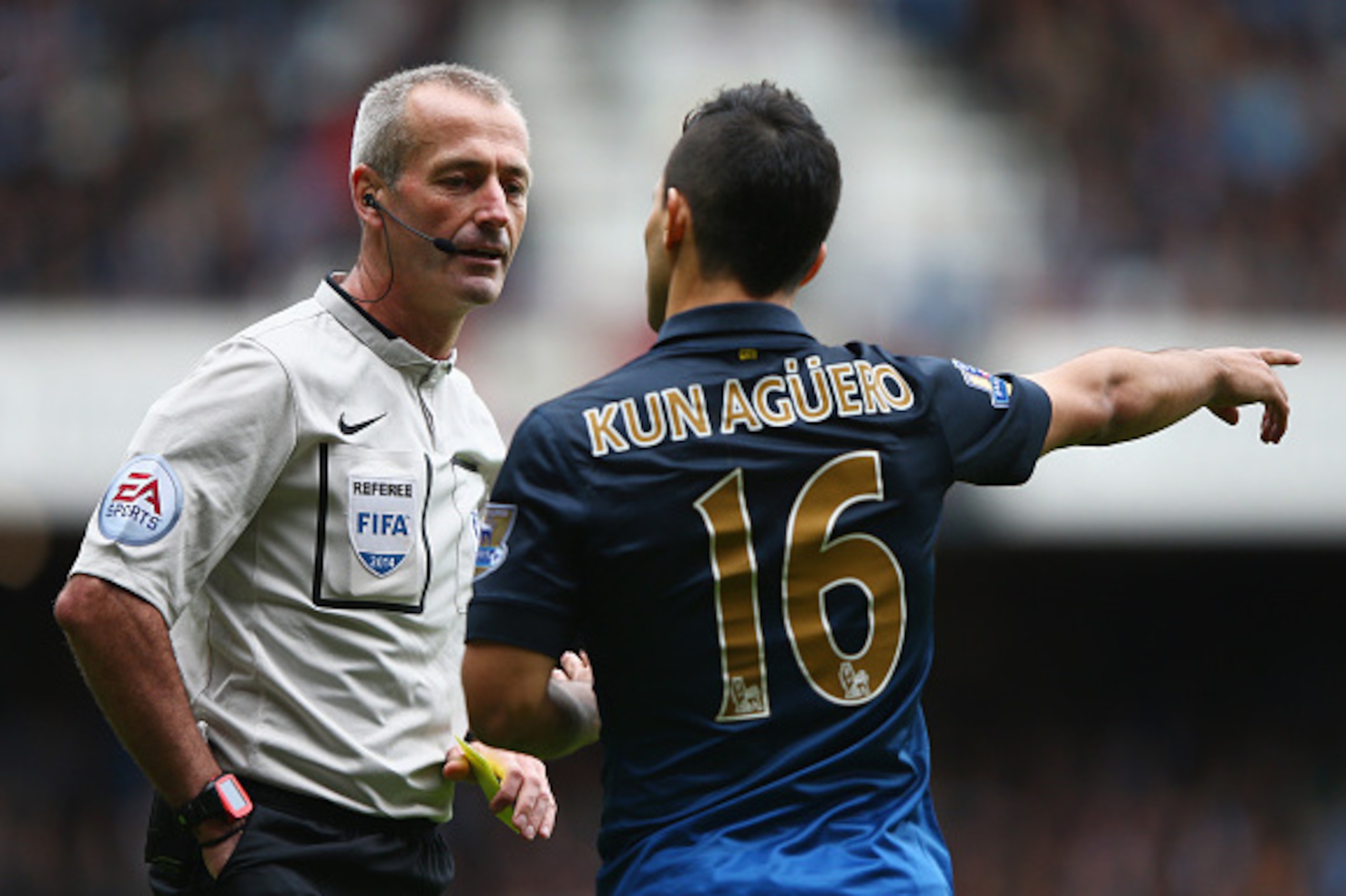
Typically, in modern football as in general business, individual salaries increase year on year. While in most industries such pay rises would be at the discretion of the boss, in football, percentage increases are often written into contracts—another example of the agent exerting the upper hand they seem to have in such situations.
Nevertheless, what if City managed to negotiate contracts that actually diminished in value over their lifetime? It might be against industry conventions, but what if City could get Aguero et al. to agree to earn less in the fourth year of their deal than they received in the first? Then, the difference in those two figures could be added to the club's salary “cap space” for the second year.
The problem, of course, is that both the player and his agent would appear to have little incentive to agree to those terms. Why would they ever want to learn less money than they did the year before?
Then again, one of the misconceptions of modern football is that “wages” are worked out on a weekly basis (perpetuated by the “Player X demands £150,000-a-week deal” stories we see in the newspapers every day). This is a relic of a bygone era, when football was a working-class sport and its players still needed to hold down regular jobs during the week to earn a living wage.
Nowadays, players and agents deal in annual salaries. For City’s players, that means seven- or eight-figure numbers when the contracts are signed.
For example, if Aguero earned £200,000 a week under his previous City contract, that works out to £10.4 million per annum (before tax). A new five-year deal on the same terms, therefore, would have a total value of £52 million.
Assuming City gave the Argentinian a wage rise—and considering his status within world football and the clubs that have courted him, we can safely assume they will have done—we can estimate that City were willing to up that figure to somewhere within the region of £60 to £70 million. For the purposes of this example, we will assume the figure was £65 million (£13 million per annum, or £250,000 per week).
If Aguero and his advisors knew they were going to get £65 million over the course of the contract one way or another, then what difference would it make to them if they get that money at different rates? Indeed, wouldn’t it seem preferable to receive more of that money sooner—they could always renegotiate the contract later in the term or engineer a transfer when the decreases started to kick in.
Say, then, that Aguero and City agreed the forward would be paid £16 million in the first season, a figure that (as an example) reduced by £1 million in the first two seasons and £2.5 million and £3.5 million over the final two seasons respectively. Those reductions would count as extra space on City’s cap in those seasons.
| £16m | £15m | £14m | £11.5m | £8.5m | £65m |
| - £1m | - £1m | - £2.5m | - £3.5m |
Do that with five players (again, as an example) and that means City would have an extra £12.5 million (plus their permitted £4 million) on their “salary cap” for the following season. That works out at £317,000-a-week—enough to add another truly world-class player (and perhaps two elite ones) to the wage bill without violating the Premier League's restrictions.
As long as those players are the correct ones, that should be enough to refresh a great squad and keep it competitive at the very highest level.
Therefore, City could feasibly pay Borussia Dortmund forward Marco Reus' transfer fee with the increase in their commercial revenue and then fit his salary to meet FFP regulations, thanks to the year-on-year reductions Aguero and others have agreed to.
The problem with this approach, as alluded to above, is that nothing prevents agents of players from demanding a renegotiation of the contract after the first two or three years, pre-empting the planned wage reduction by preying on the club’s worry about losing them for nothing a few seasons later.
City, however, are better placed than any club to play that game of chicken. If they lose a player on a free transfer, it will barely make a dent on their financial position, even if it could have a significant impact on the quality of their playing squad.
Signing such long contract extensions also helps in that regard—the likes of Silva, Aguero and Kompany are now tied down well into their thirties, and the natural expectation is that their skills will have started to erode (and along with it their value on the open market).
City might regularly find themselves in the strong bargaining position they are first set to be in when Yaya Toure’s contract expires in 2017, one that will not look too bad from their point of view.
Toure will be 34 at the end of his contract, likely to be a shadow of the player we currently know. If City release him at the end of his term, they will free up £300,000 a week from their salary allowance, as reported by the Manchester Evening News' Simon Bajkowski. If they decide to retain him, they will likely be able to re-sign him on reduced terms. Either way, their situation will improve financially, allowing them to spend greater amounts elsewhere.
Last month, there was speculation that Toure was set to sign a new deal, especially after a summer in which his agent had infamously expressed some dissatisfaction with his client’s treatment at the club. It will be interesting to see if anything comes of such speculation—City seem to have no incentive to agree to an extension, unless it came with a reduction in wages.
In the short term, the newly established franchises in New York and Melbourne might allow City to supplement their squad with short-term, cost-free loan moves when those sides sign an experienced campaigner—as with the current arrangement with New York City FC and Frank Lampard.
As the MLS and A-League franchises pick up veteran stars on lucrative wages, City (whose owners will, in effect, be footing the bill, though not in the eyes of UEFA or the Premier League) will occasionally be able to take advantage of their services for short periods.
This is a practice that has already attracted criticism from some other Premier League clubs, however. And it could be a loophole that is closed before too long.
"I think 'is it legal?',” Arsenal manager Arsene Wenger said in September on the subject of Lampard, per Sky Sports. "I respect the fact he wants to play at the top level and he maybe didn't have that opportunity any more at Chelsea.
"Was it always his plan to go to New York and go to Man City? I am not sure.”

The Premier League’s regulations on wage bills are not just an issue for the biggest clubs in the division. They are a concern for almost every top-flight side.
In the most recent financial details released for the 2012/13 season, just five teams—Norwich City, Swansea City, Southampton, Reading and Wigan Athletic—spent under the £52 million threshold that is now in effect, per the The Guardian.
In the book Soccernomics, authors Simon Kuper and Stefan Szymanski pointed out the compelling correlation between wage spending and a team’s eventual success. This trend is reflected in the above figures, as two of those five teams were relegated at the end of that season.
The pressure is on all clubs to spend more on player salaries each season. While the correlation is not perfect, in general, better players will always command bigger deals. Better results require a more expensive workforce.
As a result, it is not inconceivable that almost all top-flight clubs will attempt to follow City’s lead over time, especially as sides like Crystal Palace and Swansea City will not be able to increase their earnings from commercial deals by the same margins that those regularly involved in European competitions might manage.
If those clubs can also stagger the deals they sign to pay more in the first year than they do in the last, then they can open up their wage bill as much as possible to continue investing in the squad. Of course, the Eagles and the Swans perhaps do not have the same economic ability to resist the pressure to sell players rather than allow them to leave on a free, but that is a risk they may soon have to accept.
Financial Fair Play creates restrictions for the biggest clubs, but it also creates opportunities to get creative with the accounting and thus hold an advantage over less inventive rivals. The rules are prohibitive, but by analysing them in depth, clubs will find ways to bend them and gain as much of an advantage as possible.
Changing the way salaries are paid, as City might well have done this summer, will not have a huge impact on the bottom line. But it could allow them to buy one or two great new players each season—individuals who could have a potentially decisive impact over the course of a campaign.
Other subtle changes in approach in other areas might offer similar marginal gains, and City believe that on such marginal gains trophies can—and will—be won.
"We have moved beyond the period of heavy investment that was required to make the club competitive again," City chairman Khaldoon Al Mubarak noted in City's latest financial results, per the Daily Mail. "It is commercial growth of the kind we are seeing today that will underpin and support our operations in the future."

.jpg?w=2560 "NBA Gambling Charges")

.jpg?w=2560 "Aikman Blasts Cowboys WR 🫣")


.jpg?w=2560 "Jonathan Taylor Landing Spots")