How the Detroit Lions Built One of the NFL's Most Feared Defenses
Before the season began nearly eight weeks ago, the Detroit Lions were considered a talented team—offensively. Defensively the experts cringed at the look of the Lions secondary on paper. New head coach Jim Caldwell brought in Teryl Austin, who was the Baltimore Ravens secondary coach for a couple of years and had never been a coordinator at the NFL level prior to joining the Lions.
The common question among observers—can Detroit’s loaded offense be good enough to compensate for what is sure to be a troubled secondary?
There was belief and promise in the Detroit’s defensive line, but the linebackers and defensive backs were largely considered a collection of nameless question marks who were either too old, too young or just not good enough to compete in a division that featured Jay Cutler and Aaron Rodgers.
TOP NEWS
.jpg?w=2560 "NFL Paris Football")
NFL House in Paris Closes for Protests
.jpg?w=2560 "Seahawks Chiefs Football")
Trevon Diggs Cut by Seahawks
.jpg?w=2560)
B/R's Expert Week 7 NFL Picks 🔮
This was nothing new for the Lions defense only vindicated this assessment. It seemed each year, under former head coach Jim Schwartz, the Lions were struggling to piece together a complete defense—their perpetual weakness? The secondary and linebackers.
So how did this group of misfits and castoffs transform into one of the NFL’s most feared defenses?
According to Glover Quin in a recent interview with CBSDetroit.com, Austin listens to his players.
"That stuff right there keeps the players engaged as well because when you’re sitting there knowing, 'Okay, all I can do is this,' well, whatever...But when you sit there and say, 'Okay, I’m going to watch the film and see what they’re doing, and I may have an idea of something that we can do that the coaches maybe didn’t think of.'
They’re open to us coming to them with ideas because that makes you look at the film in a different way...It makes you look at the film to figure out what can you do to combat what they’re doing, and it works.
"

Obviously, we all underestimated this Lions defense, but that starts with the perception of defensive coordinator Teryl Austin that Lions fans had upon his hiring. Yep, the guy who has no idea what it’s like to be a coordinator in the NFL.
Who would have every imagined that a secondary featuring Rashean Mathis—a cornerback older than Methuselah—Glover Quin, Darius Slay, Isa Abdul-Quddus and James Ihedigbo would become one of the stingiest units in the league and a big reason they're 5-2?
Just how good has Detroit's defense been in 2014? It's first in total yards allowed (290.3) and second in fewest points allowed (15 points). The Lions pass defense allows 6.6 yards-per-pass attempt, sixth best in the NFL, and it's holding opposing quarterbacks to a second-best passer rating of 76.4.
Last year this secondary ranked 23rd against the pass, and 10 of the Lions' 11 starters this season are holdovers from the Jim Schwartz regime. Safety James Ihedigbo is the only new starter on defense.
The Lions have eight interceptions in seven games, and only two teams have managed to score 20 or more points on them. No team has scored more than 24.
How is this possible?
In order to dig a little deeper, I studied every regular-season game they’ve played this year.
In an Mlive.com article written by Justin Rogers back in February, Teryl Austin had this response when asked about modeling Detroit's defense after the Super Bowl champion Seattle Seahawks:
"If you're going to model after them, the thing that you like that they do is the way they play together, the way they play for each other. In my opinion, if you have good players and you can get them all to play and buy into the team part of it, I think you have a chance to have an outstanding defense.
You don't have to do the scheme the way they do. You don't have to do coverages or whatever they do, but you have to have a group of guys that believe in each other and believe in what we're doing. Then you can reach great heights.
"
When you watch this defense, that is exactly what you see happening. It’s not a team that is dominating with incredible talent—they play smart, fast, aggressive football, and they hustle more than any other team in the NFL.
As the saying goes, hard work beats talent when talent doesn’t work hard. This defense works hard, and it's doing all of the little things that successful defenses do to translate coaching principles and game planning to the field on game day.
For starters, this has got to be one of the best tackling teams in the NFL right now. So not only are guys flying to the ball, but they’re also finishing when they get to the ball-carrier. As a result, they’re excellent at preventing big plays and long drives.
Ball-carriers who attempt to gain yardage on the Lions going east and west are bound to fail. This unit is simply too quick and too good in pursuit to be gashed with any consistency by players running laterally.
In Detroit's first seven games, you can count on one hand how many times a team was able to sustain a long drive against this defense. On the other hand, you can count with even fewer fingers the number of times they allowed a big play.

As expected, the success of this defense begins upfront, particularly in the middle, where defensive tackles Ndamukong Suh and Nick Fairley do a great job of controlling the line of scrimmage.
So much so that the New York Jets, in Week 4, were the first team to test the Lions’ ability to stop a mix of power running and read-option plays. At times New York disguised their power running game by utilizing the shotgun formation. They actually had some success doing this in the first quarter, but by the second quarter the running game had been shut down by a Detroit defense that had lost any fear of the Jets passing game.
Although Suh and Fairley are certainly assets up front, these two haven’t been dominant enough to account for all of this defense’s success. For example, just think about how dominant J.J. Watt has been for the Houston Texans these last three seasons, yet his team is currently ranked 26th in yards allowed per game (387.3) and 20th in sacks (13). That means there is a lot more going on for this defense to be as good as it has been.
However, Suh is definitely one of the key members on this defense.
Detroit's defense has found success by controlling the line of scrimmage up front and showcasing team speed when pursuing the ball, as swarming Lion defenders close up holes quickly and gang tackle to shut down opposing running games.
Their linebackers and secondary might not be the most physical groups, but they are two of the quickest. Pairing that with discipline and hustle has helped elevate the Lions defense to one of the NFL's best.
From a schematic standpoint, Detroit’s defense is fairly basic. Their base front is a 4-3, and their favorite coverage is “press man” with two high safeties. This means Lion defensive backs are right up in the receivers' faces looking to control them at the line and throw the timing off of their routes. Many defenses are afraid to use this coverage too often because of the inherent risk of being beaten deep. Yet surprisingly, the Lions have prevented big plays, despite the aforementioned risk.
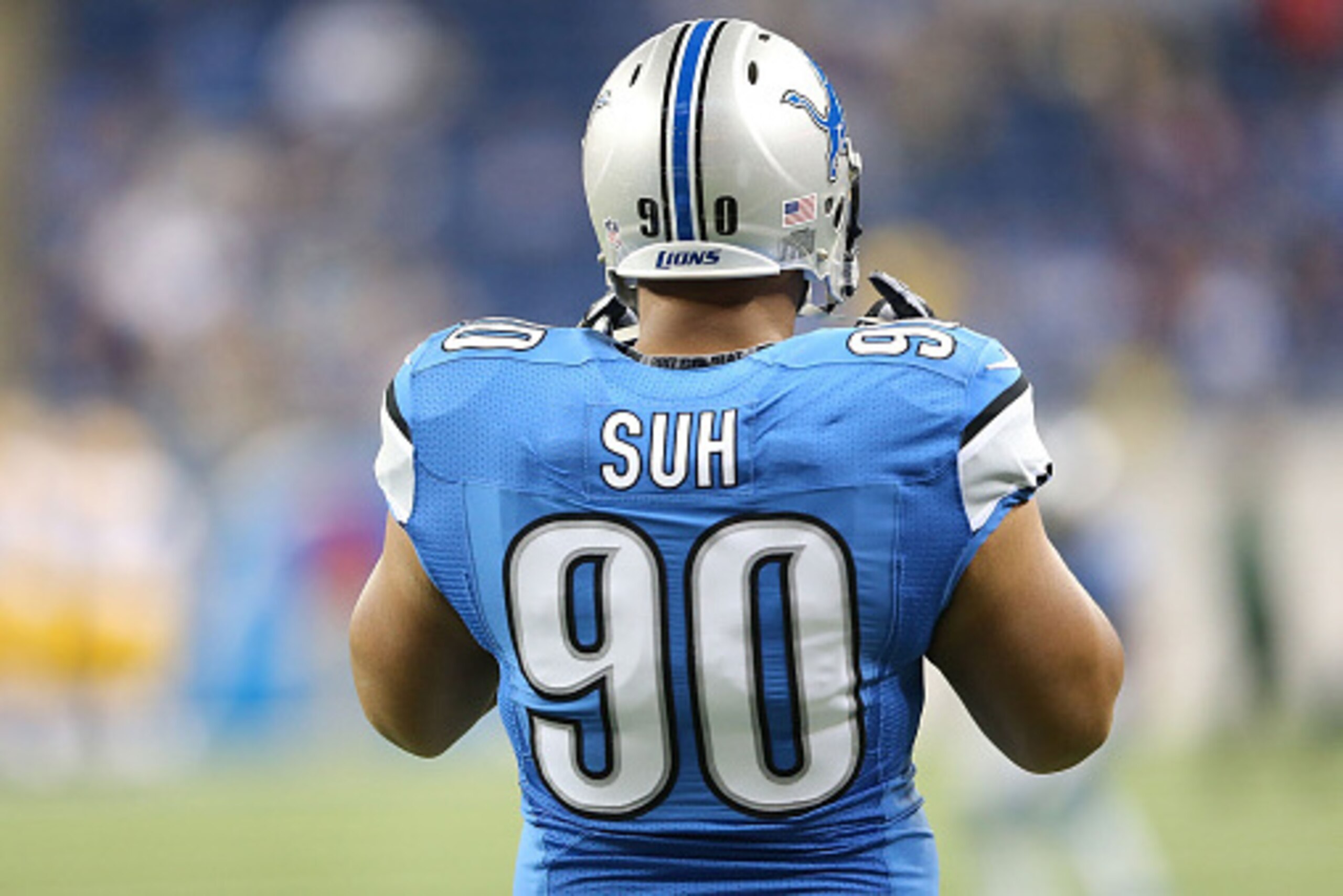
Cornerbacks Rashean Mathis and Darius Slay are playing fantastic football right now and are each being asked to do a lot for this defense. Their ability to blanket receivers in tight man coverage has been very impressive. Safeties Glover Quin, James Ihedgbo and Isa Abdul-Quddus have also played extremely well against both the pass and the run.
If a receiver gets cushion on a defender, it’s always underneath the coverage umbrella, and reinforcements fly in quickly from all angles to the ball. There’s nothing unique about this style of defense, but proper execution combined with sound tackling and hustle has been impressive.
Another surprise is that the Lions don’t seem to buy into the traditional prevent soft-coverage defense. Even up 24-10 against the Jets in the fourth quarter, the cornerbacks played tight, aggressive coverage with a two-high safety look just as they did most of the game.
Finally there is a coach with enough brains and gumption to challenge the conventional idea that allowing a soft cushion in the secondary when you have a substantial lead late in the game is the best way to close out a game.
Conversely, Austin seems to subscribe to the approach that you finish the game doing the same things that brought you success early on.
The defense likes to show casino blitz and drop out of it at the last minute. Again, nothing particularly special about this approach but it seemed to be effective against the Giants.
A signature formation the Lions love to utilize is to spread both defensive tackles out into the B-gaps and threaten the two A-gaps with linebackers lurking right over the center’s head. Sometimes the LBs blitz from this formation, and sometimes either one or both drop into coverage.
However, for the most part, this defense doesn’t focus much on disguising the coverage before the snap.
Against the Carolina Panthers, who scored the most points (24) against Detroit so far this season, the Lions played more zone and off coverage than in any other game. As a result, they were less effective when sitting back with their eyes on the QB.
This strategy was likely implemented to contain the scrambling ability of Panthers quarterback Cam Newton. It was less effective in part because the pass rush from the edge was very inconsistent, which means Newton had time to wait for passing windows to open.
They returned to their “press man” coverage in Week 3 against Aaron Rodgers and the Green Bay Packers.

It seemed as though the crossing games and line stunts by Detroit's defensive line flustered the Green Bay QB. It was surprising to see Rodgers play so conservatively against an unproven secondary. You would think he would at least test the single coverage on the sidline deep from time to time—he never did. By the same token, the defensive backs did a great job in that game not allowing receivers to gain separation downfield.
On the day, Rodgers was held to 16-of-27 passes (59.5) for 162 yards and one TD—which was by far his worst game of the year. As you can see from his stat line, they took away the big play down the field.
Some Detroit defenders who have stood out in 2014 are veteran cornerback Rashean Mathis and linebacker DeAndre Levy.
Mathis still appears to have fine speed, but he's added a few layers of wisdom and experience to his game. A rare sight this season is one where a receiver is catching a pass on Mathis.
Levy is a much better LB than I gave him credit for heading into the season. His fluidity and burst are impressive, and he does a great job attacking downhill against the run.
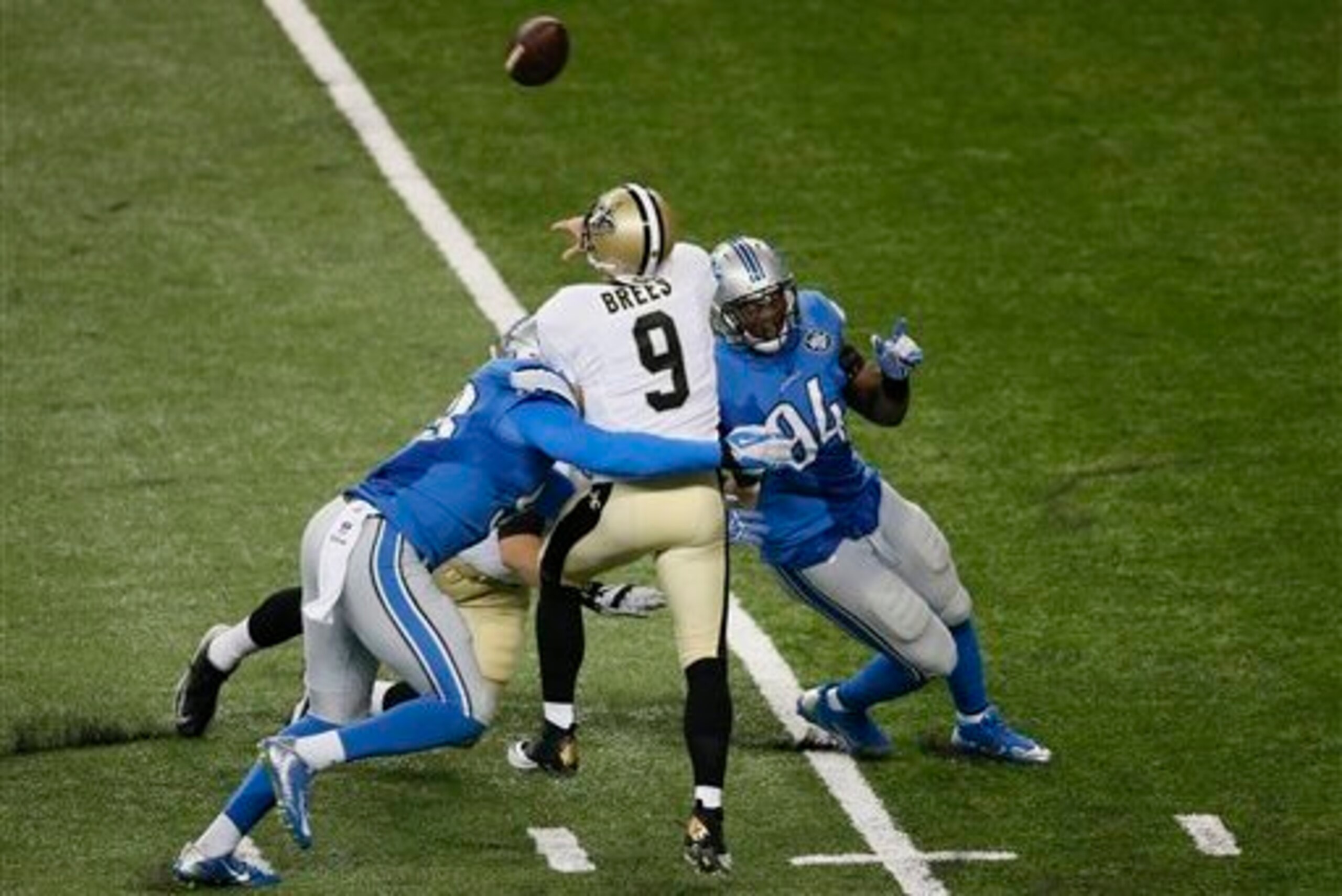
Ezekiel Ansah, the former first-round pick, is a much better run-stopper than he is pass-rusher at this point in his career. Most of his sacks this season came against the Minnesota Vikings and their rookie QB Teddy Bridgewater. Ansah finds most of these sacks when the quarterback is flushed outside from pressure up the middle.
A big question worth asking is this: Can the Lions defense maintain this enormous success throughout the season?
One reason this question is difficult to answer is because it's puzzling why more teams haven’t tried to attack Detroit’s secondary deep. Sure the coverage has been tight, but there have been many times when the receiver has what seems to be a favorable one-on-one matchup. In these circumstances, a quarterback would trust that his receiver would make a play downfield and or break up a possible interception. And there’s always a chance for drawing a pass-interference penalty.
In that same vein, when the Lions faced a potent running game (Jets), they showed us that they can be run on if a team is committed to doing so. Most of their opponents have tried to attack them by spreading them out. This has not been very effective.
I think we can expect some degree of regression to the mean, but as long as they continue to hustle, play as a unit and tackle well, they should finish the year as one of the best in the league.
Ryan Riddle is a former NFL player and currently writes for Bleacher Report.
.jpg?w=2560 "Titans Colts Football")