Paul Pogba's New Deal Secures His Value at Juventus, Not Necessarily His Future
From the moment it was publicly revealed that Paul Pogba was earning just £23,000 a week at Juventus, it was clear something would have to change—and soon.
On Friday, that change duly came: Juventus announced they had agreed a contract extension with the 21-year-old Frenchman, one of the brightest young talents in world football.
Speaking before a shareholder’s meeting, club administrator Beppe Marotta announced the good news. He told the audience, per the club’s official website: “Before coming here we signed Paul Pogba’s contract extension, which binds us until 2019.”


It is safe to assume the new deal included a significant wage rise for the French international—on Thursday Italian journalist Gianluca Di Marzio reported the impending new deal on his website, estimating Pogba’s new deal to be in the region of €4 million per year after tax (which works out at around £60,000 a week).
In England that figure was put at £68,000 a week, although that does not account for the differing tax systems of the two countries. Considering England's more aggressive system, Pogba would have to be paid £120,000 a week by any Premier League club to take home the same amount he will now receive at Juve—in summary, the 2013 Golden Boy winner (the award for the best young player in Europe) is now finally being paid at a rate commensurate with his talent and potential.
Following Marotta’s announcement, within the English media the news was widely interpreted as a “blow” to Pogba’s many English suitors—Manchester United have been most strongly linked with their former player, but it is safe to assume Manchester City, Chelsea and Arsenal would all have retained a strong interest in the player and his situation. With their target now locked down by the Turin club for another five years, the consensus was that those clubs would all have to put their aspirations on the backburner.
Pogba’s previous deal was set to expire in the summer of 2016, meaning his asking price was going to start dropping from January, as the risk of Juventus losing him for an arbitrary sum gradually increased (FIFA rules ensure clubs will receive a fee for all players under 24 years of age if they leave at the end of a contract, based on a few provisions Juventus would almost certainly have fulfilled, but that fee—set by a tribunal—is nevertheless unlikely to have matched up with Pogba’s normal market value).
Juventus, after all, were only asked to pay around £800,000 in compensation to United when Pogba engineered his exit in 2012. Even judging by the talent he was believed to have at the time, never mind what he has subsequently shown, that was obviously a snip for the Italian club. They will not have wanted to end up on the other end of that imbalanced equation, when the figures involved where going to be all the larger.
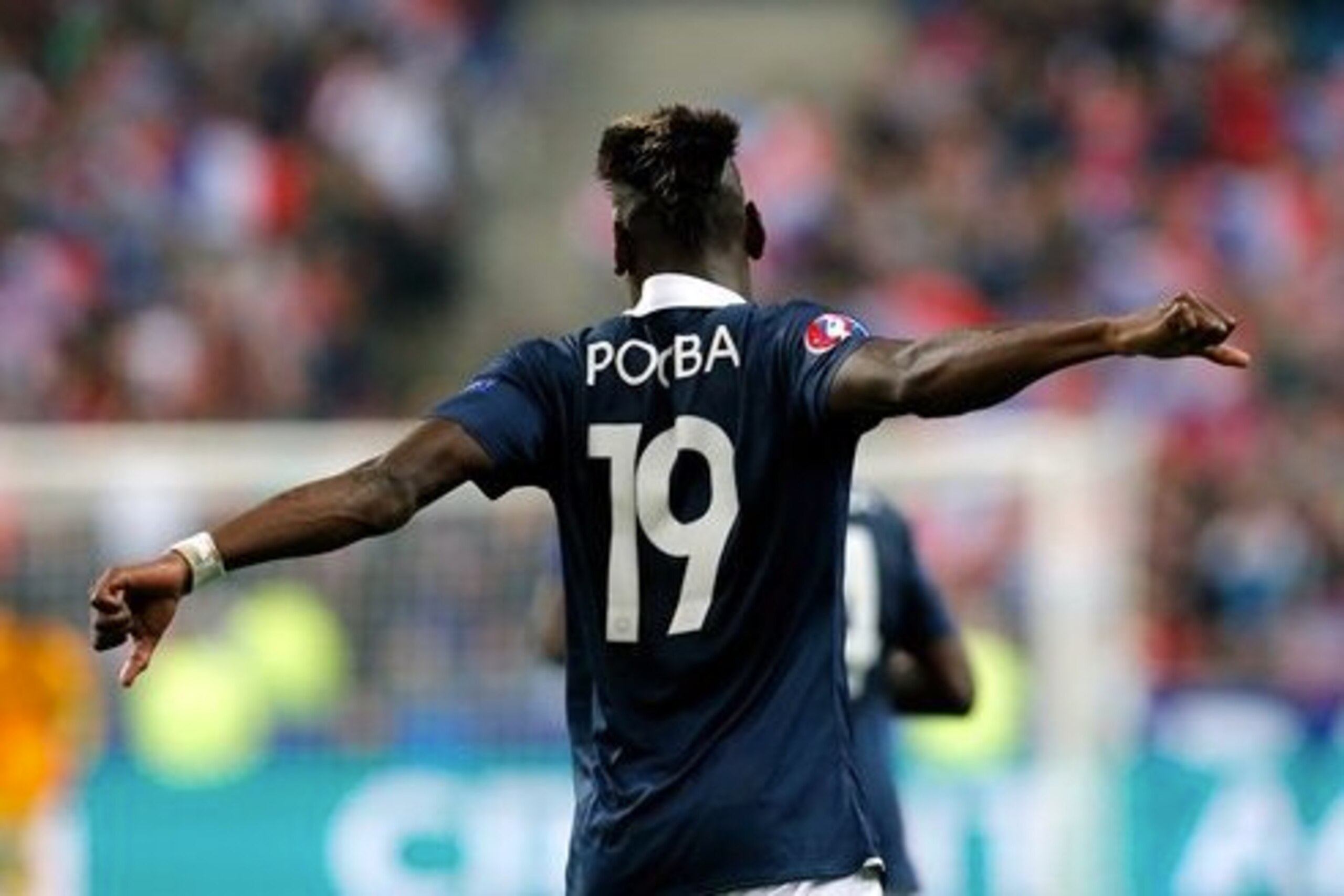
In reality, however, the new contract extension will not have a significant impact on Pogba’s many suitors, other than in adjusting his wage demands whenever the time comes to discuss such things. It may have eliminated the (already slim) prospect of signing the midfielder on the cheap, but it does not eliminate the prospect of being able to sign him at some point—even at some point in the near future.
Pogba’s agent remains Mino Raiola, of course, a notorious mover of men both inside Italian football and around Europe. Raiola also represents Zlatan Ibrahimovic and Mario Balotelli, two players for whom he has shown a remarkable knack for brokering regular (and lucrative) transfers at reasonably frequent intervals. Pogba’s new deal, and significant wage rise, guarantees his short-term happiness and service but will do little to protect Juventus if Raiola receives expressions of interest from Europe’s elite next summer, or any summer after that.
Considering the links Raiola will have fostered in negotiating deals for Balotelli and Ibrahimovic—Manchester City, Barcelona, Paris Saint-Germain, to pick just three—the channels of communication should be open with plenty of interested parties when it comes to the latest jewel in his stable.
That, of course, presumes that Juventus would countenance selling their marquee talent. Yet, harsh as it may be, that is not too much of a presumption. Having just announced Pogba’s extension, it was illuminating that Juventus then embarked on a fairly grave warning about the long-term prospects of the club—and Italian football in general.
While announcing that the club had made a small profit, the completion of a long-term plan to improve the club’s financial sustainability, there was a more bleak assessment of what might lie in store.
“You need only take a step back and look at Italian football objectively to realise it’s in progressive decline,” club president Andrea Agnelli said, per the club’s official Twitter feed. “England, Spain and Germany have overtaken us in terms of income, business sustainability, sporting results, stadia and UEFA rankings.
“Supporters and families have gradually stopped going to Italian stadia. Juventus can only grow at a fraction of its potential if the collective product of Serie A doesn’t make strides forward as well.”
This is the issue at the core of the club’s ability to retain Pogba for the entirety of this new contract, and even beyond that: Can they find a way to compete at the very highest level? Can they join the likes of Bayern Munich, Real Madrid, Barcelona and England’s best clubs in seemingly competing in the latter stages of the Champions League each and every season?
At the moment they struggle to even qualify for the knockout stages of the competition (they failed last season, losing out to Galatasaray, and have work to do to avoid the same fate at the hands of Olympiakos this time around). Pogba, the rare player who almost all would agree has the potential to be one of the four or five best in the world, is not going to settle for that level of European involvement forever.
What is more, as the most sought-after talent in the stable, selling Pogba might be the best way for the Old Lady to raise funds that could significantly strengthen the playing squad in a number of other areas. The insertion of a release clause in Pogba’s new deal—Simon Johnson of the London Evening Standard reported it to be set at £63 million—indicates the club’s board is not averse to going down that route (and it is not absurd to think a club could meet that figure next summer).
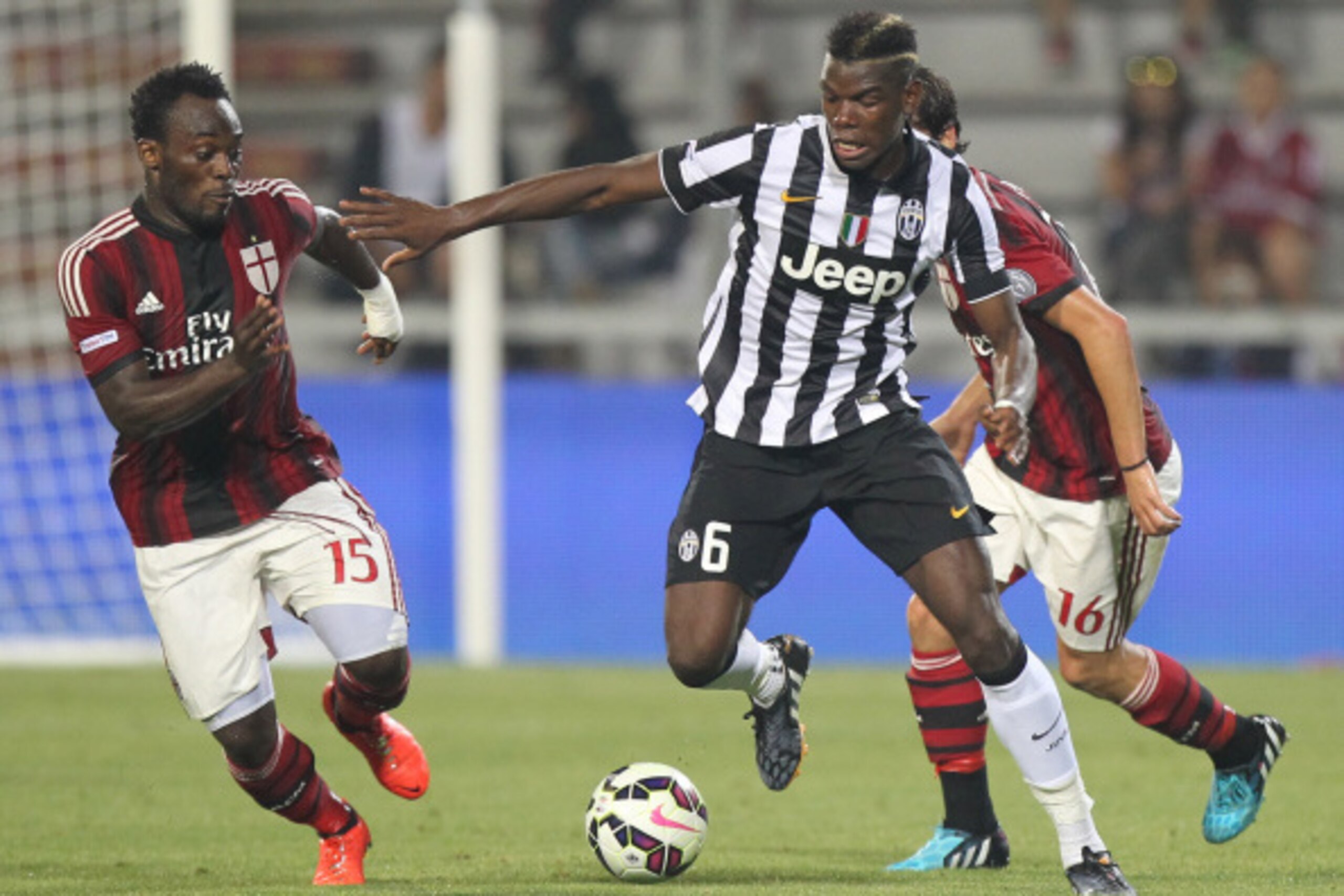
Serie A currently has its benefits for the player—at 21, Pogba is already winning titles every year, gaining big-game experience in the process and learning from some of the best midfielders (well, mainly Andrea Pirlo) of recent times. As controversial as his move from United to Juventus was, you cannot say it has been anything other than a unmitigated success for the player, who was handled carefully by former manager Antonio Conte and subsequently flourished into a player who arguably could and should have made an even bigger impact at the World Cup.
Nevertheless, he is on the cusp of becoming one of the very best midfielders in the world (if he is not there already), one who deserves to grace the very biggest stages in club football on a regular basis. The task for Juventus is to ensure they progress at that level, that they are able to provide Pogba with that platform over the coming campaigns.
They certainly have the potential to do so, with the right additions to the squad at the right time, but as Agnelli points out, that is not something that is completely up to them.
Serie A will have to progress with them, something that is far harder to predict. Even if it does happen, it will surely take not just years but a decade or more for the impact to translate to the pitch.
Pogba’s new deal gives Juventus some additional security and probably clinches his services for another season, perhaps two. But the midfielder has so many suitors—so many options—that it is almost inevitable he will leave eventually, especially once the prime of his career looms into view.
The contract extension is not a blow to the clubs chasing Pogba; it is merely a clarification of what they will now need to do to secure his services: pay the release fee, or something very close to it. When it comes to a man of Pogba's ability, though, £63 million is ultimately not that much at all for the sort of clubs that are likely to want him.
.jpg?w=2560 "NFL Paris Football")
.jpg?w=2560 "Seahawks Chiefs Football")