Arsene Wenger has never made any secret of the fact his model for how football should ideally be played is the Total Football of Ajax in the early 1970s.
He admired the rapid interchanging of position, the focus on possession, the beautiful skeins of passing. All of that, his Arsenal team have, at times, produced.
But he must also have seen the rigour with which Ajax pressed, the aggression of their hounding of opponents with the ball and the discipline of their offside line. It’s there that Arsenal has come up short.
TOP NEWS
Live World Football Moments 🍿

Final Men's Ballon d'Or Rankings 📊
.jpg?w=2560 "NFL Paris Football")
NFL House in Paris Closes for Protests
The strange thing is that Wenger’s sides have never been great at pressing. At Arsenal, he inherited a back four which played the offside trap as well as perhaps any in the history of English football, and supplemented them with a screen of two robust holding players in Patrick Vieira and Emmanuel Petit.

In the Invincibles season, Gilberto Silva had arrived to replace Petit. At Monaco, he had also had a screening pair in Marcel Dib and Jean-Philippe Rohr.
Ajax, of course, had Johan Neeskens—a ferocious central midfield player not afraid to make tackles—but their way of defending was to squeeze space.
Like Arrigo Sacchi’s AC Milan or Valeriy Lobanovskyi’s Dynamo Kiev, the key was the coalition between elements in the system, controlling the shape of the game with acute positional awareness.
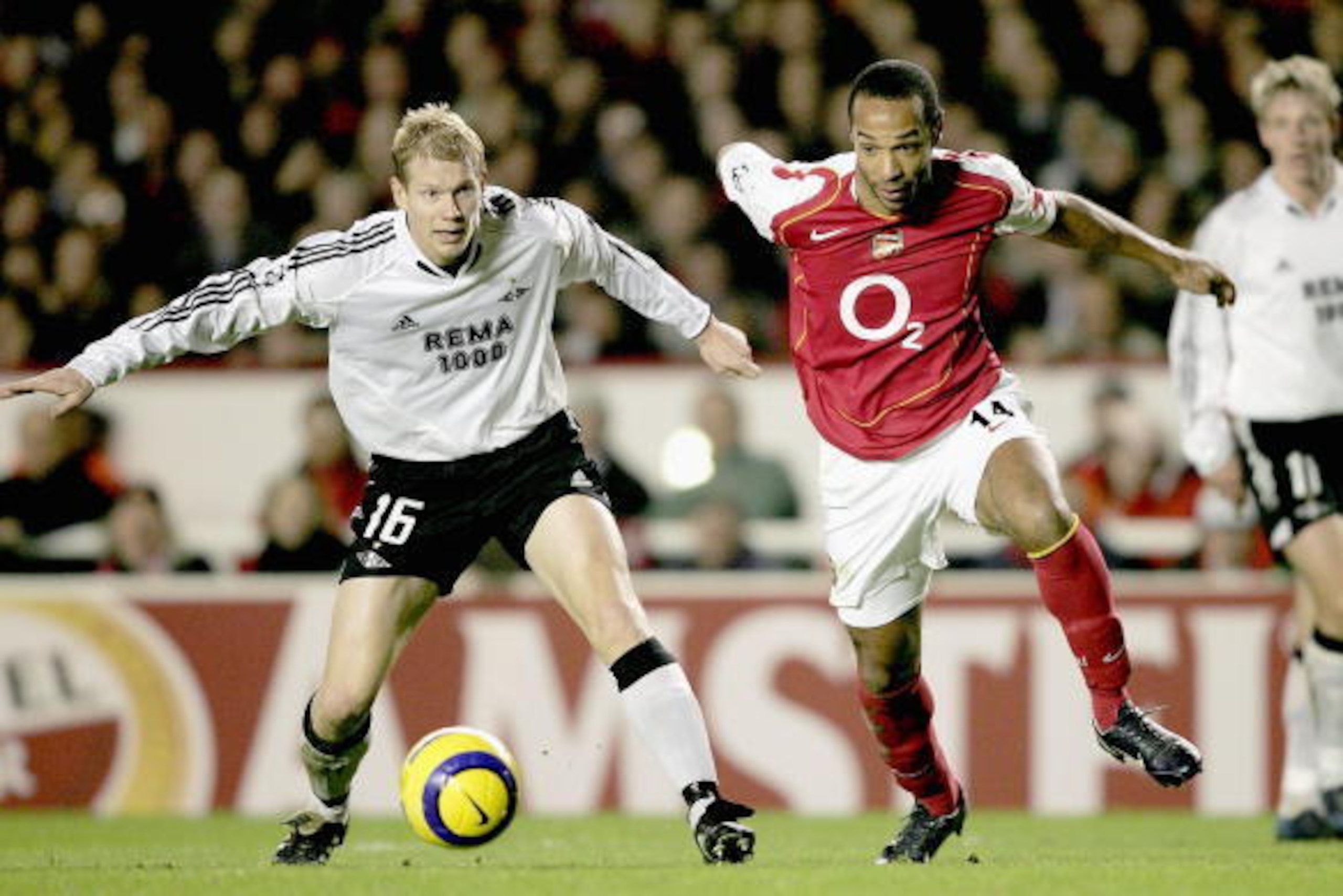
Wenger’s sides have never done that. The way his early Arsenal teams controlled space, rather, was to allow teams onto them, looking to spring forward on the counter, using the pace of Ian Wright, Nicolas Anelka, Thierry Henry, Freddie Ljungberg and Robert Pires.
The offside trap was there as additional protection and, of course, those sides could produce the intricacy necessary to break down massed defences, but they were never pressing sides.
Over the past decade, Wenger’s approach has changed. The defeat to Chelsea in the quarter-final of the Champions League in 2004 perhaps stands as the watershed—the moment at which new money conquered the old.
Arsenal went on to finish that league season unbeaten, and won the FA Cup the following year, but it’s as though at that moment Wenger accepted he could no longer compete in the way he once had.
He could no longer buy the best, so he seemed to settle for moral victories. The focus seemed to become beauty rather than silverware.
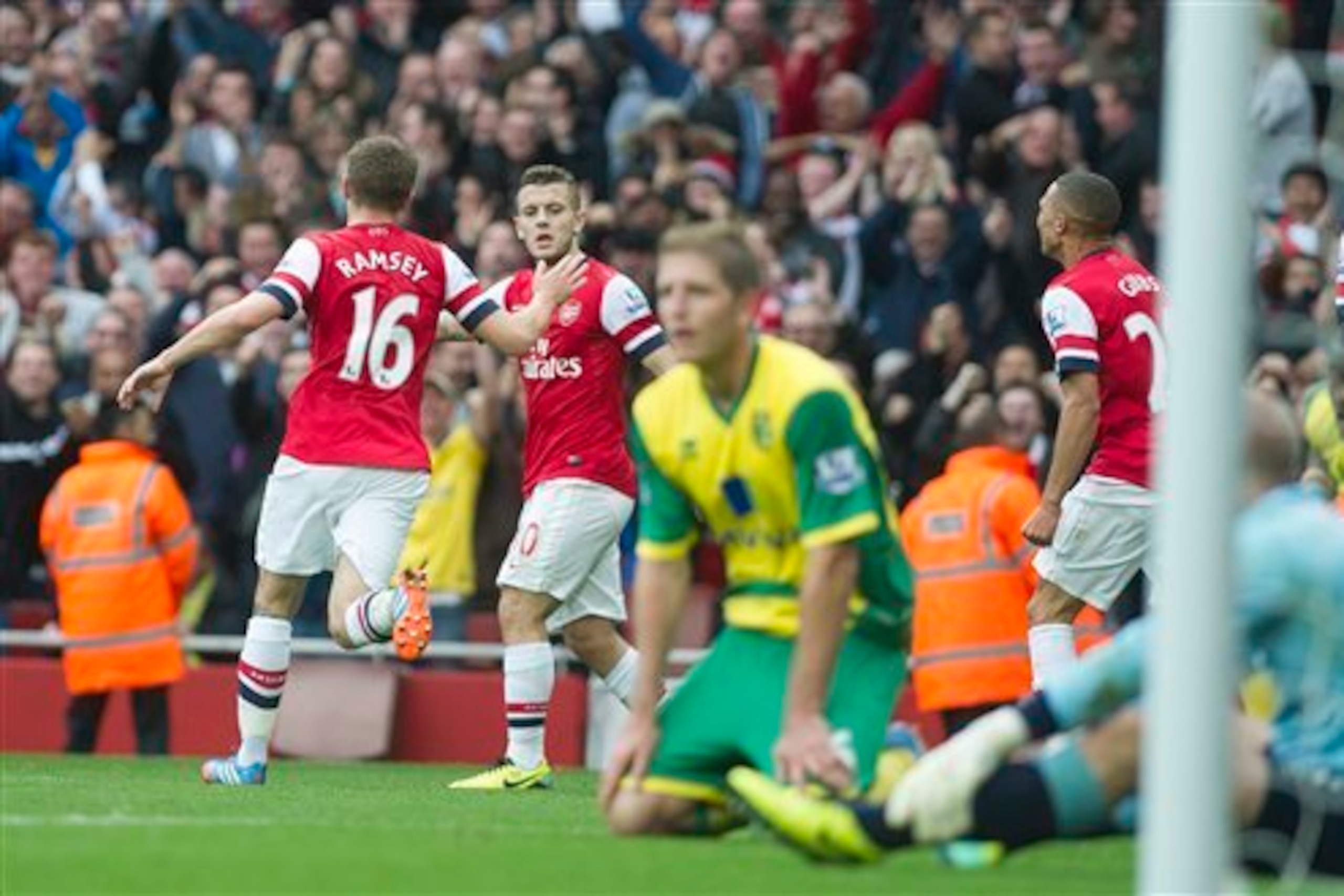
Vieira left in 2005 and has never been adequately replaced. There is a prettiness about Arsenal still these days, and at their best—Jack Wilshere’s goal against Norwich last season, for instance—there is a finesse about them that no other Premier League team can match.
Wenger seems to be trying to create something more similar to the Ajax ideal, as Barcelona did under Pep Guardiola: A glut of attacking players operating with the energy and the organisation that they could get away with only one holding midfielder.
The games between Arsenal and Barcelona in the Champions League in 2010 and 2011, though, showed precisely the difference between them.
Lionel Messi aside, it’s not that Arsenal’s players were particularly less gifted than Barca’s; the issue was rather that the La Liga team pressed with far more rigour and discipline.
If one player went to the man in possession, he would be backed up by two or three others; when Arsenal went, it tended to be in ones and twos and in a far less structured way.
The swirl of diminutive, technically gifted players can be a devastating attacking weapon, and it can offer defensive solidity as well, but only if there is proper organisation.
For a time, three or four years ago, Arsenal tried to play with a high line but there was rarely enough pressure on the ball, so the Gunners were repeatedly caught out with balls over the top.

The arrival of Per Mertesacker has meant Arsenal would sit deeper and his partnership with Laurent Koscielny was good enough to bring 17 clean sheets last season.
Against the better sides, though, if the defence sits deep, there must be a breakwater in front of it, and Arsenal simply don’t have that sort of destructive player.
They have become a pantomime horse of a team: The front half set up to play one way, the back half another. The result this season, not surprisingly, has often been incoherence.

.jpg?w=2560 "Seahawks Chiefs Football")