

Spencer Hawes or DeAndre Jordan: Who Gets Clippers' Crunch-Time at Center?
DeAndre Jordan's rise has come without much of a safety net. Ever since Chris Kaman left the Los Angeles Clippers and the organization committed to Jordan long term, the seven-year vet hasn't had a proper backup—until now.
The Clippers signed Spencer Hawes to a four-year, $22.7 million deal over the summer and, with that, finally got DJ the type of third big man he and Blake Griffin deserve. Hawes shoots three-pointers, rebounds at a reasonable rate, passes with precision and pops off screens as well almost any other 7-footer in the league.
Now, one specific question has to be answered: Who should close out games at center for the Clippers? The offensive-minded Hawes, or the free-throw-inept Jordan?


When the general public phrases the inquiry in such a way, it implies the Clippers should lean to Hawes, that Jordan's free-throw shooting (or lack thereof) is so detrimental to his team down the stretch that he isn't worth playing.
In reality, though, this scenario doesn't exist. It's a construct built by those who misvalue the Jordan free-throw miss.
The Clippers don't have a choice in who they play. They can pick and choose their spots as any other team would, but their only option for a consistent, fourth-quarter center is DeAndre Jordan.
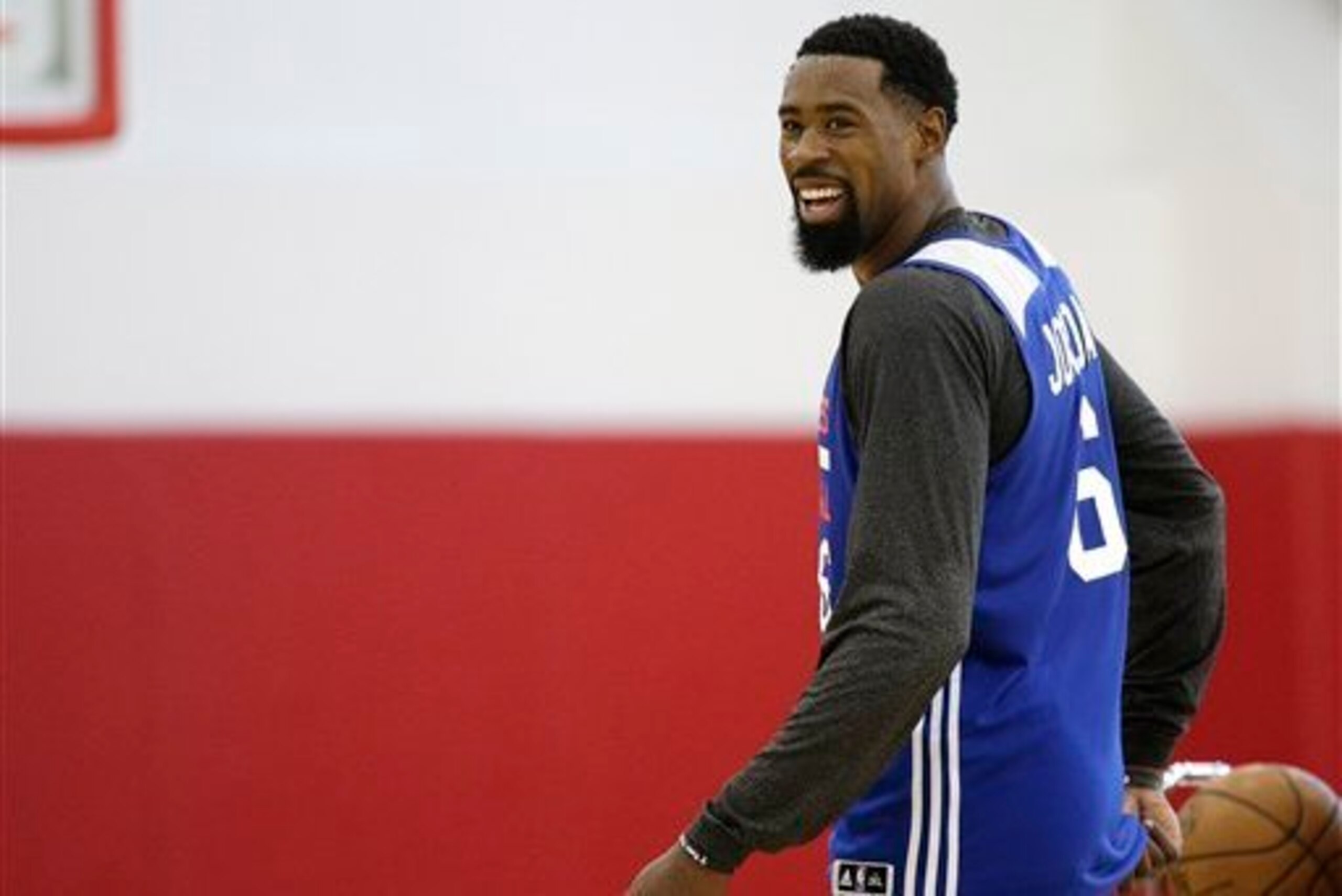
The Jordan fourth-quarter narrative has taken on its own form now. It has its own life. It's living. It's breathing. And so with all this liveliness, you have to wonder why it won't just get up and leave.
Back in the Vinny Del Negro days, Jordan didn't play in the final period. That wasn't because he couldn't have. It wasn't even because he shouldn't have. The reason was more complicated than that.
Del Negro was the type of coach who favored veterans over young players. If Jordan made a mistake on defense, he would come out of a game. If Eric Bledsoe jumped a passing lane unsuccessfully, his bottom would keep his chair company for the long haul. There wasn't any leeway. So Jordan started to pick up the label of "incapable fourth-quarter player" as Lamar Odom and even Ryan Hollins battled during the last 12 minutes of games instead of him.
During the 2012-13 season, Del Negro's final year as Clippers coach, Jordan played in all 82 games. He saw the floor in the fourth quarter during just 30 of them, averaging 1.8 minutes per fourth quarter.

With Doc Rivers at the helm last season, it all changed. Jordan started to play fourth quarters—and it worked out just fine. The 26-year-old led the league in rebounding, field-goal percentage and finished third in Defensive Player of the Year voting. But for his critics, that's not the issue.
It's time to talk about free-throw shooting: DeAndre can't make 'em.
Jordan sunk 42.8 percent of his free throws a season ago. He hasn't made more than 52.5 percent during a single season in his career. At this point, it's probably safe to say he'll never find success at the line. But when it comes to arguing whether he's a quality fourth-quarter player, that's not the point.
The concentration shouldn't be if Jordan makes his free throws. That's a purely superficial reason to sit someone. The focus should be exactly how much the missed free throws hurt the Clippers. And in reality, they don't make such a large difference.
DJ played 72 fourth quarters in his first season under Doc. The 10 he missed were because of blowouts and rest. The free throws didn't present the issues everyone figured they would mainly because DJ doesn't touch the ball often on offense.
Jordan shot 53.8 percent from the line during fourth quarters, missing only 0.7 free throws for every fourth quarter he played.
That's right, 0.7 free throws. He didn't even miss a free throw per quarter.
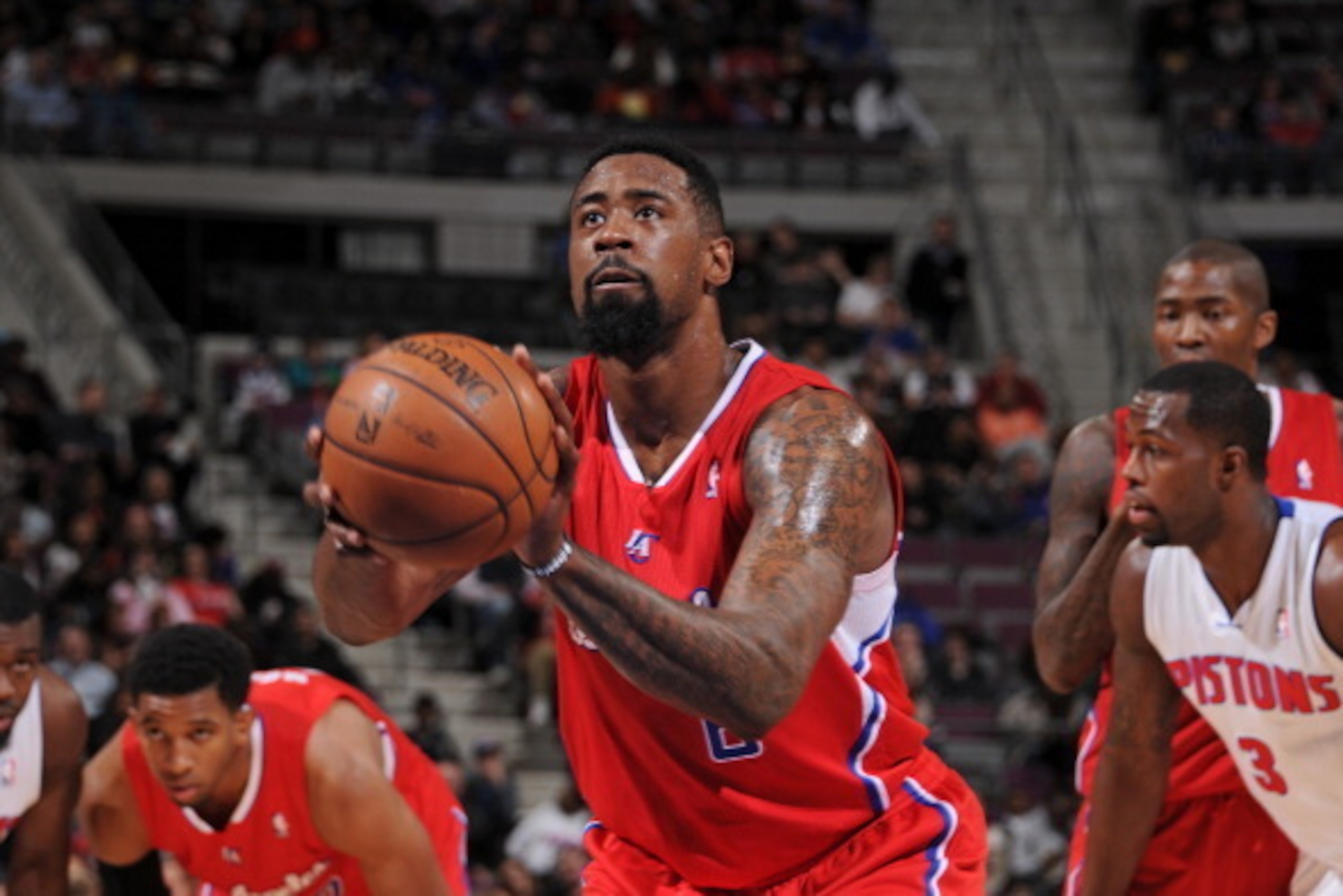
In actuality, Jordan rarely ever goes to the line. DJ missed at least half of his free throws in a game with four or more attempts 36 times last year, but the Clippers went 26-10 during those games. He's missing free throws, but the team isn't necessarily losing because of it.
Obviously, you'd prefer Hawes' success at the line considering he made 78.3 percent of his philanthropic shots a season ago. But Jordan's defense is too important to lose on a consistent basis considering Hawes' struggles with footwork and general pick-and-roll coverage. On top of that, so much of what DJ does while guarding has to do with confidence.
Jordan's production exponentially improved with playing time under Rivers. Someone outside the locker room can never say for sure, but DJ's arrogance—the productive kind, that is—seemed so apparent. As soon as Doc got to town, when asked if Jordan could be Defensive Player of the Year, he started saying things like this:
"One hundred percent, I think that's what he will be. When other teams show up, they should look at him and say, 'This is not going to be a fun night.'"
And this:
"[Jordan] is just too young and too gifted to let walk out your door, bottom line. He's a game changer defensively. He can single-handedly change a game with his defense. There's five guys, and that number maybe too high, that can do that single-handedly with their size and athleticism and he's one of them. When you have one of those guys, you want to keep them.
"
And guess what? Whether Doc actually believed what he was saying, it worked. Jordan's game completely transformed last season.
His rebounds spiked 3.4 per 36 minutes. He learned to defend pick-and-rolls like he never had before. He hit his rotations sooner. He turned into the anchor of the Clippers, whose defense transformed for the worse whenever he would leave the floor, something that stands true so far this preseason when the slower-footed Hawes enters games.
It all culminated in a brilliant playoff performance for Jordan, especially during the Clippers' seven first-round contests against the Golden State Warriors.
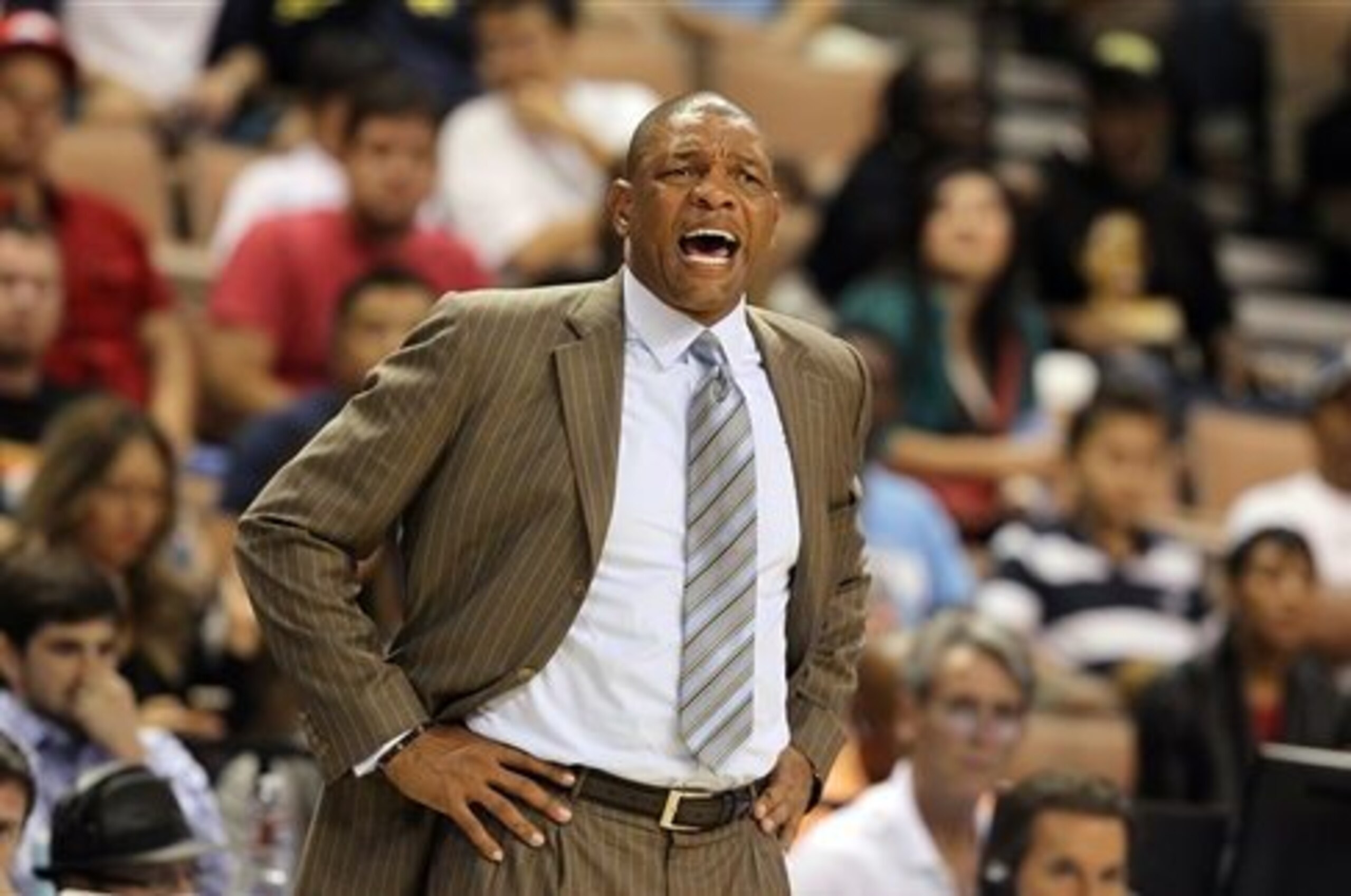
Take DJ out of games consistently, dirty his good name as Del Negro once did and your crunch-time defense is going down with his reputation.
This doesn't mean the Clippers shouldn't adjust depending on opponent and game situation. There are times when playing Hawes at the 5 could fit the Clips better. As Drew Garrison from SB Nation wrote when the Clippers signed the former Cleveland Cavalier, "Hawes provides a significant frontcourt upgrade for the Clippers, giving them a 7-footer who can also space the floor. His utility as a true stretch center came into full bloom last season."
When L.A. trails by 10 with five minutes remaining, go ahead and play Hawes. When the three-point-shooting 7-footer is having a night during which he's drained four long balls and is catching fire, happily leave him in the game. But what's important here is habit, routine. Not necessarily game-to-game X's and O's.
Rivers' actions were consistent with his words. That was essential. Jordan gained clear trust in his coach, and on-court confidence followed. To sit Jordan for fourth quarters now so the team can make a couple more free throws every once in a while would be short-sighted and blatantly incorrect.
Let's be clear: Rivers has not said he will sit Jordan for fourth quarters. He hasn't implied it. And he probably won't do it except for when Jordan is seriously struggling on a given night or if another team goes to the deck-a-DJ strategy. Essentially, he'll treat him like any other closer.
Not many coaches go to deck-a-DJ in the fourth quarter, and even if they were to do so, there would be no reason to sit Jordan for the final two minutes, when an intentional foul would lead to two shots and the ball for the Clippers. Meanwhile, the coach who pulled out that strategy most often, Mark Jackson, is no longer in the league.
There is truly no reason to keep Jordan out of fourth quarters other than perpetuating the incorrect notion that DeAndre Jordan can't play fourth quarters. Hawes will do a nice job off the bench for the Clippers, but considering the defensive and potentially mental ramifications, pulling Jordan from his current role would be the inconsistent move and, thus, the wrong one.
Fred Katz averaged almost one point per game in fifth grade but maintains that his per-36-minute numbers were astonishing. Find more of his work at WashingtonPost.com or on ESPN's TrueHoop Network at ClipperBlog.com. Follow him on Twitter at @FredKatz.
Unless otherwise noted, all statistics are current as of Oct. 23 and are courtesy of Basketball-Reference.com and NBA.com (subscription required).


.jpg?w=2560 "NFL House in Paris Closes for Protests")
.jpg?w=2560 "Trevon Diggs Cut by Seahawks")


