How Argentina Can Get the Best out of the Team with Lionel Messi at the Helm
It is admittedly a dilemma that 99 percent of the world's football teams—club and international—would love to face. But it is a dilemma nonetheless. Argentina are blessed with the best player on the planet in their ranks but still need to work out how best to use his talents.
Albiceleste captain Lionel Messi has been in the national set-up for nine years. In that time he has appeared 95 times, scoring 44 goals to slot in behind the great Gabriel Batistuta as Argentina's all-time top scorer. Yet still, there is a case to state that the nation have never truly figured out how best to use their most valuable asset.
TOP NEWS
Live World Football Moments 🍿

Final Men's Ballon d'Or Rankings 📊
.jpg?w=2560 "NFL Paris Football")
NFL House in Paris Closes for Protests
A brief comparison between the team's most recent friendly matches, excluding a training-ground thrashing of Hong Kong, is telling. In the first clash under new coach Gerardo Martino, an Argentina without Messi turned to exhilarating winger Angel Di Maria for inspiration.

The results were devastating.
The Manchester United record signing proved what he could do with three assists and a goal to down Germany 4-2 in Dusseldorf. If that match formed a slight piece of revenge for the Albiceleste, it must have been even more bittersweet for Fideo.
Di Maria was forced to watch the World Cup final from the substitutes' bench due to an injury sustained in an earlier round, as Messi and Co. toiled in a 1-0 defeat. The question "what if" was impossible to avoid for Albiceleste fanatics and perhaps for the players themselves.
In fact, Germany is the kind of opposition that Argentina can thrive against. Joachim Low will never go out to shut out a game, instead looking to hurt opponents and play as far up the pitch as possible. This leaves Argentina in danger of seeing their defence exposed, but it also means they will have chances to cause damage themselves.
In the final itself, if Messi, Gonzalo Higuain and Rodrigo Palacio had converted several golden chances, the World Cup could have had a very different fate.
October's run-out against Brazil, on the other hand, demonstrated the other side of the coin for the expansive Argentines. Even with Di Maria, Messi and Sergio Aguero on the pitch, they struggled desperately to break down Dunga's well-drilled Selecao. Everybody knows how the dour Brazil coach will line up: deep, with men behind the ball, hitting on the counter. The question for Martino was how to combat this, and in Beijing he most definitely did not have the answer.
Neither did his captain. Messi looked the man most likely to do something against the team spearheaded by his Barcelona team-mate Neymar, the first time the pair had met since his move to the Camp Nou. But something was missing. The pace and verve that had typified Argentina against Germany had evaporated.
Aguero and Erik Lamela, so impressive against the world champions, went dangerously missing as Diego Tardelli's double settled the score in favour of Brazil. Di Maria pushed and pushed as always but was unable to make the difference from deep. Juventus' young star Roberto Pereyra was impressive but ultimately also struggled to break through an impenetrable back line.
A penalty miss from Messi, when the game was still deadlocked and goalless, typified the frustration at trying to chisel through the Brazilian wall without the appropriate tools.
La Pulga will not be going anywhere. One poor game in national colours does not a bad player make, and Martino knows that his compatriot from Rosario is vital to any plans Argentina have going into the Copa America next year. But that is not to say changes cannot be made in order to make Messi function even better in the coach's fledgling system.
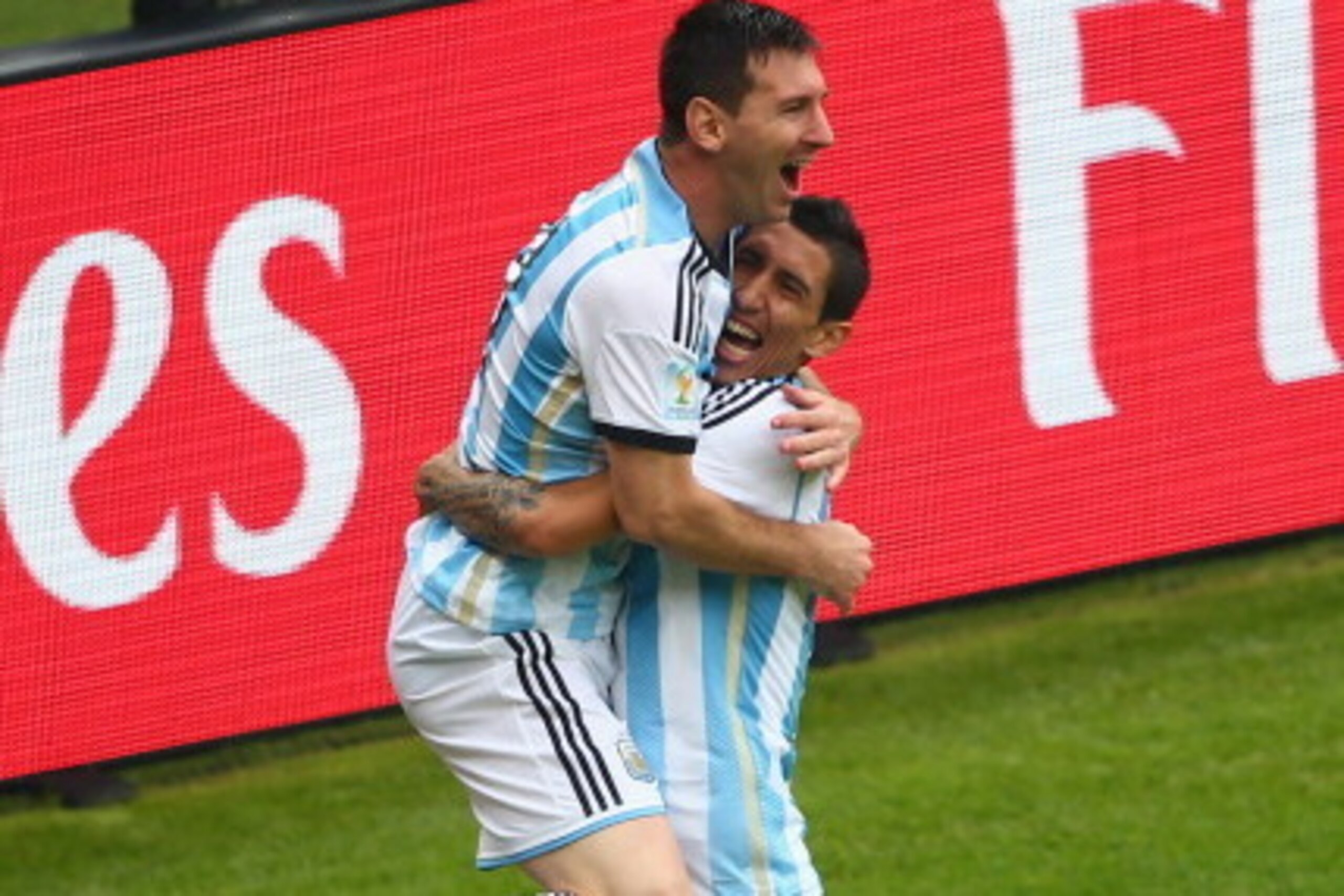
The first priority for the Albiceleste must be, as counterproductive as it may seem, to take some of the ball away from Messi. Of course, even for some of the world's elite players it is very easy to hand the ball to the Barcelona legend 30, 40 or 50 metres from goal and wait for him to achieve the impossible.
But doing so in every passage of play limits Argentina's dynamism and work in the transition, lowering the pace and allowing defences to regroup.
Changing the point of attack to Di Maria, for example, out wide would allow Messi to push forward where he can really do damage. It would allow him to receive the ball in the penalty area, leaving him just one jink or twist away from a clear chance.
Messi still has a role to play as Argentina's creative hub. But should there be just one? Blessed with two of the finest players currently involved in football right now, Argentina have a responsibility to use them as much as possible.
La Pulga playing further up the pitch, in almost a centre-forward role, while Fideo slots in as a wide striker with the likes of Lamela and Pereyra pushing on from midfield could be an irresistible use of those talents.

.jpg?w=2560 "Seahawks Chiefs Football")