
Panthers vs. Packers: Breaking Down Carolina's Game Plan
On Sunday, the Panthers head to Green Bay to take on the Packers and are looking to build off of a strong but imperfect performance against the AFC-North leading Cincinnati Bengals that resulted in the first tie in franchise history.
The Panthers are still finding their way on defense and have continued to struggle on that side of the ball since defensive end Greg Hardy was placed on the commissioner's exempt list.
They haven't had the same success pressuring the quarterback with the front four as they had in 2013, throwing a huge wrench into their coverage strategies and resulting in the increased use of linebackers in blitz schemes, which has consequently made the defense very prone to allowing explosive plays in the run game.
TOP NEWS
.jpg?w=2560 "NFL Paris Football")
NFL House in Paris Closes for Protests
.jpg?w=2560 "Seahawks Chiefs Football")
Trevon Diggs Cut by Seahawks
.jpg?w=2560)
B/R's Expert Week 7 NFL Picks 🔮
Perhaps now, with six weeks of experience playing together, the Panthers' new defense will begin to return to its 2013 form, but will that be enough against a high-powered Green Bay offense?
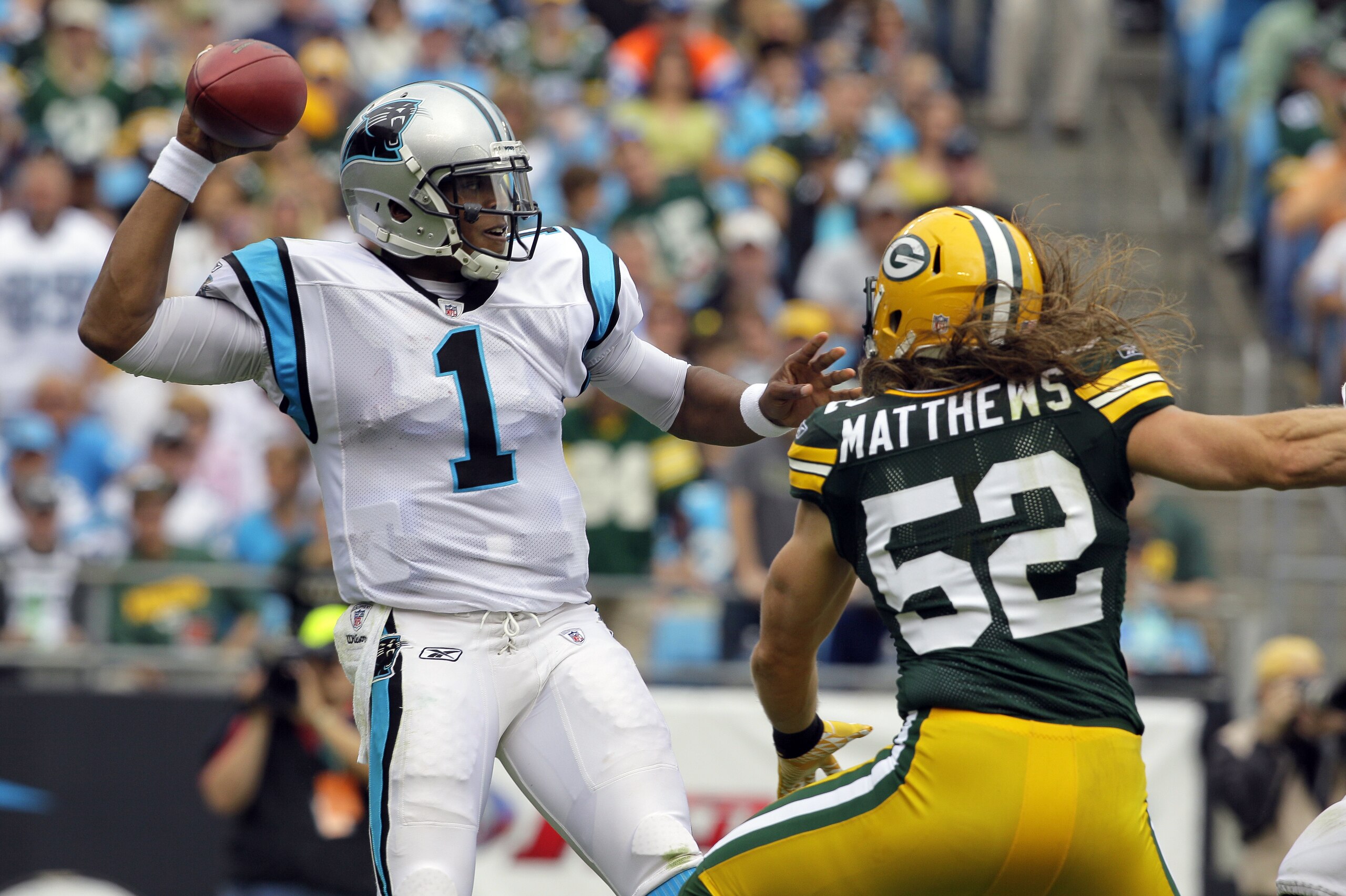
And will the Cam Newton-led offense be able to tear through a toughened Packers defense the way it did in Cincinnati last week?
Read on to find out how the Panthers will plan to answer both questions and come away with a huge win at Lambeau Field and maintain their position atop the NFC South.
Control the Ball and Slow the Pace
For years, it seemed that the Panthers played best when they kicked off to begin games and played the field position battle. This was likely because their defensive performance was typically superior to their product on the opposite side of the ball.
However, the Panthers now have the offensive firepower to sustain a long, confidence-boosting opening drive against the league's better defenses and are better off taking the ball first and establishing their preferred tempo.
Such an opening drive was key to the Panthers' offensive game plan against Cincinnati, as their opening drive ate up over nine minutes out of the first quarter.
The Carolina offense accomplished this by consistently picking up yards on their first-down plays—four rushes, one play-action pass—and avoiding long, drive-killing sacks. Thank the quarterback Newton for that; his movement in the pocket was spectacular.
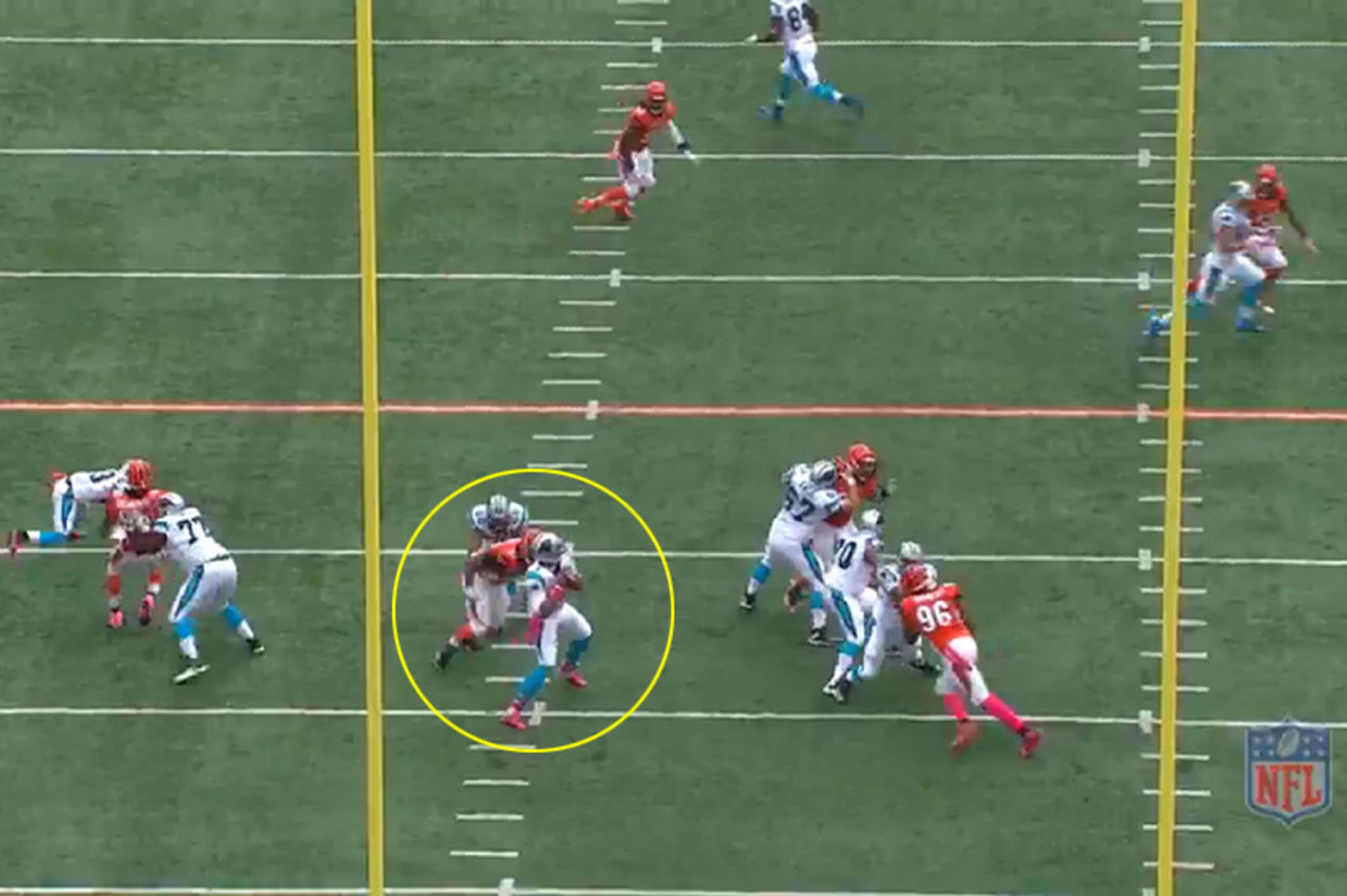
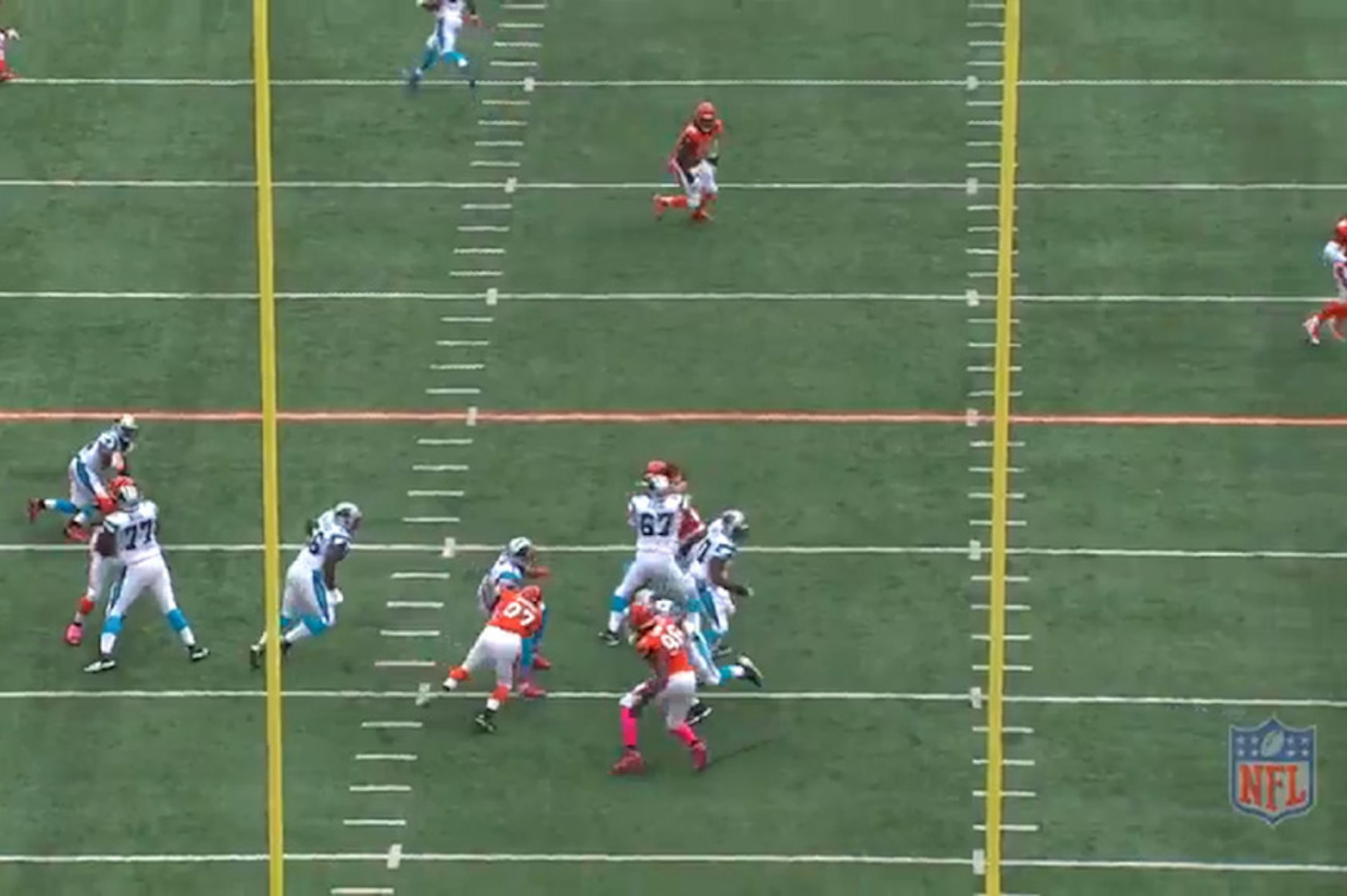
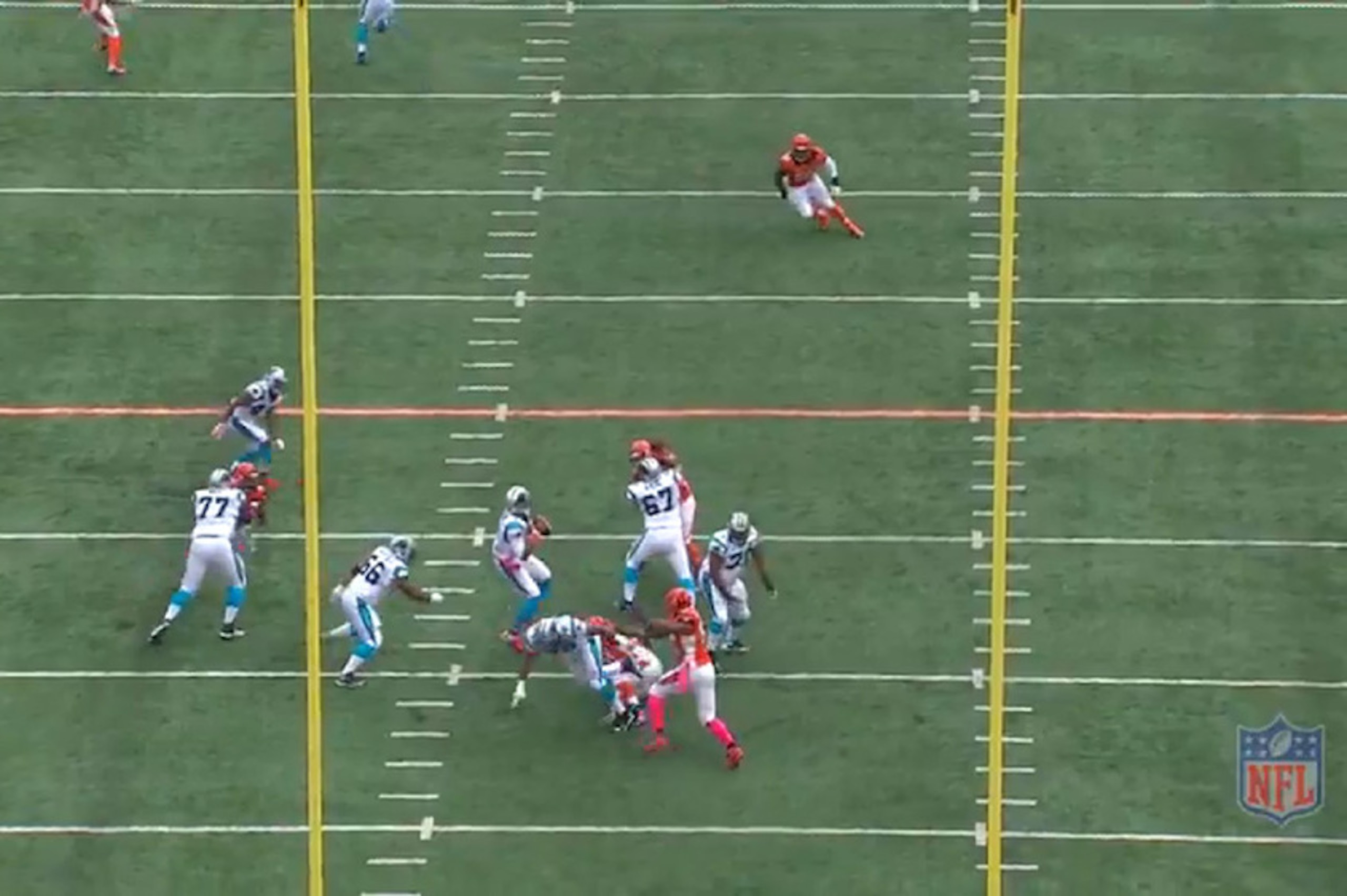
Left guard Amini Silatolu was discarded by Bengals defensive tackle Geno Atkins, who then had a free shot at Newton, but the quarterback's great pocket sense saved the team from a nine-yard loss on second down and set the Panthers up to convert the first down on the following play.
The bad news for the Panthers is that they'll be facing a much stronger group of pass-rushers when they take on the Packers, who play out of a base 3-4 defense. The good news, however, is that their defense struggles to stop the run, and running back Jonathan Stewart should be returning from injury just in time for a favorable matchup this week.
In Week 4, the Bears exploited the poor Green Bay run defense for 235 yards on just 41 carries, despite no runs of 20 or more yards. They consistently gained positive yards on first and second and had the Packers defense on its heels all game, falling just four yards short of a 500-yard offensive performance.
Let's take a look at a few plays to see why the Packers couldn't keep Matt Forte bottled up.
Here, the Bears use two effective double-teams to wash down the Packers nose tackle, and play-side defensive end and left tackle Jermon Bushrod combos down to the inside linebacker—in this case, Jamari Lattimore.
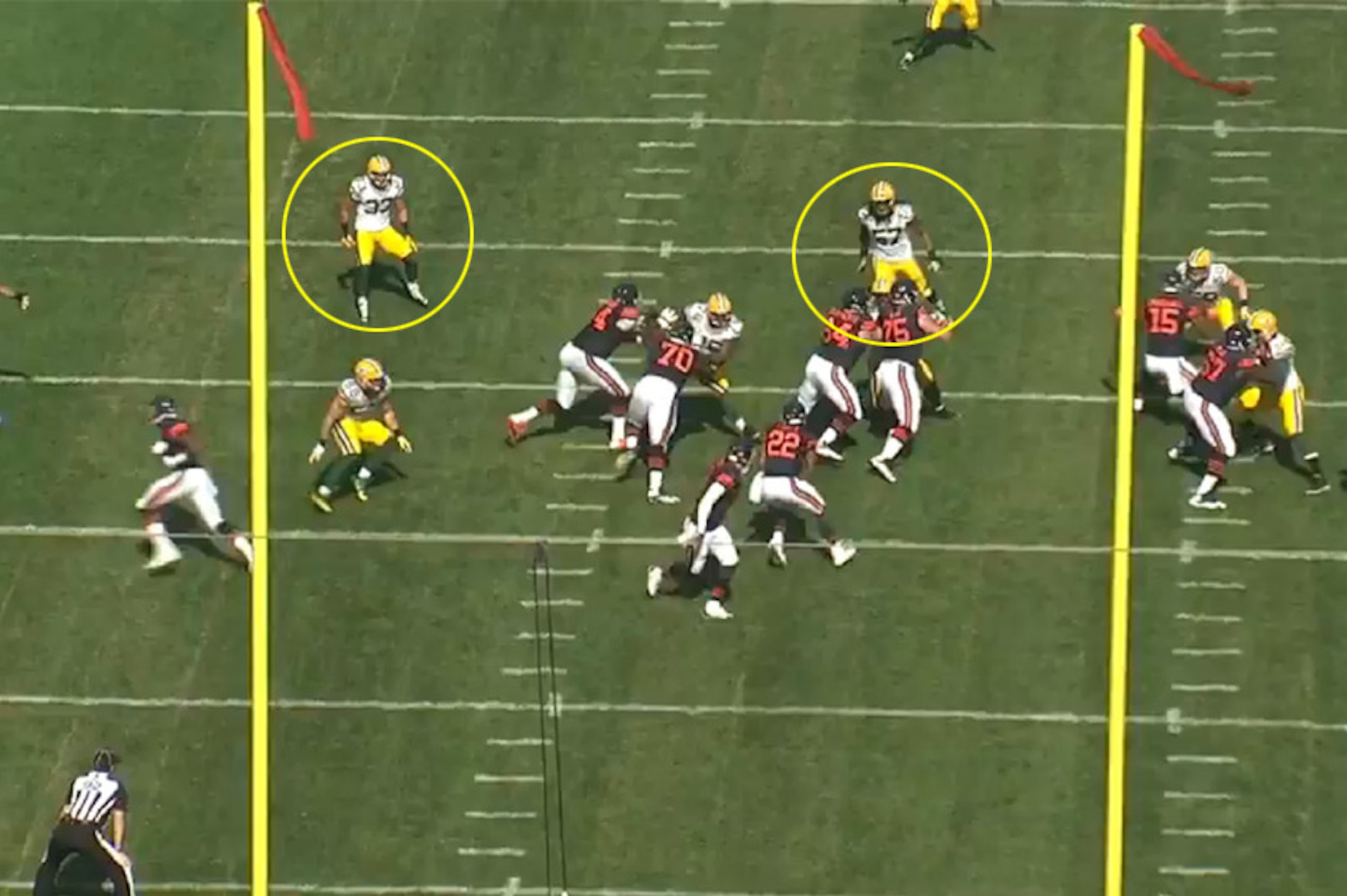

Both Lattimore and safety Micah Hyde (circled) fail to diagnose the play quickly enough, and Forte is able to run off the butt of his left tackle and gain a healthy eight yards, picking up a first down off of a 2nd-and-long.
With linebacker Clay Matthews getting too far upfield, Hyde should immediately have stepped up and replaced the gap cleared by the Bears left tackle, while Lattimore should have recognized the blocking angles of the Bears offensive line and fought to get over the top of the combo block coming his way. Had they done this, Forte would have had no place to make a cut and the gain would have been negligible.
On this next play, you'll see the result of linebacker Sam Barrington (circled) not fighting pressure with pressure and keeping his outside arm free.
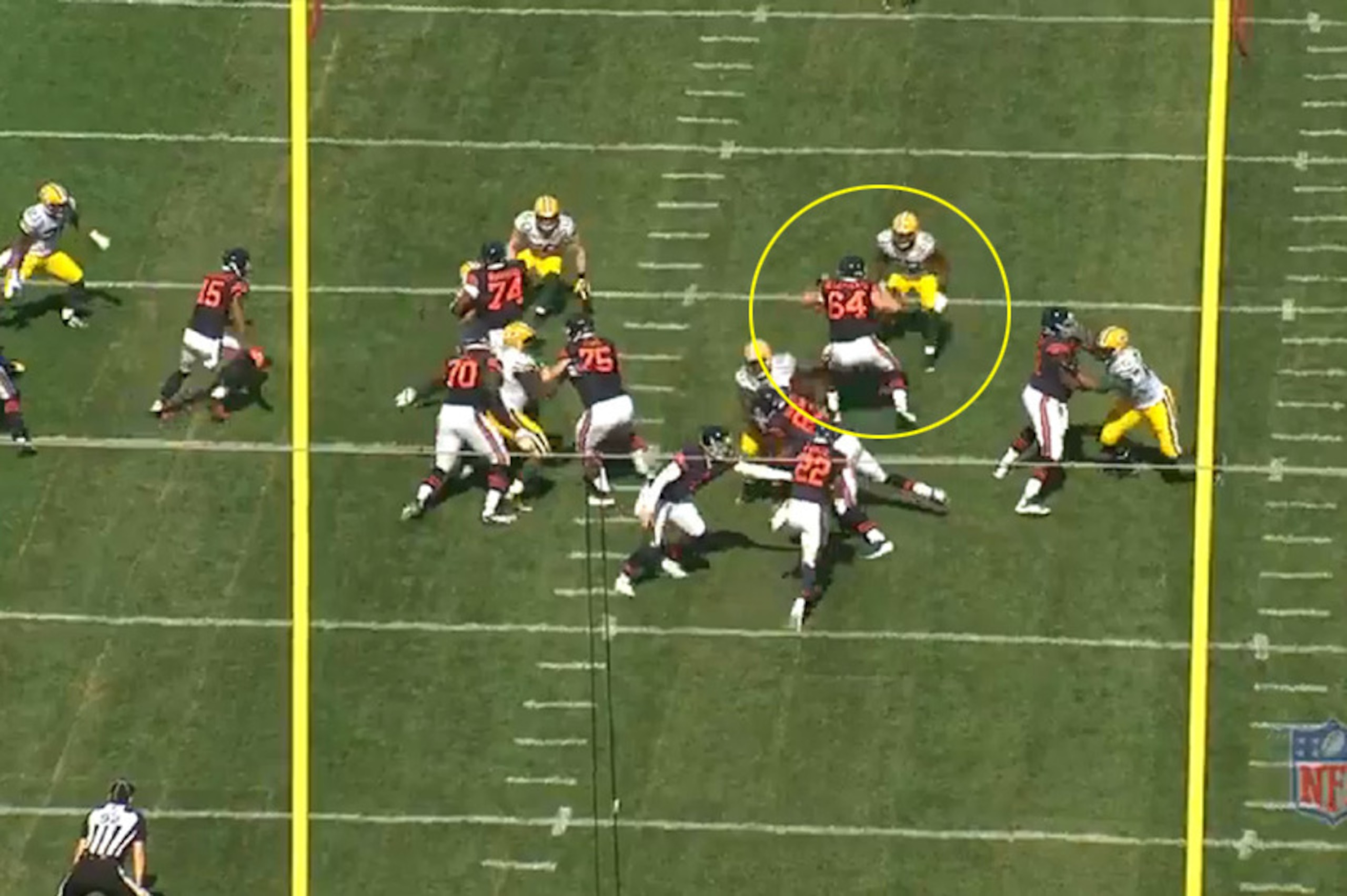

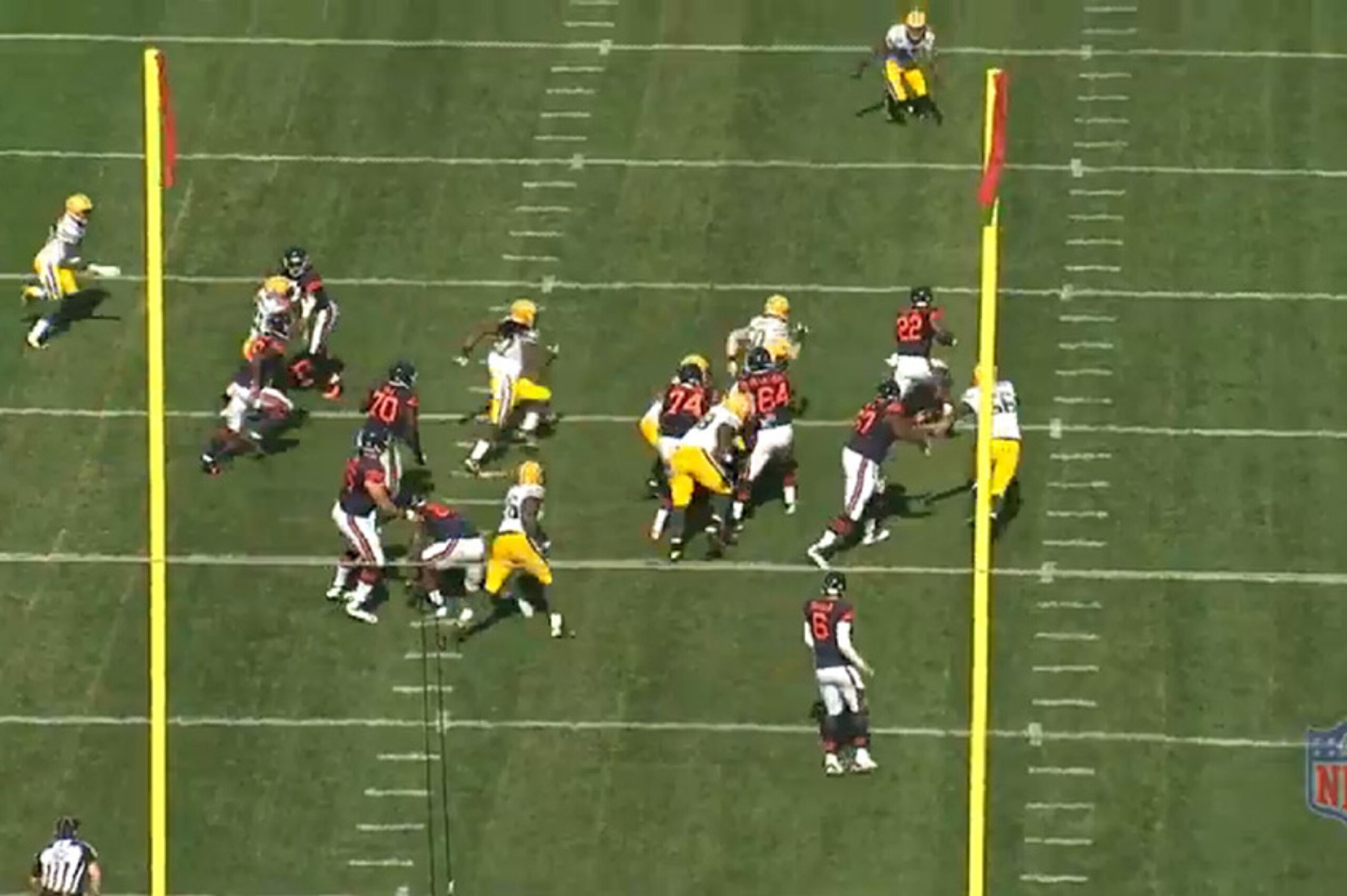
Defensive end Julius Peppers does a decent job of pushing the right tackle back into the running lane, and had Barrington fought across the face of center Brian de la Puente, Forte would have been forced to cut back into the arms of inside linebacker A.J. Hawk. Instead, Forte runs through the gap left open by Barrington and gets to the second level, where he's a missed tackle away from a touchdown run.
The final play we'll look at shows the Packers simply getting outplayed at the point of attack and safety Ha Ha Clinton-Dix (circled) waiting for Forte instead of stepping up into the box, breaking down and making a play on the ball-carrier.
This run play is set up simply: The Bears right guard blocks down, and the left guard pulls to kick out defensive end Datone Jones. The inside linebacker Hawk should have recognized the right side of the offensive line blocking down and filled the opening gap, but he takes a false step to the left and loses his balance as Forte shoots through the hole opened up by the kick block.
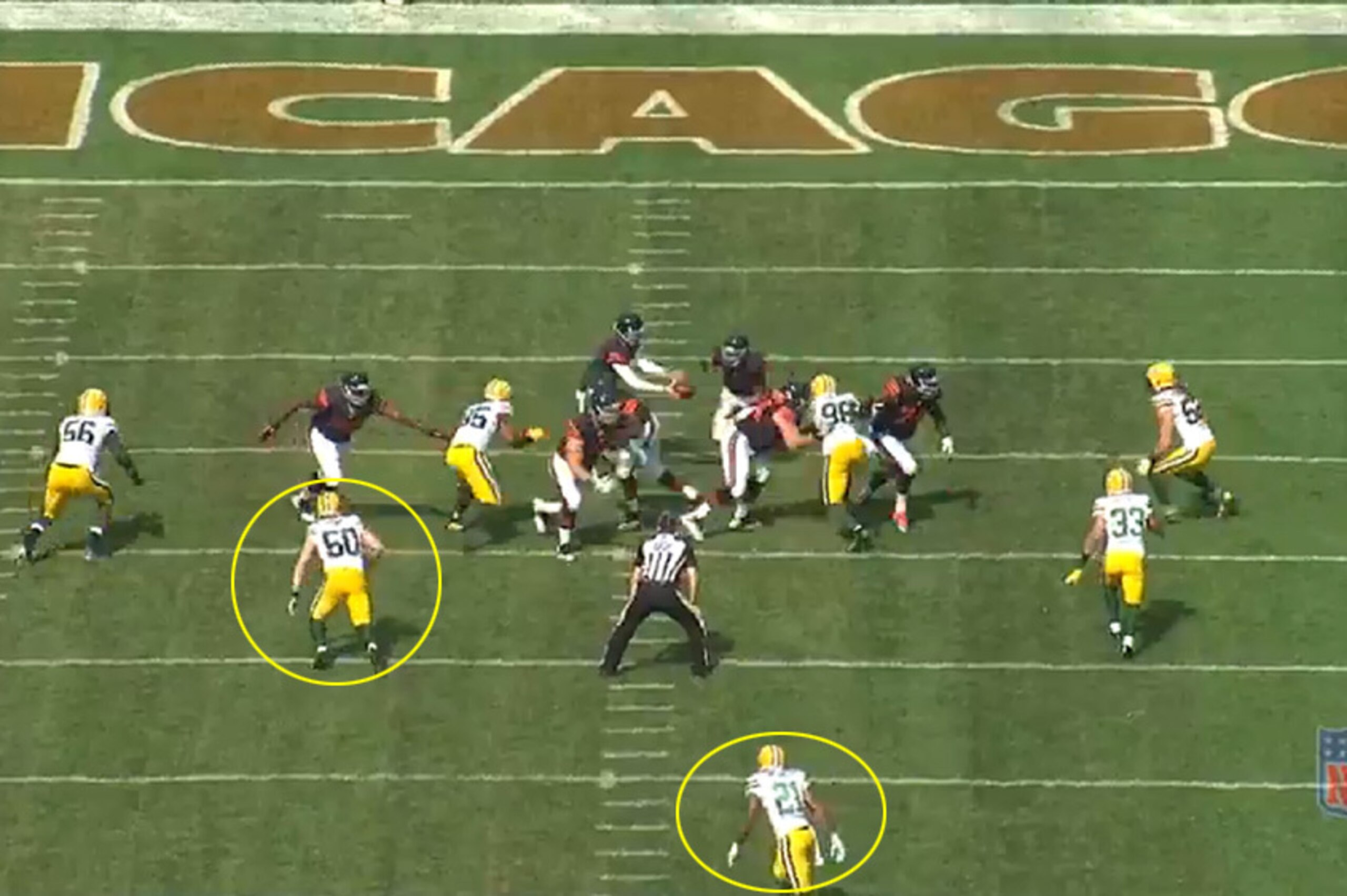

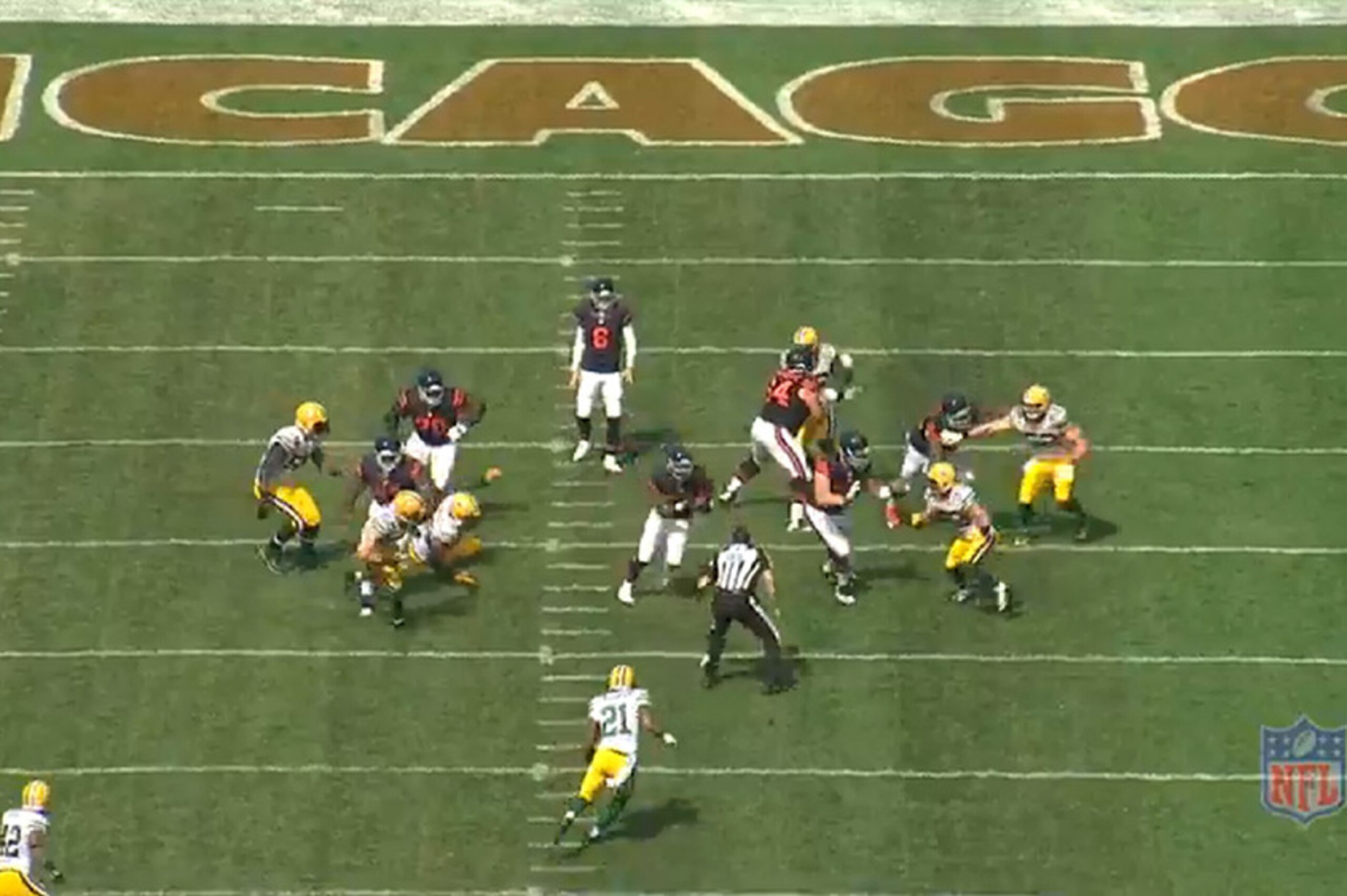
From the first frame to the third, the safety Clinton-Dix takes nothing but false steps and makes no progress toward the line of scrimmage. This puts him at a disadvantage, as he's only given Forte more room to work with, and the Bears ultimately gain 19 yards and a first down on the play.
Carolina has had little luck on traditional running plays this season, but if there's a game for it to turn that around, it's this one. The Panthers will likely attempt to establish the running game early and go to the ground game often as the defense wears out because there will be open holes in this defense.
Getting the ground game going will be key to slowing down quarterback Aaron Rodgers and the high-powered Green Bay offense. Due to injuries, the Panthers don't have the depth in the secondary to keep up with a passing offense that has so many weapons at the receiver position if that offense is also controlling the time-of-possession battle.
Pressure Rodgers by Any Means
Just a year after leading the league in sacks, the Panthers pass rush has turned...well, average. They're currently ranked 15th in the league in sacks and are sorely missing Hardy's double-team-beating abilities that enabled them to blitz infrequently and get to the quarterback anyway.
The Packers offensive line has performed about as expected this season. Left guard Josh Sitton has played spectacularly, and the rest of the line has just been solid, with the exception of rookie center Corey Linsley, who has struggled early on in his career, allowing a team-high eight pressures on the quarterback so far this season.
Linsley's presence at the center of the Packers offensive line sets up nicely for a matchup with Panthers defensive tackle Kawann Short, who has been nothing short of dominant in 2014 (I promise that pun was unintentional).
Short's bull-rushing prowess has been disrupting opposing quarterbacks all season, and he'll have to continue doing so this week to prevent Rodgers from sitting back and picking apart a weak Carolina secondary.
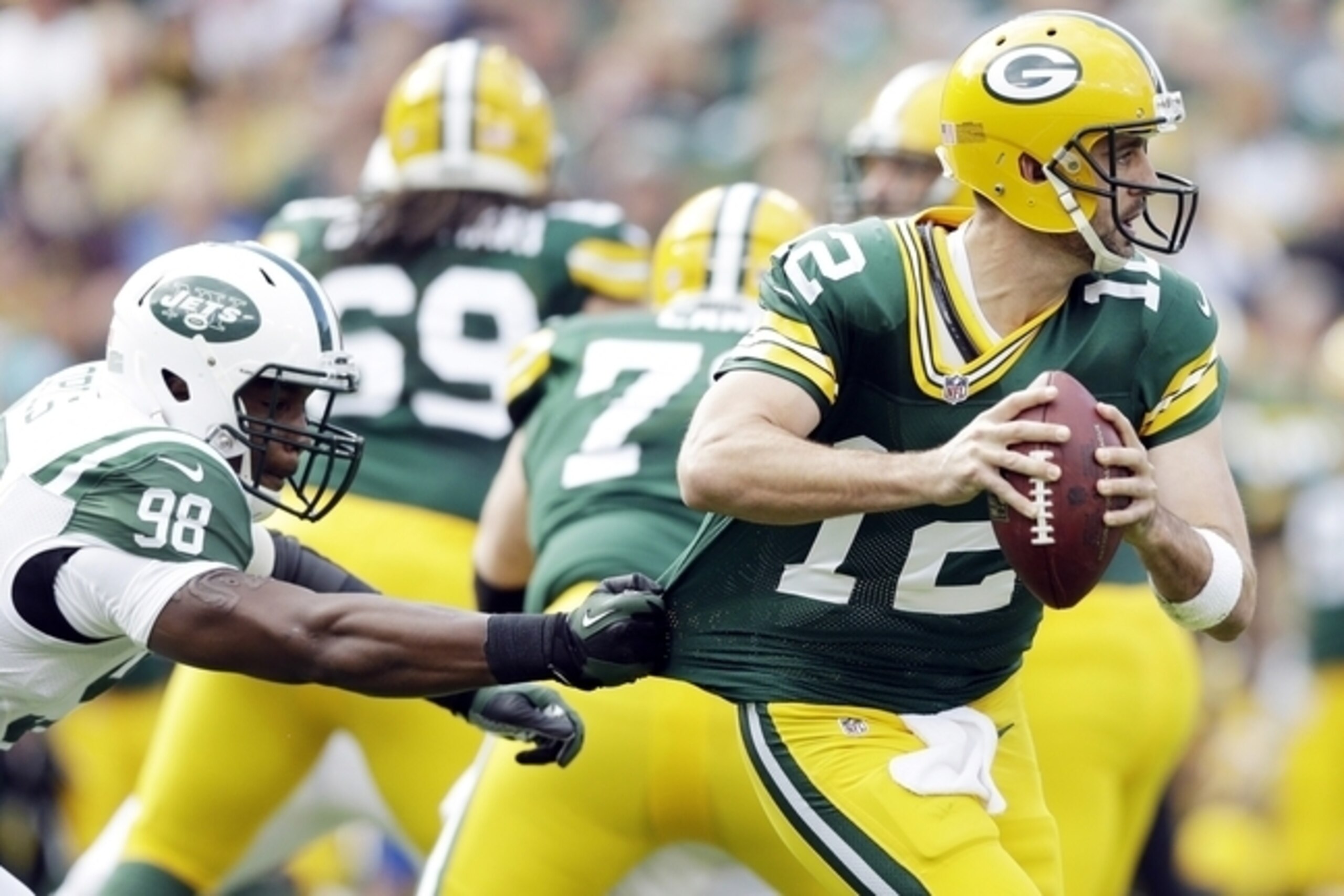
When under pressure this season, Rodgers' completion percentage falls to 47.8 percent compared to 69.9 percent when he isn't under pressure. With Carolina already allowing a 30th-ranked 69.1 completion percentage to opposing quarterbacks this season, allowing Rodgers to be comfortable in the pocket is clearly not an option.
That could mean that defensive coordinator Sean McDermott involves safety Roman Harper in more blitz packages this week. Nickel back Bene Benwikere was Carolina's preferred blitzing defensive back, but he's unlikely to play for the second straight week, so it's likely that the team spent the week working another player into those blitz packages.
Harper hasn't been much of an asset in pass coverage, so bringing him into the box more often makes sense, especially with the promotion of safety Robert Lester, who had three interceptions in 12 games as a rookie in 2013, to the active roster from the practice squad earlier this week.
McDermott doesn't love to blitz often, but Carolina's current pass-defense strategy hasn't been very effective, so it's time to see him make a change. If it does pay off, it could help bridge the gap until Hardy's potential return in November.
All statistics courtesy of ProFootballFocus.com.
.jpg?w=2560 "Colts Football")