Additions of Verrett, Flowers Paying Dividends Early for Chargers Defense
At the end of the 2013 season, it certainly could have been said that the San Diego Chargers had the worst starting cornerbacks in the NFL.
Six games into their 2014 season, Chargers offseason additions Brandon Flowers and Jason Verrett are making a case for being the best tandem of starting cornerbacks in the NFL.
San Diego had made an effort to improve at the position during the 2013 offseason when it signed veteran free agent Derek Cox to a four-year, $20 million deal, but Cox played so badly that he was relegated to the bench after Week 12 and released after one season.
TOP NEWS
.jpg?w=2560 "NFL Paris Football")
NFL House in Paris Closes for Protests
.jpg?w=2560 "Seahawks Chiefs Football")
Trevon Diggs Cut by Seahawks
.jpg?w=2560)
B/R's Expert Week 7 NFL Picks 🔮
Each of the top three Chargers cornerbacks in snaps played last season—Shareece Wright, Richard Marshall and Cox—were ranked among the NFL’s 10 worst players at the position by Pro Football Focus (subscription required). According to ESPN.com, the Chargers allowed opposing passers to complete 66.4 percent of the throws they attempted for an average of eight yards per attempt.
Flowers and Verrett, going into Week 7 of this NFL year, have cumulative grades from Pro Football Focus that rank them No. 1 and No. 2 among all cornerbacks. So far, the Chargers have allowed their opponents to complete just 60.3 percent of their passes at a clip of 6.6 yards per attempt.
| Comp. % Allowed | Yards per Attempt | Yards per Game | Opp. QB Rating | |
| 2014 | 60.3 | 6.6 | 209.3 | 88.2 |
| 2013 | 66.4 | 8.0 | 258.7 | 96.4 |
It might still be too early to draw any concrete conclusions from the San Diego passing defense’s seemingly vast improvement. What is clear is that, at least at the cornerback position, the Chargers are in a far better position this season than they were last year.
Big cornerbacks like Richard Sherman of the Seattle Seahawks might be becoming the NFL’s new prototype for the position, but don’t tell that to San Diego.
Flowers, at 5’9” and 187 pounds, and Verrett, at 5’9” and 178 pounds, both rank among the league’s smallest starting defensive backs.
One focused on their skills and not their statures probably wouldn’t notice, because both cornerbacks show no lack of physicality and strength despite their disadvantages in size.
The Rookie
Cornerback was the Chargers’ biggest need heading into this year’s NFL draft, as they had not yet made any significant moves to improve their depth chart at the position at the time, so it made perfect sense for them to use their first-round pick (No. 25 overall) to select Verrett, a second team AP All-American from Texas Christian University.
The fourth cornerback selected in this year’s draft, Verrett is already showing at the professional level what should have been evident from his three years as a starter at TCU: He’s got everything but size.
Verrett put his speed on display at this year’s NFL Scouting Combine, where he ran a 4.38-second 40-yard dash, according to NFL.com, but what really makes Verrett special athletically is how well he translates that speed to his football movements.
Possessing clean footwork and naturally fluid hips, Verrett is at his best in man-to-man coverage, as he is consistently able to mirror opposing wide receivers in their movements and keep himself in position to force incomplete passes.
A 39-inch vertical jumper who competes for the ball in the air, Verrett can win in jump-ball situations, even against receivers much larger than he is.
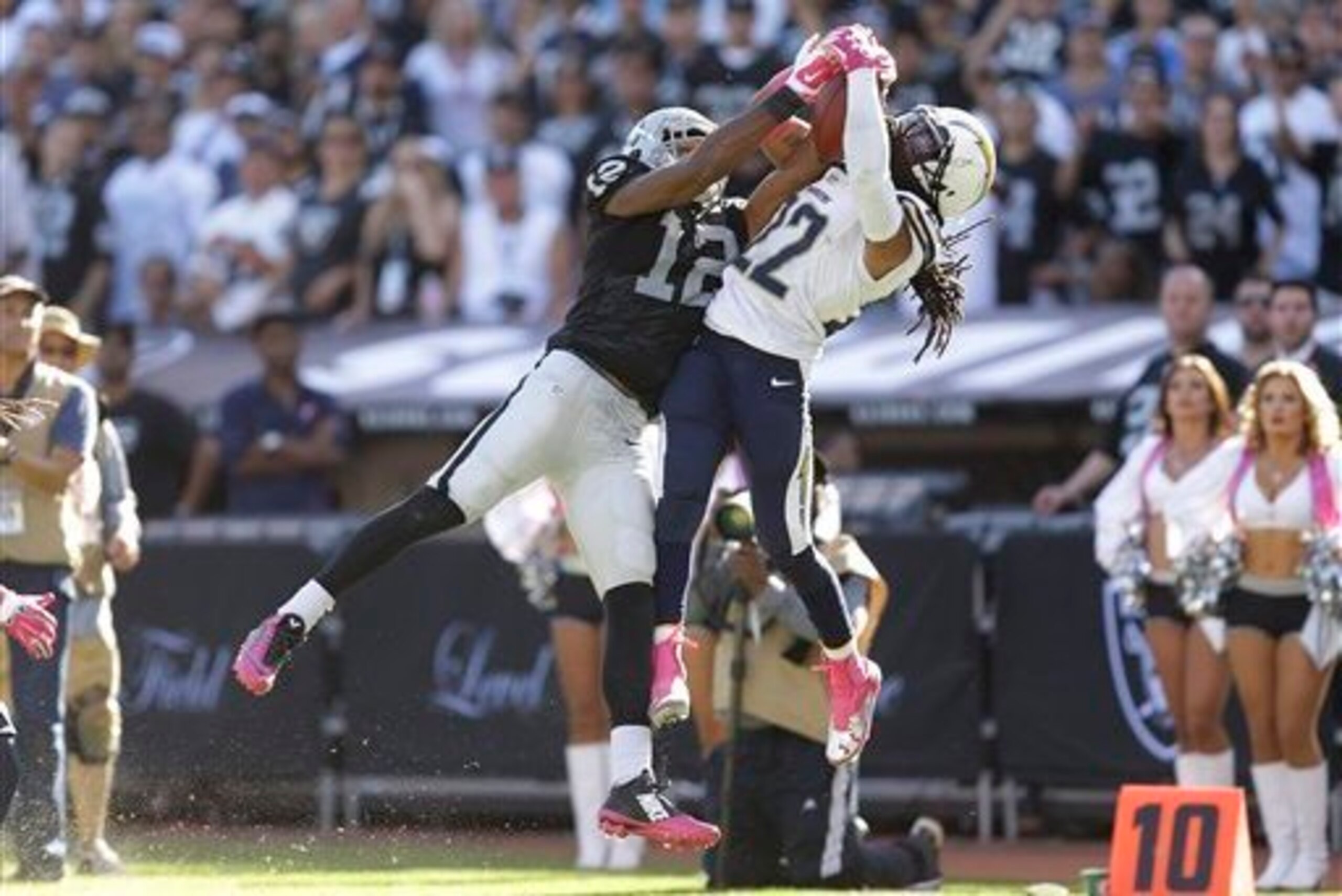
Attempting to mount a go-ahead drive late in the fourth quarter against the Chargers on Sunday, Oakland Raiders quarterback Derek Carr decided to test Verrett’s jump-ball ability, as he threw a deep pass to Brice Butler, a 6’3”, 210-pound wide receiver, against the cornerback’s single coverage.
Verrett made Carr, a fellow rookie, pay by timing his jump perfectly and stealing the ball away from Butler at the catch point for a victory-sealing interception—a play that was chosen by NFL Network as the No. 6 “performance moment” of Week 6 (see 1:05 mark of video below).
Overall, Verrett has allowed just 11 receptions on 25 targets through five games (he missed San Diego’s Week 4 game against the Jacksonville Jaguars with a hamstring injury).
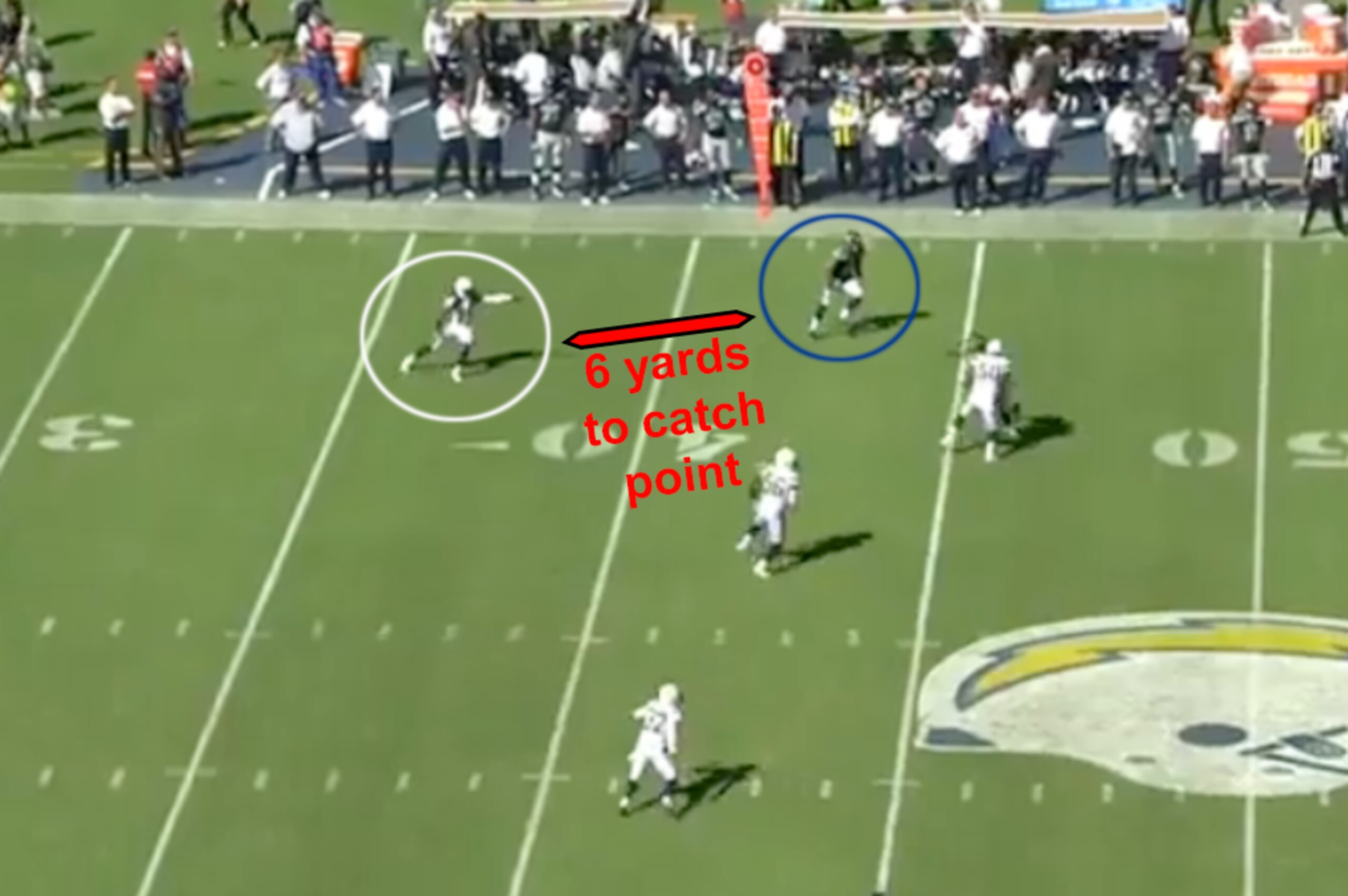
Most of the catches Verrett has allowed have come in situations where he was playing off the receiver and gave his opponent too much cushion, like he did in the following short reception and 15-yard gain by Seattle Seahawks receiver Jermaine Kearse.

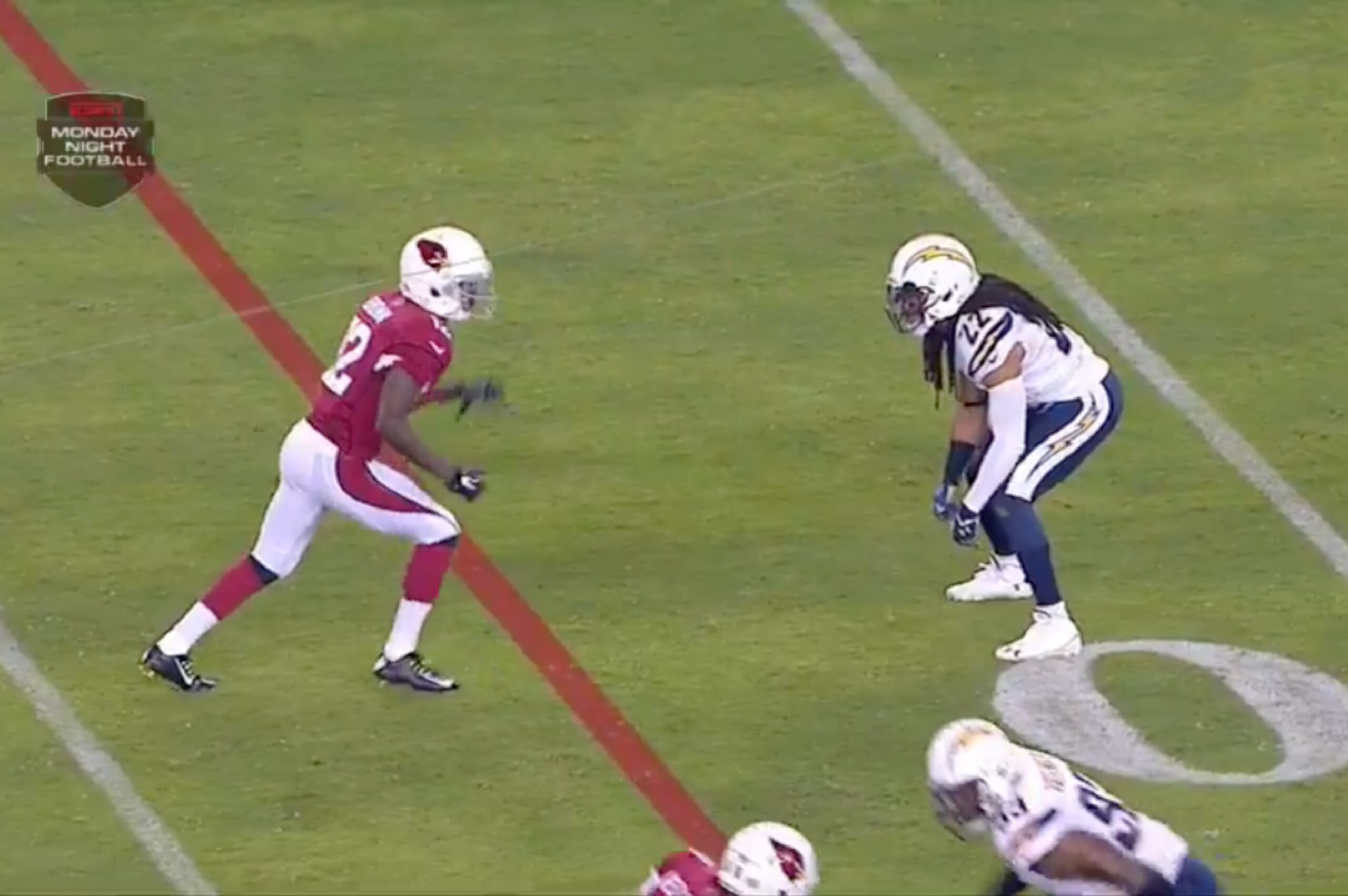
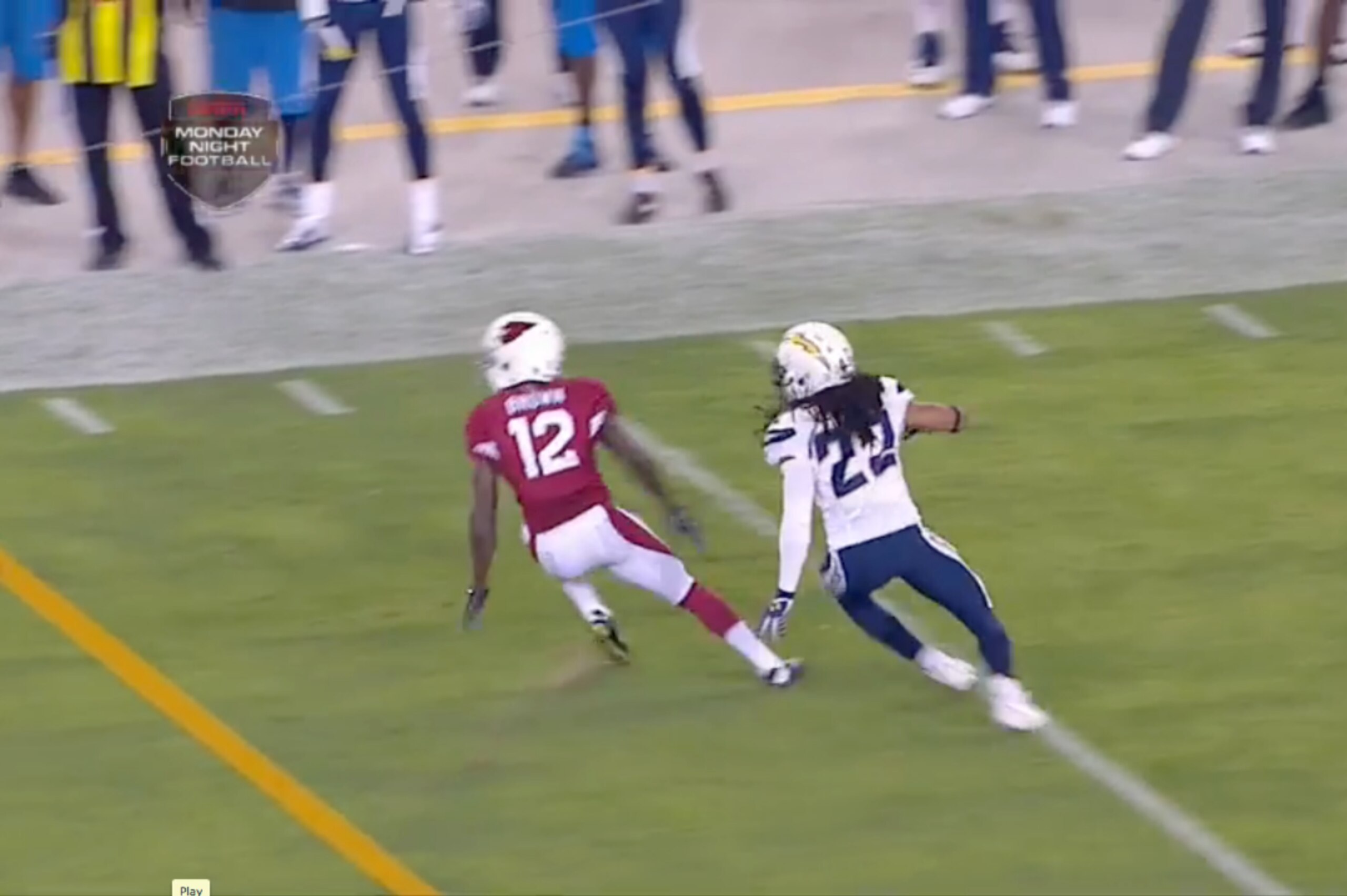
When he is playing close to the receiver, Verrett can take advantage of his change-of-direction quickness and physical hitting to break up passes, like he did on a 10-yard comeback route against fellow rookie John Brown in San Diego's season opener against the Arizona Cardinals.


Even when he has allowed catches in front of him, Verrett has consistently been able to close upon his receiver and make a quick, sound tackle without giving up significant yards after the catch.
With the exception of a 30-yard catch against him by Raiders wideout Andre Holmes on Sunday, Verrett has not allowed any other receptions this year that have gone for more than 16 yards.
The aforementioned interception was the biggest play of the year so far for Verrett, who has four total passes defensed this season, but what’s more important is how consistent he has been.
He has allowed just 0.86 receiving yards per coverage snap against him this season, the 10th-best mark among NFL cornerbacks who have played at least 50 percent of their teams’ snaps this year, according to Pro Football Focus.
The Veteran

Although Verrett’s career is off to a very impressive start, he alone would not have solved the Chargers’ cornerback problem. Their second solution came in June, when they took advantage of their division rival Kansas City Chiefs’ release of Pro Bowl defensive back Brandon Flowers and signed him to a one-year contract.
For $3 million—$900,000 less than they are paying Cox in dead money this season, according to Spotrac—it has looked as though the Chargers are getting one of the NFL’s best bargains for the 2014 season.
Although inconsistent with the fact that he was named to his first Pro Bowl last season, Flowers’ play was disappointing in 2013. A poor fit in the Chiefs’ new defensive scheme under defensive coordinator Bob Sutton, Flowers gave up 1.7 yards per coverage snap in his final year in Kansas City, according to PFF, and was deemed not to be worth the $10.5 million he would have made as a Chief this year.
That’s worked out well for the Chargers, as Flowers has accumulated PFF’s best grade among NFL cornerbacks (12.1) and recorded seven passes defensed in just five games (he was absent from San Diego’s Week 2 win against the Seattle Seahawks with a groin injury).
Flowers doesn’t have the speed that enables Verrett to thrive, but he’s a skilled and experienced cornerback who consistently puts himself in the right position to make plays.
Like Verrett, Flowers is a physical defensive back who excels in man-to-man coverage and throws his body into tackles. He was beaten badly for one big play Sunday, as Andre Holmes ran away from him on a 77-yard receiving touchdown, but his overall body of work this season—which includes two interceptions—has been outstanding.
Flowers' well-rounded game enables him to play both outside in the base defense and as a slot cornerback in nickel packages. He has excelled in the latter capacity, as he leads all NFL cornerbacks in coverage snaps per reception allowed in the slot, according to PFF.
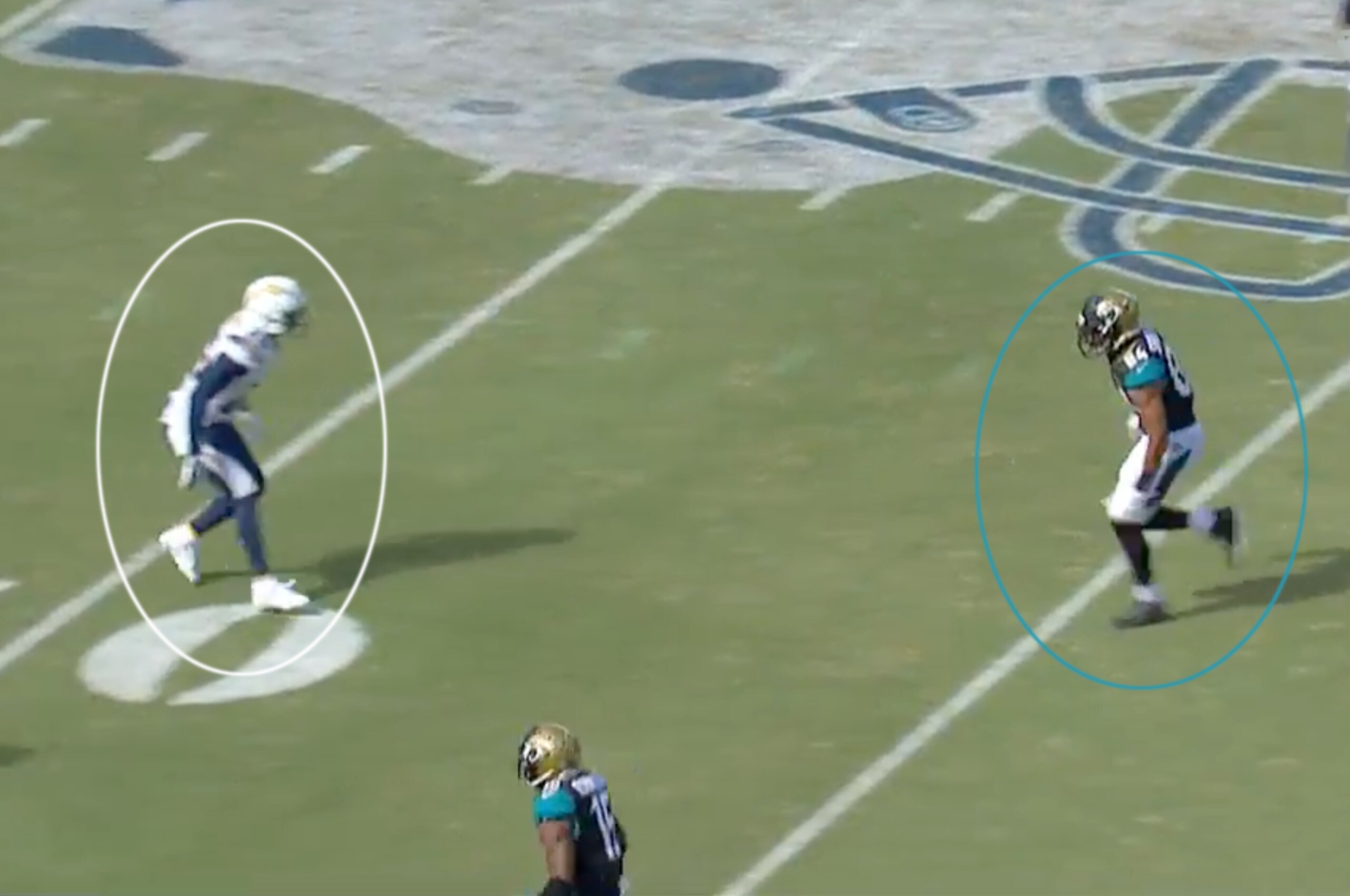
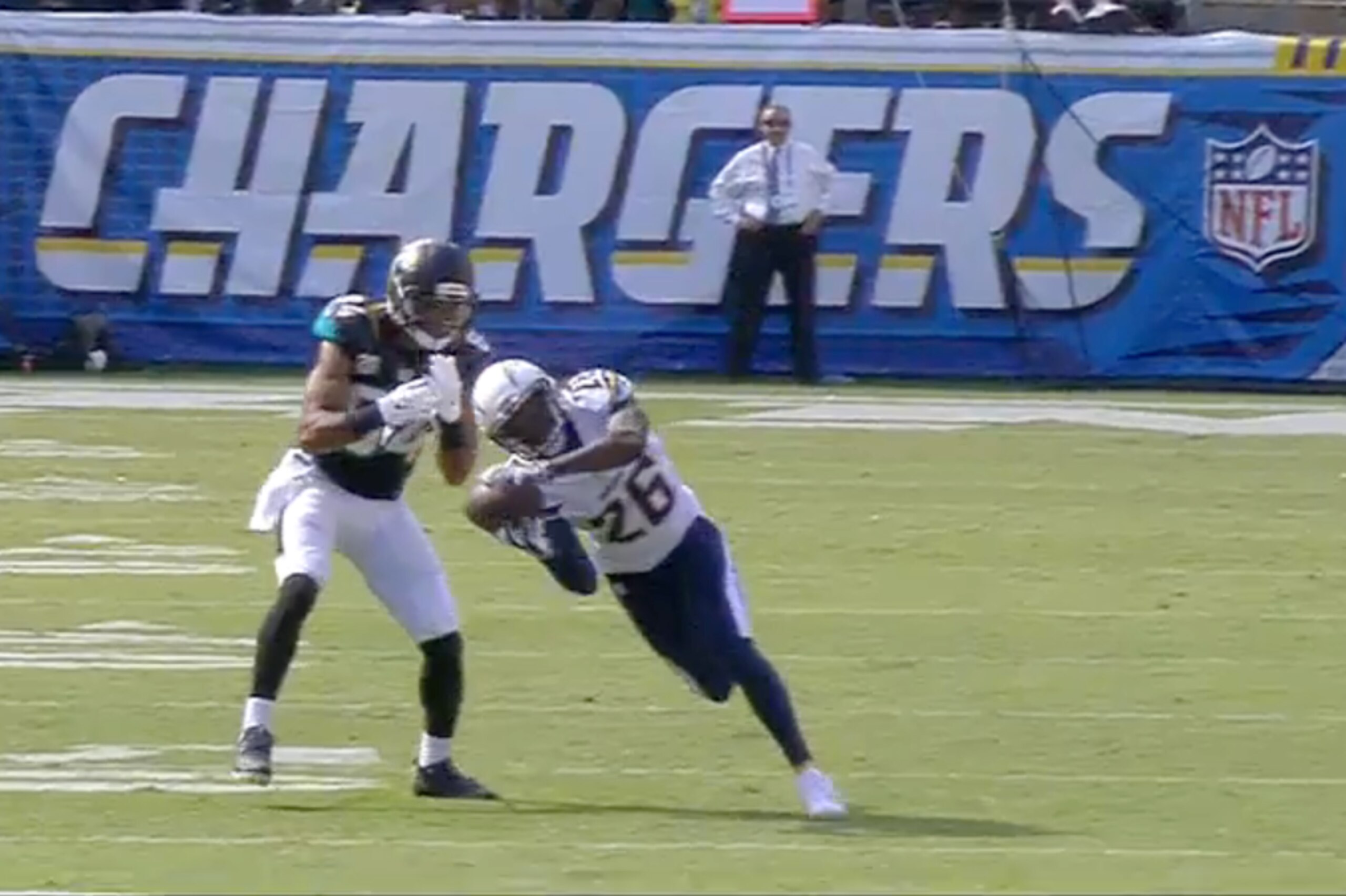
The veteran cornerback's interception against Jacksonville in Week 4 is a good example of his make plays all over the formation. Matched up with Jaguars wideout Cecil Shorts III, Flowers shadowed him across the formation in pre-snap motion, anticipated the pass coming Shorts' way on a stop route and made a perfectly timed break on the ball for a takeaway.



Can Early Excellence Be Sustained?
Skeptics (aka Chicago Bears fans strongly opposed to the possibility that Verrett could be ranked ahead of Kyle Fuller as this year’s top rookie cornerback) have been quick to point out that while the Chargers cornerbacks have been impressive, they haven’t had to face top competition yet this season.
That’s a valid point, considering that all six of San Diego’s opponents thus far rank 19th or lower in the NFL in passing yards per game.
The first major test of the year for the Chargers passing defense will come Thursday—four days after San Diego plays the Chiefs—when it will take on Peyton Manning and the Denver Broncos’ dynamic downfield passing game on the road.
Given the technically-sound play that Verrett has demonstrated thus far, there’s no reason to believe the rookie can’t continue to be one of the league’s best cover men for this year and many more to come. But a game against Manning and a wide receiver corps led by Demaryius Thomas and Emmanuel Sanders will be his chance to answer the doubters.
Flowers has to bounce back from a disappointing game versus the Raiders, in part because he has to get healthy. He left Sunday’s game with a recurrence of his groin injury, which leaves him questionable for San Diego’s first of two contests this year with Flowers’ former team.
To their credit, Wright and Marshall have played better this season than they did last year, but that’s partially because their roles have been more limited. The Chargers still don’t want to be in a position where either of them has to be among their top two cornerbacks for any significant period of time.
San Diego’s pass rush has improved slightly this season thanks to the health of outside linebacker Dwight Freeney, but the loss of fellow outside linebacker Melvin Ingram to a hip injury—which will keep him out until at least Week 11—has limited the amount of help the Chargers secondary has received from pressure up front.
Truly, the primary reason for the Chargers passing defense playing significantly better so far this year has been the additions of Flowers and Verrett. Their continued success is crucial to the Chargers’ chances of winning the AFC West and potentially contending for a Super Bowl.
All screenshots taken through NFL Game Rewind and illustrations made by the author. All measurables and statistics courtesy of NFL.com unless otherwise noted.
Dan Hope is an NFL/NFL Draft Featured Columnist for Bleacher Report.
.jpg?w=2560 "Titans Colts Football")