Why Thomas Muller Is Under Most Pressure for Germany Following Draw with Ireland
After Saturday's dismal 2-0 loss to Poland in Warsaw, Germany had a point to prove against Ireland. The World Cup winners met FIFA's 62nd-ranked national side in Gelsenkirchen on Tuesday, but after failing to score with 22 shots against the Poles, the Nationalmannschaft played even worse against Martin O'Neill's men.
They may have earned a draw, but Joachim Low's side created far fewer chances than against Poland and only scored thanks to a brilliant effort from distance by Toni Kroos.
There will be questions asked of the defense that allowed Ireland's only shot on target of the game to find the net, but a bigger concern is in attack, where Low's strikerless system has produced just five goals in four games since the World Cup. For perspective, Low's men put six goals past Ireland in a single match when the two sides last met in World Cup qualifiers.

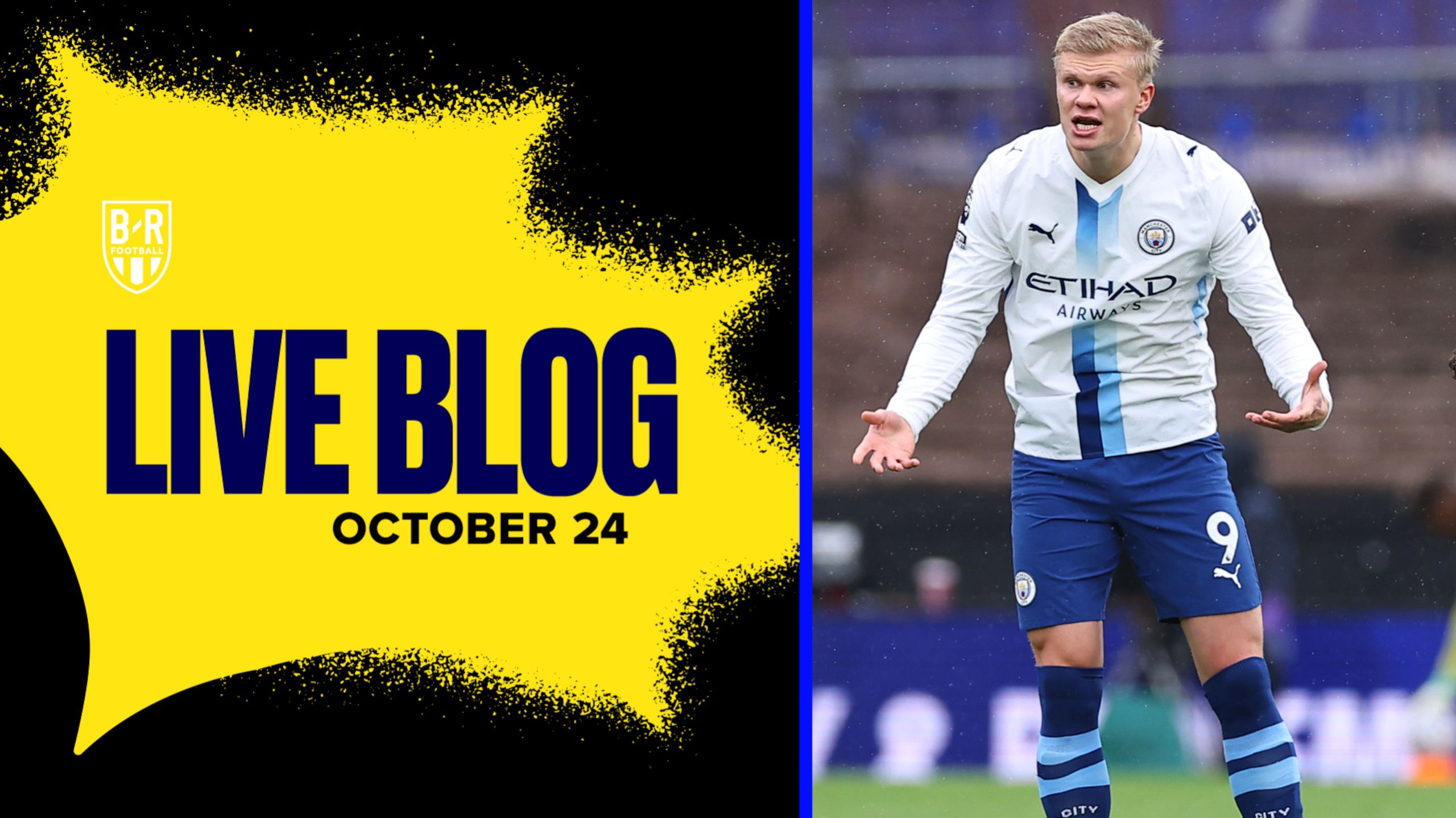

Looking forward, the player who will feel the most pressure to improve his game is Thomas Muller. Although a Silver Boot and a Silver Ball winner at the World Cup, since then, he's been inconsistent while playing for the national side.
His record stands at two goals in his last five caps, a very respectable one. Both goals came against Scotland in a match that he could absolutely claim to have made the difference. The other four, especially the two most recent Euro 2016 qualifiers, have been very different.
For his performance against Poland, German tabloid Bild labeled Muller "harmless," rating him with a "5," the second-lowest possible mark and the second lowest in the German team. The same source rated Muller with the same grade against Ireland, except there was no player with a lower mark in that match.
Germany took a depleted squad into the Ireland match, with only four substitute outfielders. Their starting XI included newcomers like Karim Bellarabi, Antonio Rudiger, Erik Durm and Matthias Ginter, all of whom had previously earned four caps or fewer. Julian Draxler (14 caps) had played just 15 minutes of tournament football in his career. Suffice to say, they needed a leader to step up and deliver.
Muller, who despite being only 25 years of age has already appeared in three major international tournaments, came into the match having earned more caps (59) than the sum of the rest of Germany's front four and scored as many goals for country (24) as the rest of the starting XI combined. With the inexperienced Draxler and Bellarabi flanking him, the pressure was on Muller to do what he'd done time and time again for club and country: create or score the necessary goals to secure victory.
He instead looked tired, uninspired and perhaps overworked from the 14 matches in which he'd played this season thus far.
Whatever the cause, Muller left plenty to be desired against Ireland. In contrast to the reputation he's garnered as lacking passion and desire, Kroos was instead the hero, or near-hero, missing the target multiple times before finally slamming home what could have been the winner.
Germany currently stand third in Euro 2016's Group D qualifiers, three points behind both Ireland and Poland and with a rather embarrassing minus-one goal differential after three games.
UEFA's expanded format ahead of the 2016 tournament will make it very difficult for the Nationalmannschaft not to book their trip to France in two summers. At the same time, it would be a glaring dark spot on Germany's record if they were not to finish atop of what is an entirely winnable qualifying group.
Muller's ability to play anywhere in attack has long been a great asset; it's this characteristic that saw him keep his starting role at Bayern as a youngster, before he'd proven himself on the level of some of his more experienced team-mates. Since Miroslav Klose's retirement, he's been primarily used as a centre-forward but has yet to score when deployed in that position.
It's hard to imagine Muller losing his starting role with Germany, but if he cannot score when used as a striker, he'll have to fight for his spot in attacking midfield. The spot behind the centre-forward is the most competitive area of the pitch for Germany, with Mario Gotze, Marco Reus and Mesut Ozil all world class, Draxler well short of reaching his potential and Andre Schurrle just starting to show his class as a Germany international.
And that area of the pitch will remain extremely competitive for years to come given the prodigious development of players like Max Meyer and Julian Brandt. Even in a less competitive squad, it's worth noting that Low benched Muller once before, keeping him out of the starting line-up in the knockout rounds of Euro 2012 after he'd failed to produce in the group stage.
In his club and international career, Muller has always been most at home on the right wing. If and when he's moved into that role for Germany, he may well start producing once more. But if there's one player in the Germany team who can feel truly disappointed by his performance during the international break, it's Muller.
When he's next called up for internationals, the pressure will be on him to show what again and again he's proven he's capable of.
.jpg?w=2560 "NFL Paris Football")
.jpg?w=2560 "Seahawks Chiefs Football")