England's Emerging Reliance on Arsenal Core Comes a Few Years Too Soon
One prominent record was not broken on Thursday at Wembley, but another, more obscure one, was equalled.
Wayne Rooney failed to surpass Jimmy Greaves on the list of all-time England goalscorers—although he had a couple of chances to do so—but in the second half, five Arsenal players took to the Wembley pitch simultaneously, the first time that has happened since 1936.
Four of them started, as Kieran Gibbs, Calum Chambers, Jack Wilshere and Danny Welbeck all helped England build a 2-0 first-half lead against lowly San Marino. Club-mate Alex Oxlade-Chamberlain was then added to the mix in the second half, providing the low cross for Welbeck’s goal as the Three Lions eventually cruised to a 5-0 win.
TOP NEWS

Live World Football Moments 🍿

Final Men's Ballon d'Or Rankings 📊
.jpg?w=2560 "NFL Paris Football")
NFL House in Paris Closes for Protests
It was not the mammoth scoreline many expected, but on a night where Spain (against Slovakia) and Switzerland (to Slovenia) both lost, perhaps it was wise not to take too much for granted.
"I suppose they're surprising, but maybe not," England coach Roy Hodgson told reporters on Thursday night, when asked about those results. "I think we should stop being surprised in international football.
“If you happen to be called Spain, Russia or England, we can't expect we can go and beat whoever because we have more people in our country than them.
"San Marino were better this year, better than they were last year. Albeit as an amateur team, it'll be a long time before they can beat the likes of us at Wembley, I hope."
With the result already a foregone conclusion, however, reporters had to search wider for a viable angle to take from the evening. Rooney’s pursuit of Greaves’ place in the all-time pecking order was anticipated in advance to be the obvious storyline, but it was soon pretty evident that would not materialise (he needed three goals to draw level with him, instead he got one).
Fortunately another turned up in its place, as the core of Arsenal players now making up this England side came to the fore.
The presence of so many Gunners is notable not just because it hasn’t happened for 82 years but because it comes less than 10 years after the club became the first in Premier League history not to name a single English player in their matchday squad.
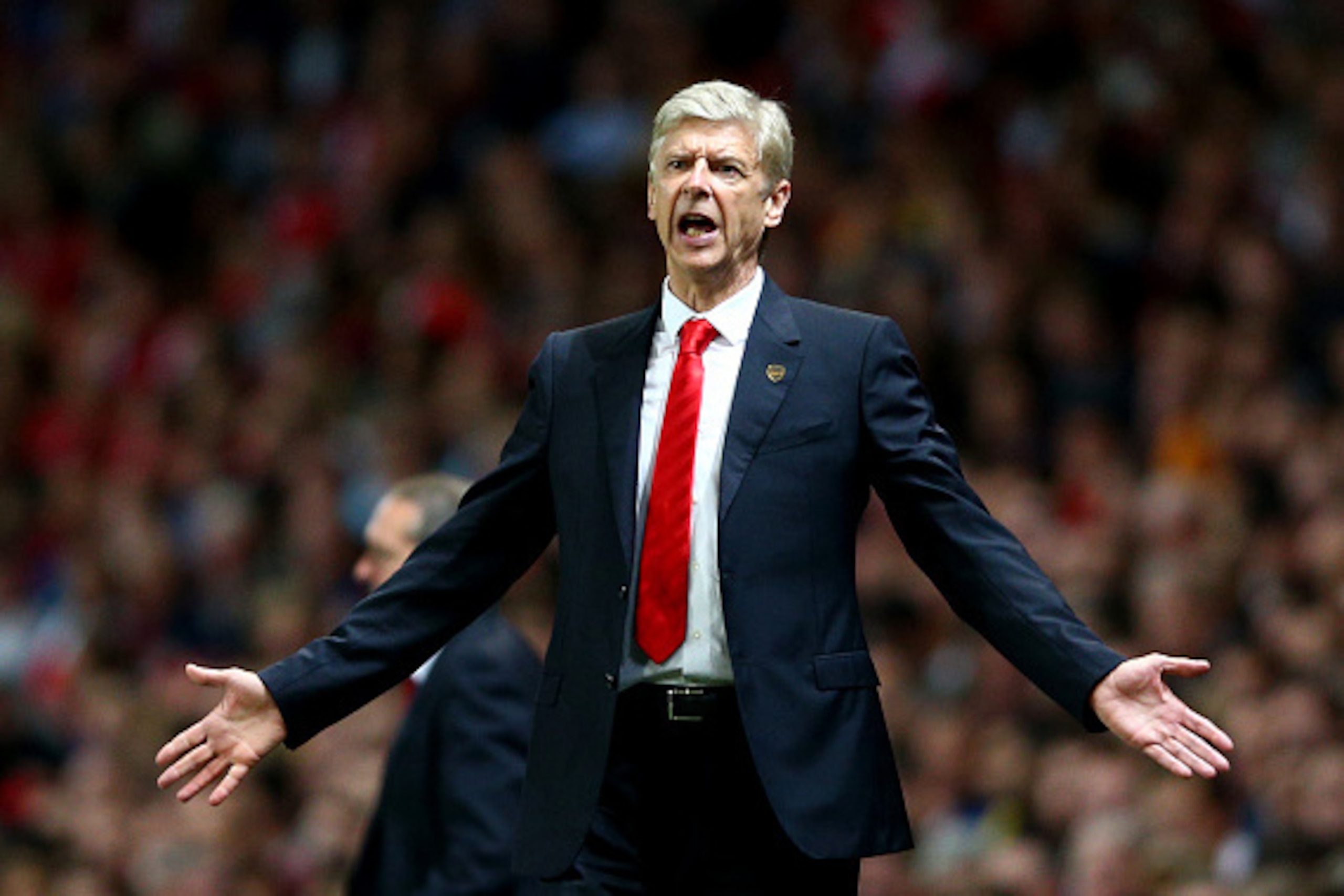
Sol Campbell and Ashley Cole were both unavailable at the time, so to an extent Arsene Wenger’s hands were tied. Even so, he was somewhat unrepentant about the whole issue, telling the BBC at the time: "I don't look at the passport of people, I look at their quality and their attitude.
"I didn't know about [the lack of an English player] until I was told about it.”

That statement makes a certain amount of sense, the sort of blinkered logic the Frenchman often likes to trade in, although he was nevertheless criticised by a media fearful of the continued proliferation of foreign talent in the Premier League and the slow erosion of the domestic identity.
Not quite a decade later, however, the Frenchman has seemingly reversed course entirely—coveting young, talented English players to form the core of his side at the Emirates.
It is a complete sea change in his approach, perhaps a recognition that the trophyless years that followed that all-foreign squad were in part down to a lack of a deep-seated attachment to the club and the cause.
Now he has gone the other way, hoping that bringing through English players together will produce both the quality and hunger required for more success like last year’s FA Cup. Greater success, even.
“I hope in the future we have a core of the English team,” said Wenger recently, per the Daily Telegraph. “Spain won the World Cup with six players from Barcelona and Germany won it with six from Bayern Munich. I hope England can win it with six players from Arsenal.”
Perhaps that will happen. For now, however, the symbiotic relationship comes too soon and underlines how far both teams still have to go if they want to compete with the elite. Arsenal are currently well short of Chelsea and Manchester City in the Premier League and the best handful of clubs on the continent—the fact England draw so heavily from their pool underlines that they are in the same situation at the international level.
That is not entirely Wenger’s fault, however; indeed it arguably is not at all. In the likes of Oxlade-Chamberlain, Wilshere and Welbeck, not forgetting the injured Theo Walcott, he has amassed a group of English players of undeniable potential for the years ahead.
If winning the Premier League really does require an “English core,” as the old wisdom always went, then Arsenal are bringing their own group towards maturity. But recent results, and their current league standing, show that they are not there yet.
Not that the England coaching team would seemingly acknowledge that. Hodgson seems beholden to the wonder of an English player, any English player, representing a top-four side.
Calum Chambers has been rushed straight into the senior setup, despite looking extremely nervous against San Marino—if you look nervous against a team of that ilk, you are probably not yet ready for this level.
Would Chambers, whose long-term position appears unlikely to be at right-back, have started the game at that position had he stayed at Southampton this summer? Would Nathaniel Clyne, a natural full-back, have been left on the bench all evening had he been the one to move to the Gunners in the summer? Are either of them different players because of those moves or just judged differently (by Hodgson) because of them?
Chambers, after all, was not even in the squad initially—instead “loaned” to the under-21s to play in their play-off tie with Croatia.
When John Stones picked up an injury, that changed Hodgson’s plans, but even so, shouldn’t Clyne have been the one to start? Why call him up at all if you were not prepared to play him, other than to pay lip service to the media who had called for his inclusion?
One of the Arsenal contingent, Gibbs, was making his first start in four years for the national team. Partly that is down to injuries, partly that he was fast-tracked into the national setup too quickly in the first place.
History would seem to be repeating itself with Chambers, while even Oxlade-Chamberlain and Wilshere are still trying to nail down a set position in the XI.
Wilshere, for example, was at the base of England's midfield diamond in the last game, against Switzerland. This time he was shifted to what Hodgson called a "wing-half" position, with James Milner in the more defensive role. The two interchanged occasionally, with things varying further when the versatile Oxlade-Chamberlain was added to the mix.
"We are always trying to find ways in which we can get the best players on the field in positions that suit them," Hodgson said, by way of explanation. Taken another way, he does not currently have players who assert their dominance over any one role.
That is not just true of the Arsenal players. But as there are so many of them, it is perhaps more noticeable.
Over time, an Arsenal core—to join the fledgling Liverpool one, which should not be ignored—in the England setup could undoubtedly prove to be a good thing.
For now, however, it underlines the lack of options, and lack of independent thinking, that will surely continue to hinder England against bigger and better opponents.
All quotes obtained first-hand unless stated.

.jpg?w=2560 "Seahawks Chiefs Football")