Analysing England and Hodgson's 3 Major Tactical Talking Points vs. San Marino
England beat San Marino 5-0 on Thursday night in what can solely be considered a midweek run-out. The 33,000-strong microstate put up 23 minutes of resistance, then showed their amateur colours as the goalkeeper, Aldo Simoncini tripped over as he tried to clear a corner and conceded.
There is little, generally or tactically, that you can extract from matches such as these, but Roy Hodgson was pleased with a select few principles and we'll run through them here.
1. Adam Lallana Makes the Difference in Tight Spaces
TOP NEWS

Live World Football Moments 🍿

Final Men's Ballon d'Or Rankings 📊
.jpg?w=2560 "NFL Paris Football")
NFL House in Paris Closes for Protests
As expected, San Marino played deep.
They played five at the back, four across the midfield just five yards ahead and a lone striker so deep he was essentially impersonating Nigel De Jong at times.
With respect to Uruguay, as the two sides in comparison are vastly different beasts, it was reminiscent of how la Celeste shut up shop at the end of their FIFA World Cup 2014 tie in Brazil against The Three Lions—they removed the space, played the same formation and gave dribblers no chance to succeed.
As a result, England had a tough time moving the ball beyond and played too slowly and carefully.
Although the home side took a 2-0 lead into the break, both goals were via set pieces—a corner, aforementioned, and a penalty converted by Wayne Rooney.
Second-half substitute Adam Lallana changed the nature of the game, with Hodgson waxing lyrical about his impact post-match to reporters:
"Another player who impressed me after coming on was Lallana. Those wonderful touches—maybe seven or eight situations he created in the penalty box—we just couldn't get the shot away or get it in the back of the net at the end.

"I found it interesting that Lallana was every bit as dangerous and inventive as Raheem[Sterling] (at the point of the diamond)."
Lallana excels at taking the ball in his stride in tight spaces, swivelling on it and distributing quickly. Few England players showed the bravery to quicken the tempo despite the game falling flat, but Liverpool's £25 million man changed the Three Lions' game when he came on.
He had a goal wrongly disallowed for offside and created chances; rather than dribble blindly at San Marino's barricade, Lallana allowed England to feed it inside the tight spaces and chip away at the wall.
2. "Runs into the Corners"
In the second half, aside from Lallana's impact, Hodgson lauded his men's "runs into the corners after getting the ball wide to the full-backs." He said it was arguably the most impressive part of the performance.
Without context this means little, but analysing the game, it was fairly clear what he meant.
England were too often bottlenecked in the first half after fumbling forward slowly and meeting a low block of 10 men. In the second half they moved the ball quicker, and one of the preferred moves was to lift the ball over the top and toward the corner for a runner.
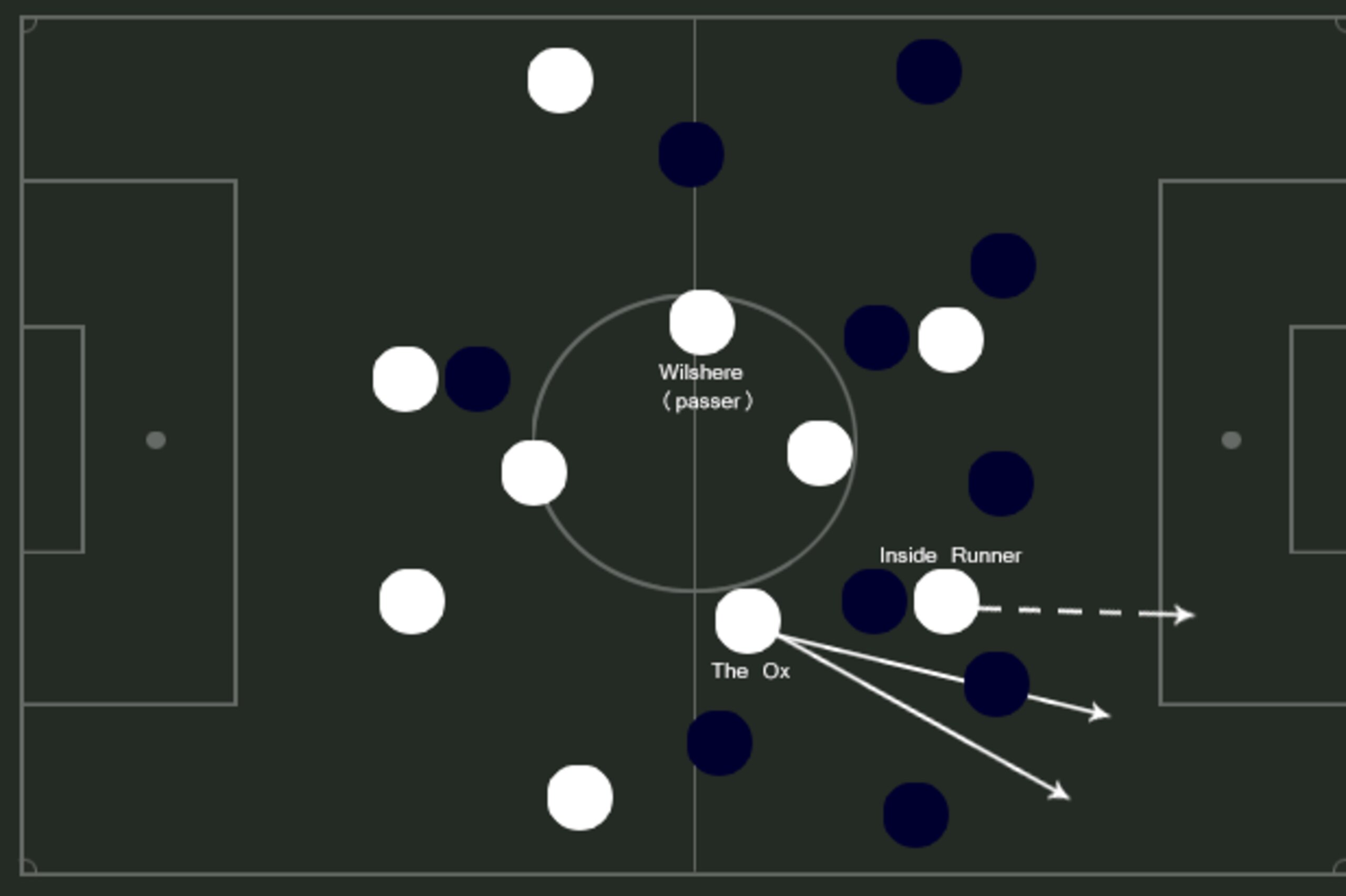
This worked especially well with Alex Oxlade-Chamberlain on the pitch, and it was typically Jack Wilshere's excellent passing that found his diagonal runs, starting from inside and angling out, that got behind San Marino.
Left-wing-back Manuel Battistini and left-centre-back Cristian Brolli struggled immensely with Chamberlain's pace and directness, and so long as he was able to move the ball quickly from the corner or hurtle toward the box, the visitors found their flank overrun within seconds.
It's important to note this method only works starting from deep as space in behind is required. It was a result of a) more direct, risky play and b) quicker movement of the ball.
3. Tracking Runs
"One thing you probably didn't notice was the tracking runs. Even after the fifth goal it was great to see them tracking back," Hodgson finally enthused.
In a game in which England did nothing but attack—per WhoScored.com, they had 67 percent possession, 32 shots on goal and Joe Hart made one save—trust Roy to pick out the defensive solidity as a strength!
What he meant by "tracking runs" were the players chasing back. He's overblown it a little given the severe numerical disadvantage San Marino had when pushing forward, but it was indeed a positive to see England committed to winning the ball back quickly.
If it was lost on the flanks by Kieran Gibbs or Calum Chambers, midfielders and wingers would swarm to the ball and create a near-three vs. one situation, robbing the attacker of the ball. It was easy to commit numbers and leave the opposing flank bare; England knew their opponents lacked the quality to play a cross-field ball into space and punish them.
As a fail-safe, there were two centre-backs on the halfway line looking very, very bored.
*All quotes obtained first-hand.
If you read and appreciate my work, I'd be grateful if you voted for me in the best established football writer in the 2014 Football Blogging Awards here: http://bit.ly/1qTsc5S

.jpg?w=2560 "Seahawks Chiefs Football")