How Denver Nuggets' Kenneth Faried Can Live Up to New Contract Extension
UPDATE on Tuesday, Oct. 7 at 8:30 pm ET
As it turns out, Kenneth Faried's new contract extension will keep him on the books for four years instead of five, allowing the big man fondly known as the "Manimal" to hit the open market at 28 years old. He's also jumping from $12 million per year under the original structure to slightly more, as Adrian Wojnarowski reports for Yahoo Sports:

How you view this deal essentially depends on what you think about the new television deal that the NBA signed on Monday with Turner and ESPN. With $24 billion in revenue set to enter the books over the next nine years, the salary cap will inevitably take a massive leap, even if the league uses a smoothing process to make it rise more gradually.
So for now, the Denver Nuggets are paying just about market price for Faried's services, and maybe slightly more than that. Denver will now have four contracts worth about $12 million to deal with in 2015-16, so the franchise is essentially committing to the same roster structure for the next two years, barring any future trades that ship out prominent pieces and bring in new ones.
But after the 2015-16 season, when the cap is projected to rise significantly, Faried's new salary will seem like quite the steal.
--End of update--
ORIGINAL TEXT
Even though the Denver Nuggets and Kenneth Faried reportedly agreed to terms on a new contract in the wee hours of Monday, Oct. 6, the extension isn't yet finalized.
That should change in the near future, given the organization's obvious desire to keep Faried around for a while, thereby increasing their playoff ceiling and keeping a fanbase that largely loves his energetic exploits as happy as possible. But as of now, nothing is done.
Yes, Faried was ecstatic. He made that quite clear on Twitter:
But the deal, which was a five-year contract worth $60 million, as originally reported by Yahoo Sports' Adrian Wojnarowski, would violate the current terms of the NBA's collective bargaining agreement:
Dan Feldman, writing for NBC Sports, went into quite a bit of detail on what the CBA dictates in this situation. After analyzing the details, he determined that there were three possible solutions here, based on Wojnarowski's first report.
- Five years, $89 million: Based on a max contract extension, though the number is an estimate, as the salary cap has not yet been set for next season.
- Four years, $60 million: If the Nuggets are staying below a max salary, a four-year extension is the longest they can give Faried.
- Four-year, $57,750,232: I'll let Feldman explain below:
"Maybe Wojnarowski was referring to the total value of Faried’s contract – one season on the rookie deal, four seasons on the extension.
If that’s the case, Faried’s extension would be $57,750,232 over four years ($60 million minus his 2014-15 salary of $2,249,768).
That means his average annual salary during the extension would be $14,437,558 – a healthy bump over the $12 million per year it seemed Denver would be paying him.
This is my best guess for the mix up, but it’s just a guess.
"
The details are certainly interesting, but they may end up being fairly irrelevant.
With the NBA agreeing to a new television deal that will reportedly be giving the league $24 billion over the next nine years, the salary cap is expected to skyrocket after the 2015-16 season. So the Nuggets may be overpaying for Faried now, but he'll be one heck of a bargain when he's taking up a much smaller percentage of the cap.
No matter what the final numbers are on his contract, Faried will be experiencing a huge jump in salary, and he'll have to justify that leap.
Just Keep on Keeping On
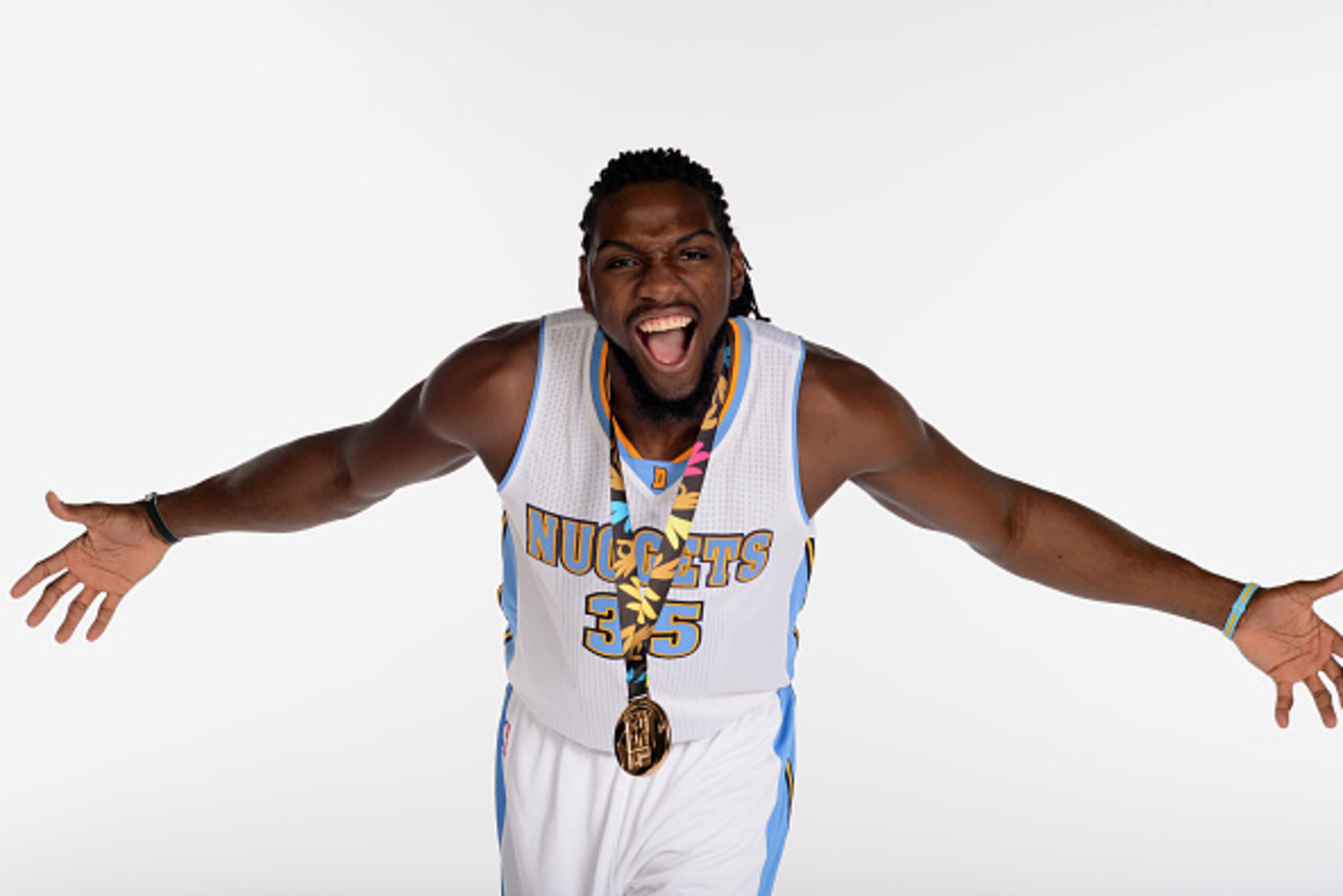
The dirty little secret here is that Faried doesn't really have to do any improving, so long as he can continue what he started during the second half of the 2013-14 campaign and carried over to Spain at the 2014 FIBA Basketball World Cup.
Once the the Association's All-Star break had come and gone, the energetic power forward averaged 18.8 points, 10.1 rebounds, 1.6 assists, 1.1 steals and 0.7 blocks per contest during the remainder of the season, doing so while shooting 54.6 percent from the field. And somehow, he got even better during the true stretch run. Over Faried's final 11 games, he produced 20.6 points and 12.3 rebounds during the average outing.
He started playing to his strengths more, attacking the hoop with reckless abandon and spending much more time at the free-throw line. Plus, he began rebounding on the defensive end with the same fervor he used when trying to create second-chance opportunities for the Nuggets.
Why? Because he and head coach Brian Shaw finally found some philosophical middle ground. Faried wanted to run, and Shaw started letting him lead the fast-break charge and push the pace when he grabbed a defensive rebound, which apparently was all the motivation the big man needed.
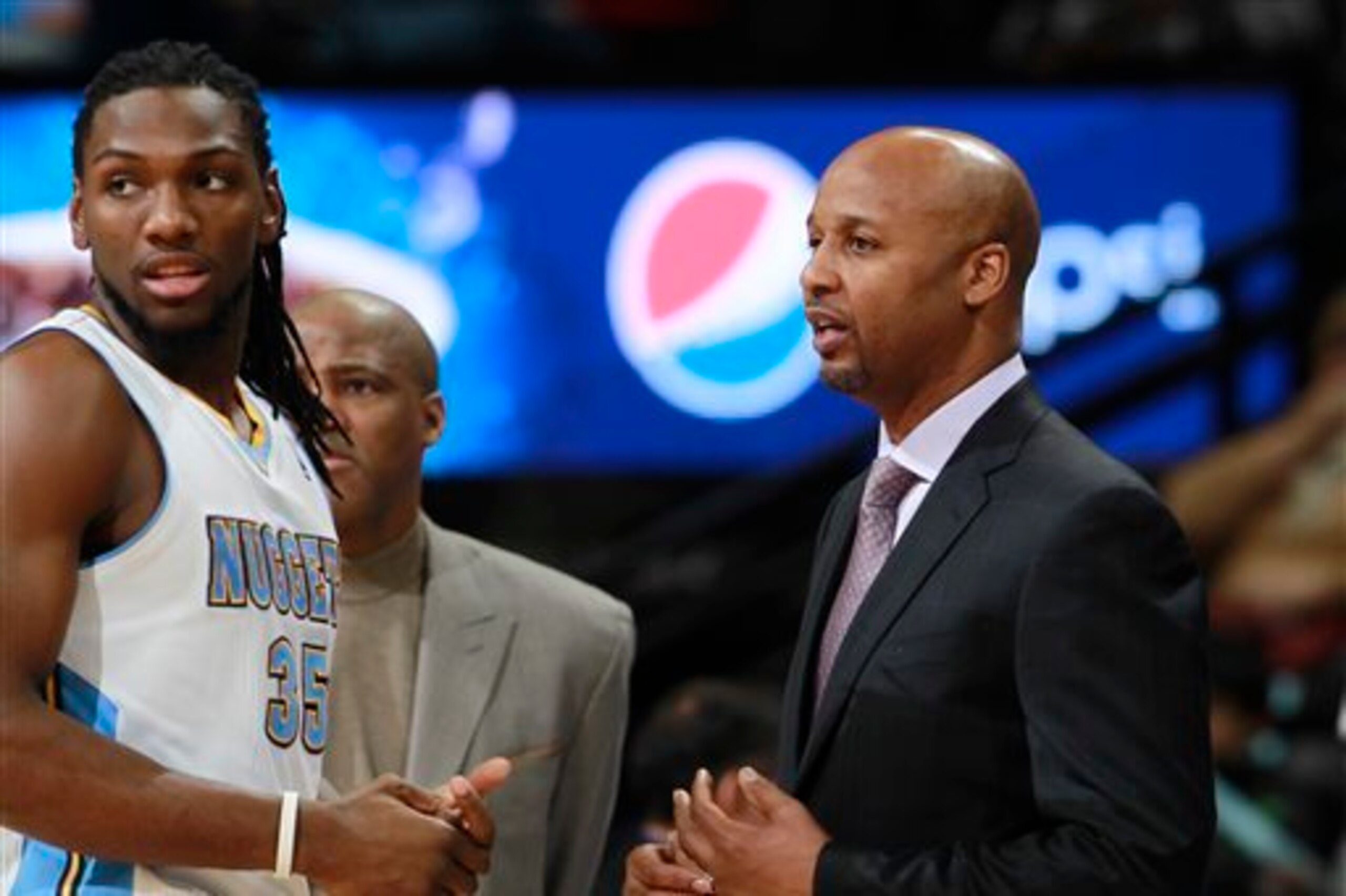
The Nuggets simply started taking advantage of that nonstop motor, one that might make the Energizer Bunny himself turn a bit green with envy.
Then over the summer, Faried made the Team USA roster, to the surprise of many. And not only did he make the team, but he found himself in the starting lineup, where he'd prove himself to be arguably the team's MVP en route to a gold medal.
Per FIBA.com, he averaged 12.2 points and 7.7 rebounds per game while shooting a blistering 63.3 percent from the field. His enthusiasm and effervescent energy sparked Team USA during the few rough times it endured, and he was a large reason that the team was able to overcome a distinct lack of size, especially when some of the guards struggled with their shots.
For his efforts, he drew nothing but rave reviews.
"Overall, from the start of training camp, he's been the biggest and best surprise and has turned out to be a very, very important player for us," Team USA head coach Mike Krzyzewski told ESPN.com's Marc Stein. "He's made that happen. We never call a play for him."
And that's been the biggest key of all, during both portions of the year discussed up above. No one is calling plays specifically designed for Faried, but his energy is still allowing him to make huge contributions. He's already working his way toward justifying the extension through that method alone, but what if he could force the issue even further?
Develop a Few New Skills

There are three primary ways in which Faried can still make huge leaps and bounds: post-up play, jump-shooting ability and defensive skills.
Faried has never been much of a rim-protecting big man, given his undersized frame and lack of an elite wingspan. But he can get far more disciplined when sticking with his assignments and staying close to them while playing help defense. That should get easier with JaVale McGee turning away shots at the basket, but the onus is still on him to make strides.
For now, it's all about discipline. Whether he's keeping his man within his peripherals or staying in the proper position rather than going for an ill-advised block attempt, making the right mental decisions is the best way for Faried to morph into more of a stopper.
It's a process, but he's been able to look solid for brief spurts in the past.
Jump shooting is another area where he might always have some limitations, though.
During the 2013-14 season, it was abundantly clear that he couldn't really space the floor for the Nuggets, as his shooting percentages dipped when he moved further away from the hoop. While Faried shot 69.1 percent at the rim and 41.9 percent from three to 10 feet, per Basketball-Reference.com, he struggled his way to 38.8 and 24.5 percent from 10-16 and 16-23 feet, respectively.
On jumpers as a whole, the big man connected on just 34.1 percent of his looks, which obviously doesn't make the Denver coaching staff willing to give him many opportunities from those areas. However, he also flashed some skills during the World Cup that could change that.
Faried wasn't making jumpers in Spain, but he was able to face up, put the ball on the floor and drive to the hoop, getting past his defender and finishing a relatively easy layup for two points. If he can consistently do that without becoming a turnover machine, he can still space out the court simply by being a threat to work off the bounce when the ball ends up in his hands on the perimeter.
On top of that, his post-up game might be getting a bit too many knocks, as Grantland's Zach Lowe explained back in early April:
"Only about 15 percent of the possessions Faried used up on offense before the All-Star break came via post-ups, per Synergy Sports. That's a middling share for a starting NBA big man, amounting to fewer than two fieldgoal attempts per game in Faried's case. Those numbers have exploded in Denver's 26 games since the All-Star break. In that stretch, Faried is attempting nearly four shots per game via post-ups, per Synergy, and such plays have accounted for almost 30 percent of the possessions he has soaked up. Those numbers are on par with high-usage post-up bigs such as Tim Duncan, DeMarcus Cousins, and Amar'e Stoudemire, per Synergy....
Best of all: Faried is shooting 56 percent on post-ups since the All-Star break. Look at that number again. Among all players who have recorded 75 post-ups this season, or about one per game, just one has shot better that: Shaun Livingston. "Now people are saying, 'Hey, maybe he can get you 15 or 20 a night,'" Faried says. "And that I can do it without breaking a sweat."
"
Most of the damage came on a right-handed hook shot—Faried made 65 of his 130 hooks in 2013-14, according to Basketball-Reference.com—and an expanded arsenal would make him even more dangerous. It's one he might already have, even if it hasn't shown up.
"His No. 1 rule was: If they don't take your best move away, don't use your counters," Faried told Lowe, referring to his prior training with back-to-the-basket legend Hakeem Olajuwon. "I've got counters. I just haven't needed them. There's no point if they can't take my first move away."
The scouting report is out now, and the Nuggets, who have the luxury of seeing Faried's moves in practice day in and day out, are essentially betting on his ability to make those counters when the need to utilize them arrives.
It's not as though they're asking the big man to turn into Al Jefferson, thoroughly dominating opponents after he gets the ball on the left block and slows things down. Likewise, they don't need him to do a convincing Ryan Anderson imitation and start draining jumpers from all over the court while lining up at the 4. And in the very same vein, he's not expected to become a defensive stopper.
Faried is still primarily an energy guy, and these new skills would all be luxuries. Even slight improvement in each of the three categories, so long as it's not accompanied by a sacrifice of his energy-related havoc, would allow him to exceed the value of his new contract, whatever the per-year number ends up being.
If he can do that, he becomes yet another major force in the Nuggets' increasingly deep quiver. And, despite the tough nature of the Western Conference, that might be all that's needed to make playoff basketball return to the Mile High City.
That, above all else, would allow him to live up to this extension.

.jpg?w=2560 "NFL House in Paris Closes for Protests")
.jpg?w=2560 "Trevon Diggs Cut by Seahawks")