

MMA Retrospective: Examining the Career of 'The Axe Murderer' Wanderlei Silva
Upon hearing the news that “The Axe Murderer” Wanderlei Silva was retiring from MMA, I found myself both sad and glad.
It is a relief that he has finally conceded that the time has come to step away from a sport that by its very nature consumes the excellence of those who ply it as a trade. The world of combative sports is demanding and void of mercy or compassion. Far too often it makes old men out of the young—sometimes overnight, as in the case of Meldrick Taylor—and continues to feast upon their flesh because the last things to age are pride and desire.
For me, it doesn’t matter why he is stepping away; the important thing is that he is doing so of his own volition while reasonably healthy and with enough coin remaining in his pocket that his future need not be mortgaged just to stay off the soup line. If he has invested his money wisely, he can finally rest—content that the blood he spent in the ring and cage has ensured that his legacy will cast a shadow over the sport well into the future.
And if anyone has earned a rest from the sport, it’s Silva.
In an era when fans and promoters will burn a fighter in effigy for not stepping up to face a last-minute replacement opponent (and will in fact cancel an entire event and throw the effigy aside in order to blame said fighter as a result, as was the case during the UFC 151 fiasco), Silva was, in his prime (some 10 years earlier), essentially a middleweight who stepped up to fight heavyweights.
In today’s era of fandom, we see excellent fighters disparaged because they don’t fight for the finish or are unwilling to fight anyone at anytime. They get bad pub because they've have never been a champion or never faced their closest rival.
None of that can be said with any truth about The Axe Murderer.
What follows is a true and honest (as honest as I know how to be) examination (or retrospective, if you will) of the career of one of the most transparent and genuine figures in the history of the sport.
Silva has always been a savage figure who, at his core, has been simple without being stupid—an advocate of consistent aggression with no compromise. His modus operandi, his architecture of aggression, has always been knock-out-or-be-knocked-out.
After that, the media and the fans of the sport—both positive and negative on both sides—were trusted to sort out the rest and apply whatever spin or bias they wish, in accordance to the safe distance needed to acquire both.
Thus, I say to his detractors—who act as if his successes in MMA, from the beginning through to the end, have been based on nothing more than steroids or testosterone replacement therapy or whatever is the miracle enabler of the day—that pills or intravenous solutions may empower the body, but they do not enrich the mind to the point where jumping onto the track of an oncoming freight train seems like the wisest course for career longevity.
In short, they do not create true courage. To fight heavyweights like Mirko "Cro Cop" Filipovic and Mark Hunt—when you are a middleweight in the Pride ring, where kicks, stomps and knees to the head of a downed opponent are legal—takes more than drugs can give you; it takes a willingness to live by the sword so few are willing to acknowledge even exists.
And yet Silva is not just the sum total of his fights; when he was poised to fight Chael Sonnen, The Axe Murderer gave his critics perhaps their biggest loaded gun, and in truth, it cannot be dismissed so easily.
Obviously, Sonnen was using no small amount of projection, in order to cast the eye of critical judgment upon someone other than himself. But be that as it may, Silva still fled from a drug test.
We don’t know how much, if any, of his career was tainted with whatever chemical enhancements were available at the time, and to assume he was tainted at all is to assume the worst on behalf of a man who always gave us his furious best.
Obviously, anyone who watched the sport back then cannot forget his reign of terror, just as they cannot forget the recollections of Mark Coleman, who spoke of the kind of out-of-bounds-gamesmanship that seems to have occurred on a regular basis in Brazil in the early days of the sport.
Coleman said that he went into Silva’s locker room and found that the Brazilian was being oiled up for the upcoming bout—a damning statement to say the least. You won’t find me calling Coleman a liar at any time, especially considering that I was not there.
But when watching Silva’s bout with Mike Van Arsdale, both men look like they ended up pretty dry come fight time, which is what matters most.
And so, while we were not there, we are here, in 2014, to try and quantify the positive and the negative of one fighter’s career.
The rub is found in the fact that such a career spans two different and incredibly demanding eras. Back then, defeat was as distasteful and condemned as it is now, and Silva tried to utilize a single method of operation in order to rise above all time constraints: fight to the finish above all else.
He wasn’t the worst during those time periods, yet he was nearly the best that purely violent intentions could give, spanning almost two generations in the 17 years he was active.
Hate him as you must, love him as you will, but never forget him as the man who, in his prime (which occurred when North, South, East and West were about as wild and dangerous as you can imagine) never shied away from a fight, no matter how dangerous or big the opponent.
This is the career of Wanderlei Silva, a true and undeniable product of the Chute Boxe camp and one of the greatest middleweight champions in MMA history.
1996
1 of 20The professional career of Wanderlei Silva started on November 1, 1996 in Brazil. The promotion—Brazilian Vale Tudo 6—was typical of the events of that time and location: bare knuckle brawls between MMA fighters in a small ring before a demanding crowd.
Silva’s opponent that night was Dilson Filho, who was dubbed as a karate fighter but inside the opening moments of the bout scooped up Silva and slammed him hard to the mat.
From there, both men threw caution to the wind and let their strikes go, both standing and on the ground; at one point, Silva ended up tumbling out of the ring, only to jump right back into the fray with no hesitation.
The fight was exciting and ended in the exact way the crowd demanded: violently. Silva, fighting with his back in the corner, locked up the muay thai clinch, landed some hard knees and followed with a short elbow (or perhaps a punch) to the face that saw Filho wilt against the ropes.
Silva was officially 1-0 and just 20 years old.
1997
2 of 20After having just one fight in 1996, Wanderlei Silva put in some serious work in 1997, going nearly undefeated for the year and running his record up to 4-1.
On July 1, he defeated Marcelo Barbosa via TKO on a shoulder injury in his shortest fight of the year, lasting just 20 seconds.
His next bout would take place as part of a tournament for the International Vale-Tudo Championships (IVC) on September 15 of that year. Said bout was his first of the night, pitting him against Sean Bormet.
Silva won the fight in his quickly-becoming-legendary style, knocking Bormet out via head kick in just 79 seconds.
His second fight of the night saw him defeat Egidio Amaro da Costa via verbal submission from a slew of punches. Both men came out hard in the beginning, but Silva landed a stiff short left hand early that saw his opponent buckle at the knees. Silva swarmed and from there eventually landed on top and went to work until the fight ended.
Finally, Silva made it to the finals of the tournament, and with it Silva would possibly display his first weakness—that of a desire to attack at the cost of his own flesh.
His opponent was a game and crafty Artur Mariano, who had the bearing of an excellent fighter at some points and at others the look of a man who was desperate to avoid the tornado that chased him about the ring.
The fight went back and forth with both men playing the roles of aggressor and matador. Countless strikes were thrown and landed, but the telling moment came when Silva suffered a cut near his eye.
As the fight progressed, Silva utilized a then-legal technique: the head-butt. The problem was that he was butting Mariano with the side of his head where had suffered the cut, which in turn caused it to grow wider and wider, bleeding more and more.
It was bizarre to see Silva do this to himself, but he did, and as a result the fight was finally stopped at 13:10. Mariano, battered, bloody and swelling, was the victor due to doctor stoppage.
The first defeat of his career, arguably self-inflicted, had not diminished Silva’s desire in the least bit, and he would soon find himself jumping up several levels when it came to class of opposition.
1998
3 of 20After allowing his wounds to heal, Silva found himself back in the IVC ring nearly a year later, on August 23.
His opponent was the dangerous and undefeated Mike Van Arsdale.
Van Arsdale was the biggest name Silva had faced in his career and easily the most dangerous. A powerful fighter with a strong wrestling base, Van Arsdale was fast, agile, aggressive and hungry.
In addition to all of that, Van Arsdale was training with UFC champions and coming off a big win at UFC 17, where he outclassed and embarrassed Joe Pardo, a Gracie family devotee and student. Van Arsdale exposed Pardo as the MMA novice that he truly was, eventually defeating him via key-lock.
Now, Van Arsdale was in Brazil at IVC 6, looking to take Silva down and pound him through the canvas.
Sadly for Van Arsdale, Silva was looking to do much the same thing to him.
The fight was everything we expected out of both men, but the ending surprised everyone with the level of violence displayed. After a bit of a wild exchange, Silva landed a hard knee to the midsection that inspired Van Arsdale to flee. When Silva gave chase, Van Arsdale tried a side kick that failed, and then Silva threw his off-balance opponent to the mat and soccer-kicked him in the back of the head.
In just four minutes, Silva had gone from a prospect to a fighter to watch in Brazil, and it would be the UFC that came calling next.
On October 16, UFC fans got their first taste of Silva, with his bald, tattooed head and menacing demeanor. No one knew who he was, other than he had run all over Van Arsdale, and that he was facing the lightning-fast Vitor Belfort, whom was well-known and respected by UFC fans the world over.
The event was dubbed “Ultimate Brazil” and was the company's first-ever trip to the home of the Gracie family, co-founders of the promotion. In what appeared to be a small venue, the anticipation level was high for Silva’s fight with Belfort, mainly given to the latter’s penchant for finishing good fighters very quickly with barrages of chain-gun punches.
And those fans were rewarded as Belfort caught Silva early and finished him fast, driving him across the Octagon with a flurry of punches that eventually saw him fall against the cage, unable to defend himself.
The beginning of the end started when Silva, coiled and tight and ready to explode, left himself too open after an exploratory leg kick that saw him revolve 360 degrees—right into Belfort’s fists.
After that, Silva was rocked, and Belfort swarmed. The fight was over in just 44 seconds.
Thus came an abrupt and painful end to his first introduction to the UFC audiences; he entered with minor fanfare and exited as a highlight reel, but we had no idea that as Belfort rejoiced, the man he had rightfully bested would rise to far greater heights in the coming years. His career would enjoy a consistency of championship dominance that The Phenom would never enjoy.
The year ended with Silva owning a 5-2 record.
.png?w=2560)
1999
4 of 20After such a crushing defeat on such a big stage, Silva came roaring back in 1999. He was still a young man at 22 years old, hungry and burning for redemption.
It might be hard for today’s generation of MMA fans to reconcile, but a young Silva was not the slower, somewhat cumbersome clubber of today; back then, he was a lithe and nimble fighter, in both form and function, capable of sprawling against the best shots in the game and making said shooters pay for it when the fight came back up for air.
And pay they did, right alongside anyone who stepped into the ring or cage against him—especially in 1999.
They say that the greatest of fighters respond to defeat with a fury that will not be denied. Such was the case with Silva, who never seemed to think, for a moment, that the rising MMA landscape was more than he could overcome.
In fact, it seemed as if it was nothing more than a growing tide that he felt he could not only rise above but dominate, as is the predisposition of men who dream of conquest above those who attend the keel.
1999 saw Silva rebound with a true vengeance, as he won five straight bouts. The first two of them came via stoppage inside of 35 seconds, and the third by knockout inside of three minutes.
It becomes particularly noteworthy given that the first two stoppages came in the IVC, against opponents who knew Silva, especially since one of those men was Eugene Jackson, a four-time undefeated veteran of the Bas Rutten Invitational promotion.
It was after this victory that Silva earned the moniker: “The Axe Murderer.” Jackson would go on to UFC fame with victories over NCAA wrestling notable Royce Algier, in addition to others.
The third bout of the year was in the UFC, against Tony Petarra, who was a game opponent until the game went deep and ugly. Silva left him hurt on the canvas after a series of nasty knees from the muay thai clinch.
The last two fights of the year saw the Chute Boxe fighter earn decision victories in Pride FC 7 and 8, leaving Silva undefeated for the year.
Now, The Axe Murderer owned a record of 10-2, with two victories on the Pride FC stage. Such are how big things begin.
2000
5 of 20Wanderlei Silva began 2000 with a guest bout on one of the biggest cards in MMA history to date: the Pride FC Grand Prix 2000.
Thanks to the successes of Kazushi Sakuraba, Mark Kerr and others, Silva was afforded his biggest exposure at the time and made the most of it, dispatching Bob Schrijber via rear-naked choke in less than three minutes.
But once again, the UFC beckoned, and Silva returned to the Octagon to face hot commodity Tito Ortiz for the middleweight/light heavyweight title that was vacated by Frank Shamrock.
Silva and Ortiz fought for a full 25 minutes at UFC 25 in Japan, making history in their own way.
The fight between Silva and Ortiz was the typical clash of styles to be expected back in the day—striker vs. grappler—yet, as the fight wore on, both sides traded positions of dominance.
At one point, Ortiz caught Silva coming in with a short, hard punch that dropped The Axe Murderer to his belly, only to see him battle his way back to his feet and continue.
In the other significant exchange of the bout, Silva caught an Ortiz kick, drove him to the fence and began to exchange punches. Silva caught The Huntington Beach Bad Boy with a right hook, barely grazing his jaw. Ortiz sagged to his knees and then quickly rose in the face of a Silva bull rush—running headlong with his back turned away from his Brazilian opponent—until the cage left him nowhere else to turn but inward, and the battle was joined again.
This is noteworthy given the fact that it may be the only time in the history of combat sports that during a title bout, one fighter actually ran from the contest and was still awarded a decision victory instead of being burdened by a loss via disqualification due to running.
Ortiz won the bout via his strong takedowns and top control, becoming the new UFC middleweight/light heavyweight champion, while Silva headed into his next fight, opposite early UFC veteran Todd Medina at Meca World Vale Tudo 2.
Sporting the well-known Gracie jiu-jitsu dual-facing dog heads on his chest, Medina looked like a man with enough familiarity with No Holds Barred (NHB) fighting to give Silva at least some pause, especially coupled with his experience in the early UFC shows.
Then, Silva began to roll his wrists, and when we saw that Pedro Rizzo was the referee we figured: “Well, Todd, it’s been good knowin’ ya, brother.”
The fight started quickly. Medina kept on being pulled face-first into the punishment, and after one particularly violent knee-to-the-face from the muay thai clinch, Silva was starting another winning streak without a scratch on him.
Next up was a return to the Pride FC ring—this time to take on UFC 13 light heavyweight tournament champion Guy Mezger at Pride 10: Return of the Warriors, on August 27, 2000.
Silva won a hard-fought bout with Mezger via first-round KO at 3:45, finally finding Mezger against the ropes and flat-lining him with hard punches. The spirited fight saw Silva rocked and the crowd ever-interested in this madman with the skull tattoos and killer intuition who marched forward, no matter what.
After that, MMA fans saw Silva face the dangerous and dirty-as-hell heavyweight, Gilbert Yvel, on October 31, 2000.
At that point in his career, Yvel had already been disqualified once for biting an opponent and owned an overall record of 23-5, with all 23 wins coming by way of stoppage. To say he was a dangerous man who was much bigger was an understatement; he was a heavyweight savage with no appreciation for the rules of MMA.
And Silva, who was basically a middleweight, fought him with little reservation.
The fight really didn’t last long enough to determine who was the better man; Silva landed a hard kick to the groin early, and at the 21-second mark of Round 1, the fight was declared a no-contest. In all honesty, the blow didn’t seem intentional or overly hard due to pre-fight prejudice; it was a bad shot landed at a bad time in a very bad place, and just like that, the fight was over.
Following that bout, Silva stepped up to perhaps the biggest test of his entire career to date: a fight against the undefeated Dan Henderson at Pride 12.
Henderson, who was 9-0 and owned victories over prime fighters like Carlos Newton and Allan Goes under the UFC 17 banner (thus winning him the UFC 17 Middleweight Championship medal), also held victories over Renato “Babalu” Sobral and Antonio Rodrigo Nogueira.
The fight was tough for both men, but Silva was on point, terribly aggressive and capable of attacking nearly everywhere the fight went. Save for a period in the bout where Henderson landed some hard shots standing and used them as a gateway to take Silva down and pound on him, Henderson looked like a man who was trying to simply hold on for most of the fight. It was a back-and-forth brawl that saw Silva landing more often and doing more damage, which was enough to give him the victory and Henderson his first loss ever.
Silva went 5-1 for the year while improving his overall record to 14-3-1. His defeat to Ortiz was the last loss he would endure for more than four years.
2001
6 of 20Silva’s first fight in 2001 turned out to be the biggest bout to date in his career; a headlining fight against Kazushi Sakuraba, who was thought to be the greatest pound-for-pound fighter in the world.
Up until their fight in March, Sakuraba had been the darling of the MMA world: a come-from-the-corner-of-your-eye sensation who had upset the notion that Brazilian fighters were the best in the world on the floor.
In his brief but engaging reign, from the beginning of 1998 to March of 2001, Sakuraba proved to be too much for nearly every Brazilian he fought—from the heavyweight Marcus “Conan” Silveira to men such as Vitor Belfort, Ebenezer Fontes Braga and two members of the legendary Gracie clan: Renzo and Royce.
He was simply the best pound-for-pound MMA fighter in the world at that time, and now he was slated to face another Brazilian, but this time his opponent wasn’t even a notable on the ground.
The common thought at the time was that this was an easy fight for Saku; he would engage on the feet long enough to slip under a wild flurry from Silva, take him down and submit him in short order from there.
And I must admit, I was one of the many fans of that day who agreed.
God, were we wrong.
In Silva, Sakuraba faced the first true embodiment of uncompromising violence he had ever known.
The fight didn’t last long, but when Silva got the upper hand (much like many other Brazilians had done), he proved to be a different and vastly more savage animal. He didn’t just go for a position—he ran all over Sakuraba, swarming him with punches in the beginning, followed by knees, kicks, stomps and soccer kicks, and ending the Japanese superstar’s reign in just 98 seconds.
Although no belt was on the line (Pride FC didn’t have really belts at that point in time), Silva was suddenly the man in the middleweight division, bar none. The UFC, while still a top-shelf organization, was not the premier organization, and thus Silva was top dog in the sport for his weight class.
His next bout came soon, on May 27 against Shungo Oyama at Pride 14. Silva won the bout via violent TKO from punches at 30 seconds of the opening round, solidifying himself as a fighter who was not taking anything, or anyone, for granted.
Then came a rematch with Sakuraba, on November 3 at Pride 17, some seven months after their first fight. Anticipation was high for the bout, but Silva once again proved to be too much (and possibly too soon), stopping Sakuraba by scooping him up high and slamming him down to the floor, breaking the Japanese superstar’s clavicle in the process.
His reward for the bout was a belt that seemed, at the time, almost fan-made. It was not, of course, but it did not have the fanfare or promotional gusto that it was due, and this was perhaps one of the chief indicators that Pride FC was not as serious as the UFC.
His fourth and final bout of the year came against another Japanese fighter, “The Diet Butcher” Alexander Otsuka.
Now, when looking at the career of Silva (not to mention many fighters who rose to acclaim in Japanese organizations), fans and detractors speak of the “can factor,” meaning that said fighters built their reputations feasting on less-than-capable opposition.
In some part, there is validity to such opinion; many Japanese fighters were simply not up to the level of the fighters they were thrown against. These fighters seemed to be just popular enough to entice the hometown crowd into watching in the hopes of an upset, and for Pride FC, that does indeed seem to have been a factor in the matchmaking.
But then again, just as Joe Silva will put together fights that don’t make sense, sometimes the ends justified the means, far beyond the UFC, stretching into Japan and other locales.
Consider Houston Alexander vs. Keith Jardine and Alexander Otsuka vs. Marco Ruas. Bother Alexander and Otsuka were heavy underdogs and rose to the occasion by defeating opponents who should have been well beyond their means.
At the end of the day, champions in Pride FC (who were hardly ever Japanese) had to be consistent and hungry—ready to rise to any occasion and devour all placed before them.
And Silva was constantly hungry, with a maw full of razor-sharp teeth. Never was he bored or tired of wearing the belt; never did he grow weary of the sport or the demands it placed upon its champions.
In short, Silva was the ultimate champion of the day; he was in love with defending a belt he did not own (to the fault of the sport) until it was randomly made and passed off in a humorous parody of victory, void of all true promotional gravitas.
Beyond those early moments, Silva was the violent sun that all else gravitated around in Pride FC. Detractors of the organization may have cast doubts upon their business practices or whatever else was at hand, but no one could doubt the savagery by which Silva plied his trade and defended what he thought was his: a belt of faux silver, set in leather.
Back then, Silva wasn’t made champion by the belt; the belt was rendered a champion’s due by the virtue and savagery by which he claimed and wore it.
And that has really never happened before or since.
Silva crushed Otsuka via TKO in less than three minutes, going 4-0 during a banner year in his career and raising his total record to 18-3-1. He wore the only true middleweight championship belt of the world.
2002
7 of 20The year of 2002 was a slow yet fast year for Wanderlei Silva. He fought four times during 12 months, but only once was he set against a man who could defeat him more often than not: Mirko "Cro Cop" Filipovic.
Outside of Cro Cop, the story of Silva’s 2002 was small and quiet: three victories over the likes of three Japanese opponents.
But each deserves a deep look.
At Pride FC 19, Silva took on Kiyoshi Tamura at Pride 19 and knocked him stiff with a straight punch at 2:28 of Round 2.
After that, Silva faced the first true heavyweight of his career, who was closing in on the peak of his own career: Filipovic.
Mind you, Filipovic was a true heavyweight back then—fast, poised and incredibly accomplished as a striker. In fact, he was, without a doubt, the best striker in the sport in 2002, bar none.
And Silva jumped at the chance to fight him, at heavyweight.
Now, imagine if today’s middleweight notables were to do something similar; imagine if Chael Sonnen or Chris Weidman signed up to fight Cain Velasquez or Daniel Cormier.
Said smaller fighters would be declared heroes, and the fans of the sport would openly cry that they should never have to face or endure a disparaging word ever again during their lifetimes.
Thus were the similar circumstances by which Silva stepped into the Pride ring to face Filipovic, who was the most dangerous striker of his time.
We saw not only a size disadvantage but a great clash of styles; the fight ended in a draw thanks to the modified rules that were arranged for the bout, which stated that if Silva went the distance, the bout was declared a draw.
But never during the fight did Silva look afraid or seem like a mark to pad Cro Cop's record. Silva was there to fight and win, even if his skills were not equal to a specialist like Cro Cop.
And the fight was really excellent; both men were landing and enjoying moments of dominance. Cro Cop blasted Silva to the body with kicks that left him badly bruised, in addition to stiff punches. Silva attacked in his typical flurry-based style, forcing Cro Cop to give ground and go defensive. He also managed more than a few takedowns on his heavyweight opponent and at one time blasted him with a beautiful straight right to the jaw, which was set up by a leg kick as Cro Cop stood too long by the ropes.
After the bout was over, the special rules didn’t seem to matter all that much, and no one complained how the bout was scored; both men were winners that night.
Next, Silva faced Tatsuya Iwasaki and Hiromitsu Kanehara, defeating both via TKO inside of the first five minutes of each bout.
Silva ended 2002 with a total record of 21-3-1 (1), with seven out of his last eight fights ending via KO/TKO.
2003
8 of 20In 2003, Silva only fought three bouts, but they would turn out to be among the most important of his career.
2003 was an epic year in the life of Silva for one basic reason: the Pride FC Middleweight Grand Prix.
Without a doubt, it was the MMA event of the year, hands down. Staged over two events spanning four months, all eyes were fixed on Japan.
The first event, held on August 10 and dubbed Pride Total Elimination 2003, was held at the Saitama Super Arena and saw 40,000-plus fans attend. The second show on November 9 at the Tokyo Dome pulled in a massive 67,000 spectators.
If that wasn’t enough, the UFC had sent one of its top fighters, Chuck Liddell, over the water to defeat Wanderlei Silva, steal the glory and bring the belt back to America, where it would rest on the desk of Dana White.
Many fighters were participating on both cards, but the tournament middleweights were the true stars, and among them stood five notables: Chuck Liddell, Quinton “Rampage” Jackson, Hidehiko Yoshida, Kazushi Sakuraba and Silva as the reigning middleweight champion.
During the opening round, Silva defeated Sakuraba for the third time, by a one-punch KO, advancing to the next round in November while breaking more than a few Japanese hearts along the way.
During the final event, Silva won a hard-fought and very close decision over Yoshida, an Olympic gold medalist in judo, setting up the fight that fans of the sport had been anticipating since Pride 25: Silva vs. Jackson.
Jackson had broken White’s heart by giving Liddell a pronounced beating in order to advance to the final round. Jackson had also enjoyed a shorter fight and seemed to be at an advantage.
None of that mattered when he stepped into the ring with Silva during the finals.
Just seeing both men standing there was the fairy-tale ending so many had hoped for. Usually the tournament format has a way of upsetting the matchmaking hearts of fans, but not this time.
The creme had honestly risen to the top. This just so happened to be the fight that nearly everyone had hoped for since Silva and Jackson engaged in a post-fight melee after Jackson had stopped Kevin Randleman at Pride 25.
Tensions were high, and both men fought very hard. In watching the fight, every second seemed to threaten a violent KO ending. When Jackson scored a takedown and began to do some damage, it seemed like Silva’s many detractors were about to get their chance to celebrate.
Then, the fight was stood up. Silva was penalized with a yellow card for stalling, and both men tore into each other again.
But after the stand-up, it looked like Silva was simply a beat ahead of the music, on point and sharp as hell. He was in command of the distance, throwing more punches and, most of all, was the more effective and constant aggressor.
This aggression allowed Silva to lock up that muay thai clinch and begin unloading knee after knee after knee to the crumbling forearms-across-the-face-and-head defense of Jackson.
How many knees landed for Silva has been questioned and counted numerous times, but perhaps what should be looked at is not the quantity but the quality. Not all of those knees were 100 percent flush, but a good number of them were.
The fact that Jackson was still standing, smiling in the face of his soon-to-be-conqueror as Silva walked him to the ropes, says volumes about the man. Jackson may be mocked by fans in 2014, but he has always been one tough son of a gun, far more than most, and on that night, he proved it by going down with a serious swagger, defiant to the end.
But, the end did come, thanks to some more punches and knees from Silva. The referee jumped in as Jackson fell against the ropes, and Silva was now the Grand Prix champion and undoubted ruler of his division.
Silva’s record rose to 24-3-1 (1), and 2003 marked his greatest year.
2004
9 of 20After trampling his biggest rival to date in the biggest MMA event to date, Silva stepped right back into competition on February 15 at Pride Bushido 2. He ended up soundly defeating Ikuhisa Minowa via KO from punches in just 69 seconds of Round 1.
Following that, he next crushed former Pancrase champion Yuki Kondo via KO (ending in some stomps to the head) in less than three minutes at Pride Final Conflict 2004 on August 15.
Following two routs, Silva was paired against Quinton Jackson once again. Rampage had gone undefeated since their last bout, stopping Minowa via TKO and then annihilating one of Silva’s bigger rivals, Ricardo Arona, after slamming him damn near through the canvas in one of the biggest highlight-reel finishes the sport has ever seen.
So, what worked so well before was mined once again, and the two men faced off in a rematch that ended up being the best fight of the Pride 28 card.
Held on Halloween night, Silva and Jackson tore into each other again, and once again, it was a fantastic fight.
Jackson seemed sharper the second time around, eager to close the distance and limit the amount of space Silva would need to win the stand-up exchanges. Both men were pushing the action and scoring well, but when Jackson started to use his strength advantage, it looked like he might just win the rematch, especially when he locked Silva up in a clinch and threw him to the floor.
Near the end of Round 1, Jackson had Silva on the floor and was working ground-and-pound as best as he could, winning the round as the frame ended.
When Round 2 began, Silva came out swinging as if the fight had just started.
He threw more strikes and was landing more, plain and simple. When Jackson covered up, Silva attacked freely. Then, Jackson scored another takedown, only to have Silva reverse him and begin his onslaught anew.
After both men returned to their feet, Silva let his hands go, catching Jackson with a crunching counter right to the face, followed by knees, which crashed against the defense-minded guard of Jackson until it crumbled, exposing his face.
The knees continued until Jackson fell face-first through the ropes and dangled there, with blood pouring out of his face in one long, steady stream.
Silva was once again the victor, and Rampage had to go back to the drawing board after going 0-2 against the champion of the division.
While Rampage tried to regroup, Silva stepped back into the ring a final time in 2004—this time at Pride Shockwave 2004, on December 31, as a heavyweight.
He faced former K-1 Grand Prix champion and MMA newcomer, Mark Hunt. The bout was indeed one of those “freak show” bouts that have often been associated with the Pride promotion, but there was also some merit to the logic behind it all.
In Silva, Hunt had the exposure that comes with facing a big name in the sport in addition to a matchup that seemed as if it would occur in Hunt’s domain—the stand-up.
For Silva, it was another chance to shine against a feared striker. In retrospective, perhaps it was also a byproduct of a healthier-than-usual ego; taking on a fighter with the skill, power and chin of Hunt is not something done lightly, no matter if he was new to the sport or not. Add in the size advantage and you have a whole different animal to contend with.
Yet Silva signed up, stepped in and in the eyes of many delivered the kind of performance that should have seen him win the bout.
Yet, he did not; the judges awarded the victory to Hunt, who would go on to take on another star in Filipovic, winning by split decision.
Silva would end the year by tasting defeat for the first time in more than four years, going 3-1 in 2004 and 27-4-1 (1) in his career.
2005
10 of 20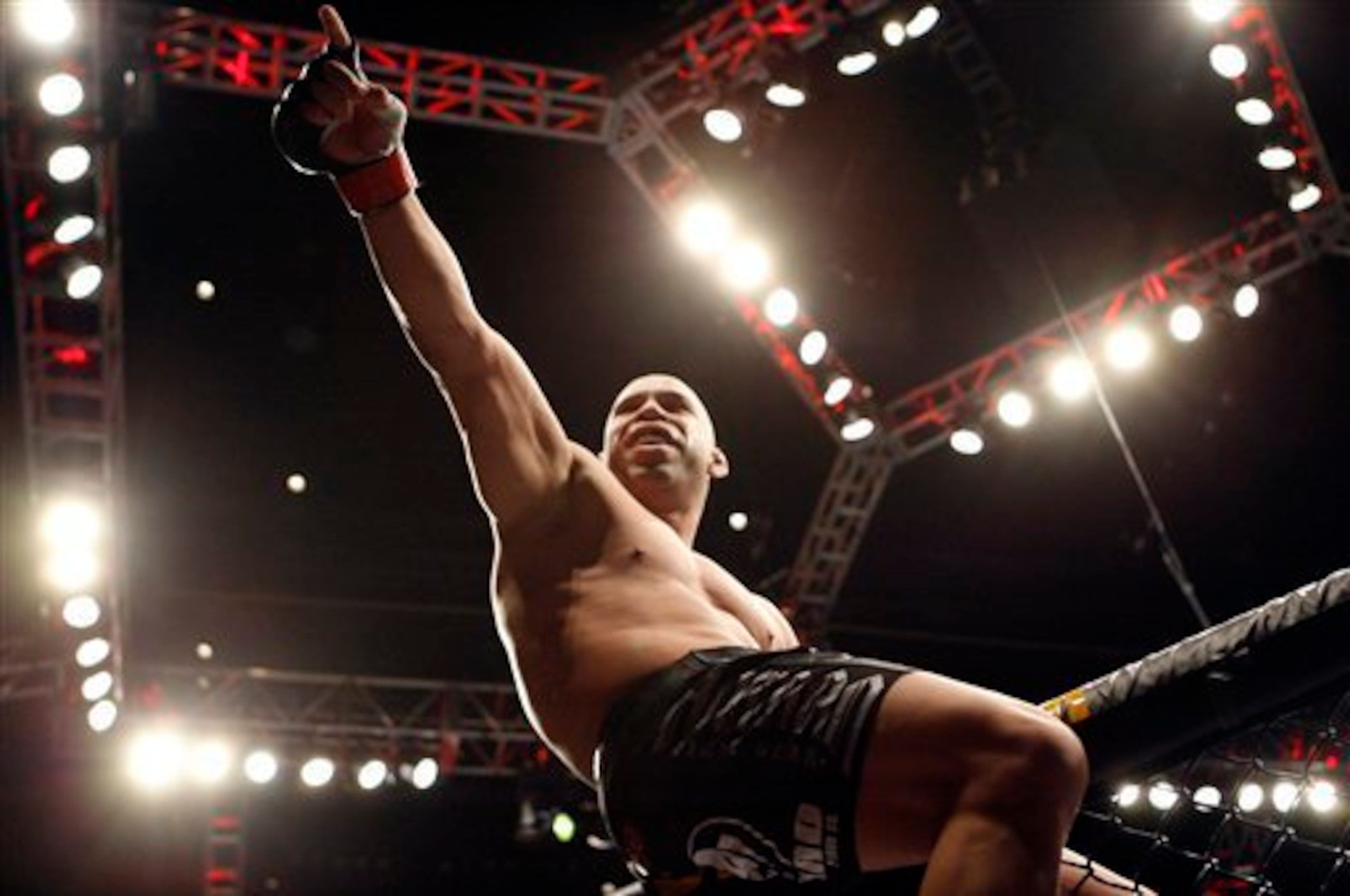
Perhaps in an attempt to get back to his winning ways, Silva entered the second Pride Middleweight Grand Prix tournament, drawing Hidehiko Yoshida in a rematch of their first meeting in the 2003 Grand Prix.
So, on April 23, Silva stepped into the ring at Pride Total Elimination 2005 and once again bested Yoshida in a tough scrap that saw Silva escape with a split-decision victory. In truth, the arguments for a Yoshida victory had just as much merit as those favoring Silva; the judoka had hung tough and fought as hard as anyone ever had.
But in the end, Silva impressed the judges enough to advance to the quarterfinal round on June 26.
In the next fight, at Pride Critical Countdown 2005, Silva stopped Kazuhiro Nakamura via TKO from punches at 5:24 of Round 1, advancing to the semifinals.
Then, on August 28, Silva faced Ricardo Arona, a fellow Brazilian who had long wanted a chance to defeat Silva in the Pride ring. That night, at Pride Final Conflict 2005, Arona got his wish and defeated Silva via unanimous decision in a bout that saw him take Silva down and control him for most of the bout.
Since the fight had occurred in the grand prix, Silva’s middleweight title was not on the line, which set up a rematch, for the belt, on December 31 at the Pride Shockwave 2005 show.
With everything on the line—most importantly pride—Silva barely edged out Arona via split decision in a fight that was hard to score. Arona was able to control much of the fight on the floor ,and Silva really didn’t do much damage during the stand-up. The difference seemed to be Silva’s aggression; he fought like the man who wanted to win, while Arona fought like a man who was willing to risk just enough not to lose.
In the end, it was a very close bout that could have gone either way. I can say that it was one of the few times I felt the two-chapter series left much unresolved.
Silva ended the year with his championship intact and his career record standing at 30-5-1 (1), but he had lost his first fight to non-heavyweight in a long time.
2006
11 of 20After a close call in 2005, Silva came into 2006 bold and aggressive, entering the Pride Openweight Grand Prix.
Stepping into the ring on July 1 at the Pride Critical Countdown Absolute, Silva faced off against the third heavyweight of his career, Kazuyuki Fujita, who also went by the moniker “Ol’ Ironhead.”
Fujita had been one of the few fighters to ever make the reigning heavyweight champion, Fedor Emelianenko, look human. He had lost via submission, by cut and by decision, but he had never been honestly stopped by a KO or TKO that was a result of strikes.
Then, Silva ran all over him, ending the bout at 9:21 of Round 1 via TKO due to punches (not to mention kicks, knees and everything else he could throw). It was shocking to see a heavyweight—who had taken brutal knees to the head from Mark Kerr—get blasted from pillar to post by the smaller Silva.
But that is exactly what happened, and Silva advanced to the next round and his next opponent, while Fujita looked around the ring from the floor, stunned and thoroughly beaten down for the first time in his career.
It was also the last time we would really see Silva in vintage form, because waiting for him in the next round was a rematch with Cro Cop—only this time Filipovic had honed his skills to a razor edge.
And that edge was used to maximum effect on Silva at Pride Final Conflict Absolute on September 10.
If Silva thought that his first bout with the Croatian was a good blueprint for their second dance, he was sadly mistaken. This time around, Cro Cop was on a mission and utterly focused on the task at hand.
At 5:26 of Round 1, his focus saw him rewarded as he leveled Silva with a head-kick KO that left him flat on his back.
Cro Cop would go on to win the entire event and his only title in the world of MMA.
Silva was 1-1 for the year, with his total record now standing at 31-6-1 (1), but the seasons had changed for The Axe Murderer. 2007 would officially be the winter of his career.
2007
12 of 20After the clean and brutal knockout at the hands (or feet, as it were) of Cro Cop, Silva jumped right back on the horse, this time back at middleweight, giving a rematch to the dangerous Dan Henderson, who had in turn just claimed the Pride Welterweight Championship in 2006 by winning the welterweight version of the Pride Grand Prix series.
Never short on ambition, Henderson was looking to become the only fighter in the history of MMA to own two different titles in two weight divisions in a premier organization—at the same time.
Some fighters age poorly, while others seem to bloom; Henderson is of the latter species. In his rematch with Silva at Pride 33 on February 24, he was the sharper man with the heavier hands, throwing punches in equal number yet landing more, including the savage left hand that dropped Silva flat on his back at 2:08 of Round 3.
Henderson was now in the history books, and Silva was no longer the middleweight champion. The loss also marked his second defeat by violent KO; even though he was going out on his shield to the top fighters of the day, he was also losing much of what had made him so great.
His whirlwind style had been a crowd-pleasing mechanism for victory in the past—intimidating and damaging—but where once there had been danger, there were now holes to be exploited by future opponents, if they had the daring and the power to make the most of them.
Styles do indeed make fighters, but only for as long as the fighter can make the style work for him with any kind of consistency. When Pride FC was bought out by the UFC, and Silva was pitted against Chuck Liddell in a long-overdue fight, we found there was still enough left in Silva to make the style work in the face of the longer reach, brutal power and cool resolve of The Iceman.
Part of what made this fight so fantastic was that, despite their age and the fact that the bout was about four years past being ideal, both men had lost their last two fights and their championships and were desperate for victory.
Now, all that they had left was each other and a little meeting in the Octagon that would turn out to be Fight of the Year for 2007.
It happened on December 29 at UFC 79, and to actually see both legends in the Octagon, at the same time, with bad intentions filling the air like electrical current during a storm, well, it was one of those moments that fight fans dream of.
In one of the more two-sided bouts of the night, Silva and Liddell took turns rattling each other's head side-with heavy shots. At one point in the bout, Liddell had Silva backed up against the cage, stringing together straight punches that were bouncing off his face over and over. Then, in typical Silva form, he came roaring back, throwing hard and making Liddell give ground.
Silva had his moments as well, even dropping Liddell with blows. But in the end, Liddell landed the harder, cleaner shots in addition to going the extra mile by securing some takedowns—something he had never felt pressured to do before then.
Silva and Liddell really brought out the best in each other; in defeat, Silva made an incredible first impression to UFC fans, and Liddell was finally back in the win column.
As it turns out, it would be the last victory of Liddell’s career, while Silva would continue to fight for another six years.
Going 0-2 for the year, Silva dropped to 31-8-1-(1).
2008
13 of 20Longing for redemption and hungry for action, Silva climbed back into the Octagon to face Chuck Liddell-conqueror Keith Jardine at UFC 84 on May 24.
Although Jardine had lost to Houston Alexander via violent KO at UFC 71 in 2007, he had rebounded at UFC 76 of the same year, defeating Liddell via split decision and even dropping The Iceman with a hard punch. It had been a grueling fight, but most felt Jardine had won Rounds 2 and 3 in a bout that saw him come into his own.
When it was announced that he would be fighting Silva, it looked as if the UFC was going to use the former Pride champion to build up one of its up-and-comers. Silva had lost three in a row, and while he was still a legend, it seemed like his best days were behind him.
In short, Jardine was the future, and Silva was the past.
Sadly for Jardine, Silva proved that those who forget the lessons of the past are doomed to repeat it, and against Silva, that means a lot of pain.
Jardine was too loose in the Octagon that night, lingering with his hands down too long, in close range with a fighter as powerful as Silva with nothing but a token defense. Silva let his fists go, caught The Dean with hard blows, knocked him to his knees and then to his back, climbed aboard, grabbed Jardine by the throat and proceeded to pound any remaining consciousness right out of him.
When Silva stepped off, Jardine looked stiff as a board and in a very bad way. Thankfully, he was all right, but as we have seen with many fighters, such violent endings can have a serious effect on the career of any fighter, no matter how young or old.
Silva was back. His intuition to finish was as strong as ever, and his destruction of Jardine—which lasted a total of 36 seconds—once again proved that the idea of MMA math is never solid enough to bet on with any seriousness.
This was proved again on December 27, at Silva’s expense, as he was paired up for a third time with a man he had mauled in Pride twice over: Quinton Jackson.
After winning both previous fights so brutally, it seemed that Silva simply had Jackson’s number; the idea that Jackson was even being given the fight had many scratching their heads, pondering the idea that the big wigs at Zuffa might be openly declaring themselves as sadists.
But we learned that the idea that a fighter who has lost twice to one opponent can never avenge those losses is false.
For their third fight at UFC 92, Jackson had his defense tight and caught the ever-reckless Silva with a beautiful counter left hook that knocked him cold at just 3:21 of Round 1.
Just like that, Rampage had derailed Silva’s comeback train, and any prospect for career longevity looked like a fluorescent light bulb that was badly flickering in the dark.
Silva went 1-1 for the year and 32-9-1 (1) overall.
2009
14 of 20With a disastrous 2008 behind him, Silva traveled to Germany to face off against Rich Franklin at UFC 99.
Often, matches are made based on the consistency of styles that certain fighters employ. In this case, it was the power and poise of Franklin against the whirlwind of violence that was Silva.
And it was a damn good fight.
Franklin won Round 1 by being the busier and more accurate fighter, delivering kicks to the body and some ground-and-pound before ending the frame by landing some stiff blows.
Silva bounced back and won Round 2 by maintaining the pressure, buckling Franklin twice and trapping him against the fence. Franklin battled back near the end, but Silva had done enough damage to claim the round.
In Round 3, both men went for broke in spurts, but Franklin was the fresher fighter, landing the cleaner blows and just being sharp enough to be ahead on points as the fight ended.
The judges rightfully awarded Franklin the victory by unanimous decision, which brought Silva’s overall record to 32-10-1 (1).
2010
15 of 20After nearly an eight-month layoff, Silva climbed back into the cage at UFC 110 in Sydney, Australia, to face new rival Michael Bisping.
Eager to erase the taste of a winless 2009, Silva seemed primed and ready to face Bisping, who, while being the quicker and more mobile fighter, didn’t have Silva’s punching power or experience.
But he wasn’t willing to concede anything to the Pride star, either. Bisping showed up to fight and implemented a stick-and-move game plan that also threw in some successful takedowns to score points while keeping Silva in a position that took away the chance of a knockout.
It was this strategy that saw The Count win Round 1 on many scorecards.
Then, Silva came back in Rounds 2 and 3, pressing the action and winning the rounds off the strength of his kicks and punches, not to mention a close submission attempt via guillotine choke in Round 2 and a late flurry in Round 3 that knocked Bisping down and almost out.
All the rounds were close, but it was Silva who came close to ending the fight on two occasions, which was probably the difference that saw him awarded the victory.
Silva made his first middleweight debut and was back in the win column, bringing his career record to 33-10-1 (1) and proving there was still some fight left in him.
2011
16 of 20
After the satisfaction of defeating Michael Bisping had subsided, Silva was once again back in the Octagon, facing Chris Leben at UFC 132 on July 2.
Leben was a slow brawler with a rock-hard chin who was big in heart but short on any kind of defensive skills. Incredibly exciting as he was, he seemed like a poor bet in a fight against a legend like Silva.
And in the beginning of the fight, it looked like Leben was simply going to get blown out of the water.
Silva caught the ever-catchable Leben early, rocking him and from there looking to run him over.
Sadly for Silva, Leben had more gears available than most thought. He caught Silva coming in with some serious haymakers, and after Silva face-planted on the canvas, Leben landed more shots until the fight was called.
Silva had lost yet another fight in the UFC, against one of the members of the first season of The Ultimate Fighter, which may or may not have added some shame to the defeat.
But the simple facts are that Silva had grown old and slow and had already gotten his “ticket” punched too many times. Hard knockout losses to big bangers like Mirko Filipovic, Dan Henderson and Quinton Jackson had taken their toll on him.
He wasn’t the fighter who had stormed out of Brazil, working a shockingly fast and slick sprawl and never tiring or slowing down. He was a legend in the twilight of his career, fighting one of his stone-fisted fans, and he just got knocked out.
It’s no wonder that fans were predicting that his next opponent, Cung Le, would beat him badly and send him into retirement at UFC 139.
After all, Silva had lost six of his last eight fights (four by violent KO) and didn’t exactly employ a defensive style. Most fans, including myself, feared or figured that Le would be able to hit him from range with those devastating kicks all night long.
But there is a saying that all great fighters have one last great fight left in them, and for Silva, it was the second-to-last great fight remaining.
And boy, was it a dandy.
For nearly 10 minutes, Silva and Le took turns slinging heavy leather and stunning each other. Le looked great at times, but then Silva would time him just right, catch him and flurry, sending him to retreat.
Then, as Round 2 was coming to a close, Silva poured it on after stunning Le with a stiff right hand against the cage. From there it was all vintage Silva as he swarmed Le, battering him with nasty knees to the head from the front headlock position before the fight tumbled to the floor and Silva landed continuous hammerfists until the fight was stopped.
Once again, Silva was back, and even though most of us knew his time was still drawing to a close, it was nice to see him come up with a victory when few thought it possible or gave him any chance.
With the win, Silva went 1-1 for 2011 and 34-11-1 (1) for his career.
2012
17 of 20After a great victory over Cung Lee in 2011, Silva found himself facing an old rival as Rich Franklin stepped in to replace the injured Vitor Belfort on the UFC 147 card in Brazil.
The bout was to be a conclusion of the first-ever incarnation of The Ultimate Fighter to be shot in Brazil, focusing exclusively on Brazilian talent. Silva served as one coach, while his longtime rival, Belfort, served as the other.
The show was not as wildly successful as many thought it would be (including myself), but it was not exactly a bust, either. It was basically an American production and idea brought to a foreign country, where English was not the language of choice. In addition to that, it was not really broadcast in America.
But the pride on the line was never absent. This was a big deal to the Brazilian fighters and their Brazilian fans, and their hopes for an excellent main event fight were rewarded when Franklin and Silva poured their aggression and bad intentions all over each other.
Both men hurt each other and kept battling. At one point, Silva landed a heavy punch that knocked Franklin flat, yet still the former middleweight champion defended himself, survived the round and came back, earning a unanimous decision over Silva in a bout that delighted fans of all stripes.
Silva dropped to 34-12-1 (1) and was winless in 2012.
2013
18 of 20After his hard-fought loss to Rich Franklin in Brazil, Silva came back with a fury as the UFC went back to his old stomping grounds, Japan.
Silva faced off against Brian Stann, a dangerous slugger who looked to be a fighter with the means to take the aging and oh-so-hittable Silva out in this late stage of his career.
At UFC on Fuel TV 8, both fighters let it all hang out, pounding the hell out of each other. It was a glorious fight that saw both men look great, but in the end Silva stopped Stann via KO near the end of Round 2.
Sadly, it was the last time Silva would ever fight in cage or ring, but it fittingly happened in Japan, the country that had seen him attain such great heights a decade prior.
The victory brought his total record to a final tally of 35-12-1 (1), just one fight shy of 50 bouts total.
All in all, it was a fitting final performance for a fighter who never really failed to deliver on the promise of violence inherent in his name. That is saying a great deal when you consider how many fighters have promised all-out aggression and violence (Georges St-Pierre is one example) yet failed to deliver.
2014
19 of 20After his Fight of the Night performance against Brian Stann in Japan, Silva never stepped foot in the cage professionally in 2014.
Instead, he coached a third season of The Ultimate Fighter: Brazil, opposite then-rival Chael Sonnen.
Perhaps Silva felt that such a situation—opposite a man who had spoken so harshly and with such negativity about Brazil, in Brazil—would see him celebrated rather than playing the role of hapless court jester.
If so, he learned the hard way that playing anything opposite Sonnen was far from easy. What had been so clear-cut and simple in the earlier years of his career turned into the kind of situation where he was not the avenger of wrongs or upholder of national pride but an old fighter who was used poorly as a punch line for The Chael Sonnen Show.
Silva came off as if he had no understanding at all of the promotional antics that had been employed by fighters since the times of Muhammad Ali. Of course, the language barrier was just enough that Sonnen could talk to Silva as if he were a simpleton and spin it as nothing more than an attempt to make sure he was understood clearly.
Then, there were the times when Silva seemed so thrown off by Sonnen that he was stumbling over his own feet. His demanding of an apology from Sonnen on behalf of Brazil, coming in late and, of course, the scuffle that saw Sonnen attacked by Silva’s assistant coach, Andre Amade—all of it made Silva look like a newcomer to the sport rather than the veteran and legend he was.
All of it came together in a parade of errors that played out like a Greek tragedy.
Then came the promotion of the fight that never happened: Silva vs. Sonnen. Mocking was done, and accusations were made. In the end, both parties ended up garroting their own careers—Sonnen for failing his drug test and Silva for willfully avoiding his and showing little remorse for doing so.
Now, both fighters have retired, leaving the entire mess to decompose on its own, and maybe that is best. Continuing on after all that has happened would just be like a bad movie skit, and their careers are worth far more than that.
The Present
20 of 20Now, with the talk of Silva’s retirement video and the NSAC ruling dying down, we have learned that Dana White says Silva will not be offered a place in the UFC Hall of Fame, and to be honest, that shouldn’t be surprising.
It is no secret that fighters who attack the company or offend White do not get an invitation to the clubhouse. That being said, Silva is in good company—Frank Shamrock, the promotion's first-ever middleweight champion, is never going to be in the Hall of Fame, either.
White has been shockingly restrained in response to the video where Silva raked the promotion over the coals, but it’s hard to condemn Silva’s career with any seriousness when you are the one in front of the camera, unable to hide behind a computer screen.
Can his actions—avoiding NSAC representatives—be judged in a harsh light, and should they? Yes, because Silva has been in the game a long time and knows how it works. He should understand by now that fighters of note should be expected to be held to a higher standard.
But to dismiss such a long and visceral career is to discount that which we advocate for the loudest in sake of that which we understand the least.
The NSAC is doing its best, no doubt, to find a much-needed and uniformed code of professional conduct and from there to apply the rules fairly and firmly, but it is not there yet. The ban nailed the coffin shut on Silva’s career, but it is only a judgment of one period of time, which came at the end.
That which came before—between the ropes or inside the cage—was not on trial, and judgment of that time belongs to the fans alone.
The whole thing seems to have a bitter taste for everyone involved. No one wanted to see the end come about this way, but it has, and now, each day that passes asks of us a single question: How will you remember The Axe Murderer?
His detractors will declare him a bum who was juiced to the gills for the entirety of his career in Japan, and that is their right. It may be crappy, but it’s honest, and that is all that can be asked of any fanbase.
His fans will remember him not by how his career ended—in some antechamber before an assembly of men struggling to regulate a sport in dire need of regulation—but by his time fighting: swinging for the fences while taking on all comers.
And on that topic, Silva did best some excellent competition. He was the first man to defeat Dan Henderson and judo gold medalist Hidehiko Yoshida. He the first to stop Quinton “Rampage” Jackson by TKO, and to top it all off, he was the first non-heavyweight to not only defeat but stop Kazushi Sakuraba when he was the pound-for-pound king of the sport.
When tallying up the records of the notable fighters Silva defeated at the time he bested them—Dan Henderson, Kazushi Sakuraba, Quinton Jackson, Hidehiko Yoshida, Michael Bisping and Cung Le—you arrive at a figure of 68-8 (or 68-6 if you throw out the two losses Sakuraba suffered to heavyweights).
That’s not just good—that’s great.
As for his losses, given the level of competition he has faced, defeat is a given, especially when you start fighting heavyweights. As the saying goes, “Show me an undefeated fighter and I’ll show you someone who hasn’t been fighting the right people,” and on that count Silva can rest easy.
Fighters like Vitor Belfort, Tito Ortiz, Mark Hunt, Mirko Filipovic, Dan Henderson, Chuck Liddell, Quinton Jackson and Rich Franklin are champions and “the right people." A loss to any of them is nothing to be ashamed of.
No, he wasn’t perfect; far from it, in fact. But he was good—good enough to beat some of the very best in the sport during their peak. He pulled us to the edge of our seats; we either cheered him on or moaned as he defeated our heroes.
He experienced both the thrill of victory and the agony of defeat, but he handled the former with humility and restraint and the latter with an understanding that it is better to go out on your shield than live a timid life that sees dreamers unwilling to act upon their dreams.
And we never had to guess what kind of dreams Silva had; he lived them, right before our eyes. They were bloody, violent and uncompromising, and god how we loved him for it.
War Wand, indeed.

.jpg?w=2560 "Brewers Looking To Sweep Dodgers 🧹")
.jpg?w=2560 "Bleacher Report's Expert NFL Picks 🔮")