
The 1 Thing to Watch for with Every Top 2014-15 NBA Rookie
There are several factors that determine how successful NBA rookies are, and the most important one varies from player to player.
During the next few weeks of preseason and the early months of the regular season, the league's top newcomers will be fighting to establish themselves as effective members of their clubs.
For some onlookers, the key aspect to track in the novices is decision-making. For others, it's how they handle physicality or approach specific skills.
What is the one thing to watch for with every top rookie?
Rookie rankings based on projected impact and production for 2014-15.
10. Dante Exum: Chemistry with Backcourt
1 of 10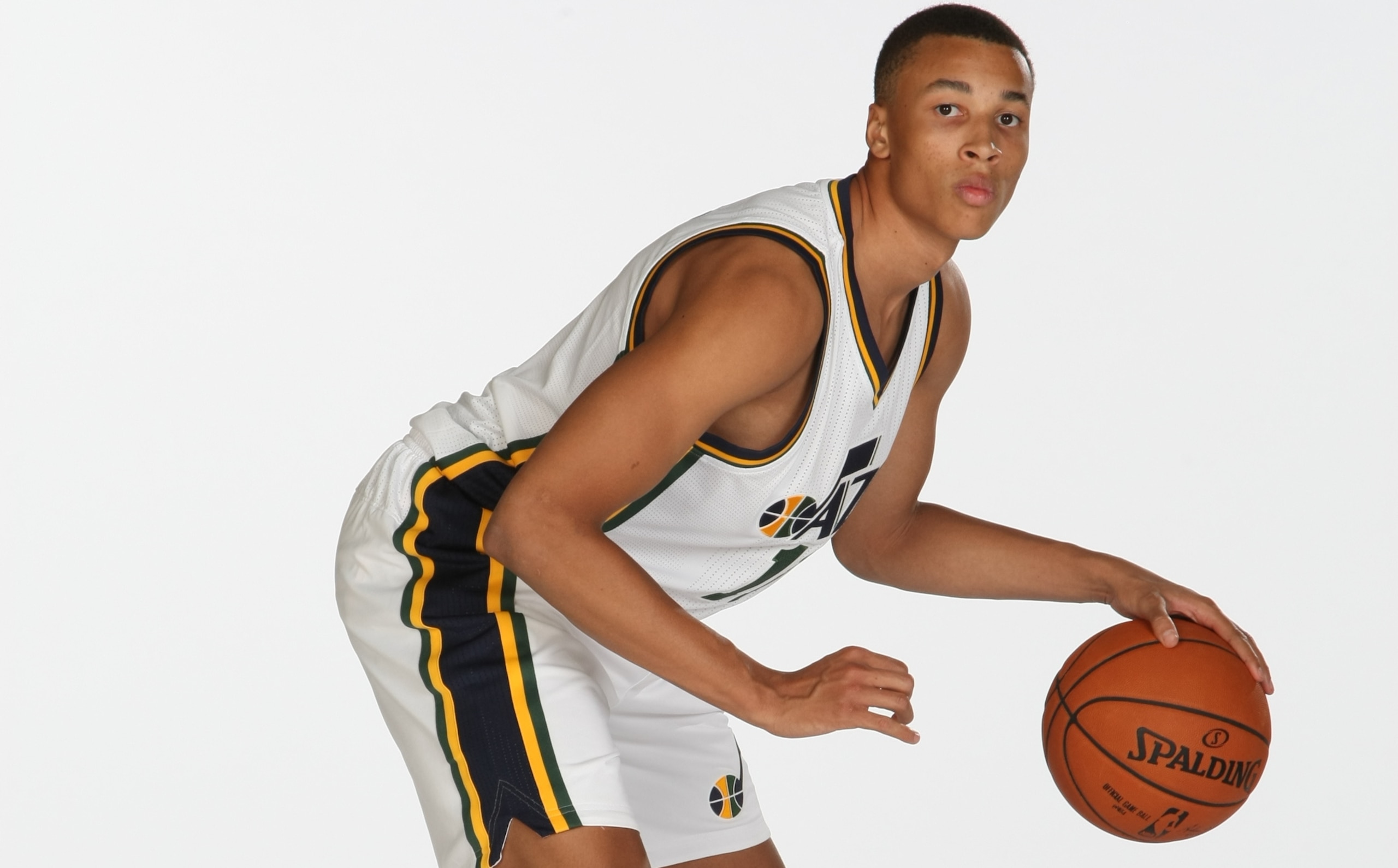
Dante Exum's role with the Utah Jazz is undefined at this point. He played as a 2-guard for much of summer league, but his skill set and background are those of a point man.
Coach Quin Snyder will likely experiment with him at both positions, which means he'll have to build chemistry and adjust to the American game from a couple of different angles.
That won't be easy, especially the shooting guard portion. One Eastern Conference scouting director talked with Sean Deveney of Sporting News about Exum's precarious situation:
"From what I have seen, the guy is a 1 all the way,” the scouting director said. “You can try putting him at 2...If he plays a lot of 2-guard, I would hope it does not hurt his confidence and set him back a little. That’s not his game right now."
We'll see whether Exum has the confidence and jump-shooting ability to play the 2 alongside Trey Burke, and if he can run the Jazz ship as floor general when appointed. That's easier said than done for a 19-year-old.
9. Nikola Mirotic: How Quickly Can He Grasp NBA Defense?
2 of 10
It's difficult to tell whether Nikola Mirotic will be a capable defender for the Chicago Bulls in the early going.
Given his underwhelming physical tools, he likely won't thrive as a one-on-one defender. And he knows this.
"I know that I'm not a very, very good defensive player, but I need to learn," he told Nick Friedell of ESPNChicago.com. "Every day I learn something new on defense. ...So I think I can get better.”
Fortunately, basketball is a team sport, and Tom Thibodeau's five-man units tend to excel even if there is a weak defender on the floor—as long as that player exhibits proper awareness and spacing.
Mirotic has the necessary alertness and effort, so it's just a matter of applying his hustle to Thibodeau's schemes.
Watch how he handles different types of forwards and centers over the first few weeks. Will his size and energy be enough to counteract athletic bigs?
8. Nik Stauskas: How He Handles Contact on Both Ends
3 of 10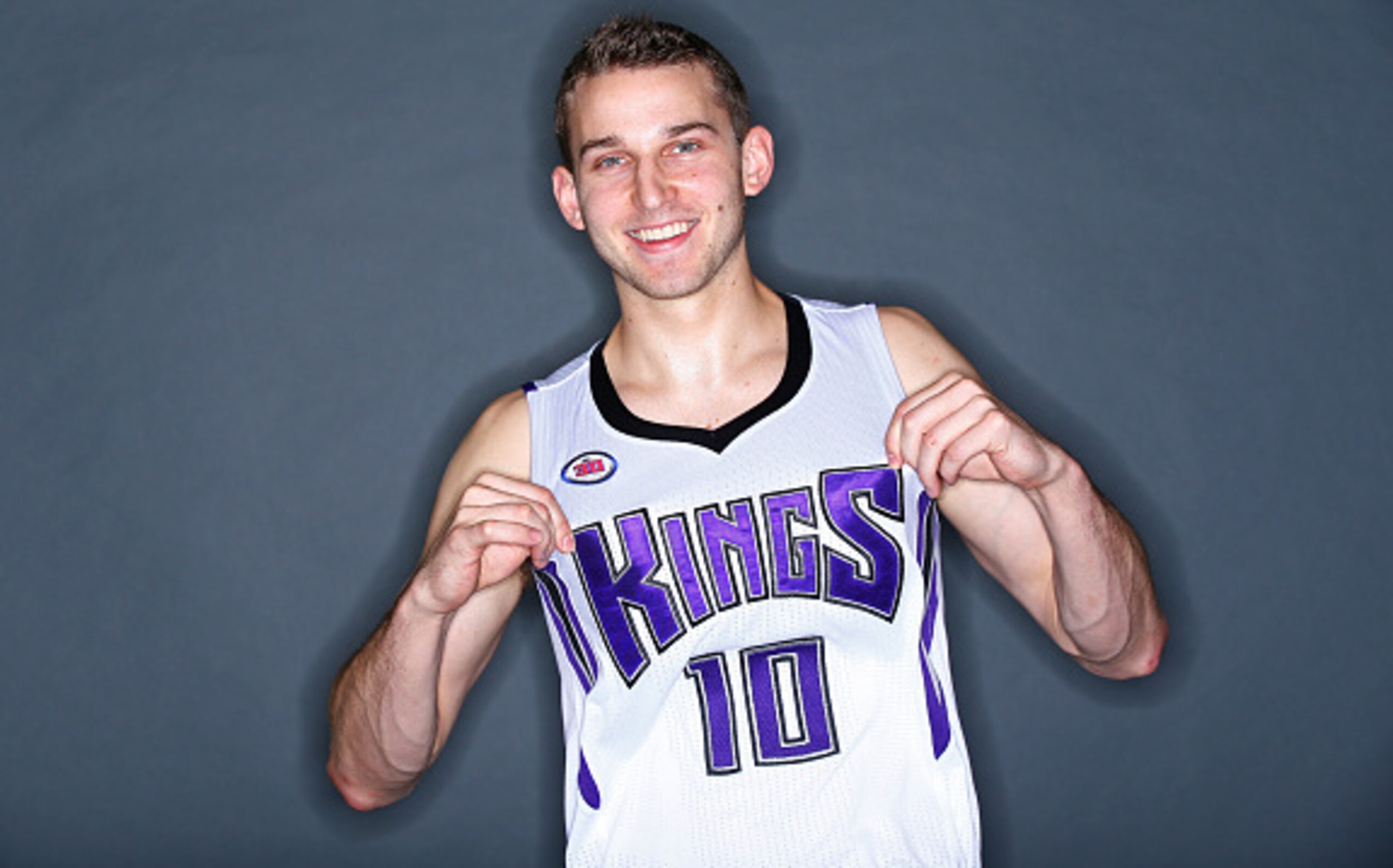
Sacramento Kings fans will be pleased with Nik Stauskas' skill set, instincts and command of the game as a rookie. He's going to make the right play almost every time, and he'll knock down jumpers at an efficient rate.
The variable to keep an eye on is his level of physicality on both ends of the floor. It could be the factor that determines whether or not he consistently generates offense and effectively checks swingmen.
The former Wolverine added some muscle between his freshman and sophomore seasons at Michigan, and that helped him score in traffic more often in 2013-14. But NBA defenders are bigger and sturdier, so he'll have to adapt further and learn how to attack, draw and absorb contact.
Stauskas earned just 2.6 free-throw attempts per game at summer league, although he got a combined 13 tosses in his first two contests.
Let's see if he can regularly drive aggressively and create offense for Sactown.


7. Julius Randle: Jump-Shooting Confidence
4 of 10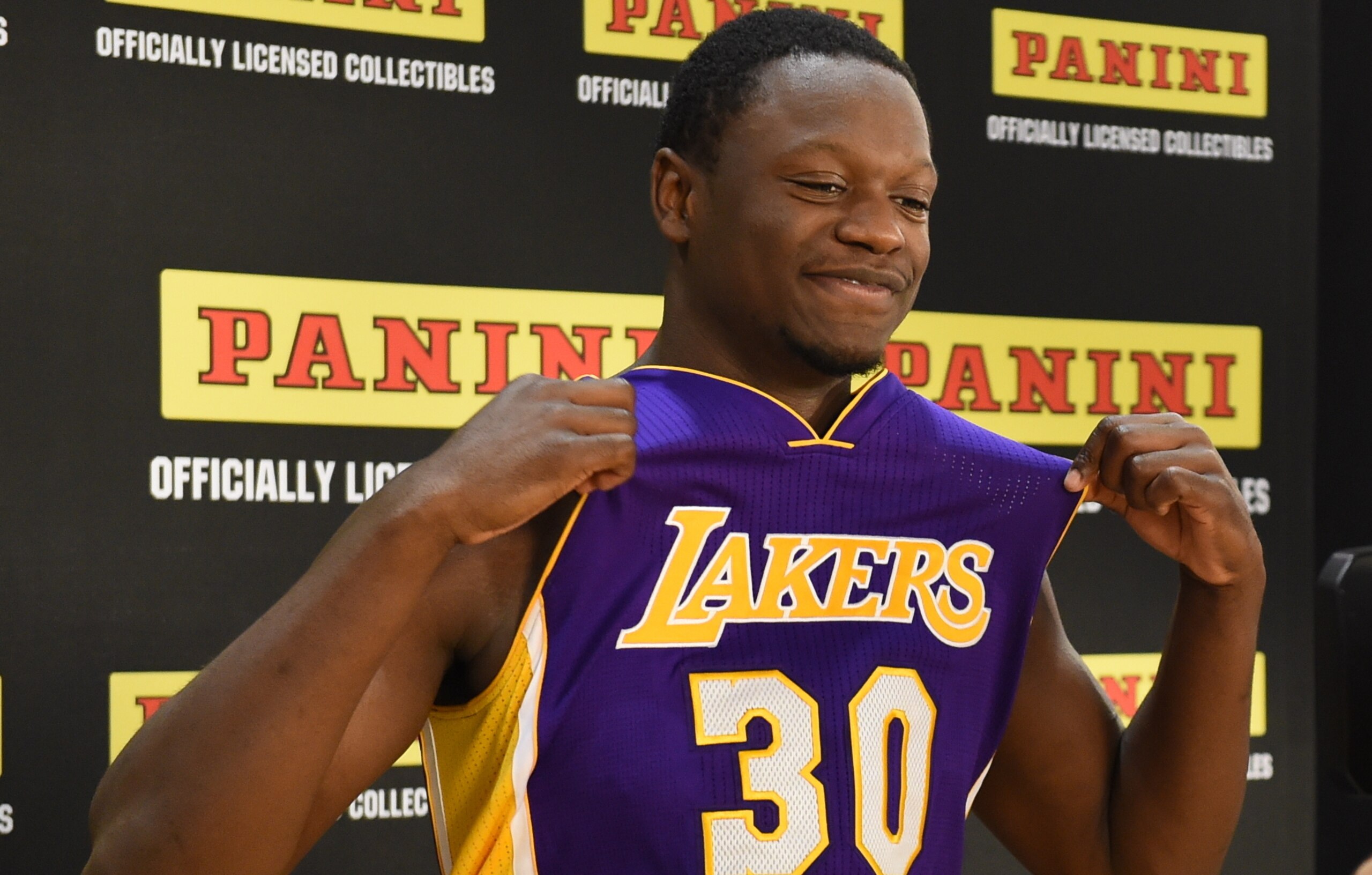
The biggest X-factors surrounding Julius Randle's rookie-year productivity are his mid-range and outside shooting.
He has decent shooting form and knocks down the occasional jumper, but that's not his preferred scoring method. At Kentucky, he tended to pause before shooting, almost as if he were reluctant to launch. His 2013-14 shot chart shows that he wasn't proficient outside the paint.
Los Angeles Lakers opponents will try to steer him away from the lane or clog the middle to prevent drives. Sometimes they'll dare him to shoot. Byron Scott and Co. will watch closely to see he how he reacts under these circumstances.
Randle needs to be willing to step into shots in rhythm—and connect at a respectable clip. His jump-shooting success could determine whether he's All-Rookie first team or still in "project" mode.
6. Elfrid Payton: Pick-and-Roll Execution
5 of 10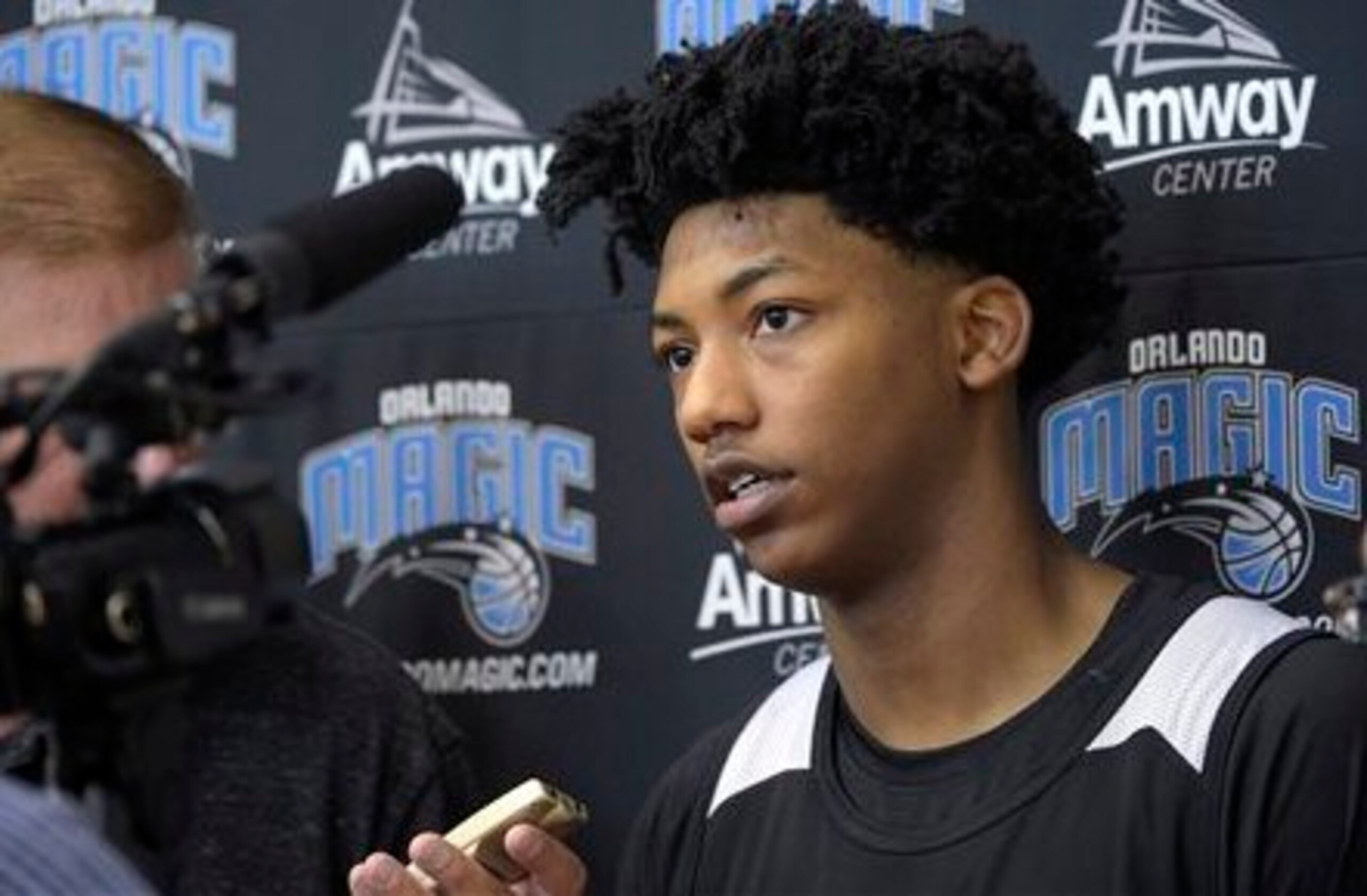
Throughout college and during summer league, Elfrid Payton showed exciting promise as a pick-and-roll orchestrator. He possesses ball-handling speed and natural court vision to make plays when turning the corner.
That's a good sign for the Orlando Magic, because their personnel are suited for a heavy diet of pick-and-rolls. However, Payton is just a rookie, and he'll need to sharpen his decision-making during on-the-job training.
We'll soon find out if he's truly ready for the variety of scenarios coming out of the pick-and-roll at the pro level. From that basic setup, he'll have to execute everything from pick-and-pops, to lobs, to pocket passes and pull-up jumpers.
Ed Isaacson of HoopsHabit.com noted that Payton will have to adjust to the speed of NBA defenses, so he'll need to make his decisions faster than ever.
"Payton makes good reads in pick-and-roll situations, though he needs to work on making them quicker and relying less on just using the screen to get to the basket," Isaacson said.
5. Doug McDermott: How He Handles Elite Athletes
6 of 10
We know Doug McDermott will have no problem sinking rhythm shots. We also know he won't shine defensively, and he'll face a learning curve.
What we don't know is exactly how he'll fare against elite athletes.
Sequences against ridiculously gifted athletes are inevitable, so how will he compete? Will he be able to consistently create scoring opportunities off the bounce, and will he be able to slow down explosive swingmen?
Mike Schmitz of DraftExpress.com offered a tempered measure of hope during his film breakdown of the former Creighton star against NBA-caliber length and athleticism.
"(McDermott) does a great job getting the ball up quickly to counter lack of athleticism...able to create space with his Dirk-like fadeaway...overall he does a good job countering his limitations with craftiness," Schmitz said.
It's nice to see that he held his own against a few players from Baylor and St. John's. But that doesn't come close to guaranteeing success against the upper crust of the NBA.
4. Marcus Smart: Balancing Act Between Scoring/Passing Production
7 of 10
Boston Celtics star quarterback Rajon Rondo is sidelined with a broken hand, so rookie Marcus Smart has a chance to step in and potentially start for Brad Stevens' squad.
He's talented in both the scoring and passing departments, gifted with the ability to drive, shoot or set up teammates with crisp dimes. Unfortunately, he doesn't always run the most balanced attack.
Coaches and fans alike should monitor his assist-to-shot ratio, as the guard sometimes tries to take over games and forces up bad shots.
For example, in his final summer league game, he hoisted 18 shots to get 20 points. In the meantime, he dished just three assists in 29 minutes, and the Celtics lost the game to Indiana 95-86.
He doesn't have to strike a perfect balance between scoring and passing every night, but he's got to keep his teammates involved and do his best to score in an economical way. That's a lot to ask of a newbie floor general, although it's no less than what Stevens desires.
3. Andrew Wiggins: How He Handles Contact on Both Ends
8 of 10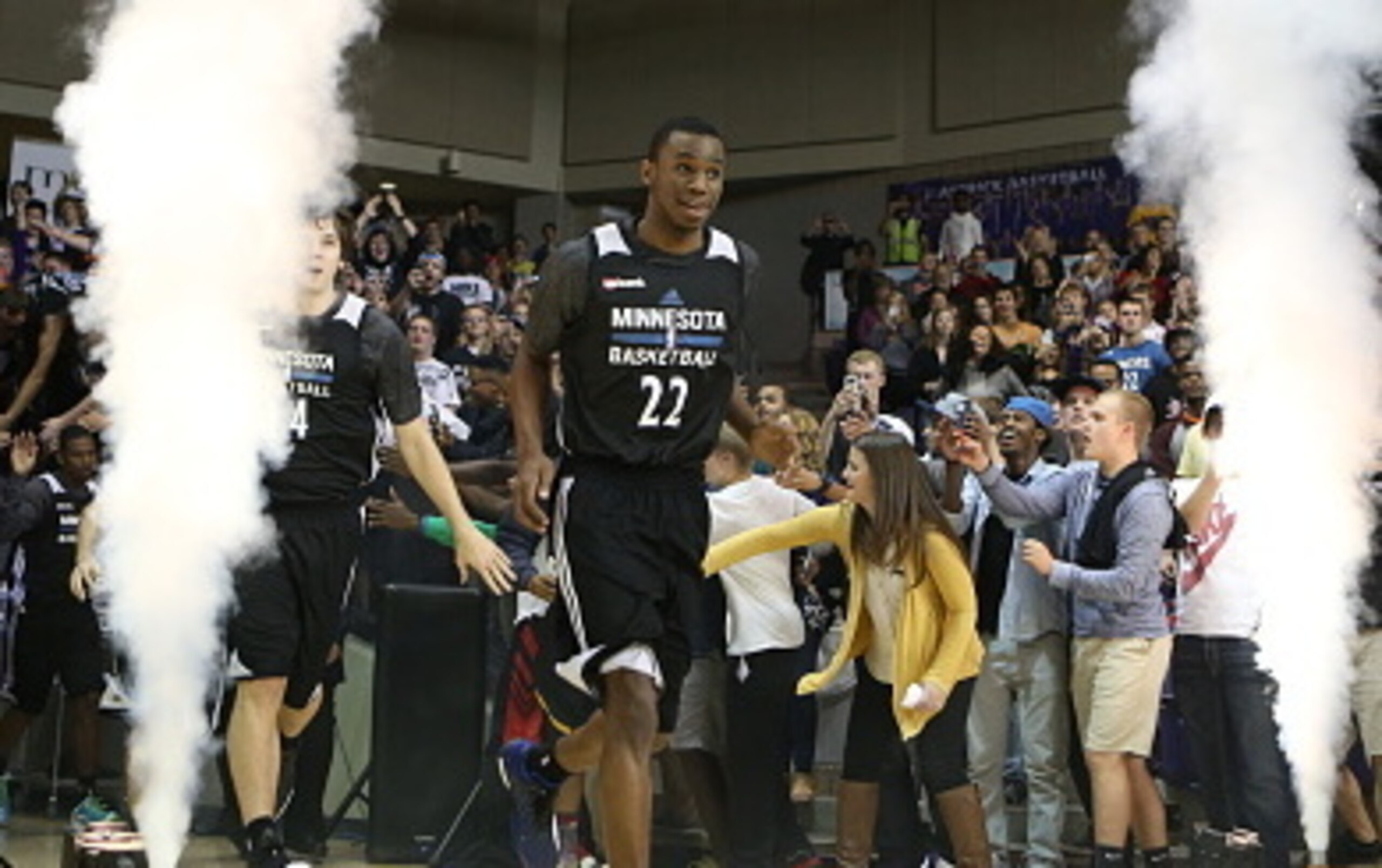
Much like Nik Stauskas followers in Sacramento, Minnesota Timberwolves fans should pay close attention to Andrew Wiggins when he's in traffic.
He's not usually classified as a "weak" player, but his slender frame isn't conducive to strong drives to the rim or stout interior defense. Wiggins relies heavily on his burst of speed and vertical explosiveness.
In the NBA, he's going to encounter situations where speed and finesse aren't enough. He overwhelmed inferior athletes during summer league, but B/R NBA Lead Writer Jonathan Wasserman knows Wiggins will be challenged physically in the big leagues:
"At Kansas, he made 34.1 percent of his threes and shot just 56 percent at the rim, per DraftExpress.com. As we know, the arc gets deeper and the trees get taller in the pros. Wiggins is probably going to shoot in the low 30s (percentage) from downtown and have trouble finishing through contact around the basket.
"
This isn't meant to completely disparage Wiggins' ability to attack. He has a chance to use his quickness craftily to draw fouls, and he may also learn to play stronger than his physique suggests.
We'll soon discover whether his toughness and footwork are up to the task on both ends of the floor.
2. Nerlens Noel: Rebounding Effectiveness
9 of 10
Many people will judge Nerlens Noel's game-to-game impact by how many shots he blocks or whether or not his offense is flowing.
Don't forget about rebounding.
It's not the most exciting part of his game, and it's not his biggest strength. But it's a critical aspect of controlling the paint, and it's something he must do consistently for the 2014-15 Philadelphia 76ers.
Noel averaged a respectable-but-unimpressive 8.8 boards per 40 minutes at summer league, grabbing as few as two in a single game. He explained to Kevin Pelton of ESPN.com (subscription required) that his playing style isn't suited for volume rebounding, but he nevertheless wants to improve on the boards:
"I've made that a focus on my own part. You haven't played in so long, so being able to find my spots and pick and choose them, pick them wisely. Not playing so long, you can get caught out of place, not knowing where to be at certain times, but I know that timing will come back. Especially with the steals and the blocks, I think that decreases the opportunities for rebounds as well. Getting steals, that's less shots they take to rebound.
"
Does Noel have what it takes to stay disciplined and jostle with frontcourt foes?
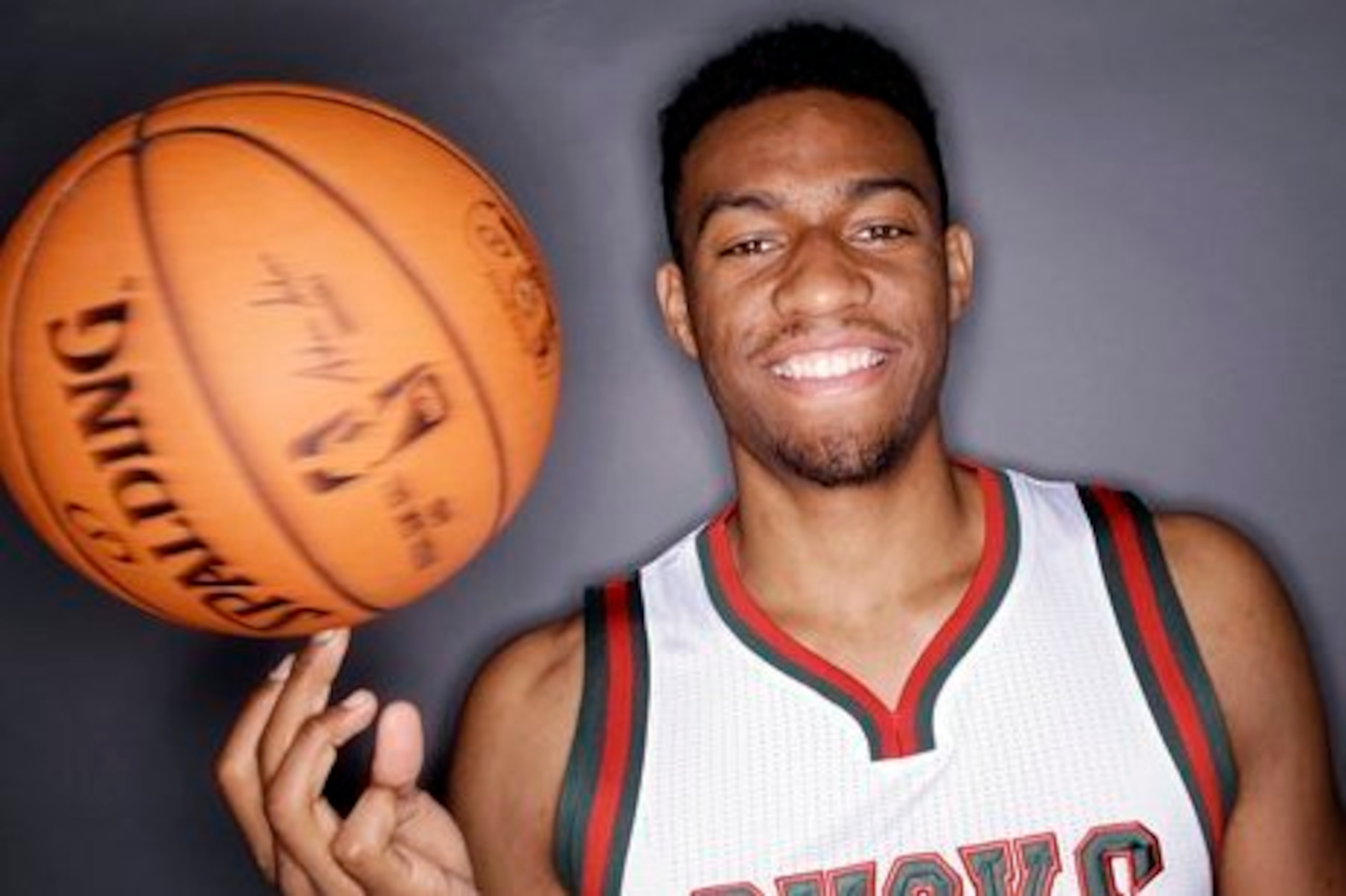
1. Jabari Parker: Low-Post Defense
10 of 10
It looks increasingly likely that Jabari Parker will be used predominantly as a power forward in 2014-15. The Milwaukee Bucks rookie indicated on Sirius XM NBA Radio (via Charles F. Gardner of the Milwaukee Journal Sentinel) that it's his favored position, and that coach Jason Kidd is poised to make him a stretch 4.
As such, he'll spend a big chunk of time guarding post players rather than swingmen. That's unquestionably a good move overall, because he'll struggle mightily to contain shifty small forwards.
Now the discussion turns to exactly how effective he'll be guarding the 4 spot.
He's got enough bulk to match up against most power forwards, and his 6'11.75" wingspan is so-so. Parker may have trouble against explosive big men with 7'3" wingspans, but he'll be much more competitive against similar-sized adversaries.
In most matchups, it will come down to awareness, technique and effort for Parker. It's up to him to put his strong frame in the best position to prosper.
Dan O'Brien covers the NBA and NBA draft for Bleacher Report.
Follow him on Twitter: @DanielO_BR


.jpg?w=2560 "NFL House in Paris Closes for Protests")
.jpg?w=2560 "Trevon Diggs Cut by Seahawks")


