Assessing the Latest Boston Bruins Trade Talk Surrounding Boychuk, McQuaid
Predictably enough, puck pundits are proposing trades for the Boston Bruins to alleviate their blue-line overstock and chafing financial straps.
Two of the more jutting musings from the past week came from a team-focused beat writer in ESPN Boston’s Joe McDonald and a national analyst in Sports Illustrated’s Allan Muir.
In a Friday morning column stressing the issue of restricted free agents Torey Krug and Reilly Smith, McDonald opined that a deal involving Johnny Boychuk and the New York Islanders would make sense. In his words:
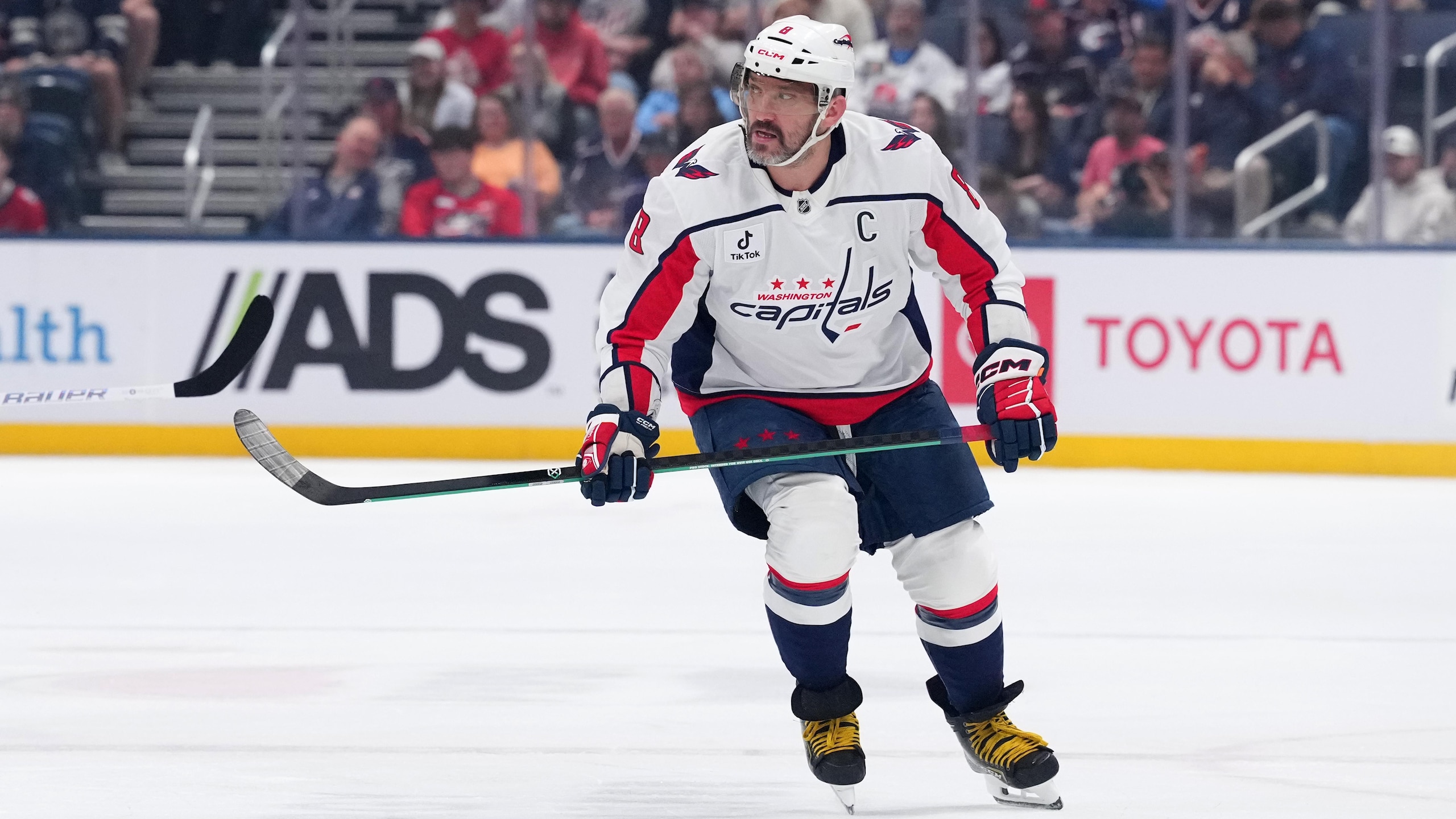

"If the Bruins were to move Boychuk, the New York Islanders could be a good landing spot. The Islanders have nearly $10 million in cap space, according to CapGeek.com, and could use Boychuk’s services. Maybe all it would take is a draft pick in return to free up Boston’s cap constraints.
"
Meanwhile, earlier in the week, Muir pointed to Adam McQuaid as a potential export and the Atlantic Division cohabitant Detroit Red Wings as a potential buyer. Muir acknowledged that “Boston would probably prefer to send McQuaid further afield, but if the Wings ante up the best pick or a prospect in return, this could benefit both sides.”
Realistically and analytically speaking, both ideas are half-and-half. Swap out either the player or the buyer in one writer’s proposition for the other and Boston is closer to its best bet.
As of Sunday evening, the Bruins are 10 nights away from their regular-season opener. Every elapsing preseason practice and scrimmage is widening the game-ready gap between the aforementioned RFAs and their active, under-contract teammates.
A deal is a must and, for at least 2014-15, it should yield little more benefit than shaving off a cap hit.
But when it comes to that objective, bigger is not automatically better. Despite more than doubling up McQuaid on the salary front ($3,366,667 to $1,566,667 via CapGeek), Boychuk ought to be a keeper.
The discrepancy in their earnings is an appropriate reflection of Boychuk’s value and virtual irreplaceability.
Joe Haggerty of csnne.com underscored that notion with this observation after Friday’s exhibition tilt in Washington: “Good to see Johnny Boychuk wearing the “A” on his sweater, along with David Krejci, as he’s a sometimes underrated leadership force inside the Bruins dressing room and an important piece of the team.”
Those qualities soundly complement Boychuk’s textbook tangibles as a protector in the home zone and point patroller on opposing property.
He posts perennial triple digits in the hit and shot-block column and is coming off career highs north of 150 in 2013-14. He was also second only to aging captain Zdeno Chara in overall and short-handed ice time last season.
Boychuk’s contract, which bears a no-trade clause, shall expire next summer, rendering him an unrestricted free agent. While chronic cap congestion could put the Bruins at risk of losing him for nothing at that point, it is in their best interest to max out his assets throughout 2014-15.
Besides his direct contributions to their cause this season, Boychuk's presence as a leader can help Boston's vast young crop of rearguards in their ongoing development. Even if he dons a different uniform in 12 months, he could leave a line of quality successors in Dougie Hamilton, Krug, Kevan Miller and maybe Matt Bartkowski or even Joe Morrow.
Conversely, McQuaid, a fellow pending UFA for 2015, lacks a no-trade clause and will give any team fewer minutes than Boychuk. In addition, last winter’s rise of Miller, who boasts a similar stay-at-home skill set, compounds McQuaid's expendability.
Granted, his rampant injury history is a concern, although he has avoided all problems on that front since restoring normalcy this month. A negligible asking price ought to convince a team with plentiful financial flexibility to take a wide-ranging chance on McQuaid.
McDonald himself acknowledged that the Isles could use any stay-at-home defensive help it can get. The Bruins, on the other hand, need not ask for much in return beyond a dice-roller of a prospect or future draft pick.
Would that be enough to achieve the immediate objective, namely clinching the requisite cap space to resolve the RFA standstill? That would simply be for the negotiating parties to decide.

With the lack of activity involving Krug and Smith, the team’s readings on CapGeek remain the same. Boston is still $809,143 above the ceiling with Marc Savard being one of the 12 forwards and 21 total players in the equation.
If and when Savard goes on long-term injured reserve, the Bruins will have $3,218,000 at their disposal. If and when they renew Smith and Krug’s services, they would have a quorum of 12 healthy forwards and an overstock of eight defensemen.
That, of course, assumes their NHL payroll stays the same with of Justin Florek and Jordan Caron up front. That is a risky assumption, at best, with the likes of Ryan Spooner ($760,000 cap hit) looking to crack the roster.
There are several hypothetical configurations one can make. The simple, universal conclusion is that $3,218,000 will not be enough to accommodate Krug, Smith and one or two other forwards.
But if they deal McQuaid, the Bruins would be looking at up to $4,784,667 in open space. Inserting Spooner would mean trimming that down to barely north of an even $4 million.
Whether Florek retains his spot on Boston’s payroll or gives way to Alexander Khokhlachev, Matt Fraser or any other rising forward, the cap room should stay relatively the same. All aspirants in the organization who are on CapGeek’s non-roster payroll will impose a six-figure cap hit this season.
In turn, if Boston settles strictly for swapping out a defenseman, the first step in its best-case scenario would be to trade McQuaid. The second would be to find a non-divisional rival to accept McQuaid, whether it is a struggling Metropolitan Division tenant like the aforementioned Islanders or a Western Conference club.
The third and final step would be to convince Krug and Smith to go no higher than $2 million apiece for a one-year renewal.
Unless otherwise indicated, all statistics for this report were found via nhl.com
-(2).jpg?w=2560 "Bleacher Report")

.jpg?w=2560 "2 NFL Officials Suspended")


.jpg?w=2560 "Mahomes' Wife Trolls Kubiak 💀")

.jpg?w=2560 "Love's Body Already 'Tired'")