Ryder Cup Format 2014: Explaining Match Play, Scoring Rules and Standings
Golf fans are generally used to an every-man-for-himself mentality, but the Ryder Cup throws that out the window every two years, which makes for arguably the most entertaining event in the sport.
The 12 best players from Europe and the United States, respectively, will do battle at Gleneagles Hotel in Perthshire, Scotland, this weekend, with international golfing supremacy on the line. In doing so, however, many conventional golf rules will be thrown out the window.
Pairs play will dominate Friday and Saturday, while match play will be the preferred method of scoring throughout the entire event.
TOP NEWS

New NFL Power Rankings 📊
.jpg?w=2560 "Commanders Eagles Football")
2 NFL Officials Suspended
.jpg?w=2560 "Texans-Mixon Released Football")
Injury-stricken Seahawks signing veteran RB
That system inevitably makes things even more exciting, and it allows the fans to get more involved as well.
For those who aren't particularly well-versed in the Ryder Cup—or for those who simply need a refresher—here's an in-depth look at how this golfing spectacle will play out.
Live Updating Ryder Cup Standings
Ryder Cup Schedule
| Friday, Sept. 26 | Fourball | 2:35 a.m. | 7:35 a.m. |
| Friday, Sept. 26 | Fourball | 2:50 a.m. | 7:50 a.m. |
| Friday, Sept. 26 | Fourball | 3:05 a.m. | 8:05 a.m. |
| Friday, Sept. 26 | Fourball | 3:20 a.m. | 8:20 a.m. |
| Friday, Sept. 26 | Foursomes | 8:15 a.m. | 1:15 p.m. |
| Friday, Sept. 26 | Foursomes | 8:30 a.m. | 1:30 p.m. |
| Friday, Sept. 26 | Foursomes | 8:45 a.m. | 1:45 p.m. |
| Friday, Sept. 26 | Foursomes | 9 a.m. | 2 p.m. |
| Saturday, Sept. 27 | Fourball | 2:35 a.m. | 7:35 a.m. |
| Saturday, Sept. 27 | Fourball | 2:50 a.m. | 7:50 a.m. |
| Saturday, Sept. 27 | Fourball | 3:05 a.m. | 8:05 a.m. |
| Saturday, Sept. 27 | Fourball | 3:20 a.m. | 8:20 a.m. |
| Saturday, Sept. 27 | Foursomes | 8:15 a.m. | 1:15 p.m. |
| Saturday, Sept. 27 | Foursomes | 8:30 a.m. | 1:30 p.m. |
| Saturday, Sept. 27 | Foursomes | 8:45 a.m. | 1:45 p.m. |
| Saturday, Sept. 27 | Foursomes | 9 a.m. | 2 p.m. |
| Sunday, Sept. 28 | Singles | 6:36 a.m. (12-minute intervals after) | 11:36 a.m. (12-minute intervals after) |
Match Play Events
Fourball
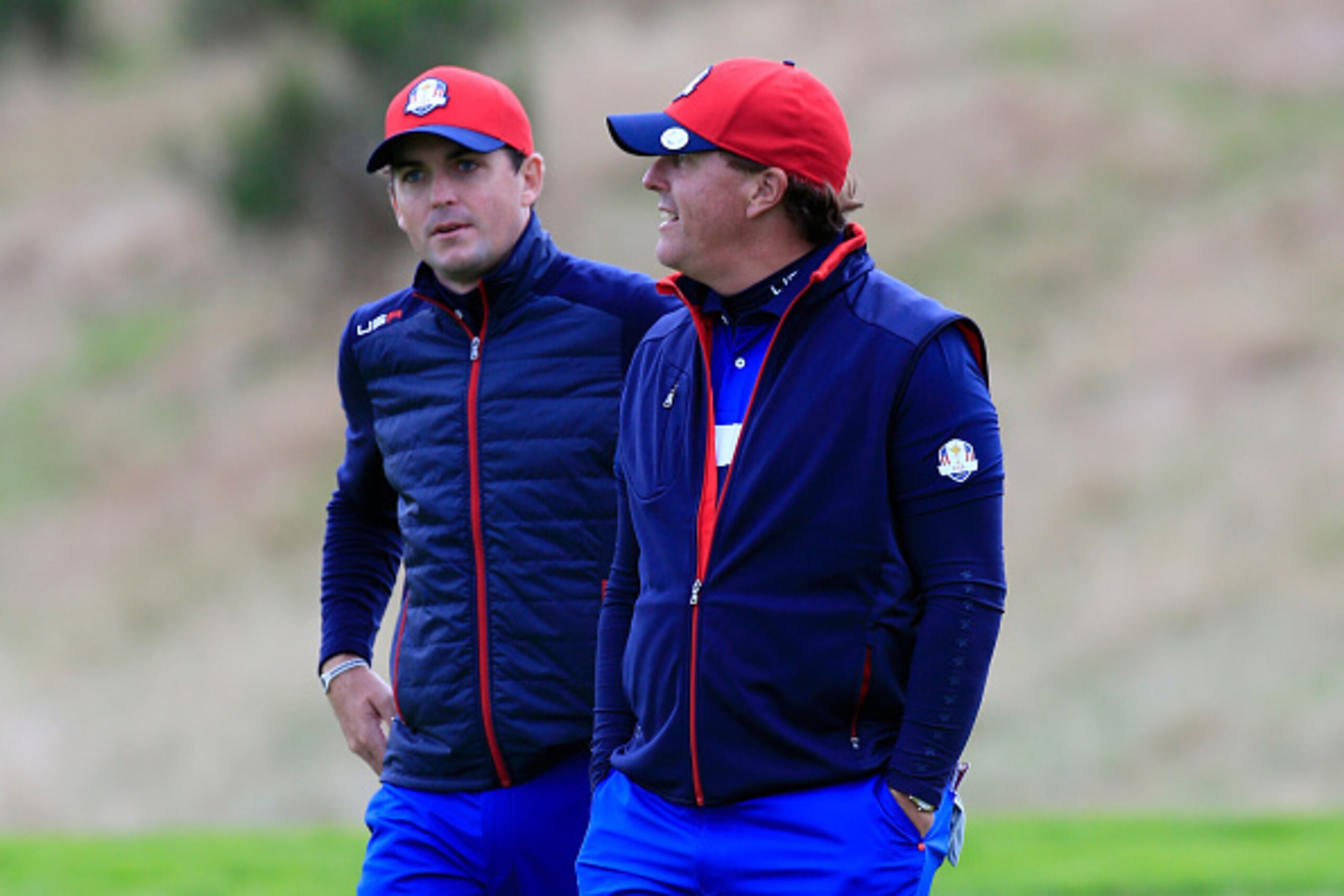
The Ryder Cup is predicated largely on team play, and nowhere is that more apparent than in fourball. Both Day 1 and Day 2 will feature a fourball session, which pits an American pairing and a European pairing against each other.
All four golfers will play out each hole, but only the lowest score will count for each team. It is often said in sports that a team is only as good as its weakest link, but fourball places emphasis on the strongest link instead.
Foursomes
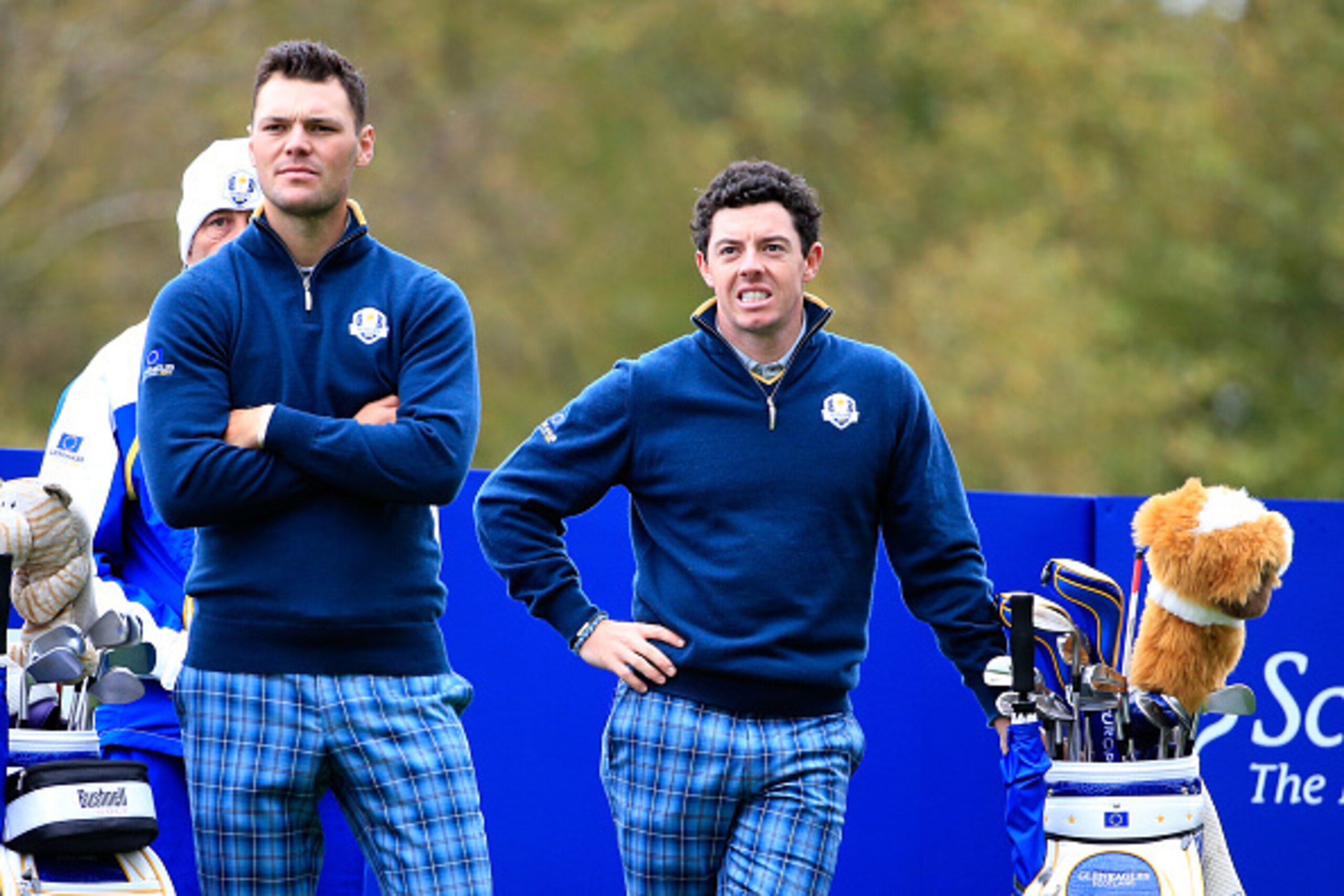
Like fourball, there will be a foursomes session on both Friday and Saturday at Gleneagles. The biggest similarity between the two formats is that they involve pairings going up against each other, but even more importance is placed on team play when it comes to foursomes.
Rather than all four golfers playing their own ball, each team plays one ball each hole, with the teammates alternating shots. That means there is much less margin for error than there is in fourball.
Singles

After two days of team play, Sunday will feature only singles matches, with all 12 players competing from each team. Since 12 points are up for grabs, it is entirely possible for one team to make a major comeback with a strong Day 3.
These one-on-one encounters have made for some of the greatest moments in the history of the Ryder Cup. There are no partners present for golfers to fall back on during Day 3, so the singles competition is the closest thing to the style of play that is utilized in normal PGA tournaments, although there are still notable differences.
Scoring Rules
The most vital aspect of the Ryder Cup's scoring rules is that the scores aren't cumulative. The teams or individuals are in a battle to win each hole. The duo or person with the better score on any given hole wins it, while the hole is halved if the scores are identical.
That means someone could shoot at 10 on a hole, but it wouldn't impact the rest of their round. The worst that could happen is losing the hole, which is something that every golfer is capable of bouncing back from.
The match play continues until one team or individual is so far ahead that the other doesn't have enough holes left to make up the deficit. The winning side earns a point in the standings for their team, while the losing side gets nothing. If the match ends in a stalemate, however, both the United States and Europe receive a half point.
There are 28 points up for grabs in all, which means that 14.5 points is enough to win the event. In the event of a 14-14 tie in the final standings, Europe will be declared the winner as defending champion.
Europe has won five of the past seven and seven of the past nine Ryder Cups. Its last two victories came by a score of 14.5-13.5, however, which means Team USA may be closing in.
Important Facts and Figures
While all 24 players involved in this event excel on the PGA and European Tours, that doesn't always equate to success at the Ryder Cup or in match play situations.
Perhaps the best match play golfer in this event is Europe's Ian Poulter. The 38-year-old Englishman is often criticized for his inability to come through in the clutch, as he has yet to win a major title. When it comes to the Ryder Cup, though, he is an entirely different animal.
As seen in this graphic courtesy of Team Europe, Poulter has won 80 percent of his Ryder Cup matches in four appearances:
The Americans don't have anyone on the roster with that same level of success, but one of the less-experienced players could conceivably emerge.
A top candidate is 24-year-old Patrick Reed, who is making his first career Ryder Cup appearance. It takes a special type of mentality to thrive in match play, and Reed displayed it during his college years with a perfect record in that format, per Cameron Morfit of Sports Illustrated:
Another vital aspect of having Ryder Cup success is the ability to find chemistry with a partner in very little time. One golfer who has become something of an expert at that is Team USA's Jim Furyk.
The 44-year-old veteran has had 14 different partners over eight Ryder Cup appearances, and he embraces being put in that position, according to Doug Ferguson of The Associated Press (h/t RyderCup.com).
"I like to look at the positive side of that. I'm like the utility infielder that leads off now. I take it as a compliment. I just think my temperament, being a veteran in these allows me to kind of move around and be a bit of a chameleon and fit into some different situations, and I have taken that as a compliment by most captains.
"
While the golfers will ultimately decide the competition on the course, American captain Tom Watson and European captain Paul McGinley will have a major influence based on the pairings they create and where they place them.
The Ryder Cup's format allows for plenty of strategic posturing, and it breeds a great deal of excitement and entertainment as well.
These types of rules aren't often seen in golf, but it is easy to see why the fans embrace them.
Follow @MikeChiari on Twitter


.jpg?w=2560 "Mahomes' Wife Trolls Kubiak 💀")