

Jonny Evans' Latest Issue Highlights a Wider Injury Problem at Manchester United
When Chris Smalling picked up a groin injury at Sunderland on 24 August, Manchester United fans rued the defender’s bad luck. It was a similar feeling when Phil Jones sustained a hamstring injury playing for England on 8 September. However, when Jonny Evans limped off with an ankle injury at Leicester City on 21 September, United fans couldn’t help but laugh at the misfortune.
All three centre-backs became injured in the space of just 28 days.
Each incident combines to reinforce one key point: United’s defenders are far too injury prone, which could harm the chances of a top-four finish in the Premier League.


.jpg?w=2560 "Rams Eagles Football")
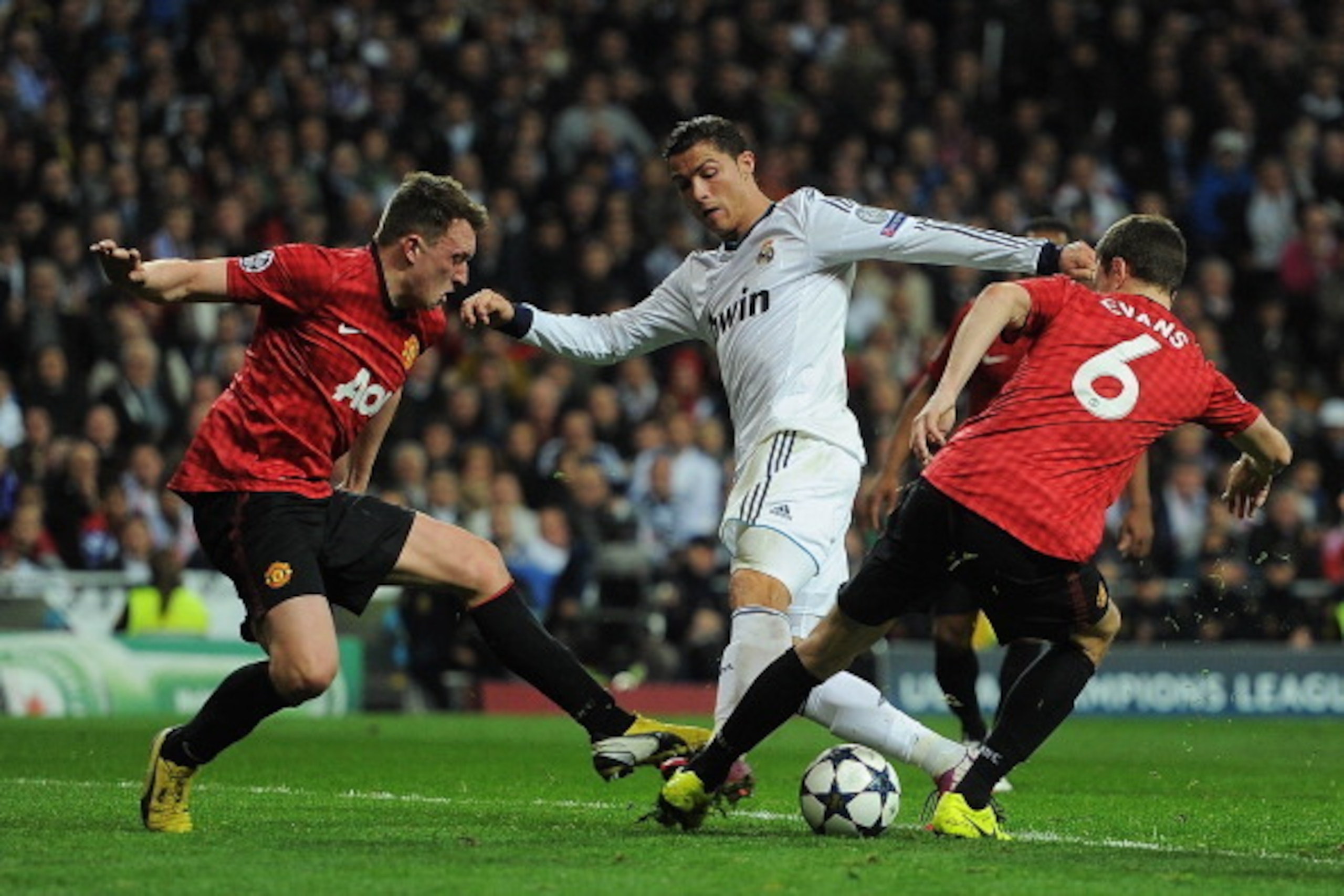
With Nemanja Vidic, Rio Ferdinand and Patrice Evra leaving the club this summer, Louis van Gaal knew he needed to rebuild his defence.
His solution seemed to involve playing Smalling, Jones and Evans at the same time in a 5-3-2 formation. The emergence of Tyler Blackett on the pre-season tour of the United States was an added bonus and provided Van Gaal with a fourth possibility.
Although it worked fairly well in terms of performances and results, a three-centre-back system was never really a long-term option.
Smalling, Jones and Evans cannot stay fit enough for long enough. The fact the trio haven’t featured in the same matchday squad this season is evidence of that. It’s a problem, one which has been ongoing for some time.
| Player | PL Games Played | Percentage | ||
| Smalling | 40/76 | 52 | ||
| Jones | 43/76 | 56 | ||
| Evans | 40/76 | 52 |
It gets worse.
Since the start of the 2012/13 season, per Squawka.com, Evans hasn’t featured in more than seven consecutive Premier League fixtures. Through the same period, Jones’ longest run is 10 games and Smalling’s is 12 games.
It’s worth noting that Ferdinand and Vidic were, for the most part, the first-choice pairing during that time, but they also had injury problems.
The point is that Smalling, Jones and Evans don’t provide any continuity. Looking ahead, it’s too much of a gamble to rely on the three players.

It’s therefore unlikely that Van Gaal will try and forge a centre-back partnership from the aforementioned trio. Chances are, at least one of the three players will be injured at any given point.
The newly signed Marcos Rojo will have to be a mainstay at centre-back from now on. The Argentine has played his first two games for United at left-back, but circumstances mean Van Gaal will have no option other than to move him into the middle. Blackett, meanwhile, picked up a suspension following his red card at Leicester.
That means Van Gaal will be left with a makeshift defence for Saturday’s game against West Ham United, and the worry is that it won’t be a one-off.
Even at this early stage of the season, it’s abundantly clear that Van Gaal will rarely have all five of his centre-backs fit and available for selection.

Central defence has typically been one of United’s strengths in the Premier League era, but it’s quickly becoming a problem area under Van Gaal.
The likelihood is that Michael Carrick, once fit, will have to fill in at centre-back. Daley Blind could be forced to play there on occasion. Van Gaal may also draft Tom Thorpe or another youth-team player into the first team, if only to increase the options available to him.
In the short term, Smalling, Jones and Evans’ injury problems will cause frequent chopping and changing in central defence.
With only one game a week and no Champions League football, United should be able to cope. In the long term, however, Van Gaal has no choice but to spend money on a centre-back or two.
Whether Smalling, Jones and Evans are good enough to be first-choice centre-backs at United is quickly becoming irrelevant. Each player can only stay fit enough to play for half a season, which is a real concern.
The only way Van Gaal can resolve the problem is by delving into the transfer market in January or next summer.
.jpg?w=2560 "Texans-Mixon Released Football")
.jpg?w=2560 "Commanders Eagles Football")

.jpg?w=2560 "Grading WWE Raw 🔠")
.jpg?w=2560 "Mahomes' Wife Trolls Kubiak 💀")

