

Constructing the Perfect Hell in a Cell Match
Hammer together malice and ferocity, lacerations and the sound of rattling steel, and you have the perfect Hell in a Cell match.
The ideal version of it is an intensified version of a steel cage match. It's a WWE creation that began in 1997 and has since evolved into something tamer.
For one to reach brutal perfection today, the route is much more of an incline. Mick Foley, Triple H and others forged a trail into dangerous territory that can't safely be topped.
TOP NEWS

BS Meter on Biggest Wrestling Rumors 🌡️
New Truths About WWE and AEW 😲
Iconic WWE championship belt sells for $716K
There is more to birthing a Hell in a Cell masterwork than blood and falls, though. Fury is just as key to the bout as violence.
The Ideal Rivals
The Hell in a Cell is designed to host two enemies whose hatred has outgrown the wrestling ring. They have such a surplus of bad blood that they need a more violent structure to contain it.
A perfect Hell in a Cell match pits two warriors against each other just as their rivalry calls for a new, more dangerous arena.
Among the issues with recent Hell in a Cell matches is that they often don't happen organically. They are simply booked when the Hell in a Cell pay-per-view arrives.
That forces the climax to come early. Mark Henry and Randy Orton should not have fought inside the Hell in a Cell in 2011. That was too quick of an escalation of their feud.
The Hell in a Cell should be reserved for the most bitter of enemies.
Seth Rollins and Dean Ambrose have reached that status. After Rollins betrayed The Shield, there has been a series of attacks, ambushes and fist fights between him and Ambrose.
When a Lumberjack match can't contain two foes, when one man crushes another's head with a stack of cinder blocks, then it's time for the Hell in a Cell.
Shawn Michaels vs. Triple H from Bad Blood 2004 benefited from similar timing. As a result of their storyline hatred, the match type felt appropriate.
It made sense that their wars would take them inside that enclosed cage. The battleground matched the battle.
Longtime enemies like Steve Austin and The Rock or Sting and Ric Flair would have been great fits as well. Once they stepped inside The Devil's Playground, they would have to use their surroundings as a weapon, a third player in their drama.
Intensity, Violence Using the Structure
Leave out the wristlocks and amateur-style takedowns. A Hell in a Cell match needs to be more barbarous than beautiful.
The cage calls for aggression, mercilessness and a touch of creativity.
When Michaels and The Undertaker squared off in 1997 in the first-ever Hell in a Cell match, the cage was ever-present. Michaels tried to climb the walls and it was clear early on that escape was not coming.
It was a showcase of intensity, one which every wrestler who follows them should strive to live up to.
The ideal Hell in a Cell match features action that one can only see in this type of match. That was partly why Sheamus vs. Randy Orton from Hell in a Cell 2010 wasn't as great as it should have been. It felt like the structure was merely decoration for an ordinary match.
At Judgment Day 2002, Chris Jericho faced Triple H in a bout that was just the opposite.
Even when the two men failed to send the other's head into the cell wall, there was an increased sense of danger. It was as if they were battling next to a pile of nails and the crowd knew that eventually someone would get pricked.
Each time that Jericho fell out of the ring, Triple H punished him by whipping him into the steel. Eventually Jericho would launch The Game into the cell wall and Triple H would hit the Pedigree to Jericho on top of the cage.
Even the referee crashed into the structure, violently dropping to the floor.
The Hell in a Cell, even more than the usual destructiveness that goes on in a ring, appeals to the part of humanity that enjoys seeing gladiators swing swords at each other in the arena. It's at its best when it is vicious, ugly, two animals gnashing their teeth at each other.
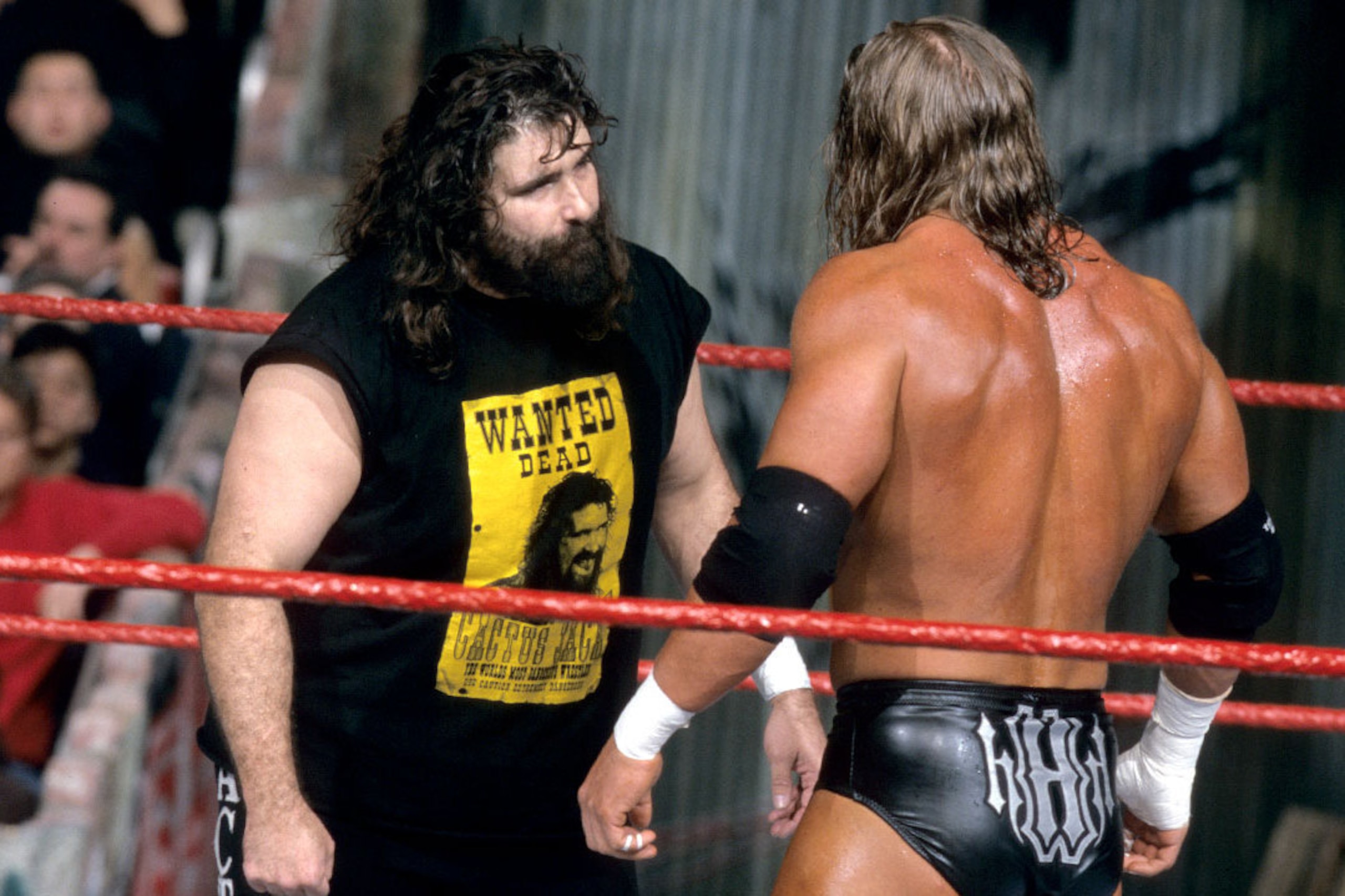
Ask fans to name their favorite Hell in a Cell matches and they will likely list Cactus Jack vs. Triple H at No Way Out 2000 or Brock Lesnar vs. Undertaker at No Mercy 2002. What those showdowns have in common is that the mat was thick with blood afterward.
When WWE.com listed the 10 best Hell in a Cell matches ever, it only mentioned two where the competitors didn't bleed.
Is blood a must? No, but the kind of unsettling violence and intensity that usually accompanies it is.
It just can't be a regular match with a steel covering. The cell and the barbarity it is expected to bring out of the two opponents have to be vital parts of the action.
Fans want the match to be a cruel spectacle beyond what normally goes on in a ring. That's especially true for the climax.
The Lasting Image
The best Hell in a Cell matches have thrilled throughout and then fired one, final blast into the air. It's that huge moment at the end that takes a bout from great to classic, memorable to unforgettable.
Fans so often think back to Undertaker vs. Mankind at King of the Ring 1998. That was no great exchange of counters, no display of athleticism. It was a brawl powered by breathtaking spots.
The most famous among them is, of course, when Undertaker threw Mankind off the top of the cage and sent him hurtling to the ground like a downed satellite.
Wrestlers will never be able to top that, but they don't need to. There just needs to be something memorable, some never-before-seen collision.
That gets more difficult to do each year, but men like Edge have tried their best to do so. The Rated-R Superstar punctuated his SummerSlam 2008 bouts with The Undertaker with a spear that sent them both crashing out of the cage.
This lasting image need not be a cage-centered stunt like that, though. Kane's debut elevated Undertaker vs. Michaels in 1997, and Triple H bending a steel chair across The Deadman's back bolstered their WrestleMania match.
This element of the action should be a headline-maker and create a memory that will stay with the audience forever.
Combine that with a pair of rivals who fans are anxious to see go to war, fists drumming against flesh and violent spills. That's Hell in a Cell perfection.
The formula to achieve that isn't complicated; it's just less likely to happen in a toned-down, PG-TV version of WWE. There is no issue finding the right foes, but composing the more savage elements that we have seen in these matches over the years is harder to do with today's restrictions.
The artists in that cage must paint their masterpiece without blood in their palette.
Violence is scaled back today. With the right seething enemies and an ample amount of innovation, wrestlers could construct a Hell in a Cell match of the flawless variety.
They will have to do so, though, with dulled tools.
.jpg?w=2560)


.jpg?w=2560 "Mahomes Told Teammate to Leave Meeting")
.jpg?w=2560 "Rodgers Iced Out on Plane 💎")
.jpg?w=2560 "🚨 Week 8 AP Top 25 Poll")


.jpg?w=2560 "Lamar Being Out Shocked Ravens")
.jpg?w=2560 "Raiders Could Start Mendoza")