
Projecting Which 2014-15 NBA Rookies Are Most Likely to Be Busts
Draft busts are inevitable. Despite all the new fancy advanced stats and tracking data, NBA teams continue to screw up high draft picks year after year.
However, we have seen some recent trends and patterns among prospects that might help us better predict whose game will translate versus whose game won't.
Analytics has become an integral part of most NBA scouting departments' evaluation process.
Between the advanced stats the analytics guys put stock in and my personal observations, I projected the most likely busts from the 2014 draft class.
Observations I believe represent red flags include:
- Struggles finishing at the rim
- Uncertain NBA position
- Lack of size/athleticism/weight for position
- Shot selection
- Usage
- Age
Tyler Ennis, Phoenix Suns
1 of 8
Potential Red Flags: Struggles finishing at rim, athleticism for position, usage
Tyler Ennis' pass-first mentality and clutch play made him a likable prospect at Syracuse, and there's a good possibility that clouded the Phoenix Suns' judgment.
A below-average athlete for the position in terms of hops, quickness and strength, Ennis struggled finishing in traffic all season long. He made just 50 percent of his shots at the rim and only 28 percent of his floaters, per DraftExpress. Ennis doesn't invite contact and in an attempt to avoid it gets forced into difficult shots in the paint.
It doesn't help that Ennis is just an average shooter from outside, where he hit 35.3 percent of his three-point attempts. Trouble at the rim compounded by poor shooting is ultimately a recipe for a 41.1 field-goal percentage.
As a facilitator, there's no denying his decision-making and passing instincts. Ennis' vision is awesome, and he rarely turns it over.
But many of his assists this year came as a result of play execution—not off-the-dribble creativity or breakdown drive-and-kick offense. Ennis' usage rate was abnormally low for a point guard—just 21.8 percent. There were 174 point guards in college with higher ones.
For what it's worth, he was pretty bad in Las Vegas Summer League, where he shot an ugly 21.9 percent (7-of-32) and went scoreless from downtown.
There's a lot to like about Ennis both as a player and a person, but he'll have a lot to fix and improve on if he wants to start one day in the pros. Who knows when he'll get the chance behind Goran Dragic, Isaiah Thomas, Eric Bledsoe and Archie Goodwin?
James Young, Boston Celtics
2 of 8
Potential Red Flags: Steal rate, struggles finishing at rim, shot selection
James Young had plenty of production to show for his one-and-done year at Kentucky, but there are a number of reasons to be skeptical regarding his transition to the pros.
From an analytics perspective, the No. 1 red flag concerning Young is that 1.39 steal percentage. He finished with 30 steals in 40 games, a bad sign for a projected 2-guard or wing. Whether or not you put much stock into steals, Young struggled on defense all year, from his on-ball effectiveness to his off-ball awareness.
Despite his 14.3 points per game and the occasional big-time slam dunk, Young struggled to finish at the rim and inside the arc. He made just 1.13 points per shot at the rim, which ranked fourth-to-last of all small forwards in last year's draft discussion, per DraftExpress' Matt Kamalsky. He also converted just 47 percent of his two-point field goals and 40.7 percent of his field goals in total.
His lack of comfort finishing in traffic might explain why he took 235 three-pointers (to just 215 two-pointers) despite only being a 34.9 percent shooter from deep.
The fact that he struggles to create doesn't help either. Nobody took more spot-up jumpers in the country last year than Young, per Synergy Sports via DraftExpress. He's a catch-and-shoot (or catch-and-score) guy as opposed to a playmaker or one-on-one scorer. His 1.7-1.9 assist-to-turnover ratio also reflects his below-average off-the-dribble game, vision and decision-making skills.
Young is a good athlete with terrific size and shot-making ability, but he's a one-way, perimeter-oriented player who lacks many "makes-his-teammates-better" qualities.
Zach LaVine, Minnesota Timberwolves
3 of 8
Potential Red Flags: Struggles to finish at rim, assist rate, weight for the position, usage
Minnesota took Zach LaVine in the lottery based on long-term upside tied to his electric athleticism and size for a ball-handler.
To draft him as high as the Timberwolves did, they had to ignore his numbers and troublesome tendencies at UCLA.
LaVine's shot selection and weak 12.6 percent assist rate suggest he's much more of a 2-guard than a point guard.
Only he almost never gets to the basket, and when he does, he struggles to convert. In the half court, LaVine shot just 45 percent at the rim and made only 17 shots all season, per DraftExpress' Jonathan Givony.
That might have something to do with his skinny 180-pound frame—an awfully low number for a 2-guard.
He was also only used on just 20.2 percent of UCLA's possessions. LaVine's playmaking opportunities were limited all year long, which not only makes him tougher to evaluate, but likely extends his NBA-ready timetable.
And unfortunately, with Kevin Martin, Chase Budinger and Andrew Wiggins in Minnesota, minutes could be tough to come by for LaVine early on.


Aaron Gordon, Orlando Magic
4 of 8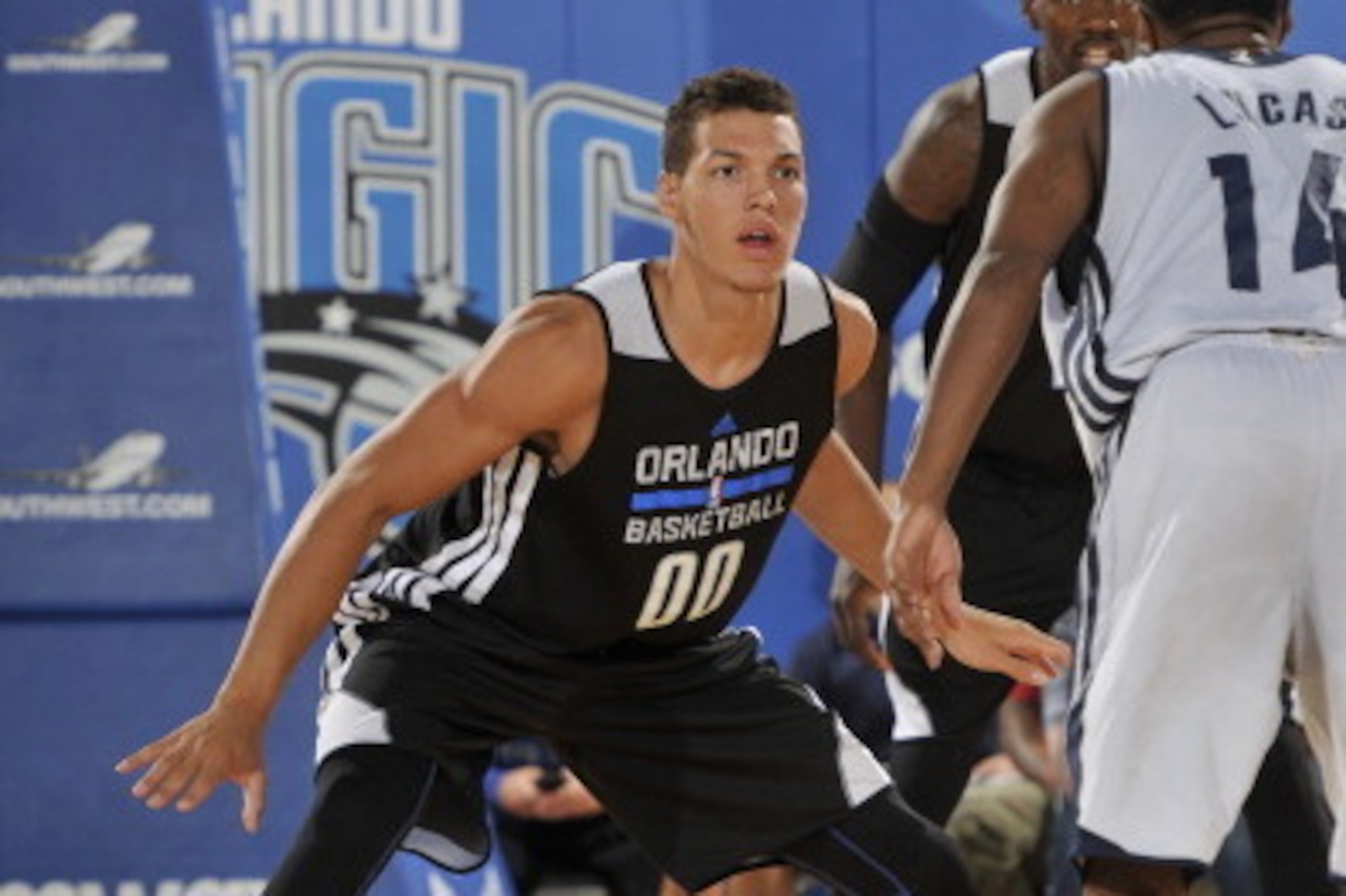
Potential Red Flags: Uncertain NBA position, usage
Aaron Gordon at No. 4 overall might have really been a reach for the Orlando Magic, who clearly valued his athleticism and youth over his game and skill level.
Personally, the risk tied to taking a forward with no natural position would be too much for me that high in the draft.
At 225 pounds, Gordon didn't show off much of a post game at Arizona with just 1.1 post-up possessions per game (per Synergy Sports via DraftExpress' Derek Bodner), while his 15.5 percent rebounding percentage looked fairly average.
And it seems pretty obvious that Gordon lacks the traditional skill set of a small forward. He hit just 29.3 percent of his jumpers all year and showed little to no shot creativity as a scorer on the perimeter. He only got 1.2 isolation possessions per game, given his limited off-the-dribble and in-between game in the mid-range.
Gordon is clearly an elite-level athlete with a tireless motor. Worst-case scenario, he'll give the Magic some defensive versatility and a high-percentage finishing target inside.
But Gordon's offensive game is just too far behind. He'll have a lot of catching up to do if he wants to justify that No. 4 overall value.
Gary Harris, Denver Nuggets
5 of 8
Potential Red Flags: Size for the position, struggles finishing at rim, shot selection
You wonder if Gary Harris' fall from the lottery discussion to No. 19 overall had something to do with the fact he measured in just 6'2.5" in socks. That's awfully small for a 2-guard who plays strictly off the ball.
We didn't see Harris get to the rack much, and when he did, he struggled to finish. In the half court, he made just 25 total shots at the rim on a poor 45.5 percent shooting, per DraftExpress' Jonathan Givony.
To no surprise, 74.7 percent of his shots came on jumpers last season. He took 230 threes, which he only hit 35.2 percent of, to 142 free-throw attempts.
An undersized perimeter scorer, Harris won't have much margin for error in the pros, given the low-percentage shot selection that's tied to his specific game.
He averaged 18.6 points in Las Vegas Summer League, only it was on dreadful 32.1 percent shooting and 16.8 shot attempts per game.
Harris is either going to have to find easier ways to score, which will be difficult given his physical limitations, or become a much more consistent shooter.
He's too smart and fundamentally sound to fall flat on his face in the NBA, but I'm not sure he's the future scorer many thought he'd be at Michigan State.
Shabazz Napier, Miami Heat
6 of 8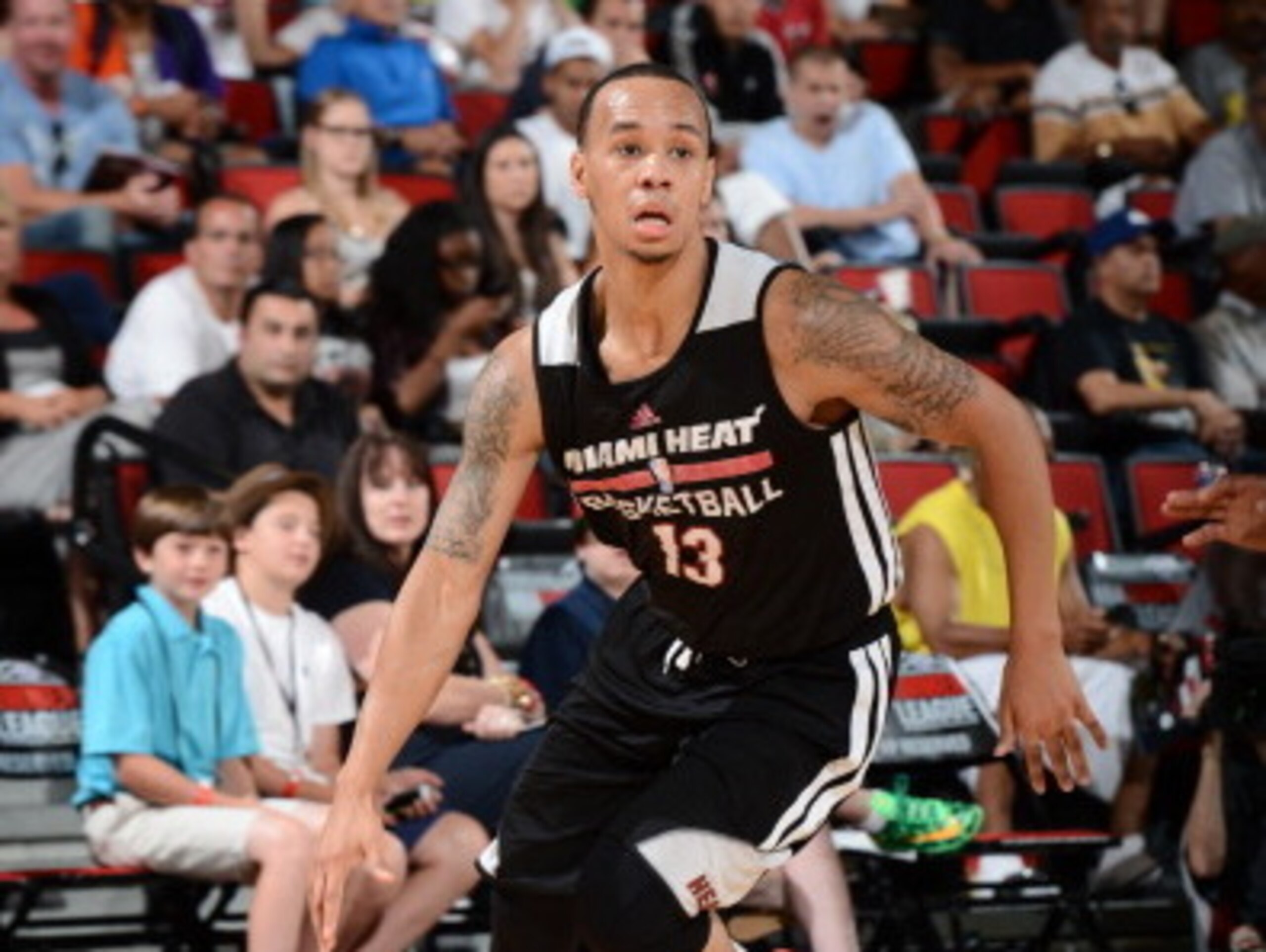
Potential Red Flags: Athleticism for position, struggles finishing at rim, age
It took about three-and-a-half years, but Shabazz Napier finally broke through onto the first-round radar following a sensational NCAA tournament championship run.
But despite Connecticut's success and Napier's strong play, not much changed with regard to his NBA outlook.
At just 5'11" in socks and 175 pounds, Napier is a below-the-rim point guard without much explosiveness or meat on his bones. In the half court, he converted just 46.3 percent of his shots at the rim, per DraftExpress' Matt Kamalsky.
This forces him to rely on difficult shot-making on the perimeter, and though he's proved himself as capable, it's not a recipe for high-percentage offense.
Napier had all sorts of trouble in both the Orlando and Las Vegas Summer Leagues, where he combined to shoot an awful 28.4 percent and average 4.2 turnovers per game.
"I'm unable to do a lot of things that I did in college, such as passes and stuff like that," Napier told Baxter Holmes of The Boston Globe. "I have to learn how to adjust and make those certain passes, but on an NBA level. That's the learning curve."
And though there aren't any advanced stats or numbers to reflect it, Napier also struggles containing dribble penetration on defense. Given his lack of size and strength, he doesn't exactly project as a ball-stopper at the point.
At 23 years old already, I'm not sure how much room there is left for Napier to grow and improve. Napier was one heck of a college guard, but he'll have a number of questions to answer before being able to make an NBA impact. Don't expect him to get much burn this season behind Mario Chalmers and Norris Cole in Miami.
Julius Randle, Los Angeles Lakers
7 of 8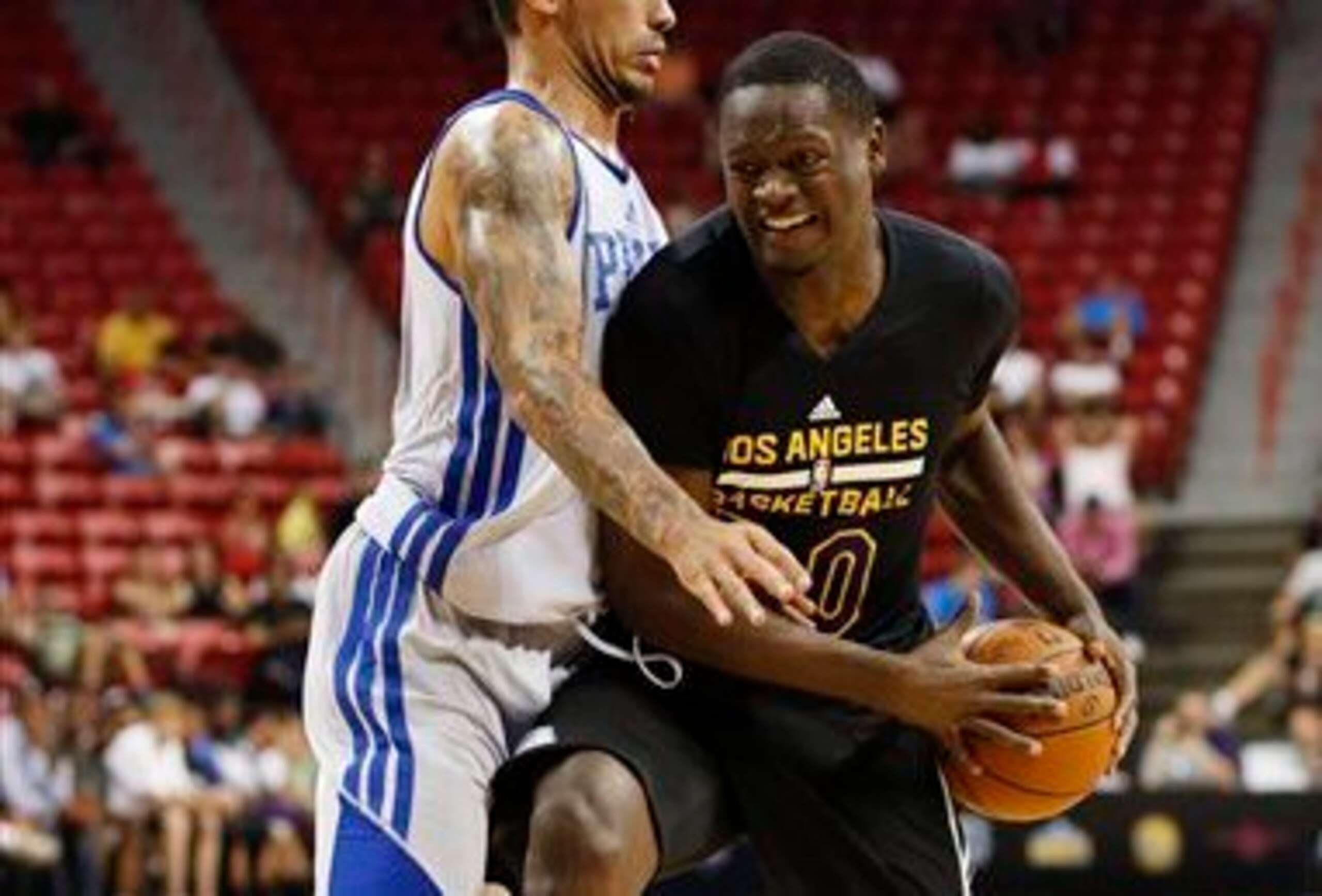
Potential Red Flags: Steal percentage, block percentage, shot selection
Julius Randle does not project well from an analytics standpoint, starting with that alarming .52 steal percentage.
He racked up just 20 steals in 40 games playing over 30 minutes in each.
Randle's 2.57 block percentage (31 blocks, 40 games) for a 6'9" big man isn't too encouraging either.
ESPN's analytics guru Kevin Pelton noted (subscription required) that "the combination [low steal and block percentage] is a red flag about Randle's ability as a help defender."
Offensively, my biggest concern centers on his preferred shot selection, which is heavily interior-oriented. He made just 17.3 percent of his jumpers last season, having only taken 1.3 per game, per Synergy Sports via DraftExpress' Matt Kamalsky.
In Las Vegas Summer League, he didn't make one shot outside the paint, having passed on open looks away from the rim for much tougher ones closer to it. This resulted in Randle shooting just 41.9 percent in Vegas and a fairly average 51.7 percent for a big man on two-pointers last season.
If he was dominant in the post, maybe it would be a different story. But Randle converted on just 39.3 percent of his post-up chances at Kentucky. And at the pro level, the interior only gets bigger, stronger and longer.
He's going to need to develop a jumper in the pros to complement his face-up game in the mid-range and inside game down low.
Between Randle's defensive limitations and questionable style of play, his transition to the NBA might not be as smooth as his pro-ready body suggests it should be.
Kyle Anderson, San Antonio Spurs
8 of 8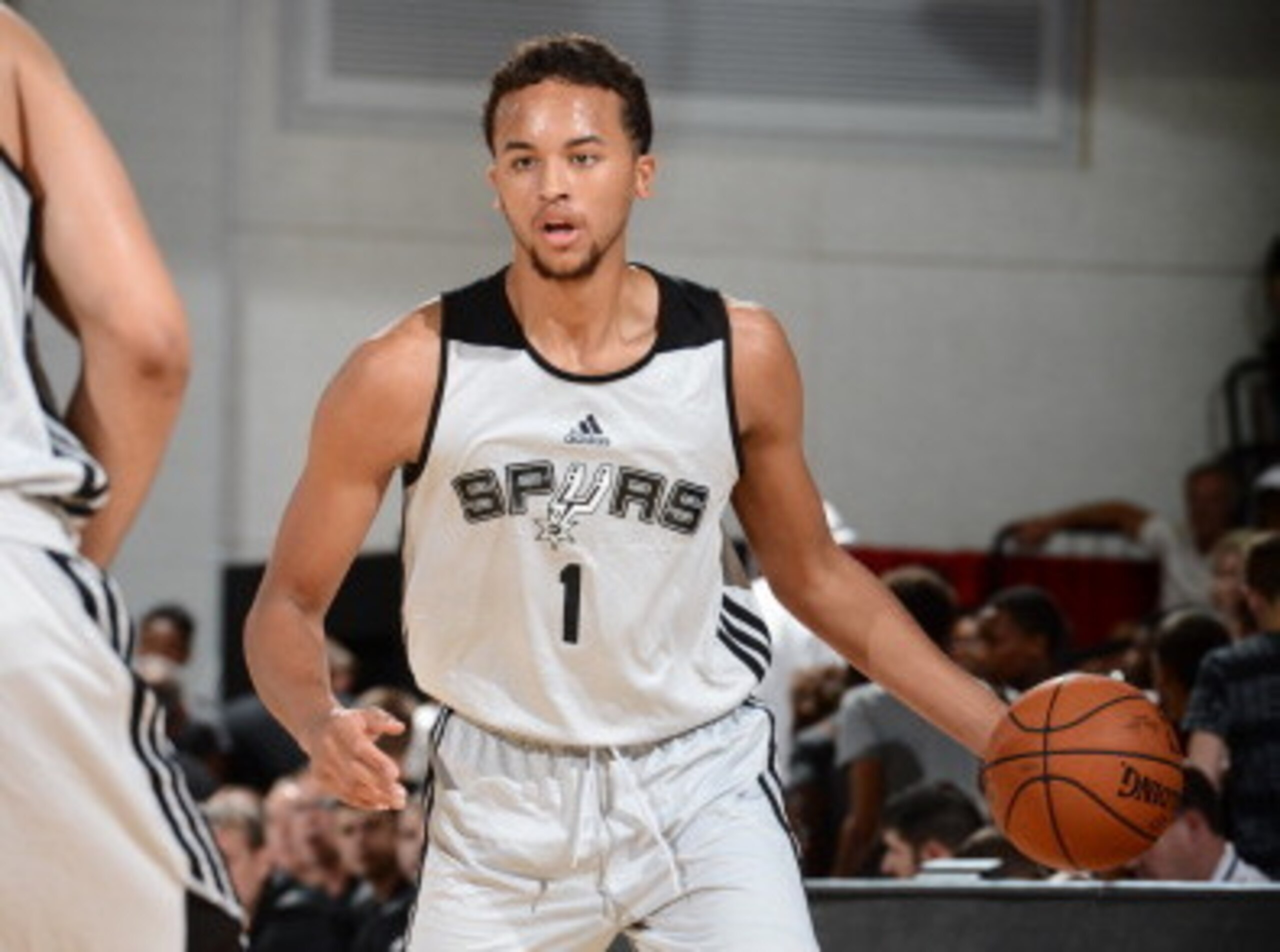
Potential Red Flags: Uncertain NBA position, athleticism for position (any position)
There's a reason Kyle Anderson was passed on 29 times in June. Nobody knows what his position will be on either side of the ball.
Anderson played point guard in college, but at 6'9" with way-below-average foot speed for a guard, it's tough to picture his floor game translating to an NBA backcourt. As a ball-handler, Anderson could have major trouble beating defenders off the dribble.
This makes it reasonable to think he'll start his career on the wing, only he struggled in this role as a freshman without possessing a skill set suited for playing off the ball (not a slasher or cutter).
However, defense is where there are the most question marks, as Anderson seems to lack the lateral quickness to defend the perimeter or the strength to man the post.
Anderson shot just 40.5 percent and averaged two assists in Las Vegas Summer League.
Unless he finds a way to fill the same niche that Boris Diaw has filled as a Spur, Anderson could be in jeopardy of falling between positions.
Advanced stats courtesy of RealGM.com.

.jpg?w=2560 "2 NFL Officials Suspended")

.jpg?w=2560 "Mahomes' Wife Trolls Kubiak 💀")
.jpg?w=2560 "Love's Body Already 'Tired'")